# 1 position


Audited and Verified:
Our Editorial and Data Verification Process
Research.com uses government datasets, official education statistics and primary institutional information to support its career and degree guides. Our review process checks factual accuracy, occupational definitions, source dates and the requirements associated with the credentials discussed.
How This Article Was Fact-Checked
Our editorial team verifies salary estimates, employment projections, education requirements and program information against original data providers and official organizations. Salary figures are checked against the relevant occupational definitions and reporting periods. Information about licensure, accreditation and required in-person training is reviewed separately.
Fact-checked and verified on:

Co-Founder and Chief Data Scientist

Reviewed by Karolina Broda
Fact-Checker and Data Verification
Choosing electrician training in Florence, Kentucky, means deciding whether to pay for classroom preparation, pursue a paid apprenticeship, or combine both. The stakes are real: the U.S. Bureau of Labor Statistics projects electrician employment to grow 9.2% nationally from 2025 to 2035, but training alone does not confer a license. This guide explains local pathways, costs, practical experience, and Kentucky requirements. It accompanies the Best Electrician Trade Schools in Florence for 2027 ranking, created by the Research.com team of data scientists to help students identify programs worth considering.
Expect a mix of electrical theory and physical practice: reading plans, calculating loads, selecting conductors and protective devices, bending conduit, wiring circuits, testing faults, and working safely. A useful program makes students demonstrate these tasks in a supervised lab. Ask how much scheduled time involves hands-on work and whether instruction is aligned with the electrical code used by local employers.
For a Florence resident, the main choice is often between school-first training and earning while learning. Gateway Community and Technical College is a public-college option to investigate, but confirm its current electrical offerings, teaching location, schedule, and credential before applying. Apprenticeships combine paid work with related instruction and may suit someone who can secure a position immediately; a school program may suit someone who needs foundational skills or a structured entry point. Neither route should be judged by credential name alone.
The table separates credentials from work experience so you can compare what each pathway actually delivers. Availability, hours, and credit arrangements depend on the provider.
| Pathway | What it typically provides | Best fit and main check |
| Pre-apprenticeship or short certificate | Introductory safety, theory, and sometimes lab practice | Entry preparation; ask whether an apprenticeship sponsor recognizes it |
| College certificate or diploma | Structured technical instruction and labs | School-first learners; ask how graduates enter supervised employment |
| Electrical technology associate degree | Broader technical and general coursework, if offered | Learners who want a wider credential; weigh extra cost and time against job goals |
| Registered apprenticeship | Paid supervised work and related instruction | Learners ready to apply for positions; verify registration, wages, and progression |
Training can lead to supervised work with residential and commercial electrical contractors, construction firms, industrial maintenance teams, or facilities employers. Florence's position in the Northern Kentucky-Cincinnati labor market makes work across the Ohio River a practical possibility, but it also makes the jurisdiction of the job important: Kentucky training does not automatically establish eligibility for electrical work governed by Ohio or local rules.
Ask prospective employers whether a credential helps applicants enter as helpers or apprentices, whether they sponsor supervised training, and where jobsites are located. Travel between sites, early starts, and access to transportation can matter as much as classroom location.
The national median annual wage for electricians was $63,190 in May 2025 (U.S. Bureau of Labor Statistics). That figure covers experienced workers as well as newer electricians across the country; it is not an estimate of starting pay in Florence. Compare actual local apprentice or helper offers by hourly wage, scheduled hours, benefits, wage progression, and commuting costs before calculating a program's likely payoff.
A school's advertised earnings figure deserves the same scrutiny. Ask which occupation, graduation cohort, location, and time after completion it represents. For a lower-cost route into paid work, quick certifications that pay well can be a useful comparison, but a short electrical certificate should not be mistaken for the experience needed to advance in the trade.
A short introductory credential can take less time than a diploma or associate degree, while a registered electrician apprenticeship generally takes several years of paid work and related instruction (U.S. Bureau of Labor Statistics). Program length and time to independent practice are different questions: finishing school does not erase experience, examination, or licensing requirements.
Get the published calendar, total classroom and lab hours, and part-time schedule from each provider. Then ask a prospective apprenticeship sponsor or employer whether any completed coursework receives credit or advanced standing; do not assume it will. An accelerated course is worthwhile only if it leaves enough time to develop and demonstrate practical skills.
Online coursework can cover electrical calculations, code concepts, and blueprint reading. Wiring, conduit work, equipment testing, lockout practices, and supervised jobsite skills require physical equipment and in-person assessment. A hybrid program can reduce classroom travel, but a fully online course is not a substitute for supervised practical training or proof of licensing eligibility.
For a Florence student, ask exactly where and when labs occur before choosing a remote option; a distant lab can cancel out the convenience of online lessons. If flexibility is your main concern, compare a hybrid schedule with evening instruction or paid apprenticeship hours. Other online study formats, including easy online masters, serve different goals and do not provide electrical trade practice.
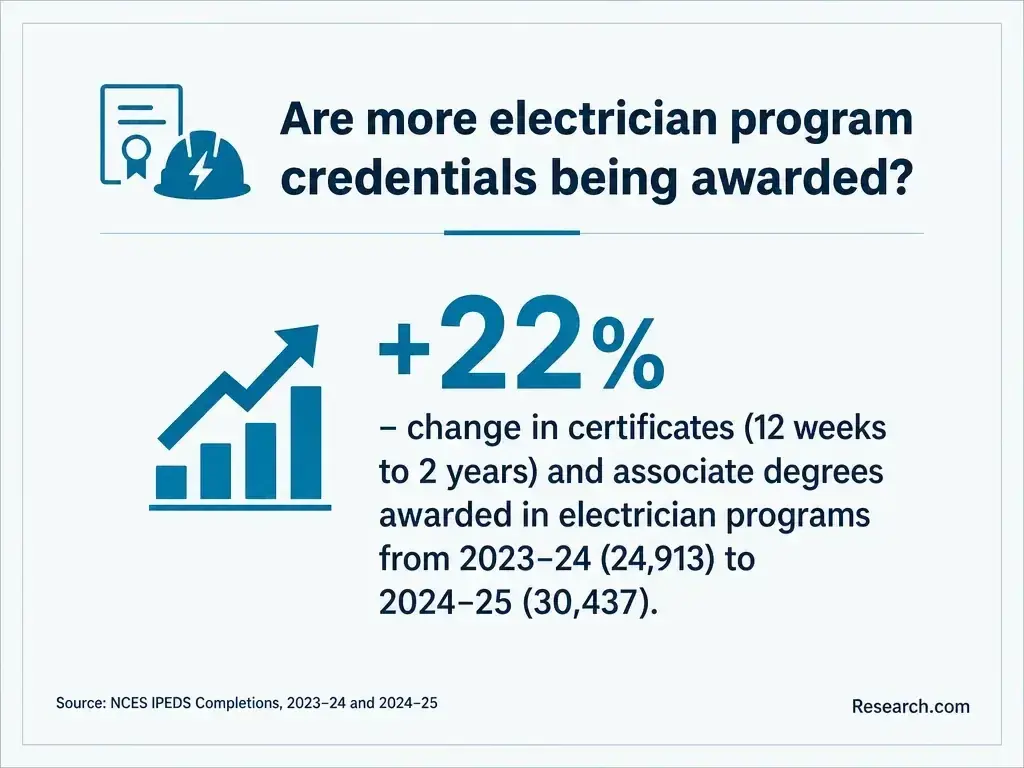
There is no defensible single Florence average that covers college programs, private training, and paid apprenticeships on comparable terms. Request a current, itemized price for each option instead. Tuition is only the starting point: required fees, books, tools, test equipment, protective gear, transportation, examination or application charges, and earnings forgone while studying all affect the amount needed to become job-ready.
Compare the net cost and timing of each path. Ask about eligible federal aid, Kentucky workforce assistance, scholarships, payment plans, and whether a paid apprenticeship supplies tools or reimburses instruction. Check eligibility with the provider and aid administrator rather than assuming every short certificate qualifies. A longer program may still be worthwhile if its practical training and employment connections justify the additional time; a low sticker price alone cannot establish return on investment.
If borrowing is necessary, compare expected payments with a conservative local entry-level wage - not a national occupational median. Lists of cheap bachelor degrees are not substitutes for an itemized electrician-training quote.
Depending on the offering, a student may earn a completion certificate, diploma, or associate degree. A registered apprenticeship has its own completion credential. These identify different kinds of preparation; none should be advertised as a Kentucky electrician license without confirmation from the licensing authority.
Institutional accreditation concerns the school; state authorization concerns permission to operate; industry recognition concerns a training standard; apprenticeship registration concerns a work-based program; and occupational licensure concerns legal authority to perform regulated work. Check each separately. Ask whether a credential documents specific lab competencies and whether an employer or registered sponsor accepts its coursework toward training progression.
Career-return comparisons such as most lucrative majors address a different decision. For electrical work, the more useful question is what the credential lets you do next: apply for supervised work, receive recognized training credit, or meet a documented licensing requirement.
Schools and apprenticeship sponsors set different entry rules. Expect to verify the current requirements for prior schooling, reading and math readiness, age, identification, and any application assessment or interview. Employers and sponsors may also specify driving, physical job demands, or workplace screening requirements. Do not pay an application fee based on a generic requirements list; request the criteria for the particular intake.
An apprenticeship application may be competitive and tied to available employer placements, while admission to a classroom program does not itself secure a jobsite position. Ask when the next cohort starts, whether places are limited, and what support is offered to applicants who need stronger algebra or measurement skills.
Core instruction should connect electrical theory to safe installation: circuits, measurement, conductors, overcurrent protection, grounding and bonding, schematics, code navigation, and troubleshooting. Shop work should let students install and test equipment rather than merely watch demonstrations. Workplace skills - documenting work, communicating with a crew, and recognizing when a circuit must be de-energized - also matter.
Ask to see the course sequence and lab equipment. A program aimed mainly at electronics or general maintenance may be valuable, but it is not automatically equivalent to training for building electrical installation. For an experienced worker, ask whether prior learning can reduce repeated coursework without bypassing required practical assessment.
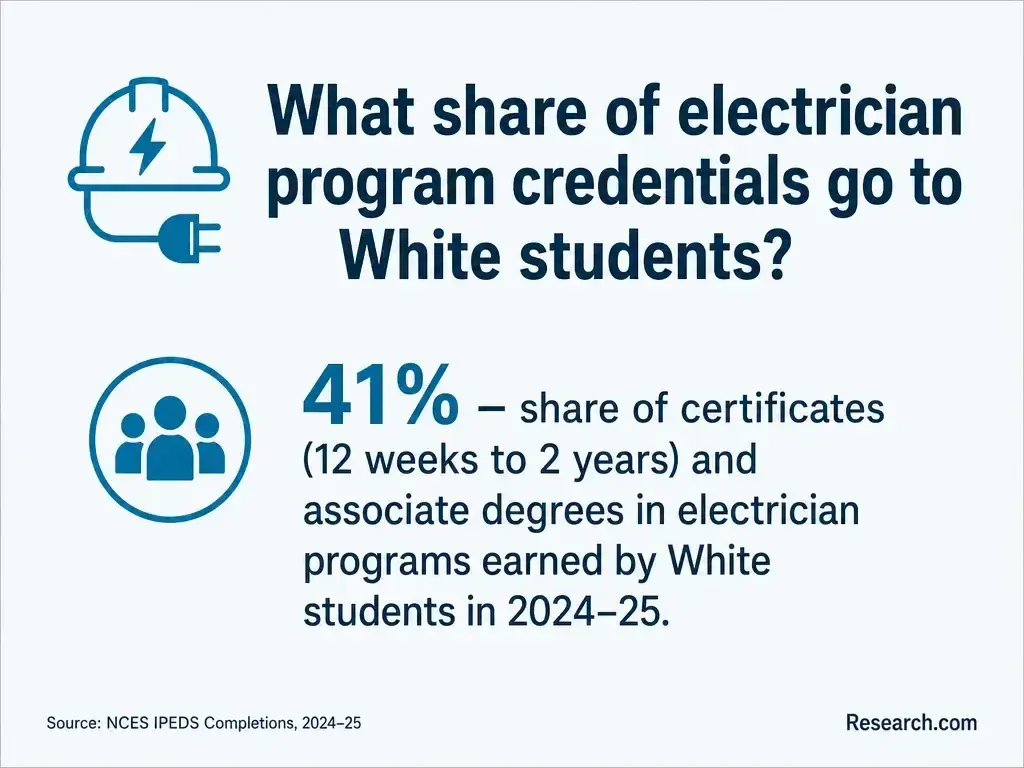
Kentucky regulates electrician, master electrician, and electrical contractor licensing through its Department of Housing, Buildings and Construction. License categories have distinct experience, examination, and other requirements; a school certificate alone is not a license. Confirm the current category relevant to your intended duties and ask how a provider documents classroom training and supervised work for an eventual application (Kentucky Department of Housing, Buildings and Construction).
Florence residents considering Cincinnati-area jobs must also check the rules where they will work. Do not assume a Kentucky license or school credential transfers automatically to Ohio, or that contractor requirements are the same as requirements for an employee. Before enrolling, obtain the current requirements from the relevant licensing authority and have the school or sponsor explain its graduates' route to meeting them.
Start with the job you want - residential installation, commercial construction, or industrial maintenance - and compare training against that goal. A ranking can identify programs to investigate, but it cannot verify your schedule, apprenticeship access, or licensing path for you.
Use these questions when speaking with a school and a potential apprenticeship sponsor:
Red flags include a promise of immediate independent work after graduation, an online-only claim that overlooks practical training, or a price that excludes mandatory tools. Compare completion probability, debt, likely starting pay, and the time it may take to reach higher earnings. Unrelated credentials, including 1 year phd programs online free, do not answer whether an electrical program provides the practice and eligibility your intended job requires.
A realistic progression begins with supervised helper or apprentice work, followed by broader responsibility as experience and applicable licensing requirements are met. With additional experience, an electrician may move toward commercial projects, industrial systems, troubleshooting, supervision, or contracting. Each step has different employer expectations; contracting also raises separate licensing and business obligations (Kentucky Department of Housing, Buildings and Construction).
Choose a starting pathway that matches the destination. Someone targeting building construction should prioritize installation labs and contractor connections; someone targeting plant maintenance should ask about controls, motors, and troubleshooting. Optional industry credentials can strengthen a specialization, but they should not be confused with mandatory occupational licenses.
U.S. electrician employment is projected to grow 9.2% from 2025 to 2035 (U.S. Bureau of Labor Statistics, Employment Projections). That is a national occupation-wide projection, not a forecast of openings for new graduates in Florence. It supports considering the trade, but not paying for a program without checking local hiring and supervised-work access.
Because Florence sits near a state border, search opportunities by actual jobsite and employer - not just by hometown. Compare current entry-level postings with program competencies, ask sponsors about upcoming intakes, and verify the work-state rules before counting an Ohio opportunity in a Kentucky-focused career plan.
Investing in training is a consequential decision. Research.com created this ranking to help readers compare electrician programs with other programs in the same occupation and location, rather than with unrelated schools. The team reviews outcomes, costs, recognition, and student support; only programs reporting completions to IPEDS are eligible. Consequently, an apprenticeship or employer training program absent from the ranking is not necessarily unavailable or inferior.
Best-program scores consider completion and full-time and part-time retention; earnings one year after completion and earnings relative to annual attendance cost; tuition, attendance cost, debt, and federal loan default rates; and institutional accreditation, occupation-relevant recognition, and student support. Occupation-relevant programmatic accreditation or industry recognition accounts for 20%, institutional accreditation for 10%, and student support for 10%. Outcomes, earnings, and costs share the remaining 60% through an entropy-based method that assigns more weight to indicators that vary more across programs. Most-affordable rankings instead score only costs and debt, using entropy-based weights; they do not include accreditation or other quality indicators.
The team used the following sources to check the quality, credibility, and accuracy of the ranking:
The allied-health and dental sources are part of the broader ranking methodology, not electrician licensing authorities. Readers can use the ranking to narrow their choices, then verify current electrical training and licensing details directly. More information appears on the Research.com methodology page.
# 1 position
# 2 position
Not necessarily. A paid apprenticeship can combine related instruction with supervised work. Compare that route with school training, and verify Kentucky's current requirements for the license you ultimately want.
No certificate alone establishes independent-work authority. Check the applicable licensing category, required experience, examinations, and rules for the state where the jobsite is located.
Online lessons can cover theory, but wiring and safety competencies require in-person practice and assessment. Ask where a hybrid provider conducts labs and how students obtain supervised work.
An apprenticeship may be attractive if you can obtain a paid placement. School may help if you need foundational instruction first. Compare entry availability, wages, costs, lab quality, and recognized credit rather than assuming either route always wins.
Confirm its current electrical offering, credential, teaching location, lab schedule, complete costs, and whether an apprenticeship sponsor recognizes the coursework. Offerings and arrangements can change.