
# 1 position
Most Affordable Electrical Technician Schools & Training in Rancho Mirage for 2027
Audited and Verified:
Our Editorial and Data Verification Process
Research.com uses government datasets, official education statistics and primary institutional information to support its career and degree guides. Our review process checks factual accuracy, occupational definitions, source dates and the requirements associated with the credentials discussed.
How This Article Was Fact-Checked
Our editorial team verifies salary estimates, employment projections, education requirements and program information against original data providers and official organizations. Salary figures are checked against the relevant occupational definitions and reporting periods. Information about licensure, accreditation and required in-person training is reviewed separately.
Fact-checked and verified on:

Co-Founder and Chief Data Scientist

Reviewed by Karolina Broda
Fact-Checker and Data Verification
Choosing an affordable electrician program near Rancho Mirage means comparing more than tuition: California's training rules, hands-on experience, and the cost of getting to worksites all affect the investment. The Research.com team of data scientists created the Most Affordable Electrician Trade Schools in Rancho Mirage for 2027 ranking to help students identify programs worth considering. With U.S. electrician employment projected to grow 9.2% from 2025 to 2035, this guide helps career starters and career changers compare training routes, costs, credentials, and realistic next steps (U.S. Bureau of Labor Statistics).
Key findings about electrician degrees in Rancho Mirage
- For California electrician work, check whether a school is approved for electrician-trainee education; a low-cost certificate alone does not replace supervised experience or state certification requirements (California Division of Industrial Relations).
- Compare the entire route to employment - school charges, tools, travel, and forgone earnings - against a paid apprenticeship, not tuition alone. IPEDS-based affordability rankings omit routes without reported program completions.
- The U.S. median electrician wage was $63,190 in May 2025, but that is an occupation-wide figure, not expected starting pay in Rancho Mirage (U.S. Bureau of Labor Statistics).
Table of Contents
- Most Affordable Electrical Technician Schools & Training in Rancho Mirage for 2027
- What can I expect from an electrician trade school program in Rancho Mirage?
- Where can I work with an electrician trade school training in Rancho Mirage?
What can I expect from an electrician trade school program in Rancho Mirage?
Expect instruction in electrical theory, code use, safety, and installation methods alongside supervised practice. A school program can prepare you to seek entry-level work, but California distinguishes completing school from becoming a state-certified electrician. Ask how much time is spent actually wiring circuits, testing faults, and using tools, rather than watching demonstrations.
Near Rancho Mirage, the workable choice may depend on travel to a campus and, later, to jobsites elsewhere in the Coachella Valley. Compare schedules and hands-on access before treating programs listed among the most popular online trade schools as interchangeable with local shop training.
Where can I work with an electrician trade school training in Rancho Mirage?
Electrical contractors install and maintain systems in homes and commercial buildings; maintenance teams also need electrical skills. In the Rancho Mirage area, that makes residential construction, hospitality properties, and building maintenance useful fields to investigate. The distinction matters: an employer may hire a supervised trainee, while independent electrical contracting involves separate California contractor-licensing rules (California Division of Industrial Relations; Contractors State License Board).
Ask prospective employers where their jobsites are. A nearby classroom does not necessarily mean a short commute once fieldwork begins, and travel costs can change which training offer is most affordable.
The national median annual wage for electricians was $63,190 in May 2025 (U.S. Bureau of Labor Statistics). It describes workers across experience levels and locations; it is neither a Rancho Mirage wage nor a starting-wage estimate. Compare actual local trainee offers by hourly rate, paid training time, benefits, and expected travel before using a national median to judge return on investment.
Apprentice or trainee earnings may initially be lower than experienced-worker pay, but paid work can offset training costs. For a meaningful comparison, include what you earn while learning - not just the wage you hope to reach afterward.
A short certificate, a longer college program, and an apprenticeship have different end points. A school credential may mark completion of coursework without marking completion of the supervised work needed for certification. California's general-electrician certification pathway requires substantial documented work experience; verify the current experience and examination rules with the California Division of Industrial Relations before choosing a schedule.
An accelerated associates degree may reduce classroom time if a suitable program and transferable credit are available, but acceleration does not eliminate required practical experience. Ask whether prior electrical coursework can count toward a credential and whether the state or an apprenticeship sponsor will recognize it; those are separate decisions.
Online instruction can suit code reading, calculations, and theory. It cannot by itself demonstrate safe tool use, circuit installation, testing, or supervised work on an electrical jobsite. A hybrid program is useful only if its in-person labs and work arrangements meet your training needs and, when applicable, California's electrician-trainee rules (California Division of Industrial Relations).
Flexible study can help older career changers, including people comparing online college courses for seniors. For electrician entry, however, ask exactly where practical sessions occur, who supervises them, and whether the school is on California's approved list. Do not infer state eligibility from an "online electrician" label.
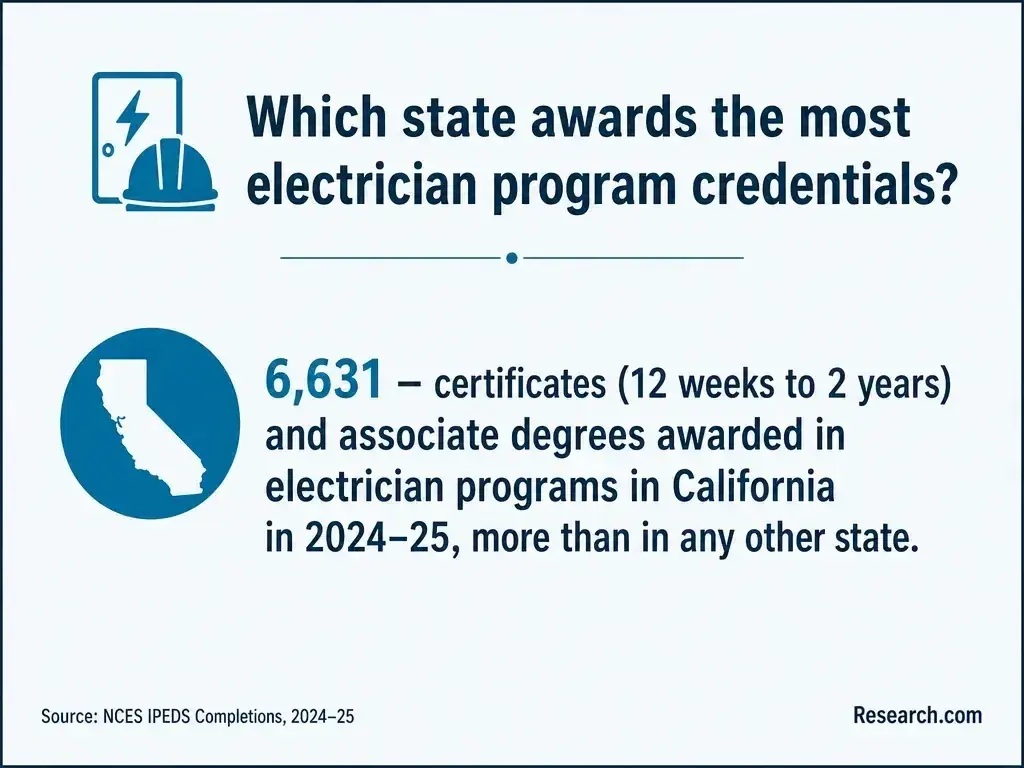
There is no dependable Rancho Mirage-wide average that covers school programs, paid apprenticeships, and employer training on the same basis. Request a current, written cost-of-completion estimate from any program you consider, including San Joaquin Valley College-Rancho Mirage. An advertised tuition figure alone cannot establish what it will cost you to become job-ready.
The table separates costs that are easy to overlook from offsets that can change the value of an offer. Amounts and eligibility depend on the provider and your circumstances.
| Cost or offset | What to confirm |
| School charges | Tuition, mandatory fees, books, materials, and any charges for repeat coursework |
| Job-entry expenses | Tools, protective gear, transportation, and applicable examination or application fees |
| Time and funding | Lost work hours versus apprenticeship wages, employer support, grants, and aid eligibility |
Ask financial-aid staff which grants or federal aid, if any, apply to the specific program; eligibility is not established merely because a school offers aid elsewhere. Also check California workforce-training assistance if you qualify (Federal Student Aid; California Employment Development Department).
Depending on the route, you might earn a school certificate or diploma, an associate degree from an eligible college program, or an apprenticeship completion credential. These document different training and should not be confused with California electrician certification. Even an accredited accelerated bachelor degree online is not a substitute for the state's electrical work and examination requirements.
Before enrolling, request the exact credential name and ask whether the program is approved for California electrician-trainee education. Institutional accreditation concerns the school; state approval concerns the relevant trainee education; apprenticeship registration concerns the work-and-instruction arrangement. None automatically grants occupational certification (California Division of Industrial Relations; U.S. Department of Labor).
Schools and apprenticeship sponsors set their own entry rules, so check the current application rather than assuming one standard. Ask about minimum education, math assessment, identification, schedule availability, and any requirements for entering a worksite. An apprenticeship may have a selection process and an employer or sponsor match; admission to a classroom program does not guarantee one (U.S. Department of Labor).
If your plan is to work as a California electrician trainee, confirm how to register with the California Division of Industrial Relations, maintain enrollment in an approved school, and arrange the required supervision. Clarify that sequence before paying a deposit.
Relevant training covers electrical safety, circuits, blueprint interpretation, code use, wiring methods, measurement, and troubleshooting. Strong practical instruction lets students make connections, use test equipment, diagnose faults, and correct mistakes under supervision. These competencies matter to contractors evaluating a new trainee more than a credential title alone (U.S. Bureau of Labor Statistics).
Compare the lab equipment and assigned practice with the work you want to do - residential installation, commercial systems, or maintenance. Ask whether the curriculum addresses current equipment and code practices, and whether instructors assess individual performance rather than attendance alone.
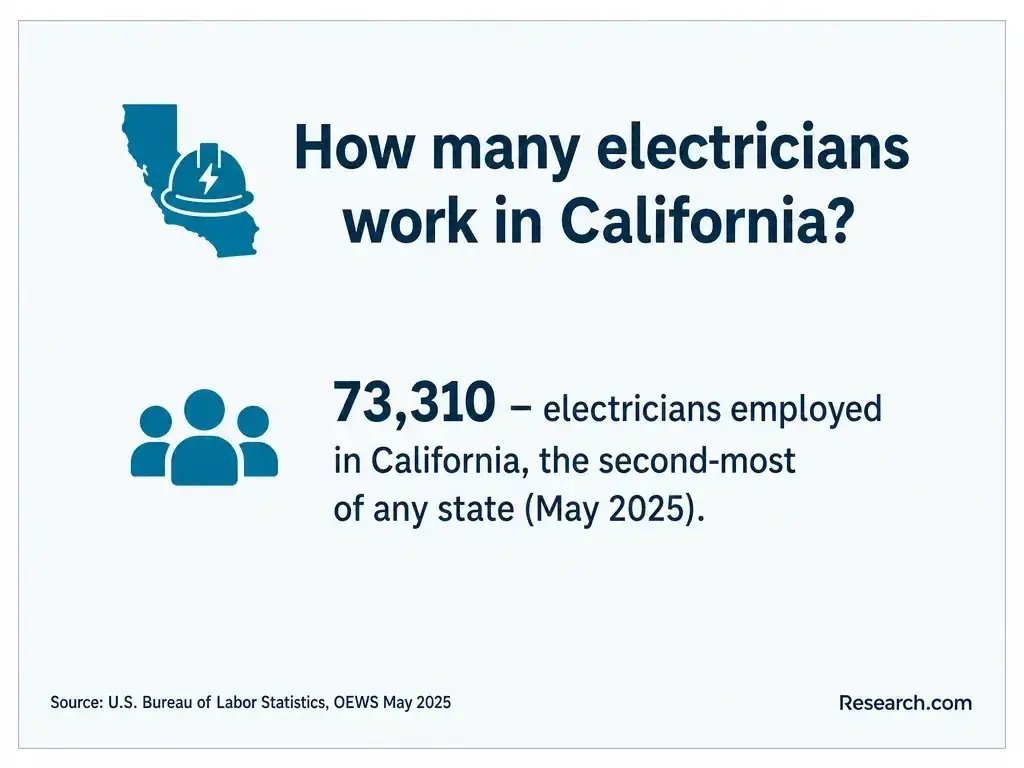
California regulates this work through electrician certification and electrician-trainee registration. A trainee can work under the applicable supervision rules while pursuing qualifying education and experience; a school certificate is not state certification. General-electrician certification involves documented experience and a state examination, so retain work records from the beginning (California Division of Industrial Relations).
If your eventual goal is to contract independently, California's C-10 electrical-contractor license is a separate credential with its own requirements (Contractors State License Board). Ask the state agencies about your intended work before assuming that school completion, an apprenticeship credential, electrician certification, and a contractor license mean the same thing.
Start with the job you want, then compare routes to the required experience. General lists of top schools for college cannot tell you whether a particular electrician program provides California-approved trainee education or useful supervised practice.
Use these checks when speaking with a school and an apprenticeship sponsor; answers should be specific to the program and location:
- Confirm the credential, California approval status where needed, lab access, and how supervised work is arranged.
- Request written total costs and aid terms, then compare them with wages and expenses in a paid apprenticeship.
- Ask for program-specific completion and job-placement information, including how each measure is defined.
- Estimate your likely completion date, commute, debt, and earnings over a realistic time horizon rather than relying on a ranking position.
A major red flag is a promise that an inexpensive or entirely online certificate alone makes you a certified electrician. Verify claims directly with the California Division of Industrial Relations before committing.
Entry-level school training can support a supervised trainee role; a registered apprenticeship combines paid work with related instruction. With the required experience and certification, a worker may pursue broader electrician responsibilities, then specialize in installation, troubleshooting, or building maintenance. Supervisory work or independent contracting brings additional experience and, for contracting, separate licensing considerations (California Division of Industrial Relations; Contractors State License Board).
If you need income while learning and can secure a place, compare paid apprenticeship offers first. If you need foundational practice before applying to employers, a school program may be worthwhile - provided its cost and California eligibility fit your plan.
U.S. electrician employment is projected to grow 9.2% from 2025 to 2035 (U.S. Bureau of Labor Statistics, Employment Projections). That national forecast supports investigating the trade, but it does not measure Rancho Mirage openings or promise a local placement.
For a local decision, compare current trainee vacancies and apprenticeship intake across the Coachella Valley, not just within city limits. Note which employers offer supervised hours and what their jobsites require in travel: access to qualifying work can matter as much as access to a classroom.
Most Affordable Electrical Technician Schools & Training in Rancho Mirage for 2027
Investing in training is an important decision. Research.com designed this ranking to help readers compare electrician programs against other programs in the same occupation and location, using documented cost and debt measures rather than assuming the lowest advertised tuition is the best value. The team reviews source data for consistency and credibility; only programs with completions reported to IPEDS are eligible. That means the ranking does not cover every apprenticeship, employer training route, or provider.
Most affordable rankings use tuition, cost of attendance, median student debt, and federal loan default rates. An entropy-based method assigns more weight to measures that vary more across eligible programs. Accreditation and other quality indicators are not part of the affordability score, so readers should check them separately. Research.com's broader best programs rankings use a different model: 20% for relevant programmatic accreditation or industry recognition, 10% for institutional accreditation, 10% for student support, and 60% for outcomes, earnings, and costs, with entropy-based weighting within that last group.
The ranking draws on the following databases and reference sources. Some cover other trades and are not electrician-specific approval authorities:
- IPEDS database - reported program completions and institutional data.
- National Center for Education Statistics - education data and institutional context.
- College Scorecard database - available cost, debt, and outcome measures.
- Peterson's database - institutional and program information.
- Commission on Accreditation of Allied Health Education Programs (CAAHEP) - occupation-specific recognition checks where applicable; not electrician approval.
- Accrediting Bureau of Health Education Schools (ABHES) - health-school accreditation checks where applicable; not electrician approval.
- Commission on Dental Accreditation (CODA) - dental-program checks where applicable; not electrician approval.
- Dental Assisting National Board (DANB) - dental credential information where applicable; not electrician certification.
- National Center for Construction Education and Research (NCCER) - construction-training and industry-recognition context.
- Apprenticeship.gov Partner Finder - registered-apprenticeship pathway context.
The result is a starting point for a cost comparison, not a substitute for confirming California electrician-trainee eligibility, practical training, and the full amount you would pay. More detail is available on Research.com's methodology page.
# 2 position
San Joaquin Valley College-Rancho Mirage - Electrician.
certificate or diplomaFrequently asked questions about electrician programs in Rancho Mirage
Is trade school required to become an electrician in California?
Not necessarily. A qualifying apprenticeship is another route. If you choose to work as an electrician trainee while attending school, check California's approved-school, registration, and supervision rules (California Division of Industrial Relations).
Is the cheapest listed program automatically the best choice?
No. Compare total costs, practical training, state eligibility, completion prospects, and access to supervised work. An affordability ranking does not score all of those factors.
Can I complete electrician training entirely online?
Online theory can help, but electrical installation and supervised work require in-person practice. Confirm how any hybrid program provides it before enrolling.
Will a school certificate make me a certified electrician?
No. California electrician certification has separate experience and examination requirements (California Division of Industrial Relations).
Should I choose a school program or a paid apprenticeship?
Choose based on admission access, how you will earn while training, classroom and hands-on instruction, and your intended credential. A paid apprenticeship may lower your net cost; a suitable school program may help you build entry skills before seeking supervised work.
- U.S. Bureau of Labor Statistics - Electricians
Used to verify salary, employment outlook, and typical education requirements.
https://www.bls.gov/ooh/construction-and-extraction/electricians.htm - NCCER - Accredited Training
Used to verify programmatic accreditation or industry recognition of programs.
https://www.nccer.org/ - O*NET OnLine - Electricians
Used to verify common responsibilities, skills, work settings, and education expectations.
https://www.onetonline.org/link/summary/47-2111.00 - San Joaquin Valley College-Rancho Mirage - official website
Official school website (programs, tuition, admissions).
https://www.sjvc.edu/