# 1 position


Audited and Verified:
Our Editorial and Data Verification Process
Research.com uses government datasets, official education statistics and primary institutional information to support its career and degree guides. Our review process checks factual accuracy, occupational definitions, source dates and the requirements associated with the credentials discussed.
How This Article Was Fact-Checked
Our editorial team verifies salary estimates, employment projections, education requirements and program information against original data providers and official organizations. Salary figures are checked against the relevant occupational definitions and reporting periods. Information about licensure, accreditation and required in-person training is reviewed separately.
Fact-checked and verified on:

Co-Founder and Chief Data Scientist

Reviewed by Karolina Broda
Fact-Checker and Data Verification
Choosing electrician training near Española means comparing more than tuition: a short classroom program and a paid apprenticeship may lead to very different levels of job readiness. The U.S. Bureau of Labor Statistics projects 9.2% growth in electrician employment nationwide from 2025 to 2035. This guide explains local training routes, New Mexico licensing, costs, and career prospects. It will also feature the Best Electrician Trade Schools in Espanola for 2027 ranking, created by the Research.com team of data scientists to help students make an informed choice about programs worth considering.
Expect a mix of electrical theory and practical work, but verify the mix before enrolling. A classroom-based program may introduce circuits, wiring methods, blueprint reading, testing, and safety in a lab. An apprenticeship adds supervised work on actual installations and repairs, alongside related technical instruction. The two routes are not interchangeable simply because both teach electrical fundamentals.
For a reader based in Española, Northern New Mexico College is a local institution to investigate for current electrical-trades offerings, campus location, lab access, and schedule. Do not assume a listed program runs every term or places students with an employer; request its current catalog and ask who arranges work-based training. The most useful question is whether its instruction and documented experience fit the New Mexico electrical classification you ultimately want.
The main training routes differ in what they deliver. This comparison helps identify which option merits a closer look before you request prices or apply.
| Route | What it typically provides | Best fit and key limitation |
| Pre-apprenticeship or short certificate | Introductory safety, tools, and electrical skills; may include labs | Useful for exploring the trade or strengthening an application; does not replace required supervised experience |
| Longer college credential | More extensive technical instruction and possibly an associate degree | Useful when you want broader coursework; confirm its added time and cost advance your licensing plan |
| Registered apprenticeship | Related instruction plus paid, supervised work | Strong fit for earning while gaining experience; entry depends on sponsor openings and selection rules |
| Direct employer entry | On-the-job learning that varies by employer | May get you working sooner; verify how experience is supervised and documented for licensing |
Source: U.S. Department of Labor apprenticeship guidance and New Mexico Construction Industries Division licensing guidance; individual program arrangements vary.
Electricians work for electrical contractors and in building construction, maintenance, and industrial settings, according to the U.S. Bureau of Labor Statistics. Around Española, the practical distinction is whether you can reach the jobs and supervised worksites needed to build experience. Ask prospective employers and apprenticeship sponsors where assignments occur; a program nearby does not necessarily mean every workday will be nearby.
Residential wiring can build experience with homes and renovations, while commercial or industrial assignments may expose trainees to different equipment and installation methods. Choose a sponsor or employer whose work aligns with the New Mexico license classification you intend to pursue. A classroom credential alone does not authorize independent electrical contracting.
The U.S. Bureau of Labor Statistics reports a $63,190 national median annual wage for electricians in May 2025. A median describes workers across experience levels and locations, not what a newly trained worker in Española will receive. Compare actual local apprentice and entry-level job offers, including benefits, expected hours, travel, and any wage increases tied to training milestones.
Pay comparisons should also account for when earnings begin: an apprentice may earn wages during training, whereas a full-time student may postpone work. If you are weighing career returns against what master's degrees make the most money, keep the comparison separate: electrician entry depends chiefly on practical experience and New Mexico credentialing, not that educational route.
A short introductory program can finish sooner than an apprenticeship, but finishing school is not the same as qualifying to work independently. Program calendars and contact hours vary; get the current schedule in writing, including required lab sessions. The U.S. Department of Labor describes registered apprenticeships as combining paid on-the-job learning with related instruction, with duration set by the particular program.
New Mexico's Construction Industries Division sets experience requirements by journeyman classification. For example, its general electrical journeyman classification, EE-98J, calls for four years of qualifying experience. Ask the division and a prospective sponsor how the work will be recorded and whether any school instruction can count toward the classification you seek; do not assume classroom hours automatically shorten the experience requirement. An accelerated school timetable, unlike an best accelerated bachelor's degree online search, cannot by itself accelerate documented electrical work experience.
Online instruction can be useful for code concepts, calculations, and some safety theory. Wiring, testing, tool handling, troubleshooting, and supervised jobsite work require in-person practice. A hybrid option makes sense if it reduces travel from Española and provides accessible labs and a credible plan for work-based experience. An entirely online course should not be treated as a substitute for those components or as proof of licensing eligibility.
Check the actual meeting sites and frequency before enrolling: a convenient online lecture can still come with a long commute to labs. Resources about non profit regionally accredited online colleges address a different comparison; an institution's accreditation alone cannot demonstrate that remote electrical training meets New Mexico experience or examination requirements. New Mexico Construction Industries Division rules, rather than delivery format, govern occupational eligibility.
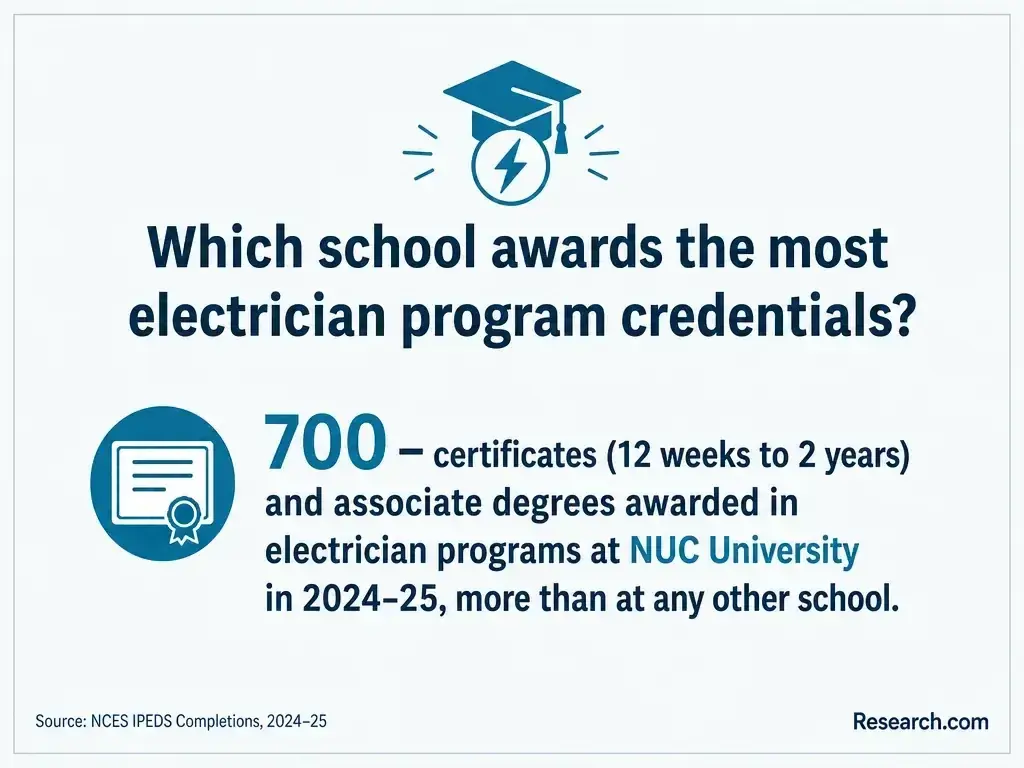
There is no defensible single average for Española's electrician training routes: a college program charges tuition and fees, while a paid apprenticeship has a different cost-and-income structure. Request a current, itemized quote rather than using an unrelated institution-wide tuition figure as the price of an electrical program.
For a meaningful comparison, total tuition and mandatory fees; books and code materials; tools, testing equipment, and personal protective equipment; examination and application charges; and travel to labs and worksites. Add earnings you would give up to attend, then account for grants, eligible aid, employer-paid supplies, and apprenticeship wages. Federal Student Aid notes that eligibility for federal aid depends on the institution and program, so verify the specific offering. A trade-training budget should not be inferred from pages about best college courses for older adults online, which address different costs and goals.
For return on investment, compare the routes over the same time horizon: consider your current earnings, likely time to completion, chance of finishing, borrowing cost, and the timing of post-training earnings. A cheaper course with no viable path to supervised work may be a worse investment than a costlier option that helps you enter an apprenticeship; neither outcome is guaranteed.
The award depends on the route. A school may award a certificate, diploma, or associate degree; a registered apprenticeship has its own completion credential. None is automatically a New Mexico journeyman certificate or contractor license. Before applying, obtain the exact credential name and ask whether the instruction or documented work can support your intended licensing application. New Mexico's Construction Industries Division, not the name on a school award, determines occupational credential requirements.
Do not confuse a stack of short electrical certificates with dual-degree programs: what matters here is whether each additional credential contributes useful skills, recognized instruction, or verifiable experience toward your trade goal.
Requirements differ among a college course, a pre-apprenticeship, and an employer or registered-apprenticeship opening. Ask each provider about educational prerequisites, math assessment, minimum age, application dates, identification and work-eligibility documents, and any jobsite-related screening. Do not assume that admission to a classroom program includes admission to an apprenticeship or a job.
If you already have electrical coursework or supervised experience, request a written review of prior learning or advanced standing before paying for repeated instruction. Ask both the provider and the New Mexico Construction Industries Division what documentation would be needed for any licensing-related experience claim.
Useful entry training covers electrical calculations, circuits, wiring methods, drawings, testing instruments, safe tool use, and applicable code practices. The U.S. Bureau of Labor Statistics describes electricians as installing, maintaining, and repairing electrical power, communications, lighting, and control systems. A strong lab lets students practice measuring, assembling, testing, finding faults, and correcting mistakes under supervision - not merely watching demonstrations.
Ask for the number of supervised lab hours, the equipment students personally use, and how instructors assess safe work. Also ask how the program teaches communication and documentation: an apprentice must be able to explain a fault, follow instructions, and record work accurately on a jobsite.
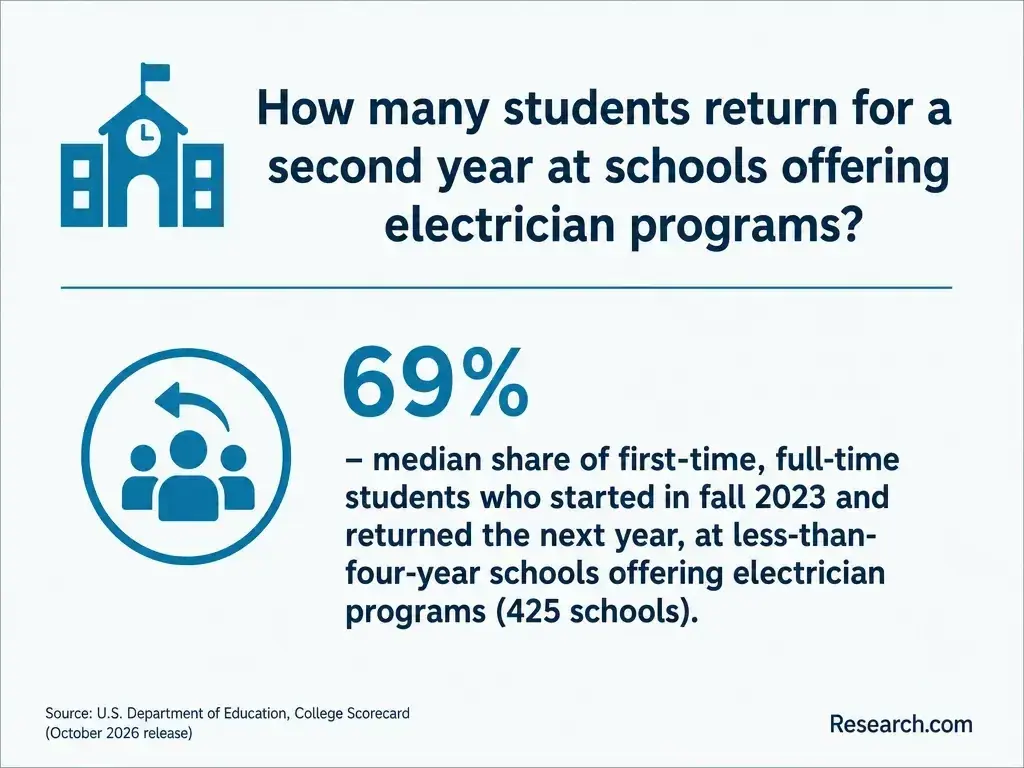
Yes, New Mexico regulates electrical work, but the authorization needed depends on the work and your role. Its Construction Industries Division administers electrical journeyman classifications and contractor licensing. A trainee can work under appropriate supervision while building qualifying experience; completing a school program does not itself make someone a licensed journeyman or authorize them to operate an electrical contracting business. Classification-specific experience, examination, and application rules must be checked with the division before choosing a route.
Keep four separate checks in view: institutional accreditation concerns the school; state authorization concerns its permission to operate; apprenticeship registration concerns a particular work-and-instruction program; and occupational licensing concerns permission to perform regulated work. An industry training certificate, including an NCCER-related credential where offered, may demonstrate learning but does not replace New Mexico licensure. Source: New Mexico Construction Industries Division and U.S. Department of Labor.
The best option is the one that gets you the right instruction and a workable route to supervised employment at a total cost you can manage. Use the ranking to identify programs for closer review, not as a substitute for checking your intended New Mexico classification. Before committing, put these questions to the school and any apprenticeship sponsor:
Be cautious of claims that a certificate alone makes you a licensed electrician, that online coursework replaces jobsite experience, or that a national wage figure predicts your starting pay. Accreditation and student support are useful quality signals, but neither substitutes for hands-on access, employer connections, and licensing alignment.
A typical path begins with entry-level, supervised electrical work, progresses through documented experience and any required examination toward a New Mexico journeyman classification, and may later include specialized work, supervision, or contracting. Residential, commercial, maintenance, and industrial assignments call for overlapping fundamentals but offer different equipment and work conditions. The U.S. Bureau of Labor Statistics notes that electricians may advance to supervisory positions; independent contracting brings separate licensing and business responsibilities.
Choose early training for the work you can realistically access, not just the job title you hope to hold later. If your aim is independent contracting, ask about the additional New Mexico contractor requirements rather than treating a school certificate as the final step.
The U.S. Bureau of Labor Statistics projects 9.2% growth in U.S. electrician employment from 2025 to 2035. That national projection signals continued demand for the occupation, but it does not measure openings in Española or guarantee a local apprenticeship seat. For a local decision, compare current sponsor openings and employer vacancies with the program's schedule and the distance you can travel for work.
Broad demand is most useful if you can obtain the supervised experience that moves you toward your chosen classification. If nearby opportunities are limited, ask whether a sponsor serves a wider commuting area before paying for training that depends on a placement you cannot reach.
Investing in electrician training is an important decision, so Research.com evaluates programs against others in the same occupation and location rather than against unrelated schools. Its best-program rankings consider student outcomes; earnings and return on investment; costs and debt; and quality and recognition. Programmatic accreditation or relevant industry recognition accounts for 20% of the score, institutional accreditation for 10%, and student support for 10%. The remaining 60% covers outcomes, earnings, and costs, with weights distributed through an entropy-based method that gives more weight to indicators that vary more across programs.
Only programs reporting completions to IPEDS are eligible for this ranking. That improves comparability but means an apprenticeship or employer training program can be a worthwhile local option without appearing in the results. Research.com also produces most-affordable rankings based only on tuition, cost of attendance, student debt, and federal loan default rates; accreditation and other quality indicators are not part of that affordability score. The team uses the following sources to check the quality and credibility of its rankings, applying occupation-specific information where relevant:
The ranking can narrow a reader's school search, but it cannot establish that a particular program satisfies New Mexico licensing requirements or offers an apprenticeship placement. For more detail on how rankings are created, see Research.com's methodology.
# 1 position
# 2 position
Not necessarily. A registered apprenticeship or suitable supervised employer training may provide a route into the trade. Confirm the instruction, documented experience, and examination rules for your intended classification with the New Mexico Construction Industries Division.
It may be if you need wages and qualifying jobsite experience now. A school certificate may help you prepare or compete for entry, but ask whether it leads to a sponsor and whether its cost adds value to your plan.
Online coursework can cover some theory, but it does not replace hands-on work or New Mexico's classification-specific requirements. Verify labs and supervised experience before enrolling.
No. A school credential is distinct from a New Mexico occupational credential or contractor license. The permission required depends on the work and your role, according to the New Mexico Construction Industries Division.
Ask which electrical offerings are currently available, where labs meet, what the complete price includes, what credential is awarded, and whether the program connects students to documented supervised work.