# 1 position


Audited and Verified:
Our Editorial and Data Verification Process
Research.com uses government datasets, official education statistics and primary institutional information to support its career and degree guides. Our review process checks factual accuracy, occupational definitions, source dates and the requirements associated with the credentials discussed.
How This Article Was Fact-Checked
Our editorial team verifies salary estimates, employment projections, education requirements and program information against original data providers and official organizations. Salary figures are checked against the relevant occupational definitions and reporting periods. Information about licensure, accreditation and required in-person training is reviewed separately.
Fact-checked and verified on:

Co-Founder and Chief Data Scientist

Reviewed by Karolina Broda
Fact-Checker and Data Verification
Choosing electrician training in Marion means deciding whether to pay for classroom preparation, enter a paid apprenticeship, or combine the two. That decision matters: the U.S. Bureau of Labor Statistics projects electrician employment to grow 9.2% nationally from 2025 to 2035. This guide compares credentials, hands-on training, costs, and North Carolina licensing rules. It also accompanies the Best Electrician Trade Schools in Marion for 2027 ranking, created by the Research.com team of data scientists to help students identify electrician trade schools and training programs worth considering.
An electrician training program teaches you to install, test, troubleshoot, and repair electrical systems safely. Expect instruction in electrical theory and code alongside in-person practice with wiring, conduit, circuits, drawings, and test instruments. The important distinction is school lab practice versus supervised job experience: both develop skills, but they are not interchangeable when an employer or licensing authority asks for documented work experience.
In Marion, McDowell Technical Community College is a school option to investigate; apprenticeships and employer-sponsored training are alternatives, not lesser versions of the same credential. Ask what the current program awards, how much time is spent in a lab, whether employers provide work placements, and whether coursework can be applied toward an apprenticeship. Choose school first if you need structured fundamentals before seeking work; prioritize an apprenticeship if you can secure a suitable paid position and want to learn while earning.
Training can support applications for entry-level work with electrical contractors and employers maintaining commercial, industrial, or institutional facilities. Around Marion, the practical question is not just whether an employer hires electricians, but whether it will hire and supervise new trainees. Construction installation and facility maintenance also develop different skills, so look for work placements aligned with your preferred setting (U.S. Bureau of Labor Statistics, Occupational Outlook Handbook).
Ask prospective sponsors which jobsites are reachable from home and whether work is available consistently enough to build experience. A longer commute can change the value of an otherwise inexpensive program or paid apprenticeship. If your goal is eventually to contract independently, select work that helps you document experience relevant to North Carolina's licensing requirements.
The U.S. median annual wage for electricians was $63,190 in May 2025 (U.S. Bureau of Labor Statistics). That figure combines workers at different experience levels across the country; it is neither a Marion wage nor a reasonable promise of first-job pay. Apprentices typically earn while training, with pay governed by the sponsor's terms rather than the national occupational median.
For a useful local comparison, request current apprentice and newly qualified worker pay ranges from Marion-area employers or apprenticeship sponsors. Compare those offers with hours worked, benefits, travel costs, and the time needed to gain skills. A program's return on investment depends on those earnings and its price, completion likelihood, debt, and time away from paid work - not on the occupational median alone.
A short certificate may teach foundational skills sooner than a diploma or associate degree, but completion does not make someone an independently practicing electrician. Registered apprenticeships generally combine related instruction with extensive paid, supervised work over multiple years; exact schedules and required hours depend on the registered sponsor (U.S. Department of Labor, Apprenticeship.gov). Ask providers for their published clock or credit hours and the portion spent in labs or on jobsites.
Be wary of comparing electrician preparation with top 6-month online associate degree programs on speed alone. Wiring and troubleshooting require physical practice, and a faster classroom credential does not erase the time needed to develop jobsite competence. Part-time study may preserve income, while a full-time schedule may get you ready to apply for entry-level work sooner.
Online coursework can be useful for electrical theory, calculations, drawings, and some code study. It cannot replace supervised practice installing circuits, using tools, testing equipment, or working safely on a jobsite. A hybrid program is useful only if its in-person labs are accessible from Marion and its schedule fits any apprenticeship or job you hold.
When reviewing accredited non-profit online colleges, separate an institution's accreditation from the electrician program's actual practical training. Ask where hands-on assessments occur and who supervises them. A fully online credential may improve your theory knowledge, but do not assume it supplies the experience an employer needs or satisfies North Carolina electrical contractor licensing requirements.
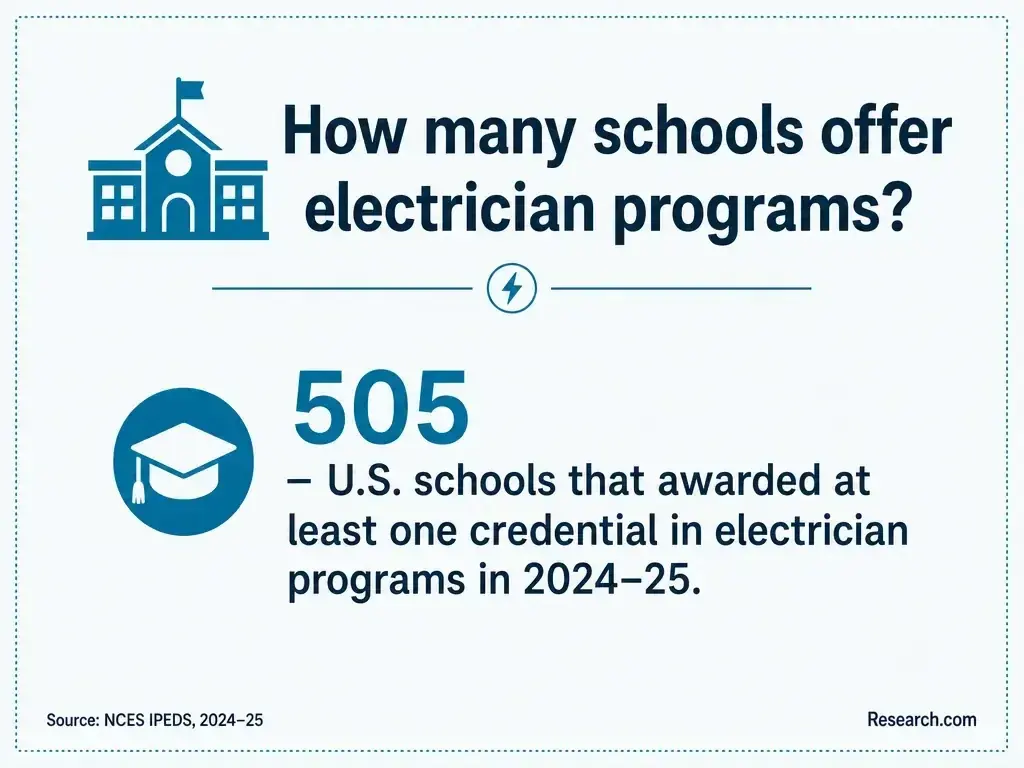
There is no single reliable Marion-wide price for electrician training: a community college certificate, a longer academic program, and a paid apprenticeship have different cost structures. Get a current, itemized quote rather than comparing advertised tuition alone. Your estimate should include mandatory fees, books, tools, testing equipment, safety gear, materials, transportation to labs or jobsites, and any applicable exam or application charges.
Subtract grants, eligible aid, or employer-paid costs, then consider wages you would give up to attend. Federal aid eligibility depends on the institution and particular program, not simply its trade-school label (U.S. Department of Education, Federal Student Aid). Ask McDowell Technical Community College about current program eligibility and ask apprenticeship sponsors what they pay for instruction and equipment. A paid route may lower borrowing, but only if you can obtain a position and manage its schedule.
The credential depends on the pathway: a school may award a certificate, diploma, or associate degree; a registered apprenticeship documents completion of its structured training. An industry credential, if offered, is separate from both the school award and a North Carolina electrical contractor license. Confirm the exact credential in the current program catalog or apprenticeship agreement before enrolling.
If you are comparing what is the easiest certification to get that pay well, remember that electrician work is not entered by collecting a quick online certificate. Employers need evidence that you can work safely and perform practical tasks. Ask whether the credential is recognized by local hiring employers and whether completed coursework can count toward further training; obtain any advanced-standing decision in writing.
School and apprenticeship entry requirements are different. A school may ask for an application and placement information, while an apprenticeship sponsor may also assess math readiness, availability, and ability to travel to worksites. Obtain the current requirements directly from the provider; admission to a school program does not secure an apprenticeship or a job.
Accreditation is another separate check. Lists of top online schools with national accreditation do not establish that a particular electrician program provides hands-on instruction or meets a contractor licensing pathway. Verify institutional accreditation with the accreditor or U.S. Department of Education, confirm any claimed industry recognition with its issuing body, and check North Carolina licensing questions with the State Board of Examiners of Electrical Contractors.
Useful electrician instruction connects calculations to physical work: reading plans, selecting materials, installing wiring methods, measuring circuits, finding faults, and following safety procedures. Code instruction matters because an installation must meet applicable requirements, not merely function when switched on (U.S. Bureau of Labor Statistics, Occupational Outlook Handbook).
Compare what students actually do in each lab with what they only watch or read. Ask whether you will bend conduit, terminate conductors, use meters, diagnose deliberately introduced faults, and receive feedback on safe work practices. If you want industrial maintenance rather than construction installation, ask how much instruction covers motors and controls. Similar credential names do not mean similar equipment, practice time, or job preparation.
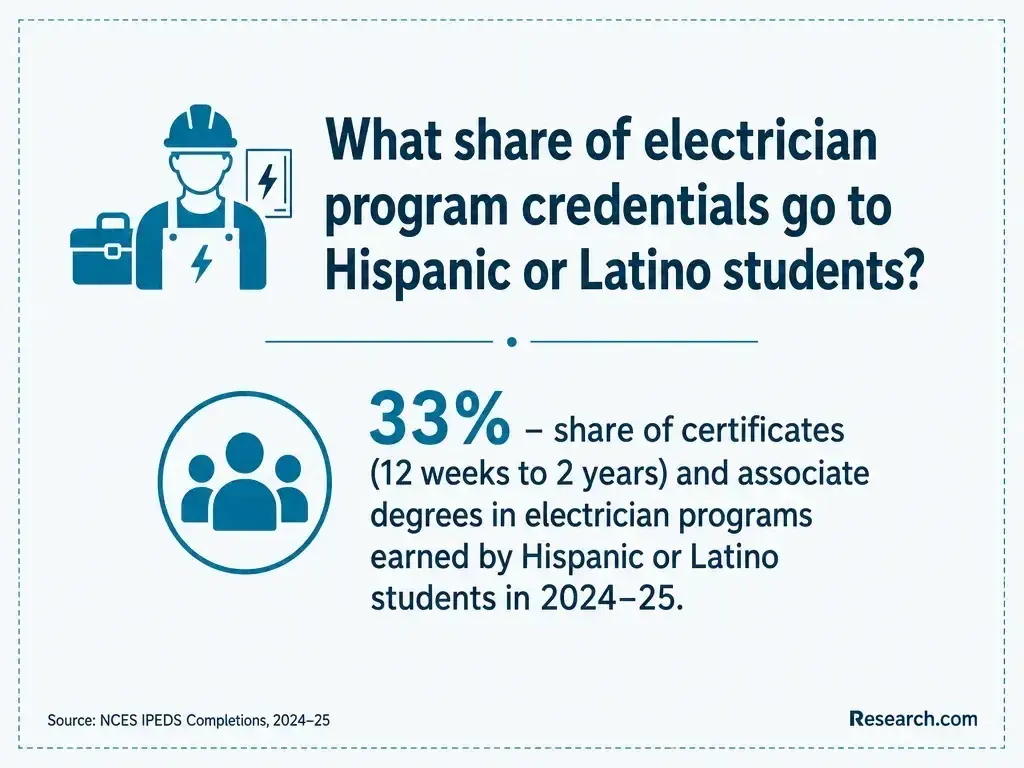
North Carolina's State Board of Examiners of Electrical Contractors licenses electrical contracting, with classifications and eligibility rules that depend on the work and license sought. A school credential, institutional accreditation, industry certification, and apprenticeship completion are distinct from that occupational license. Do not assume graduation alone qualifies you to take an examination or operate a contracting business (North Carolina State Board of Examiners of Electrical Contractors).
You can pursue supervised employment before becoming a licensed contractor, subject to the rules governing the work and your employer. If independent contracting is your goal, review the Board's current classification, experience, examination, and application requirements before choosing a program. Ask how the school or sponsor helps you document qualifying work; get a Board determination on uncertain eligibility rather than relying on a recruiting claim.
The best option is the one that gets you from your current skill level to the work you want at a cost and schedule you can sustain. Start with the job - construction installation, maintenance, or eventual contracting - then compare school, paid apprenticeship, and employer-sponsored routes against it. A ranking is a useful shortlist, not evidence that a program fits every student.
Ask each provider for its credential, total price, practical-training schedule, employer connections, completion information, and whether prior learning or coursework can receive documented credit. Check the trip to both campus and worksites. A red flag is a claim that an online certificate alone makes you licensed or job-ready. Likewise, a comparison of the cheapest doctorate degree online has no bearing on electrician-training value: compare only pathways that lead toward the same occupation and include foregone earnings and likely debt.
A common progression is trainee or apprentice, then more independent installation or maintenance work as practical competence grows. Experienced electricians may move toward troubleshooting, crew leadership, specialized systems, or electrical contracting. Those directions require different experience; some advanced roles may call for employer training, additional credentials, or a North Carolina contractor license (U.S. Bureau of Labor Statistics, Occupational Outlook Handbook; North Carolina State Board of Examiners of Electrical Contractors).
Choose early experience deliberately. Construction work can build installation skills, while facility maintenance offers recurring exposure to the systems at one site. If self-employment is the long-term goal, keep records of supervised work and check licensing eligibility before paying for training marketed as a shortcut to running a business.
The U.S. Bureau of Labor Statistics projects 9.2% growth in electrician employment from 2025 to 2035. This national projection supports considering the trade, but it does not predict the number of openings in Marion or guarantee a position after training. Local hiring depends on contractors' projects, maintenance needs, and whether employers are taking on new trainees.
Before enrolling, check current vacancies and speak with apprenticeship sponsors about entry opportunities and work locations. If nearby employers rarely take beginners, a program with strong placement relationships - or a wider commuting radius - may be more valuable than a faster credential without a route to supervised work.
Investing in training is a consequential decision, so Research.com evaluates programs against others in the same occupation and location rather than against unrelated schools nationwide. The ranking includes only programs with completions reported to IPEDS. That makes comparisons more consistent, but it also means a registered apprenticeship or employer program may be a strong local option without appearing in the ranking.
Best-program scores consider student outcomes; earnings and return on investment; costs and debt; and quality and recognition. Programmatic accreditation or relevant industry recognition accounts for 20%, institutional accreditation for 10%, and student support for 10%. The remaining 60% covers outcomes, earnings, and costs, with an entropy-based method giving more weight to indicators that vary more across programs. Most-affordable-program rankings instead score tuition, attendance cost, debt, and federal loan default rates using entropy-based weights; accreditation and other quality indicators are not part of that score.
The Research.com team uses the following data sources to check program information and support credible comparisons. Some occupation-specific sources in the broader methodology concern healthcare rather than electrician training and should not be interpreted as electrician approvals:
Use the ranking to narrow your choices, then confirm current prices, lab access, outcomes, and employer connections directly with each provider. Read more about Research.com's ranking methodology.
# 1 position
# 2 position
Not necessarily. Paid apprenticeship and employer-supervised training are alternatives. Trade school can help you build fundamentals, but compare each route's practical experience and employer access.
No. A school certificate does not itself grant a North Carolina electrical contractor license. Check the State Board of Examiners of Electrical Contractors' current rules for the work you intend to perform.
Theory can be studied online, but installation, testing, and jobsite safety require in-person practice. Confirm where and how a hybrid program provides that practice.
It may be if you can secure a paid position and want supervised work from the start. School may be a better first step if you need foundational skills or cannot yet obtain an apprenticeship.
Request an itemized total cost, the exact credential, lab hours and equipment used, documented employer connections, and any written policy on applying coursework toward an apprenticeship.