# 1 position
Gaston College - Electrician.
associate

Audited and Verified:
Our Editorial and Data Verification Process
Research.com uses government datasets, official education statistics and primary institutional information to support its career and degree guides. Our review process checks factual accuracy, occupational definitions, source dates and the requirements associated with the credentials discussed.
How This Article Was Fact-Checked
Our editorial team verifies salary estimates, employment projections, education requirements and program information against original data providers and official organizations. Salary figures are checked against the relevant occupational definitions and reporting periods. Information about licensure, accreditation and required in-person training is reviewed separately.
Fact-checked and verified on:

Co-Founder and Chief Data Scientist

Reviewed by Karolina Broda
Fact-Checker and Data Verification
Choosing electrician training in Dallas means deciding whether to pay for classroom preparation, apply for a paid apprenticeship, or combine the two. The U.S. Bureau of Labor Statistics projects national electrician employment to grow 9.2% from 2025 to 2035, but demand alone does not make every program a good investment. This guide explains costs, hands-on training, Texas licensing, and career prospects. It also features a Best Electrician Trade Schools in Dallas for 2027 ranking created by the Research.com team of data scientists to help you identify programs worth considering.
Expect instruction in electrical theory, wiring methods, blueprint reading, calculations, testing, and jobsite safety, followed by supervised practice. A strong program makes you use tools and instruments to install and troubleshoot circuits, not merely watch demonstrations. Before enrolling, request the published curriculum and ask how much instruction takes place in a lab and who supervises it.
The routes differ most in how they connect learning to paid work. This comparison helps identify the pathway that fits your finances and readiness:
| Pathway | Typical credential and experience | Best fit |
| Short pre-apprenticeship or certificate | School or training-provider credential; introductory labs, with job placement or apprenticeship entry dependent on the provider | Someone who needs foundational skills before applying for supervised work |
| Community-college or career-school program | Certificate, diploma, or, where offered, associate degree; classroom and lab instruction | Someone seeking structured preparation, provided the cost and work connection justify it |
| Registered or employer-sponsored apprenticeship | Structured instruction and documented, supervised work experience; wages during employment | Someone ready to compete for a training position and learn primarily on the job |
Not every school program arranges an apprenticeship, and an apprenticeship is not simply a school certificate with a different name. Ask whether a provider offers employer interviews, documented work hours, or an actual apprenticeship agreement. The broader question behind what is trade school jobs is especially practical here: which credential and experience will let you perform the work you want?
Dallas-area opportunities include electrical contractors serving residential construction and renovations, commercial buildings, industrial facilities, and building-maintenance operations. Worksites and shifts differ: a construction apprentice may travel among projects, while a maintenance worker may stay at one facility. The U.S. Bureau of Labor Statistics describes electricians as installing, maintaining, and repairing electrical power, communications, lighting, and control systems.
For a student, that variety makes employer connections more useful than a broad "job placement" claim. Ask which contractors hire trainees, whether work is available in the specialty you want, and whether the commute reaches both the classroom and changing jobsites. Union-sponsored training associated with IBEW Local 20 and nonunion contractor apprenticeships are distinct routes worth comparing; admission and openings depend on the sponsor.
A verified national benchmark is the $63,190 median annual wage for electricians in May 2025 (U.S. Bureau of Labor Statistics). It is not a Dallas wage quote, an apprentice rate, or a promise to new completers. Pay varies with experience, specialty, employer, overtime, and whether work is steady.
For a local decision, compare current Dallas-Fort Worth-Arlington electrician wages in the Bureau of Labor Statistics Occupational Employment and Wage Statistics series with written apprentice wage schedules from sponsors. Ask how wages progress during training and whether benefits begin immediately. Those figures are more useful for budgeting than applying the national median to your first year.
A preparatory certificate can be much shorter than the route to independent journeyman work. Program schedules vary by provider and attendance intensity; ask for the exact clock or credit hours, lab hours, calendar length, and evening availability. A longer school program is not automatically a shorter licensing route.
Texas requires 8,000 hours of supervised on-the-job experience for journeyman electrician licensure (Texas Department of Licensing and Regulation). Apprenticeships typically combine work with related classroom instruction over multiple years, but their schedules and required instructional hours depend on the registered sponsor. Before paying for school, ask whether any prior learning can reduce coursework and whether an apprenticeship sponsor will grant advanced standing. Do not assume school lab hours count as supervised employment hours.
Online study can work for code concepts, calculations, and blueprint interpretation. It cannot substitute for safely bending conduit, making connections, taking measurements, or troubleshooting energized-equipment scenarios under appropriate supervision. Hybrid training makes sense when its in-person labs and worksite arrangements are accessible from your home and job.
Compare formats by asking where practical assessments occur and how often you must travel. A fully online theory course may be useful preparation, but do not assume it provides the hands-on competence or supervised employment Texas requires for licensing (Texas Department of Licensing and Regulation). When comparing cheap accredited online colleges, check the specific electrician curriculum rather than treating online affordability as proof of a complete occupational pathway.
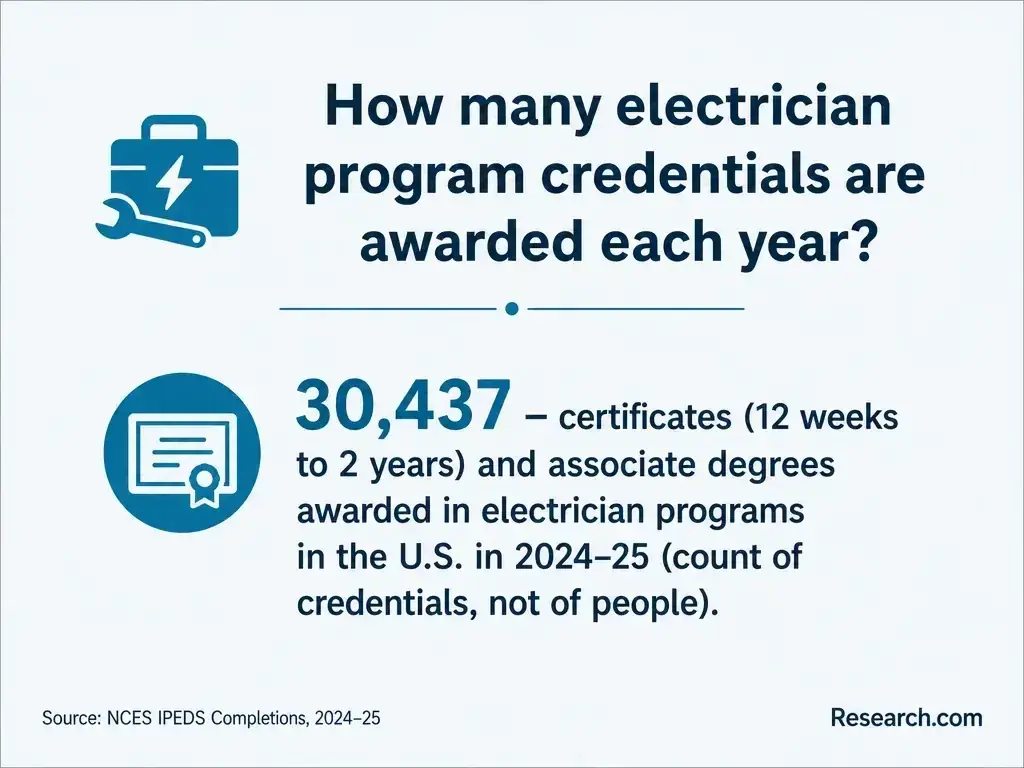
There is no single reliable Dallas-wide price that covers short certificates, longer college programs, private career-school training, and paid apprenticeships on the same basis. Request each provider's current written cost of attendance rather than treating advertised tuition as the amount needed to become job-ready.
Compare these cost categories alongside any wages or assistance you expect to receive:
Confirm eligibility before counting on aid: federal student aid depends on the institution, program, and student meeting applicable rules (Federal Student Aid). A lower-priced course can be expensive if it delays paid work; a paid apprenticeship can reduce upfront cost but may be competitive to enter. Readers exploring medical certifications that pay well should likewise compare total entry costs rather than advertised tuition alone.
The answer depends on the provider: a school may award a completion certificate, diploma, or associate degree, while a registered apprenticeship documents completion of its occupational training program. An NCCER-related credential, if offered, signals training in a construction curriculum; it is not a Texas electrician license (National Center for Construction Education and Research; Texas Department of Licensing and Regulation).
Distinguish three separate checks. Institutional accreditation concerns the school; state school authorization concerns permission to operate, with Texas Workforce Commission oversight relevant to covered career schools; and occupational licensure is administered by the Texas Department of Licensing and Regulation. Ask the provider what its credential says, who recognizes it, and whether any coursework transfers or earns apprenticeship advanced standing. Accreditation alone answers none of those licensing or transfer questions.
Schools set their own entry policies, so verify age, prior-education, placement, and prerequisite requirements directly. Apprenticeship sponsors set separate selection rules and may assess math skills, interview applicants, and require candidates to meet worksite or employer conditions. Acceptance to a school does not secure an apprenticeship position.
Texas offers an apprentice electrician license for people entering supervised electrical work; the Texas Department of Licensing and Regulation does not require prior experience for that license. Before applying, ask a prospective employer or sponsor who will supervise you and which license you need for the work assigned. If you already have construction experience, ask the sponsor how it evaluates documented prior work rather than assuming it will waive training.
Useful instruction links electrical principles to real installations: interpreting plans, calculating loads, selecting materials, following applicable code, installing conductors and devices, and diagnosing faults. Safety training should cover shock and arc hazards, protective equipment, and procedures for testing and de-energizing equipment. These reflect the installation and maintenance tasks described by the U.S. Bureau of Labor Statistics.
Evaluate what students actually do. Ask to see the lab equipment, how practical work is assessed, and whether students practice troubleshooting rather than only assembling preset circuits. Dallas-area trainees interested in commercial construction or facility maintenance should ask how much time the curriculum devotes to those settings. A course title alone cannot establish that its practical training matches the intended job.
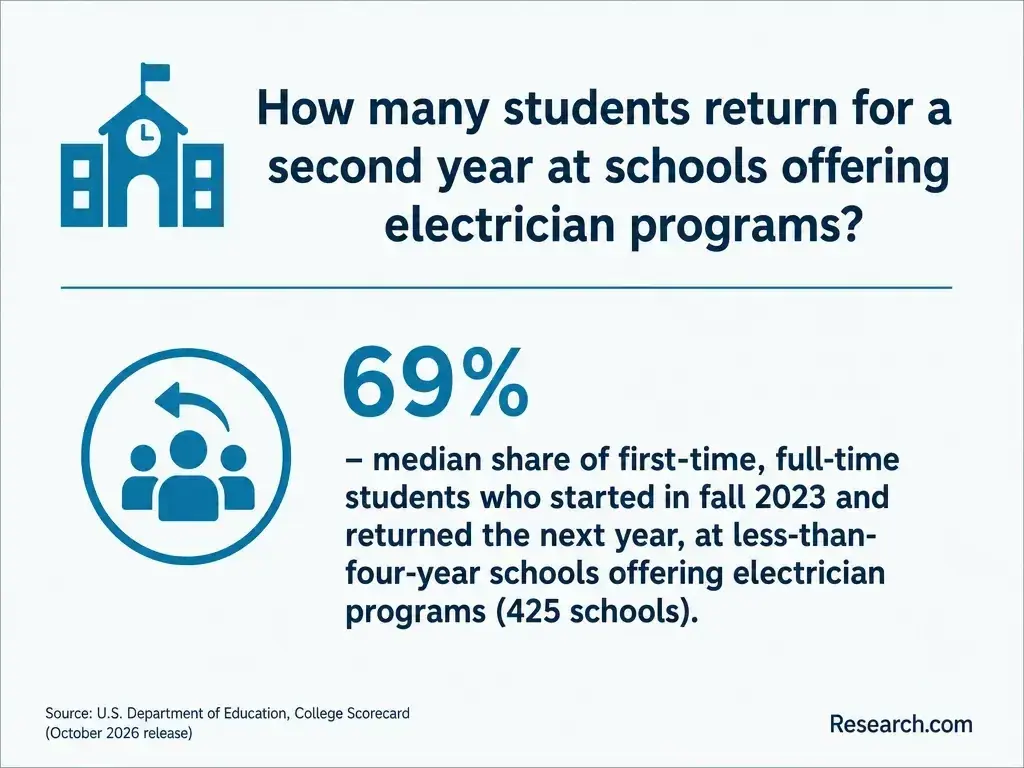
Texas regulates electrical work through the Texas Department of Licensing and Regulation (TDLR). An apprentice electrician license allows entry into supervised work; journeyman electrician licensure requires documented supervised experience and a licensing examination. TDLR specifies 8,000 hours of supervised on-the-job training for the journeyman route. Check its current application, supervision, examination, and renewal rules before relying on a provider's description.
A school certificate, NCCER credential, or registered-apprenticeship completion record may demonstrate training, but none automatically becomes a state license. If a school says its graduates are "license-ready," ask which Texas license it means and exactly how graduates obtain the remaining experience and examination eligibility. Licensing requirements can differ outside Texas, so confirm the destination state's rules if you expect to move.
Start with the work you want: residential installation, commercial construction, or maintenance. Then compare a school program with direct apprenticeship entry on the same basis - time to paid supervised work, total cost, hands-on preparation, and likelihood of completion - not ranking position alone.
Use these questions when speaking with admissions staff and apprenticeship coordinators:
A red flag is a provider implying that graduation itself grants a Texas journeyman license. Another is an appealing tuition quote that omits tools or offers no credible route to supervised work. Estimate return on investment using your current earnings, likely time out of work, aid, borrowing, completion prospects, and a realistic period of post-training earnings - not a median wage as your expected first paycheck. If you are comparing what are the easiest masters degrees, keep that separate from the electrician licensing decision: neither program label nor perceived ease replaces verified occupational requirements.
An apprentice can develop toward journeyman work after meeting Texas experience and examination requirements. With further experience, electricians may pursue more advanced licensing, supervision, estimating, specialized installation, or contracting roles, subject to applicable TDLR rules. Construction and facility-maintenance work offer different routines and skill demands; neither follows automatically from finishing a particular certificate.
Specialization is most valuable when it matches employers you can reach. Ask local contractors whether they train workers in controls, industrial maintenance, or other systems and what experience they require before assigning that work. If your goal is advancement rather than entry, compare the cost of additional training against employer-supported learning. The same caution applies when browsing a cheapest master's degree online: it is not a substitute for the work experience and licensing steps that govern electrician progression.
The U.S. Bureau of Labor Statistics projects 9.2% growth in electrician employment nationwide from 2025 to 2035. That supports considering the trade, but it is a national projection, not a forecast of openings for a particular Dallas graduate or apprentice applicant. Local hiring also depends on construction schedules, maintenance needs, and employers willing to supervise trainees.
Use the outlook as a reason to investigate - not to assume placement. Compare current Dallas-area postings with apprenticeship recruitment notices and ask whether a program's employer relationships lead to interviews for beginners. The strongest pathway is one that pairs usable technical skills with a realistic opportunity to accumulate the supervised hours Texas requires.
Investing in training is a consequential decision, so Research.com evaluates electrician programs against other programs in the same occupation and location - not against unrelated credentials. The ranking considers student outcomes, earnings and return on investment, costs and debt, and quality and recognition. Only programs with completions reported to IPEDS are eligible; a missing apprenticeship or employer program is not necessarily a poor option.
For best-program rankings, occupation-relevant programmatic accreditation or industry recognition accounts for 20% of the score, institutional accreditation for 10%, and student support services for 10%. The remaining 60% covers completion and full-time and part-time retention; median earnings one year after completion and earnings relative to annual attendance cost; and tuition, attendance cost, median debt - including debt held by students who withdrew - and federal loan default rates. An entropy-based method distributes weight among those indicators according to how much they vary across programs. Most-affordable rankings are separate: they score tuition, attendance cost, median debt, and default rates using entropy-based weights, without accreditation or other quality indicators in the score.
Research.com uses the following data sources in its ranking work. Some cover other trades or health occupations and should not be mistaken for electrician-specific approval or licensing authorities:
The ranking can narrow a local search, but its measures cannot establish that a particular graduate will obtain a Texas license or earn the reported median. Readers should verify current program details and compare paid apprenticeships that IPEDS may not capture. Research.com explains its broader approach on its methodology page.
# 1 position
# 2 position
Yes. A supervised apprenticeship or employer-sponsored route can combine paid work with instruction. Confirm the sponsor's entry rules and how work hours are documented for Texas licensing (Texas Department of Licensing and Regulation).
A certificate does not replace Texas's supervised work requirement or licensing examination. Ask the provider and apprenticeship sponsor separately whether coursework earns any advanced standing (Texas Department of Licensing and Regulation).
Online theory can help you prepare, but practical skills require in-person training, and regulated electrical work requires the appropriate Texas license and supervision. Verify those arrangements before enrolling (Texas Department of Licensing and Regulation).
Apply to apprenticeships if you are ready for supervised work and want to earn while learning. Consider school first if you need foundational instruction, but check its total cost and whether it helps you enter paid training.
Get written confirmation of the credential, total charges, lab access, employer connections, refund terms, and any licensing or advanced-standing claims. Verify school authorization and Texas licensing rules with the relevant regulators rather than relying solely on advertising.