
Most Affordable Electrical Technician Schools & Training in Albany for 2027
Audited and Verified:
Our Editorial and Data Verification Process
Research.com uses government datasets, official education statistics and primary institutional information to support its career and degree guides. Our review process checks factual accuracy, occupational definitions, source dates and the requirements associated with the credentials discussed.
How This Article Was Fact-Checked
Our editorial team verifies salary estimates, employment projections, education requirements and program information against original data providers and official organizations. Salary figures are checked against the relevant occupational definitions and reporting periods. Information about licensure, accreditation and required in-person training is reviewed separately.
Fact-checked and verified on:

Co-Founder and Chief Data Scientist

Reviewed by Karolina Broda
Fact-Checker and Data Verification
The cheapest electrician program is not necessarily the least expensive route to becoming job-ready. In Albany, Oregon, students must weigh school costs against paid apprenticeships, hands-on training, and state licensing requirements. The U.S. Bureau of Labor Statistics projects 9.2% national employment growth for electricians from 2025 to 2035, making the choice timely. This guide accompanies the Most Affordable Electrician Trade Schools in Albany for 2027 ranking, created by the Research.com team of data scientists to help students identify programs worth considering and compare their full path to employment.
Key findings about electrician degrees in Albany
- For an Albany student seeking an Oregon general journeyman electrician license, a registered apprenticeship is a key comparison: the usual pathway combines approximately 8,000 hours of supervised work with 576 hours of related instruction, followed by state examination requirements (Oregon Bureau of Labor and Industries; Oregon Building Codes Division).
- The U.S. median annual wage for electricians was $63,190 in May 2025, but that occupation-wide figure is not a forecast of an Albany trainee's starting pay (U.S. Bureau of Labor Statistics).
- Compare a school's total out-of-pocket cost and practical training with paid apprenticeship options. An inexpensive certificate is poor value if its hours do not count toward the Oregon license you intend to pursue.
Table of Contents
- Most Affordable Electrical Technician Schools & Training in Albany for 2027
- What can I expect from an electrician trade school program in Albany?
- Where can I work with an electrician trade school training in Albany?
What can I expect from an electrician trade school program in Albany?
Expect instruction in electrical theory, blueprint reading, circuits, wiring methods, code use, and jobsite safety, ideally reinforced through supervised lab work. A short pre-apprenticeship or certificate can help you qualify for entry-level work or compete for an apprenticeship; it is not the same as completing one. An associate degree may add broader technical coursework, but its value depends on whether its classes and practical work advance your specific goal.
For someone who needs wages while learning, a registered apprenticeship may be the stronger investment: it pairs paid work with related instruction and a defined progression. School-based training can make more sense when you need foundational skills before applying or want a structured introduction to the trade. Ask Linn-Benton Community College which current electrical offerings, if any, provide lab access and whether an apprenticeship sponsor accepts their coursework for credit. Do not assume a similarly named credential earns the same standing with every sponsor.
Where can I work with an electrician trade school training in Albany?
Electrical contractors working on homes, commercial buildings, and industrial sites are the clearest employment target. Albany's position between Corvallis and Salem can widen a trainee's search, but it also makes commute time, vehicle access, and reporting to changing jobsites part of the training-cost calculation. Facilities maintenance and manufacturing may offer related electrical work; check whether each role's duties qualify as supervised experience for the license you want (Oregon Building Codes Division).
School training alone may support an application for an apprentice or other entry-level position, not independent electrical contracting. Before accepting a job described as "electrical," confirm its supervision, licensing expectations, and whether the employer or apprenticeship sponsor will document qualifying hours.
The U.S. median annual wage for electricians was $63,190 in May 2025 (U.S. Bureau of Labor Statistics). This is a national, occupation-wide midpoint - not an Albany wage estimate and not typical pay for a newly hired apprentice. Local offers depend on the employer, apprenticeship wage schedule, experience, specialty, and available hours.
When comparing an offer with tuition, request the sponsor's current apprentice wage progression and ask employers about paid travel, overtime, and tool allowances. A paid pathway can improve your finances during training even if it takes longer than a school certificate; compare earnings and expenses over the entire route to licensure rather than comparing a starting wage with an established electrician's median.
A school certificate may take substantially less time than the full journey to licensure. Oregon's general journeyman apprenticeship pathway typically involves approximately 8,000 hours of supervised on-the-job training and 576 hours of related instruction - commonly organized over four years (Oregon Bureau of Labor and Industries; Oregon Building Codes Division). An individual school's calendar, part-time schedule, or prior-experience policy may differ.
Distinguish time to finish a program from time to work independently. Before enrolling, ask for the exact clock hours, lab hours, attendance schedule, and written confirmation from the relevant apprenticeship sponsor or state authority about any credit toward required training. An accelerated course cannot simply replace supervised work hours.
Electrical theory, calculations, code-study exercises, and some lectures can work online. Building circuits, selecting protective equipment, testing installations, and demonstrating safe work practices require a supervised lab or jobsite. A hybrid option is useful only if you can reliably reach its required in-person sessions and its practical hours meet your intended sponsor's requirements.
Albany students should check where labs are held, not merely where an online program is advertised. Even a program found through a list of best online universities should be evaluated by its electrician-specific hands-on arrangements; online delivery does not establish Oregon licensing eligibility. Ask who supervises practical work and how performance and hours are recorded.
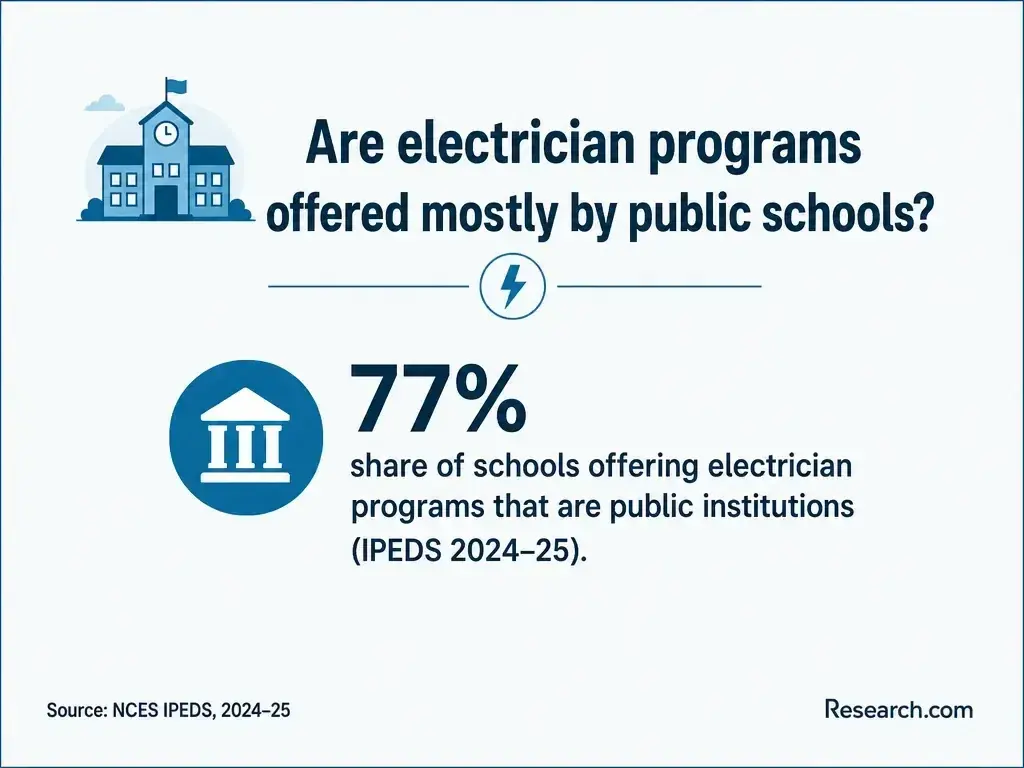
There is no defensible single Albany average that captures school programs and paid apprenticeships together. Published tuition may omit mandatory fees, books, tools, safety gear, transportation, and the earnings you forgo while attending class. Apprenticeships may pay wages during training, although related instruction, tools, and travel can still create expenses. Request a current, itemized estimate from each provider instead of treating its advertised tuition as the price of becoming job-ready.
For aid, ask a school whether the specific program is eligible for federal student aid and ask WorkSource Oregon about applicable workforce funding. Oregon Promise has eligibility restrictions and should not be assumed to cover every trade credential (Federal Student Aid; Oregon Higher Education Coordinating Commission; WorkSource Oregon). A search for a degree fast track does not answer whether a shorter electrician program reduces the total cost of qualifying for work.
The award depends on the pathway: a school may issue a certificate or associate degree, while completing a registered apprenticeship documents a combination of related instruction and qualifying work experience. Oregon occupational licensure is separate from any school award or apprenticeship completion document (Oregon Bureau of Labor and Industries; Oregon Building Codes Division).
NCCER credentials, where offered, can document particular construction skills but do not substitute for an Oregon electrical license (NCCER; Oregon Building Codes Division). If you already have relevant coursework or work experience, ask both the provider and apprenticeship sponsor about assessed prior learning or advanced standing; get any credit decision in writing. Results for universities with dual degree programs are not a substitute for confirming which electrical credential and supervised hours a particular route provides.
Requirements vary by provider and pathway. Schools may assess reading and math readiness; apprenticeship sponsors may additionally require an application, qualifying education, aptitude assessment, interview, and the ability to reach jobsites. Verify current requirements directly with the provider or sponsor rather than assuming school admission also means apprenticeship placement (Oregon Bureau of Labor and Industries; Apprenticeship.gov).
Before paying an enrollment deposit, check the program's state authorization and institutional accreditation, if applicable, and separately confirm the sponsor's apprenticeship registration. None of those checks alone establishes that a certificate qualifies you for an electrician license. A result about easiest master degrees is irrelevant to trade entry; focus instead on documented entry criteria, supervised-work access, and Oregon licensing rules.
Useful training connects electrical calculations and National Electrical Code study to safe installation: reading plans, identifying conductors and overcurrent protection, using test instruments, troubleshooting circuits, and communicating hazards to a crew. Electricians also need physical dexterity and the ability to follow safety procedures at active worksites (U.S. Bureau of Labor Statistics, Occupational Outlook Handbook).
Compare programs by what learners actually practice. Ask to see the lab equipment, the proportion of instruction spent applying skills, and how instructors evaluate safe wiring and troubleshooting. A classroom-heavy course may build theory but leave you needing more supervised practice before an employer will trust you with site work.
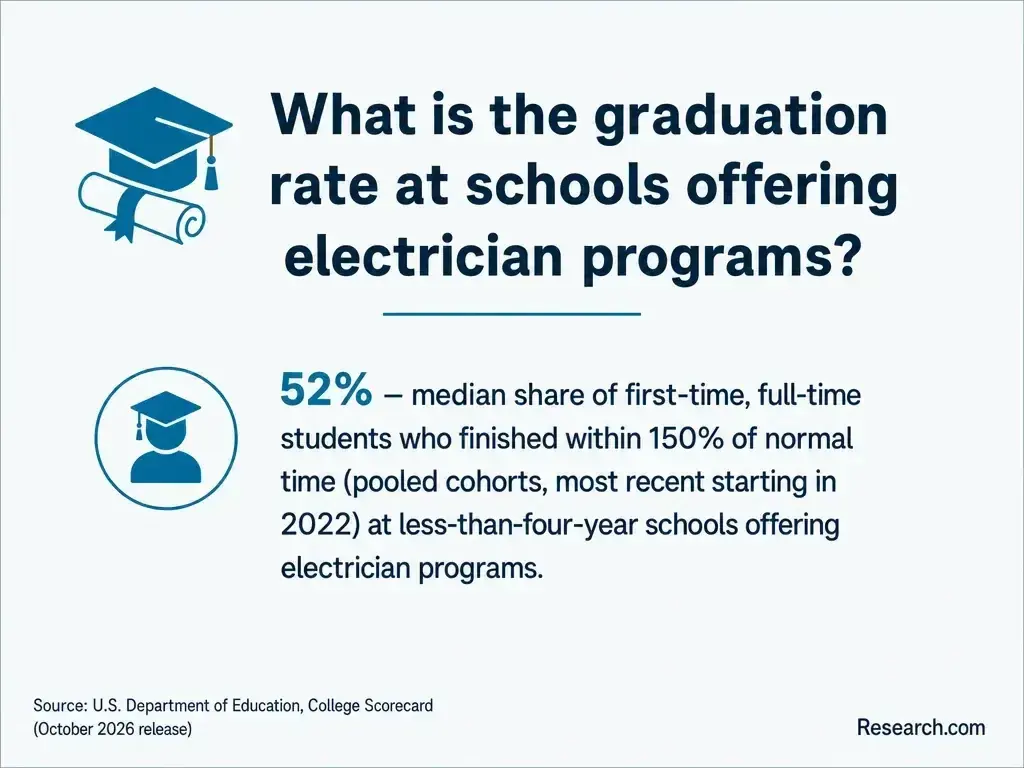
Oregon regulates electrical work through the Building Codes Division. The license and supervision needed depend on the work and role; a general journeyman electrician applicant must meet the applicable experience and education standards and pass the required examination. Completing a school program does not itself confer a license or permission to perform regulated work independently (Oregon Building Codes Division).
Check the state's current requirements for your intended license before selecting training. Institutional accreditation addresses the school, apprenticeship registration addresses the work-based program, and an optional industry certification documents particular skills. None is interchangeable with occupational licensure. If you hope to work across state lines later, verify the destination state's rules rather than assuming an Oregon credential transfers automatically.
Start with the job you want, then work backward to its licensing and experience requirements. The affordability ranking can identify school-based candidates, but its cost-and-debt score does not measure lab quality, apprenticeship placement, or Oregon licensing eligibility. A paid apprenticeship may be better for someone ready to compete for an entry position; school may be better for someone who first needs technical preparation.
Use these checks to compare finalists on the same basis:
- Ask the Oregon Building Codes Division or intended apprenticeship sponsor whether the program's instruction or experience counts toward your target license, and request the answer in writing.
- Get an itemized price covering fees, tools, protective equipment, transport, and any lost work time; subtract only aid or employer support you are actually eligible to receive.
- Inspect the lab or worksite arrangements and ask who supervises practice, how hours are documented, and whether the schedule is compatible with your commute and employment.
- Request program-specific completion information and ask how many participants enter qualifying apprenticeships or electrical jobs; check what each outcome measure actually counts.
Beware of claims that a short or fully online course alone makes you a journeyman, and do not use a national median wage as a promised starting salary. Search results for a doctoral degree online no dissertation do not address the practical training or licensing checks needed for this decision.
Early training can lead to a supervised apprentice role. With qualifying experience and the appropriate Oregon license, an electrician may pursue residential, commercial, or industrial installation and troubleshooting work. Later options can include specialized systems, crew supervision, or operating an electrical contracting business, subject to the separate requirements for each role (Oregon Building Codes Division; U.S. Bureau of Labor Statistics).
Choose introductory training that matches the work you actually want. For example, experience limited to one type of installation may not build the breadth needed for a different license or employer. Ask prospective sponsors which tasks apprentices perform and how they rotate through the required work.
National electrician employment is projected to grow 9.2% from 2025 to 2035 (U.S. Bureau of Labor Statistics, Employment Projections). That supports investigating the trade, but it is not an Albany hiring forecast or a guarantee of apprenticeship entry. Demand accessible to an Albany resident also depends on which contractors are hiring across the surrounding Willamette Valley and whether you can travel to changing sites.
Check current openings alongside registered apprenticeship intake schedules before committing to school. If local sponsors are not accepting applicants immediately, a practical preparatory program may help you use the waiting time; if a paid qualifying position is available, compare its earnings and instruction with the full cost of school.
Most Affordable Electrical Technician Schools & Training in Albany for 2027
Education is a significant investment, so Research.com evaluates affordability against the options students can realistically compare in the same occupation and location. The Most Affordable ranking scores programs with completions reported to IPEDS on tuition, cost of attendance, median student debt, and federal loan default rate. Indicator weights are assigned using an entropy-based method, which gives more weight to measures that differ more across programs. Accreditation and other quality measures do not affect this affordability score.
The team uses multiple education and occupational data sources to check the quality and credibility of its comparisons. The ranking's data sources are:
- IPEDS database - reported program completions, enrollment, and institutional cost data.
- National Center for Education Statistics - federal education data and definitions.
- College Scorecard database - institution-level cost, debt, and outcome measures where available.
- Peterson's database - supplementary institutional and program information.
- Commission on Accreditation of Allied Health Education Programs (CAAHEP) - occupation-specific recognition information in the broader trade-school dataset; not electrician licensing approval.
- Accrediting Bureau of Health Education Schools (ABHES) - health-school accreditation information in the broader dataset; not electrician licensing approval.
- Commission on Dental Accreditation (CODA) - dental-program accreditation information in the broader dataset; not electrician licensing approval.
- Dental Assisting National Board (DANB) - dental credential information in the broader dataset; not electrician licensing approval.
- National Center for Construction Education and Research (NCCER) - construction-training and industry-credential information.
- Apprenticeship.gov Partner Finder - apprenticeship-provider information for pathway research.
These sources do not all measure electrician-program quality, and IPEDS does not capture every union, employer-sponsored, or registered apprenticeship option. Use the ranking to narrow school-based choices, then check apprenticeship availability and licensing alignment separately. Research.com explains its approach further on its methodology page.
# 2 position

Frequently asked questions about electrician programs in Albany
Is electrician trade school required to become an electrician in Albany?
Not necessarily. A registered apprenticeship combines related instruction with supervised paid work and is a principal route toward Oregon journeyman eligibility. School can be useful preparation, but confirm whether its coursework counts with your intended sponsor or the Oregon Building Codes Division.
What is the cheapest path into the trade?
A paid apprenticeship may reduce the need to pay school tuition and provide income while training. Compare its actual wages, instruction costs, tools, and travel with an itemized school estimate; availability and admission requirements matter too.
Can I become a licensed Oregon electrician through an online course?
Online lessons can cover theory, but an online course alone does not replace required supervised practical experience or the applicable examination. Verify the exact license requirements with the Oregon Building Codes Division.
Does a certificate let me work independently?
No. A certificate documents completion of a particular program, not an Oregon electrical license. The work you may perform depends on your applicable credential, supervision, and state rules.
What should I ask a program before enrolling?
Ask for its complete cost, supervised lab hours, credential awarded, apprenticeship connections, and written evidence of whether its training counts toward your intended Oregon license.
- U.S. Bureau of Labor Statistics - Electricians
Used to verify salary, employment outlook, and typical education requirements.
https://www.bls.gov/ooh/construction-and-extraction/electricians.htm - NCCER - Accredited Training
Used to verify programmatic accreditation or industry recognition of programs.
https://www.nccer.org/ - O*NET OnLine - Electricians
Used to verify common responsibilities, skills, work settings, and education expectations.
https://www.onetonline.org/link/summary/47-2111.00 - Linn-Benton Community College - official website
Official school website (programs, tuition, admissions).
https://www.linnbenton.edu/