
Most Affordable Electrical Technician Schools & Training in Oregon City for 2027
Audited and Verified:
Our Editorial and Data Verification Process
Research.com uses government datasets, official education statistics and primary institutional information to support its career and degree guides. Our review process checks factual accuracy, occupational definitions, source dates and the requirements associated with the credentials discussed.
How This Article Was Fact-Checked
Our editorial team verifies salary estimates, employment projections, education requirements and program information against original data providers and official organizations. Salary figures are checked against the relevant occupational definitions and reporting periods. Information about licensure, accreditation and required in-person training is reviewed separately.
Fact-checked and verified on:

Co-Founder and Chief Data Scientist

Reviewed by Karolina Broda
Fact-Checker and Data Verification
Choosing affordable electrician training near Oregon City means comparing more than tuition: the route must also provide supervised work and a path toward an Oregon license. The U.S. Bureau of Labor Statistics projects 9.2% national growth in electrician employment from 2025 to 2035. For career starters and working adults, this guide compares school, apprenticeship, cost, and licensing trade-offs. It also accompanies the Most Affordable Electrician Trade Schools in Oregon City for 2027 ranking, created by the Research.com team of data scientists to help students make an informed choice about which programs are worth considering.
Key findings about electrician degrees in Oregon City
- For Oregon's general journeyman electrician license, an approved apprenticeship typically combines 8,000 hours of supervised work with 576 hours of related instruction; a short school certificate alone is not the same pathway (Oregon Building Codes Division; Oregon Bureau of Labor and Industries).
- The U.S. electrician median annual wage was $63,190 in May 2025, not a starting-pay estimate for an Oregon City trainee (U.S. Bureau of Labor Statistics).
- The lowest advertised tuition may not be the lowest cost to qualify: compare fees, tools, travel, debt, and earnings during a paid apprenticeship, then verify that the training fits the Oregon license you want.
Table of Contents
- Most Affordable Electrical Technician Schools & Training in Oregon City for 2027
- What can I expect from an electrician trade school program in Oregon City?
- Where can I work with an electrician trade school training in Oregon City?
What can I expect from an electrician trade school program in Oregon City?
Expect a mix of electrical theory, code study, and practical work - not a classroom credential that automatically permits independent electrical contracting. For Oregon City residents, the central distinction is whether a course prepares you to apply for an apprenticeship, supplies related instruction within one, or is itself part of an approved training arrangement. Oregon's Building Codes Division (BCD) licenses electrical workers; the Oregon Bureau of Labor and Industries (BOLI) oversees registered apprenticeships.
The pathways below serve different goals. Compare the credential and workplace experience, not just whether each provider uses the word "electrician."
| Pathway | What it provides | Best fit and main limitation |
| Pre-apprenticeship or introductory certificate | Basic safety, math, and wiring practice; a completion credential if offered | Useful for testing the trade or strengthening an application; does not replace required supervised experience. |
| College coursework or occupational certificate | Structured instruction and, where offered, labs | Useful when schedules or foundational skills need attention; confirm whether a sponsor accepts the instruction toward apprenticeship requirements. |
| Registered electrical apprenticeship | Paid, supervised job training plus related classroom instruction | Most direct structured route toward the relevant license, subject to admission and completion requirements. |
Clackamas Community College is a local option to investigate for electrical or apprenticeship-related instruction. Ask which current offering is open to nonapprentices, who arranges the job placement, and whether completed coursework receives credit from a particular registered sponsor. Do not assume a similarly named certificate and apprenticeship have interchangeable hours.
Where can I work with an electrician trade school training in Oregon City?
Electrical work in and around Oregon City spans residential construction and remodeling, commercial buildings, industrial facilities, and building maintenance. Those settings differ: a residential crew emphasizes service equipment and home circuits, while commercial or industrial work can involve larger distribution systems, controls, and troubleshooting. The U.S. Bureau of Labor Statistics identifies electrical contractors and other construction employers as major employers of electricians.
Entry training may help you obtain an apprentice position, but the tasks you may perform depend on Oregon licensing and supervision rules - not your certificate title. Compare a potential sponsor's actual job assignments with the license classification you intend to pursue. A convenient placement that offers little exposure to required work categories can be a poor fit even if it pays well.
The latest national median for electricians was $63,190 annually in May 2025 (U.S. Bureau of Labor Statistics, Occupational Outlook Handbook). A median covers experienced workers as well as newer electricians; it is neither an Oregon City wage quote nor an expected apprentice starting salary. Pay depends on license classification, experience, employer, hours, and the work available locally.
When weighing an offer against training costs, request the sponsor's current apprentice wage progression and benefits in writing. Compare that schedule with your present earnings, not with the national median. For a local wage benchmark, use the most recent electrician figures published for the Portland-area labor market by the Oregon Employment Department, and check whether a quoted figure describes apprentices, licensed workers, or both.
A short introductory course can finish much sooner than an apprenticeship, but finishing the course does not finish Oregon's general journeyman training. The standard approved apprenticeship route calls for 8,000 hours of supervised on-the-job training and 576 hours of related instruction (Oregon BCD; Oregon BOLI). Work availability and the sponsor's schedule affect calendar time. Other electrical license classifications have different requirements, so choose the target classification before comparing advertised program lengths.
If speed is your priority, distinguish "time to a certificate" from "time to licensed work." Even lists of best paying 6 month certificate programs cannot establish that a short electrician course satisfies Oregon's supervised-work requirement. Ask whether prior documented experience or coursework can be evaluated for credit by the relevant apprenticeship sponsor or BCD before paying for repeated training.
Online or hybrid delivery may work for some code, mathematics, and electrical-theory instruction. Conduit bending, safe testing, wiring, equipment installation, and supervised job performance require access to a lab or worksite. For Oregon licensing, the decisive question is whether the responsible sponsor or regulator accepts the particular instruction and documents the required practical experience (Oregon BCD; Oregon BOLI).
Campus study can give beginners direct feedback on tools and safety procedures; hybrid study can reduce classroom travel for a working apprentice. Neither format removes the need to reach a training site. Broad directories of top college courses for seniors online are not substitutes for checking an electrician program's in-person requirements. Request a schedule showing exactly which sessions and assessments must be attended in person.
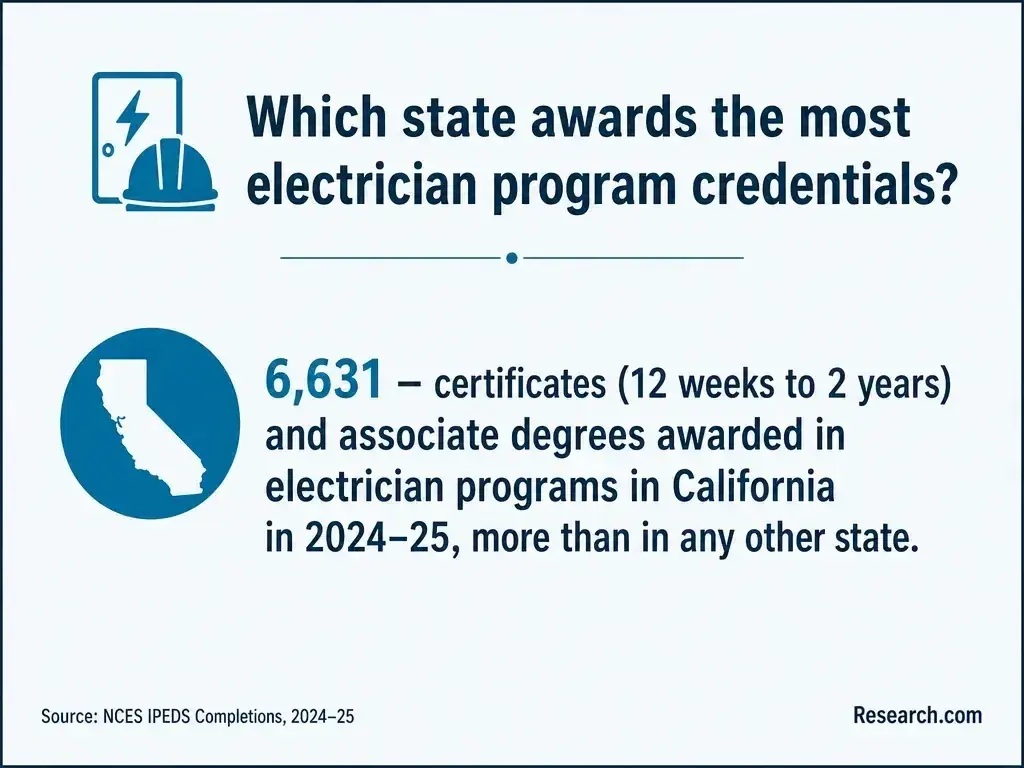
There is no single defensible average for all Oregon City electrician pathways: college courses, short preparatory programs, and paid registered apprenticeships have different prices and reporting systems. An IPEDS-based affordability ranking also omits apprenticeships without reported completions. Request a current, itemized quote rather than treating a listed tuition figure - or an older published price - as your 2027 total.
Include mandatory fees, books, tools, testing equipment, protective gear, transportation to changing jobsites, and any exam or license application charges. Then subtract confirmed grants or employer-paid costs and account for wages earned - or work hours forgone - during training. Federal student aid depends on the institution and eligible program; apprenticeship pay is not the same as financial aid (Federal Student Aid; Oregon BOLI). Eligible community-college students can also check current Oregon Promise rules with the Oregon Higher Education Coordinating Commission.
For return on investment, compare your likely completion time and probability, borrowing and repayment, earnings while training, expected earnings afterward, and the time needed to recover costs. A search result for affordable online phd programs is not a meaningful price benchmark for practical electrician training.
The credential depends on the route. A preparatory provider might award a certificate of completion; Clackamas Community College may award the credential specified for its particular current offering; a registered apprenticeship documents completion of its approved training. None should be described as an Oregon journeyman license. BCD issues occupational licenses after the applicable experience, education, examination, and application requirements are met.
Institutional accreditation concerns a school's overall educational oversight. State school authorization, apprenticeship registration, industry credentials, and BCD occupational licensure answer different questions. Ask the provider to name its exact award and explain, in writing, which Oregon licensing requirement each part of its training addresses. Do not pay extra for a credential whose relationship to your intended license cannot be demonstrated.
Requirements vary by provider and route. An introductory course may use a straightforward enrollment process, while a registered apprenticeship can involve an application, education documentation, math assessment, interview, and employer placement. BOLI's apprenticeship listings and each sponsor's current standards - not a school's general admissions page - are the authority for that sponsor's entry requirements.
Before applying, confirm the minimum age and education rules, acceptable math preparation, application window, selection process, and whether reliable travel to regional worksites is necessary. If you lack the required math preparation, ask which qualifying course or assessment the sponsor accepts. Admission to a class should never be mistaken for acceptance into a registered apprenticeship or a promise of work.
Relevant training covers circuit principles, electrical calculations, reading plans, wiring methods, the applicable electrical code, grounding, testing, and jobsite safety. Labs let students practice tool use and fault finding under supervision; apprentices apply and expand those skills on real installations. The U.S. Bureau of Labor Statistics describes installing, maintaining, and repairing electrical power, communications, lighting, and control systems as core electrician work.
Compare syllabi with the work you want to do. Someone aiming for industrial controls should ask about motors and troubleshooting, while a residential applicant should ask about service equipment and branch circuits. In either case, obtain the lab schedule and ask who verifies practical competency. A video demonstration is useful preparation, not evidence that you performed the task safely.
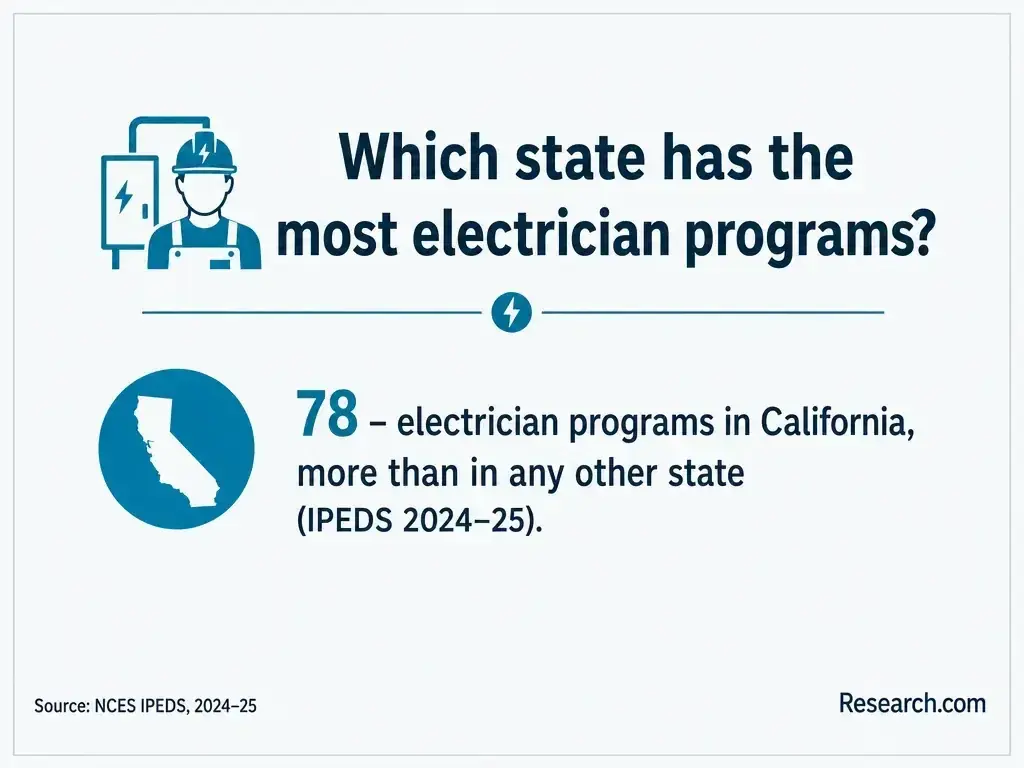
Oregon regulates electrical work through BCD licenses and supervision requirements. For the general journeyman pathway, an approved apprenticeship ordinarily supplies the required supervised work and related instruction before the applicant pursues the applicable state examination and license. Other classifications, including limited licenses, have their own scopes and qualifications (Oregon BCD; Oregon BOLI). Check the current BCD classification rules before selecting training: authorization for one kind of electrical work does not automatically cover another.
An industry certificate can show familiarity with a skill, but it is not an Oregon occupational license. Likewise, a school's accreditation does not grant permission to work independently. Ask BCD or the registered sponsor how your specific training and documented work will count, and confirm who must supervise you at each stage.
Start with the intended Oregon license, then work backward to the training and supervised experience it requires. A low-cost preparatory course may be worthwhile if it helps you enter an apprenticeship; it is a weak investment if it duplicates instruction your future sponsor will provide without granting credit.
Use these checks before committing money or time:
- Ask BCD and the apprenticeship sponsor which license classification the route supports and how each hour of instruction and work will be documented.
- Get an itemized current cost estimate and a written explanation of tools, fees, aid eligibility, and any paid-work arrangement.
- Inspect the lab and worksite arrangements; ask who supervises practice and whether placement is arranged or merely suggested.
- Compare completion, apprentice placement, and licensing-exam information only when the provider defines the cohort and reporting period.
- Confirm the commute and class schedule against likely jobsites and your ability to keep earning during training.
A directory of non profit accredited universities cannot verify Oregon electrical licensing eligibility. Check a provider's institutional standing separately from its sponsor relationship and BCD requirements. The red flags are an unexplained "licensed upon graduation" claim, no documented hands-on component, or a price that excludes required equipment.
A common progression is apprentice, licensed electrician in the relevant classification, then more specialized field or supervisory work with experience. Construction, maintenance, service, and controls work call for overlapping but different skills. Some electricians later pursue supervisory responsibilities or an electrical contracting business, which introduces additional Oregon regulatory requirements; those are advancement possibilities, not automatic outcomes of an entry certificate (Oregon BCD; U.S. Bureau of Labor Statistics).
If you are still deciding among jobs you can pursue after trade school, compare the actual daily work as well as the training bill. Electrician work rewards comfort with diagnostic reasoning, physical jobsites, and strict safety procedures. An introductory course can test that fit before you commit to a longer apprenticeship.
The U.S. Bureau of Labor Statistics projects 9.2% growth in electrician employment nationally from 2025 to 2035. That indicates a favorable national outlook, but it does not forecast a specific number of openings in Oregon City or guarantee an apprentice placement. Local hiring depends on construction activity, maintenance demand, and employers willing to train new entrants.
For a more useful decision, review current Oregon Employment Department regional projections alongside live apprenticeship openings, then ask sponsors how often they recruit and where apprentices work. The practical test is whether you can reach available jobsites and remain employed long enough to accumulate the required supervised hours - not whether a national growth figure looks attractive.
Most Affordable Electrical Technician Schools & Training in Oregon City for 2027
Investing in training is a consequential decision, so Research.com evaluates reported program costs and debt against other programs in the same occupation and location. Its most-affordable ranking includes only programs with completions reported to IPEDS. The score uses tuition, cost of attendance, median student debt, and federal loan default rate; an entropy-based method gives more weight to indicators that distinguish programs. Accreditation and other quality measures are not part of this affordability score.
The team uses the following sources to check program, institution, cost, and occupation-related information. Some cover other trades or health occupations and do not, by themselves, establish whether an Oregon electrician program meets licensing requirements:
- IPEDS database: reported completions, institutional costs, and student data.
- National Center for Education Statistics: federal education data and institutional context.
- College Scorecard database: available cost, debt, and outcome measures.
- Peterson's database: supplementary institution and program information.
- Commission on Accreditation of Allied Health Education Programs (CAAHEP): occupation-specific recognition checks where applicable.
- Accrediting Bureau of Health Education Schools (ABHES): occupation-specific recognition checks where applicable.
- Commission on Dental Accreditation (CODA): occupation-specific recognition checks where applicable.
- Dental Assisting National Board (DANB): occupation-specific credential information where applicable.
- National Center for Construction Education and Research (NCCER): construction-training and industry-recognition context.
- Apprenticeship.gov Partner Finder: registered-apprenticeship provider context.
This method helps readers compare reported affordability, not every available route into the trade: a registered apprenticeship may be absent because it does not report IPEDS completions. Before enrolling, compare the ranking with current provider quotes and Oregon apprenticeship and licensing rules. More detail on the ranking approach appears in Research.com's methodology.
# 2 position
Frequently asked questions about electrician programs in Oregon City
Can I become an Oregon electrician with only a trade-school certificate?
Not for the general journeyman pathway. A certificate may help you prepare, but Oregon also requires qualifying supervised experience, related instruction, and satisfaction of BCD's licensing requirements.
Is an apprenticeship cheaper than trade school?
It can reduce out-of-pocket costs because apprentices earn wages while training, but compare sponsor fees, tools, transportation, and the pay progression. A short preparatory course may still be useful if it helps you qualify for entry.
Can I complete electrician training entirely online?
Online theory may be possible. Practical skills and supervised work require in-person participation; confirm that a hybrid course is accepted by your intended Oregon apprenticeship sponsor.
Does Clackamas Community College enrollment guarantee an apprenticeship?
No. Ask about the specific current offering, any sponsor relationship, eligibility for apprenticeship credit, and whether placement is provided or requires a separate application.
Which price should I compare when choosing a program?
Compare the current total cost to become job-ready - not tuition alone - and account for tools, fees, travel, borrowing, financial aid, and earnings during training.
- U.S. Bureau of Labor Statistics - Electricians
Used to verify salary, employment outlook, and typical education requirements.
https://www.bls.gov/ooh/construction-and-extraction/electricians.htm - NCCER - Accredited Training
Used to verify programmatic accreditation or industry recognition of programs.
https://www.nccer.org/ - O*NET OnLine - Electricians
Used to verify common responsibilities, skills, work settings, and education expectations.
https://www.onetonline.org/link/summary/47-2111.00 - Clackamas Community College - official website
Official school website (programs, tuition, admissions).
https://www.clackamas.edu/