# 1 position

Audited and Verified:
Our Editorial and Data Verification Process
Research.com uses government datasets, official education statistics and primary institutional information to support its career and degree guides. Our review process checks factual accuracy, occupational definitions, source dates and the requirements associated with the credentials discussed.
How This Article Was Fact-Checked
Our editorial team verifies salary estimates, employment projections, education requirements and program information against original data providers and official organizations. Salary figures are checked against the relevant occupational definitions and reporting periods. Information about licensure, accreditation and required in-person training is reviewed separately.
Fact-checked and verified on:

Co-Founder and Chief Data Scientist

Reviewed by Karolina Broda
Fact-Checker and Data Verification
For an aspiring electrician in Moses Lake, the cheapest classroom program is not necessarily the least expensive route to a license. Washington requires substantial supervised work experience, so the price of training matters alongside access to an apprenticeship. Nationally, electrician employment is projected to grow 9.2% from 2025 to 2035, according to the U.S. Bureau of Labor Statistics. This guide explains costs, credentials, licensing, and local choices. It also features a Most Affordable Electrician Trade Schools in Moses Lake for 2027 ranking created by the Research.com team of data scientists to help students identify programs worth considering.
Expect a choice between pre-employment instruction and work-based training, not a single standard "electrician school" experience. A college certificate may teach electrical theory and provide labs; an associate program may add broader technical coursework. A registered apprenticeship combines instruction with paid, supervised electrical work. A pre-apprenticeship can help someone prepare to apply, but does not itself make a participant a journey-level electrician.
Big Bend Community College is a local institution to investigate for current electrical or closely related technical offerings. Confirm the current catalog, credential, lab hours, and whether an offering is intended for construction wiring, industrial maintenance, or another job. A similarly named electrical credential can prepare students for different work. Washington State Department of Labor & Industries (L&I) determines which supervised experience and instruction count toward an electrical license; a college's institutional accreditation alone does not answer that question.
A school-first route can suit someone who needs foundational math, safety, and hands-on practice before approaching employers. Someone ready for work who can secure a registered apprenticeship should compare its paid training with the cost and potential delay of enrolling first. Ask whether the school has documented apprenticeship connections or credit arrangements rather than assuming classroom hours will reduce required field experience.
Potential workplaces include residential and commercial construction sites, industrial plants, utilities, and facilities-maintenance operations. The distinction matters locally: Grant County's agricultural and industrial economy can create interest in motors, controls, and equipment maintenance, while construction electrician work follows a different licensing and experience pathway. Occupational duties also differ across construction electricians and maintenance roles (U.S. Bureau of Labor Statistics; O*NET).
Before choosing a program, read actual Moses Lake-area job descriptions. If your goal is licensed construction wiring, ask whether a prospective employer can provide qualifying supervised electrical work. If the goal is maintaining plant equipment, check whether the curriculum covers motors, troubleshooting, and controls - and whether the position requires an electrical credential. Some work opportunities or apprenticeship classes may require travel outside Moses Lake; include that commute in your comparison.
The U.S. Bureau of Labor Statistics reports a May 2025 national median annual wage of $63,190 for electricians. This is the midpoint for employed electricians across experience levels and locations - not a Moses Lake wage estimate or a likely first-year apprentice wage. A paid apprenticeship generally starts below journey-level pay and progresses under its sponsor's wage schedule.
For a local earnings estimate, request current apprentice and journey-level wage schedules from sponsors serving Grant County, and compare them with local employer postings for the work you want. Check whether a quoted rate assumes overtime, travel, or a particular license. The most useful financial comparison is expected take-home earnings while training as well as potential earnings after qualification.
A short certificate may take months and can build entry-level skills; an associate program generally takes longer. Neither duration should be confused with the time needed to qualify as a Washington journey-level electrician. The state's general journey-level pathway involves 8,000 hours of qualifying supervised electrical work experience, with requirements concerning the type of work performed; confirm the current apprenticeship, instruction, and examination rules with Washington L&I before enrolling.
That makes a "fast" credential useful only if it advances your intended next step. Readers comparing 6 month certificate programs for high paying jobs should not interpret a short electrician-related certificate as a shortcut past supervised experience or state licensing. Ask the provider when students can begin paid qualifying work and whether classes fit around an apprentice's schedule.
Electrical theory, code reading, and some math instruction may be delivered remotely. Building circuits, using meters, working safely around equipment, and demonstrating wiring skills require supervised practice with physical equipment. Apprenticeship fieldwork takes place at worksites, regardless of how related instruction is delivered (Washington L&I; U.S. Department of Labor, Apprenticeship.gov).
For a Moses Lake resident, hybrid instruction may reduce trips to a training center, but only if labs and apprenticeship job sites are reachable. Use guides to best accredited online colleges non profit to understand institutional questions - not as evidence that a remote electrician course satisfies Washington's practical or licensing requirements. Request the in-person schedule and location before paying a deposit.
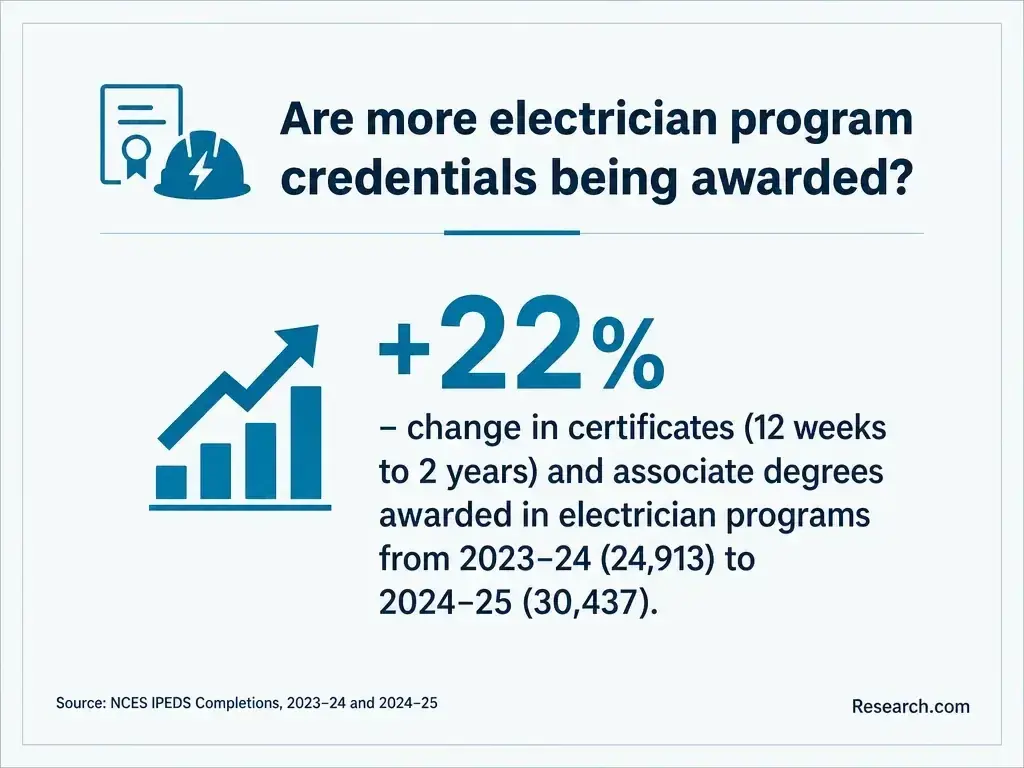
There is no reliable single Moses Lake average that captures college instruction, private training, and paid apprenticeships on comparable terms. Published tuition is only one part of the decision. A student's actual budget may include mandatory fees, books, tools, boots and other protective equipment, transportation to labs or jobsites, and licensing or examination charges. Lost earnings during full-time study can be larger than a difference in tuition.
The comparison below separates charges from possible offsets. Request a written, program-specific estimate rather than using a ranking position as your final price.
| Cost or offset | What to verify | Why it affects the choice |
| College charges | Resident tuition, mandatory fees, and the cost of the complete credential | A per-term price can understate the full program cost. |
| Job-ready supplies | Required tools, PPE, texts, and replacement materials | These may not be included in advertised tuition. |
| Travel and time | Lab and jobsite locations, class schedule, and foregone wages | Distance can change the least expensive option for a Moses Lake student. |
| Funding and wages | Eligible aid, grants, employer support, and apprentice wages | Paid training can offset costs but should not be assumed available. |
For eligible students, check federal aid with Federal Student Aid and Washington College Grant eligibility with the Washington Student Achievement Council. Ask Big Bend Community College about current program eligibility and aid; ask apprenticeship sponsors which expenses they cover. Aid eligibility depends on the student and program, not simply on the school's name.
The credential depends on the pathway: a college may award a certificate or an associate degree, while a registered apprenticeship leads to an apprenticeship completion credential. A pre-apprenticeship may document preparation without granting journey-level status. Washington electrical licenses or certificates are issued through the state's regulatory process, not automatically by a school (Washington L&I; U.S. Department of Labor, Apprenticeship.gov).
When checking nationally recognized online colleges, distinguish an institution's accreditation from approval of a specific training pathway and from occupational licensure. Ask for the exact award name, whether the school is properly authorized and accredited, and how its instruction or experience will be evaluated for your intended Washington license. Also ask whether prior learning or apprenticeship instruction can receive credit; do not assume transfer or advanced standing is automatic.
Requirements differ by provider and pathway. A college may use an application and math placement or advising process; an apprenticeship sponsor may require an application, aptitude assessment, interview, and evidence that an applicant can reach assigned jobsites. Employers may set additional hiring conditions. Check current requirements directly with Big Bend Community College or the registered sponsor rather than relying on requirements for a different occupation or state.
For Washington electrical work, entry into a school is separate from authorization to work as an electrical trainee. Before accepting a position or starting field hours, check Washington L&I's current trainee-certificate and supervision rules. An unrelated search such as what is the easiest doctorate degree cannot answer the practical entry question here: whether you can access qualifying supervised work alongside your training.
A construction-focused program should develop safe work habits, electrical calculations, circuit and blueprint reading, code use, installation methods, and testing with appropriate instruments. Industrially focused training may place more emphasis on motors, controls, and troubleshooting. Labs allow students to practice these skills, but supervised work introduces the pace, site conditions, and accountability of real electrical jobs (U.S. Bureau of Labor Statistics; O*NET).
Ask to see the course sequence and lab schedule, then compare them with the tasks in the jobs you want. Do not mistake convenient remote study - or a search for a doctorate degree no dissertation - for a way around electrical labs and supervised field experience. The decisive question is which skills you will demonstrate in person and where.
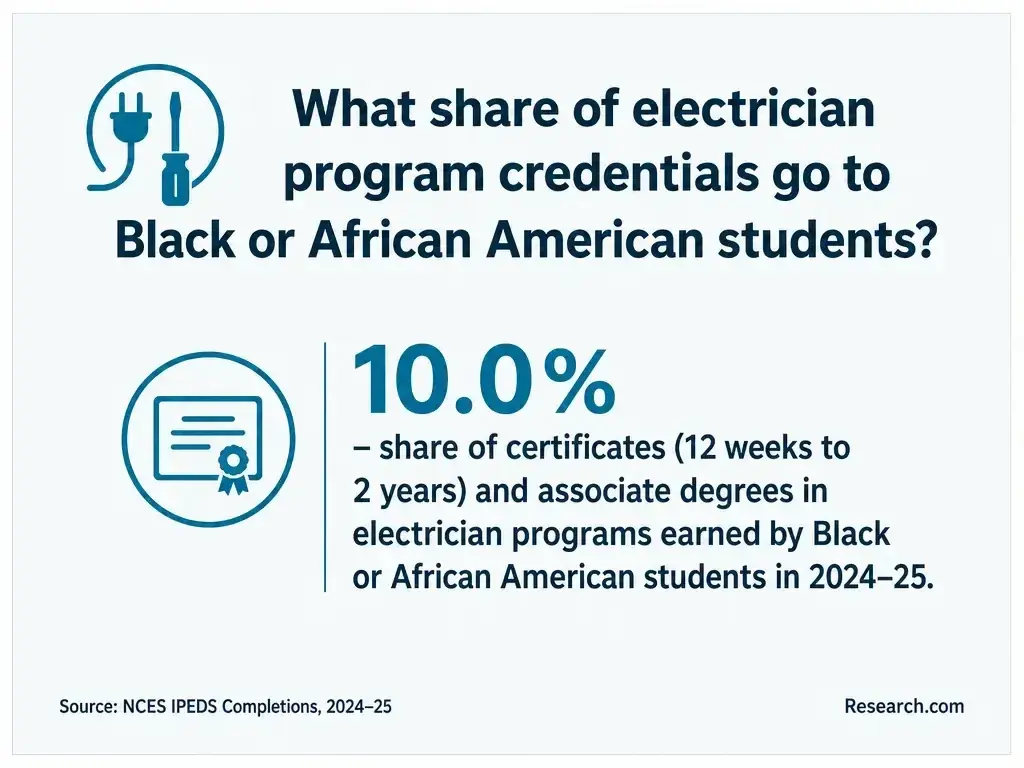
Yes, Washington regulates electrical work. The authorization you need depends on the work: a trainee works under applicable supervision rules, while journey-level and specialty electrician credentials have different experience and examination requirements. For general journey-level electrician qualification, Washington L&I specifies substantial qualifying supervised experience and an examination; registered-apprenticeship rules and any applicable exceptions must be checked against the candidate's circumstances. Completing a classroom program alone is not a license.
Keep these distinctions clear: institutional accreditation concerns a school; registered-apprenticeship status concerns a training sponsor; an industry certificate may document skills; and Washington L&I determines occupational licensing eligibility. Before enrolling, tell L&I and the provider the exact credential and electrical work you intend to pursue. Obtain written clarification on whether proposed classes and work hours count. If you may move across state lines, check the destination state's rules separately rather than assuming a Washington credential transfers automatically.
Start with the job and Washington credential you want, then compare training routes against that goal. A lower-priced program is poor value if its labs do not prepare you for the work or its schedule prevents you from taking a qualifying apprenticeship. An apprenticeship may be financially attractive because it pays during training, but admission, jobsite availability, and travel can limit access.
Use these questions with each school or sponsor to uncover costs and licensing gaps before committing:
Verify regulatory claims with Washington L&I and apprenticeship registration with the Washington State Apprenticeship and Training Council. A red flag is a promise that a certificate, institutional accreditation, or an all-online course automatically makes you a licensed electrician. Ignore unrelated credential comparisons - even what is the easiest doctorate degree - when judging whether electrical training provides qualifying experience.
Entry-level training can lead to supervised construction electrical work or, where a job's duties and requirements align, electrical maintenance support. With the required experience and examination, a worker may pursue a Washington journey-level or applicable specialty electrician credential. Later options can include industrial troubleshooting, supervision, estimating, or electrical contracting, each with its own experience, employer, or regulatory expectations (Washington L&I; U.S. Bureau of Labor Statistics).
Choose backward from the work you want to perform. If you want to install building wiring independently, prioritize a route to qualifying supervised work and the appropriate license. If you prefer plant equipment, compare motor-and-controls training with actual maintenance vacancies; a construction-oriented certificate may not be the best fit. Optional industry credentials can strengthen a particular skill set, but they do not replace Washington's electrical licensing requirements.
The U.S. Bureau of Labor Statistics projects 9.2% national employment growth for electricians from 2025 to 2035. That supports investigating the trade, but it does not establish how many openings will be available in Moses Lake or whether a particular applicant will obtain an apprenticeship.
Use the national projection as background, then test the local market: review Grant County-area postings, ask sponsors about application windows and jobsite locations, and distinguish construction demand from industrial-maintenance demand. If opportunities in town are limited, willingness to commute may affect both the chance of entering the trade and the true cost of training. Do not take on debt based on the national outlook alone.
Education is a significant investment, so the Research.com team designed this ranking to make local cost comparisons more credible and useful. Programs are compared with other electrician programs in the same location and occupation. Only programs with completions reported to the Integrated Postsecondary Education Data System (IPEDS) can appear; that limitation excludes some apprenticeships and employer-sponsored training, not necessarily because they lack quality or approval.
For most affordable rankings, the score considers tuition, cost of attendance, median student debt, and federal loan default rate. Weights are assigned using an entropy-based method that gives more weight to measures that vary more across programs. Accreditation and other quality indicators are not part of this affordability score. Readers should therefore use the ranking to identify cost-conscious options, then separately verify training quality and Washington licensing fit.
The team uses the following data sources across its trade-program ranking work. Several cover other occupations rather than electrician training specifically; their inclusion as methodology sources does not make them electrician accreditors or licensing authorities.
This approach can narrow a costly search, but it cannot determine whether a specific graduate will qualify for an electrical license. More detail about the ranking process is available on the Research.com methodology page.
# 1 position
# 2 position
Not necessarily. A registered apprenticeship combines related instruction and supervised paid work. A school program can provide a useful foundation, but compare its cost and apprenticeship connections before enrolling (Washington L&I; U.S. Department of Labor, Apprenticeship.gov).
No online course alone replaces Washington's qualifying supervised experience and licensing process. Remote theory instruction may be useful, but confirm in-person labs, work requirements, and license eligibility with Washington L&I.
Do not assume it does. Ask the apprenticeship sponsor whether it grants credit or advanced standing, and confirm with Washington L&I how any proposed instruction or experience applies to your intended credential.
Compare the net cost of a college program with a paid registered apprenticeship or employer-supported route. Include tools, travel, aid eligibility, wages during training, and the time needed to reach qualifying work.
No. The $63,190 U.S. median for May 2025 covers electricians across locations and experience levels. Request current local apprentice wage schedules and relevant job postings instead (U.S. Bureau of Labor Statistics).