# 1 position
Lincoln Technical Institute-Whitestone - Electrician.
certificate or diploma

Audited and Verified:
Our Editorial and Data Verification Process
Research.com uses government datasets, official education statistics and primary institutional information to support its career and degree guides. Our review process checks factual accuracy, occupational definitions, source dates and the requirements associated with the credentials discussed.
How This Article Was Fact-Checked
Our editorial team verifies salary estimates, employment projections, education requirements and program information against original data providers and official organizations. Salary figures are checked against the relevant occupational definitions and reporting periods. Information about licensure, accreditation and required in-person training is reviewed separately.
Fact-checked and verified on:

Co-Founder and Chief Data Scientist

Reviewed by Karolina Broda
Fact-Checker and Data Verification
Choosing an electrician program in New York means deciding more than where to take classes: you need a route to supervised work and, potentially, a local license. The U.S. Bureau of Labor Statistics projects 9.2% national employment growth for electricians from 2025 to 2035. This guide compares training, costs, credentials, and career-entry rules. It accompanies the Best Electrician Trade Schools in New York for 2027 ranking, created by the Research.com team of data scientists to help students identify programs worth considering and make an informed choice.
Expect instruction in electrical theory, code use, wiring methods, blueprint reading, testing, and safety, followed by supervised practice on equipment or installations. A school-based certificate or diploma generally concentrates on classroom and shop learning. A registered apprenticeship combines related instruction with paid, supervised work over several years; an employer-sponsored route may also train workers on the job (New York State Department of Labor; U.S. Bureau of Labor Statistics).
A short school program can make sense if you need foundational skills before seeking an apprentice or helper position. It is a weaker investment if its labs are limited, employers do not recognize its training, or you are paying substantial tuition for instruction you could obtain through a suitable paid apprenticeship. An associate-degree program may fit someone who wants broader technical coursework, but the credential alone does not replace work experience required by an employer or licensing authority.
Compare the actual shop tasks and employer connections - not just similarly named credentials. If you are weighing accelerated bachelors programs against electrical training, keep the decision focused on your intended job: classroom education outside the trade is not a substitute for supervised electrical practice.
Electricians work for electrical contractors, construction firms, building owners, manufacturers, utilities, and maintenance operations (U.S. Bureau of Labor Statistics). In New York, the kind of work matters as much as the employer: a construction site, an occupied building, and an industrial facility can demand different experience with wiring, troubleshooting, controls, and safety procedures.
Look for a program or apprenticeship with worksite connections in the area where you can travel reliably. A New York City placement may expose you to dense commercial buildings and a distinct licensing jurisdiction; a placement elsewhere in the state may offer a different mix of construction and maintenance work. Ask whether the provider helps students obtain supervised electrical work rather than only a general job interview.
Easiest phd degree programs address a different career question; they do not provide the worksite practice needed to enter this trade.
The latest national figure supplied by the U.S. Bureau of Labor Statistics is a May 2025 median annual wage of $63,190 for electricians. That is the midpoint for employed electricians across experience levels and locations, not a promised wage for a New York graduate or a new apprentice.
For a local decision, compare current New York State Department of Labor occupational wage estimates for the area where you expect to work, then ask prospective apprenticeship sponsors or employers about entry pay and scheduled increases. Union agreements, prevailing-wage work, overtime, specialty, and experience can affect an offer. Compare wages with commuting and housing costs; a higher-paying job farther away may not produce a better financial result.
There is no single statewide school-program length. A focused certificate or diploma can be shorter than an associate-degree program, but neither should be confused with the longer period of supervised work involved in learning the trade. New York registered apprenticeship standards specify occupation-specific on-the-job and related-instruction requirements; ask a sponsor for its current electrician standard rather than assuming that school clock hours count toward it (New York State Department of Labor).
An accelerated schedule can get you to an entry-level job search sooner, while part-time study may let you keep earning. The useful comparison is time until you can secure suitable supervised work, not just time until graduation. Likewise, quickest cheapest masters degree searches concern a different training goal; speed alone does not establish electrical job readiness.
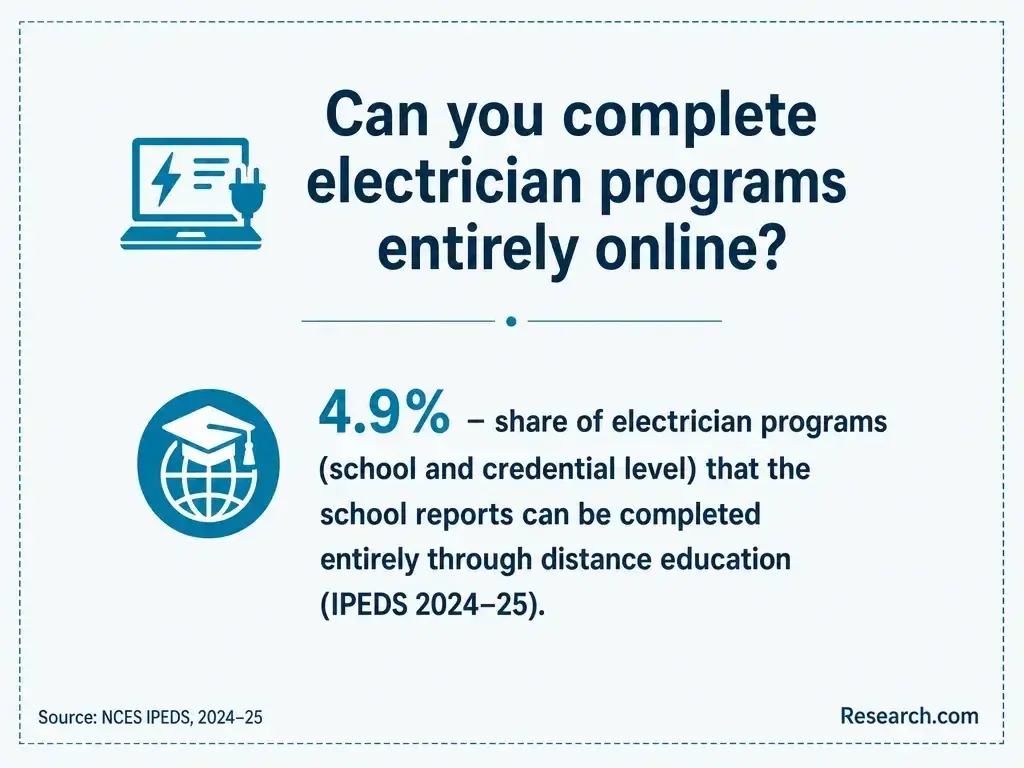
Electrical theory, math, code reading, and some assignments can be taught online. Wiring, testing, tool use, fault-finding, and safe work practices require supervised practice with equipment; apprenticeships add experience on actual worksites. An entirely online course should not be treated as equivalent to a program with substantial shop and field training.
For a hybrid program, ask for the required in-person lab schedule, location, equipment access, and any arranged work experience. This is especially important if travel across New York would make attendance difficult. Cheapest online universities for job holders may help frame a flexible-study search, but electrician applicants must separately verify how and where practical skills will be assessed.
There is no dependable single average that captures New York career schools, public colleges, and paid apprenticeships on equivalent terms. Published tuition may exclude mandatory fees, books, tools, personal protective equipment, consumables, transportation, and any examination or local license application charges. Public-college resident and nonresident charges may differ; verify the rate you qualify for with the provider.
Request a written estimate of total cost through completion and entry into supervised work. Then subtract grants or other aid you are eligible to receive - not loans, which must be repaid - and account for wages you could earn in a paid apprenticeship. Federal aid eligibility depends on the school and program; New York aid and workforce-training assistance have their own eligibility rules (Federal Student Aid; New York State Higher Education Services Corporation; New York State Department of Labor). A cheaper program is not automatically better value if limited lab access or weak placement connections delay paid work.
That depends on the pathway. A career school may award a certificate or diploma; a college may award a certificate or associate degree; and a registered apprenticeship leads to an apprenticeship completion credential after its required instruction and work experience (institution or sponsor; New York State Department of Labor). An industry credential, where offered, is separate from both school completion and occupational licensure.
Before enrolling, ask for the exact credential name and whether employers you target recognize it. Also ask whether prior electrical coursework can count toward a later program or whether an apprenticeship sponsor offers advanced standing. Get any credit decision in writing: neither a school credential nor an industry certificate automatically reduces apprenticeship requirements or grants a local license.
Requirements vary by provider. Schools may assess basic math and reading, while apprenticeship sponsors may set their own education, age, assessment, interview, and ability-to-perform-work requirements (institution or sponsor; New York State Department of Labor). Do not assume admission to a school also means admission to its employer partner or to an apprenticeship.
Ask admissions staff and apprenticeship coordinators what documents, tests, deadlines, and additional costs apply. If you need to work while training, confirm the actual class and shop schedule before paying a deposit. A program that requires frequent daytime labs may not fit a full-time work schedule even if its theory lessons are flexible.
A useful entry program teaches electrical calculations, circuits, wiring and raceways, reading plans, use of meters, troubleshooting, and safe work practices. It should also teach students how to locate and apply the electrical code used on their jobs, rather than simply memorize answers. The precise curriculum and lab hours vary, so request a current syllabus and shop schedule (institution or sponsor; U.S. Bureau of Labor Statistics).
For construction work, look for repeated practice installing and testing circuits. For maintenance work, look for diagnosis of faults and exposure to controls. Ask who supervises the labs, which tasks students perform individually, and how competence is checked. Demonstrations alone provide less evidence of job readiness than assessed hands-on work.
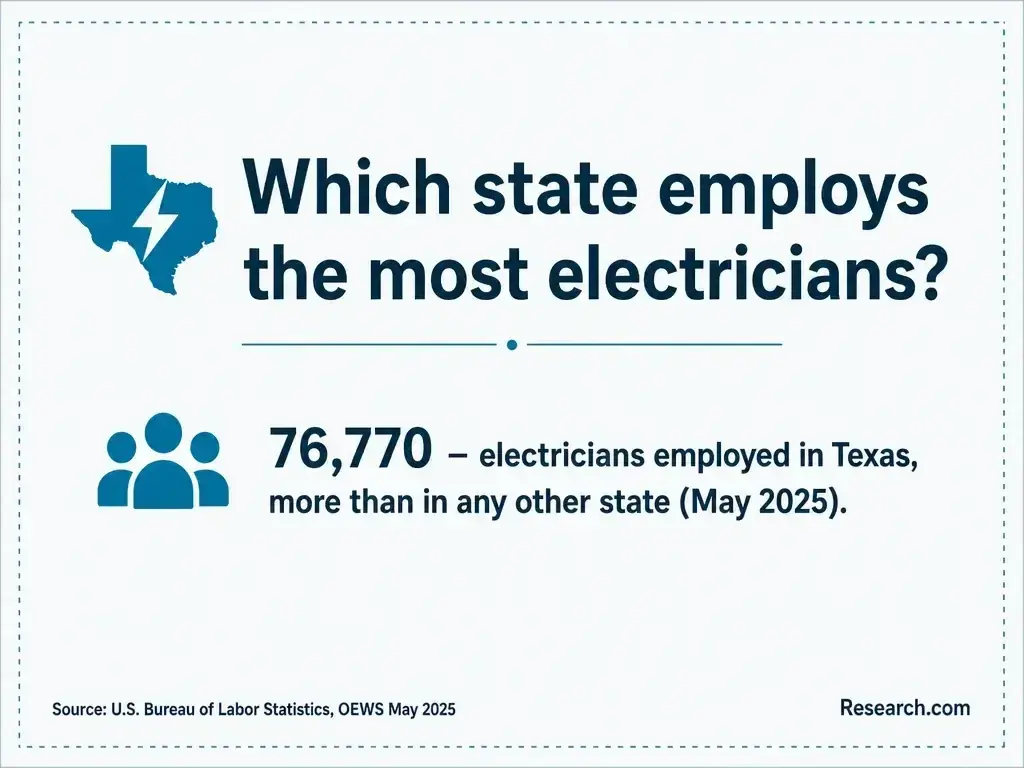
New York has no single statewide electrician license; licensing and permitted work can depend on the municipality. New York City, for example, licenses master and special electricians through its Department of Buildings. Its eligibility process involves specified experience and examination requirements, so a school certificate alone does not qualify someone for those licenses (New York City Department of Buildings). Verify the rules where you plan to work before choosing training.
Keep these distinctions clear: school authorization permits a provider to operate; institutional accreditation concerns the institution; apprenticeship registration concerns a training arrangement; industry certification attests to a defined set of skills; and a local occupational license grants authority under that jurisdiction's rules. None automatically substitutes for another. Ask a prospective provider how it documents supervised experience and whether its graduates have a realistic route into the work needed for your intended jurisdiction.
Start with the job and municipality you want, then compare school programs with registered apprenticeships and employer training. The strongest choice is the one that gives you accessible practical instruction, a credible route to supervised work, and a manageable total cost - not necessarily the fastest schedule or highest rank.
Use these checks before committing money; they expose gaps that a program name or advertised tuition may hide:
A useful return-on-investment comparison also considers your current earnings, how long training takes, your chance of completing it, expected earnings after training, debt, and when benefits might occur. Rankings can narrow a search, but they cannot make those personal factors equal for every student. Even online degrees for high paying jobs answer a different question from whether a particular electrical program gets you into paid, supervised trade work.
An entry route may lead to electrical helper or apprentice work, followed by more independent installation or maintenance responsibilities as skills and experience grow. Experienced workers may pursue specialties such as industrial controls, building systems, or supervision; business ownership and work requiring a local license call for a separate review of the jurisdiction's rules (U.S. Bureau of Labor Statistics; relevant local licensing authority).
Choose training for the next step you can actually take. A beginner generally needs sound fundamentals and access to supervised work. Someone already employed in electrical maintenance may gain more from targeted controls instruction or a sponsor's advanced-standing assessment than from repeating an introductory program. Optional specialty credentials should be evaluated for employer value, not mistaken for mandatory statewide licenses.
The U.S. Bureau of Labor Statistics projects 9.2% growth in electrician employment nationally from 2025 to 2035. That signals demand across the occupation, not a guaranteed opening in a particular New York county or for a new program graduate.
Use New York State Department of Labor regional projections and current postings to test the market where you intend to work. Compare the kind of openings - not merely their number - with a program's curriculum: construction employers, industrial maintenance teams, and building operators may seek different experience. If local entry openings are scarce, an apprenticeship sponsor's worksite coverage and your ability to commute may matter more than a school's location alone.
Investing in training is a consequential decision, so Research.com compares electrician programs with other programs in the same occupation and location rather than with unrelated schools. The ranking is intended to help readers narrow their options; it cannot replace a check of current program costs, practical training, and local licensing rules.
Only programs reporting completions to IPEDS are eligible. The best-programs ranking considers student outcomes; earnings and return on investment; costs and debt; and quality and recognition. Occupation-relevant programmatic accreditation or industry recognition accounts for 20% of the score, institutional accreditation for 10%, and student support for 10%. The remaining 60% covers outcomes, earnings, and costs, with weights distributed by an entropy-based method that gives more weight to indicators that vary more across programs. The separate most-affordable ranking scores only tuition, cost of attendance, median debt, and federal loan default rate using entropy-based weights; accreditation and other quality indicators are not part of that score.
The Research.com team draws on the following sources when building its trade-program rankings. Some are relevant to other trades rather than electrician training; their inclusion does not imply that they accredit or approve electrician programs.
IPEDS and College Scorecard do not cover every union program, registered apprenticeship, or employer-sponsored route. An omitted provider is not necessarily unapproved or lower quality. Readers can find further detail about the ranking approach on Research.com's methodology page.
# 1 position
# 2 position

# 3 position

# 5 position
# 7 position

# 8 position
# 9 position
# 11 position

# 12 position
# 13 position

# 14 position
# 15 position
# 16 position

No single statewide rule requires a trade-school credential. Registered apprenticeships and employer training are also routes into supervised electrical work. Check the requirements of the employer and municipality where you intend to work (New York State Department of Labor; relevant local licensing authority).
No. A certificate documents completion of a program, not fulfillment of a municipality's experience, examination, or application requirements. New York City's master and special electrician licenses, for example, have separate requirements (New York City Department of Buildings).
It may be if you can secure a place and want to earn while completing structured instruction and supervised work. School can be useful when you need foundational skills first or when its schedule and employer connections better fit your circumstances. Compare total costs, admission prospects, and access to worksites.
You can study some theory online, but wiring, testing, safe tool use, and worksite competence require in-person practice. Ask any online or hybrid provider where practical training happens and how it is assessed.
Ask for the reporting period, number of completers included, definition of placement, and share placed in electrical - not unrelated - work. Confirm whether the provider helps arrange supervised positions and whether those positions are accessible from your home.
