# 1 position


Audited and Verified:
Our Editorial and Data Verification Process
Research.com uses government datasets, official education statistics and primary institutional information to support its career and degree guides. Our review process checks factual accuracy, occupational definitions, source dates and the requirements associated with the credentials discussed.
How This Article Was Fact-Checked
Our editorial team verifies salary estimates, employment projections, education requirements and program information against original data providers and official organizations. Salary figures are checked against the relevant occupational definitions and reporting periods. Information about licensure, accreditation and required in-person training is reviewed separately.
Fact-checked and verified on:

Co-Founder and Chief Data Scientist

Reviewed by Karolina Broda
Fact-Checker and Data Verification
The cheapest electrician program is not necessarily the least expensive route to a Utah license. Tuition matters, but so do tools, time away from work, and whether training counts toward supervised experience. The Most Affordable Electrician Trade Schools in Utah for 2027 ranking, created by the Research.com team of data scientists, will help students identify programs worth considering. With U.S. electrician employment projected to grow 9.2% from 2025 to 2035, according to the U.S. Bureau of Labor Statistics, this guide helps career changers and first-time trainees compare costs, credentials, apprenticeships, and licensing requirements.
Expect instruction in electrical theory, code, safety, installation, and troubleshooting, with supervised practice using wiring, panels, meters, and drawings. The decisive question is how that instruction connects to paid field experience: a school credential alone is not a journeyman license. Utah's Division of Professional Licensing (DOPL) sets license requirements separately from a school's graduation requirements.
These routes differ in what they award and how quickly they put you on a worksite. Published schedules and eligibility vary by provider and sponsor.
| Training route | What it typically provides | Best fit and main trade-off |
| Technical-college certificate | Focused classroom and lab training; a school credential | Useful preparation for entry-level work, but confirm whether instruction satisfies a licensing-route requirement |
| Community-college program | Electrical coursework that may lead to a certificate or, where offered, an associate degree | Fits students seeking broader coursework; compare added time and cost with career-entry needs |
| Registered apprenticeship | Related instruction and supervised, usually paid, work under a sponsor | Fits applicants ready to earn while training; entry depends on sponsor hiring and selection |
| Employer-sponsored entry | Worksite training, sometimes paired with outside classes | May reduce upfront school expense; verify the employer can document qualifying experience and required instruction |
Public options to investigate include Salt Lake Community College, Utah State University, Bridgerland Technical College, and Davis Technical College. Compare their specific current electrician offerings rather than assuming similarly named credentials include the same lab time or apprenticeship connection. Private career schools, union training centers, and employer sponsors can also be options, even when they do not appear in a college-based ranking.
Electrical contractors install and service systems in homes, commercial buildings, and industrial facilities. Other opportunities include facilities maintenance, manufacturing, utility-related projects, and construction involving solar equipment or controls. Job duties and the license needed to perform them depend on the work, not the name of a school certificate; the U.S. Bureau of Labor Statistics describes electricians as installing, maintaining, and repairing electrical power, communications, lighting, and control systems.
Location affects the search. Students near the Wasatch Front may be able to compare more employers and training schedules within commuting distance, while a rural applicant should ask whether required classes and supervised worksites are realistically accessible. Before enrolling, ask a prospective employer or apprenticeship sponsor whether it recruits from the program and what entry-level tasks trainees may perform under supervision.
Utah pay varies by location, license level, specialty, employer, and overtime. For a consistent benchmark - not a Utah wage figure - the U.S. Bureau of Labor Statistics reports a $63,190 national median annual wage for electricians in May 2025. The median includes experienced workers and should not be used as a new apprentice's expected pay.
For a useful local estimate, compare current Utah apprentice wage scales and job postings for the area where you can work, then compare later-stage journeyman rates. A paid apprenticeship can improve cash flow during training even if its starting wage is below an experienced electrician's rate. Evaluate any school expense against earnings you could otherwise receive during the same period.
A school certificate can take substantially less time than the supervised experience needed for a journeyman license. Course length depends on whether classes are full-time, part-time, or scheduled alongside work. A registered apprenticeship combines classroom instruction with work experience over multiple years; Utah DOPL recognizes specific experience-and-training routes, so students should verify the current hour and instruction requirements for their intended license before choosing a schedule.
Speed is not the same as occupational readiness. If you are comparing the quickest associates degree with a shorter electrical certificate, ask which option gets you into qualifying paid work sooner. An accelerated school schedule that prevents you from working may cost more overall than slower classes paired with supervised employment.
Online delivery can be practical for code study, electrical calculations, and some theory. It cannot replace demonstrating safe tool use, wiring, testing, and fault-finding in a lab or supervised worksite. A hybrid program is useful when its in-person sessions and work requirements fit your commute; an entirely remote course should not be assumed to satisfy Utah licensing requirements.
When reviewing a top online school for trade skills, request a written breakdown of online instruction, in-person lab hours, and any arranged field experience. Ask who verifies hands-on competencies and whether Utah DOPL or an apprenticeship sponsor will accept the instruction. For a rural student, the location and frequency of required visits can outweigh a low advertised online tuition.
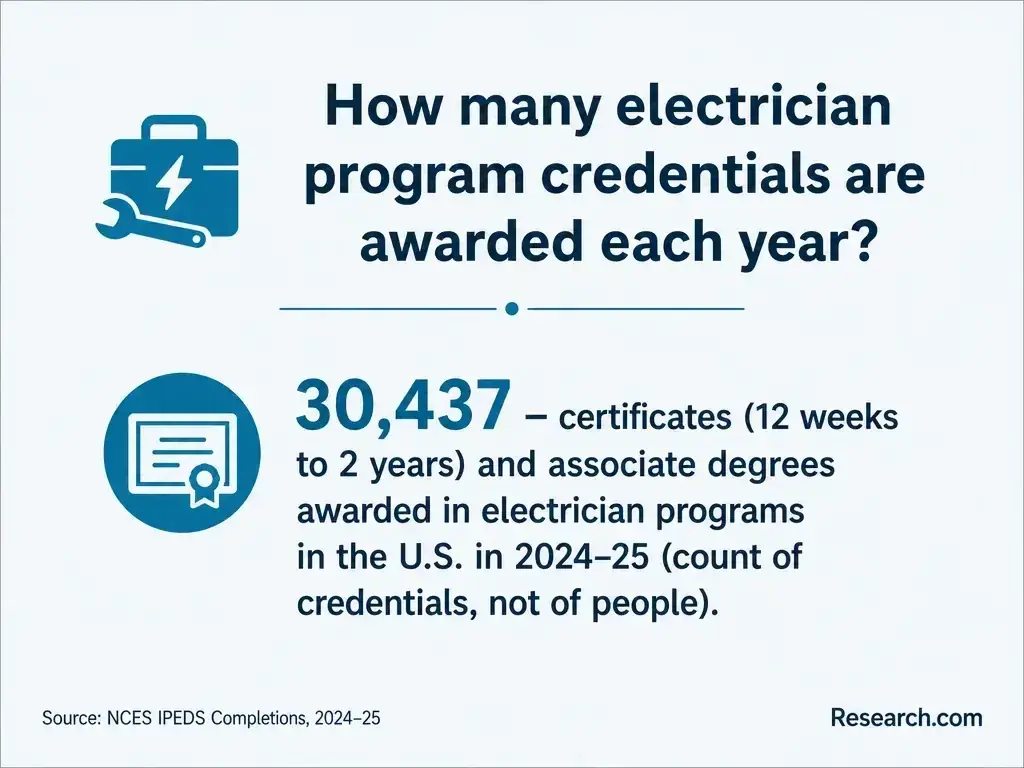
There is no single reliable statewide average that captures technical-college programs, community-college study, and paid apprenticeships on the same basis. Published tuition may omit expenses needed to become job-ready. Request an itemized, current estimate for your residency status and intended schedule rather than treating a ranking position as your final price.
This comparison separates upfront charges from costs and offsets that can change the value of an apparently affordable program.
| Cost or offset | What to verify | Why it changes the comparison |
| Tuition and mandatory fees | Full-program price, residency rules, and any per-term charges | A longer schedule can add fees even when tuition appears low |
| Tools, PPE, and materials | Required tool list, safety gear, books, and consumables | These may be purchased separately or supplied by a sponsor |
| Work and licensing expenses | Travel, examination and application fees, and any required screening | They arise beyond the classroom portion of training |
| Income and assistance | Apprentice wages, employer support, grants, and eligible aid | Paid training can offset costs; aid eligibility varies by program |
Ask each provider for a cost-of-attendance estimate and each apprenticeship sponsor for its wage progression and participant expenses. Federal student aid depends on the student's and program's eligibility, according to Federal Student Aid; eligible applicants can also ask Utah's workforce system about available training assistance. The cheapest route is the one that makes financial sense through job entry, not simply at enrollment.
A school may award a certificate, diploma, or, for an applicable college program, an associate degree. A registered apprenticeship has its own completion credential. These document different training; none should be confused with a Utah occupational license. Ask for the exact credential name and a record of instruction and supervised experience that you can provide to an employer or licensing authority.
Students considering the quickest way to get an associate's degree should compare its additional coursework with a shorter electrician certificate and a paid apprenticeship. Choose the broader credential if it serves a specific goal, not because its title seems more likely to qualify you for licensure. Ask whether prior instruction, documented work, or apprenticeship coursework can receive credit or advanced standing; policies vary by provider and sponsor.
School entry rules and apprenticeship hiring rules are different. A provider may require an application, placement assessment, or evidence of readiness for electrical math; a sponsor may additionally assess applicants for worksite demands and available openings. Confirm current requirements directly with the program. Separately, ask Utah DOPL what registration or license status you need before performing electrical work as a trainee.
Older career changers comparing top college courses for seniors online should pay particular attention to the schedule and physical location of labs and worksites. An accessible online theory course is helpful only if they can also complete the required practical training. Before paying a deposit, ask whether classes are open to applicants without an employer and whether the provider assists with apprenticeship placement.
Training should connect calculations and code interpretation to safe installation. Expect electrical theory, circuit calculations, blueprint reading, conductors and raceways, grounding, equipment installation, meter use, and troubleshooting. Labs should require you to build, test, diagnose, and correct work - not just watch demonstrations. These competencies reflect the installation and repair duties described by the U.S. Bureau of Labor Statistics.
Compare the practical portion closely. Ask to see the lab schedule, equipment, instructor supervision arrangements, and assessment methods. If your goal is industrial maintenance or controls rather than residential installation, check whether the curriculum and available worksites actually cover that equipment. General electrical instruction may be a sound foundation without being sufficient preparation for every specialty.
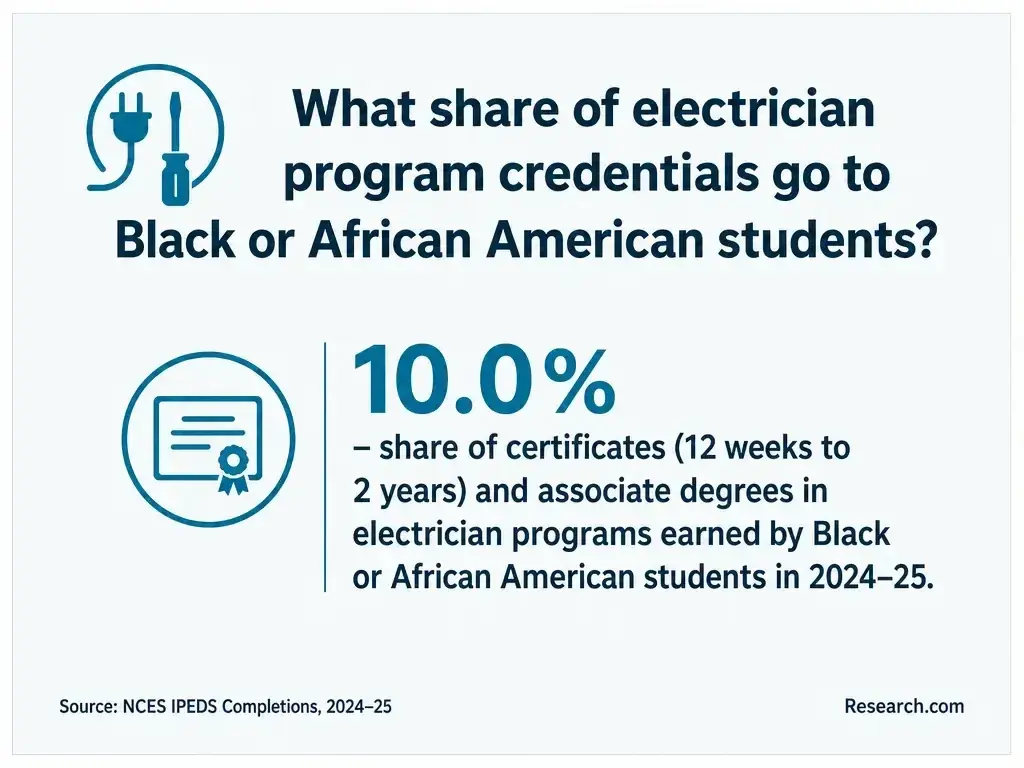
Utah regulates electrical work through DOPL. The appropriate trainee status and the requirements for residential, journeyman, or later master-level work depend on the activities and license sought. Journeyman progression involves documented qualifying experience, required training under an applicable route, and examination; finishing a school program alone does not authorize independent electrical work. Verify the current route and how your hours will be recorded with Utah DOPL before enrolling.
Keep four checks separate: institutional accreditation concerns the school; state authorization concerns permission to operate; apprenticeship registration or recognition concerns the work-based training arrangement; and occupational licensure concerns legal permission to perform regulated work. An industry certificate can document skills but does not replace a Utah license. This distinction matters especially when a provider advertises "certification" without identifying what it qualifies you to do.
Start with your intended work and license, then compare only routes that can plausibly get you there. The most affordable ranking helps identify school costs, but it does not score licensing alignment or the value of paid work experience. For each finalist, obtain answers in writing:
A red flag is a promise that a short course - or a fully online certificate - automatically makes you a licensed electrician. Another is a price quote that excludes required equipment or offers no clear path to qualifying fieldwork. A sound investment is a route you can complete, afford, and connect to the experience your goal requires.
A common progression is supervised trainee work, additional instruction and experience, and eligibility to pursue the appropriate Utah license. With experience, electricians may specialize in residential service, commercial construction, industrial maintenance, or controls; supervisory and contracting opportunities involve further responsibilities and applicable licensing. The credential needed for a particular step should be checked with Utah DOPL and prospective employers, rather than inferred from a course title.
For someone seeking quick schooling to make good money, electrician training requires a realistic time horizon. A short course may help secure an entry-level opportunity, but experienced-worker pay generally requires years of skill development. Compare how soon each pathway lets you earn, how reliably it supplies supervised experience, and whether its specialty matches jobs within commuting distance.
The U.S. Bureau of Labor Statistics projects 9.2% national growth in electrician employment from 2025 to 2035. That supports a positive broad outlook but is not a Utah forecast or a promise of a nearby opening. Construction activity, facility maintenance needs, and employers' willingness to take on trainees will determine an individual applicant's options.
Use Utah labor-market information and current local postings to test demand in the area where you intend to work. Count openings that accept supervised trainees separately from those requiring a journeyman license. If entry-level opportunities are limited near home, the ability to commute or relocate may matter more than a small difference in school tuition.
Education is a consequential investment, so Research.com designed this ranking to make local cost comparisons more credible and useful. Programs are compared with others in the same occupation and location, and only programs with completions reported to the Integrated Postsecondary Education Data System (IPEDS) are eligible. The team evaluates the available data for consistency and accuracy; readers should still confirm current prices and licensing alignment directly with providers.
The most affordable ranking scores tuition, cost of attendance, median student debt, and federal loan default rates. An entropy-based method assigns more weight to measures that distinguish programs more clearly. Accreditation, student outcomes, and other quality indicators are not part of this affordability score. That makes the ranking a cost-screening tool, not a finding that the cheapest program is the best route to licensure.
Research.com also produces separate best-program rankings. Those consider completion and full-time and part-time retention; earnings one year after completion and relative to annual attendance cost; tuition, attendance cost, debt, and loan defaults; and accreditation, occupation-relevant recognition, and student support. In that separate model, relevant programmatic accreditation or industry recognition receives 20%, institutional accreditation 10%, student support 10%, and outcomes, earnings, and costs collectively 60%, allocated through an entropy-based method.
The ranking draws on the following data sources. Some cover multiple occupations and may be less directly relevant to electrician training than others:
IPEDS and College Scorecard do not comprehensively cover union programs, employer training, or registered apprenticeships. A provider's absence from the ranking does not mean it lacks approval or value. Use the ranking to narrow school options, then compare them with paid training routes. More detail about Research.com's approach is available on its methodology page.
# 1 position
# 2 position

# 3 position
# 4 position
Compare paid apprenticeships and employer-sponsored training with public technical-college options. Include tools, travel, fees, and wages while training; the lowest tuition is not necessarily the lowest total cost.
No. A certificate does not replace the qualifying experience, training, and examination required under the applicable Utah DOPL licensing route.
Do not assume so. Online theory may help, but practical competencies and qualifying supervised work require separate verification against Utah DOPL's current requirements.
Choose based on access to paid supervised work, required instruction, total cost, and your schedule. School can build entry-level skills; a registered apprenticeship combines instruction with work but depends on sponsor selection.
No. Accreditation addresses the institution or program's educational standards. Check licensing-route eligibility and apprenticeship or work-experience requirements separately with Utah DOPL.