# 1 position
College of Eastern Idaho - Electrician.
associate

Audited and Verified:
Our Editorial and Data Verification Process
Research.com uses government datasets, official education statistics and primary institutional information to support its career and degree guides. Our review process checks factual accuracy, occupational definitions, source dates and the requirements associated with the credentials discussed.
How This Article Was Fact-Checked
Our editorial team verifies salary estimates, employment projections, education requirements and program information against original data providers and official organizations. Salary figures are checked against the relevant occupational definitions and reporting periods. Information about licensure, accreditation and required in-person training is reviewed separately.
Fact-checked and verified on:

Co-Founder and Chief Data Scientist

Reviewed by Karolina Broda
Fact-Checker and Data Verification
Choosing an affordable electrician program means looking beyond tuition: will the training help you qualify for supervised work and, eventually, an Idaho license? The U.S. Bureau of Labor Statistics projects 9.2% national growth in electrician employment from 2025 to 2035. For prospective students and career changers, this guide compares costs, credentials, apprenticeships, and licensing steps. It also accompanies the Most Affordable Electrician Trade Schools in Idaho for 2027 ranking, created by the Research.com team of data scientists to help you identify programs worth considering.
Expect electrical theory, code instruction, and practical work - not an immediate journeyman credential. Idaho training options include college certificates or associate degrees, pre-apprenticeship training, and registered apprenticeships. Their crucial difference is whether supervised job hours are built into the pathway. The Idaho Division of Occupational and Professional Licenses (DOPL) sets licensing requirements; a school credential alone does not replace them.
The comparison below shows what each pathway typically provides and the main gap to investigate before enrolling. Individual schedules, awards, and apprenticeship arrangements vary by provider.
| Pathway | Training and credential | Best fit and key question |
| College certificate or diploma | Classes and labs leading to a school credential | Useful for building fundamentals; ask whether the instruction counts toward Idaho requirements and how you will obtain supervised work. |
| Associate degree | Electrical coursework, labs, and an academic degree | May suit someone wanting broader technical study; check whether added time and cost advance the same licensing goal. |
| Pre-apprenticeship | Entry-level preparation; any completion credential depends on the provider | May help applicants compete for an apprenticeship; ask whether a sponsor offers placement or credit. |
| Registered apprenticeship | Paid supervised work plus related instruction; completion credential depends on the sponsor | Direct route for people ready to work while training; ask about openings, wages, travel, and classroom costs. |
A short course can be useful preparation, but electrician licensing is not a quick-course outcome. If speed of entry into paid work is your priority, compare 6 month courses that pay well with an electrical pre-apprenticeship without assuming either replaces Idaho's journeyman requirements.
Electrical apprentices and licensed electricians may work for construction contractors, industrial facilities, utilities, and building-maintenance employers. Residential and commercial construction involve different job sites and schedules; industrial and maintenance work can place greater emphasis on motors, controls, and troubleshooting. The U.S. Bureau of Labor Statistics describes construction and maintenance as major settings for electricians.
Location affects both training access and costs. A student near a larger employment center may have more sponsors to approach, while a rural applicant may need to travel for instruction or job sites. Ask a prospective employer or sponsor where work is actually performed and whether travel time, vehicle costs, or overnight stays will fall to you.
Do not use a national median as a quote for your first Idaho job. The U.S. Bureau of Labor Statistics reports a $63,190 U.S. median annual wage for electricians in May 2025; it covers workers at different experience levels, not just new apprentices. To estimate your likely earnings, compare current Idaho apprentice wage schedules and local job postings with Idaho occupational wage data from the state labor agency.
Pay can change substantially as an apprentice gains experience and qualifies for a journeyman license. When weighing tuition against earnings, use the wage you could realistically receive during training as well as afterward. A paid apprenticeship may improve short-term cash flow even if its route to independent work takes longer than a classroom certificate.
A school program and the route to journeyman licensure have different clocks. Certificates and pre-apprenticeships vary by provider; an associate degree generally involves a longer academic course of study. Idaho's standard journeyman pathway generally calls for 8,000 hours of documented supervised electrical work and 576 hours of related instruction, commonly organized over four years, followed by an examination (Idaho DOPL). Verify current rules and whether a proposed school's hours qualify before assuming its completion date is your licensing date.
Full-time classes can build skills quickly but may leave less time to earn wages. Part-time classes alongside registered apprenticeship work may better suit someone who needs income. Ask the provider for its actual calendar, required lab attendance, and any agreement allowing prior instruction or experience to be evaluated for credit; do not assume credit is automatic.
Online instruction can cover theory, calculations, and some code study. It cannot substitute for handling tools, installing wiring, testing circuits, following lockout procedures, or performing supervised work at a job site. A hybrid program can be practical if its labs and work placements are accessible from where you live; a fully remote course should not be treated as a route to Idaho electrical licensure without confirmation from Idaho DOPL.
Institutional accreditation is worth checking for a college-based option, but it is separate from approval of instruction for licensing purposes. A list of top accredited non-profit online schools cannot answer whether a particular electrical program supplies Idaho-eligible instruction or in-person practice. Request the lab schedule and ask DOPL how the instruction will be evaluated.
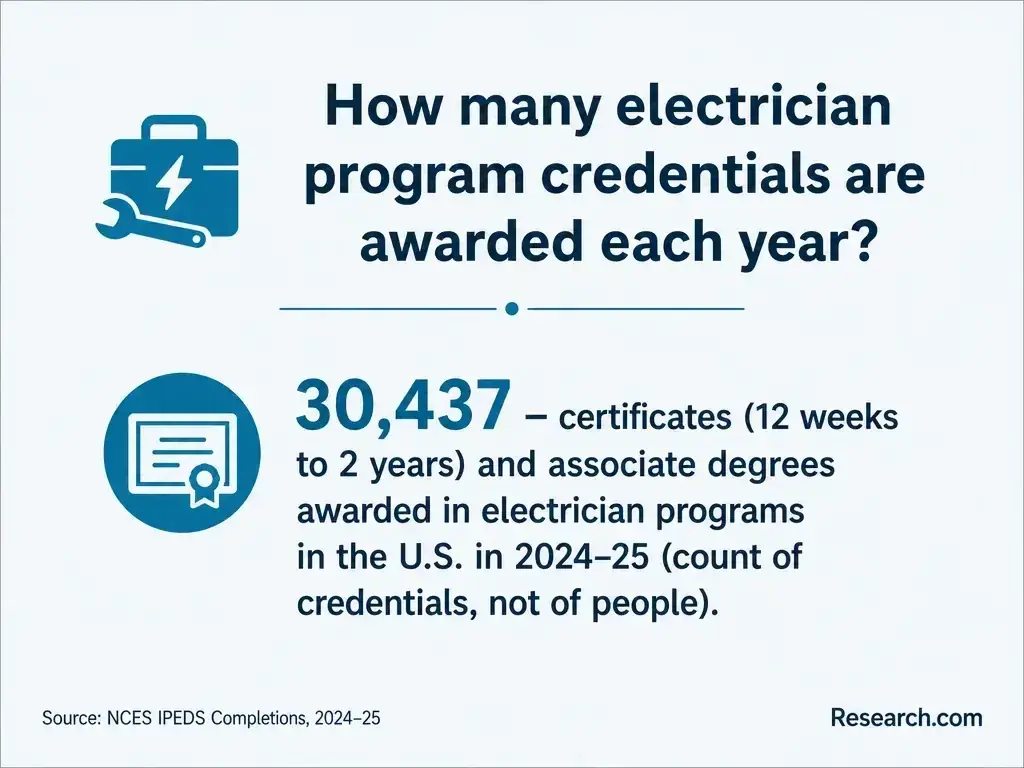
There is no single defensible statewide price for every electrician pathway: a college program charges tuition and fees, while an apprenticeship generally pays wages and may still charge for instruction, books, or supplies. Published prices can also differ by residency and enrollment load. Compare current, program-specific quotes rather than treating a ranking position as your final bill.
Build a job-ready budget that includes tuition, mandatory fees, books, tools, electrical test equipment, PPE, exam and license applications, and travel to both classes and job sites. Then subtract confirmed grants, scholarships, eligible aid, or employer-paid costs. Federal aid eligibility depends on the institution and program, according to Federal Student Aid; ask each provider and the Idaho workforce agency about applicable assistance. Searches for cheap phd online programs do not provide a useful price benchmark for hands-on electrical training.
For a meaningful return-on-investment comparison, account for program duration, wages you forgo or earn during training, likely completion, borrowing costs, and your realistic earnings over time - not tuition alone. Get each provider's written cost breakdown before committing.
The award depends on the pathway: a college may issue a certificate, diploma, or associate degree; a registered apprenticeship provides its sponsor's completion credential. These show training completed, but none is itself an Idaho journeyman license. DOPL, rather than a school, determines eligibility for an occupational license.
Ask whether the credential records instruction hours in a form Idaho accepts and whether an apprenticeship sponsor will recognize prior coursework. Unlike dual-degree programs, stacking electrical credentials matters here only if the extra training advances your work, licensing, or specialization goal.
Requirements differ across colleges, pre-apprenticeships, employers, and registered sponsors. Providers may assess math readiness, require an application or interview, and expect applicants to meet job-site safety and physical demands. An apprenticeship sponsor may also require applicants to be available for assigned work and classes. Check the actual provider's current admissions notice rather than assuming that acceptance into a school means acceptance into an apprenticeship.
Before applying, ask whether you must secure an employer first, when supervised hours begin, which costs are due before your first paycheck, and whether previous electrical work or coursework can be evaluated for advanced standing. If admission is competitive, apply to more than one suitable sponsor or training provider.
Core training typically covers electrical theory, circuit calculations, blueprint reading, wiring methods, the electrical code, testing, and safe use of tools. Labs let students practice installations and troubleshooting; supervised job sites add the pace, coordination, and safety decisions of real construction or maintenance work. The U.S. Bureau of Labor Statistics identifies reading technical diagrams, installing systems, and diagnosing problems as central electrician duties.
Match the practical work to your intended role. Someone interested in industrial maintenance should ask about motors and controls, while a prospective residential apprentice should ask how much time is spent on wiring and service work. Request the curriculum and lab schedule, then ask where graduates obtain supervised hours; a similarly named certificate at another provider may offer a very different amount of hands-on practice.
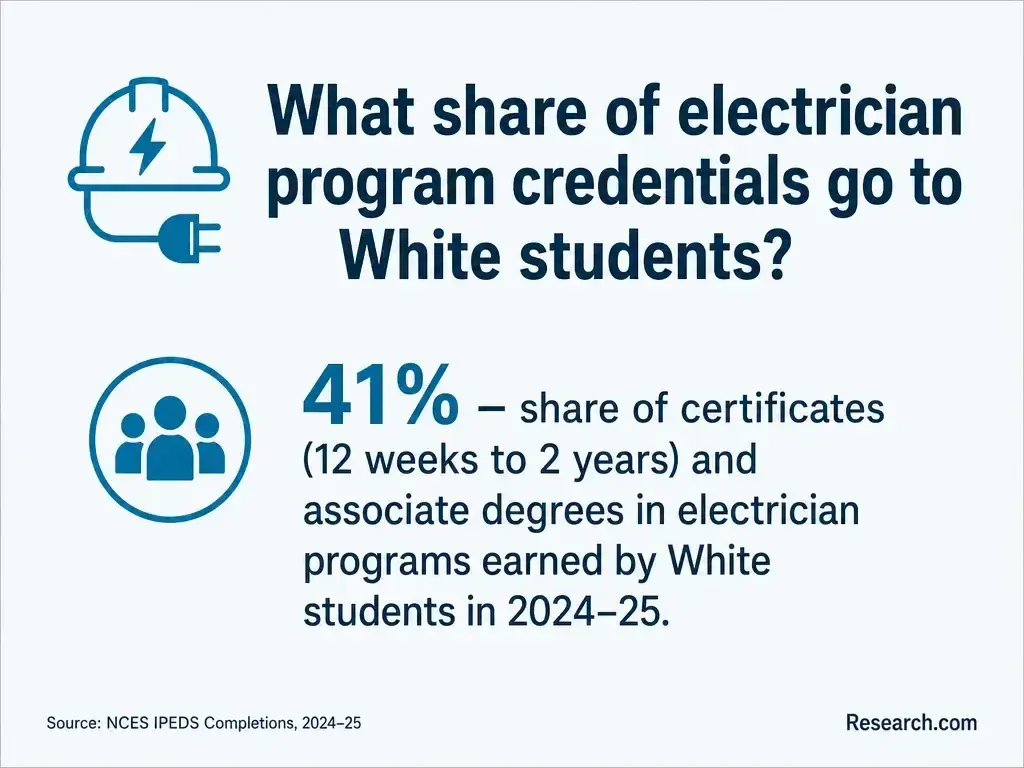
Yes, Idaho regulates electrical work through DOPL. An entrant should distinguish apprentice registration, which supports supervised work, from a journeyman license, which requires qualifying experience and instruction plus an examination. Master and contractor credentials involve further requirements and are not entry-level school awards. Confirm your intended work category and current application rules directly with DOPL before enrolling or accepting work.
Institutional accreditation concerns the school; apprenticeship registration concerns the training arrangement; occupational licensure concerns legal authority to perform regulated work. Industry certificates or voluntary safety training may be valued by employers but do not replace the state license. If you may move, check the destination state's rules separately rather than assuming an Idaho credential transfers automatically.
Start with the job you want and work backward to Idaho's requirements. The affordable choice is the one that gives you credible instruction, accessible practical training, and a feasible route to supervised hours at a total cost you can manage. A low tuition figure is a warning sign if the provider cannot explain those connections.
Use these questions when speaking with a school or apprenticeship coordinator; request written answers where possible:
Check institutional accreditation separately from Idaho licensing alignment, and verify a claimed registered apprenticeship with its sponsor or Apprenticeship.gov. Rankings can narrow a search, but even an apparently attractive result for easiest doctorate degree illustrates why a ranking outside your intended occupation cannot answer an electrician licensing question.
A common progression is registered apprentice, licensed journeyman, and then more specialized or supervisory work with experience. Depending on the employer, electricians may focus on residential construction, commercial buildings, industrial equipment, or maintenance. Further credentials may be needed for particular regulated responsibilities; an optional industry certificate is not the same as a state license (Idaho DOPL).
Choose introductory training for the work you actually want to pursue. If your goal is independent electrical work, prioritize a clear path to documented experience and examination eligibility. If you want to test the trade before a longer commitment, a pre-apprenticeship may make sense - but confirm what it costs and whether a local sponsor recognizes it.
The U.S. Bureau of Labor Statistics projects 9.2% growth in electrician employment nationwide from 2025 to 2035. This supports investigating the trade, but it does not predict the number of openings in your Idaho community or guarantee an apprenticeship place. Construction activity, maintenance needs, and employer hiring differ by area.
Use the national projection as context, then check Idaho Department of Labor projections and current sponsor openings for the place you can realistically work. If local positions are limited, compare the expense of commuting or relocating with the benefit of a paid training opportunity before choosing a campus or signing an apprenticeship agreement.
Education is a significant investment, so Research.com evaluates programs against other options in the same occupation and location. The Most Affordable ranking considers tuition, cost of attendance, median student debt, and federal loan default rates, with weights assigned through an entropy-based method. It does not include accreditation or other quality indicators in the affordability score. Only programs reporting completions to IPEDS are eligible; an apprenticeship or training provider absent from the ranking is not necessarily unapproved or unsuitable.
To support the quality, credibility, and accuracy of its rankings, the Research.com team draws on the following sources. Some serve its broader trade-school research rather than electrician-specific approval checks:
The ranking gives you a cost-focused starting point, not a substitute for checking current prices, hands-on training, and Idaho licensing eligibility. Research.com explains its broader approach on its methodology page.
# 1 position
# 2 position

# 3 position

# 4 position

A paid apprenticeship may reduce the need to stop earning while you train, but compare its books, tools, travel, and other charges with a college program's net cost after aid. The cheapest route depends on the offer you actually receive.
No. A certificate can document instruction, but Idaho DOPL also requires qualifying supervised experience and an examination for the standard journeyman pathway. Confirm whether your particular instruction counts.
Online theory may be possible. Practical skills and supervised electrical work require in-person participation; ask Idaho DOPL how any remote instruction will count.
Choose based on access to paid supervised work, the instruction you need, your budget, and your schedule. A college program can help you prepare, while a registered apprenticeship combines work and related instruction; neither should be assumed to fit everyone.
No. Accreditation addresses an institution or program under an accreditor's standards. Ask Idaho DOPL whether the instruction and experience arrangement meet its licensing rules.