# 1 position
Horry-Georgetown Technical College - Electrician.
certificate or diploma

Audited and Verified:
Our Editorial and Data Verification Process
Research.com uses government datasets, official education statistics and primary institutional information to support its career and degree guides. Our review process checks factual accuracy, occupational definitions, source dates and the requirements associated with the credentials discussed.
How This Article Was Fact-Checked
Our editorial team verifies salary estimates, employment projections, education requirements and program information against original data providers and official organizations. Salary figures are checked against the relevant occupational definitions and reporting periods. Information about licensure, accreditation and required in-person training is reviewed separately.
Fact-checked and verified on:

Co-Founder and Chief Data Scientist

Reviewed by Karolina Broda
Fact-Checker and Data Verification
Choosing electrician training in South Carolina means deciding whether a school program, a paid apprenticeship, or both will get you the practical experience you need. The U.S. Bureau of Labor Statistics projects 9.2% national growth in electrician employment from 2025 to 2035, making that choice worth examining carefully. The Best Electrician Trade Schools in South Carolina for 2027 ranking, created by the Research.com team of data scientists, helps students identify programs worth considering. This guide explains how to compare their costs, credentials, hands-on training, and career-entry value.
Expect classroom instruction paired with supervised practice: reading electrical drawings, calculating loads, installing conduit and wiring, using test instruments, and working safely around energized systems. A school shop lets beginners make and correct mistakes under supervision; it is not a substitute for sustained experience on construction or maintenance jobsites. Ask each provider how often students work with equipment, rather than relying on a course title such as "hands-on electrical training."
The pathways below lead to different credentials and amounts of work experience. Compare the route to your intended first job before comparing school names.
| Pathway | What it provides | Best fit and limitation |
| Technical-college certificate or diploma | Electrical coursework and labs; some programs may connect students with employers | Useful for building fundamentals or testing career fit; verify how much jobsite experience follows |
| Associate degree in electrical technology | A longer academic credential with technical and general coursework | Potential fit for broader technical or advancement goals; not required merely to enter the trade |
| Registered apprenticeship | Paid, supervised work and related instruction through an approved sponsor | Strong fit for people ready to earn while training; entry depends on sponsor openings and selection |
| Employer-sponsored entry | Training while working as a helper or trainee | Can reduce upfront school costs; confirm who supervises training and whether experience is documented |
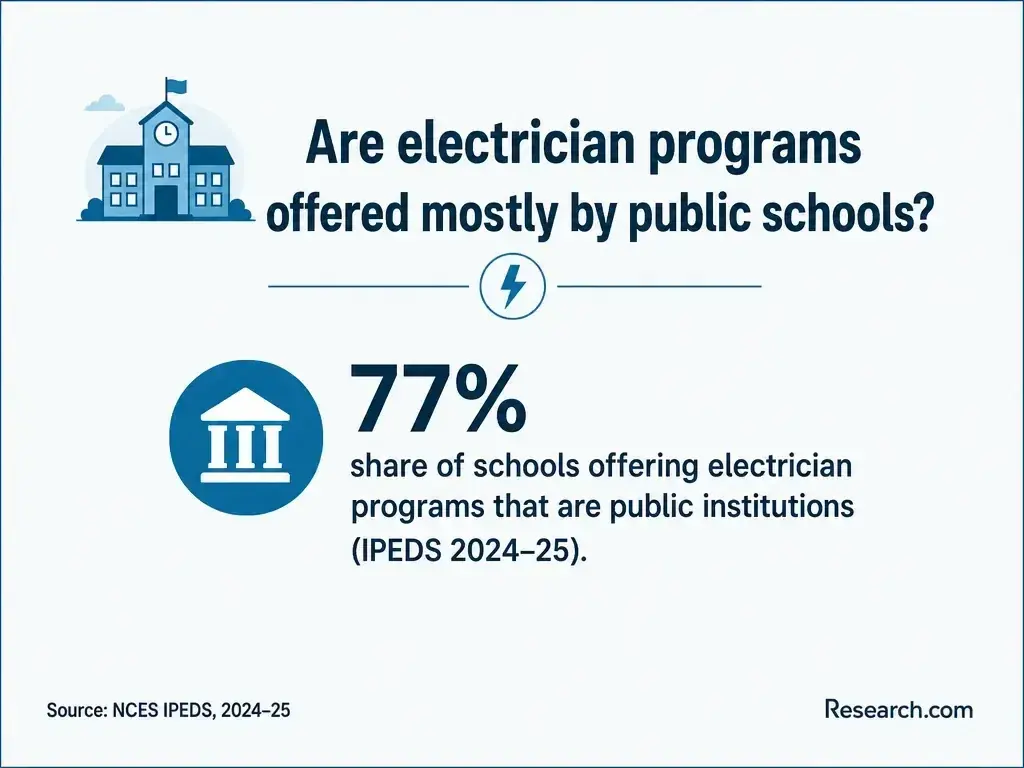
In South Carolina, public technical colleges such as Greenville Technical College, Horry-Georgetown Technical College, Technical College of the Lowcountry, Orangeburg Calhoun Technical College, and Northeastern Technical College are starting points for checking local offerings - not interchangeable promises of identical electrician credentials. Compare their current catalogs and lab locations. Also ask union-sponsored and other registered-apprenticeship programs about openings in the area where you can commute to work.
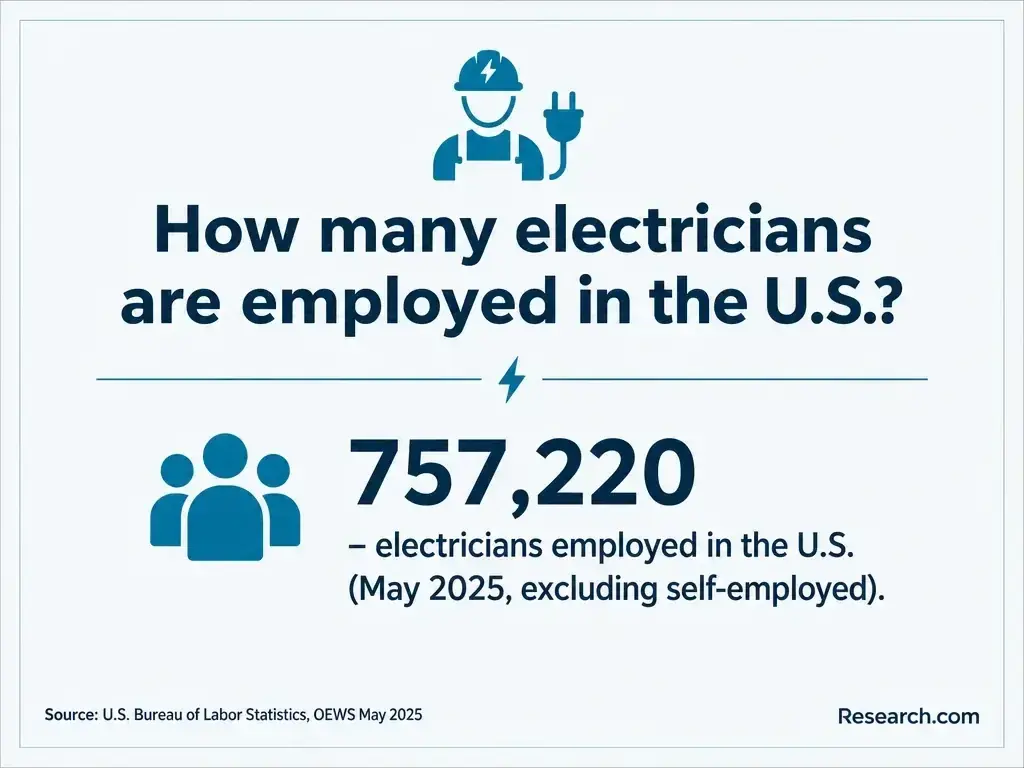
Electrical trainees can seek work with residential and commercial electrical contractors, industrial plants, facilities-maintenance teams, utilities, and employers installing controls or energy equipment. The U.S. Bureau of Labor Statistics distinguishes electricians from electrical-power-line installers: a program focused on building wiring should not be assumed to prepare someone for linework.
Location changes the training decision. A student near the Upstate's manufacturing employers may value industrial troubleshooting and motor-control instruction; someone targeting coastal construction may prioritize building-wiring practice and access to local contractors. In a rural area, the closest classroom may not be close to an apprenticeship worksite. Before enrolling, ask where recent trainees completed supervised work and how far they traveled.
Pay varies by experience, job type, employer, and location. The U.S. Bureau of Labor Statistics reports a $63,190 U.S. median annual wage for electricians in May 2025. That is the national midpoint for workers at all experience levels - not a South Carolina starting salary or an expected wage immediately after a school program.
For a local comparison, check the latest South Carolina electrician estimate in the Bureau of Labor Statistics Occupational Employment and Wage Statistics release and ask apprenticeship sponsors for their current starting wage and increase schedule. Compare offers on the same basis: hourly pay, expected hours, benefits, travel between jobsites, and tool allowances. A paid apprenticeship can improve cash flow during training even if its initial wage is below an experienced electrician's wage.
School-program length depends on the credential, course load, and schedule; a short certificate, a longer diploma, and an associate degree should not be treated as equivalent amounts of practice. Ask for the published calendar, total instructional hours, and separately identified lab hours. Also ask whether classes run often enough to finish on schedule while working.
A registered electrician apprenticeship typically takes about four to five years of paid on-the-job training plus related instruction, according to the U.S. Bureau of Labor Statistics. A shorter school program may get someone ready to apply for a helper or apprentice position sooner, but it does not compress the supervised experience needed to become a capable independent electrician. Be skeptical of searches for an online associate degree in 6 months accredited when your actual goal requires electrical lab work and documented jobsite training.
Online delivery can work for electrical theory, code study, calculations, and some safety instruction. Conduit bending, terminations, instrument use, fault-finding, and safe work habits require observed, in-person practice. A hybrid program is useful only if its required labs and any employer worksite placements are accessible from where you live.
For a working adult, flexible coursework can reduce trips to campus; it cannot eliminate the need to demonstrate practical competence. Compare the actual lab timetable and travel burden, not just the "online" label. Guides to low cost online universities for working students address a different comparison: for electrician training, the decisive question is where and how you will practice safely. Do not assume online coursework alone satisfies an apprenticeship sponsor's expectations or any licensing requirement.
There is no single reliable price for all South Carolina electrician pathways: published tuition may cover different credentials, and apprentices may earn wages while receiving instruction. Request a current, itemized estimate from each provider rather than treating an advertised per-credit price as the amount needed to become job-ready.
The following cost categories make school and paid-training quotes comparable. Ask which expenses are included, required later, or potentially covered by an employer.
| Cost or offset | What to verify |
| Tuition and mandatory fees | Resident eligibility, program length, lab fees, and payment timing |
| Tools, PPE, and materials | Required tool list, safety gear, textbooks, and replacement supplies |
| Travel and time | Trips to campus and jobsites, schedule conflicts, and earnings forgone |
| Career-entry expenses | Any applicable examination, application, or later contractor-licensing costs |
| Offsets | Grants, eligible aid, employer tool support, and apprentice wages |
Federal student aid depends on both student and program eligibility, according to Federal Student Aid; do not assume every short course or apprenticeship qualifies. Ask the financial-aid office about applicable state aid and the local workforce office about training assistance before borrowing. A guide to best online degrees for seniors will not answer an electrician applicant's central cost question: what will the complete practical-training route cost after aid and wages?
The credential depends on the pathway: a school may award a certificate, diploma, or associate degree; a registered apprenticeship documents completion of its approved work-and-instruction program. Some providers may also prepare students for an industry credential, but preparation is not the same as earning that credential. Verify the exact award and whether an examination or separate application is required.
Neither institutional accreditation nor an industry certificate is a South Carolina electrician license. Institutional accreditation concerns the school; state authorization concerns its permission to operate; apprenticeship registration concerns the training arrangement; and occupational licensing concerns authority to perform regulated work. Check each separately. Searches for doctorates without dissertation concern a different credential question and provide no evidence of electrician jobsite readiness.
Requirements vary by provider and pathway. Schools may ask for an application, proof of prior education or placement readiness, and evidence that a student can meet safety and course prerequisites. Apprenticeship sponsors set their own application, aptitude, interview, work-eligibility, and jobsite requirements. An employer hiring a helper may use a different screening process. Confirm the current requirements directly rather than assuming admission to a school also secures an apprenticeship position.
Ask whether the program offers evening classes, whether employment is required before certain courses, and whether prior electrical experience can earn credit or advanced standing. Obtain any decision on transferred coursework or apprenticeship articulation in writing before paying: a school's credit policy and an apprenticeship sponsor's recognition of previous training are separate decisions.
Core instruction commonly covers electrical safety, circuit theory, blueprint reading, the National Electrical Code, wiring methods, conduit, motors, and testing. The U.S. Bureau of Labor Statistics identifies installation, maintenance, testing, and troubleshooting as central electrician work. A strong lab should let students connect these subjects - for example, interpreting a drawing, installing a circuit, measuring it, and diagnosing a deliberately introduced fault.
Curriculum emphasis matters. Residential wiring alone may not provide much exposure to industrial controls; a controls-focused course may not provide enough practice with construction installation. Ask instructors which equipment students personally use, how performance is assessed, and which tasks are learned only after placement with a supervising employer. Code editions and workplace practices change, so confirm which materials the current cohort uses.
Do not assume one statewide "electrician license" applies to every worker and job. South Carolina's Department of Labor, Licensing and Regulation administers contractor licensing through its Contractors Licensing Board and residential-specialty oversight through its Residential Builders Commission; the applicable authorization depends on the scope of work and who contracts to perform it. Local jurisdictions and employers may impose additional requirements for particular roles. A trainee working under an authorized contractor is in a different position from someone bidding on electrical work independently.
Before choosing training, describe your intended work - employee, apprentice, residential contractor, or commercial contractor - to the relevant South Carolina licensing board and local building authority. Ask which experience, examinations, classifications, and supervision rules apply at that stage. A school certificate, NCCER credential, or registered-apprenticeship completion may be valuable evidence of training, but none automatically replaces a required contractor license or local authorization. Confirm current rules with South Carolina's Department of Labor, Licensing and Regulation before relying on a provider's licensing claims.
Start with the job you want, then work backward to the training and supervised experience it requires. A low-cost certificate may be a sound entry point if it leads to an employer placement; a paid apprenticeship may offer better cash flow if you can obtain a position. Neither choice is automatically the better investment. Compare completion likelihood, aid, debt, earnings forgone during training, likely earnings after training, and the time needed to reach your goal.
Use this sequence when contacting schools and apprenticeship sponsors. It turns a ranking shortlist into a check of practical fit and helps expose costly gaps before enrollment.
Red flags include a guaranteed-salary claim, a fully online "hands-on" electrician credential with no accessible lab, or a promise that graduation alone authorizes independent contracting. Likewise, one year phd programs online are unrelated to evaluating a trade pathway: compare electrical training against electrical job requirements instead. Use rankings to find candidates, not to skip verification.
A realistic first step is often an electrical helper, trainee, or apprentice role under supervision. With documented experience and stronger troubleshooting skills, workers may move into more independent installation or maintenance assignments, industrial controls, crew leadership, estimating, or contracting where properly authorized. The U.S. Bureau of Labor Statistics notes that electricians work across construction, maintenance, and related settings; a school credential alone does not establish readiness for every specialization.
Choose electives and work placements with the next step in mind. Someone drawn to industrial maintenance should seek motor, controls, and diagnostic practice; someone hoping to operate a contracting business should plan for the applicable South Carolina licensing process as well as technical experience. Additional industry credentials can support a specialization, but verify whether an employer values them before paying for an exam.
The U.S. Bureau of Labor Statistics projects 9.2% growth in U.S. electrician employment from 2025 to 2035. This national projection indicates continuing opportunities across the occupation, not a forecast of openings in a particular South Carolina county or a guarantee that every graduate will be hired. Construction schedules, industrial maintenance needs, and replacement hiring can create different opportunities within the state.
Check the latest South Carolina Department of Employment and Workforce occupational projections and local job postings for the area where you can work. Separate postings for experienced electricians from genuine trainee openings, then ask sponsors and employers which practical skills those entry roles require. That comparison is more useful for selecting a program than treating the national growth figure as a placement rate.
Investing in training is a consequential decision. Research.com created its ranking to help readers compare electrician programs with other programs serving the same occupation and location, rather than with unrelated schools. Only programs reporting completions to the Integrated Postsecondary Education Data System (IPEDS) are eligible; a registered apprenticeship or employer program absent from IPEDS may still be a worthwhile option.
Best-program rankings assess student outcomes; earnings and return on investment; costs and debt; and quality and recognition. Programmatic accreditation or relevant industry recognition accounts for 20% of the score, institutional accreditation for 10%, and student support for 10%. The remaining 60% covers completion and full-time and part-time retention, earnings one year after completion, earnings relative to annual attendance cost, tuition, attendance cost, debt - including for students who withdrew - and federal loan default rates. An entropy-based method gives more weight to indicators that distinguish programs more strongly. The separate most-affordable-program rankings score only tuition, attendance cost, median debt, and loan default rates using entropy-based weights; accreditation and other quality indicators are not part of that score.
The team draws on the following sources to check program reporting, outcomes, costs, and applicable recognition. Several recognition organizations serve other trades or health occupations; their inclusion among ranking data sources does not make them electrician accreditors or licensing authorities.
Use the ranking to narrow a shortlist, then confirm current program details and apprenticeship connections directly. Read more about the approach on the Research.com methodology page. A ranking score cannot establish that a particular course satisfies an employer's experience expectations or a licensing authority's requirements.
# 1 position
# 2 position
# 3 position
# 4 position
# 5 position
# 6 position
Not necessarily. A registered apprenticeship or supervised employer training may provide another route. Match the route to your intended job and verify any applicable licensing requirements before enrolling.
Online coursework can teach theory and code concepts, but installing, testing, and troubleshooting electrical systems require supervised in-person practice.
No. A school certificate records completion of its coursework; a registered apprenticeship combines related instruction with documented, paid on-the-job training through a sponsor.
No. Independent contracting may require authorization under South Carolina contractor or residential-specialty rules, depending on the work. Confirm the applicable requirements with the state licensing authority.
Compare total costs after aid or apprentice wages, not tuition alone. Check lab access, employer connections, completion time, and whether the training fits the job you want.