# 1 position
Advantage Technical College-Aguadilla - Electrician.
certificate or diploma

Audited and Verified:
Our Editorial and Data Verification Process
Research.com uses government datasets, official education statistics and primary institutional information to support its career and degree guides. Our review process checks factual accuracy, occupational definitions, source dates and the requirements associated with the credentials discussed.
How This Article Was Fact-Checked
Our editorial team verifies salary estimates, employment projections, education requirements and program information against original data providers and official organizations. Salary figures are checked against the relevant occupational definitions and reporting periods. Information about licensure, accreditation and required in-person training is reviewed separately.
Fact-checked and verified on:

Co-Founder and Chief Data Scientist

Reviewed by Karolina Broda
Fact-Checker and Data Verification
Choosing an affordable electrician program in Aguadilla means looking beyond tuition: a low-cost credential may not provide enough hands-on practice or a clear route to licensed work. The U.S. Bureau of Labor Statistics projects electrician employment to grow 9.2% nationally from 2025 to 2035, making training choices timely. This guide explains local options, costs, credentials, and Puerto Rico licensing questions. It also accompanies the Most Affordable Electrician Trade Schools in Aguadilla for 2027 ranking, created by the Research.com team of data scientists to help students identify programs worth considering.
Expect a mix of electrical theory, safety instruction, and supervised practice with wiring, circuits, testing equipment, and installations. A short certificate or diploma may prepare you to seek entry-level work, but its name alone says little about how much time you spend in a lab or on a jobsite. Ask for the current curriculum, required clock hours, and a breakdown of classroom, lab, and field instruction.
The right pathway depends on whether you need foundational skills, income while learning, or a longer route combining instruction and supervised work. These options are not interchangeable:
| Pathway | Typical training structure | Best fit and key trade-off |
| Trade-school certificate or diploma | Scheduled classes and electrical labs; work placement varies by provider | Fits someone who wants structured preparation before applying for work; check whether field experience is included. |
| Registered apprenticeship | Related instruction alongside paid, supervised work | Fits someone ready to learn on the job and earn while training; openings and entry requirements depend on the sponsor. |
| Employer-sponsored entry | Worksite training that may be paired with outside instruction | Fits someone with a willing employer; verify whether training is documented and counts toward the intended licensing route. |
A search for 1 year master's programs addresses a different educational goal. For electrical work, the decisive questions are practical competence, documented experience, and eligibility under Puerto Rico's rules - not the prestige of a credential's title.
Potential settings include residential and commercial construction, building maintenance, industrial facilities, and electrical contractors serving the northwest of Puerto Rico. Tasks differ: a construction crew may install new circuits, while maintenance staff diagnose faults in existing equipment. The U.S. Bureau of Labor Statistics identifies these as common electrician work settings nationally; a training credential by itself does not establish eligibility to perform regulated work independently in Puerto Rico.
Aguadilla residents should ask employers where jobsites are located, not just where the company is based. Travel between projects can affect transport costs and the value of a nearby program. If your goal is industrial maintenance rather than building wiring, compare programs' motors, controls, and troubleshooting practice before enrolling.
A verified Aguadilla-specific electrician wage is not available here, so it would be misleading to present a local salary estimate. The U.S. median annual wage was $63,190 in May 2025 for electricians, according to the U.S. Bureau of Labor Statistics. That national figure covers workers at different experience levels and locations; it is not a starting-pay quote or a Puerto Rico wage benchmark.
For a useful local estimate, request current pay ranges from Aguadilla-area employers or apprenticeship sponsors for the specific entry role you could obtain. Compare those ranges with your expected training cost and the wages you would forgo while studying. Also ask how pay changes after documented experience and any required licensing steps.
There is no single Aguadilla-wide program length. A school certificate may have a shorter schedule than an apprenticeship that combines related instruction with extended supervised employment. Part-time attendance can lower weekly disruption but prolong the time before you finish; an accelerated schedule can shorten enrollment while leaving less time for paid work.
Request the provider's published clock or contact hours, calendar length, attendance policy, and separately documented lab and worksite hours. Ask whether prior electrical experience earns credit or advanced standing and whether those hours would be accepted for your intended Puerto Rico licensing route. Do not confuse a quick completion date with a quick route to independent work. A search for the easiest bachelor's degree will not answer the trade-specific question: how long until you have the required skills and qualifying experience?
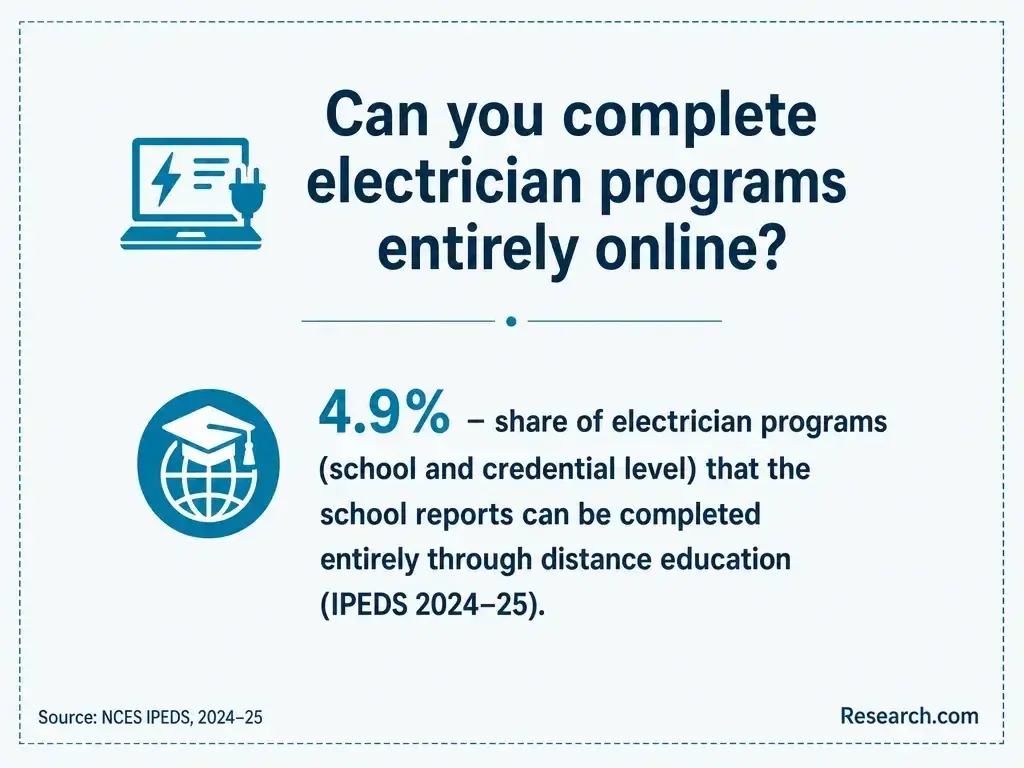
Electrical theory, calculations, and some code instruction can be taught remotely. Making connections safely, using test instruments, diagnosing faults, and following jobsite procedures require supervised physical practice. A hybrid program can suit someone balancing work and study if its in-person labs and any required fieldwork are accessible from Aguadilla.
An online course with no practical component should not be treated as equivalent to a campus lab or a supervised apprenticeship. Ask where hands-on sessions take place, how often you must attend, who evaluates your work, and whether the provider documents hours for the intended licensing pathway. The appeal of a doctorate degree online no dissertation search is unrelated to this decision: electrician training must be judged on demonstrated practical skills, not remote convenience alone.
A defensible Aguadilla-wide average is not available here. Published tuition may also exclude costs that differ substantially between a school-based program and paid work-based training. Get an itemized, current quote from each provider before deciding which option is cheapest.
Build a job-ready cost comparison from tuition and mandatory fees; books or software; tools and consumable materials; protective equipment; examinations and license applications where applicable; and travel to labs or worksites. Add earnings you would give up to attend, then subtract confirmed grants, scholarships, eligible aid, employer contributions, or apprenticeship wages. Federal aid eligibility depends on the student and program, not simply on a school calling itself a trade school, according to Federal Student Aid.
If you are asking which online college is the cheapest, remember that an electrician course with a low online price can still require costly in-person practice. Compare the amount you would need to borrow, the chance of completing the program, and plausible entry pay - not tuition in isolation.
The credential depends on the provider and pathway: it may be a school certificate or diploma, a documented industry training credential, or a registered-apprenticeship completion credential. These establish different things. A certificate records completion of a particular curriculum; an apprenticeship also documents structured work-based training. Neither should be described as a Puerto Rico occupational license without confirmation from the licensing authority.
Before paying a deposit, ask the provider to name the exact credential on the completion document, identify who issues it, and explain whether an employer or apprenticeship sponsor recognizes it. If you may later enter an apprenticeship, ask whether completed coursework or experience qualifies for advanced standing; do not assume credit transfers automatically.
Requirements vary by provider and route. A school may specify educational prerequisites, placement assessments, attendance expectations, and equipment purchases. An apprenticeship sponsor or employer may additionally assess readiness for physical work, safe tool use, and travel to changing jobsites. Obtain the current written requirements rather than relying on a general description of trade-school admission.
If comparing Advantage Technical College-Aguadilla and Universal Technology College of Puerto Rico, confirm that each currently offers the particular electrical training you want, accepts applicants for your intended start date, and provides the lab or worksite access its curriculum promises. The presence of a school in a directory does not verify a current electrician offering or its admissions terms.
A relevant curriculum should teach electrical safety, circuit concepts, reading plans, selecting materials, installing and testing wiring, and troubleshooting faults. Depending on the intended job, motors, controls, and maintenance diagnostics may matter as much as installation practice. The U.S. Bureau of Labor Statistics describes installation, maintenance, and repair as core electrician duties; use the curriculum to check which of those duties you will actually practice.
Ask to see the lab equipment and sample assignments. A program that teaches calculations but offers little supervised testing or fault-finding may be a weaker fit for someone seeking hands-on entry work. Conversely, a course centered on building wiring may not be the best preparation for an industrial maintenance goal.
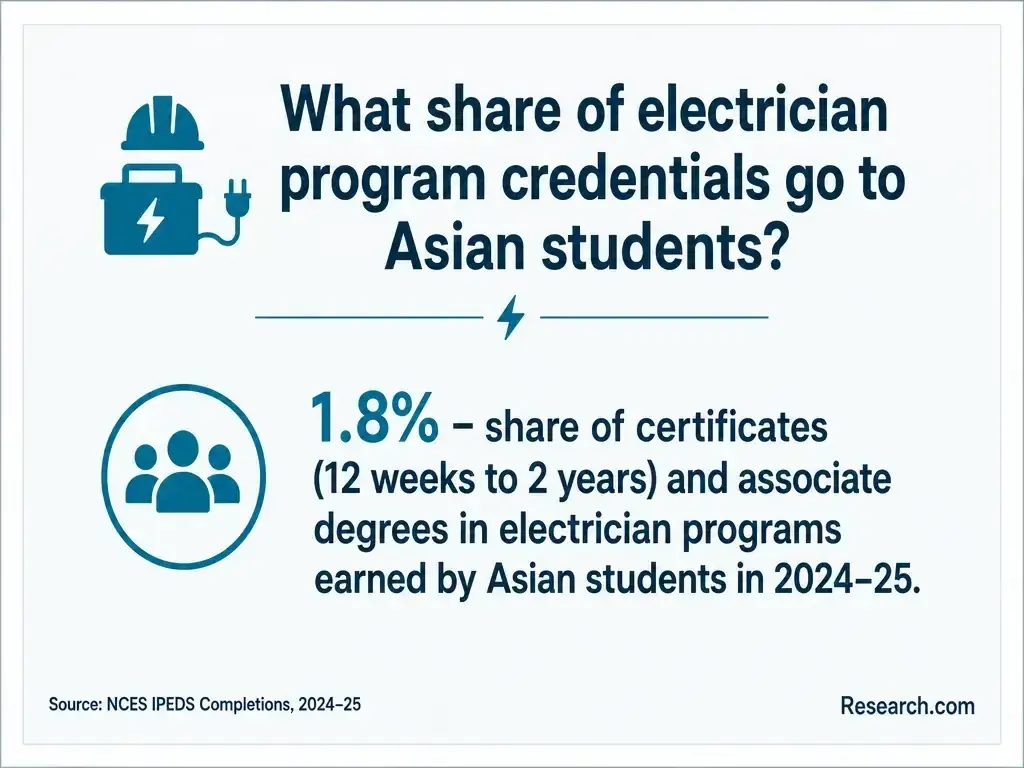
Puerto Rico regulates electrician practice through its Junta Examinadora de Peritos Electricistas. The authorization needed depends on the work you intend to do and the role in which you will perform it. School completion, institutional accreditation, an optional industry certificate, apprenticeship registration, and an occupational license are distinct; none automatically substitutes for another.
Before enrolling, ask the Junta which current education, documented experience, examination, and application requirements apply to your target role. Then ask the school or sponsor exactly which requirements its training satisfies and how it records qualifying hours. Confirm the answer directly with the Junta, especially if you expect to train in one jurisdiction and work in another. Do not assume a credential from elsewhere transfers to Puerto Rico.
Start with the job you want and work backward to the training and authorization it requires. An affordability ranking is a useful shortlist, but it cannot tell you whether a program's practical instruction fits your intended work or whether an apprenticeship would cost you less after wages are considered.
Use these questions when speaking with each school, employer, or apprenticeship sponsor; request written answers where possible.
Verify institutional accreditation separately from school authorization and any occupation-specific approval. A common mistake is choosing the lowest advertised tuition while overlooking missing lab hours or work experience. Likewise, a search for the cheapest bachelor degree online cannot establish the value of an electrician pathway. Your investment decision should account for completion likelihood, aid, debt, lost earnings, likely pay after training, and how long you expect to use the skills.
An entry route may involve supervised installation or maintenance work. With additional documented experience and the authorization required for the work, an electrician may take on more independent assignments, specialize in troubleshooting or controls, or move toward supervision. Self-employment brings separate business and regulatory considerations; finishing a course alone is not a basis to advertise independent electrical services.
Choose specialization by matching the curriculum to likely worksites. Someone interested in construction should prioritize installation practice and jobsite safety; someone targeting facility maintenance should ask about motors, controls, and diagnosing existing systems. Industry credentials may help demonstrate particular skills, but check employer recognition and licensing relevance before paying for an optional exam.
The U.S. Bureau of Labor Statistics projects 9.2% growth in electrician employment nationally from 2025 to 2035. That projection supports considering the trade, but it does not measure openings in Aguadilla or promise work to a new trainee. Construction activity, facility maintenance needs, and the availability of supervised entry positions will matter more to an individual job search.
Before committing, check recent openings within the distance you can realistically travel and ask prospective employers whether they hire beginners or expect prior field experience. If local entry positions are scarce, a broader northwest Puerto Rico search or a sponsor with established worksites may be more useful than choosing a program solely because it is close to home.
Investing in training is an important decision. Research.com created this ranking to help readers compare affordable electrician programs against other programs in the same occupation and location, rather than against unrelated schools. The team uses multiple education and training sources to check the quality and credibility of its comparisons. Only programs with completions reported to the Integrated Postsecondary Education Data System (IPEDS) are eligible; an apprenticeship or other provider absent from the ranking may still be a valid option.
For most affordable rankings, the score uses tuition, cost of attendance, median student debt, and federal loan default rate. An entropy-based method gives more weight to indicators that differ more across eligible programs. Accreditation and other quality measures are not part of this affordability score. Research.com's separate best programs methodology considers student outcomes, earnings and return on investment, costs and debt, and quality and recognition; it is not the scoring method used here.
The ranking draws on the following sources. Some cover education broadly or other trades; their inclusion does not establish that an electrician program has a particular approval or credential.
Use the ranking to narrow the field, then confirm current prices, electrical lab access, completion requirements, and Puerto Rico licensing relevance directly with each provider. More detail on the ranking approach appears in Research.com's methodology.
# 1 position
# 2 position
Compare itemized school costs with paid apprenticeship and employer-sponsored options. The lowest tuition is not necessarily the lowest net cost once tools, travel, aid, and earnings during training are included.
Online lessons can teach theory, but electrical installation and troubleshooting require supervised hands-on practice. Confirm how any course meets the practical and regulatory requirements for your intended role.
Do not assume so. Confirm the applicable authorization and requirements with Puerto Rico's Junta Examinadora de Peritos Electricistas before choosing a program.
It may be a better fit if you can secure a place and want paid, supervised experience. School-based training may offer a more accessible starting point when apprenticeship openings are limited. Compare documented hours, costs, and entry requirements.
Ask for its current total price, credential, practical-training hours, completion information, and explanation of licensing relevance. Verify regulatory claims with the responsible authority and compare the answer with at least one other training route.