
# 1 position
Most Affordable Electrical Technician Schools & Training in Miami for 2027
Audited and Verified:
Our Editorial and Data Verification Process
Research.com uses government datasets, official education statistics and primary institutional information to support its career and degree guides. Our review process checks factual accuracy, occupational definitions, source dates and the requirements associated with the credentials discussed.
How This Article Was Fact-Checked
Our editorial team verifies salary estimates, employment projections, education requirements and program information against original data providers and official organizations. Salary figures are checked against the relevant occupational definitions and reporting periods. Information about licensure, accreditation and required in-person training is reviewed separately.
Fact-checked and verified on:

Co-Founder and Chief Data Scientist

Reviewed by Karolina Broda
Fact-Checker and Data Verification
Choosing affordable electrician training in Miami means comparing more than tuition: a low-cost program may still leave you needing substantial supervised work before you can advance. The U.S. Bureau of Labor Statistics (BLS) reports a national median electrician wage of $63,190 for May 2025, but that is not a starting-pay estimate. This guide compares costs, credentials, apprenticeships, and Florida licensing considerations. It also accompanies the Most Affordable Electrician Trade Schools in Miami for 2027 ranking, created by the Research.com team of data scientists to help students make an informed choice about programs worth considering.
Key findings about electrician degrees in Miami
- The lowest published tuition is not necessarily the cheapest route to work: compare required tools, fees, travel, debt, and whether an apprenticeship pays wages during training.
- Electrician employment is projected to grow 9.2% nationally from 2025 to 2035, according to BLS. That signals opportunity, not a promise of a Miami job or a graduate's starting wage.
- A typical electrician apprenticeship lasts four to five years and includes about 2,000 hours of paid on-the-job training annually, according to BLS. A short school certificate generally does not replace that experience.
Table of Contents
- Most Affordable Electrical Technician Schools & Training in Miami for 2027
- What can I expect from an electrician trade school program in Miami?
- Where can I work with an electrician trade school training in Miami?
What can I expect from an electrician trade school program in Miami?
Expect a mix of electrical theory, code instruction, and supervised practice with wiring methods, circuits, meters, and safety procedures. A short certificate or diploma may prepare you to seek entry-level work; an associate program, where offered, adds a broader course of study. Neither credential should be confused with a license or a completed apprenticeship.
For someone who needs structured preparation before applying to electrical employers, school can be useful. If you can enter a registered apprenticeship directly, compare that route first: it combines related instruction with paid work and generally takes longer, but provides the field experience a classroom-only program cannot. Ask each school how many hours take place in a lab, who arranges job placements, and whether an apprenticeship sponsor grants credit for prior instruction.
Where can I work with an electrician trade school training in Miami?
Potential settings include residential and commercial electrical contractors, building maintenance teams, and companies serving construction or renovations. The work differs: a construction trainee may install raceways on changing jobsites, while a maintenance trainee may troubleshoot existing equipment at one facility. School training can support an application, but employers determine entry requirements and supervision (BLS, Occupational Outlook Handbook).
Consider the daily setting as well as the occupation. Readers exploring best careers introverts may appreciate focused troubleshooting, but electrical work also requires clear communication with coworkers, supervisors, and customers. Ask about jobsite travel before accepting a role; in Miami, travel between training, employers, and worksites can affect the real cost of an otherwise inexpensive program.
A reliable Miami-specific wage should be checked against the latest BLS metropolitan occupational wage release before being used to budget. As a benchmark - not a local figure or an entry-level offer - the national median for electricians was $63,190 in May 2025 (BLS, Occupational Outlook Handbook). A median covers experienced workers as well as newer ones, so compare actual trainee and apprentice offers with your expected program costs.
Pay can change with experience, employer, specialization, and overtime. When assessing a program's return, use a realistic starting offer and account for time spent training, wages you would otherwise earn, aid, borrowing, and how likely you are to complete the pathway.
School certificates and diplomas vary in length and schedule; request the published clock hours and a calendar showing when lab work occurs. An associate program normally requires a longer commitment than a short certificate. Compare hours of actual electrical practice rather than assuming that similarly named credentials offer equal preparation.
For the work-based route, BLS describes electrician apprenticeships as typically lasting four to five years, with about 2,000 hours of paid on-the-job training each year plus technical instruction. Prior schoolwork may earn advanced standing only if the sponsor agrees. Searches for 6 month associate programs online may help clarify other education options, but an accelerated online credential cannot substitute for required electrical field experience.
Online or hybrid instruction can work for theory, calculations, and some code study. Wiring, testing, safe tool use, and troubleshooting require supervised practice with physical equipment; an apprenticeship also requires work at employer sites. Ask a hybrid provider exactly where its labs occur and whether their dates fit your work schedule.
An entirely online course may be a useful introduction, but do not assume its completion qualifies you for an apprenticeship, a local competency credential, or a Florida contractor license. Verify what the credential documents and which practical requirements remain with the relevant sponsor or licensing authority.
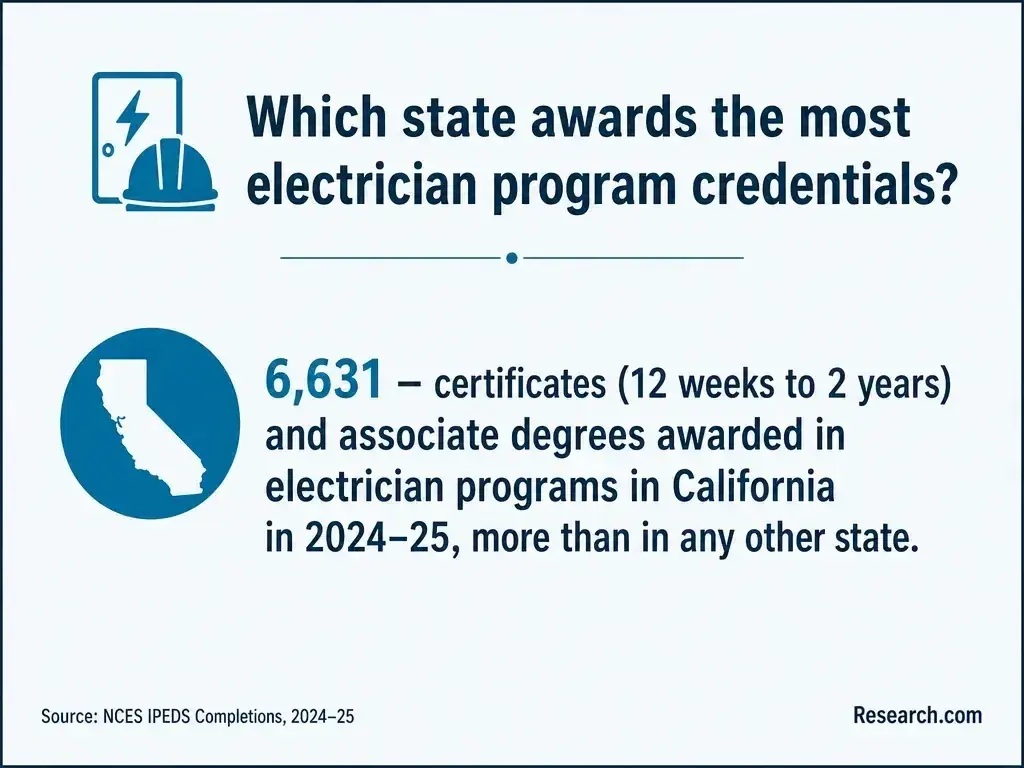
There is no single defensible Miami-wide price for electrician training across school certificates, associate programs, and paid apprenticeships: these routes charge and pay students differently. Request a current, itemized quote rather than treating an advertised tuition figure as the average. If you compare an associate program with a list of the cheapest associate degree options, first check whether those alternatives include the in-person electrical training you need.
Build a job-ready budget from tuition, mandatory fees, books, tools, personal protective equipment, materials, possible examinations and applications, and travel to labs or jobsites. Add lost earnings if attendance reduces your working hours. Then subtract confirmed grants or scholarships and, for a paid apprenticeship, account for wages earned while learning. Ask the school whether it participates in federal aid programs and check workforce-funding eligibility separately; neither aid nor apprenticeship placement is automatic (Federal Student Aid; U.S. Department of Labor).
The credential depends on the route: a school may award a certificate or diploma, an associate program awards a degree, and a registered apprenticeship documents completion of an approved work-and-instruction program. These are distinct from industry training certificates, professional certifications, and government-issued licenses. Confirm the exact award in writing before enrolling.
Lists of quick degrees that pay well can help compare education choices, but speed alone is a poor test for electrician training. Ask whether the credential helps you secure supervised work, whether a sponsor accepts any of its instruction, and what additional experience your intended role requires.
Requirements vary by provider. Ask about the minimum age, education documentation, math or placement assessment, application dates, and any safety or physical demands. Apprenticeship sponsors set their own selection procedures and may require an aptitude assessment or interview; admission to a school does not reserve an apprenticeship position.
Likewise, online colleges with open admission policies are not evidence that electrical employers or apprenticeship sponsors use open entry. Request each provider's current requirements and ask whether its schedule permits paid work while you train.
Core instruction commonly covers electrical theory, reading plans, basic calculations, circuits, wiring methods, testing instruments, and safe work practices. Code instruction matters because installation and inspection depend on applicable requirements; students should ask which code edition a program teaches and how it updates its labs (BLS, Occupational Outlook Handbook).
Look for practice that requires you to build, measure, diagnose, and correct circuits - not just watch demonstrations. If your goal is construction work, ask how much instruction covers installation. If you prefer maintenance, ask about fault-finding on existing systems. These differences are more useful than comparing course titles alone.
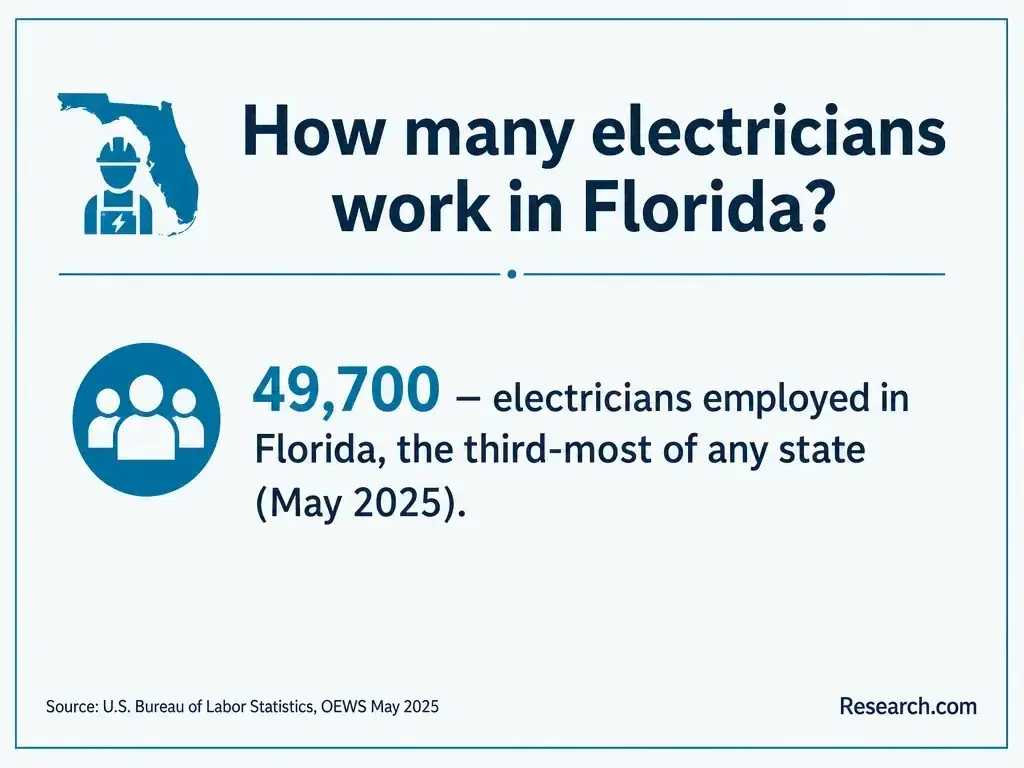
Do not assume a school certificate is an electrician license. Florida regulates electrical contracting through the Department of Business and Professional Regulation and its Electrical Contractors' Licensing Board; contractor licensing involves requirements beyond completing a trade program, including experience and examination (Florida Department of Business and Professional Regulation). Local rules may also affect the credential or registration needed for a particular role in Miami-Dade County.
A newcomer can pursue supervised electrical work without already holding a contractor license, subject to the applicable employer and local rules. Before paying for school, tell the provider whether your goal is trainee employment, advancement through an apprenticeship, or eventual contracting. Verify the relevant requirements with the Florida board and Miami-Dade County, and ask an apprenticeship sponsor whether it recognizes the program's hours. Institutional accreditation, school authorization, apprenticeship registration, industry certification, and occupational licensure serve different purposes; none automatically replaces another.
Start with the role you want, then compare a school route with direct entry to paid apprenticeship training. For example, ask Florida International Training Institute or Lindsey Hopkins Technical College for a current program sheet if you are considering either provider; confirm that the specific electrician training you want is available before comparing it. A low price is valuable only if the program delivers useful practice and fits your path into work.
Use the same checks for every option so an advertised tuition price does not obscure a costly mismatch:
- Get the exact credential, total clock hours, lab hours, schedule, and full itemized cost in writing.
- Ask who provides supervised field experience and whether a registered apprenticeship sponsor accepts prior instruction or grants advanced standing.
- Verify institutional accreditation or state authorization separately from any claims about industry recognition or licensing eligibility.
- Request recent completion and placement information with its reporting period and definitions; do not treat either as a job guarantee.
- Compare likely debt, aid, paid-training wages, travel, and lost earnings against realistic entry-level offers.
A red flag is a claim that an online certificate alone makes you licensed, or a promise of electrician-level pay immediately after a short course. If the provider cannot explain its practical training and the next step into supervised work, consider another route.
A common progression is trainee or apprentice, then more independent electrical work as experience and applicable local requirements permit. With additional experience, workers may specialize in construction installation, maintenance, or troubleshooting, move into supervision, or pursue the Florida credentials needed to operate an electrical contracting business (BLS, Occupational Outlook Handbook; Florida Department of Business and Professional Regulation).
Choose training for the next step, not just the eventual title. A beginner needs safe practical skills and access to supervised work; someone already employed may benefit more from related instruction accepted by their sponsor. Optional industry credentials can demonstrate particular skills, but they do not by themselves confer contractor authority.
BLS projects 9.2% national employment growth for electricians from 2025 to 2035. That supports investigating the trade, but it is not a Miami-specific forecast or a placement rate. Local prospects depend on contractors' hiring, project schedules, maintenance needs, and your ability to obtain supervised experience.
For a decision you can act on, compare current trainee openings and apprenticeship intake dates with each school's completion date. If a program cannot show how students connect with employers or sponsors, its low tuition may be less valuable than a pathway with a clearer route into paid work.
Most Affordable Electrical Technician Schools & Training in Miami for 2027
Education is a significant investment, so Research.com designed this ranking to help readers compare electrician programs with other reported options in the same location and occupation. The team checks multiple education and training sources for credible, comparable information. Only programs with completions reported to IPEDS are eligible; a registered apprenticeship or other provider absent from the ranking may still be a worthwhile option.
For most affordable rankings, the score considers tuition, cost of attendance, median student debt, and federal loan default rates. An entropy-based method gives more weight to indicators that vary more across programs. Accreditation and other quality measures are not part of this affordability score. Research.com's separate best programs methodology also considers student outcomes, earnings, support, and recognition; readers should not mistake an affordability rank for an overall quality rating.
The ranking draws on the following data sources. Several cover education broadly or occupations other than electrical work; their inclusion does not mean a health-care accreditor approves electrician training.
- IPEDS database - reported completions and institutional data.
- National Center for Education Statistics - federal education data and definitions.
- College Scorecard database - available cost, debt, and outcome measures.
- Peterson's database - supplemental program and institution information.
- Commission on Accreditation of Allied Health Education Programs (CAAHEP) - occupation-specific recognition checks where relevant.
- Accrediting Bureau of Health Education Schools (ABHES) - occupation-specific recognition checks where relevant.
- Commission on Dental Accreditation (CODA) - occupation-specific recognition checks where relevant.
- Dental Assisting National Board (DANB) - occupation-specific credential information where relevant.
- National Center for Construction Education and Research (NCCER) - construction-training recognition information.
- Apprenticeship.gov Partner Finder - registered-apprenticeship pathway information.
Use the ranking to narrow your search, then confirm current program charges, practical training, aid eligibility, and the route into paid electrical work directly with each provider. More detail on Research.com's approach appears on its methodology page.
# 2 position
Lindsey Hopkins Technical College - Electrician.
certificate or diploma
Frequently asked questions about electrician programs in Miami
Is electrician trade school worth it if I can apply for an apprenticeship?
It can be if you need foundational skills or a schedule that helps you qualify for work. Compare its full cost and practical hours with direct apprenticeship entry, which combines instruction with paid experience.
Can I become an electrician through a fully online program?
Online lessons can teach theory, but they do not provide the supervised equipment practice and field experience needed for electrical work. Confirm what in-person training and work remain.
Does a trade school certificate make me licensed in Miami?
No. A school award is not a Florida contractor license. Check the rules for your intended role with the Florida licensing board and Miami-Dade County.
What should I ask about an advertised program price?
Request tuition, mandatory fees, tools, protective gear, books, travel requirements, and available aid in one written estimate. Ask whether paid work or an apprenticeship is built into the pathway.
Is the cheapest ranked program always the best choice?
No. The affordability ranking measures costs and debt, not hands-on quality or apprenticeship access. Verify training hours, completion information, and the route to supervised employment before enrolling.
- U.S. Bureau of Labor Statistics - Electricians
Used to verify salary, employment outlook, and typical education requirements.
https://www.bls.gov/ooh/construction-and-extraction/electricians.htm - NCCER - Accredited Training
Used to verify programmatic accreditation or industry recognition of programs.
https://www.nccer.org/ - O*NET OnLine - Electricians
Used to verify common responsibilities, skills, work settings, and education expectations.
https://www.onetonline.org/link/summary/47-2111.00 - Florida International Training Institute - official website
Official school website (programs, tuition, admissions).
https://www.fitischools.com/ - Lindsey Hopkins Technical College - official website
Official school website (programs, tuition, admissions).
https://www.lindseyhopkins.edu/