# 1 position
Mech-Tech College - Electrician.
associate

Audited and Verified:
Our Editorial and Data Verification Process
Research.com uses government datasets, official education statistics and primary institutional information to support its career and degree guides. Our review process checks factual accuracy, occupational definitions, source dates and the requirements associated with the credentials discussed.
How This Article Was Fact-Checked
Our editorial team verifies salary estimates, employment projections, education requirements and program information against original data providers and official organizations. Salary figures are checked against the relevant occupational definitions and reporting periods. Information about licensure, accreditation and required in-person training is reviewed separately.
Fact-checked and verified on:

Co-Founder and Chief Data Scientist

Reviewed by Karolina Broda
Fact-Checker and Data Verification
Choosing an electrician program in Caguas means comparing more than tuition: you need practical training, a manageable total cost, and a route toward the work you want to do. The U.S. Bureau of Labor Statistics projects 9.2% growth in electrician employment nationwide from 2025 to 2035. For prospective students and career changers, this guide explains costs, credentials, apprenticeships, and Puerto Rico licensing questions. It also accompanies the Most Affordable Electrician Trade Schools in Caguas for 2027 ranking, created by the Research.com team of data scientists to help students identify training programs worth considering.
Expect a combination of electrical theory and supervised practice, not a credential that independently authorizes electrical contracting. Instruction may cover circuits, wiring methods, electrical drawings, testing instruments, safety, and fault diagnosis. A credible program should specify which tasks students perform in a lab or shop and whether it arranges field experience. Ask how its instruction reflects electrical codes and practices applicable in Puerto Rico, rather than assuming a mainland curriculum transfers unchanged.
A school-based certificate or diploma may suit someone who wants structured preparation before seeking entry-level work. A registered apprenticeship combines related instruction with paid, supervised work and can suit someone ready for a longer work-and-learn commitment. Employer-sponsored training may offer another entry route, but its scope and recognition vary. Someone seeking quick education for high paying jobs should be especially wary of a short course advertised as equivalent to extensive supervised electrical experience.
Training can support applications for supervised electrical work with construction contractors, building-maintenance teams, industrial facilities, and service firms. Worksite location matters: a student living in Caguas may need to travel elsewhere in the surrounding labor market for a placement or first job. Before choosing an evening or full-time schedule, ask where practical placements occur and whether transportation is required.
Entry-level electrical work, maintenance, and later specialization are different among the types of jobs you can pursue after trade school. Check each posting's required experience and license category; completing a course does not make an applicant eligible for every electrician role.
A verified, current Caguas-specific electrician median is not established here. For context, the U.S. median annual wage for electricians was $63,190 in May 2025 (U.S. Bureau of Labor Statistics, Occupational Outlook Handbook). That figure covers experienced and newly employed workers nationwide; it is neither a local wage quote nor a likely starting salary.
For a realistic return-on-investment estimate, compare actual Caguas-area job postings or offers for the license level and experience you expect to have. Separate wages for trainees from those for independently qualified electricians, and account for commuting, paid apprenticeship time, training debt, and the possibility of taking longer to complete a program.
There is no single duration: a school certificate, diploma, part-time course, and registered apprenticeship have different schedules and purposes. A shorter classroom program can lead to an entry-level job search sooner, while an apprenticeship develops skills through sustained paid work and related instruction. Neither a program name nor its calendar length establishes the supervised experience needed for a particular license.
Request the program's total clock hours, the hours spent in hands-on labs, the weekly schedule, and any required field placement in writing. If you already have relevant training, ask whether documented prior learning earns advanced standing and whether an apprenticeship sponsor will accept the coursework; do not assume credit transfers. Speed matters only if the training reaches the entry point you need.
Online instruction can reasonably cover electrical concepts, calculations, drawings, and some code study. Safe tool use, circuit assembly, testing, troubleshooting, and supervised work require physical equipment and in-person assessment. A hybrid program is useful when its required lab sessions and worksites are reachable from Caguas; a fully remote course should not be treated as a substitute for practical training or as proof of licensing eligibility.
Unlike searches for best online associate degrees in 6 months, the decisive format question here is where and how electrical skills are practiced. Ask for the exact lab location, attendance requirements, equipment access, and procedure for making up missed practical sessions before paying a deposit.
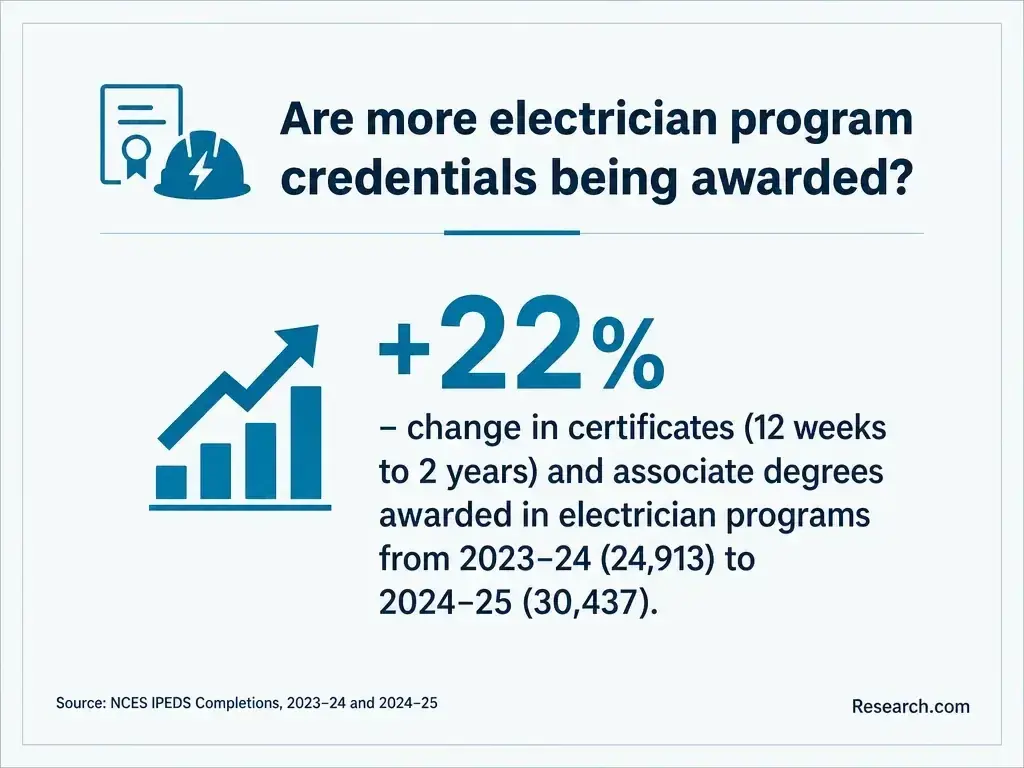
A defensible Caguas-wide average is not available here: providers differ in program length, included supplies, and whether trainees earn wages. Treat any advertised tuition as only the first line of a job-ready cost estimate. Request an itemized, current quote for mandatory fees, books or software, tools, materials, safety gear, examinations, licensing applications, and travel to labs or worksites. Add income you would give up while attending; subtract grants, eligible aid, or paid-training earnings where applicable.
For an apples-to-apples comparison, calculate what you would pay and how long you would train before qualifying to apply for the work you want. Federal student aid depends on the student's and program's eligibility (Federal Student Aid, U.S. Department of Education); do not assume every trade course qualifies. A discussion of highest earning bachelor degrees is not a substitute for comparing electrician training costs with attainable entry-level electrical wages.
The award depends on the provider: it might be a certificate, diploma, associate degree where offered, or a documented apprenticeship completion. A school credential records education; apprenticeship completion documents a registered work-and-instruction pathway. An industry credential, such as one associated with NCCER training, is separate from both (National Center for Construction Education and Research). None should be described as a Puerto Rico occupational license without confirmation from the licensing authority.
Ask the provider for the award's exact title, who issues it, whether employers in your target role recognize it, and what graduates must do next. If the program offers credit toward later training or advanced apprenticeship standing, get the receiving organization's acceptance policy in writing.
Requirements vary by school and apprenticeship sponsor. A provider may ask for prior schooling records or an assessment of math and reading; a work-based placement may also have employer safety, scheduling, and eligibility conditions. Ask which requirements apply before enrollment and which apply only when seeking a field placement. Someone who cannot attend scheduled labs or travel to a worksite should resolve that constraint before committing, even if an online theory course has open enrollment.
Admissions staff should also explain the program's language of instruction, required supplies, refund policy, and whether any placement is guaranteed or merely assisted. Do not confuse admission to training with admission to an apprenticeship or eligibility to sit for a licensing examination.
Useful entry-level instruction links classroom concepts to safe work: reading diagrams, measuring voltage and current, selecting wiring methods, installing components, using test instruments, and locating faults. Safety practice should include recognizing electrical hazards and following appropriate procedures before touching equipment. Electricians also need arithmetic, documentation, communication, and the ability to follow plans and applicable codes (U.S. Bureau of Labor Statistics, Occupational Outlook Handbook).
Compare programs by what students do, not just what a course catalog names. Request a lab syllabus and ask who supervises practical work, which equipment students use, and how competencies are assessed. If your goal is industrial maintenance rather than building installation, check that the exercises actually address the equipment and troubleshooting you expect to encounter.
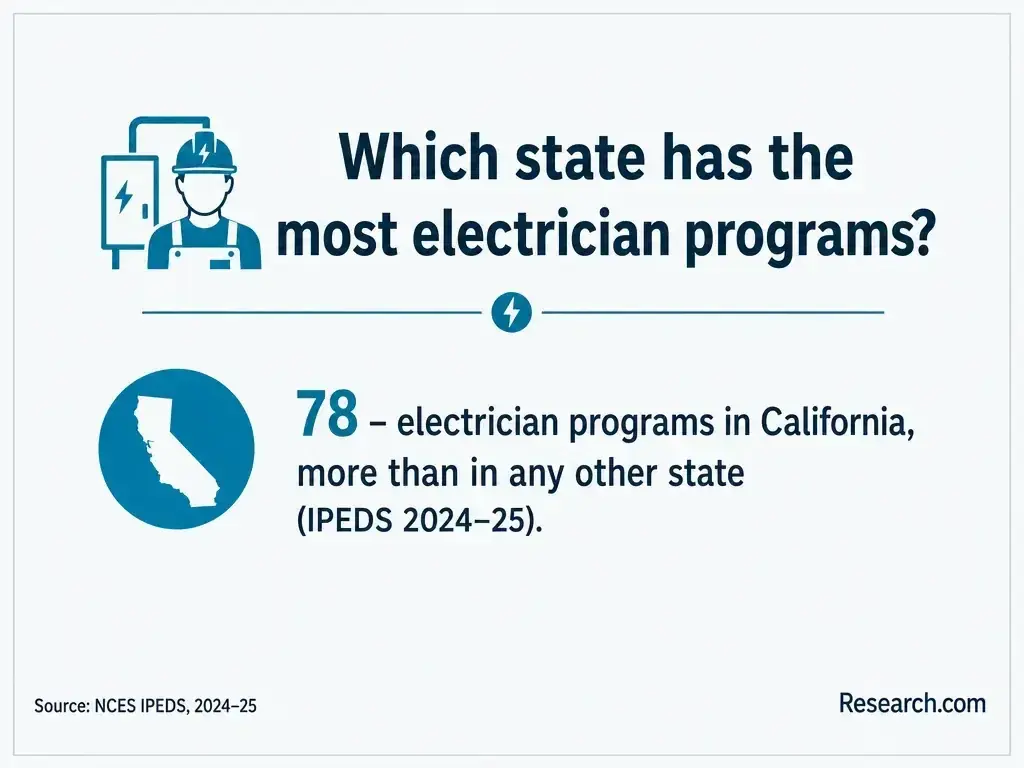
Puerto Rico regulates the practice of electrical work through its electrician licensing framework; the relevant authority is the Junta Examinadora de Peritos Electricistas (Puerto Rico Department of State). The requirements that matter depend on the work and license category sought. Before enrolling, confirm the current education, documented experience, examination, and application requirements directly with the board, including whether a proposed school's hours count. Do not assume rules from a U.S. state apply in Caguas.
Institutional accreditation concerns the school; school authorization concerns permission to operate; apprenticeship registration concerns a work-and-training program; industry certification documents specified skills; and occupational licensure grants authority under applicable law. One does not automatically confer another. Ask what work a new trainee may perform under supervision and what further steps are required before independent practice.
Start with the job and license category you want, then compare programs that can plausibly get you there. The cheapest listed option is not the best investment if it omits needed labs, has an impractical commute, or leaves required experience entirely to you. Conversely, a higher-priced program is not automatically better because it is faster or advertises job assistance.
Use these questions when speaking with an admissions representative and the applicable licensing authority; written answers make competing offers easier to compare.
Readers weighing which bachelor degree is the easiest are asking a different question: for this occupation, verify practical competence and the licensing pathway rather than choosing training by apparent academic ease. Red flags include a claim that accreditation alone grants a license, vague lab-hour descriptions, or a price that excludes required tools.
A realistic first step is supervised electrical work while building documented experience. Depending on the training and employer, later paths can include installation, service troubleshooting, facility maintenance, and more specialized electrical work. Independent practice, supervision, or contracting may call for additional experience and the applicable Puerto Rico license; an initial school certificate is not an automatic promotion to those roles.
For someone who needs earnings during training, a paid apprenticeship or employer route may be more attractive than full-time school. For someone who needs a structured introduction before applying to worksites, a lab-intensive school program may be a better fit. Ask employers which credentials they accept for the first position, then plan later credentials around the work you actually want to perform.
The U.S. Bureau of Labor Statistics projects 9.2% growth in electrician employment nationally from 2025 to 2035. This supports considering the trade, but it is not a Caguas job forecast or a promise of placement. Local opportunity depends on contractors' projects, maintenance hiring, the applicant's experience, and willingness to travel to worksites beyond the city.
Use the projection as background, then test demand directly: review recent vacancies for the license category you can pursue, note whether employers offer supervised entry roles, and ask apprenticeship sponsors about openings. A program is more compelling when its schedule and practical training match those entry requirements - not simply because the national occupation is growing.
Investing in training is a consequential decision. Research.com's team built the accompanying affordability ranking to help readers compare programs against other electrician options in the same location, using documented education and cost data rather than advertising claims. The team checks source quality and comparability, but a ranking is a starting point - not a substitute for confirming current program prices, practical training, and licensing relevance.
Only programs with completions reported to the Integrated Postsecondary Education Data System (IPEDS) are eligible. The most affordable ranking scores tuition, cost of attendance, median student debt, and federal loan default rate; an entropy-based method gives more weight to measures that vary more across eligible programs. Accreditation and other quality measures are not part of this affordability score. Separate best programs rankings assess student outcomes, earnings and return on investment, costs and debt, and quality and recognition: occupation-relevant programmatic accreditation or industry recognition carries 20%, institutional accreditation 10%, student support 10%, and outcomes, earnings, and costs the remaining 60% through entropy-based weighting.
The ranking draws on the following databases and reference sources. Some cover other trades or health occupations and should not be mistaken for electrician-specific accreditation or licensing authorities.
IPEDS and college-oriented databases do not capture every apprenticeship, union program, employer training route, or vocational provider. An absent option is not necessarily unapproved or inferior. Readers can learn more about the ranking approach on Research.com's methodology page.
# 1 position
# 2 position
Compare school programs with paid apprenticeships and employer training. The lowest tuition may not mean the lowest total cost once tools, travel, lost earnings, and required experience are included.
Online study can teach theory, but electrical installation, testing, and supervised practical skills require in-person work. Confirm licensing relevance with Puerto Rico's electrician licensing authority.
No. A school certificate documents training, while Puerto Rico occupational licensure has separate requirements. Confirm the applicable category and current steps with the Junta Examinadora de Peritos Electricistas.
Choose based on access to paid supervised work, the instruction provided, total cost, and your target role. Ask an apprenticeship sponsor whether it accepts prior school training before paying for both pathways.
Not necessarily. The $63,190 May 2025 U.S. median covers electricians across experience levels and locations (U.S. Bureau of Labor Statistics). Use local entry-level offers for a personal budget.