# 1 position


Audited and Verified:
Our Editorial and Data Verification Process
Research.com uses government datasets, official education statistics and primary institutional information to support its career and degree guides. Our review process checks factual accuracy, occupational definitions, source dates and the requirements associated with the credentials discussed.
How This Article Was Fact-Checked
Our editorial team verifies salary estimates, employment projections, education requirements and program information against original data providers and official organizations. Salary figures are checked against the relevant occupational definitions and reporting periods. Information about licensure, accreditation and required in-person training is reviewed separately.
Fact-checked and verified on:

Co-Founder and Chief Data Scientist

Reviewed by Karolina Broda
Fact-Checker and Data Verification
Choosing electrician training in Dayton means deciding whether to pay for classroom preparation, pursue a paid apprenticeship, or combine the two. The stakes are real: the U.S. Bureau of Labor Statistics projects 9.2% growth in electrician employment nationally from 2025 to 2035. This guide explains credentials, hands-on training, costs, Ohio licensing, and career prospects. It also features a Best Electrician Trade Schools in Dayton for 2027 ranking, created by the Research.com team of data scientists to help students identify programs worth considering and make an informed choice.
Expect instruction in electrical theory, wiring methods, blueprint reading, code use, testing, and safety, followed by supervised practice. A useful program lets you work with conduit, circuits, panels, and diagnostic equipment - not just watch demonstrations. Ask for its scheduled lab hours, equipment access, class size, and whether employers help provide field experience.
The route depends on your goal. A short certificate or pre-apprenticeship can help a beginner prepare for entry-level hiring; a longer college credential can add broader technical study. A registered apprenticeship combines related classroom instruction with paid, supervised work and leads to a recognized apprenticeship completion credential. Neither a school certificate nor an associate degree should be mistaken for an Ohio electrical contractor license (U.S. Department of Labor; Ohio Construction Industry Licensing Board).
For a local comparison, check Sinclair Community College's current electrical-program catalog and ask the Dayton-area electrical apprenticeship sponsor associated with IBEW Local 82 about its entry process and training schedule. Catalog offerings and apprenticeship openings can change; compare what each route actually provides before committing.
Potential workplaces include electrical contractors serving homes and commercial buildings, industrial facilities, building-maintenance departments, and contractors installing or servicing electrical systems. Dayton's mix of construction and established facilities makes it useful to ask whether a program's employer relationships emphasize new construction, service calls, or industrial maintenance: those jobs use overlapping fundamentals but different equipment and work schedules.
School training alone may qualify you to seek an entry-level role, not to work independently. When comparing placements, ask whether students enter supervised electrical jobs, continue into apprenticeships, or move into adjacent maintenance work. Those outcomes are not interchangeable if your goal is to become a construction electrician (U.S. Bureau of Labor Statistics).
The latest national median annual wage specified by the U.S. Bureau of Labor Statistics for electricians is $63,190 for May 2025. A median describes workers across experience levels and locations; it is not a reliable offer estimate for a new Dayton trainee. Apprentice pay can increase as training progresses, while actual offers depend on employer, experience, specialty, and work hours.
Before borrowing for school, compare current Dayton-area apprentice and entry-level job postings with the program's total cost. Ask an apprenticeship sponsor for its current wage progression and a school for documented outcomes for its electrical students. Do not treat a national occupational median or an institution-wide earnings figure as a promised return.
A short preparatory credential can take less time than a multi-term college program, but completing school is different from completing occupational training. Electrician apprenticeships commonly take about four to five years because they pair related instruction with extensive supervised work; the sponsor's registered standards determine its actual hours and progression (U.S. Bureau of Labor Statistics; U.S. Department of Labor).
Ask for the school's calendar, required contact and lab hours, and whether classes run around employment. If you plan to enter an apprenticeship afterward, ask whether prior coursework earns advanced standing under that sponsor's rules; never assume it shortens training. An accelerated classroom schedule may get you to an entry-level application sooner, but it cannot compress the jobsite experience an employer or apprenticeship requires. That distinction matters more here than the timelines advertised for unrelated options such as masters in one year.
Online instruction can work for code reading, electrical calculations, and some theory. On-campus labs and employer jobsites are where learners practice tool use, wiring, measurements, troubleshooting, and safe work around physical equipment. A hybrid schedule may reduce classroom trips, but it does not remove the need for in-person practice and supervised work (U.S. Bureau of Labor Statistics).
Before choosing an online offering, request a written breakdown of remote lessons, required lab attendance, and work-based training. If you commute across the Dayton area, account for trips to both the classroom and worksites. A course advertised as fully online is a poor substitute for a hands-on entry pathway unless it clearly arranges practical training. Lists of affordable online schools that accept fafsa cannot establish that a particular electrician course provides those competencies or qualifies for aid.
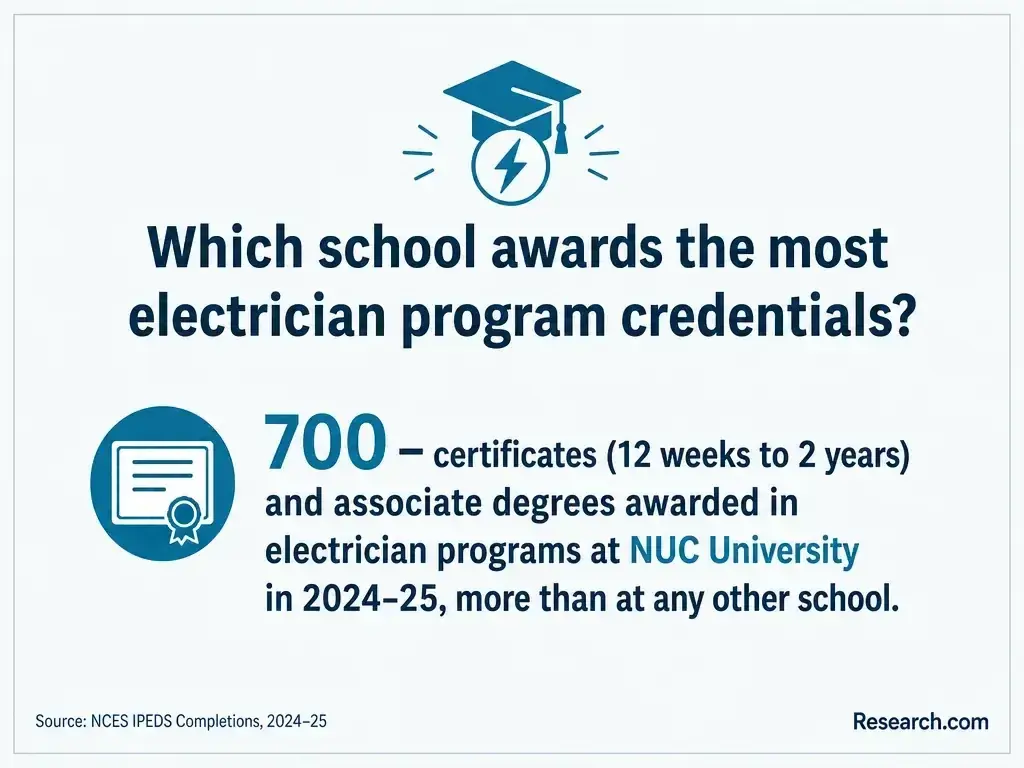
There is no single dependable Dayton-wide average for electrician training: a college program, a short private course, and a paid apprenticeship have different pricing and coverage, and college-oriented datasets do not capture every sponsor. Request a current, itemized estimate rather than relying on an advertised tuition figure. Include required fees, books, tools, safety gear, materials, transportation to labs and jobsites, and any applicable examination or application costs.
A paid apprenticeship can offset training expenses with wages, but compare its starting pay and schedule with your immediate living costs. For a school route, ask which aid applies to the specific program; institutional eligibility alone does not prove that every course qualifies for federal aid (Federal Student Aid). Also weigh earnings you might give up while attending. A low sticker price is not necessarily a better investment if completion is unlikely or the training does not lead to your intended job.
The award depends on the route: a pre-apprenticeship may issue a completion certificate, a college may award a certificate or associate degree, and a registered apprenticeship issues a nationally recognized completion credential when its requirements are met. Industry training credentials, where offered, document particular skills; they are not occupational licenses (U.S. Department of Labor).
Get the exact credential name in writing. Then ask the employer or apprenticeship sponsor you hope to join whether it recognizes that credential, accepts any training toward advanced standing, or still requires you to start at entry level. An academic award's value depends on that connection to practical experience - not merely on its title.
Requirements vary. A school may assess math or reading readiness and require an application; an apprenticeship sponsor may set additional eligibility, testing, interview, and work-readiness steps. Electrical work also calls for reliable attendance, safe tool use, and the ability to follow diagrams and instructions. Obtain each provider's current written criteria rather than assuming that admission to a class means admission to an apprenticeship.
If you are changing careers later in life, ask about evening schedules, recognition of prior technical experience, and the physical demands of jobsite work. General resources about degrees for 60 year olds address a different education decision; for this trade, the decisive questions are access to supervised work and whether the schedule is sustainable.
Core training usually covers circuit theory, measurements, wiring and raceways, electrical drawings, installation methods, testing, troubleshooting, code use, and jobsite safety. The best fit depends on your intended work: construction preparation should offer substantial installation practice, while a facilities-oriented route should make room for diagnosis and maintenance. Ask to see the curriculum and lab activities rather than judging programs by a shared "electrical" label (U.S. Bureau of Labor Statistics).
Modern work can also involve controls and increasingly electrified building equipment. Those topics are useful additions, but they should not crowd out the fundamentals or supervised practice. If a provider claims industry certification preparation, ask which organization issues the credential, what assessment is required, and whether the examination fee is included.
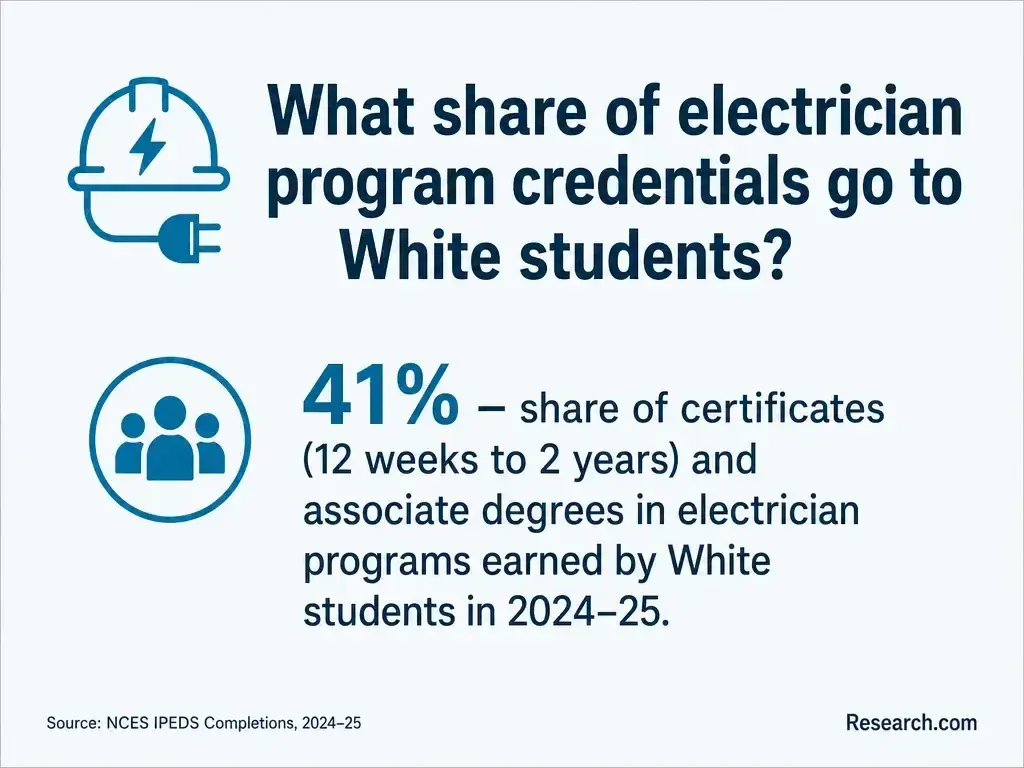
Ohio's Construction Industry Licensing Board licenses electrical contractors; completing a trade-school program does not itself grant that license. The contractor pathway involves separate experience and examination requirements. Local registration, permitting, and supervision rules may also affect particular work, so confirm the requirements for your intended role with the Ohio board and the relevant local building authority before treating a school's claims as eligibility advice (Ohio Construction Industry Licensing Board).
For an entry-level applicant, the immediate question is often how to obtain supervised experience. A registered apprenticeship is a structured route; a school certificate or optional industry credential may help demonstrate preparation but does not replace applicable work-experience or contractor-licensing requirements (U.S. Department of Labor; Ohio Construction Industry Licensing Board). Credentials aimed at unrelated academic pathways, including a phd with no dissertation, have no bearing on electrical work authorization.
Start with the job you want - construction electrician, service technician, or facility maintenance worker - then compare routes against the training that job demands. A school can be worthwhile when it supplies meaningful lab practice, an attainable schedule, and credible employer or apprenticeship connections. If you can enter a suitable paid apprenticeship directly, paying for a separate preparatory program may be unnecessary.
Use these checks before enrolling; they expose gaps a ranking or tuition quote cannot resolve.
For return on investment, consider completion probability, debt, wages you forgo while studying, your current earnings, plausible post-training pay, and how long you expect to work in the trade. A cheaper program with weak practical training may cost more in lost time; a longer one is not automatically better. An affordable bachelor's degree answers a different goal and should not be used as a price benchmark for becoming job-ready in this trade.
An entry-level electrical helper role or apprenticeship can lead to more complex installation and troubleshooting work as experience grows. Later options may include service work, industrial electrical maintenance, supervision, or operating a contracting business - each with its own employer expectations and, for contracting, applicable Ohio licensing requirements (U.S. Bureau of Labor Statistics; Ohio Construction Industry Licensing Board).
Choose training with the next step in mind. If you want jobsite construction work, prioritize a route into supervised electrical employment. If you already work in facility maintenance, targeted electrical coursework may fill a skill gap without restarting through a broad beginner program. Neither route makes independent contracting an automatic next step.
The U.S. Bureau of Labor Statistics projects 9.2% national growth in electrician employment from 2025 to 2035. That supports considering the trade, but it is not a forecast for Dayton or a guarantee of placement. Local opportunities depend on contractor hiring, construction projects, maintenance demand, and your ability to reach changing worksites.
For a practical local check, review current openings by experience level and specialty, then ask programs how many electrical students enter relevant work or apprenticeships. Give more weight to documented local connections and a workable commute than to a national growth figure alone.
Investing in electrician training is an important decision. Research.com created its ranking to help readers compare programs against other options in the same occupation and location, rather than against unrelated schools. The team reviews outcomes, costs, recognition, and student support; only programs with completions reported to IPEDS are eligible. That boundary matters: a registered apprenticeship or employer training program may be a strong option even if it does not appear in the ranking.
Best-program rankings consider student completion and full-time and part-time retention; earnings one year after completion and earnings relative to annual attendance cost; tuition, attendance cost, debt - including for students who withdrew - and federal loan default rates; and accreditation, relevant industry recognition, and support services. Programmatic accreditation or industry recognition receives 20% of the score, institutional accreditation 10%, and student support 10%. The remaining 60% covers outcomes, earnings, and costs, with weights distributed through an entropy-based method that gives more weight to indicators that vary more across programs. Most-affordable-program rankings score only costs and debt using that method; accreditation and other quality measures are not part of their score.
The team uses the following data sources to check program information and maintain a credible comparison. Some sources cover occupations other than electrical work; their inclusion in the broader ranking process does not imply that their credentials apply to electricians.
Use the ranking to narrow a shortlist, then confirm current program details, apprenticeship connections, and total costs directly with each provider. Read more about Research.com's methodology.
# 1 position
# 2 position
No single trade-school credential is the required entry route. A registered apprenticeship or supervised employer training may provide a path; check the requirements of the role and applicable Ohio and local rules (U.S. Department of Labor; Ohio Construction Industry Licensing Board).
It may be if you can secure a place and need wages while learning. School may help you build fundamentals or compete for entry-level work. Compare admission timing, hands-on hours, pay, total cost, and employer recognition.
Theory can be taught remotely, but tool use, installation, testing, and supervised jobsite work require in-person participation. Verify the practical component before enrolling.
No. Ohio contractor licensing is a separate process with experience and examination requirements. Confirm current details with the Ohio Construction Industry Licensing Board.
No. Ranking eligibility is limited to programs with completions reported to IPEDS. Compare registered apprenticeships separately; absence from the ranking is not a quality judgment.