# 1 position
Surry Community College - Electrician.
associate

Audited and Verified:
Our Editorial and Data Verification Process
Research.com uses government datasets, official education statistics and primary institutional information to support its career and degree guides. Our review process checks factual accuracy, occupational definitions, source dates and the requirements associated with the credentials discussed.
How This Article Was Fact-Checked
Our editorial team verifies salary estimates, employment projections, education requirements and program information against original data providers and official organizations. Salary figures are checked against the relevant occupational definitions and reporting periods. Information about licensure, accreditation and required in-person training is reviewed separately.
Fact-checked and verified on:

Co-Founder and Chief Data Scientist

Reviewed by Karolina Broda
Fact-Checker and Data Verification
Choosing electrician training in Dobson means deciding whether to pay for a school program, pursue a paid apprenticeship, or combine the two. The decision matters: the U.S. Bureau of Labor Statistics projects electrician employment to grow 9.2% nationally from 2025 to 2035. This guide compares credentials, hands-on training, costs, and North Carolina licensing rules. It also features a Best Electrician Trade Schools in Dobson for 2027 ranking, created by the Research.com team of data scientists to help students make an informed choice about which programs are worth considering.
Expect instruction in electrical theory, code use, blueprint reading, wiring, testing, and safe tool operation, followed by practice in a lab or at a worksite. Classroom completion alone is not the same as being ready to work independently. Employers need people who can apply those skills safely under jobsite conditions, and North Carolina regulates businesses that offer electrical contracting services (North Carolina State Board of Examiners of Electrical Contractors).
For a Dobson resident, Surry Community College is a local school option to investigate. Compare its current electrical offerings with a registered apprenticeship or employer-sponsored route: school may offer a structured introduction before employment, while apprenticeship combines related instruction with paid, supervised work. Ask each provider how much time is spent doing wiring and troubleshooting, who arranges work experience, and what credential completion actually awards.
Electrical training can support entry-level work with residential or commercial electrical contractors, industrial maintenance teams, or building-service employers. The work differs: construction emphasizes installation and code-compliant wiring, while maintenance emphasizes diagnosis, repair, and minimizing equipment downtime (U.S. Bureau of Labor Statistics, Occupational Outlook Handbook).
Dobson's smaller local market makes commute distance part of the training decision. Before paying for a program, ask where its employer partners and practical placements are located and whether you can reliably travel to early jobsite starts. A credential is more useful when its training and placement network match the work you are willing to reach.
The national median annual wage for electricians was $63,190 in May 2025 (U.S. Bureau of Labor Statistics, Occupational Outlook Handbook). This is the midpoint for employed electricians across experience levels and locations - not a Dobson pay figure or an expected first-year wage. Ask prospective local employers or apprenticeship sponsors for their current entry pay and wage-progression schedules before estimating what training could return.
A paid apprenticeship may produce earnings during training, whereas full-time school can reduce time available for paid work. Compare the two using expected take-home pay, training expenses, likely completion time, and the pay you could earn without enrolling; do not compare a tuition bill directly with the national median wage.
A short certificate, a longer diploma, and an associate degree have different course loads, so there is no single Dobson completion time. Request Surry Community College's current course sequence and ask how often required labs run; part-time availability can matter as much as the advertised full-time schedule. If rapid job entry is the priority, compare that schedule with applying directly for apprentice or helper positions.
A registered apprenticeship typically spans several years of paid work and related instruction rather than ending when classroom courses finish. Training hours and credit for previous experience depend on the registered sponsor's standards (U.S. Department of Labor, Apprenticeship.gov). Get any promise that school coursework will shorten an apprenticeship in writing from the sponsor.
Electrical calculations, terminology, and some code lessons can be taught remotely. Safe wiring, meter use, fault-finding, and worksite procedures require supervised practice with real equipment. A hybrid format makes sense if its lab schedule and location fit your commute; an entirely online course should not be treated as a substitute for practical training or evidence of licensing eligibility.
Be cautious when browsing online schools with open enrollment: easy admission says nothing about whether an electrician program provides local labs or employer connections. Ask for the required in-person hours, lab address, equipment access, and the name of any apprenticeship sponsor that recognizes the coursework.
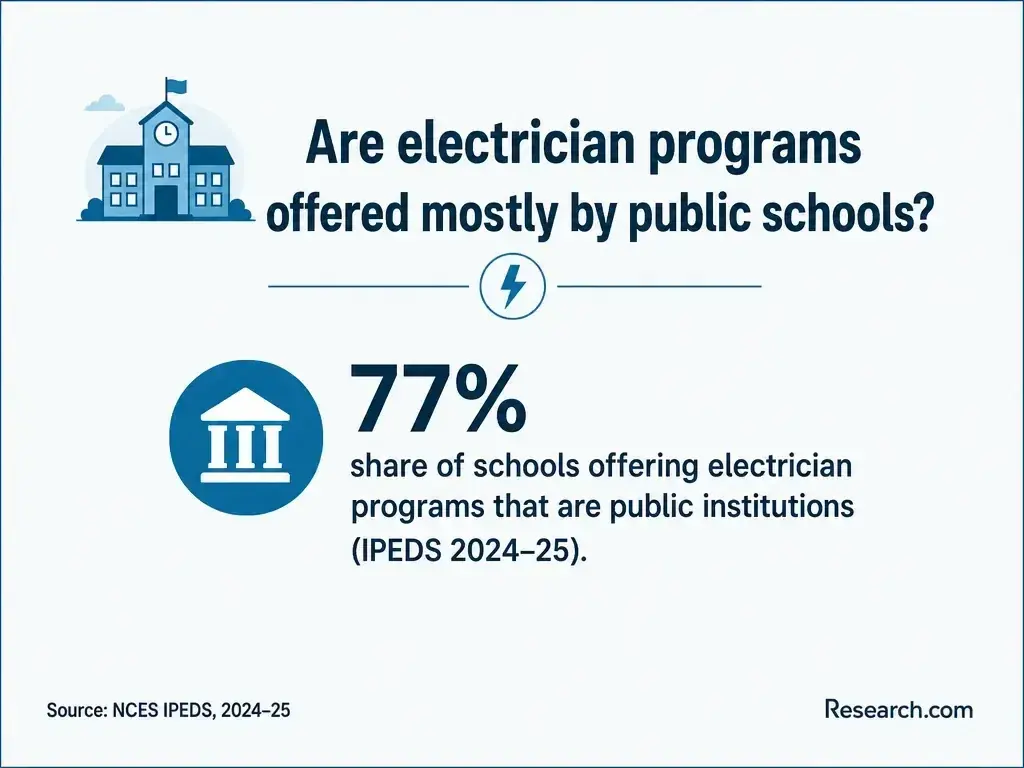
There is no reliable single average that represents Dobson school programs and paid apprenticeships together; their prices and earnings during training work differently. Obtain a current, program-specific estimate from Surry Community College and any apprenticeship sponsor you are considering. The comparison below identifies costs that a tuition quote alone may omit.
| Pathway | Costs to verify | Possible offset |
| School program | Tuition, mandatory fees, books, tools, PPE, lab materials, travel, and foregone work | Eligible aid, scholarships, or workforce funding |
| Registered apprenticeship | Tools, PPE, travel, any required instruction charges, and initially lower earnings | Wages during supervised training; possible employer-paid instruction |
A lower sticker price is not automatically the better investment. Estimate total out-of-pocket cost and lost earnings through completion, then weigh likely completion, debt, and realistic local pay over the period you expect to work. For another comparison of academic-format costs, best online associate degree in 6 months accredited is not a shortcut around the hands-on requirements of electrical work; confirm the actual length of any electrical associate program instead.
The award depends on the specific offering: a school may award a certificate, diploma, or associate degree, while completion of a registered apprenticeship produces an apprenticeship completion credential under its approved standards (U.S. Department of Labor, Apprenticeship.gov). A school award records education; an apprenticeship credential also documents completion of its structured work-based training.
Neither award alone is a North Carolina electrical contractor license. Before enrolling, ask whether the credential is recognized by employers you intend to approach, whether courses can be applied toward a later credential, and whether an apprenticeship sponsor grants documented credit or advanced standing. Do not assume similarly named credentials contain equivalent lab or field experience.
School and apprenticeship entry rules are set by the provider. Check Surry Community College's current requirements for the exact electrical offering, including placement or course prerequisites, and ask an apprenticeship sponsor about its application, math expectations, interview, work eligibility, and ability to travel to jobsites. An employer may impose additional hiring or safety requirements.
Open admission to a school is not admission to an apprenticeship or a job. If you need income immediately, compare application timelines before committing to classes; if you need to strengthen electrical math first, ask whether a preparatory course leads into the technical sequence without adding unnecessary cost.
Core training should connect electrical theory and calculations to circuit installation, plan interpretation, code-based decisions, testing, and safe troubleshooting. Look for assessed practice with tools, meters, panels, and wiring methods - not just demonstrations or a course title. The U.S. Bureau of Labor Statistics identifies reading technical diagrams, testing components, and following safety and electrical codes as central electrician tasks.
Ask to see the current lab syllabus and equipment list. A student aiming for industrial maintenance should look for substantial controls and troubleshooting practice; someone aiming for construction should prioritize installation methods, drawings, and code application. Optional industry credentials can document particular skills, but verify whether local employers value them before paying extra.
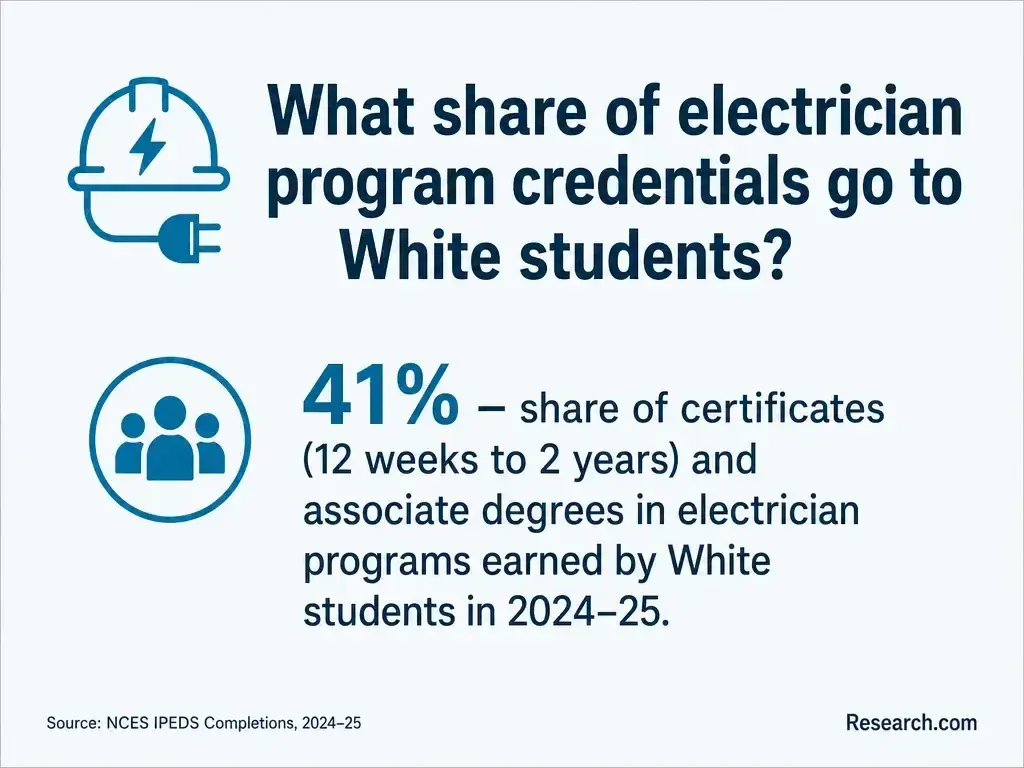
North Carolina regulates electrical contracting through the North Carolina State Board of Examiners of Electrical Contractors. Its contractor classifications have distinct experience, examination, and other application requirements. Completing a trade-school program does not itself grant authority to offer electrical contracting services. Working as an employee under an appropriately licensed contractor is a different situation from operating a contracting business (North Carolina State Board of Examiners of Electrical Contractors).
Before choosing training, decide which goal applies to you: entry-level employment, completion of an apprenticeship, or eventual independent contracting. Ask the board which experience and examination rules apply to the contractor classification you may seek, and keep records of supervised work. Institutional accreditation, apprenticeship registration, optional industry certification, and occupational licensure each serve different purposes; none automatically substitutes for another.
Start with the job you want, then compare the school option with registered apprenticeships and direct employer entry. A school program may suit someone who wants a structured foundation before applying for jobs. Paid apprenticeship may fit someone ready for a longer commitment who needs income and supervised field experience. Neither route is best solely because of its provider type or ranking position.
Use these checks before you commit money or time:
Accreditation can help you assess an institution, but a directory of top accredited non-profit online colleges cannot establish that a particular electrical program has adequate practical training. Likewise, nationally accredited colleges online should be evaluated by their actual electrical curriculum and local hands-on arrangements, not the label alone.
A common starting point is supervised electrical helper or apprentice work. With experience, workers may take on more complex residential or commercial installation, industrial troubleshooting, or crew leadership. Operating an electrical contracting business is a separate step governed by North Carolina's contractor licensing rules (North Carolina State Board of Examiners of Electrical Contractors).
Choose training for the next job, not an unrelated salary comparison. Searches for masters degrees that pay the most, for example, do not show whether an electrical certificate or paid apprenticeship is a sound investment. For this trade, practical competence, documented experience, and the requirements of the role you intend to pursue matter more.
The U.S. Bureau of Labor Statistics projects 9.2% national growth for electrician employment from 2025 to 2035. That supports investigating the trade, but it is not a forecast of openings in Dobson or a promise of placement. Demand for installation and maintenance work can differ by employer and commuting area.
Test the outlook locally before enrolling: ask prospective employers and apprenticeship sponsors which skills they hire for, where their jobsites are, and whether they recruit beginners. Those answers are more useful for a Dobson applicant than assuming national growth will translate into a nearby opening.
Investing in electrical training is a consequential decision, so the Research.com team evaluates programs against others in the same occupation and location rather than treating every school as a direct alternative. The best-programs ranking includes only programs with completions reported to IPEDS; a registered apprenticeship or employer program may be valuable even if it cannot appear in that ranking.
The ranking assesses student outcomes, earnings and return on investment, costs and debt, and quality and recognition. Occupation-relevant programmatic accreditation or industry recognition carries 20% of the score, institutional accreditation 10%, and student support services 10%. Completion, retention, earnings, tuition, attendance cost, debt, and federal loan default measures make up the remaining 60%, with weights distributed using an entropy-based method. The separate most-affordable-programs methodology scores costs and debt only; it does not include accreditation or other quality indicators. Details are available on Research.com's methodology page.
The team uses the following sources to check program records and relevant quality indicators. Several cover other trades and should not be mistaken for electrician-specific accreditation or licensing authorities:
Use the ranking to narrow a school shortlist, then verify the current electrical curriculum, local work placements, and total price directly. Its IPEDS-based coverage cannot establish that an unlisted apprenticeship or training provider is inferior.
# 1 position
# 2 position
Not necessarily. A registered apprenticeship or employer-supported entry route may combine instruction with supervised work. Compare its entry requirements and training standards with the school program you are considering.
No. A school certificate is not a North Carolina electrical contractor license. Check the North Carolina State Board of Examiners of Electrical Contractors' requirements before planning to offer contracting services.
Online lessons can cover theory, but wiring, testing, safety, and troubleshooting need practical training. Verify where and how a program assesses those skills.
Choose based on available openings, your need for income, the quality of supervised practice, and total cost. Ask whether school courses receive apprenticeship credit before paying for both pathways.
Ask for the current electrical credential, itemized costs, required lab schedule, employer connections, and any written arrangements for apprenticeship credit. Confirm that the offering matches the electrical work you want to do.