# 1 position


Audited and Verified:
Our Editorial and Data Verification Process
Research.com uses government datasets, official education statistics and primary institutional information to support its career and degree guides. Our review process checks factual accuracy, occupational definitions, source dates and the requirements associated with the credentials discussed.
How This Article Was Fact-Checked
Our editorial team verifies salary estimates, employment projections, education requirements and program information against original data providers and official organizations. Salary figures are checked against the relevant occupational definitions and reporting periods. Information about licensure, accreditation and required in-person training is reviewed separately.
Fact-checked and verified on:

Co-Founder and Chief Data Scientist

Reviewed by Karolina Broda
Fact-Checker and Data Verification
Choosing electrician training in Prestonsburg means checking more than the credential: you need hands-on practice, a workable commute, and a route toward Kentucky licensure. The U.S. Bureau of Labor Statistics projects 9.2% national growth in electrician employment from 2025 to 2035, making that planning timely. This guide compares school and apprenticeship pathways, costs, and career requirements. It also accompanies the Best Electrician Trade Schools in Prestonsburg for 2027 ranking, created by the Research.com team of data scientists to help students make an informed choice about programs worth considering.
Expect electrical theory and substantial in-person practice, not simply a set of online lessons. A useful entry-level program should let you interpret plans, calculate electrical loads, identify code requirements, and safely install and troubleshoot circuits using real tools. Before applying to Big Sandy Community and Technical College, ask which electrical credentials are currently offered, where labs meet, and how many supervised lab hours each requires; offerings and schedules can change.
A certificate or diploma can help someone who wants structured preparation before seeking an electrician helper position or apprenticeship. A registered apprenticeship may suit someone ready to compete for an opening and earn wages while learning. Neither route should be judged by its name alone: ask whether employers recognize the training, whether work is supervised and documented, and how it supports Kentucky's licensing requirements. Someone primarily looking for a classroom-only credential should reconsider if their goal is to perform licensed electrical work.
Potential work settings include residential and commercial construction, building maintenance, and industrial facilities. Electrical training may also be useful in facilities that maintain motors, controls, and power-distribution equipment. These settings require different skills: a residential wiring course is not automatically strong preparation for industrial controls work.
Prestonsburg's location in eastern Kentucky makes travel a practical part of the decision. Ask prospective employers and apprenticeship sponsors where jobsites are located, whether travel is paid, and whether you need reliable transportation to changing sites. A nearby classroom can still be a costly choice if work-based training requires a long daily drive. Check whether a position is an electrician apprenticeship, a helper role, or general maintenance work; the title alone does not establish that its hours will count toward licensure.
The U.S. Bureau of Labor Statistics reports a $63,190 national median annual wage for electricians in May 2025. This figure includes experienced workers across the United States; it is neither a Prestonsburg wage estimate nor a likely first-year wage for a new trainee. Apprentice pay can rise as skills and documented experience accumulate, but the starting rate depends on the sponsor and employer.
For a useful local comparison, request the apprentice wage schedule, expected hours, overtime rules, benefits, and travel policy from prospective sponsors or employers. Compare those terms with what you currently earn rather than treating a national occupational median as your immediate return on training.
There is no single completion time. A short certificate, a longer diploma, and a registered apprenticeship cover different amounts of classroom and practical learning. Ask Big Sandy Community and Technical College for the current program map and required clock or credit hours; ask an apprenticeship sponsor for its related-instruction schedule and supervised-work requirements. Do not assume time spent in a school program automatically counts as the same amount of licensing experience.
A shorter school route can get you ready to seek supervised work sooner, but it may leave more training to complete on the job. An apprenticeship generally takes longer to finish because it combines instruction with progressive work experience, while offering wages during training (U.S. Department of Labor). For either route, establish time to paid entry and time to licensing eligibility separately before comparing schedules.
Electrical theory, calculations, and some code study can be taught remotely. Safe installation, measurement, fault-finding, and tool use require supervised practice with equipment; an online-only course should not be treated as a substitute for a lab or worksite. A hybrid option is worthwhile only if its in-person sessions are accessible from Prestonsburg and provide the practice your intended job requires.
Confirm the exact location and frequency of labs, who assesses practical skills, and whether online coursework has any recognized relationship to an apprenticeship or Kentucky licensing requirements. General guides to accredited online schools with no application fee may help with application-cost comparisons, but they cannot establish whether an electrician program provides the required hands-on training.
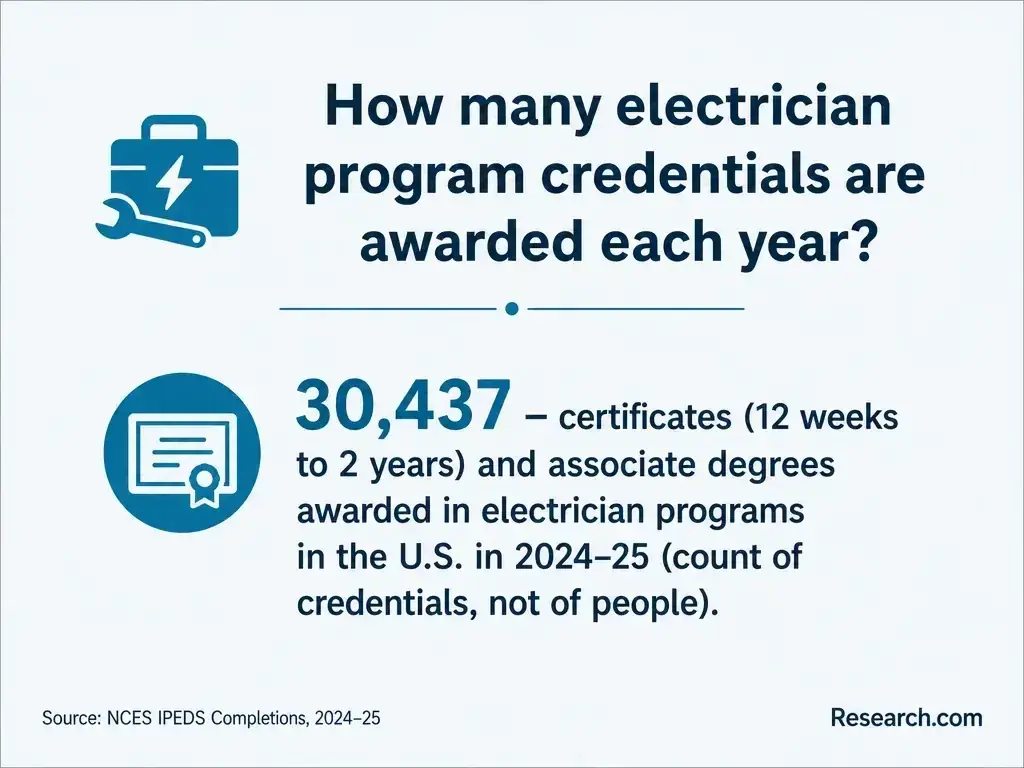
A reliable Prestonsburg-wide average is not available here, and a quoted tuition price would not capture the cost of becoming job-ready. Request a current, itemized estimate from each program and compare it with the costs and wages associated with an apprenticeship. The following categories show what to include in that comparison.
| Cost or offset | Why it matters |
| Tuition, mandatory fees, books, and materials | Determine the amount owed for the complete credential, not just one term. |
| Tools, safety gear, and consumables | Check what the school supplies and what you must own before lab or work begins. |
| Exams, applications, and transportation | Budget for career-entry steps and travel to labs or changing jobsites. |
| Lost earnings and available assistance | Account for reduced work hours, paid apprenticeship wages, grants, and eligible aid. |
For a public-college option, verify your residency-based tuition and whether the specific credential qualifies for federal aid or Kentucky assistance, including the Work Ready Kentucky Scholarship where applicable (Federal Student Aid; Kentucky Higher Education Assistance Authority). A paid apprenticeship can reduce the need to give up earnings, but wages, tools, and travel terms vary by sponsor. Compare the amount you would finance, your chance of completing, and the time until paid work - not tuition alone.
The answer depends on the specific program. A school may award an occupational certificate or diploma; a registered apprenticeship has its own completion credential after required instruction and work-based learning (U.S. Department of Labor). Confirm the exact award with Big Sandy Community and Technical College rather than assuming similarly named courses have the same scope.
A school credential, institutional accreditation, industry training recognition, apprenticeship registration, and a Kentucky electrician license are different things. None automatically substitutes for another. Ask whether coursework can receive advanced standing in an apprenticeship, what documentation you receive for practical work, and whether any prior learning can reduce repeated coursework. Get the answer from the receiving sponsor as well as the school.
Requirements vary by credential and provider. Ask the college about its current application, placement, age, safety, and tool requirements. An apprenticeship sponsor may have a separate application and selection process, and employers can set additional requirements for driving or worksite access. Meeting school admission requirements does not mean an applicant has secured an apprenticeship position.
Before committing, confirm that you can attend the full lab schedule and reach worksites reliably. If you are changing careers, ask whether prior electrical or maintenance experience can be assessed for credit or advanced standing; do not assume that informal experience will satisfy a sponsor or Kentucky's licensing authority. Obtain entry and progression requirements in writing from the organization that will recognize the training.
Relevant instruction includes electrical safety, circuit principles, blueprint reading, measurement, wiring methods, code interpretation, and troubleshooting. Depending on the program, lab work may include conduit bending, installing devices and panels, testing circuits, or working with motors and controls. The U.S. Bureau of Labor Statistics identifies reading technical diagrams, testing components, and following electrical codes as central electrician tasks.
Use the course outline to match training to the work you want. If industrial maintenance is your goal, ask specifically about motor controls and diagnostics; if residential installation is the goal, ask about branch circuits and service work. Request a demonstration or description of practical assessments: watching an installation is not the same as performing and troubleshooting one under supervision.
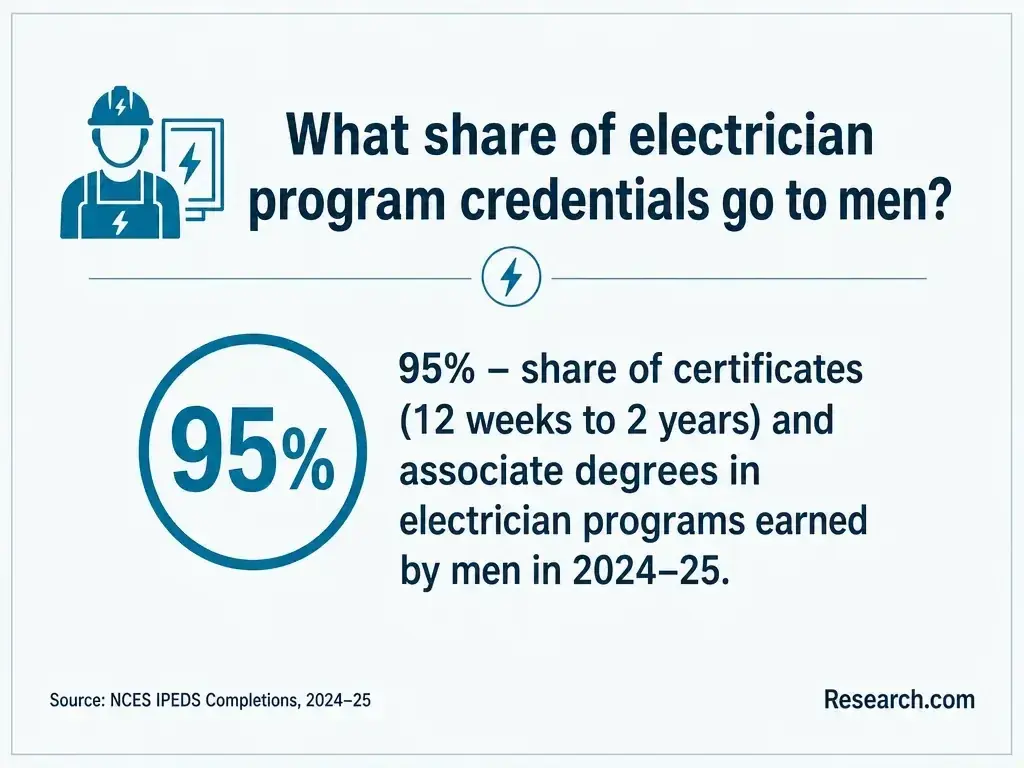
Kentucky regulates electrician licensing through the Department of Housing, Buildings and Construction. Becoming licensed involves requirements beyond completing a school program, including qualifying experience and an examination; requirements differ by license category. Verify the current rules for the work you intend to do directly with the department before relying on a school's description of "license preparation."
Ask whether the job or apprenticeship will document supervised experience in a form Kentucky accepts, and who is responsible for retaining those records. An industry certificate can demonstrate particular skills, but it is not a Kentucky occupational license. Similarly, institutional accreditation addresses a school's status; it does not grant permission to perform licensed electrical work.
Start with the job you want and work backward to the training and license it requires. A ranking can identify programs to investigate, but it cannot tell you whether a particular lab schedule, worksite, or apprenticeship opening fits your circumstances. For each option, ask the following questions and request documents rather than relying on a verbal assurance.
A red flag is a promise that a short or entirely online credential will make you a licensed electrician without further verification. Another is a low advertised price that excludes tools or requires substantial unpaid travel. Choose the route that gives you a credible path to supervised work at a cost and pace you can sustain; do not assume that public, private, or nonprofit status alone determines value.
A common progression is supervised helper or apprentice work, followed by further experience and the appropriate Kentucky licensing steps. With experience, an electrician may focus on construction, maintenance, controls, or supervisory work. Running an electrical contracting business brings separate regulatory and business responsibilities; an entry-level school credential alone is not preparation to operate independently.
Choose an initial placement for the work it will teach, not just its title. Someone who enjoys independent troubleshooting may want to compare maintenance with construction jobs, while recognizing that both involve safety coordination and communication. A broader guide to the best careers for introverts can help frame work-style preferences, but it cannot replace checking an actual electrician role's team and customer-contact demands.
The U.S. Bureau of Labor Statistics projects 9.2% growth in U.S. electrician employment from 2025 to 2035. That national projection supports considering the trade, but it does not measure openings in Prestonsburg or promise a local placement. Construction cycles, maintenance needs, and the geographic reach of an employer can make an individual applicant's opportunities quite different from the national trend.
Test demand locally before paying for training: review current job descriptions, ask sponsors when they expect to recruit, and find out whether they hire beginners or require prior experience. If opportunities close to home are limited, compare the pay and travel demands of jobs across your feasible commuting area. The best training investment is one that connects to positions you can realistically reach and qualify for.
Education is a significant investment, so the Research.com team designed the accompanying ranking to compare electrician programs with other programs serving the same occupation and location. The team checks multiple datasets and quality indicators to make the comparison more credible and useful. Only programs with completions reported to IPEDS are included; the absence of an apprenticeship or other provider from the ranking does not mean it is unavailable or unsuitable.
Best-program rankings assess student outcomes, earnings and return on investment, costs and debt, and quality and recognition. Programmatic accreditation or relevant industry recognition accounts for 20% of the score, institutional accreditation for 10%, and student support for 10%. The remaining 60% covers completion and retention, earnings after completion and relative to annual attendance cost, tuition, attendance cost, student debt - including debt among students who withdrew - and federal loan default rates. An entropy-based method distributes that 60% according to how much indicators differ across programs. Most-affordable rankings instead score only tuition, attendance cost, debt, and default rates using entropy-based weights; accreditation and other quality measures are not part of that score.
The team used the following data sources. Some accreditation and certification sources cover other trades; their inclusion in the broader methodology does not mean they accredit electrician programs or issue Kentucky electrician licenses.
Use the ranking to narrow your options, then verify the current credential, practical training, total cost, and Kentucky licensing implications directly with each provider. More detail on the scoring approach appears on Research.com's methodology page.
# 1 position
# 2 position
Do not assume it is the only route. A registered apprenticeship can combine classroom instruction with paid, supervised work. Check the Kentucky Department of Housing, Buildings and Construction's current licensing requirements and ask each sponsor how its training documents qualifying experience.
No. A school certificate documents completion of that program; Kentucky licensure has separate experience and examination requirements. Confirm the applicable license category before enrolling.
Online lessons can cover theory, but safe installation and troubleshooting require in-person practice. Ask where labs or supervised work occur and how practical skills are assessed.
Choose a college program if you need structured preparation before seeking work and its cost is manageable. Choose a registered apprenticeship if you secure a suitable opening and want to earn while completing supervised training. Compare both routes' schedules, practical experience, and licensing implications.
Ask which electrical credentials are currently offered, their campus and lab locations, required hours, full costs, and whether an apprenticeship sponsor will recognize the coursework. Verify current details directly before applying.