# 1 position
Mech-Tech College - Electrician.
associate

Audited and Verified:
Our Editorial and Data Verification Process
Research.com uses government datasets, official education statistics and primary institutional information to support its career and degree guides. Our review process checks factual accuracy, occupational definitions, source dates and the requirements associated with the credentials discussed.
How This Article Was Fact-Checked
Our editorial team verifies salary estimates, employment projections, education requirements and program information against original data providers and official organizations. Salary figures are checked against the relevant occupational definitions and reporting periods. Information about licensure, accreditation and required in-person training is reviewed separately.
Fact-checked and verified on:

Co-Founder and Chief Data Scientist

Reviewed by Karolina Broda
Fact-Checker and Data Verification
Choosing electrician training in Caguas means looking beyond a school's name: you need practical instruction, a manageable total cost, and a route that fits Puerto Rico's licensing rules. The U.S. Bureau of Labor Statistics projects electrician employment to grow 9.2% nationally from 2025 to 2035, but that does not guarantee a local job. The Research.com team of data scientists created the Best Electrician Trade Schools in Caguas for 2027 ranking to help students identify programs worth considering. This guide explains how to compare those programs with paid training routes before enrolling.
Expect electrical theory alongside physical practice: reading plans, identifying circuit components, making connections, using test instruments, and following safe work procedures. The decisive question is how much supervised time you will spend applying those skills in a lab or on a worksite, rather than watching demonstrations. Ask for the curriculum, scheduled practical hours, and equipment available to each student.
Paths differ in what they deliver. A certificate or diploma generally concentrates on occupational skills and may suit someone seeking structured preparation before applying for supervised work. An associate-degree program adds broader coursework and may suit a student who wants that credential, provided the additional time and cost serve a clear goal. A registered apprenticeship joins technical instruction to paid on-the-job learning; employer-sponsored training may offer a similar work-first entry route but should not be assumed to be a registered apprenticeship. The U.S. Bureau of Labor Statistics describes apprenticeships as a common way electricians learn the trade.
In Caguas, compare the school's location with the location of its labs and any promised work placement. Travel across the San Juan-Caguas area can make an otherwise convenient schedule expensive or difficult to complete. An advertised fast paced associates degree is useful only if its electrical curriculum, supervised practice, and credential fit your goal; speed alone does not establish licensing eligibility.
Electrical work may involve residential and commercial construction, building maintenance, industrial facilities, and installation or repair for electrical contractors. Around Caguas, your realistic search area may extend beyond the municipality: a program with employer connections elsewhere in the metropolitan area could be valuable if the commute and work hours are feasible. The U.S. Bureau of Labor Statistics notes that electricians install, maintain, and repair electrical power, communications, lighting, and control systems.
Training alone does not make someone an independent electrical contractor. Ask whether local employers hire the program's completers into supervised entry-level roles, what those roles are called, and whether the work provides experience applicable to Puerto Rico's licensing process. A placement claim is more useful when the provider can identify the employers, reporting period, and definition of "placed."
A verified Caguas-specific electrician wage is not established here. For context, the U.S. Bureau of Labor Statistics reports a $63,190 national median annual wage for electricians in May 2025. It describes workers across experience levels and locations, so it should not be used as an expected first-year paycheck in Puerto Rico.
Before borrowing for training, compare actual entry-level offers from employers you could commute to, including hours, overtime practices, and benefits. Ask apprenticeship sponsors what trainees earn as they progress. Those figures are more useful for a personal budget than multiplying a national median by an assumed number of working years.
The time depends on the credential and the work experience you need afterward. A school's published completion time may cover classroom and lab instruction but not the supervised employment, examinations, or licensing steps needed for the work you intend to do. The U.S. Bureau of Labor Statistics describes electrician apprenticeships as typically lasting four to five years; that is a description of a common training route, not a Puerto Rico school-hour or licensing rule.
Ask each provider for its actual clock or credit hours, the portion spent in hands-on training, the full-time and part-time calendars, and the average time students take to finish. If you already have related training or work experience, ask whether documented prior learning earns credit or advanced standing - and confirm separately whether Puerto Rico's licensing authority will recognize that experience.
Electrical theory, terminology, and some code-reading instruction can be taught remotely. Safe tool use, circuit assembly, testing, troubleshooting, and supervised fieldwork require physical equipment and in-person observation. An entirely online course should therefore not be treated as equivalent to a program with documented shop or worksite practice, or as proof of licensing eligibility.
For a working adult in Caguas, a hybrid schedule may reduce trips for lectures while retaining required lab sessions. Compare the number, timing, and location of those sessions before enrolling; an evening online class is little help if its practical component conflicts with your job. Lists of affordable online schools for working adults can inform a broader cost search, but they cannot verify the hands-on component of an electrician program.
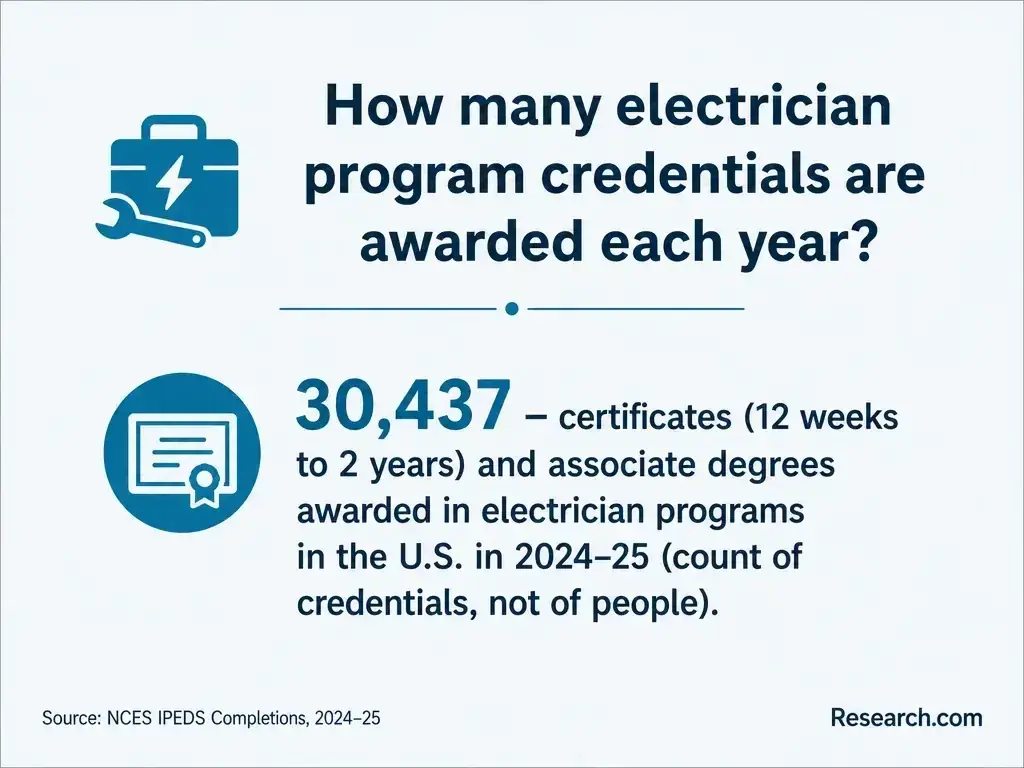
There is no verified, comparable Caguas-wide average presented here. Published prices may cover different program lengths and omit required purchases, so an unsupported "average" would be a poor budgeting tool. Request an itemized, written estimate from each provider and compare the total cost to become job-ready, not just tuition.
These costs and offsets are worth checking because they can change which route is affordable:
Check a school's eligibility and your own eligibility with Federal Student Aid before assuming federal assistance applies; also ask Puerto Rico workforce offices about current training support. General lists of affordable degrees are not substitutes for an itemized electrician-training quote. A sound return-on-investment comparison also considers debt, completion likelihood, your current earnings, plausible post-training pay, and how long it may take to recover the cost.
Depending on the provider, the award may be a certificate, diploma, or associate degree. A registered apprenticeship has its own completion credential; an industry credential, such as one associated with NCCER training, is a separate form of recognition. Ask the provider for the exact award name and whether it is issued by the school, an apprenticeship sponsor, or an industry organization.
These credentials are not interchangeable with Puerto Rico occupational licensure. Nor does institutional accreditation establish that a specific electrical curriculum has licensing-board approval or that its graduates have completed required supervised experience. If a school advertises transfer credit, apprenticeship articulation, or advanced standing, request the receiving organization's written policy rather than relying on a verbal assurance.
Requirements vary by provider and route. A school may ask for proof of prior schooling, an application, or a skills assessment; an apprenticeship sponsor may also set entry qualifications and select applicants for available positions. These are admission rules, not evidence that completing the program will meet Puerto Rico's rules for licensed work.
Ask admissions staff to identify every prerequisite and its deadline, including any required documents, assessment, safety gear, or costs due before classes begin. If applying to an apprenticeship, ask when applications open, how candidates are selected, whether training is paid, and when supervised work begins. Do not pay a deposit until you have confirmed both entry requirements and the refund policy in writing.
A useful curriculum connects electrical concepts to work a beginner can perform safely under supervision. Look for instruction in circuits and measurements, wiring methods, blueprint reading, applicable electrical codes, testing, troubleshooting, and hazard recognition. The U.S. Bureau of Labor Statistics identifies technical knowledge, troubleshooting, and physical work as central to the occupation.
Compare what students actually do: identify faults with meters, assemble and test circuits, interpret a plan, and explain safe isolation procedures. Ask whether instructors assess those tasks individually, whether equipment is available during scheduled lab time, and whether worksite learning is included or must be arranged after graduation. Two programs with the same credential name may offer very different preparation for an employer's practical test.
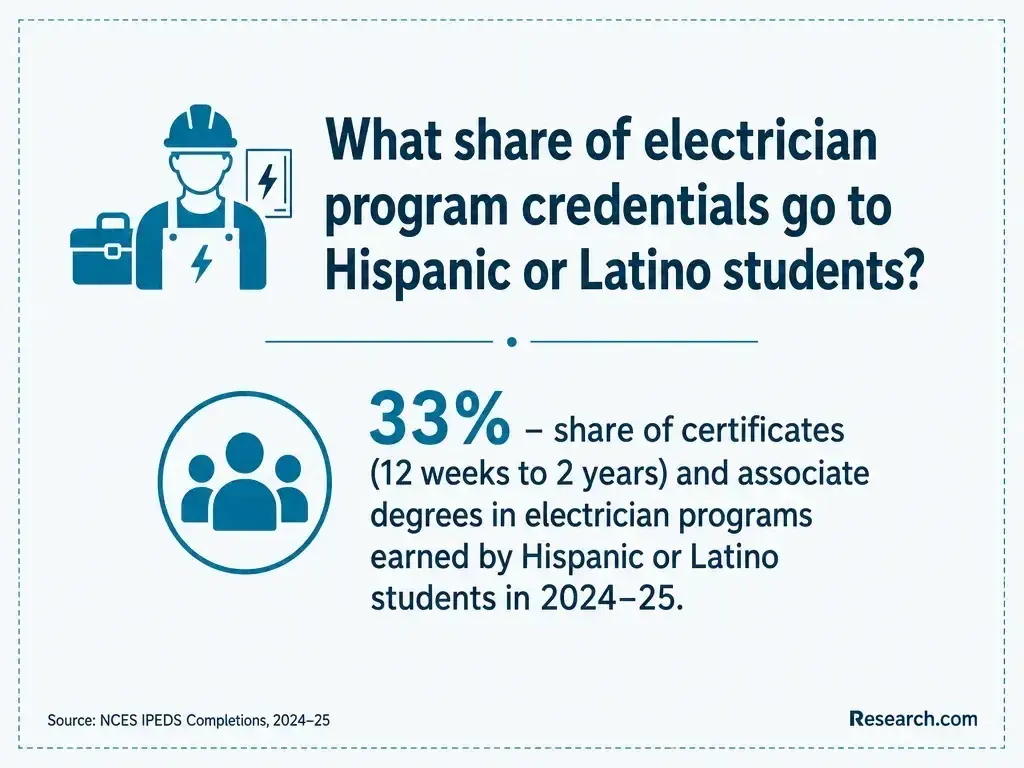
Puerto Rico regulates electrical practice, so do not assume a school certificate alone permits independent electrical work. Before choosing training, verify the current requirements for your intended role with Puerto Rico's Junta Examinadora de Peritos Electricistas, including the applicable education, experience, examination, and application requirements. The Junta - not a school's accreditation status - determines licensing eligibility under Puerto Rico's rules.
Ask the school to show, in writing, how its curriculum and any supervised work align with the specific license you intend to seek. Also distinguish an optional industry certification from a government-issued occupational license, and a registered apprenticeship from either one. If you expect to work outside Puerto Rico, check that jurisdiction's rules separately; do not assume the credential transfers automatically.
Start with the job you want - supervised entry-level work, an apprenticeship, or eventual independent practice - and work backward to the required training and experience. A ranking helps identify candidates, but it cannot replace checks on licensing alignment, practical instruction, and your own costs. Searches for unrelated options such as easiest masters programs to get into will not answer those electrician-specific questions.
Use the same questions with each school and apprenticeship sponsor so the answers are comparable:
Verify institutional accreditation through the accreditor or U.S. Department of Education, school authorization with the relevant Puerto Rico regulator, and apprenticeship registration with the appropriate apprenticeship authority. Those checks answer different questions. A warning sign is a provider that promises licensure, earnings, or a job without identifying the additional requirements or evidence behind the claim.
One route begins with supervised installation or maintenance work and builds toward greater responsibility through experience and any required licensing steps. Later options may include troubleshooting, industrial electrical work, crew leadership, or contracting, depending on an employer's needs and the authority granted by the license held. A short school program can be a starting point; it should not be sold as an instant route to every advanced role.
Choose training around the setting you want to enter. Someone seeking hands-on work quickly should compare paid apprenticeships and employer entry routes with school; someone who needs a structured foundation may value a school's labs first. Information about online 1 year masters programs addresses a different education decision and provides no evidence that an electrical training route meets Puerto Rico's practical or licensing requirements.
The U.S. Bureau of Labor Statistics projects 9.2% growth in electrician employment nationally from 2025 to 2035. This supports considering the occupation, but it is not a projection for Caguas or a forecast of openings for new trainees there. Construction schedules, maintenance hiring, and an applicant's ability to reach worksites all affect the local opportunity.
Use the national outlook as context, then test demand close to home: review current entry-level postings in your feasible commute area and ask providers which employers recently hired their completers. Check whether those jobs require experience, a specific license, or a schedule you can meet before treating a placement lead as a realistic outcome.
Investing in training is a consequential decision. Research.com designed its ranking to compare electrician programs with other programs in the same occupation and location, using outcomes, costs, and quality indicators rather than a school's name alone. Only programs with completions reported to the Integrated Postsecondary Education Data System (IPEDS) are eligible; a registered apprenticeship or employer program may still be a good option even if it does not appear.
For its best-program rankings, Research.com assesses student completion and retention; earnings one year after completion and earnings relative to annual attendance cost; tuition, attendance cost, debt, and federal loan defaults; and accreditation, relevant industry recognition, and student support. Programmatic accreditation or relevant industry recognition accounts for 20% of the score, institutional accreditation for 10%, and student support for 10%. The remaining 60% covers outcomes, earnings, and costs, with weights assigned through an entropy-based method that gives more weight to indicators that vary more across programs. Most-affordable rankings score only tuition, attendance cost, debt, and loan defaults using that method; accreditation and other quality indicators are not part of that score.
The team used the following data sources in creating its rankings. Some sources address occupations other than electrical work; their inclusion in the broader methodology does not mean they accredit electrician programs.
The ranking can narrow your shortlist, not establish that a program satisfies Puerto Rico licensing requirements or offers a particular apprenticeship placement. Confirm those points directly with the provider and the relevant licensing authority. Read more about the approach on Research.com's methodology page.
# 1 position
# 2 position
Not necessarily. A registered apprenticeship or employer training may provide another entry route. Confirm with Puerto Rico's Junta Examinadora de Peritos Electricistas which education and supervised experience count toward your intended license.
You may be able to study theory online, but wiring, testing, safe tool use, and supervised fieldwork require in-person practice. Verify the practical component before enrolling.
No. A school certificate documents completion of its program; Puerto Rico occupational licensure is a separate regulatory process.
Choose based on access, cost, and learning needs. School can provide a structured foundation; an apprenticeship combines instruction with paid, supervised work but may have a separate selection process and a longer timeline.
Get the full cost and refund policy in writing. Confirm practical hours, the credential awarded, school authorization, and how the training relates to your intended Puerto Rico license.