# 1 position
Olympic College - Electrician.
associate

Audited and Verified:
Our Editorial and Data Verification Process
Research.com uses government datasets, official education statistics and primary institutional information to support its career and degree guides. Our review process checks factual accuracy, occupational definitions, source dates and the requirements associated with the credentials discussed.
How This Article Was Fact-Checked
Our editorial team verifies salary estimates, employment projections, education requirements and program information against original data providers and official organizations. Salary figures are checked against the relevant occupational definitions and reporting periods. Information about licensure, accreditation and required in-person training is reviewed separately.
Fact-checked and verified on:

Co-Founder and Chief Data Scientist

Reviewed by Karolina Broda
Fact-Checker and Data Verification
Choosing an electrician program in Washington means deciding more than where to take classes: you need a route to supervised work, the right credential, and eventual state certification. The U.S. Bureau of Labor Statistics projects 9.2% national growth in electrician employment from 2025 to 2035, making the choice timely but not guaranteeing a job. This guide explains costs, training routes, and licensing rules. It also accompanies the Best Electrician Trade Schools in Washington for 2027 ranking, created by the Research.com team of data scientists to help students identify programs worth considering.
Expect electrical theory, code study, safety instruction, and supervised practice with wiring, conduit, circuits, and test instruments. The decisive question is how that practice connects to the work experience required for your intended Washington electrician certification. A lab can build skill without necessarily earning the same credit as qualifying supervised employment; ask the provider and L&I how each hour is recorded.
These routes serve different goals. The comparison focuses on what each route provides before a student can work independently:
| Route | Training and credential | Best fit and limitation |
| Public technical or community college | Labs and classroom instruction leading to a certificate or, where offered, an associate degree | Useful for building fundamentals or entering an apprenticeship; confirm whether instruction or work placements count toward state requirements. |
| Private career-school program | School-based certificate or diploma with provider-specific labs and job-placement support | May offer a suitable schedule, but compare the full price and verify state authorization and any claimed L&I credit. |
| Registered apprenticeship | Paid, supervised work plus related instruction under an approved sponsor | Directly connects training to a defined occupation; entry may depend on selection and available employer placements. |
| Pre-apprenticeship or employer entry route | Preparation or introductory work; the resulting credential and credit vary | Can help applicants reach a sponsor, but is not automatically a substitute for registration or certification. |
Washington students can compare offerings at Olympic College, Bellingham Technical College, Bates Technical College, Big Bend Community College, and Spokane Community College with registered apprenticeship opportunities. Check each current catalog and sponsor agreement: similarly named electrical programs may lead to different credits, placements, and credentials.
Potential settings include residential construction, commercial buildings, industrial facilities, maintenance operations, and electrical contractors' worksites. The setting matters because Washington's general journey-level route includes specified commercial or industrial experience; exclusively residential work may not meet that goal (Washington L&I). Someone targeting a residential specialty should instead check that specialty's separate experience and examination rules.
Consider where a program can place you, not just where its campus sits. A classroom near home may be convenient, but a distant jobsite can determine daily travel costs and whether you can accumulate the right supervised hours. Ask apprenticeship sponsors and employers which counties their placements cover before committing to a schedule.
The U.S. Bureau of Labor Statistics reports a $63,190 national median annual wage for electricians in May 2025. That is a midpoint for employed electricians across experience levels - not a Washington wage, an apprentice rate, or a prediction of first-year earnings. Use it as broad occupational context while comparing actual local apprentice wage schedules and job postings.
Pay can change with certification level, specialty, collective bargaining agreement, employer, and work location. For an investment decision, request the sponsor's starting wage, scheduled increases, benefits, and expected hours. Compare those figures with what you would otherwise earn while training rather than assuming the national median begins immediately after school.
School certificates vary in length, while a registered apprenticeship combines related instruction with thousands of hours of supervised employment and ordinarily takes multiple years. Washington L&I identifies 8,000 hours of qualifying work experience for the general journey-level route, including 4,000 hours in commercial or industrial work. Current entry rules generally require completion of a registered apprenticeship for that route; applicants relying on an exception or earlier experience should confirm their individual eligibility with L&I.
A shorter classroom program may get you ready to apply or begin working, but it does not compress the required field experience. Even if you are comparing top online associate degrees in 6 months, ask separately how long it will take to reach Washington electrician certification. Request a written timeline covering admission, placement, supervised hours, related instruction, and examination eligibility.
Online instruction can suit code reading, calculations, and some theory. Wiring methods, instrument use, troubleshooting, safety practice, and supervised jobsite work require physical participation. A hybrid program can reduce classroom travel, but its in-person lab and worksite schedule still needs to fit your life.
Recognition as one of the nationally recognized online colleges would not, by itself, establish that electrical training satisfies Washington's work-experience or apprenticeship rules. Ask where hands-on sessions occur, who supervises them, whether attendance is mandatory, and which hours L&I or a registered sponsor will accept. Avoid any claim that an entirely online certificate alone qualifies you for state electrician certification.
There is no single reliable statewide price that describes a college certificate, private-school course, and paid apprenticeship equally. Published tuition also omits costs that can determine whether a route is affordable. Obtain a current, itemized estimate for the exact program and your residency status before comparing offers.
For a realistic job-ready budget, include mandatory fees, books or software, tools, boots and other protective equipment, materials, examination and application charges, and travel to labs or jobsites. Add income forgone while attending classes; then subtract grants, scholarships, eligible aid, and wages earned during training. A paid apprenticeship may have lower out-of-pocket schooling costs but still involve tools, commuting, and an apprentice wage below later-career pay.
Ask a college financial-aid office whether its specific credential qualifies for federal aid and Washington College Grant support; eligibility depends on the program and student. WorkSource can help eligible applicants investigate workforce funding (Washington Student Achievement Council; Federal Student Aid; Washington Employment Security Department). Compare total expected cost and debt over the full route, not just the first term's tuition.
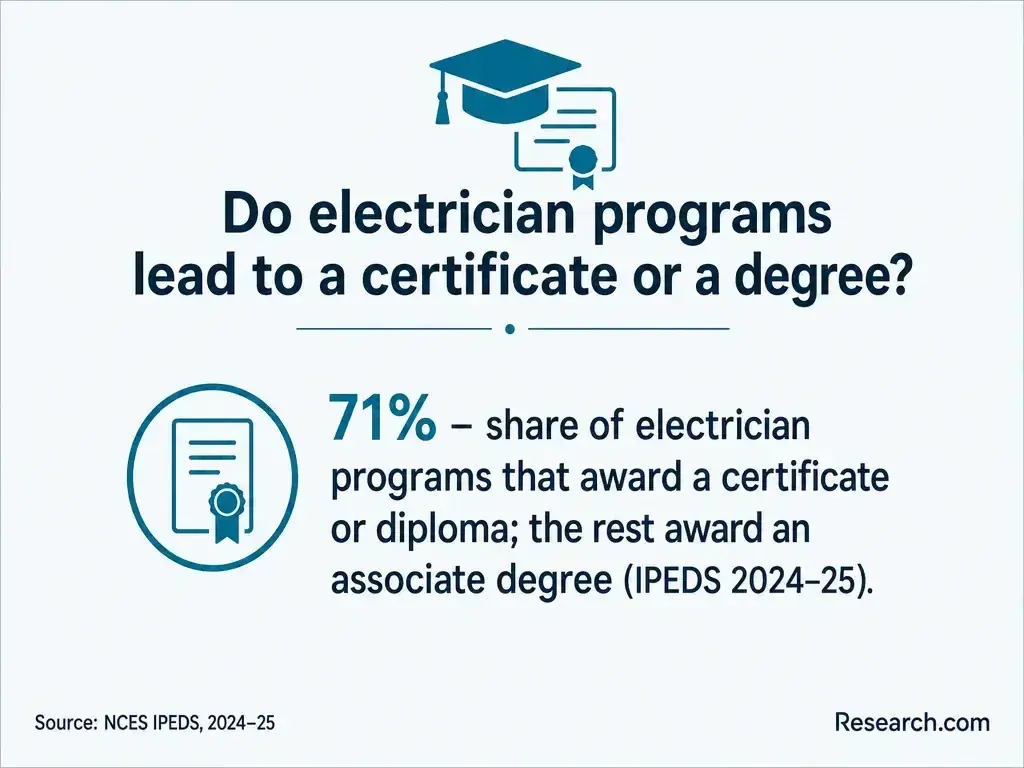
A school may award a certificate, diploma, or associate degree. A registered apprenticeship documents completion of its approved work-and-instruction program. These are training credentials, not the same thing as Washington electrician certification issued by L&I after applicable experience and examination requirements are met.
Before paying, ask for the exact credential name and whether instruction can be applied to an apprenticeship or recognized as prior learning. Get any advanced-standing promise confirmed by the receiving sponsor: transfer or credit policies are not automatic. Institutional accreditation, private-school authorization, apprenticeship registration, and state occupational certification each answer a different question; none alone establishes all the others.
Requirements depend on the provider and pathway. Schools may assess math readiness and require an application; apprenticeship sponsors set selection criteria and must have an available training opportunity. Electrical work also requires the appropriate Washington trainee status and supervision before an uncertified person performs covered tasks (Washington L&I). Confirm current rules before accepting a jobsite assignment.
Ask whether a program requires a high school credential, placement assessment, driver's license, physical ability to perform tasks safely, or employer screening. Do not assume every provider uses the same threshold. If you need wages immediately, ask sponsors when paid placement actually begins - not merely when classroom admission is offered.
Core instruction usually connects electrical mathematics and circuit theory to practical installation: reading drawings, selecting conductors and overcurrent protection, bending conduit, making connections, and testing and troubleshooting circuits. Safety training should cover shock and arc hazards, de-energization, protective equipment, and applicable electrical code. Washington's certification process makes accurate documentation of supervised work an important workplace skill as well (Washington L&I; U.S. Bureau of Labor Statistics).
Judge a lab by what you will actually do. Ask to see the equipment, the proportion of instruction spent practicing, and how instructors assess safe troubleshooting. A program emphasizing only written exam preparation may be useful later, but it is a weak substitute for supervised installation experience at entry.
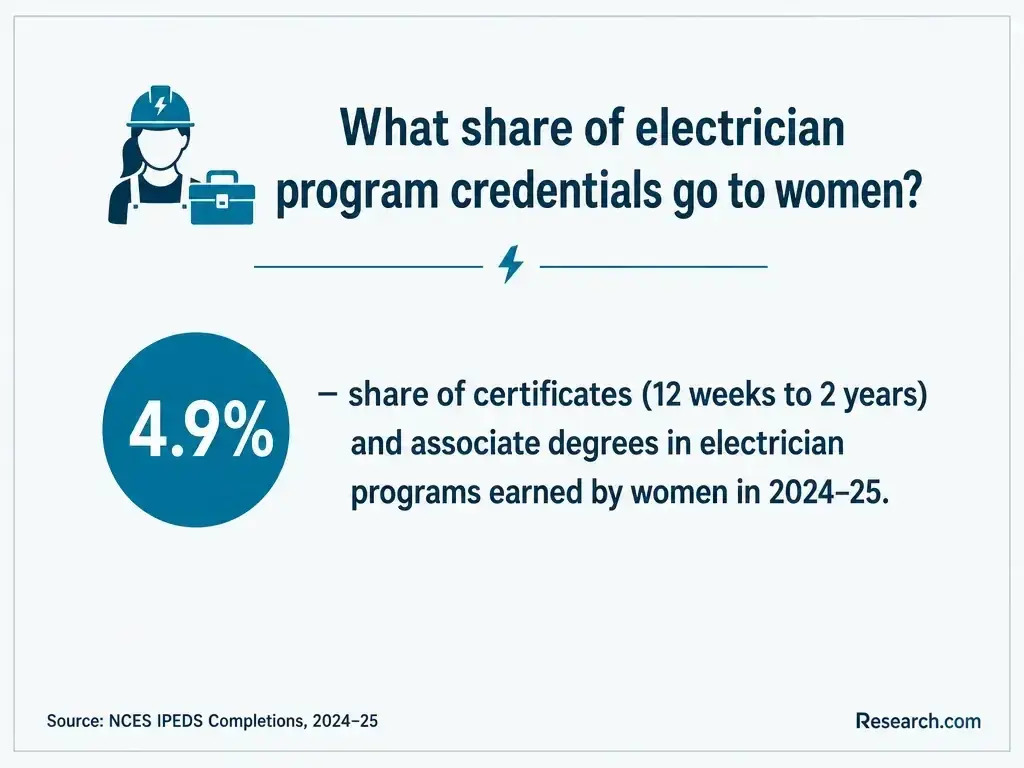
Yes, state rules govern covered electrical work. Washington L&I administers electrician certification and trainee requirements; an uncertified trainee must work under the applicable supervision rules. General journey-level and specialty certifications have different scopes and qualifying experience. Completion of school alone does not confer independent authority to perform electrical work.
For the general journey-level route, plan around registered apprenticeship, qualifying supervised experience, related instruction, and the state examination. Specialty applicants should check their chosen classification's distinct requirements rather than borrowing general journey-level figures. An optional industry training certificate may strengthen an application, but it does not replace L&I certification. Verify current eligibility, documentation, and any claimed out-of-state experience directly with L&I before choosing a program.
Start with your intended certification and work setting, then work backward to the training that supplies qualifying experience. A ranking is useful for identifying colleges to investigate, but its IPEDS eligibility rule means it cannot compare every registered sponsor or employer route.
Use these checks to turn a shortlist into a decision:
Choose school-based preparation if you need fundamentals or a schedule that helps you become a stronger apprenticeship applicant. Consider direct apprenticeship entry if you can secure a position and prefer to earn while accumulating required experience. Broad education lists, including easiest phd programs, are not substitutes for checking Washington electrical-training eligibility.
An entrant may progress from supervised trainee to a certified specialty or general journey-level electrician, depending on the experience and examination route completed. With further experience, an electrician may pursue supervisory work, industrial maintenance, estimating, or a contracting business. Business operation and electrical contracting involve requirements beyond an individual's electrician certificate; check L&I rules before treating self-employment as an immediate next step.
Match the route to the destination: residential-only training may suit someone targeting residential work but may leave gaps for a general journey-level goal. If you are comparing careers through lists of bachelor's degrees that make the most money, keep the electrician decision grounded in its own paid-training timeline, certification requirements, and likely local earnings rather than an unrelated credential's salary.
The latest national projection supplied by the U.S. Bureau of Labor Statistics is 9.2% electrician employment growth from 2025 to 2035. It indicates broader demand for the occupation, but it is not a Washington forecast and cannot tell an individual applicant how quickly a sponsor will offer a place. Local construction cycles, industrial employers, and apprenticeship openings will matter more to your immediate search.
Compare current openings in the areas where you can realistically travel, and ask sponsors about selection timing and work availability. Electrical technology and codes evolve, so a route that develops troubleshooting ability and provides continuing instruction may be more valuable than one focused solely on fast completion. Lists of shortest phd programs offer no shortcut through the supervised experience this trade requires.
Investing in training is an important decision, so Research.com evaluates programs against others in the same occupation and location rather than treating every school as interchangeable. Only programs with completions reported to IPEDS are eligible for this ranking. That boundary matters: an apprenticeship sponsor or employer training route can be a strong option even if it does not appear in a college-oriented dataset.
Best-program scores consider student outcomes; earnings one year after completion and earnings relative to annual attendance cost; tuition, attendance cost, debt - including debt among students who withdrew - and federal loan default rates; and quality indicators. Occupation-relevant programmatic accreditation or industry recognition accounts for 20%, institutional accreditation for 10%, and student support for 10%. The remaining 60% covers outcomes, earnings, and costs, with weights distributed through an entropy-based method that gives more weight to indicators that vary more across programs. Most-affordable rankings instead score only tuition, attendance cost, debt, and default rates using entropy-based weights; accreditation and other quality indicators are not included in that score.
The team draws on the following sources to check reported program, institutional, outcome, and recognition information. Some cover other trades or health occupations and should not be mistaken for electrician licensing authorities:
The ranking helps narrow a local shortlist, not determine state certification eligibility. Readers should confirm current costs, openings, and training credit directly with providers and Washington's Department of Labor & Industries (L&I). More detail about the ranking approach appears on Research.com's methodology page.
# 1 position
# 2 position

# 3 position
# 4 position
# 5 position
# 6 position

# 7 position
# 8 position

# 9 position
# 10 position

Yes. A registered apprenticeship combines instruction and paid supervised work and can be a direct route. Check Washington L&I requirements for the certification you want; skipping a separate school program does not mean skipping required instruction or experience.
Not automatically. The general journey-level route has apprenticeship and qualifying experience requirements, plus an examination. Ask L&I whether your particular instruction and documented hours apply.
Registered apprentices generally earn wages during supervised employment. Ask each sponsor for its current wage schedule, benefits, and expected time to a work placement; classroom admission alone is not a wage offer.
No online-only school certificate replaces the physical skills and supervised work required for covered electrical work in Washington. Some theory may be taught remotely, but verify in-person labs and jobsite arrangements.
Not necessarily. Compare total cost and debt with hands-on training, access to qualifying work, completion prospects, and earnings while training. A low tuition price is less useful if the program leaves you without a practical route to certification.