# 1 position
UEI College-West Covina - Electrician.
certificate or diploma

Audited and Verified:
Our Editorial and Data Verification Process
Research.com uses government datasets, official education statistics and primary institutional information to support its career and degree guides. Our review process checks factual accuracy, occupational definitions, source dates and the requirements associated with the credentials discussed.
How This Article Was Fact-Checked
Our editorial team verifies salary estimates, employment projections, education requirements and program information against original data providers and official organizations. Salary figures are checked against the relevant occupational definitions and reporting periods. Information about licensure, accreditation and required in-person training is reviewed separately.
Fact-checked and verified on:

Co-Founder and Chief Data Scientist

Reviewed by Karolina Broda
Fact-Checker and Data Verification
Choosing an affordable electrician program in West Covina means comparing more than tuition: the training must also help you gain practical skills and meet California's requirements for electrical work. The Research.com team of data scientists created the Most Affordable Electrician Trade Schools in West Covina for 2027 ranking to help students identify programs worth considering. With U.S. electrician employment projected to grow 9.2% from 2025 to 2035, according to the U.S. Bureau of Labor Statistics, this guide helps you compare costs, training routes, and career-entry requirements before enrolling.
Expect a mix of electrical theory, code study, safety instruction, and supervised practice. Useful hands-on training goes beyond watching demonstrations: students should have opportunities to measure circuits, make connections, read plans, install components, and diagnose faults under instructor supervision. Ask each provider for its scheduled lab hours, equipment list, and student-to-workstation arrangements; similarly named credentials can provide very different amounts of practice.
West Covina students can investigate local career-school offerings, including those at UEI College-West Covina and InterCoast Colleges-West Covina, but should confirm the current program name, schedule, campus location, and electrician-trainee eligibility directly. A registered apprenticeship is a different option: it integrates paid, supervised jobsite work with related instruction and can be a better fit for someone ready to compete for a work-based position. Source: DIR; U.S. Department of Labor.
Training can prepare you to seek supervised entry-level work with electrical contractors or electrical maintenance teams. The broader San Gabriel Valley and Los Angeles-area labor market matters because jobsites may be well beyond West Covina; commute time, transportation, and the ability to reach changing worksites can affect both training costs and job choices.
Residential wiring, commercial construction, building maintenance, and electrical-system upgrades require different day-to-day skills. If you want construction work, prioritize conduit, plan reading, and jobsite safety. If maintenance interests you, compare programs' motor-control and troubleshooting practice. Neither a school certificate nor a preferred specialty replaces the work experience required for California certification. Sources: BLS Occupational Outlook Handbook; DIR.
BLS reports a May 2025 U.S. median annual wage of $63,190 for electricians. That national figure describes workers across experience levels and locations, not a West Covina offer or expected pay immediately after school. Apprentices and other beginners may earn less; pay also varies by employer, specialty, hours, and jobsite. Source: BLS Occupational Outlook Handbook.
For a local decision, compare actual trainee or apprenticeship wage scales and recent entry-level postings in the commuting area. Ask a prospective program whether its published earnings describe new completers, all former students, or experienced electricians; those are not interchangeable measures.
A school's advertised completion time covers its coursework, not necessarily the time needed to become a California-certified electrician. Program schedules vary, and part-time attendance can extend the calendar time. Under California's experience-based route, general electrician certification requires 8,000 hours of qualifying electrical work experience and passing the certification examination; applicants must document eligibility under DIR rules. Source: DIR.
Registered apprenticeships generally take multiple years because paid work and related instruction progress together. A shorter school program may help you begin learning sooner, but ask exactly how it connects to supervised employment. If comparing an electrical-training certificate with accelerated online associate degrees, remember that an academic timetable does not establish California electrician-trainee status or replace documented field experience.
Online instruction can work for electrical calculations, terminology, and some code-study activities. It cannot reproduce supervised wiring, tool use, testing, or jobsite safety practice. A hybrid option is useful only if its in-person labs are accessible and its training arrangement fits California's rules for the pathway you intend to follow.
Before choosing a remote course, find out where practical sessions occur, whether attendance is mandatory, and whether the provider is on DIR's applicable approved-school list if you plan to register as an electrician trainee. A fully online completion certificate should not be treated as proof of practical competence or certification eligibility. Source: DIR.
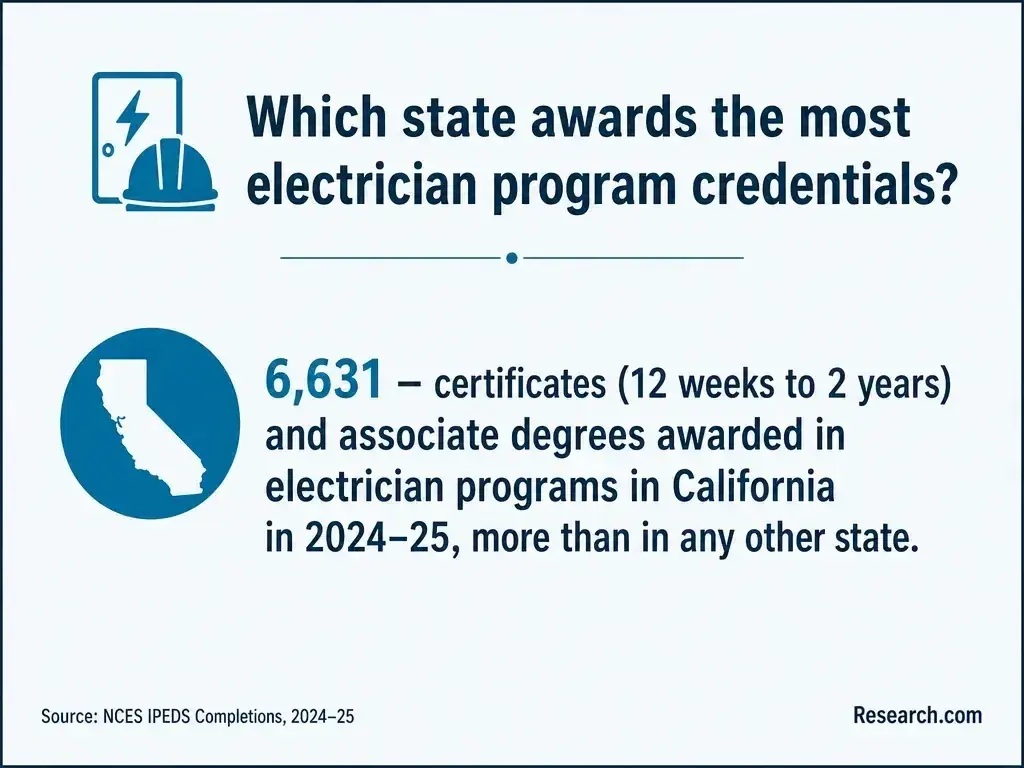
There is no reliable single West Covina average that captures school programs and paid apprenticeships on the same basis. A posted tuition figure can also omit substantial expenses. Request an itemized, current quote from each school rather than using an unverified local average to set your budget.
Compare the following costs for the entire period until you can pursue your intended job, not merely the first term:
Federal aid depends on the student and program's eligibility; a provider's presence in a ranking does not establish either. Ask about a written total-cost estimate and refund policy, then compare that amount with a registered apprenticeship's wages and expenses. Sources: Federal Student Aid; U.S. Department of Labor.
A school may award a completion certificate or diploma, while a registered apprenticeship documents completion of its work-based training. These credentials describe training; they are not the same as California electrician certification. Ask for the exact credential title and whether the provider can explain how its instruction fits your intended DIR pathway. Sources: DIR; U.S. Department of Labor.
Also distinguish institutional accreditation, state authorization of a school, DIR approval relevant to electrician trainees, and registration of an apprenticeship. Each answers a different question. None, by itself, proves you have passed California's certification examination or completed the required experience. Source: DIR.
Admissions standards vary by provider. Ask about minimum education, math readiness, identification, schedule availability, and any physical or safety expectations before paying an enrollment fee. Apprenticeship sponsors may have separate applications, selection procedures, and entry requirements; acceptance into a school does not mean acceptance into an apprenticeship.
For California work as an electrician trainee, confirm the current DIR registration process and whether your school is approved for that purpose. Do this before enrolling if trainee registration is central to your plan. Completing a course without the right registration and supervised-work arrangement can delay your path to documented experience. Source: DIR.
Relevant instruction covers electrical fundamentals, circuit calculations, safe tool and meter use, wiring methods, blueprint reading, and the electrical code. Practical exercises should require you to apply those concepts, identify hazards, and troubleshoot rather than simply recall answers. BLS identifies technical knowledge, troubleshooting, and safety practices as central to electricians' work. Source: BLS Occupational Outlook Handbook.
Look closely at the program's emphasis. Residential exercises alone may not provide the same preparation for commercial conduit work or facility maintenance. Request a course outline and lab schedule, then compare them with the tasks in the entry-level jobs you would actually seek around West Covina.
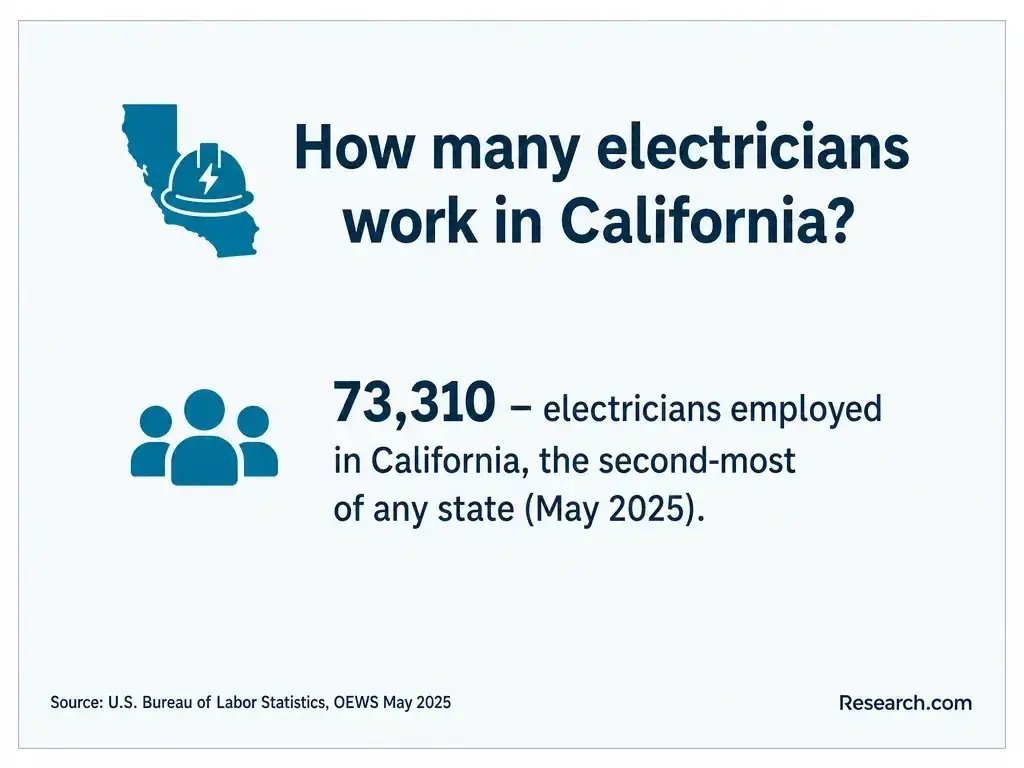
California regulates who may perform electrical work for a C-10 electrical contractor. The state distinguishes registered electrician trainees, apprentices, and certified electricians. A trainee's work and schooling must follow DIR requirements; general electrician certification involves qualifying experience and passing a state examination. Graduating from trade school does not automatically make you certified. Source: DIR.
Certification to work as an electrician is also distinct from a contractor license to operate an electrical contracting business. If self-employment is your eventual goal, investigate California Contractors State License Board requirements separately rather than assuming an electrician certificate authorizes you to bid on jobs independently. Sources: DIR; California Contractors State License Board.
The best investment is the option that gets you the right training and a viable route to supervised work at a cost you can manage. An affordability ranking identifies a useful comparison set, but it cannot tell you whether a program's labs, schedule, or California regulatory status match your goal.
Before enrolling, work through these checks with each provider or apprenticeship sponsor:
A red flag is any promise that a short course alone makes you a licensed or certified electrician. Another is a low tuition quote with no explanation of equipment costs or the work experience you still need. For someone who can secure a suitable paid apprenticeship, borrowing for a separate introductory program may not be the strongest choice; someone needing structured preparation before applying may value a well-equipped school program more. Sources: DIR; U.S. Department of Labor.
An initial route is supervised trainee or apprentice work, followed by certification when you meet California's requirements and pass the examination. With experience, electricians may move toward commercial work, maintenance, controls, supervision, or contracting, subject to the distinct requirements of each role. School training can support that progression, but it does not compress the required work experience into a classroom credential. Sources: DIR; BLS Occupational Outlook Handbook.
If earnings are a major reason for changing careers, compare electrician work with other highest paying vocational trades using their entry requirements as well as their wages. The better-paying occupation on paper may require a different training period, work schedule, or physical demands than you want.
BLS projects 9.2% U.S. electrician employment growth from 2025 to 2035. That is a national occupational projection, not a forecast of West Covina openings or a guarantee of placement. It supports taking the trade seriously, but local hiring will depend on contractors' workloads, maintenance needs, and your ability to reach jobsites across the surrounding area. Source: BLS Employment Projections.
Before selecting a schedule or borrowing for training, review current entry-level postings and apprenticeship recruitment in your practical commuting range. Note which roles accept trainees, what tools or transportation they require, and whether the advertised work matches the skills taught in your shortlisted program.
Investing in electrician training is a consequential decision, so Research.com designed its ranking to help readers compare programs against relevant local options rather than unrelated occupations. Only programs with completions reported to IPEDS are eligible. That means the ranking can help narrow a school search, but it does not cover every apprenticeship, employer-sponsored program, or training provider.
The most affordable ranking evaluates tuition, cost of attendance, median student debt, and federal loan default rates. Weights are assigned using an entropy-based method, which gives more weight to measures that differ more across eligible programs. Accreditation and other quality indicators are not part of this affordability score; readers should verify them separately. Research.com also uses the following data sources across its ranking research, although some occupation-specific sources listed here concern trades other than electrical work:
An affordability rank is a starting point, not a finding that a program meets California electrician trainee or certification rules. Check current program prices, hands-on training, and regulatory eligibility directly before committing. Research.com explains its broader ranking approach on its methodology page.
# 1 position
# 2 position
No single trade-school credential is the only route. California recognizes pathways involving approved trainee schooling, qualifying work experience, and registered apprenticeships. Check the applicable DIR requirements before choosing a route. Source: DIR.
Not by graduation alone. California certification requires meeting the applicable experience and examination requirements. Ask the provider what its credential covers and what you must complete afterward. Source: DIR.
You can study some theory online, but practical electrical work requires in-person instruction or supervised jobsite experience. Verify where labs occur and whether the arrangement fits your California trainee or apprenticeship pathway. Source: DIR.
It may reduce the need to give up earnings because apprentices are paid while training. Compare wages, required purchases, related-instruction costs, entry requirements, and how quickly you can secure a position rather than assuming either route has the lower total cost. Source: U.S. Department of Labor.
Ask for the complete cost and refund policy, hands-on hours, exact credential, current DIR-relevant approval status, and a clear explanation of how students find supervised electrical work. Confirm the answers against the appropriate state records. Source: DIR.