# 1 position


Audited and Verified:
Our Editorial and Data Verification Process
Research.com uses government datasets, official education statistics and primary institutional information to support its career and degree guides. Our review process checks factual accuracy, occupational definitions, source dates and the requirements associated with the credentials discussed.
How This Article Was Fact-Checked
Our editorial team verifies salary estimates, employment projections, education requirements and program information against original data providers and official organizations. Salary figures are checked against the relevant occupational definitions and reporting periods. Information about licensure, accreditation and required in-person training is reviewed separately.
Fact-checked and verified on:

Co-Founder and Chief Data Scientist

Reviewed by Karolina Broda
Fact-Checker and Data Verification
Should you pay for electrician training in Marietta, or start earning through an apprenticeship? The distinction matters: the U.S. Bureau of Labor Statistics projects electrician employment to grow 9.2% nationally from 2025 to 2035, but a school credential alone does not replace supervised experience. This guide compares costs, hands-on training, credentials, and Georgia licensing rules. It also accompanies the Best Electrician Trade Schools in Marietta for 2027 ranking, created by the Research.com team of data scientists to help students make an informed choice about programs worth considering.
Expect instruction in electrical theory, code use, circuits, wiring methods, blueprint reading, testing, and safety, followed by supervised practice - not just lectures. A useful lab lets students install and troubleshoot circuits, use meters correctly, and demonstrate safe work habits before entering a jobsite. Ask for the current share of scheduled time spent in labs or fieldwork; a credential name alone does not establish practical competence.
In Marietta, Chattahoochee Technical College and Lincoln College of Technology-Marietta are schools to investigate for current electrical offerings. Confirm the exact program, teaching campus, credential, schedule, and employer connections directly with each school; offerings can change. A registered apprenticeship is a different pathway: it combines related instruction with paid, supervised work and may suit someone ready to enter a jobsite immediately. School may better suit someone who wants structured preparation before applying for electrical work, provided its added cost and time make sense.
Potential workplaces include residential and commercial electrical contractors, construction sites, and facilities maintenance teams around Marietta and the wider Atlanta area. The type of work changes the training to prioritize: residential wiring calls for different repeated practice than commercial conduit work or industrial controls. Electrical training can help a candidate seek an entry-level role, but employers may still require jobsite experience, a driving record, safety training, or the ability to travel between sites.
Ask prospective employers whether they hire school-trained beginners, sponsor apprentices, and document supervised work. That answer is more useful than a broad placement claim if your goal is eventually to qualify for Georgia electrical-contractor licensing.
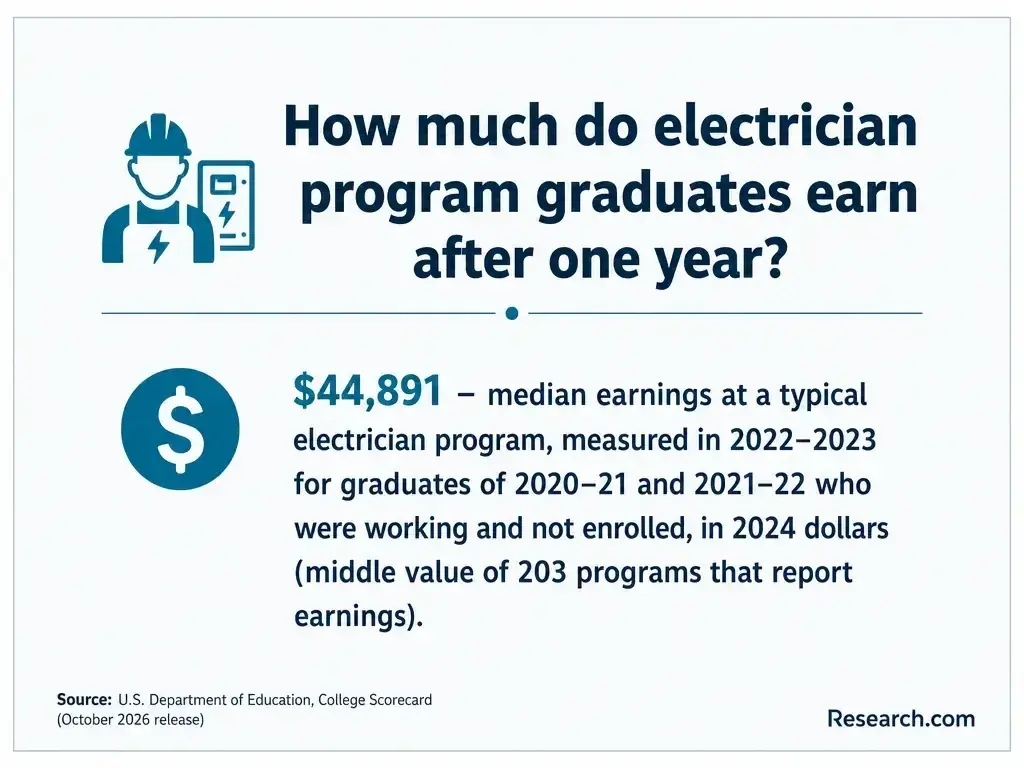
There is no Marietta-specific wage figure in the national benchmark: electricians across the United States had a median annual wage of $63,190 in May 2025 (U.S. Bureau of Labor Statistics, Occupational Outlook Handbook). Half earned more and half earned less. It is a midpoint across experience levels and locations, not an expected first offer for a new trainee in Cobb County.
For a realistic local comparison, request current wage ranges for apprentice or helper positions from employers and apprenticeship sponsors. Check whether quoted pay includes overtime, benefits, raises tied to documented progress, and travel between jobsites. Compare those terms with training payments and debt rather than treating the national median as a return-on-investment promise.
There is no single required school-program length for becoming an electrician in Georgia. A certificate, diploma, associate-degree program, and registered apprenticeship have different schedules and outcomes; part-time attendance can extend calendar time. Apprenticeship also includes supervised employment, so its longer path is not equivalent to spending that entire period out of the workforce (U.S. Department of Labor, Apprenticeship.gov).
Before comparing advertised completion dates, ask each provider for its current total clock or credit hours, lab hours, weekly schedule, and any separate work-experience requirement. Then ask whether prior trade coursework or documented electrical experience can earn credit or advanced standing. Get the policy in writing: a shorter school schedule does not necessarily shorten the supervised experience needed for your longer-term goal.
Online instruction can work for portions of electrical theory, calculations, and code study. It cannot, by itself, show that a student can safely terminate conductors, test a circuit, bend conduit, or troubleshoot energized equipment under appropriate supervision. Campus and hybrid options should therefore be compared by their actual lab access and required in-person attendance, not by their online labels.
A hybrid schedule may reduce commuting for a working Marietta student, but calculate trips to labs and any employer worksite before calling it more convenient. Be wary of a fully online offer that suggests coursework alone makes you job-ready or eligible for a Georgia contractor license. General guides to affordable online degrees can help frame cost questions, but they do not verify an electrical program's hands-on training.
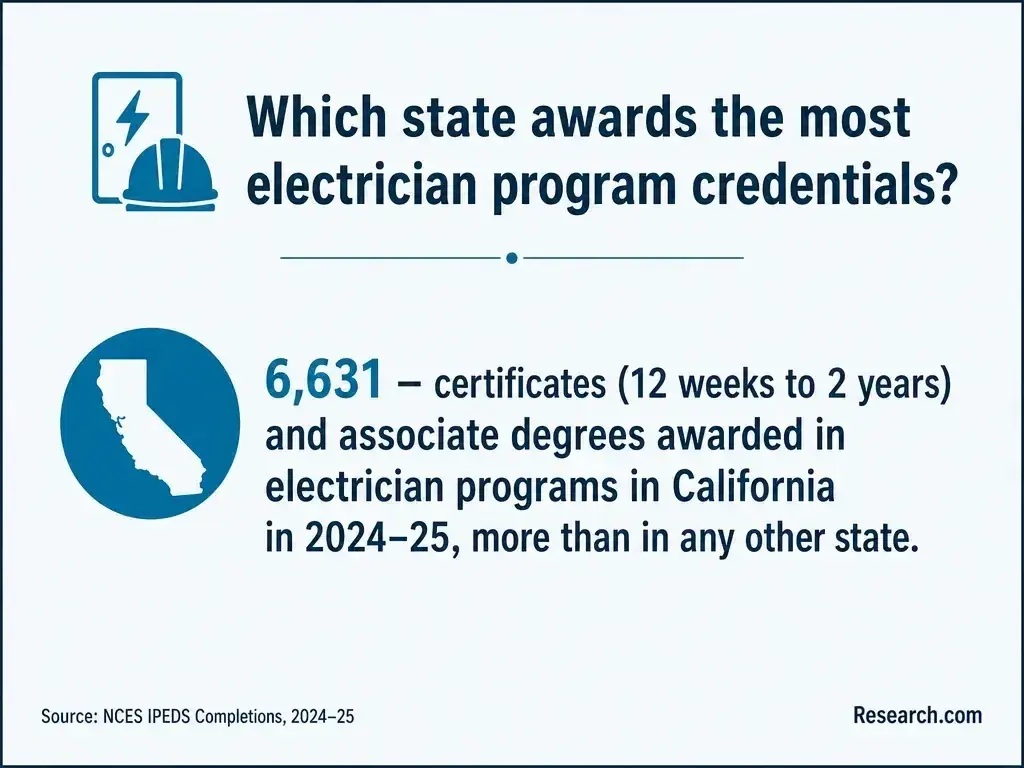
A reliable Marietta-wide average cannot be established from the available program information. Published tuition can also omit costs that differ substantially between school and paid apprenticeship. Request an individualized, current cost-of-completion estimate from each provider rather than applying a national tuition figure to a local decision.
These are the costs and offsets to place side by side. The comparison helps reveal whether a shorter or cheaper-looking program actually costs less to finish:
| Cost or offset | What to verify |
| School charges | Tuition at your residency rate, mandatory fees, materials, and charges for repeat courses. |
| Job-ready equipment | Required tools, meter, protective equipment, books, software, and replacements. |
| Career-entry expenses | Travel to labs and jobsites, any required exam or application fees, and lost earnings while attending. |
| Cost offsets | Grants or scholarships, eligible aid, employer-paid instruction, and wages earned during apprenticeship. |
Ask each school whether its specific program qualifies for federal aid and what an eligible student would still owe; eligibility depends on both the student and program (Federal Student Aid). Ask Georgia workforce offices about training assistance, but do not count unapproved funding as a discount. An apprenticeship with paid work may reduce forgone earnings, while its tools and transportation can still cost money. If you are comparing short-format associate-degree options, verify the actual award and duration: an accelerated label is not evidence that electrician competencies or work experience can be compressed.
The award depends on the pathway: a school may offer a certificate, diploma, or associate degree, while a registered apprenticeship leads to an apprenticeship completion credential after its required instruction and work experience. An optional industry credential may document particular skills. None should be described as a Georgia electrical-contractor license.
Check the exact award printed on the completion record and whether employers or apprenticeship sponsors give it credit. Also distinguish institutional accreditation, which concerns the school, from state authorization to operate, an industry credential, apprenticeship registration, and occupational licensure. A list of institutions with national accreditation is not a substitute for verifying a particular electrician program or its practical training. Chattahoochee Technical College or Lincoln College of Technology-Marietta can explain which current awards, if any, apply to their electrical offerings.
Entry rules vary by provider and pathway. Ask about the minimum education credential, placement or math assessment, age requirements, application deadlines, and whether a driving record or physical jobsite requirements affect apprenticeship or employer placement. Do not assume admission to a school program includes admission to a separate apprenticeship.
Applicants can prepare by reviewing fractions, algebra, and measurement, then asking for the next available lab seat or apprenticeship intake date. If a provider advertises advanced standing for prior learning, ask what documentation it accepts and whether credit reduces tuition, scheduled hours, or both.
Core instruction typically connects electrical theory to safe installation and diagnosis: reading plans, identifying components, calculating loads, using test instruments, selecting wiring methods, and applying the National Electrical Code to assigned work. Jobsite communication, documentation, and lockout/tagout practices also matter because mistakes can endanger coworkers and building occupants (U.S. Bureau of Labor Statistics, Occupational Outlook Handbook).
Look beyond a course catalog's topic list. Ask to see the lab tasks students must complete, who assesses them, what equipment they use, and how often they receive individual feedback. If you want commercial installation or controls work, ask whether the available practice matches that goal rather than assuming every electrical curriculum covers it equally.
Georgia's State Construction Industry Licensing Board regulates electrical contractors; completing trade school does not issue a contractor license. People performing electrical work for a licensed contractor should distinguish that employment route from independently offering electrical contracting services. The board's application and examination rules, including qualifying experience, matter if your goal is eventually to contract on your own (Georgia Secretary of State, State Construction Industry Licensing Board).
Before enrolling, ask whether the training includes supervised work, how that work is documented, and whether the school helps students connect with licensed contractors. Confirm current contractor-license categories and eligibility directly with the board before relying on a school's description. An industry certificate, institutional accreditation, and a registered apprenticeship credential serve different purposes; none automatically substitutes for state licensure.
Start with the job you want, then work backward to the training and experience it requires. A public technical-college option, a career-school option, and a registered apprenticeship can differ in schedule, lab depth, cost, and whether you earn wages while learning. The best investment is the one you are likely to complete and can connect to your intended work - not simply the highest-ranked or shortest program.
Use this sequence when speaking with Chattahoochee Technical College, Lincoln College of Technology-Marietta, or an apprenticeship sponsor:
A useful return-on-investment comparison includes completion probability, aid, debt, earnings you give up during training, likely starting pay, and the time needed to reach more experienced roles. Treat a promise of automatic licensure or a salary based on an all-experience median as a red flag. General education comparisons - including online programs for seniors - cannot answer whether an electrician pathway provides accessible labs and a workable route into supervised employment; verify those features directly.
An initial pathway is supervised electrical work with a contractor, followed by greater responsibility as skills and documented experience grow. Workers may focus on residential installation, commercial projects, troubleshooting, or maintenance; later possibilities include lead roles, supervision, or licensed contracting if Georgia's separate requirements are met. The route depends on the work available and skills demonstrated, not the school credential alone.
If your goal is independent contracting, choose early jobs that provide relevant experience you can document. If your goal is a specialty, ask employers which equipment and jobsite practices they expect, then favor training with matching labs. Articles about online Ph.D. programs without dissertations address a different educational route and should not be used to judge electrician career progression; supervised trade experience is the more relevant comparison.
The U.S. Bureau of Labor Statistics projects 9.2% national growth in electrician employment from 2025 to 2035. That signals opportunity across the occupation, but it is not a forecast for Marietta or a guarantee that a particular graduate will find work. For a local decision, compare current entry-level openings and apprenticeship intakes across Marietta and commutable Atlanta-area jobs with the training schedule you can realistically maintain.
Demand may involve new construction as well as maintaining and upgrading existing electrical systems (U.S. Bureau of Labor Statistics, Occupational Outlook Handbook). Those jobs may require different experience. Ask local employers what they hire beginners to do and which competencies they want demonstrated in a lab or on a jobsite.
Investing in training is a consequential decision. Research.com created its ranking to help readers compare electrician programs with other programs in the same occupation and location, using reported outcomes alongside cost and quality measures. The team evaluates the credibility and accuracy of those measures, but the ranking is a starting point - not a substitute for checking current program details.
Only programs with completions reported to the Integrated Postsecondary Education Data System (IPEDS) are eligible. That means a registered apprenticeship, employer training program, or other provider may be a strong local option without appearing in the ranking. Best-program scores cover student completion and full-time and part-time retention; earnings one year after completion and earnings relative to annual attendance cost; tuition, attendance cost, debt - including debt held by students who withdrew - and federal loan default rates; and accreditation, relevant industry recognition, and student support.
Relevant programmatic accreditation or industry recognition receives 20% of the score, institutional accreditation 10%, and student support 10%. Outcomes, earnings, and costs account for the remaining 60%, allocated through an entropy-based method that gives more weight to indicators that vary more across programs. Most-affordable-program rankings instead score tuition, attendance cost, median debt, and federal loan default rate using entropy-based weights; accreditation and other quality indicators are not part of that score. Neither score establishes Georgia licensing eligibility or guarantees employment.
The ranking draws on the following sources. Some occupation-specific sources may help validate particular programs rather than describe electrician training generally:
These sources help readers compare reported programs consistently, while the eligibility rule and differences in reporting limit what the ranking can show. See Research.com's methodology for more on how the ranking is created.
# 1 position
# 2 position
# 4 position
No single trade-school credential is the universal entry route. School-based training and supervised, paid apprenticeship are different options. Check employer entry requirements and Georgia contractor rules for your intended role.
Online coursework can cover theory, but practical wiring, testing, safety, and supervised jobsite skills require in-person participation. Confirm exactly where and how a hybrid program provides those experiences.
No. A school certificate is not a contractor license. Verify current experience, application, and examination requirements with the Georgia State Construction Industry Licensing Board.
It can be if you want paid, supervised work while learning and can obtain a place. School may be useful preparation before seeking employment. Compare access, total cost, schedule, lab quality, and employer recognition rather than assuming either route is best for everyone.
Request the full cost through completion, including fees, tools, protective equipment, materials, and travel. Ask what aid you actually qualify for and how much you would owe if you withdrew.