# 1 position
Augusta Technical College - Electrician.
associate

Audited and Verified:
Our Editorial and Data Verification Process
Research.com uses government datasets, official education statistics and primary institutional information to support its career and degree guides. Our review process checks factual accuracy, occupational definitions, source dates and the requirements associated with the credentials discussed.
How This Article Was Fact-Checked
Our editorial team verifies salary estimates, employment projections, education requirements and program information against original data providers and official organizations. Salary figures are checked against the relevant occupational definitions and reporting periods. Information about licensure, accreditation and required in-person training is reviewed separately.
Fact-checked and verified on:

Co-Founder and Chief Data Scientist

Reviewed by Karolina Broda
Fact-Checker and Data Verification
Choosing electrician training in Augusta means deciding whether to pay for school first or earn while learning through an apprenticeship. The U.S. Bureau of Labor Statistics (BLS) projects 9.2% growth in electrician employment nationwide from 2025 to 2035, making the choice worth examining carefully. This guide compares credentials, practical training, costs, licensing and local opportunities. It will also feature a Best Electrician Trade Schools in Augusta for 2027 ranking, created by the Research.com team of data scientists to help students make an informed choice about programs worth considering.
Expect instruction in electrical theory, code use, blueprint reading, circuits and safe installation, followed by supervised practice with tools, conduit, wiring and test equipment. Augusta Technical College is a local public-college option; verify its current electrical program title, credential, schedule and lab hours in the catalog before comparing it with another route. A certificate or diploma provides structured preparation but is not the same as years of paid field experience.
A registered electrical apprenticeship combines related classroom instruction with supervised, paid work. It can be a better fit if you can secure a position and need income while training. A school-first route can suit someone who wants foundational skills before approaching employers, especially if the program documents its employer connections. Ask either provider who supplies tools, where practical work takes place and what credential you receive at completion (U.S. Department of Labor, Apprenticeship.gov; BLS, Occupational Outlook Handbook).
Potential workplaces include residential and commercial electrical contractors, construction projects, industrial facilities and building-maintenance teams. These jobs do not all demand the same preparation: a maintenance role may emphasize troubleshooting existing equipment, while a construction apprentice spends more time installing systems under supervision (BLS, Occupational Outlook Handbook).
Augusta's proximity to South Carolina broadens the practical job search, including work across the state line. It also makes regulatory checks important. Georgia training does not automatically authorize someone to operate an electrical contracting business in South Carolina; check the licensing rules for the state where you intend to contract (Georgia State Board of Electrical Contractors; South Carolina Department of Labor, Licensing and Regulation).
The BLS reports a $63,190 national median annual wage for electricians for May 2025. Half of employed electricians nationwide earned more and half earned less; this is neither an Augusta wage nor a prediction for a newly trained worker. Apprentices generally earn wages while learning, with pay governed by their sponsor's terms and progression rather than the occupation-wide median (BLS, Occupational Outlook Handbook; U.S. Department of Labor, Apprenticeship.gov).
For a local decision, request the current apprentice wage schedule from a prospective sponsor and compare actual entry-level offers from area employers. Factor in whether work is steady, whether travel between jobsites is paid and how raises depend on experience. Those details make a more useful return-on-investment comparison than applying a national median to a first job.
A short certificate, a broader diploma and a registered apprenticeship are different time commitments. School length depends on the credential, course load, prerequisites and availability of required labs; ask Augusta Technical College for its current program plan rather than relying on a generic completion estimate. Registered electrical apprenticeships commonly extend across several years because they combine classroom learning with substantial supervised work. Confirm the sponsor's required work and instruction hours, since these are program-specific (U.S. Department of Labor, Apprenticeship.gov).
Finishing school sooner does not necessarily mean becoming an experienced electrician sooner. If speed is your priority, searches for what is a quick degree that pays well should not obscure the electrical trade's hands-on progression: compare the date you can start paid work, not just the date a credential is awarded.
Online delivery can work for portions of electrical theory, code study and scheduling. It cannot replace supervised practice installing circuits, using meters, bending conduit or responding safely to faults. An on-campus or hybrid program is useful only if its in-person labs are accessible and sufficiently substantial for your goal. A fully online course should not be mistaken for completed field experience or automatic contractor-license eligibility (BLS, Occupational Outlook Handbook; Georgia State Board of Electrical Contractors).
Even when advertised alongside 6 month associate programs online, an electrician credential should be judged by its actual lab schedule and employer-recognized experience, not an online completion claim. Ask where you will practice, who assesses your work and whether required site visits fit your commute.
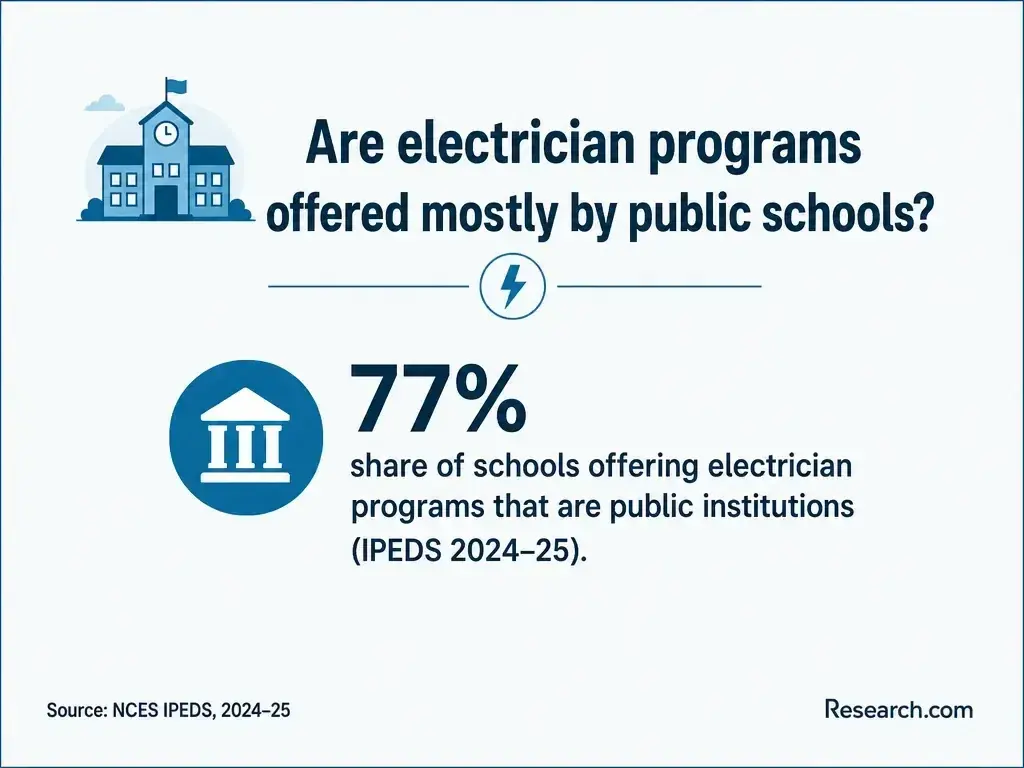
There is no single defensible average for Augusta electrician training: a school certificate, a longer college credential and a paid apprenticeship have different prices and earnings during training. Request a current, itemized quote rather than using tuition alone. Include mandatory fees, books, tools, meters, protective gear, transportation and any examination or application charges that apply to your goal. Lost work hours matter too; paid apprenticeship wages may offset them.
For eligible Georgia students, ask whether the specific Augusta Technical College credential qualifies for the HOPE Grant and what federal aid, scholarships or workforce funding may apply. Eligibility depends on the student and program, not simply on attending a public college (Georgia Student Finance Commission; Federal Student Aid). Cost comparisons built for a quickest cheapest masters degree are not a useful budget for this trade: electrical tools, lab access and paid training change the calculation.
The credential depends on the pathway. A college may award a technical certificate, diploma or associate degree as specified in its current catalog. A registered apprenticeship documents completion of a structured work-and-instruction program; an employer may also recognize specific industry training. These credentials are not interchangeable with an occupational license (Augusta Technical College; U.S. Department of Labor, Apprenticeship.gov).
Before enrolling, ask for the exact credential name and whether completed courses can count toward a longer college program or related apprenticeship instruction. Get any transfer or advanced-standing decision in writing from the receiving provider; similarly named electrical courses do not automatically carry credit.
Check the current requirements for the particular Augusta Technical College credential, including its application process, placement or prerequisite rules and any conditions for lab participation. Apprenticeship sponsors set their own selection procedures and may assess applicants' math preparation, ability to reach jobsites and readiness for physical, safety-sensitive work. Admission to school does not guarantee an apprenticeship position or job (Augusta Technical College; U.S. Department of Labor, Apprenticeship.gov).
If flexible admission is important, compare the actual electrical-program requirements rather than assuming that open enrollment programs provide immediate access to a required lab or apprenticeship. Ask when the next practical-training place opens and what must be completed before you can enter it.
Core skills typically include interpreting diagrams, applying electrical and jobsite safety procedures, calculating circuits, installing wiring and equipment, and diagnosing faults with test instruments. Work also requires following the applicable electrical code, communicating with other trades and documenting problems accurately (BLS, Occupational Outlook Handbook; O*NET).
Curricula differ in depth. When comparing programs, inspect the equipment list and ask how many supervised lab hours cover installation and troubleshooting - not merely theory. If you want industrial maintenance rather than residential construction, ask whether training includes motor controls and relevant troubleshooting practice. Employer worksites add exposure to changing site conditions that a classroom exercise alone cannot reproduce.
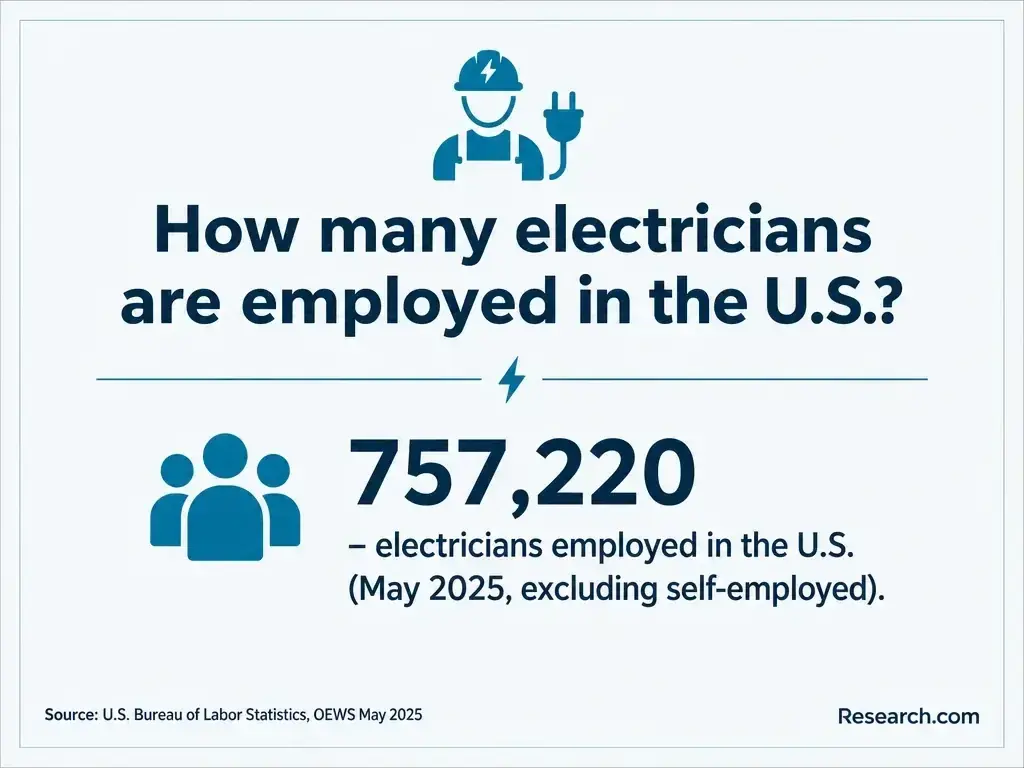
Georgia's electrical contractor license is not the same as a school credential or a license required of every employee electrician. The Georgia State Board of Electrical Contractors regulates those seeking to practice electrical contracting under its license classifications and sets experience and examination requirements. A graduate should not assume that classroom hours alone satisfy those requirements. If your goal is to run a contracting business, review the board's current classification and application rules before choosing training (Georgia State Board of Electrical Contractors).
An industry certificate, institutional accreditation, state school authorization and registered-apprenticeship status each answer a different question. None substitutes automatically for supervised experience or a contractor license. For work across the border, verify South Carolina's rules separately rather than assuming a Georgia credential transfers (South Carolina Department of Labor, Licensing and Regulation).
Start with the job you want: construction apprentice, maintenance worker or eventual electrical contractor. Then compare school and apprenticeship pathways on the training that job actually requires. A ranking can narrow the search, but it cannot tell you whether a particular lab schedule, employer connection or commute works for you.
Use these questions with Augusta Technical College and any apprenticeship sponsor before committing money or turning down paid work:
A common mistake is choosing the shortest or cheapest advertised option without checking practical training and total cost. Compare completion likelihood, foregone earnings, debt and plausible future pay over the period you expect to work - not a guaranteed salary immediately after graduation.
Training can lead toward an electrical helper or apprentice role, followed by more independent installation or troubleshooting work as skills and supervised experience grow. With additional experience, electricians may specialize in commercial systems, industrial equipment or maintenance, move into supervision, or pursue the Georgia contractor license needed for their contracting plans. Advancement depends on the position and applicable rules; a school credential alone does not confer a supervisory role or license (BLS, Occupational Outlook Handbook; Georgia State Board of Electrical Contractors).
Someone exploring careers for an introvert may appreciate the focused diagnostic work, but should not overlook coordination with customers, supervisors and other trades. Ask to observe or discuss the day-to-day work in the setting you want before choosing a specialization.
The BLS projects 9.2% national employment growth for electricians from 2025 to 2035. That indicates expanding demand across the occupation, not a forecast of Augusta openings or a promise of employment after training. Construction cycles, industrial hiring and the availability of apprenticeship places will affect a local applicant's prospects (BLS, Employment Projections).
For a current Augusta job search, compare openings by work setting and required experience. An advertisement for an experienced industrial electrician is not necessarily an entry-level opportunity; ask sponsors and employers which roles accept new trainees and whether they provide supervised work. Include South Carolina opportunities only if their commute and applicable rules make sense for you.
Investing in training is a consequential decision, so Research.com designed its ranking to compare electrician programs against other programs serving the same occupation and location. Its data scientists assess outcomes, costs and recognized quality indicators rather than treating a low advertised tuition price as proof of value. Only programs with completions reported to the Integrated Postsecondary Education Data System (IPEDS) qualify; a registered apprenticeship or employer program absent from IPEDS may still be a strong option.
For best-program rankings, student completion and full- and part-time retention, earnings one year after completion, earnings relative to annual attendance cost, tuition, attendance cost, debt, loan defaults, accreditation, relevant industry recognition and student support inform the score. Occupation-relevant programmatic accreditation or industry recognition receives 20%, institutional accreditation 10%, and student support 10%. The remaining 60% covers outcomes, earnings and costs, with entropy-based weighting that assigns more weight to indicators that differ more across programs. Most-affordable rankings instead score only tuition, attendance cost, median debt and federal loan default rates using entropy-based weights; accreditation and other quality indicators are not scored.
The ranking draws on the following databases and reference organizations. Occupation-specific recognition is considered only when relevant: allied-health and dental organizations, for example, do not accredit electrician training.
This approach helps readers compare reported school outcomes while recognizing its boundary: IPEDS and College Scorecard do not cover every union, private, employer-sponsored or registered-apprenticeship pathway. Review a program's current catalog and apprenticeship opportunities alongside the ranking. More detail appears in Research.com's ranking methodology.
# 1 position
# 2 position
No single school credential is required for every employee electrician role. A registered apprenticeship or supervised employer training may offer another route. Georgia contractor licensing is a separate consideration if you plan to operate as a contractor (Georgia State Board of Electrical Contractors; U.S. Department of Labor, Apprenticeship.gov).
Choose based on access and goals. School can build foundational skills before employment; a paid apprenticeship combines instruction with extensive supervised work and earnings. Compare your net costs, entry date and required practical experience, not just credential names.
You may complete some theory remotely, but installation and troubleshooting require supervised hands-on practice. Verify where those sessions occur before paying for an online or hybrid program.
Not automatically. The Georgia State Board of Electrical Contractors sets license classifications, experience and examination requirements. Check its current rules against your documented work history and intended business activity.
Ask for the program's full cost and whether your specific credential and circumstances qualify for federal aid, Georgia's HOPE Grant or other assistance. Also compare the wages available through paid apprenticeship training (Federal Student Aid; Georgia Student Finance Commission).