# 1 position
Jackson College - Electrician.
associate

Audited and Verified:
Our Editorial and Data Verification Process
Research.com uses government datasets, official education statistics and primary institutional information to support its career and degree guides. Our review process checks factual accuracy, occupational definitions, source dates and the requirements associated with the credentials discussed.
How This Article Was Fact-Checked
Our editorial team verifies salary estimates, employment projections, education requirements and program information against original data providers and official organizations. Salary figures are checked against the relevant occupational definitions and reporting periods. Information about licensure, accreditation and required in-person training is reviewed separately.
Fact-checked and verified on:

Co-Founder and Chief Data Scientist

Reviewed by Karolina Broda
Fact-Checker and Data Verification
The cheapest electrician program is not necessarily the least expensive route to becoming licensed. For people considering training in Jackson, Michigan, the key question is whether a program's cost, practical instruction, and connection to supervised work justify the investment. Nationally, electricians had a $63,190 median annual wage in May 2025, according to the U.S. Bureau of Labor Statistics (BLS). This guide explains how to compare those pathways alongside the Most Affordable Electrician Trade Schools in Jackson for 2027 ranking, created by the Research.com team of data scientists to help students make an informed choice about programs worth considering.
Expect instruction in electrical theory, code, blueprint reading, safety, and installation, paired with lab work on wiring and testing. At Jackson College, check the current catalog for the exact credential, required courses, lab access, and any employer connections; offerings and schedules can change. A school-based credential and a registered apprenticeship serve different purposes: the former documents completed coursework, while the latter combines related instruction with paid, supervised work (Jackson College; U.S. Department of Labor).
The choice depends on your next step. A short certificate may suit someone preparing to seek an apprentice position; a longer diploma or associate degree may suit someone who wants broader technical study. Neither should be assumed to shorten Michigan's experience requirement. Ask whether any coursework receives apprenticeship credit in writing from a prospective sponsor before paying for it.
Potential settings include residential construction, commercial building projects, industrial maintenance, and electrical contracting in and around Jackson. Electrical training may also be useful for employers maintaining plant equipment or building systems, although those positions can have different duties and hiring requirements. The BLS describes electricians as installing, maintaining, and repairing electrical power, communications, lighting, and control systems.
Decide which setting you want before choosing coursework. Someone seeking construction apprenticeship should ask about conduit, code, and jobsite safety; someone targeting industrial work should also look for motor controls and troubleshooting. Ask employers and apprenticeship sponsors what entry-level roles they actually hire for, since a school credential alone does not establish independent-work eligibility.
A verified Jackson-specific wage is not provided here, so the national figure is a benchmark rather than a local salary estimate. The BLS reports a $63,190 national median annual wage for electricians in May 2025. That median includes experienced workers and should not be used as an expected first-year apprentice wage. Before enrolling, compare current Jackson-area apprentice postings, wage progression, benefits, and commuting costs with the price of training.
Length depends on the credential and schedule: a certificate generally involves less coursework than an associate degree, while part-time study extends the calendar. Ask Jackson College for the current course sequence, total contact hours, and how often required labs run. That tells a working student more than an advertised completion time.
School completion is not the same as completing an apprenticeship. Michigan's journey electrician route generally requires 8,000 hours of practical experience over at least four years under the applicable supervision rules, plus other eligibility requirements (Michigan Department of Licensing and Regulatory Affairs, or LARA). Confirm with LARA and a prospective sponsor whether previous training receives any credit. Searches for fastest online degree programs for working adults address a different kind of time-saving: electrical field experience cannot simply be accelerated through remote coursework.
Online study can be useful for theory, mathematics, code concepts, and some assignments. It cannot by itself demonstrate safe wiring, meter use, equipment installation, or supervised jobsite practice. Compare hybrid options by asking exactly where labs occur, who assesses practical skills, and whether the schedule fits work and transportation needs.
An entirely remote course may help you prepare for training, but do not assume it meets a sponsor's instruction rules or Michigan licensing requirements. Confirm acceptance with the apprenticeship sponsor and LARA before enrolling. Likewise, a search result for a quick online master's degree has no bearing on electrician entry requirements; judge any online offering by its electrical labs and pathway to supervised work, not its advertised speed.
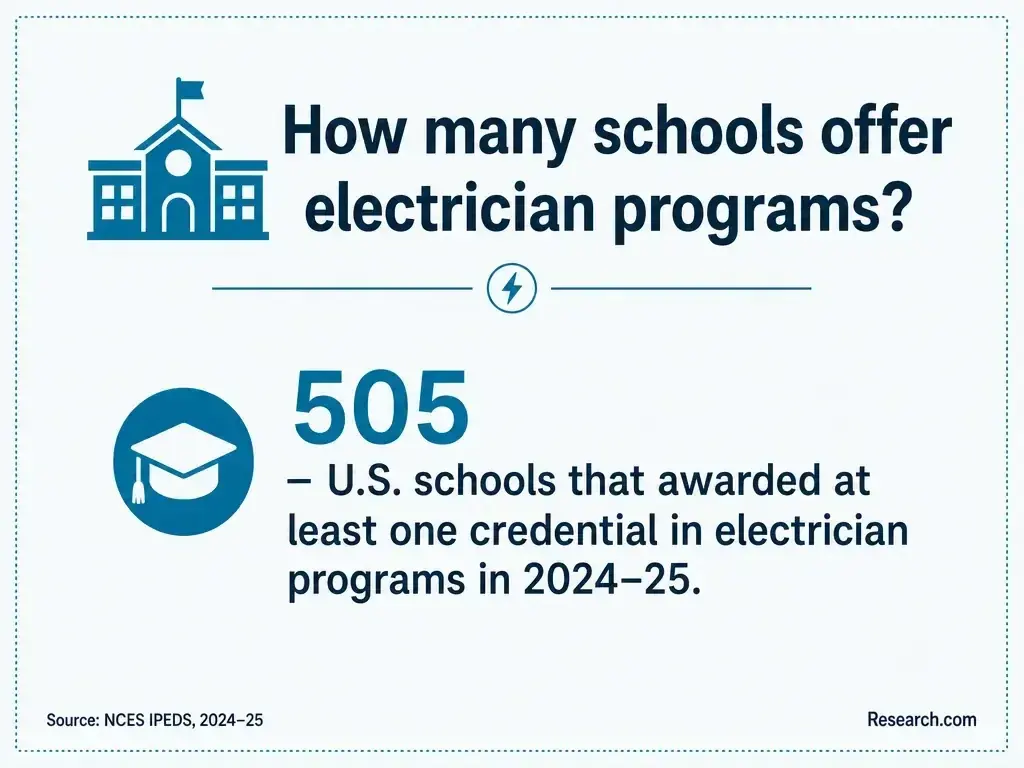
There is no reliable single Jackson average that covers school programs and paid apprenticeships. Published college tuition also may exclude mandatory fees, books, tools, work boots and other protective equipment, transportation, and later application or examination charges. Request a current, itemized estimate from Jackson College, then ask an apprenticeship sponsor what it pays for and what an apprentice must buy.
Federal aid eligibility depends on the institution, program, and student; it should not be assumed for a short course or apprenticeship (Federal Student Aid). Compare grants and scholarships before loans, and ask about workforce assistance. A list of online colleges with financial aid is not proof that a particular electrical credential qualifies. The meaningful comparison is your likely out-of-pocket cost and debt through entry into paid work, including wages forgone while studying.
The award depends on the offering: it could be a certificate or an associate degree, while a registered apprenticeship has its own completion credential. Verify the exact award in the current Jackson College catalog and ask whether courses can stack into a longer credential. The U.S. Department of Labor distinguishes registered apprenticeship completion from a school-issued award.
Keep three claims separate: institutional accreditation concerns the school; industry credentials, such as applicable NCCER credentials, document specified training or assessments; and Michigan occupational licensure governs work requiring a license. None automatically substitutes for supervised experience or a licensing examination (NCCER; LARA). Choose the credential a prospective employer or apprenticeship sponsor will recognize for your intended role.
School admission, entry to a particular electrical program, and hiring into an apprenticeship are separate decisions. Confirm Jackson College's current prerequisites, placement process, and lab requirements directly. Apprenticeship sponsors set their own selection criteria and may assess math readiness, work authorization, ability to reach jobsites, and capacity to perform safely; ask for the sponsor's written requirements (Jackson College; Apprenticeship.gov).
Being admitted to a school does not reserve an apprentice position. Even online schools with open admission cannot waive an electrical sponsor's selection rules or practical-training requirements. Before accepting a place, identify when you can seek paid supervised work and whether the program offers help making that transition.
Core study typically covers circuits, electrical calculations, the National Electrical Code, reading plans, and safe installation and troubleshooting. Hands-on work should let students use tools and test instruments, make connections, and diagnose faults under supervision. These skills reflect electrician duties described by the BLS; the depth of coverage depends on the specific curriculum.
Ask to see a course-by-course lab breakdown, not just a list of topics. For construction work, look for practice with conduit and installation methods; for industrial work, look for controls and motors. A program that teaches code vocabulary without meaningful supervised practice may be a poor substitute for the practical preparation an employer expects.
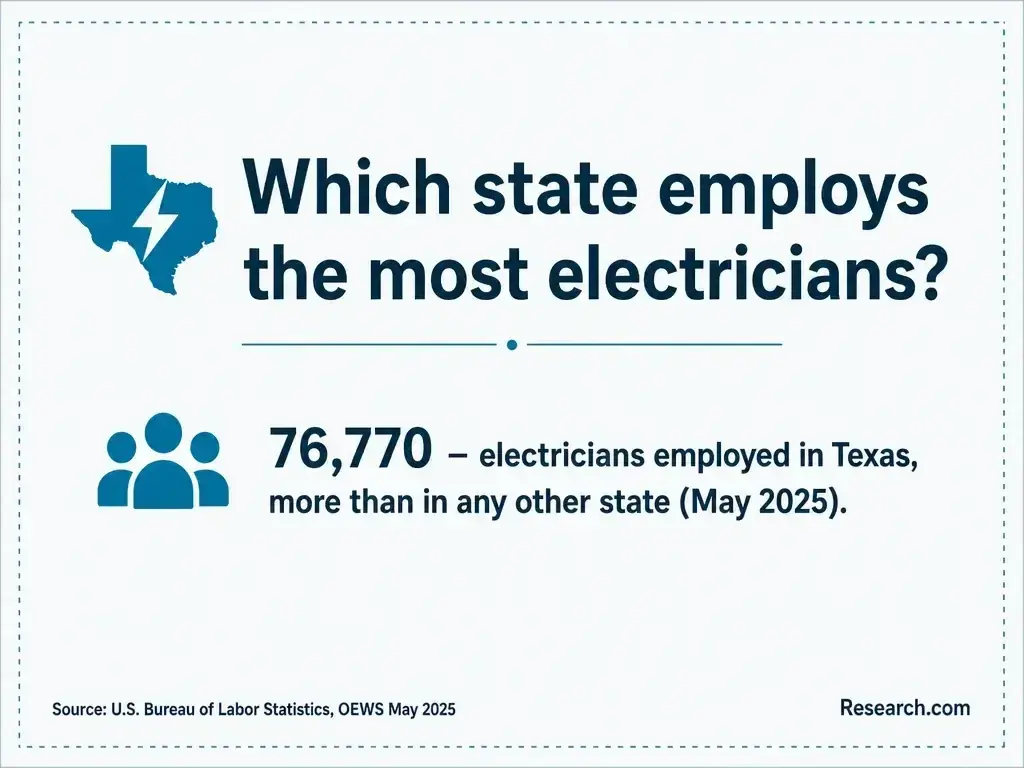
For electrical work covered by Michigan's licensing law, the role you hold determines what registration or license you need. Apprentices work under required supervision; becoming a licensed journey electrician involves documented practical experience and an examination, rather than graduation alone. LARA administers Michigan's electrician licensing requirements. Check its current rules for apprentice registration, qualifying experience, classroom instruction, and examination eligibility before choosing a course.
An optional industry certificate can support a job application, but it is not a Michigan electrician license. Likewise, institutional accreditation and apprenticeship registration are different forms of recognition. If your goal is eventually to contract for work or supervise others, ask LARA about the additional credentials and experience involved; do not assume an entry-level school award grants those privileges.
Start with the work you want and compare each option against the requirements to enter it. An affordability ranking is a useful shortlist, but a lower-cost program can be a poor investment if its schedule blocks paid work or its labs do not prepare you for the intended job.
Before committing, get answers to these questions from the school and at least one apprenticeship sponsor:
Verify accreditation through the accreditor or U.S. Department of Education, licensing rules through LARA, and apprenticeship registration through the sponsor or Apprenticeship.gov. Avoid claims that a certificate alone guarantees licensure, a particular wage, or placement.
A common progression is apprentice, journey electrician after meeting Michigan requirements, and then more specialized or supervisory work with additional experience. Residential and commercial installation, industrial maintenance, controls, and troubleshooting can involve different employers and skill mixes. Contracting or operating an electrical business has further requirements; confirm them with LARA before making that a financial goal.
Comparisons of top paying trades can help you explore alternatives, but they should not determine your choice on median wage alone. For a realistic return-on-investment calculation, weigh training duration, paid apprentice earnings, aid, debt, your current earnings, completion likelihood, and the time it may take to reach experienced-worker pay.
The BLS projects 9.2% national employment growth for electricians from 2025 to 2035. That signals demand for the occupation nationally, not the number of openings in Jackson or guaranteed placement for a new apprentice. Construction schedules and local employers' staffing needs can change the opportunities available when you finish training.
Use the projection as a reason to investigate, not to borrow without a plan. Check current local apprentice postings and ask sponsors how frequently they recruit, where jobsites are, and whether travel beyond Jackson is expected. Those answers make the national outlook relevant to your actual search.
Investing in training is an important decision, so Research.com's team checks multiple education and occupational data sources rather than treating an advertised tuition price as the whole story. The Most Affordable ranking compares programs in the same occupation and location for which completions are reported to the Integrated Postsecondary Education Data System (IPEDS). Its score uses tuition, cost of attendance, median student debt, and federal loan default rate, with weights assigned through an entropy-based method. Accreditation and other quality indicators are not part of this affordability score.
These sources inform Research.com's trade-school ranking work. Some cover other occupations and should not be interpreted as electrician-specific approvals:
The ranking helps readers narrow an affordability search, not certify that a program provides a route to Michigan licensure. Apprenticeships and other providers without IPEDS-reported completions can be valid options even though they are absent. Compare the ranked programs with paid training, verify current prices and requirements directly, and read more about the approach on Research.com's methodology page.
# 1 position
# 2 position
Not necessarily. A registered apprenticeship can combine paid supervised work with related instruction. Compare that route with school-based training, and confirm Michigan registration and licensing requirements with LARA.
No. A college credential documents school coursework; a registered apprenticeship combines instruction with supervised employment. Ask whether a sponsor recognizes any college courses before assuming they count toward apprenticeship requirements.
No. Remote coursework cannot replace the practical experience required for Michigan journey electrician licensure. Verify any online course's labs and acceptance with a sponsor and LARA.
It depends on your aid, tool costs, travel, and access to paid work. Price a school program against a paid apprenticeship using total out-of-pocket costs and expected earnings during training, not advertised tuition alone.
Not by itself. Michigan has experience and other eligibility requirements. Ask LARA which training and supervised work it will accept before enrolling.