
Most Affordable Electrical Technician Schools & Training in Traverse City for 2027
Audited and Verified:
Our Editorial and Data Verification Process
Research.com uses government datasets, official education statistics and primary institutional information to support its career and degree guides. Our review process checks factual accuracy, occupational definitions, source dates and the requirements associated with the credentials discussed.
How This Article Was Fact-Checked
Our editorial team verifies salary estimates, employment projections, education requirements and program information against original data providers and official organizations. Salary figures are checked against the relevant occupational definitions and reporting periods. Information about licensure, accreditation and required in-person training is reviewed separately.
Fact-checked and verified on:

Co-Founder and Chief Data Scientist

Reviewed by Karolina Broda
Fact-Checker and Data Verification
Choosing affordable electrician training in Traverse City means comparing more than tuition: a low-cost course may not provide the supervised experience needed for a Michigan license. The Most Affordable Electrician Trade Schools in Traverse City for 2027 ranking, created by the Research.com team of data scientists, helps students identify programs worth considering. The U.S. Bureau of Labor Statistics projects 9.2% national growth in electrician employment from 2025 to 2035. This guide explains training routes, costs, licensing, and local career considerations so you can judge which investment fits your goal.
Key findings about electrician degrees in Traverse City
- Michigan's journeyman electrician pathway generally requires at least 8,000 hours of qualifying electrical work experience over no fewer than four years, plus an examination; a school credential alone is not a license. Source: Michigan Department of Licensing and Regulatory Affairs (LARA).
- The U.S. median annual wage for electricians was $63,190 in May 2025, and national employment is projected to grow 9.2% from 2025 to 2035. These are occupation-wide figures, not starting pay or a Traverse City forecast. Source: U.S. Bureau of Labor Statistics (BLS).
- For the most affordable route, compare the full cost of a school program with a paid apprenticeship - not tuition alone. The ranking includes programs reporting completions to IPEDS, so it does not capture every apprenticeship or employer-training option. Source: Research.com ranking methodology.
Table of Contents
- Most Affordable Electrical Technician Schools & Training in Traverse City for 2027
- What can I expect from an electrician trade school program in Traverse City?
- Where can I work with an electrician trade school training in Traverse City?
What can I expect from an electrician trade school program in Traverse City?
Expect a mix of electrical theory and supervised practice: reading plans, calculating circuits, installing wiring and equipment, testing systems, and following electrical codes and safety procedures. A classroom or lab program can build a foundation, but becoming a licensed Michigan journeyman also requires qualifying work experience and an examination. Ask exactly where a program's hands-on instruction occurs and whether it connects students with employers who can supervise that work.
The main choice is between paying for preparation before seeking electrical work and earning while learning through an apprenticeship. An associate-level electrical technology program may suit someone seeking broader technical coursework, but its award and its value toward licensing must be confirmed individually. If you are comparing top college majors with trade training, the decisive question here is whether you want the practical, supervised route into electrical work.
These pathways differ in both what they award and how quickly they place you on a qualifying jobsite.
| Pathway | What it typically provides | Best fit and key limitation |
| Short pre-apprenticeship or certificate | Introductory theory, safety, and sometimes lab practice; a school credential | Useful for exploring the trade or preparing to apply; does not replace required supervised experience. |
| College technical program | Structured classroom and lab work; a certificate or, where offered, an associate degree | Useful for broader technical study; confirm its cost, current award, and connection to employment. |
| Registered apprenticeship | Paid supervised work and related instruction; an apprenticeship completion credential | Direct route for learners ready to work; entry depends on sponsor openings and selection requirements. |
| Employer-sponsored entry | Paid work and training arranged by an electrical employer | May reduce upfront school costs; confirm registration, supervision, instruction, and documentation of hours. |
Northwestern Michigan College is a local public-college starting point for checking current electrical-related offerings. Compare its published curriculum and charges with available apprenticeship and employer routes; do not assume a similarly named course elsewhere provides the same lab time or licensing-relevant experience.
Where can I work with an electrician trade school training in Traverse City?
Potential settings include residential construction, commercial buildings, industrial facilities, and building maintenance in and around Grand Traverse County. Electricians also work on renovations, service calls, and equipment installations. The setting matters because wiring a house, maintaining a facility, and working on industrial controls develop different experience; ask a prospective employer which tasks an apprentice will actually perform under supervision.
A classroom credential can help demonstrate preparation, but it does not authorize independent electrical work. If local openings are limited when you finish training, consider whether commuting to surrounding communities or joining a sponsor with a wider service area is realistic before committing to a program's schedule and transportation costs.
The BLS reports a $63,190 U.S. median annual wage for electricians in May 2025. That figure covers experienced and newly qualified workers across the country; it is not a Traverse City wage estimate or a likely apprentice starting wage. Use a current local offer or apprenticeship wage schedule, rather than the national median, to plan what you can earn while training.
Compare offers on more than hourly pay. Paid classroom time, scheduled wage increases, benefits, travel between jobsites, and seasonal work availability can change the value of a position. For a school investment, compare expected earnings after training with what you could earn immediately in a paid apprenticeship, accounting for fees and any earnings forgone while studying.
A short preparatory course can end well before you are eligible for a journeyman license. Michigan's journeyman pathway generally requires at least 8,000 hours of qualifying electrical work experience over no fewer than four years, followed by an examination, according to LARA. Ask the licensing authority and your prospective sponsor how particular work and instruction will be documented; do not assume every hour spent in a school lab counts as occupational experience.
A certificate, an associate degree where available, and an apprenticeship have different completion timelines because they deliver different things. The easiest degree to get is not a useful shortcut if your objective is Michigan electrical licensure: supervised work and demonstrated competence still matter. A part-time program may preserve income, while a full-time program may finish its classroom component sooner without shortening the separate experience requirement.
Online coursework can cover electrical calculations, drawings, and code concepts. It cannot, by itself, demonstrate safe wiring installation, instrument use, troubleshooting, or supervised work at a jobsite. On-campus and hybrid options should specify how much time students spend in a physical lab and when they must attend; that is particularly important if travel from outside Traverse City adds recurring costs.
If you are comparing cheapest online associate programs, check whether an electrical program actually awards an associate degree and provides accessible in-person practical instruction. Before enrolling remotely, ask who arranges local lab or employer placements, who supervises them, and whether the resulting experience meets Michigan's applicable rules. An online credential alone should not be treated as a license.
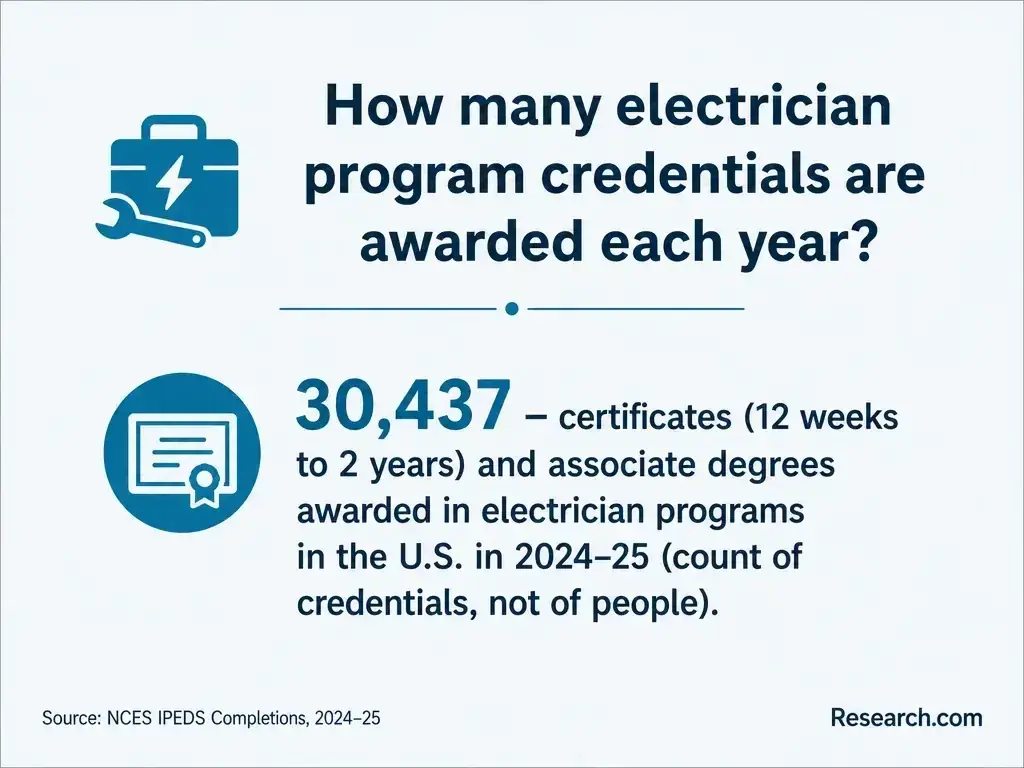
There is no reliable single average that covers Traverse City school programs, paid apprenticeships, and employer training on comparable terms. The useful figure is your total cost to become job-ready, not an advertised tuition rate. Request a written, current cost estimate for your intended start date and confirm whether charges differ by residency, course load, or program format.
Include mandatory fees, books or software, tools, work boots and other protective gear, exam and licensing charges, transportation to labs and jobsites, and income lost while attending classes. Then subtract grants, scholarships, eligible aid, employer-paid instruction, and apprenticeship wages where applicable. Federal aid eligibility belongs to the specific institution and program; a listing among online colleges that accept FAFSA does not establish that a particular electrician course qualifies. Check Federal Student Aid information and ask the provider's aid office about your exact credential.
For return on investment, consider the time to completion, likelihood of finishing, debt and repayment terms, your current earnings, plausible post-training earnings, and how long you expect to work in the trade. An accelerated course can be worthwhile if it leads to a viable supervised position; it is poor value if its lower tuition leaves you paying again for missing practical training.
The award depends on the route: a school may issue a certificate or diploma, a qualifying college program may award an associate degree, and a registered apprenticeship issues its own completion credential. These are not interchangeable with a Michigan journeyman electrician license. Obtain the exact credential name in writing and ask what training and work, if any, it documents for licensing purposes.
Institutional accreditation concerns the school; state school authorization concerns its permission to operate; apprenticeship registration concerns a sponsor's work-and-instruction arrangement. Industry credentials can demonstrate specific skills, but none of these automatically substitutes for occupational licensure. Where coursework might transfer or receive advanced standing, request a written determination from the receiving program or apprenticeship sponsor before paying for it.
Requirements vary by provider and pathway. A school may assess reading, math, or readiness for shop work; an apprenticeship sponsor or employer may also use an application, interview, aptitude assessment, and jobsite safety requirements. Ask about the actual selection process, required documents, start dates, and whether placement with a supervising electrical employer is included or must be secured separately.
Prepare to discuss basic algebra, reliable transportation, and your ability to work safely in physical settings. Do not pay a deposit based on an informal promise of an apprenticeship opening: request the sponsor's current entry criteria and clarify whether admission to classroom instruction also means admission to paid work.
Relevant instruction typically covers electrical theory, circuit calculations, blueprint reading, wiring methods, tools and test instruments, grounding, code interpretation, and hazard prevention. Lab and worksite practice then test whether a learner can install and troubleshoot equipment safely - not merely recognize a correct answer on a screen. BLS identifies installation, maintenance, troubleshooting, and reading technical diagrams as core electrician work.
Compare syllabi against the work you want to do. Someone interested in commercial construction should look for practical exposure to that setting; someone drawn to maintenance should ask about troubleshooting and controls. Also ask how instructors evaluate practical skills, how current code material is handled, and whether an employer can verify the tasks you perform during supervised work.
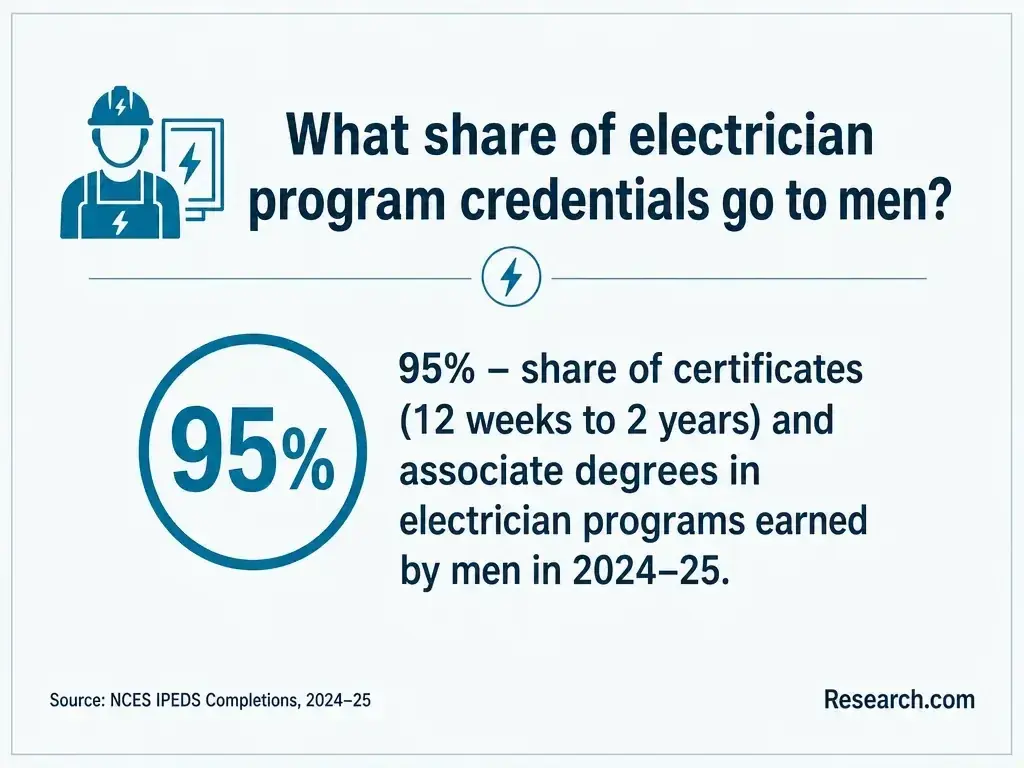
Yes, Michigan regulates electrical work and progression to independent practice. An entrant should confirm the applicable apprentice registration and supervision rules with LARA before starting electrical work. For a journeyman electrician license, Michigan generally requires at least 8,000 hours of qualifying experience over no fewer than four years and passage of the licensing examination. A school certificate is preparation, not permission to work independently. Source: Michigan Department of Licensing and Regulatory Affairs.
Later advancement has separate requirements: Michigan's master electrician pathway requires additional qualifying experience and examination, and operating an electrical contracting business involves separate licensing rules. Source: LARA. Ask a school or sponsor which licensed professional supervises your work, how hours are recorded, and who will help verify them when you apply. Do not confuse optional industry certificates, institutional accreditation, or apprenticeship completion with a state occupational license.
Start with the intended outcome: entry into a paid supervised position, a broader technical credential, or both. The most affordable ranked program is not necessarily the lowest-cost path to a license if it lacks practical access or requires you to buy training an employer would provide. Use the ranking as a shortlist, then compare each option with available apprenticeship and employer-sponsored routes.
Before committing, get answers to the questions most likely to change your total cost or licensing timeline:
- What exact credential will I receive, and what classroom, lab, and worksite activities are included?
- Who arranges supervised electrical employment, and how are qualifying work hours documented for Michigan?
- What is the itemized total for fees, tools, protective gear, travel, and examination preparation after available aid?
- Is the institution appropriately accredited or authorized, and is any claimed apprenticeship registered with the appropriate authority?
- What are the current completion and job-placement measures, how are they calculated, and do they describe this specific program?
Red flags include a claim that an online certificate alone makes you license-ready, an unexplained "guaranteed" job, or a quoted price that omits required equipment. Verify licensing claims with LARA and ask for written evidence rather than relying on a ranking, sales conversation, or a school's institutional accreditation alone.
A realistic progression starts with supervised apprentice work, then moves toward journeyman licensure after the required experience and examination. With additional experience, an electrician may pursue master-level licensure, supervision, or - subject to separate requirements - electrical contracting. Work can also become more specialized in service, commercial installation, maintenance, or controls; the right first employer depends on which experience you want to build.
If you are asking what can you do with a trade school diploma, remember that an electrician diploma may help you enter training but does not define the endpoint. Compare programs by the supervised tasks and employer connections they enable, not just the credential printed at completion.
The BLS projects 9.2% growth in U.S. electrician employment from 2025 to 2035. That national projection supports considering the trade, but it cannot tell you how many openings will be available in Traverse City when you finish. Local construction schedules, maintenance hiring, and apprenticeship openings will determine whether you can begin qualifying work without a long wait.
Before choosing a start date, review current openings across the commuting area and speak with apprenticeship sponsors and electrical employers about upcoming intakes. Treat demand as evidence to investigate - not a guaranteed job offer - and favor training that lets you demonstrate practical competence while connecting you to supervised work.
Most Affordable Electrical Technician Schools & Training in Traverse City for 2027
Investing in electrician training is an important decision, particularly when the least expensive program may not be the best route to paid work or licensure. Research.com evaluates trade programs against others in the same occupation and location, so the ranking reflects relevant alternatives rather than unrelated schools. Its team checks multiple education and occupational data sources to support credible, accurate comparisons; readers can learn more on the Research.com methodology page.
For most affordable rankings, the score uses tuition, cost of attendance, median student debt, and federal loan default rate. Weights are assigned through an entropy-based method, which gives more weight to measures that vary more across included programs. Accreditation, student support, and other quality indicators do not enter this affordability score. By contrast, Research.com's separate best programs rankings consider outcomes, earnings, costs, accreditation or industry recognition, and support services.
Only programs with completions reported to IPEDS can appear in the ranking. That matters for electricians: a registered apprenticeship or employer-sponsored route may be a strong local option even if it is absent. Research.com uses the following sources in its ranking work; sources focused on other trades do not establish an electrician program's quality or Michigan licensing eligibility.
- IPEDS database - program completions and institutional reporting.
- National Center for Education Statistics - federal education data and definitions.
- College Scorecard database - available cost, debt, and outcome measures.
- Peterson's database - supplementary institutional information.
- Commission on Accreditation of Allied Health Education Programs (CAAHEP) - accreditation information for relevant health programs.
- Accrediting Bureau of Health Education Schools (ABHES) - accreditation information for relevant health schools.
- Commission on Dental Accreditation (CODA) - accreditation information for relevant dental programs.
- Dental Assisting National Board (DANB) - dental-assisting credential information.
- National Center for Construction Education and Research (NCCER) - construction-training credential information.
- Apprenticeship.gov Partner Finder - apprenticeship-sponsor information.
Use the ranking to shortlist programs by reported affordability, then verify each option's current charges, practical training, and relationship to Michigan's electrical licensing requirements. A ranking position is not a promise of admission, employment, or licensure.
# 2 position

Frequently asked questions about electrician programs in Traverse City
Is trade school required to become an electrician in Michigan?
No single trade-school credential replaces Michigan's qualifying experience and examination requirements. A registered apprenticeship or employer-supported route may combine work with instruction; confirm the applicable registration and supervision rules with LARA.
Is a paid apprenticeship cheaper than trade school?
It can reduce upfront tuition and provide wages while training, but compare required instruction costs, tools, transportation, benefits, and entry availability. The cheapest option is the one that gets you the required training and experience at a manageable total cost.
Can I become a licensed electrician through an online program?
Online classes may teach theory, but they do not replace hands-on competence, qualifying supervised work, or Michigan's examination. Verify any hybrid program's in-person arrangements before enrolling.
Does Northwestern Michigan College guarantee an electrician apprenticeship?
Do not assume that enrollment in an electrical-related course includes a paid apprenticeship. Check the current program description and ask who arranges employer placement and documents work hours.
What should I compare first when considering two programs?
Compare the exact credential, access to supervised work, hands-on instruction, and complete out-of-pocket cost. Confirm licensing claims with LARA before using tuition or ranking position as a tiebreaker.
- U.S. Bureau of Labor Statistics - Electricians
Used to verify salary, employment outlook, and typical education requirements.
https://www.bls.gov/ooh/construction-and-extraction/electricians.htm - NCCER - Accredited Training
Used to verify programmatic accreditation or industry recognition of programs.
https://www.nccer.org/ - O*NET OnLine - Electricians
Used to verify common responsibilities, skills, work settings, and education expectations.
https://www.onetonline.org/link/summary/47-2111.00 - Northwestern Michigan College - official website
Official school website (programs, tuition, admissions).
https://www.nmc.edu/