# 1 position


Audited and Verified:
Our Editorial and Data Verification Process
Research.com uses government datasets, official education statistics and primary institutional information to support its career and degree guides. Our review process checks factual accuracy, occupational definitions, source dates and the requirements associated with the credentials discussed.
How This Article Was Fact-Checked
Our editorial team verifies salary estimates, employment projections, education requirements and program information against original data providers and official organizations. Salary figures are checked against the relevant occupational definitions and reporting periods. Information about licensure, accreditation and required in-person training is reviewed separately.
Fact-checked and verified on:

Co-Founder and Chief Data Scientist

Reviewed by Karolina Broda
Fact-Checker and Data Verification
Choosing an electrician training program in Oglesby means comparing more than tuition: you need a path to supervised work, practical skills, and any approvals required where you plan to work. The Research.com team of data scientists created the Most Affordable Electrician Trade Schools in Oglesby for 2027 ranking to help students identify programs worth considering. Electrician employment is projected to grow 9.2% nationally from 2025 to 2035, according to the U.S. Bureau of Labor Statistics (BLS). This guide explains the costs, credentials, apprenticeships, and local checks behind an informed choice.
Expect a mix of electrical theory, code-related instruction, safety, and practice with circuits and equipment. The decisive question is how the training connects to work under an experienced electrician. A college lab can teach measurement and wiring fundamentals; it is not the same as installing and troubleshooting systems on occupied jobsites.
For an Oglesby resident, Illinois Valley Community College is a local institution to ask about current electrical coursework, lab access, credential awards, and whether an employer or apprenticeship sponsor recognizes the training. A registered apprenticeship takes a different route: paid, supervised work paired with technical instruction under a sponsor's standards (U.S. Department of Labor, Apprenticeship.gov). It may suit someone ready to apply for a job-based training position, while a shorter classroom program may suit someone who wants foundational skills before applying.
Potential settings include residential and commercial electrical contractors, industrial maintenance teams, and employers maintaining facilities in and beyond the Illinois Valley. The BLS Occupational Outlook Handbook describes electricians as installing, maintaining, and repairing electrical power, communications, lighting, and control systems. Those are distinct work environments: an industrial employer may value motor controls and troubleshooting, while a construction contractor may prioritize conduit, plans, and installation work.
Oglesby's smaller local market makes the commutable hiring area important. Before enrolling, check whether prospective employers or apprenticeship sponsors have jobsites you can reliably reach, especially if training requires both classroom attendance and early jobsite starts. A school's nearby location does not guarantee that its work placements are nearby.
The BLS reports a $63,190 national median annual wage for electricians in May 2025. That is a midpoint for employed electricians across experience levels, not an Oglesby starting wage or a forecast for program graduates. No comparable Oglesby-specific wage estimate is established here, so ask local employers and apprenticeship sponsors for their current entry wage, scheduled increases, benefits, and expected hours before estimating a return on training.
Paid apprenticeship wages can offset education costs, but an apprentice's initial pay should not be compared directly with the national median for the entire occupation. For a meaningful comparison, consider earnings while training and likely earnings after completing the full supervised pathway, not just the first job offer.
There is no single electrician-school duration. A short introductory credential can establish fundamentals, while a longer college program covers more coursework; neither automatically completes the work experience associated with becoming a fully trained electrician. The BLS Occupational Outlook Handbook describes electrician apprenticeships as typically lasting four or five years and combining on-the-job training with technical instruction.
Ask each provider for its actual calendar length, classroom and lab hours, schedule, and required jobsite hours. Then ask an apprenticeship sponsor whether completed coursework earns any advanced standing. Do not assume a certificate shortens an apprenticeship: credit depends on the sponsor's rules and an assessment of what you learned.
Online lessons can cover terminology, calculations, drawings, and some code concepts. In-person labs or supervised worksites are needed to practice safe tool use, measurements, installation, and fault-finding. For someone in Oglesby, a hybrid schedule may reduce classroom trips but still require travel for labs and work assignments.
Compare formats by asking for the location and frequency of required hands-on sessions - not just the proportion of online lessons. A fully online course may be useful preparation, but it should not be treated as a substitute for practical competence, apprenticeship experience, or any local requirements. Some certifications you can get online that pay well follow different pathways; electrician training is a poor choice to judge by online convenience alone.
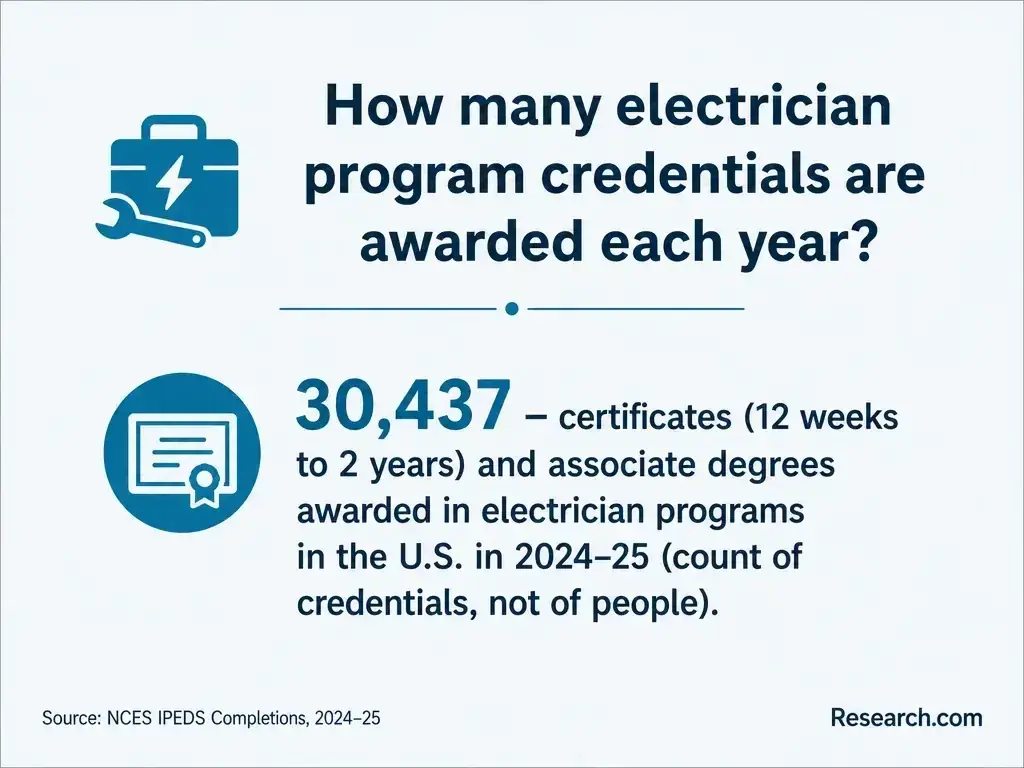
A defensible Oglesby-wide average is not available from the information used here. Tuition also varies by credential, course load, and whether a student qualifies for a public college's applicable residency rate. Ask Illinois Valley Community College for a current, itemized quote for the specific electrical program you are considering, rather than using a general college tuition figure as the complete price.
The table separates charges from costs that can change the choice between school and paid training. Get figures for the whole pathway to employment, not only the first term.
| Cost or offset | What to verify | Why it changes the decision |
| Tuition and mandatory fees | Program total, residency category, and payment timing | A low per-course price may not reflect the full credential. |
| Tools, materials, and safety gear | Required purchases and whether equipment is supplied | These may be due before training or work begins. |
| Transportation and lost earnings | Lab and jobsite locations, schedule, and time away from work | A distant or full-time route can cost more than its tuition suggests. |
| Aid and paid training | Program aid eligibility, grants, employer support, and apprenticeship wages | These may lower net cost, but eligibility is not automatic. |
Federal aid depends on both student and program eligibility (Federal Student Aid, U.S. Department of Education). Also ask about applicable Illinois workforce-training assistance before borrowing. When comparing this route with other highest paid certificate programs, use completion likelihood, debt, wages during training, and the time needed to become job-ready - not a salary headline alone.
The credential depends on the route: a college may award a certificate or an associate degree for a specified program; a registered apprenticeship leads to a sponsor-recognized completion credential after its requirements are met (U.S. Department of Labor, Apprenticeship.gov). An introductory course may award only a course-completion document. Ask what the exact credential says and which employers or apprenticeship sponsors accept it.
These are not interchangeable approvals. Institutional accreditation concerns the school; state authorization concerns permission to operate; apprenticeship registration concerns the sponsor's training program; and an industry certification documents a particular assessed skill. None alone establishes permission to perform electrical work independently in every jurisdiction. Verify recognition and local work rules separately.
College admission, enrollment in a particular electrical program, and entry into an apprenticeship are separate decisions. A provider may require placement steps or prerequisites; an apprenticeship sponsor may assess applicants for basic math readiness, ability to perform job duties safely, and eligibility for its hiring process. Requirements vary, so request the current written criteria directly from the provider or sponsor rather than assuming college admission secures an apprenticeship.
If you already have electrical coursework or relevant work experience, ask whether it can count toward a college credential or be evaluated for apprenticeship advanced standing. Request the decision before paying for repeated courses, and confirm whether any credit reduces classroom work, supervised work, or neither.
Useful foundational training covers electrical safety, basic circuits, measuring instruments, wiring methods, reading plans, and the calculations used to select and troubleshoot equipment. Programs aimed at industrial work may add motors and controls; those aimed at construction may emphasize installation methods and applicable electrical codes. The BLS Occupational Outlook Handbook identifies code interpretation, testing, and troubleshooting as part of electricians' work.
Ask to see the course outline and lab activities. A practical program should let students demonstrate safe work and diagnose faults, not only recognize answers on a screen. Because electrical codes and jobsite practices evolve, also ask how the provider keeps instruction current and whether employers help evaluate the skills taught.
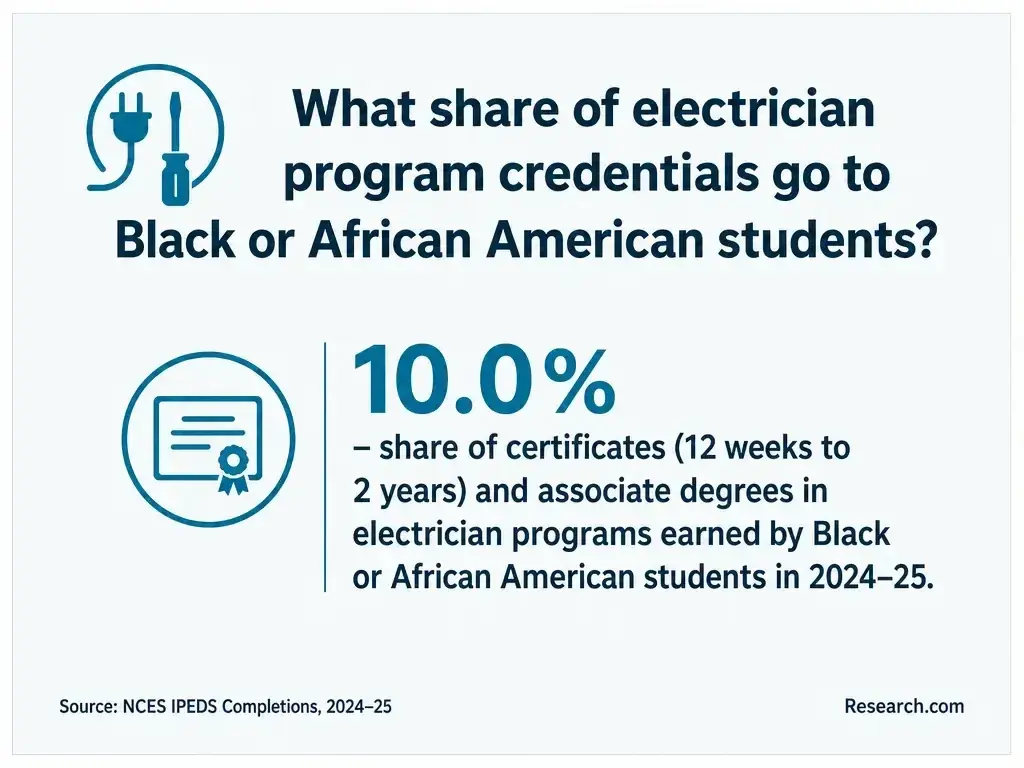
Illinois does not issue one statewide electrician license that automatically authorizes work in every municipality; local authorities may set electrical contractor, permit, or work requirements (Illinois Department of Financial and Professional Regulation; relevant local building authorities). Before choosing training, contact the building or permitting authority where you intend to work - including communities outside Oglesby if you expect to commute - and ask what rules apply to employees, apprentices, contractors, and independent work.
Do not confuse a school certificate or optional industry certification with a license. Also ask a prospective employer who supervises trainees and who obtains required permits. If independent contracting is your long-term goal, check that jurisdiction's rules before assuming that finishing school or an apprenticeship alone qualifies you to open a business.
Choose the route that gets you to your intended job with adequate practice and manageable net cost. A college program may be worthwhile if its labs build skills you need, its schedule fits your work, and local employers or sponsors value the credential. A paid apprenticeship may be the better investment if you can enter one and want supervised jobsite experience and wages from the outset. Neither choice is automatically cheaper or faster for every applicant.
Use these checks with Illinois Valley Community College and any apprenticeship sponsor you are considering. They target the gaps an affordability ranking cannot resolve:
A common mistake is choosing the lowest advertised tuition without confirming jobsite access or tool costs. Another is treating a ranking position or the national median wage as a personal outcome. Ask for recent program-specific completion and placement information, including how each measure was defined, before committing.
Training may support entry as an electrical helper or apprentice, followed by more independent installation or maintenance work as supervised experience develops. Later directions include residential or commercial construction, industrial electrical maintenance, controls work, supervision, or contracting. The right first program depends on the destination: someone targeting industrial troubleshooting should compare motor-control practice, while someone targeting construction should scrutinize wiring labs and the route to contractor-supervised work.
Progression depends on demonstrated skills, employer opportunities, and applicable local rules - not merely on the name of a certificate. Ask employers what experience they expect for the role you want next and which additional training they will support.
The BLS projects 9.2% U.S. employment growth for electricians from 2025 to 2035. That national projection points to continuing demand across the occupation, but it does not measure openings in Oglesby or guarantee a position after training. Local hiring can depend on construction activity, industrial maintenance needs, and how far you can travel to jobsites.
For a practical local test, look at current employer and apprenticeship postings across your feasible commute. Note whether openings accept beginners, require previous jobsite experience, or specify industrial skills. This tells you more about the value of a particular introductory program than national growth alone.
Investing in training is an important decision, and an affordability ranking should help readers compare realistic options - not suggest that the lowest listed tuition is automatically the best path. Research.com evaluates trade programs against others in the same occupation and location. Only programs with completions reported to the Integrated Postsecondary Education Data System (IPEDS) are eligible; an apprenticeship or other provider absent from IPEDS is not necessarily unavailable or low quality.
For the most affordable ranking, the score uses tuition, cost of attendance, median student debt, and federal loan default rate. An entropy-based method gives more weight to measures that differ more across eligible programs. Accreditation and other quality measures are not part of this affordability score. Readers should therefore verify practical training, employment fit, and regulatory requirements separately. The team uses the following sources to check the available education, cost, outcomes, recognition, and training information; not every source applies to electrician programs:
The ranking gives readers a consistent starting point for comparing published college costs and debt. It cannot replace a quote for tools, commuting, and other out-of-pocket expenses or a direct comparison with paid apprenticeships. More detail on the approach is available in Research.com's methodology.
# 1 position
# 2 position
Not necessarily. A registered apprenticeship can combine paid supervised work with technical instruction. Check each sponsor's entry rules before paying for preparatory coursework (U.S. Department of Labor, Apprenticeship.gov).
Online coursework can help with theory, but it cannot replace hands-on installation, testing, and supervised jobsite experience. Confirm practical requirements with the training provider and employer.
No. Compare its current relevant offerings with registered apprenticeships and employer-sponsored training. Availability, entry requirements, and credit for prior coursework should be confirmed directly.
Not by itself. Employer supervision and local permitting or contractor rules may apply. Check with the authority where you plan to work; Illinois does not have a single statewide electrician license covering every municipality (Illinois Department of Financial and Professional Regulation; relevant local building authorities).
Request the full program price, required tools, lab hours, exact credential, aid eligibility, and evidence of how students connect to supervised work. Ask separately whether an apprenticeship sponsor will recognize the coursework.