# 1 position


Audited and Verified:
Our Editorial and Data Verification Process
Research.com uses government datasets, official education statistics and primary institutional information to support its career and degree guides. Our review process checks factual accuracy, occupational definitions, source dates and the requirements associated with the credentials discussed.
How This Article Was Fact-Checked
Our editorial team verifies salary estimates, employment projections, education requirements and program information against original data providers and official organizations. Salary figures are checked against the relevant occupational definitions and reporting periods. Information about licensure, accreditation and required in-person training is reviewed separately.
Fact-checked and verified on:

Co-Founder and Chief Data Scientist

Reviewed by Karolina Broda
Fact-Checker and Data Verification
Choosing electrician training near Godfrey means comparing more than tuition: a low-cost program may still leave you needing substantial paid work experience. The U.S. Bureau of Labor Statistics projects electrician employment to grow 9.2% nationally from 2025 to 2035, making the pathway worth a careful look. This guide accompanies the Most Affordable Electrician Trade Schools in Godfrey for 2027 ranking, created by the Research.com team of data scientists to help students identify programs worth considering. You'll learn how to compare costs, practical training, credentials, and routes into local work.
Expect instruction in electrical theory, circuits, safe work practices, blueprint reading, and installation or troubleshooting, paired with supervised practice using tools and equipment. For a Godfrey resident, the crucial question is whether that practice is available at a commutable site and whether the provider connects students with employers or apprenticeships. Ask for the current schedule and the share of training spent in a lab or on a worksite; similarly named credentials need not provide similar practical experience.
These routes solve different entry problems. The comparison distinguishes a school credential from the work-based training many aspiring electricians will also need.
| Pathway | What it provides | Best fit and limitation |
| Certificate or diploma | Focused classroom and lab preparation | Useful for foundational skills; confirm how graduates obtain supervised work afterward. |
| Associate degree | A longer academic credential with technical and general coursework | May suit broader technical goals; compare its additional cost and time with the work you want. |
| Registered apprenticeship | Structured instruction alongside paid, supervised employment | Strong fit for learning while earning; openings, selection, and work locations vary by sponsor. |
| Employer-sponsored entry | Training tied to an available job | Can reduce upfront school cost; verify the training plan and whether experience is documented. |
A pre-apprenticeship can help an applicant prepare, but it is not itself the same credential as completing a registered apprenticeship (U.S. Department of Labor). If a provider offers advanced standing for prior coursework or experience, request the sponsor's written credit decision before paying for training you hope to skip.
Potential workplaces include residential and commercial construction contractors, industrial facilities, and maintenance departments. Godfrey's location in the greater St. Louis labor market makes commute distance important: a training site or job across the Mississippi River may be practical, but Missouri work can involve different local licensing and employer requirements. Confirm the actual jobsite location before treating a placement claim as a local opportunity.
School training can support applications for helper or apprentice roles; it does not by itself establish that someone may work independently. Ask employers whether they hire graduates into supervised positions and whether the employer documents hours toward advancement.
A reliable Godfrey-specific electrician median is not available here, so the national figure is a benchmark, not a local pay quote. The U.S. Bureau of Labor Statistics reports a $63,190 median annual wage for electricians in May 2025. Half of electricians nationally earned more and half earned less; the measure includes workers at different career stages and should not be used as a new apprentice's expected offer.
For a useful local comparison, request the starting wage, scheduled increases, benefits, travel expectations, and whether classroom time is paid from each prospective employer or apprenticeship sponsor. Compare those terms with your current earnings and training costs, rather than judging a program by the national median.
There is no single Godfrey program length: a focused school credential, an associate degree, and a registered apprenticeship have different schedules and endpoints. An apprenticeship generally extends beyond initial classroom preparation because it includes substantial supervised employment (U.S. Department of Labor). Ask each provider for its published calendar, required classroom or contact hours, lab hours, and any work-experience requirements. Do not mistake the date you finish classes for the date you become qualified for independent work.
If speed is your priority, compare the time to a paid entry role as well as the time to a credential. Lists of a quickest highest paying degree cannot tell you how long the hands-on electrician pathway will take.
Online lessons may cover terminology, code concepts, calculations, and theory. Wiring methods, measurement, testing, safe equipment use, and supervised jobsite work require in-person practice. A hybrid schedule can reduce classroom travel from Godfrey, but check where and when its labs occur; a remote course with no accessible practical component is not equivalent to hands-on training.
Before enrolling, ask the provider to identify which competencies are assessed in person and how students secure supervised work. An advertised online credential is not proof of apprenticeship credit, employer acceptance, or permission to perform regulated work. Likewise, a top online associate's degree in 6 months comparison should not be used as a shortcut for estimating electrician training time.
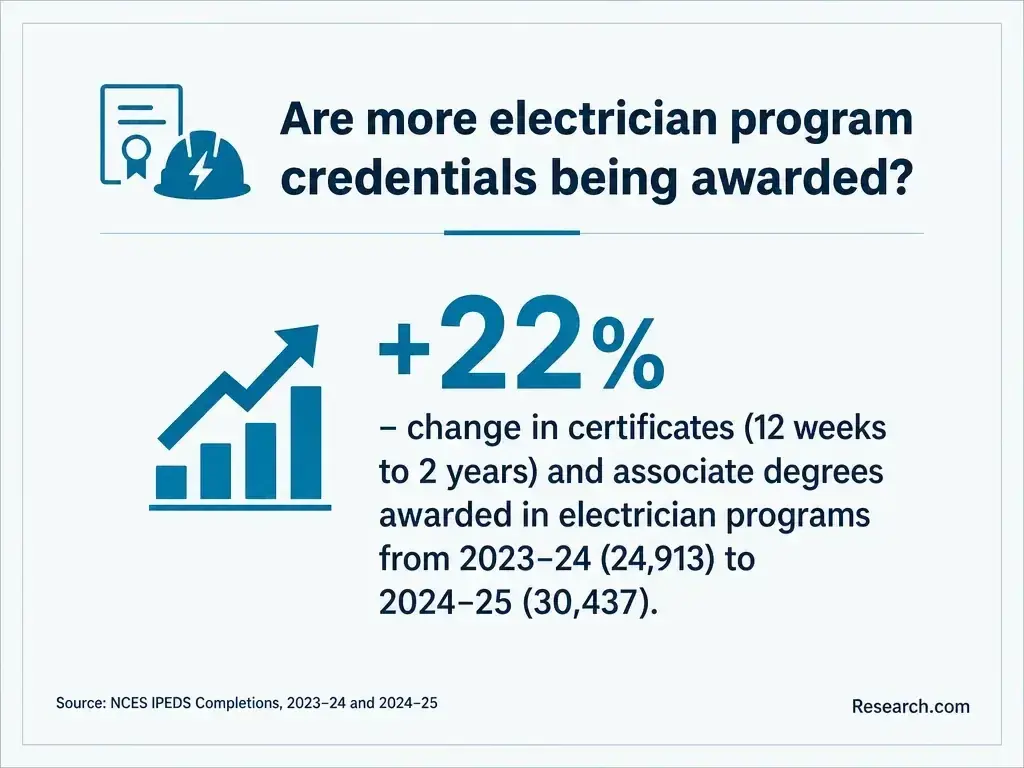
There is no verified Godfrey-wide average here that fairly combines school programs with paid apprenticeships. Request an individualized, written cost estimate instead. The amount needed to become job-ready can include tuition, mandatory fees, books, tools, personal protective equipment, transportation to labs and jobsites, and any applicable examination or application charges. Lost earnings during unpaid training matter too; wages during an apprenticeship can offset costs.
Start with Lewis and Clark Community College's current published program and tuition information if its available training fits your goal, then compare it with written terms from apprenticeship sponsors and employers. Check residency-based tuition, financial-aid eligibility, scholarships, and workforce assistance directly with the relevant provider or agency. Federal aid is not available for every training option, and a low advertised tuition is not a low total cost if required equipment and travel are excluded (Federal Student Aid).
The award depends on the route: a provider might award a certificate, diploma, or associate degree; a registered apprenticeship has its own completion credential (U.S. Department of Labor). Request the exact credential name, issuing organization, transcript or completion record, and any documented apprenticeship credit. An industry training credential, such as one associated with NCCER, is distinct from both institutional accreditation and an occupational license.
Choose a credential for its relevance to your next supervised job, not for how impressive its name sounds. A school certificate is not interchangeable with completion of an apprenticeship, and dual degree programs in usa answer a different educational question.
Requirements vary by school, employer, and apprenticeship sponsor. Request the current application checklist rather than assuming that admission to a college program also secures an apprenticeship position. Sponsors may separately assess readiness for electrical math, safe physical work, scheduling, and travel to jobsites. Confirm any required documentation, assessments, fees, or employer conditions before committing.
If you already have relevant coursework or work experience, ask both the training provider and prospective apprenticeship sponsor about documented credit or advanced standing. Credit granted by one organization should not be assumed to transfer to another.
Training should connect circuit theory and electrical calculations to safe installation, testing, and troubleshooting. Look for practice interpreting plans, selecting materials, using meters, and following applicable electrical-code and workplace-safety procedures. These are consequential skills: a program that teaches definitions without supervised tool use may prepare a student for further training, but not for the same tasks as a robust lab and worksite pathway (U.S. Bureau of Labor Statistics).
Ask to see the current course outline and lab equipment. Then compare it with the skills requested in the entry-level jobs you intend to pursue. A broad credential is less valuable to you if it omits the practical work your prospective employer expects.
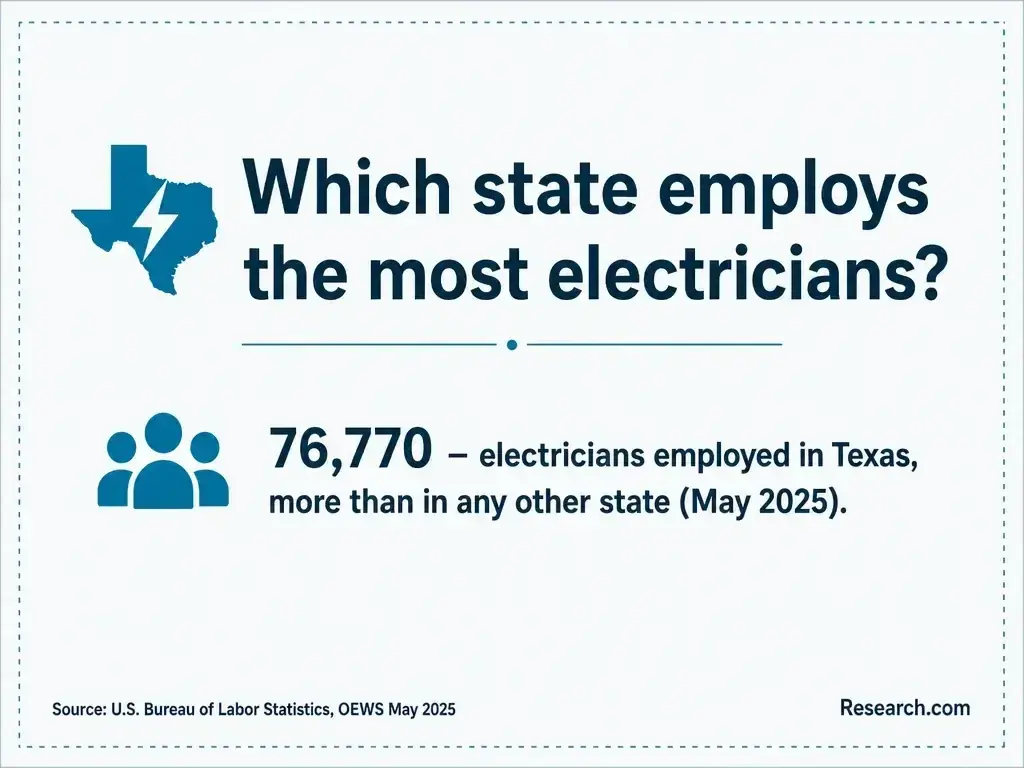
Do not assume one Illinois license settles every electrician job. Illinois does not operate a single statewide occupational licensing system for all electricians; local requirements and the nature of the work matter (Illinois Department of Financial and Professional Regulation; applicable local authorities). Before choosing training, ask the authority with jurisdiction over your intended Illinois jobsites and the prospective employer which credentials, supervision, examinations, or contractor requirements apply. Check separately if you plan to work in Missouri.
Institutional accreditation concerns the school; state authorization concerns its permission to operate; apprenticeship registration concerns the work-based program; and any local license concerns permission to perform regulated work. None automatically substitutes for another. Optional industry certifications can demonstrate particular skills, but first verify whether an employer actually values them. Lists of easy to get certifications that pay well do not establish local electrician eligibility.
Begin with the job you want and the jurisdiction where you expect to work. An affordable school program may be a good investment if its labs fit your schedule and it offers a credible route into supervised employment. A paid apprenticeship may make more sense if you can obtain a place and need earnings while training. Neither route is automatically better.
Use these checks before paying a deposit; they expose the gaps that a tuition figure or ranking cannot show:
For return on investment, consider aid, completion likelihood, post-training earnings over a realistic time horizon, and the value of earnings forgone during training - not just tuition or a national wage figure. Treat a promise of automatic independent-work eligibility or guaranteed pay as a red flag.
An initial school credential can lead toward an electrical helper or apprentice position; documented experience and further training can support progression into more independent installation, troubleshooting, maintenance, or supervisory work. Some workers later focus on industrial systems or become contractors, subject to the requirements where they perform work. These are potential paths, not automatic outcomes of graduation.
Choose training that matches the first role you can realistically obtain. If your main objective is comparing earnings across unrelated fields, top paying college majors addresses a different decision and should not be treated as a forecast for an electrician trainee.
The U.S. Bureau of Labor Statistics projects 9.2% national employment growth for electricians from 2025 to 2035. That supports investigating the occupation, but a national projection cannot tell you how many openings a particular Godfrey applicant will find or when an apprenticeship slot will be available.
Use the projection as context, then test the local market: compare current entry-level postings, sponsor intake schedules, commuting distances, and the skills employers request. Growing demand is most useful to your decision when a training route also gives you access to the supervised experience those employers require.
Investing in training is a consequential decision, so Research.com evaluates programs against others in the same occupation and location rather than against unrelated schools. Only programs reporting completions to IPEDS qualify for this ranking. That makes the comparison more relevant to Godfrey-area students, but it also means a registered apprenticeship or employer program may be a worthwhile option without appearing in the ranking.
The most affordable ranking scores tuition, cost of attendance, median student debt, and federal loan default rate. An entropy-based method gives more weight to measures that distinguish programs more clearly. Accreditation and other quality measures are not part of this affordability score. Separately, Research.com's best-program rankings consider student outcomes, earnings and return on investment, costs and debt, and quality and recognition; their weights are not the affordability-ranking weights. Readers should therefore use this ranking to narrow cost-conscious choices, then independently verify hands-on training and career fit.
Research.com draws on the following data sources in creating its rankings. Some are relevant to other trades rather than electrician training specifically; inclusion here does not mean an electrician program needs approval from a health or dental organization.
Research.com checks multiple measures to make the comparison more credible, but published datasets do not capture every training provider or a student's actual bill. See Research.com's methodology for more on how the ranking is created.
# 1 position
# 2 position
Not necessarily. A registered apprenticeship can combine instruction and paid work. Check each sponsor's entry requirements before paying for separate school training.
No. Compare tools, fees, travel, practical instruction, and access to supervised work. The affordability ranking does not score program quality.
Theory can be taught remotely, but tool use, lab competencies, and supervised fieldwork require in-person participation. Confirm the practical component before enrolling.
Do not assume so. Check the requirements for your intended jobsites with the relevant local authority and employer; school completion and permission to perform regulated work are different matters.
Choose based on available openings, your need for income, program costs, commute, and the supervised experience each route supplies. Ask whether a sponsor will recognize school training before enrolling for that purpose.