# 1 position


Audited and Verified:
Our Editorial and Data Verification Process
Research.com uses government datasets, official education statistics and primary institutional information to support its career and degree guides. Our review process checks factual accuracy, occupational definitions, source dates and the requirements associated with the credentials discussed.
How This Article Was Fact-Checked
Our editorial team verifies salary estimates, employment projections, education requirements and program information against original data providers and official organizations. Salary figures are checked against the relevant occupational definitions and reporting periods. Information about licensure, accreditation and required in-person training is reviewed separately.
Fact-checked and verified on:

Co-Founder and Chief Data Scientist

Reviewed by Karolina Broda
Fact-Checker and Data Verification
Choosing an affordable electrician program in Linn means looking beyond tuition: the training must also provide practical skills and a workable path into paid experience. The U.S. Bureau of Labor Statistics projects electrician employment to grow 9.2% nationally from 2025 to 2035, making that path worth examining. This guide helps prospective students and career changers compare costs, credentials, apprenticeships, and Missouri requirements. It will feature a Most Affordable Electrician Trade Schools in Linn for 2027 ranking created by the Research.com team of data scientists to help students make an informed choice about programs worth considering.
Expect a mix of electrical theory, code study, safety instruction, and supervised work with wiring, conduit, circuits, and test equipment. For someone based in Linn, State Technical College of Missouri is a local school to investigate; ask for its current electrician-related credential, lab schedule, itemized charges, and employer connections rather than assuming every electrical program prepares students for the same job.
School training and apprenticeship serve different purposes. A school program can provide structured practice before or alongside employment. A registered apprenticeship combines paid work under supervision with related instruction and follows a registered training plan. Direct entry into an employer-sponsored trainee role may also be possible, but ask how that employer teaches and documents skills. The best route depends on whether you need an initial skills foundation, immediate wages, or a structured route to broader field experience.
Electrician training can lead toward residential and commercial construction, industrial maintenance, facilities work, and electrical contracting. Linn's location in central Missouri makes travel to jobs and training sites an important part of the decision: an inexpensive program may be less affordable if its lab hours or work placements require substantial driving.
Entry-level titles and duties depend on the employer and local rules. A school credential may help someone seek a helper, trainee, or apprentice position, but it does not establish independent-work authority. Ask providers which employers recruit their students, where placements occur, and whether those positions provide supervised electrical experience relevant to your goal.
The U.S. Bureau of Labor Statistics reports a $63,190 national median annual wage for electricians for May 2025. It is a benchmark for the occupation as a whole - not a Linn wage estimate, a starting offer, or an apprenticeship wage. Experience, specialization, employer, and job location can all change what an individual earns.
For a realistic return-on-investment estimate, request actual trainee or apprentice wage schedules from employers you might join. Compare those wages with program debt, the time until you can work, and the earnings you would give up while attending full time. Do not use the national median as a promised post-completion salary.
A short introductory credential and an associate-degree program have different completion timelines, while a registered electrician apprenticeship generally involves several years of progressively supervised work and classroom instruction, according to the U.S. Bureau of Labor Statistics and the U.S. Department of Labor. School completion is not the same milestone as completing an apprenticeship or becoming qualified for unsupervised work.
Ask for the current program's calendar, total contact hours, hands-on hours, and whether attendance can be part time. Working adults considering fastest online degree programs for working adults should be especially wary of applying an accelerated-course timeline to electrical training: supervised practice and any required work experience cannot simply be compressed into online lessons.
Online instruction can work for reading plans, studying theory, and preparing for code discussions. It cannot replace supervised practice making connections, installing equipment, using meters safely, or troubleshooting physical circuits. A hybrid option is credible only if it clearly identifies where and when those practical components happen.
For a Linn resident, compare the convenience of remote coursework with the travel required for labs and employer worksites. Before enrolling, ask who supervises practical assessments and whether an apprenticeship sponsor or prospective employer accepts the training. An online completion certificate alone should not be treated as evidence of occupational eligibility.
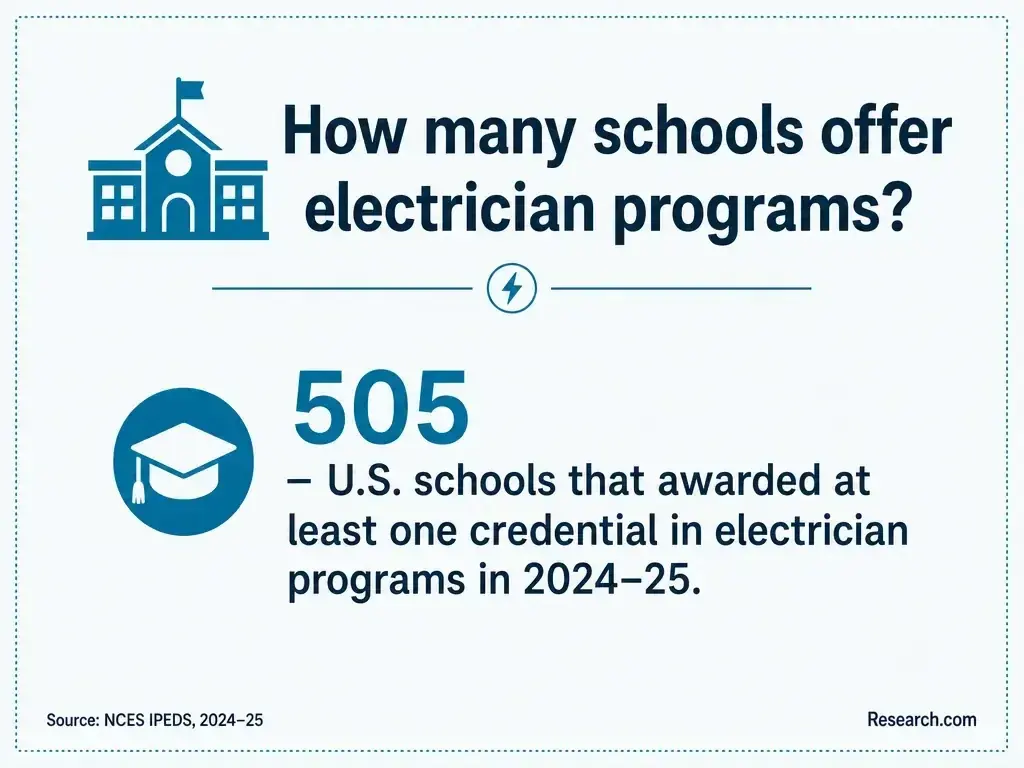
A defensible Linn-wide average is not available from the program information here. Published college prices may also omit apprenticeships and employer training, while an institution-wide net price is not necessarily the price of its electrical program. Request a current, program-specific estimate before comparing a school with a paid training route.
The comparison should include tuition, mandatory fees, books, tools, personal protective equipment, materials, travel to labs or worksites, and any applicable exam or local licensing charges. Subtract aid you are eligible to receive, then account separately for wages earned during a paid apprenticeship and wages forgone during school. Federal aid eligibility depends on the institution and program; Missouri Job Centers can advise eligible applicants about available workforce-training assistance, according to the U.S. Department of Labor and Missouri's workforce-development system.
A low advertised price is not necessarily a low cost to become job-ready. Even readers comparing cheap online universities for working students should evaluate electrician training separately because equipment, lab access, and supervised work are central costs.
Depending on the provider and program, the award could be a certificate, diploma, or associate degree. A registered apprenticeship instead documents completion of its work-based and related-instruction requirements. An employer may also offer training without awarding an academic credential. Ask for the exact award name: "electrical" in a program title does not tell you whether the curriculum targets building wiring, industrial systems, or another specialty.
Institutional accreditation concerns the school; state school authorization concerns permission to operate; apprenticeship registration concerns the work-based program; an industry certificate documents specified competencies; and occupational licensing concerns legal permission to perform regulated work. None automatically substitutes for another. Ask whether school coursework receives advanced standing with an apprenticeship sponsor, and get any credit arrangement in writing before counting on it.
Requirements vary by provider. An electrical program may assess math readiness, require prerequisite coursework, or set safety and attendance expectations; an employer or apprenticeship sponsor may separately assess applicants for worksite placement. Check the current admissions notice rather than assuming that admission to a school also secures an apprenticeship job.
Readers looking at colleges with open admissions should distinguish broad school access from entry to a particular electrical program or paid apprenticeship. Ask the provider what must be completed before lab participation, what tools are required at entry, and whether prior electrical coursework or documented experience can reduce repetition.
Relevant training covers electrical fundamentals, interpreting diagrams and plans, safe tool use, circuitry, wiring methods, testing, troubleshooting, and applicable electrical code. The U.S. Bureau of Labor Statistics describes electricians as installing, maintaining, and repairing electrical power, communications, lighting, and control systems; that range is why a program's practical facilities matter.
Compare the actual lab tasks with the work you want to do. Someone aiming for construction wiring should ask about conduit, panels, and installation practice; someone interested in industrial maintenance should ask about motors, controls, and diagnostics. Verify that instructors assess the work students perform, not only written knowledge.
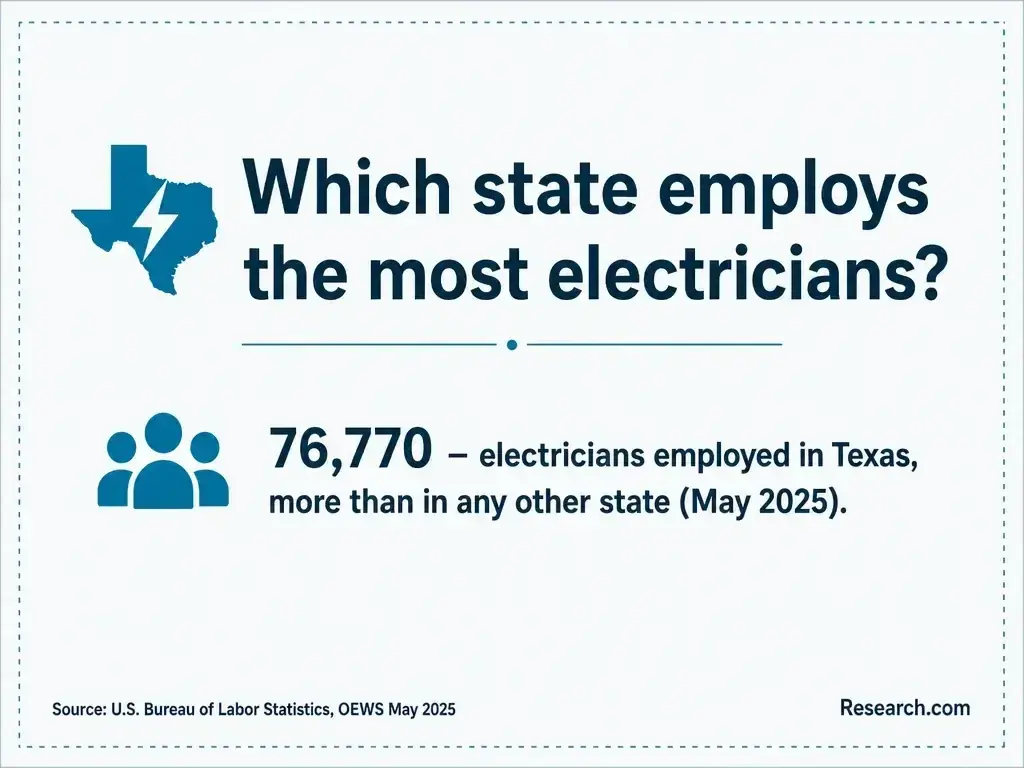
Missouri does not have a general statewide journeyman-electrician license, but local governments can set requirements for electrical work and contractors, according to Missouri's Division of Professional Registration. Rules can therefore differ between Linn and a job across a municipal boundary. Check the authority where you expect to work before choosing training on the assumption that one credential grants statewide independent-work privileges.
A school award, an optional industry credential, and completion of a registered apprenticeship demonstrate different things; none should be described as an automatic local license. Ask a prospective employer or apprenticeship sponsor what supervised experience it requires, and ask the relevant local authority whether registration, examination, or contractor licensing applies to your intended work.
Start with the job you want and work backward. An affordable program is a sound investment only if you can finish it, practice the right skills, and use it to enter the intended work. Price rankings cannot establish those conditions for you.
Use these checks when speaking with a school, apprenticeship sponsor, or employer:
A warning sign is a claim that an entirely remote credential makes a student ready to work independently. Another is a price quote that excludes required tools or travel. Lists of accredited online schools with no admission fee may help with a different cost comparison, but neither accreditation nor a waived application fee answers whether an electrician program delivers adequate hands-on training.
A typical progression begins with supervised helper, trainee, or apprentice work, followed by broader responsibility as skills and experience develop. Electricians may later focus on construction, maintenance, controls, or supervisory work. Running an electrical contracting business is a separate decision that may bring local licensing and business requirements; it is not an automatic result of finishing school.
Choose training for the next realistic step, not the highest-paid occupation on a career list. In particular, comparing apprentice earnings with a highest earning master's degree figure would mix different occupations and career stages. For this trade, the useful question is whether the program helps you obtain supervised electrical work and progress from there.
The U.S. Bureau of Labor Statistics projects 9.2% national employment growth for electricians from 2025 to 2035. That supports investigating the trade, but it does not measure vacancies in Linn or guarantee a nearby apprenticeship opening.
Local opportunity depends partly on where you can travel for construction and maintenance work. Ask prospective sponsors and employers about current intake, worksite locations, and the skills they need. If a suitable paid position is available, compare it directly with starting school; if it is not, a hands-on program may help you build a stronger application while you continue seeking supervised entry.
Investing in electrician training is a consequential decision. Research.com created this ranking to help readers compare affordable programs against other reported programs in the same occupation and location, rather than against unrelated schools nationwide. The team reviews multiple education and training sources to improve the ranking's quality, credibility, and accuracy.
The most affordable ranking scores reported tuition, cost of attendance, median student debt, and federal loan default rate. It uses an entropy-based method that gives more weight to cost and debt measures that differ more across programs. Unlike Research.com's separate best-program rankings, affordability scores do not include accreditation, earnings, completion, or other quality measures. Readers should therefore use the ranking as a cost-comparison starting point, not as proof of licensing eligibility or job readiness.
Only programs with completions reported to IPEDS can appear. That boundary matters for electricians: a registered apprenticeship or employer training program may be a strong local option even if it is absent from a college-oriented ranking. The following sources informed the ranking and its checks; some cover other trades and do not establish electrician-program approval.
Readers can learn more about the scoring approach on Research.com's methodology page. Before enrolling, confirm current program charges and training requirements directly with the provider.
# 1 position
# 2 position
Not necessarily. A paid apprenticeship or employer-sponsored trainee route may provide an alternative. Check the employer's entry rules and the requirements of each municipality where you plan to work.
No. Compare total cost with lab practice, completion prospects, work-based opportunities, and the credential's usefulness for your intended job.
Some theory can be studied online, but practical electrical skills require supervised, in-person work. Verify the lab or worksite component before enrolling.
No. Missouri has no general statewide journeyman-electrician license, and local requirements vary. A school credential does not automatically meet them.
Request an itemized total cost, exact credential, lab schedule, and explanation of how students obtain supervised work. Confirm refund terms and any claims about local licensing with the relevant authority.