# 1 position
Metro Technology Centers - Electrician.
certificate or diploma

Audited and Verified:
Our Editorial and Data Verification Process
Research.com uses government datasets, official education statistics and primary institutional information to support its career and degree guides. Our review process checks factual accuracy, occupational definitions, source dates and the requirements associated with the credentials discussed.
How This Article Was Fact-Checked
Our editorial team verifies salary estimates, employment projections, education requirements and program information against original data providers and official organizations. Salary figures are checked against the relevant occupational definitions and reporting periods. Information about licensure, accreditation and required in-person training is reviewed separately.
Fact-checked and verified on:

Co-Founder and Chief Data Scientist

Reviewed by Karolina Broda
Fact-Checker and Data Verification
Choosing an affordable electrician program in Oklahoma means looking beyond tuition: you need hands-on training and a workable route toward licensure. The U.S. Bureau of Labor Statistics projects electrician employment to grow 9.2% nationally from 2025 to 2035, making the choice timely. This guide compares trade school, apprenticeship, and employer-sponsored routes for new students and career changers. It also accompanies the Most Affordable Electrician Trade Schools in Oklahoma for 2027 ranking, created by the Research.com team of data scientists to help students make an informed choice about programs worth considering.
Expect electrical theory paired with work using tools, wiring methods, circuits, and testing equipment. A school-based program may award a certificate, diploma, or associate degree; a registered apprenticeship instead combines related instruction with supervised, paid work. Neither a similarly named credential nor a classroom schedule tells you how much qualifying field experience you will receive (U.S. Bureau of Labor Statistics; U.S. Department of Labor).
The central question is what happens after the lab. Ask whether the provider arranges employer interviews, offers work-based learning, or leaves students to find electrical employment themselves. Compare the following routes by the experience and credential they actually provide:
| Pathway | What you receive | Best fit and main trade-off |
| Trade-school certificate or diploma | Structured coursework and shop practice; credential varies by provider | Useful for exploring the trade or building entry skills; paid field experience may need to be arranged separately |
| Electrical associate degree | Electrical coursework plus a broader academic credential | Useful if the added coursework supports your goals; check whether its extra time and cost help your licensing plan |
| Registered apprenticeship | Paid, supervised work and related instruction under a registered program | Useful if you can secure a position and want to earn while training; entry and schedules depend on the sponsor |
| Employer-sponsored entry route | Job-specific training under an employer | Useful when a contractor will train and supervise you; verify instruction, safety practices, and experience records |
A pre-apprenticeship can help someone prepare to apply, but it is not the same as completing an apprenticeship. For any route, ask the provider and the Oklahoma Construction Industries Board how your particular instruction and documented work will count toward your intended license.
Electrical contractors, construction projects, manufacturers, and facilities-maintenance employers offer different kinds of work. Contractors may expose trainees to new installations and service calls; an industrial employer may emphasize motors, controls, and troubleshooting. The U.S. Bureau of Labor Statistics identifies construction, manufacturing, and government among electricians' employment settings.
Location changes the practical choice. If a program's shop is nearby but its employer placements require a long commute, transportation can erase part of its price advantage. Ask where recent trainees completed supervised work and whether placements match the residential, commercial, or industrial experience you want. A job titled "maintenance technician" should not be assumed to provide qualifying electrical experience; confirm the duties and supervision with the Oklahoma Construction Industries Board.
Oklahoma pay varies by employer, location, experience, and type of electrical work. The U.S. Bureau of Labor Statistics reports a national median annual wage of $63,190 for electricians in May 2025. This is a benchmark for the occupation, not an Oklahoma wage estimate or an expected offer to a newly trained apprentice.
For a useful local comparison, request the current starting wage and scheduled increases from apprenticeship sponsors or prospective employers. Compare those offers with the latest Oklahoma electrician wage figures published by the Oklahoma Employment Security Commission, using the same occupation and reference period where possible. Include overtime expectations and commuting costs rather than comparing advertised pay alone.
A short school-based program can finish well before a trainee has the supervised experience needed for journeyman licensure. Certificate, diploma, and associate-degree schedules differ by provider and enrollment pace; apprenticeships extend over multiple years because instruction runs alongside paid, supervised work (U.S. Department of Labor; Oklahoma Construction Industries Board). There is no single school-program duration that establishes licensing eligibility.
Ask for the catalog's total clock or credit hours, the portion spent in a hands-on shop, and the expected completion time for your schedule. Then ask separately how graduates secure and document qualifying work. If speed is your priority, comparing ways to get associate's degree online fast may be useful for understanding academic scheduling, but an accelerated online credential does not replace practical electrical training.
Online instruction can cover concepts such as electrical theory, code study, and calculations. Wiring, testing, tool use, and safe troubleshooting require physical practice under appropriate supervision. A hybrid program can work if its required shop sessions and work placements are accessible; an entirely online course should not be treated as proof of job readiness or Oklahoma licensing eligibility (U.S. Bureau of Labor Statistics; Oklahoma Construction Industries Board).
Before choosing a remote option, get its in-person requirements in writing: shop location, attendance schedule, equipment access, and responsibility for finding an employer. Lists of the easiest online associates degree options address a different question from whether an electrical program provides adequate supervised practice.
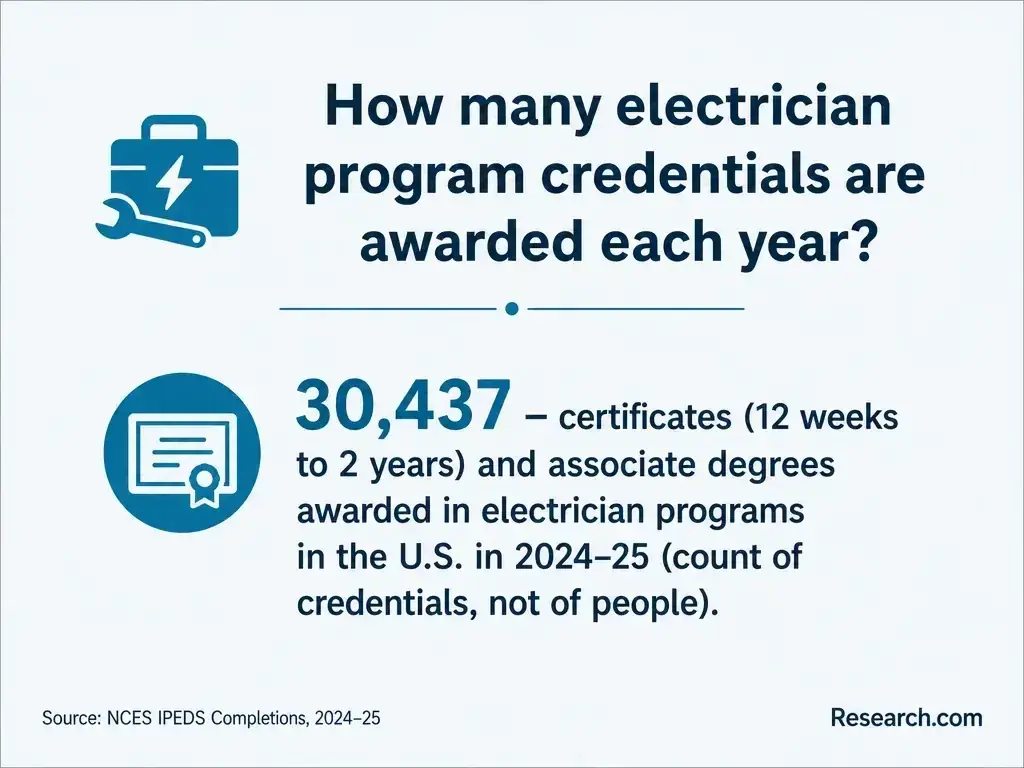
There is no reliable single average that covers Oklahoma school certificates, associate degrees, private career-school programs, and paid apprenticeships on the same basis. Their published prices may use different program lengths and may exclude job-entry expenses. IPEDS and College Scorecard can help compare reporting institutions, but they do not comprehensively price apprenticeships or employer training (National Center for Education Statistics; U.S. Department of Education).
Build an individual total-cost estimate instead. The categories below show why the lowest advertised tuition is not necessarily the least expensive route into work:
| Cost or offset | What to verify |
| Tuition and mandatory fees | Price for the entire credential, including any resident-rate conditions |
| Tools, materials, and safety gear | Required purchases, replacement costs, and what the provider supplies |
| Travel and time | Trips to shops and worksites, schedule conflicts, and earnings forgone while training |
| Entry and licensing expenses | Applicable application, examination, and other required fees |
| Offsets | Grants, eligible student aid, employer support, and wages earned during apprenticeship |
Request an itemized estimate from each provider and check aid eligibility for the specific program, not just the institution. Federal Student Aid explains that institutional participation alone does not make every course eligible for federal aid; Oklahoma Works can help eligible jobseekers investigate workforce-training assistance. Guides to fafsa approved online schools are not a substitute for confirming aid eligibility with an electrician provider's financial-aid office.
It depends on the route: a school may issue a certificate or diploma, an associate-degree program awards an academic degree, and a registered apprenticeship has its own completion credential (U.S. Department of Labor). Ask to see the exact credential name on the catalog page. A pre-apprenticeship completion document, an industry training certificate, and an Oklahoma occupational license are different things.
Institutional accreditation concerns the school; state school authorization concerns its permission to operate; apprenticeship registration concerns a work-and-instruction program; and occupational licensure concerns permission to perform regulated work. None automatically substitutes for another. An optional industry credential may help demonstrate skills, but verify its value with employers rather than assuming it satisfies the Oklahoma Construction Industries Board's license requirements.
Requirements vary by provider and route. Schools may request an application, evidence of prior education, or placement information; employers and apprenticeship sponsors set their own hiring or selection criteria. Ask about minimum age, transportation to worksites, physical demands, and any required screening before paying a nonrefundable charge. The U.S. Department of Labor notes that registered apprenticeship entry requirements are set by sponsors.
If you have previous electrical coursework or relevant work experience, ask whether the school grants prior-learning credit or whether an apprenticeship sponsor offers advanced standing. Get the decision in writing: school credit, apprenticeship placement, and experience accepted for Oklahoma licensure are separate determinations (U.S. Department of Labor; Oklahoma Construction Industries Board).
Core instruction generally covers circuits, electrical measurements, wiring methods, blueprint reading, code use, and safe installation and troubleshooting (U.S. Bureau of Labor Statistics). A useful lab lets students apply those concepts with tools and test equipment, rather than only answering questions about them. Ask what each student physically builds, tests, or diagnoses and how instructors assess safe work.
Compare specialized content with your intended work. Motor controls may matter more for an industrial job, while a residential route needs substantial practice with building wiring. Electrical code requirements and equipment change, so the ability to read current instructions and troubleshoot safely matters beyond any one device or lesson.
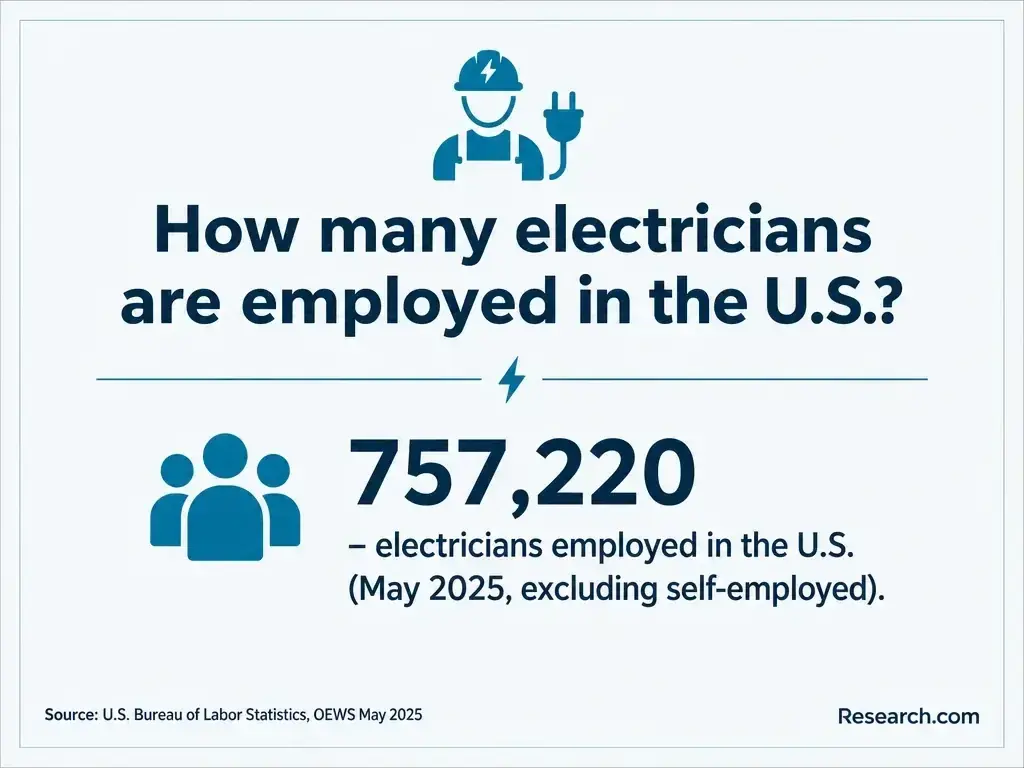
Oklahoma regulates electrical contracting and electrician licensing through the Oklahoma Construction Industries Board. Journeyman licensure involves qualifying experience and examination requirements; finishing trade school alone does not grant the license. Rules for apprentices, journeymen, contractors, and other license categories differ, so check the Board's current category-specific application instructions before choosing a program (Oklahoma Construction Industries Board).
Ask a prospective school or sponsor which licensed person will supervise your work and how your experience will be recorded. Confirm directly with the Board whether any classroom instruction can be credited toward the category you seek. An institutional accreditation claim, NCCER-related training, or apprenticeship completion should not be presented as an Oklahoma license.
Start with the job and license category you want, then compare programs on total cost, hands-on practice, documented work experience, and completion feasibility. For example, request current catalogs and itemized charges when comparing options such as Metro Technology Centers, Eastern Oklahoma County Technology Center, Wes Watkins Technology Center, Oklahoma State University Institute of Technology, or Tulsa Welding School-Tulsa. Confirm each provider's current electrical offering rather than assuming every campus teaches the same curriculum.
Before making a deposit, put these questions to admissions staff and, where applicable, an apprenticeship sponsor:
A red flag is a promise that a quick credential automatically makes you a licensed electrician. Another is a low tuition quote that omits tools or leaves employer placement entirely unexplained. Judge return on investment using your likely completion, debt, aid, training wages, earnings forgone, and expected post-training earnings over a realistic time horizon - not the ranking position alone. If you are comparing trades with high paying 4 year degrees, keep their training time, cost, and occupational entry requirements separate.
A trainee may begin with supervised installation or maintenance work, build experience toward journeyman eligibility, and later pursue more specialized, supervisory, or contracting responsibilities as applicable requirements are met (Oklahoma Construction Industries Board; U.S. Bureau of Labor Statistics). Residential service, commercial construction, and industrial electrical maintenance call for overlapping fundamentals but different work settings and equipment.
Choose the work setting before choosing a specialized curriculum. Someone who likes independent troubleshooting may prefer service work, while someone drawn to controls may seek industrial experience. Career-interest guides such as what are the best paying jobs for introverts can prompt reflection, but ask employers about actual teamwork, customer contact, and site conditions rather than choosing electrical work from a personality label.
The U.S. Bureau of Labor Statistics projects 9.2% national employment growth for electricians from 2025 to 2035. That is a nationwide occupational projection, not a forecast of openings in Oklahoma or a guarantee of work after training. For a local decision, review the Oklahoma Employment Security Commission's current projections and job postings in the areas where you can commute.
Look beyond the number of postings: check whether they seek apprentices, licensed journeymen, or workers with industrial experience. If most appealing openings require a license, favor a route with a credible plan for supervised work and documented progression - not merely the fastest classroom completion.
Investing in training is a consequential decision, so the Research.com team uses documented data sources and consistent comparisons to help readers identify affordable options. Electrician programs are evaluated against programs in the same occupation and location; only programs with completions reported to IPEDS can appear in the ranking. That limitation matters: a registered apprenticeship or employer training program may be worthwhile even if it does not appear.
The most affordable ranking evaluates tuition, cost of attendance, median student debt, and federal loan default rate. Its weights use an entropy-based method, which assigns more weight to indicators that vary more across programs. Unlike Research.com's separate best-program rankings, this affordability score does not include accreditation or other quality indicators. Readers should therefore use the ranking as a cost comparison, then verify practical training and licensing fit independently.
The team uses the following sources in its ranking research. Several cover occupations beyond electrical work; their inclusion does not mean a health-related accreditor or credential applies to an electrician program.
For more detail on the ranking approach, see Research.com's methodology. Before enrolling, obtain a current program-specific price and confirm how its instruction and supervised work fit Oklahoma's licensing requirements.
# 1 position
# 2 position

# 3 position
# 4 position
# 5 position

# 6 position

# 7 position

# 8 position

# 9 position
Electrician
Delivery mode: On Campus (May Include Online Courses)
42.26
/ 100
Final score
Accreditation
Approved by the Oklahoma State Board of Career and Technology Education (state agency recognized by the U.S. Department of Education).
Great Plains Technology Center received a Research.com Affordability Score of 42.26/100.
# 10 position

# 11 position
# 12 position

Not necessarily. School-based training is one route; registered apprenticeships and supervised employer training are others. Confirm the experience, examination, and other requirements for your intended license with the Oklahoma Construction Industries Board.
It can reduce earnings forgone because apprentices are paid while training, but compare sponsor requirements, any related costs, travel, and the time needed to complete the program. Ask each option for an itemized estimate.
Do not assume so. Online lessons cannot replace hands-on electrical work. Check the course's in-person requirements and confirm how any instruction and supervised experience count with the Oklahoma Construction Industries Board.
A certificate alone does not establish eligibility. The Oklahoma Construction Industries Board evaluates applicants under its license-category requirements, including qualifying experience.
Compare the complete cost through entry into paid work, including tools, travel, fees, aid, and apprenticeship wages. Then verify that the lower-cost option supplies the practical training and licensing pathway you need.