
Best Electrical Technician Training Programs & Trade Schools in Hamlet for 2027
Audited and Verified:
Our Editorial and Data Verification Process
Research.com uses government datasets, official education statistics and primary institutional information to support its career and degree guides. Our review process checks factual accuracy, occupational definitions, source dates and the requirements associated with the credentials discussed.
How This Article Was Fact-Checked
Our editorial team verifies salary estimates, employment projections, education requirements and program information against original data providers and official organizations. Salary figures are checked against the relevant occupational definitions and reporting periods. Information about licensure, accreditation and required in-person training is reviewed separately.
Fact-checked and verified on:

Co-Founder and Chief Data Scientist

Reviewed by Karolina Broda
Fact-Checker and Data Verification
Choosing electrician training near Hamlet means deciding whether to pay for classroom instruction, seek a paid apprenticeship, or combine the two. The stakes are real: the U.S. Bureau of Labor Statistics projects electrician employment to grow 9.2% from 2025 to 2035, but a short course alone does not make someone an experienced electrician. This guide explains local training choices, costs, hands-on requirements, and North Carolina licensing. It also accompanies the Best Electrician Trade Schools in Hamlet for 2027 ranking, created by the Research.com team of data scientists to help students identify programs worth considering.
Key findings about electrician degrees in Hamlet
- For a Hamlet applicant, the central choice is between a school-based credential that builds entry skills and a paid apprenticeship that combines instruction with supervised work; neither should be mistaken for independent contracting authority in North Carolina.
- The U.S. median annual wage for electricians was $63,190 in May 2025, according to the Bureau of Labor Statistics. That is a nationwide figure for workers at all experience levels, not an expected starting wage in Richmond County.
- Before paying, confirm the program's actual electrical lab work, total out-of-pocket cost, and route into supervised employment. A low tuition quote or an online-only course does not answer those questions.
Table of Contents
- Best Electrical Technician Training Programs & Trade Schools in Hamlet for 2027
- What can I expect from an electrician trade school program in Hamlet?
- Where can I work with an electrician trade school training in Hamlet?
What can I expect from an electrician trade school program in Hamlet?
Electrician training should teach you to install, test, troubleshoot, and work safely around electrical systems - not just recognize code terms. In Hamlet, compare any Richmond Community College electrical offering available for your intended start term with registered apprenticeships and employer-sponsored entry routes. Ask for the current curriculum rather than assuming that every course bearing "electrical" prepares residential or commercial electricians.
These pathways lead to different credentials and amounts of work experience. The distinction matters most if your goal is to move quickly into paid fieldwork.
| Pathway | Typical outcome | Best fit and principal limitation |
| Short certificate, diploma, or pre-apprenticeship | School credential and foundational lab training | Useful for testing the field or strengthening an application; supervised job experience may still be needed. |
| Electrical associate program | Academic degree with technical coursework | May suit someone seeking broader technical study; confirm that its labs and employer connections match electrician work. |
| Registered apprenticeship | Paid supervised work, related instruction, and a completion credential | Strong fit for earning while learning; admission depends on sponsor openings and selection requirements. |
| Direct hire with employer training | Employer-defined training and field experience | Can avoid upfront school costs; verify who supervises the work and whether instruction is documented. |
An affordable online associates degree comparison can help frame academic costs, but it cannot establish that electrical labs or jobsite practice are available locally. Confirm those components separately before enrolling.
Where can I work with an electrician trade school training in Hamlet?
Training can lead toward work with electrical contractors on homes, commercial buildings, renovations, or industrial facilities, and toward electrical maintenance roles with employers that operate their own equipment. The work differs: construction emphasizes installation and code-compliant wiring, while maintenance often emphasizes fault-finding and minimizing downtime. The U.S. Bureau of Labor Statistics describes both construction and maintenance as settings for electricians.
For a Hamlet resident, the practical question is where a first employer's jobsites are. Ask whether paid work, labs, and apprenticeship instruction require travel beyond Richmond County; a wider commute can expand opportunities but also change the value of a low-cost program.
The U.S. Bureau of Labor Statistics reports a $63,190 median annual wage for electricians in May 2025. Half of employed electricians nationally earned more and half earned less. This is not a Hamlet wage estimate, an apprentice pay rate, or a promise of earnings immediately after school.
When comparing offers, ask for the actual starting wage, paid hours, overtime expectations, benefits, travel reimbursement, and scheduled wage progression. A paid apprenticeship may produce income during training, while a full-time school schedule may delay it. Those differences can matter more to your budget than comparing national medians.
Duration depends on what you mean by "complete." A school certificate or diploma may finish before a worker has accumulated substantial supervised field experience; an associate program generally takes longer. Registered electrician apprenticeships commonly run about four to five years, combining paid on-the-job training with related instruction, according to the U.S. Bureau of Labor Statistics. The sponsor's published schedule - not a generic course-length claim - determines the hours you must complete.
Ask whether prior electrical coursework earns advanced standing with a particular apprenticeship sponsor; do not assume a school credential shortens the apprenticeship. A search for a 1 year masters degree describes a different educational route, not an accelerated way to acquire supervised electrician experience.
Online instruction can cover electrical theory, calculations, code reading, and some safety concepts. It cannot by itself show that you can make connections, use test equipment, identify a hazard, or troubleshoot an energized system under appropriate supervision. Campus labs, employer worksites, and apprenticeship field training provide different kinds of practice; ask how each program verifies those skills.
Hybrid study may reduce trips for classroom lessons, which helps if you work or commute from Hamlet. But map the required in-person dates before choosing it. Even if you are comparing what's the easiest degree to get online, convenience is the wrong measure for electrical training: confirm the lab location, required attendance, and pathway to supervised work.
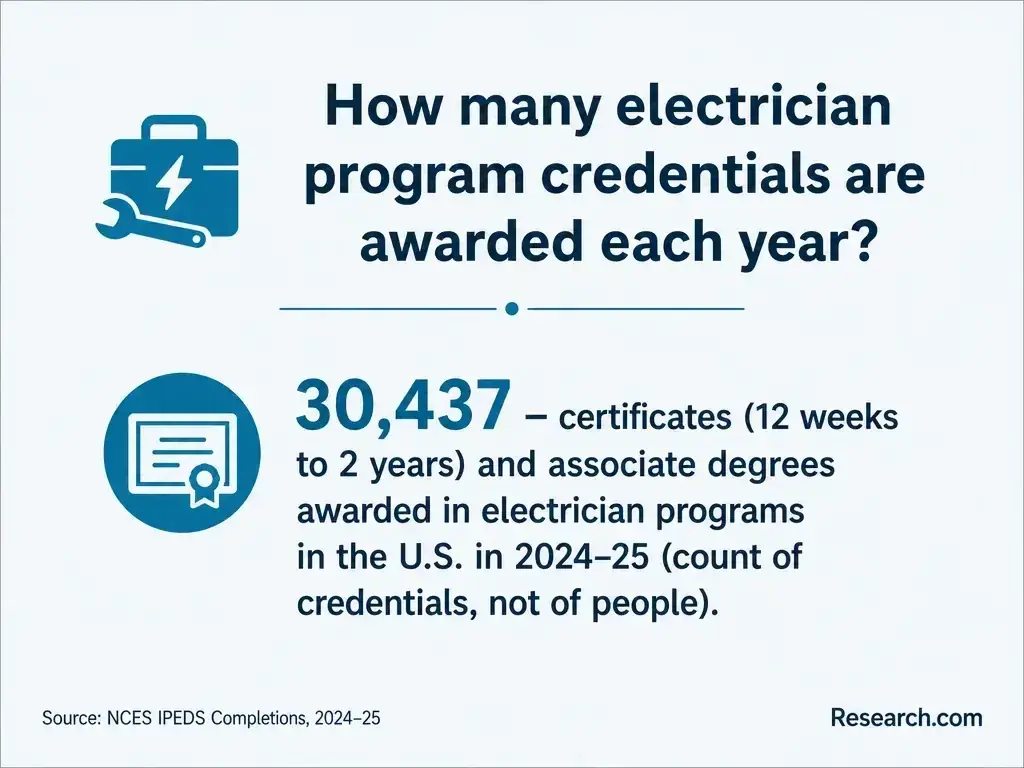
There is no single reliable "average cost" for electrician training in Hamlet: a short course, an associate program, and a paid apprenticeship have different price structures. Obtain a written, current cost-of-attendance estimate for each specific option. A useful comparison includes tuition and mandatory fees, books and code materials, tools and meters, protective gear, transportation to labs and jobsites, and any exam or licensing application costs that apply to your eventual role.
Subtract grants and employer-paid expenses, then account for wages you would earn - or forgo - while training. Federal aid eligibility depends on the school and program, not simply on a low advertised price, according to Federal Student Aid. Lists of colleges with low tuition programs that accept financial aid can prompt useful aid questions, but verify eligibility for the particular electrical program. Also ask an apprenticeship sponsor whether tools, instruction, or travel are covered.
Your credential depends on the route: a school may award a certificate, diploma, or associate degree; a registered apprenticeship awards its own completion credential. NCCER credentials, where offered, document specified construction skills, but they are not North Carolina electrical contractor licenses. An employer may value demonstrated lab and field competence more than a similarly named credential with little practical assessment.
Request a sample completion document and ask precisely which jobs it is meant to support. Check whether prior learning can earn school credit and whether a named apprenticeship sponsor accepts that credit toward related instruction or advanced standing. Get any promised articulation in writing.
Entry rules vary by provider. A school may ask for an application, placement information, and evidence of reading or math readiness. Apprenticeship sponsors set their own selection criteria, which can include an age minimum, education documentation, an aptitude assessment, an interview, and the ability to reach assigned jobsites. Apprenticeship.gov advises applicants to check each sponsor's requirements rather than assume a common national admissions rule.
Before applying from Hamlet, ask whether a driver's license or reliable transportation is necessary for work assignments, whether the schedule accommodates your job, and when the next cohort actually starts. A school admission offer is not an apprenticeship offer or a guarantee of employment.
Relevant instruction covers electrical safety; circuit theory and calculations; reading plans; raceways, wiring, and connections; use of meters; grounding and bonding; and applying the electrical code to installations. The U.S. Bureau of Labor Statistics also identifies diagnosing electrical problems and using testing devices as electrician tasks. Workplace skills include following lockout procedures, communicating with a crew, and documenting work accurately.
Ask to see the lab task list, not just the course titles. A program centered on residential wiring may be a poor match for someone targeting industrial controls; a controls-heavy course may not supply enough installation practice for a first construction job.
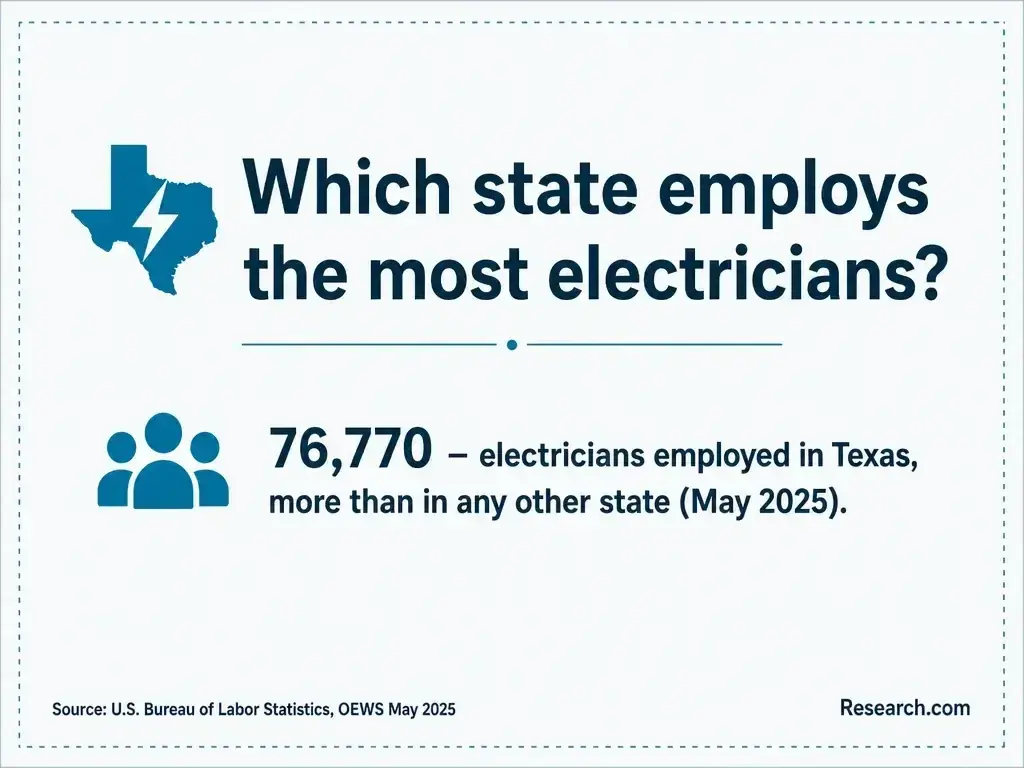
North Carolina distinguishes working on electrical installations from offering electrical contracting services. The North Carolina State Board of Examiners of Electrical Contractors regulates electrical contracting licenses and classifications, with examination and experience requirements that vary by classification. Completing trade school does not itself grant a contracting license or establish eligibility to contract independently.
If your immediate goal is employment under an electrical contractor, ask employers what supervision and documentation they require for new workers. If your goal is eventually to run an electrical contracting business, check the board's current classification, experience, examination, and business requirements before choosing training. Institutional accreditation, school authorization, apprenticeship registration, optional industry certification, and occupational licensure are separate checks; none automatically substitutes for the others.
The best option is the one that gets you from your present skills to a realistic first job at a manageable total cost. A low-price course is less attractive if it lacks electrical labs or an employer connection; an apprenticeship is less attractive if its work schedule or travel demands are unworkable. Use the ranking to form a shortlist, then verify these points directly:
- Ask the provider which credential you receive, what electrical tasks you perform in person, and how your skills are assessed.
- Request the full price, required tools and travel expectations, aid eligibility, and the latest program-level completion information available.
- Ask which employers or apprenticeship sponsors accept the training and whether any credit or advanced standing is documented.
- Confirm institutional accreditation or school authorization as applicable, then separately check any claim about apprenticeship registration or North Carolina licensing eligibility.
For a working applicant, cheap online colleges for job holders may offer scheduling ideas, but an electrical program must still provide workable in-person practice. Treat claims of guaranteed licensing, guaranteed jobs, or fully online hands-on qualification as reasons to investigate further.
An entry-level worker may begin as an electrical helper or apprentice, build supervised experience, and move into more complex installation or troubleshooting work. With further experience, possible directions include commercial construction, industrial electrical maintenance, controls, crew supervision, or electrical contracting. The U.S. Bureau of Labor Statistics describes apprenticeship as a common preparation route for electricians; advancement depends on demonstrated skills and employer requirements, not simply time since graduation.
If contracting is the long-term goal, plan separately for North Carolina's applicable licensing requirements. If you prefer diagnosing equipment to managing projects, prioritize programs and employers offering maintenance or controls exposure rather than assuming every electrical credential serves both aims equally.
The U.S. Bureau of Labor Statistics projects 9.2% national employment growth for electricians from 2025 to 2035. That supports considering the trade, but it does not predict the number of openings in Hamlet or guarantee placement for a particular graduate.
For a local decision, look beyond the national projection: ask training providers which employers recently hired their completers, where those jobsites are, and whether apprenticeship sponsors have upcoming openings. A program with a feasible route into paid supervised work is more useful than one relying only on a strong national outlook.
Best Electrical Technician Training Programs & Trade Schools in Hamlet for 2027
Education is a substantial investment, so Research.com designed its ranking to help readers compare electrician programs against other programs in the same occupation and location - not against unrelated trades. The team checks multiple education, cost, outcome, and recognition sources to support credible comparisons. Only programs with completions reported to IPEDS are eligible; a registered apprenticeship or employer program absent from the ranking may still be an excellent option.
Best-program rankings evaluate student completion and retention; earnings one year after completion and earnings relative to annual attendance cost; tuition, attendance cost, debt, and federal loan default; and accreditation, occupation-relevant recognition, and student support. Occupation-relevant programmatic accreditation or industry recognition receives 20% of the score, institutional accreditation 10%, and student support 10%. The remaining 60% covers outcomes, earnings, and costs, with entropy-based weighting that assigns more weight to indicators that distinguish programs. Most-affordable rankings use only cost and debt indicators, weighted by the same method; quality indicators are not part of that score.
The following databases and organizations are among the ranking's data sources. Some accreditation organizations cover other trades rather than electrician training; their inclusion in a cross-trade methodology does not mean they accredit an electrician program.
- IPEDS database - reported program completions and institutional data.
- National Center for Education Statistics - federal education data and definitions.
- College Scorecard database - available institutional cost, debt, and outcome measures.
- Peterson's database - supplementary institutional information.
- Commission on Accreditation of Allied Health Education Programs (CAAHEP) - occupation-specific recognition information where relevant to other trades.
- Accrediting Bureau of Health Education Schools (ABHES) - recognition information where relevant to other trades.
- Commission on Dental Accreditation (CODA) - recognition information where relevant to other trades.
- Dental Assisting National Board (DANB) - occupation-specific credential information where relevant to other trades.
- National Center for Construction Education and Research (NCCER) - construction-training recognition information.
- Apprenticeship.gov Partner Finder - information on apprenticeship pathways and sponsors.
The ranking is a starting point, not a substitute for checking whether a program has current lab access, employer connections, and a workable commute. Readers can find further details on Research.com's methodology.
# 2 position

Frequently asked questions about electrician programs in Hamlet
Is trade school required to become an electrician in Hamlet?
Not necessarily. A registered apprenticeship or supervised employer training may offer another route. Compare entry requirements, instruction, pay, and the field experience each route provides.
Can I qualify through an entirely online program?
Do not assume so. Online coursework can teach theory, but electrical installation and troubleshooting require in-person practice and, for many roles, supervised fieldwork.
Will a certificate let me work independently?
No. A school certificate is not a North Carolina electrical contracting license. Check the North Carolina State Board of Examiners of Electrical Contractors for requirements tied to the work you intend to perform.
Is a paid apprenticeship better than school?
It may be if you need income and can secure an opening. School may help you build basic skills before applying, but check whether its cost and coursework provide an advantage with your target employers.
What should I ask about a program's job outcomes?
Request recent, clearly defined completion and employment information, the employers involved, and whether reported jobs were electrical roles. Ask how many students were included before treating a rate as predictive.
- U.S. Bureau of Labor Statistics - Electricians
Used to verify salary, employment outlook, and typical education requirements.
https://www.bls.gov/ooh/construction-and-extraction/electricians.htm - NCCER - Accredited Training
Used to verify programmatic accreditation or industry recognition of programs.
https://www.nccer.org/ - O*NET OnLine - Electricians
Used to verify common responsibilities, skills, work settings, and education expectations.
https://www.onetonline.org/link/summary/47-2111.00 - Richmond Community College - official website
Official school website (programs, tuition, admissions).
https://richmondcc.edu/