# 1 position
Western Nevada College - Electrician.
associate

Audited and Verified:
Our Editorial and Data Verification Process
Research.com uses government datasets, official education statistics and primary institutional information to support its career and degree guides. Our review process checks factual accuracy, occupational definitions, source dates and the requirements associated with the credentials discussed.
How This Article Was Fact-Checked
Our editorial team verifies salary estimates, employment projections, education requirements and program information against original data providers and official organizations. Salary figures are checked against the relevant occupational definitions and reporting periods. Information about licensure, accreditation and required in-person training is reviewed separately.
Fact-checked and verified on:

Co-Founder and Chief Data Scientist

Reviewed by Karolina Broda
Fact-Checker and Data Verification
Choosing an affordable electrician training program means looking beyond tuition: you also need practical experience and a path toward working legally in Nevada. The U.S. Bureau of Labor Statistics projects 9.2% national growth in electrician employment from 2025 to 2035, making training choices consequential. For students and career changers, this guide compares costs, credentials, apprenticeships, and local requirements. It also accompanies the Most Affordable Electrician Trade Schools in Carson City for 2027 ranking, created by the Research.com team of data scientists to help students identify programs worth considering.
Expect instruction in electrical theory, code use, circuitry, installation, testing, and jobsite safety, paired with supervised practice. A classroom certificate can prepare you to seek an entry-level position, but it is not the same as completing the substantial on-the-job training in an apprenticeship. Before enrolling, ask where you will handle tools, build circuits, troubleshoot faults, and receive feedback from an instructor or supervising electrician.
These pathways serve different goals. Compare the credential with the experience it actually provides - not just its name.
| Pathway | What it provides | Best fit and key limitation |
| Pre-apprenticeship or short certificate | Foundational instruction and, where offered, shop practice | Useful for exploring the trade or strengthening an apprenticeship application; typically does not replace supervised job experience. |
| College certificate or associate degree | Structured technical coursework; an associate degree also includes broader academic study | Useful when you want scheduled instruction or a stackable credential; confirm how its courses relate to apprenticeship entry. |
| Registered apprenticeship | Paid, supervised work alongside related technical instruction | Useful if you can secure a place and want to earn while training; entry may depend on sponsor selection and available openings. |
| Employer-sponsored entry route | Workplace training that varies by employer | Useful if an employer will train you; verify supervision, classroom instruction, and whether the experience is documented toward your goal. |
For Carson City residents, Western Nevada College is one place to check for current electrical-related coursework and scheduling. Ask whether any course leads to a named credential or connects to an apprenticeship; do not assume a general electrical course does either. A broad list of certifications that pay well is less useful for this decision than confirming whether a particular credential helps you enter electrical work locally.
Electricians work for electrical contractors and in construction, building maintenance, manufacturing, and facilities operations, according to the U.S. Bureau of Labor Statistics. Around Carson City, a training choice may depend on whether you want construction-site work, service calls, or maintenance in an occupied facility: each setting emphasizes different troubleshooting, scheduling, and safety skills.
Do not assume the city alone will supply every apprenticeship opening or specialization. Ask sponsors and employers whether work assignments extend into nearby communities and what travel is expected. Transportation can materially change the cost of a seemingly inexpensive program or paid training position.
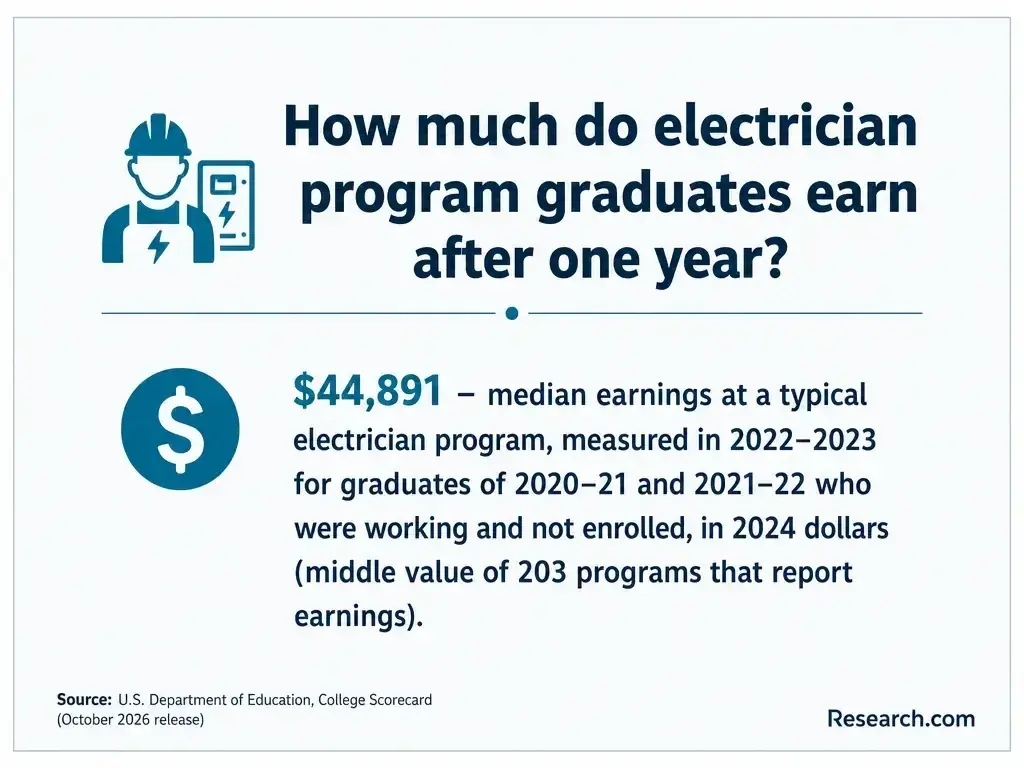
The national median annual wage for electricians was $63,190 in May 2025, according to the U.S. Bureau of Labor Statistics. This describes employed electricians across experience levels and locations - not the likely first-year earnings of a trainee in Carson City. Apprentice pay commonly changes as training progresses, while qualified workers' pay depends on employer, duties, experience, and the available work.
For a realistic local comparison, request the current wage schedule from each apprenticeship sponsor or employer and ask when raises occur. Compare expected take-home pay with commuting costs and any unpaid class time. Do not use the national median as a promised return when deciding how much to borrow.
A short introductory course may take much less time than a college credential, while a registered apprenticeship combines related instruction with supervised work over multiple years. The relevant timeline is not just "time until graduation": it is time until you have the training and documented experience needed for your intended job. The U.S. Bureau of Labor Statistics describes electrician apprenticeships as typically lasting four or five years, but a sponsor's current standards determine its actual requirements.
Ask a provider for its published course hours, shop hours, schedule, and completion requirements. Then ask an apprenticeship sponsor whether prior coursework earns entry credit or advanced standing; never assume it does. Someone comparing fast credentials with a quickest masters degree online should keep the occupational distinction clear: electrical competence requires supervised practical work, regardless of how quickly classroom material can be completed.
Online instruction can be practical for electrical theory, calculations, code-navigation exercises, and some safety lessons. It cannot by itself demonstrate that you can install equipment, use meters safely, identify a wiring fault, or work under jobsite supervision. On-campus shops and employer worksites provide the physical practice an online-only course lacks.
A hybrid program can work well if its in-person sessions are accessible from Carson City and clearly scheduled. Ask exactly where labs take place, who evaluates practical skills, and whether the provider arranges supervised work. General lists of top online accredited colleges with waived application fee may help with a different search, but an application-fee waiver does not establish that electrical training includes the hands-on components you need.
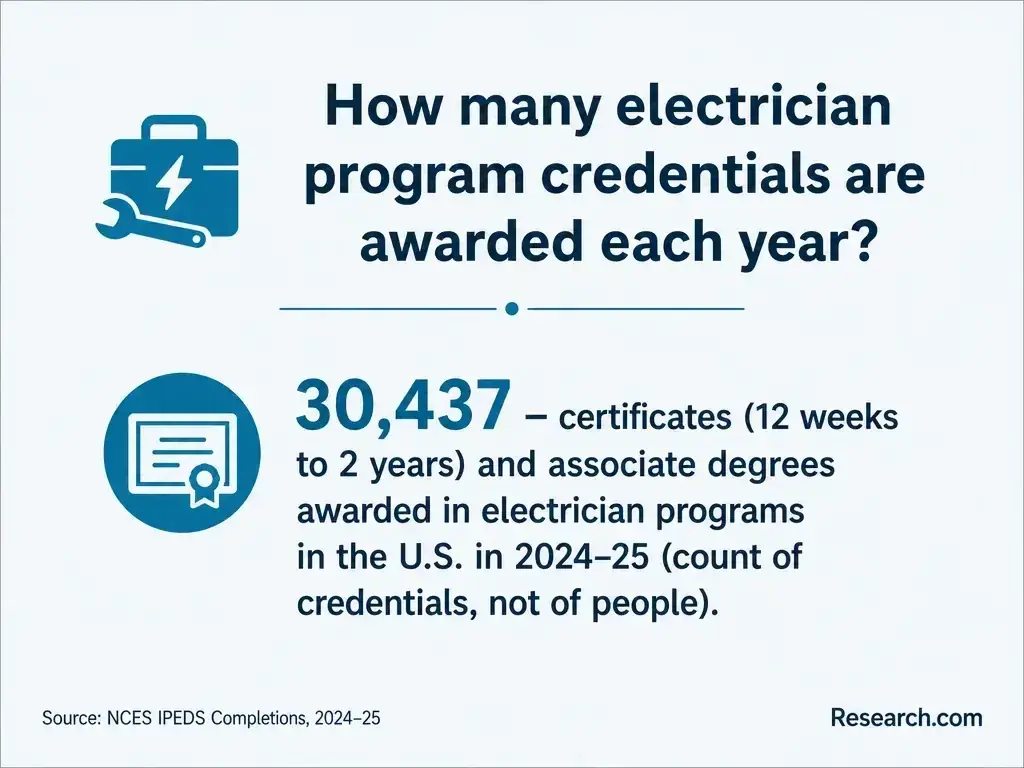
There is no reliable single Carson City "average" that fairly combines short courses, college credentials, and paid apprenticeships. They have different fee structures, lengths, and wage opportunities. Request a written, current cost estimate for your exact program and enrollment status before comparing prices.
Tuition is only part of the amount you may need to finance. The comparison below identifies costs to request from each provider; it does not imply that every charge applies to every pathway.
| Cost or offset | What to verify |
| School charges | Tuition, mandatory fees, books, and any residency-based price difference. |
| Work-ready supplies | Required tools, meter, safety gear, and replacement materials; ask what an employer supplies. |
| Career-entry expenses | Applicable examination or application charges and travel to classes or worksites. |
| Offsets and trade-offs | Eligible grants or aid, employer-paid instruction, apprentice wages, and earnings forgone while attending class. |
Federal aid depends on both the student and program meeting eligibility rules, according to Federal Student Aid; not every short course qualifies. Ask Western Nevada College or another eligible provider about aid for the specific credential, and check Nevada workforce-service eligibility if you are seeking retraining. An apprenticeship may reduce upfront education spending through paid work, but compare its wage schedule, travel, and time commitment before calling it cheaper.
The answer depends on the pathway: a provider might award a completion certificate or an associate degree, while a registered apprenticeship leads to an apprenticeship completion credential under its registered standards. An industry certificate, school award, apprenticeship credential, and government license are different documents. Ask for the exact credential name before paying a deposit.
Also ask whether coursework can transfer, count toward a later college credential, or qualify for advanced standing with a particular apprenticeship sponsor. Get any credit decision in writing from the receiving organization. Institutional accreditation concerns a school's educational oversight; it does not, on its own, establish apprenticeship credit, job readiness, or permission to perform licensed contracting.
Requirements vary by provider. A school may ask for proof of prior schooling and assess math readiness; an apprenticeship sponsor may also use an application, aptitude assessment, interview, and employer-specific hiring conditions. Physical job demands and reliable travel to changing worksites matter as much as access to a classroom. Obtain the current requirements from each provider rather than assuming that admission to a course secures an apprenticeship position.
If you are returning to training later in life, ask about evening instruction, accessible lab schedules, and recognition of relevant work experience. Advice about degrees for older adults online should not be mistaken for an electrician entry checklist: supervised practice and the sponsor's selection rules still apply.
Core instruction generally covers electrical calculations, circuits, wiring methods, reading plans, code use, testing instruments, and safe work practices. The U.S. Bureau of Labor Statistics identifies installation, inspection, testing, and repair as central electrician tasks. A useful curriculum therefore connects theory to actual assembly and fault-finding, not merely recognition of terminology.
Match electives and work assignments to your intended setting. Residential construction emphasizes different equipment and workflow from commercial installations or facility maintenance. Ask to see the tool list and a description of assessed lab tasks, then check whether training covers the equipment local employers say they use. A provider that cannot explain its practical assessment is a poor choice even if its advertised tuition is low.
School completion alone is not a license to operate an electrical contracting business. The Nevada State Contractors Board regulates electrical contracting through its contractor-license classifications, including C-2 electrical. Contractor licensing concerns the business and its qualifying requirements; it should not be confused with a school certificate or registered-apprenticeship completion.
Requirements for an individual's work on a particular project can also involve employer supervision, applicable local rules, and permits. Before selecting training, check the Nevada State Contractors Board's current contractor requirements if self-employment is your goal, and ask the Carson City building authority and prospective employers what individual documentation they require for the work you intend to perform. Confirm apprenticeship registration with the sponsor. Do not assume an optional industry certification replaces any applicable government requirement.
Start with the job you want, then work backward to the training and experience it requires. An inexpensive introductory certificate may be a good first step if you need fundamentals; it is a poor investment if you expect it to replace a full apprenticeship. Conversely, a longer college program may not be necessary if you can enter a registered apprenticeship that supplies the instruction you need.
Use these checks before committing money or leaving a job:
A sound return-on-investment comparison also considers your starting earnings, likelihood of finishing, possible debt, expected post-training pay, and how long you expect to work in the trade. Do not choose on ranking position alone. Even if you are also exploring 1 year master programs online, their timelines and outcomes are not substitutes for evaluating the supervised experience an electrician pathway provides.
Early roles may involve assisting experienced electricians or entering an apprenticeship. With documented experience and stronger troubleshooting skills, workers may pursue more independent installation, service, maintenance, or supervisory responsibilities. Business ownership is a separate step that requires attention to Nevada contractor licensing, not simply additional classroom study.
Choose training that fits the first role you can realistically obtain. A program focused on basic wiring may help with entry-level construction work, while an interest in industrial controls or complex maintenance calls for relevant equipment practice and employer experience. Ask potential employers which skills they expect at entry and which they teach on the job.
The U.S. Bureau of Labor Statistics projects 9.2% growth in U.S. electrician employment from 2025 to 2035. That national projection supports investigating the trade, but it does not predict the number of openings in Carson City or guarantee a position after training.
For a local decision, compare current vacancies and apprenticeship intake with your willingness to travel beyond the city. Ask sponsors how often they accept new trainees and where apprentices are assigned. A program becomes a stronger investment when its schedule, practical instruction, and employer connections fit the work you can actually reach.
Investing in training is an important decision, so Research.com evaluates programs against others in the same occupation and location rather than treating every trade program as a comparable option. For this most-affordable ranking, only programs with completions reported to IPEDS are eligible. The score uses tuition, cost of attendance, median student debt, and federal loan default rate; an entropy-based method assigns more weight to measures that differ more across eligible programs. Accreditation and other quality indicators do not contribute to the affordability score.
The Research.com team uses the following sources to check program records and supporting information. Some cover provider types or occupations beyond electrician training; their inclusion does not mean every source supplies a scored measure for every school.
This approach helps readers compare reported education costs, but it does not rank every route into the trade. Registered apprenticeships, employer training, and providers without IPEDS-reported completions may be viable even if absent from the ranking. Use the results as a shortlist, then confirm current prices, hands-on training, and Nevada work requirements directly with each provider. More detail about the ranking approach is available in Research.com's methodology.
# 1 position
# 2 position
Electrician
Delivery mode: On Campus (May Include Online Courses)
74.69
/ 100
Final score
Accreditation
Institutional accreditation from Northwest Commission on Colleges and Universities.
Western Nevada College earned a Research.com Affordability Score of 74.69/100, with $4,445 annual in-state tuition among the verified supporting factors.
Not necessarily. A registered apprenticeship combines related instruction with paid, supervised work and can be a direct training route. A school program may help you prepare for entry, but ask sponsors whether it offers any credit toward their requirements.
It may lower upfront costs because apprentices earn wages, but compare instruction charges, tools, travel, and time to completion. A school program may be worthwhile if it helps you qualify for a position you could not otherwise access.
Online coursework can teach theory, but it does not replace practical wiring, testing, and supervised work. Confirm how and where a program assesses those skills before enrolling.
No. Nevada State Contractors Board requirements for electrical contractors are separate from school credentials. Check the board's current rules before planning for self-employment.
Ask for its total cost, exact credential, hands-on training requirements, and any documented connection to apprenticeships or employers. Those answers show whether a low advertised price leads toward your intended job.