
# 1 position
Most Affordable Electrical Technician Schools & Training in Phoenix for 2027
Audited and Verified:
Our Editorial and Data Verification Process
Research.com uses government datasets, official education statistics and primary institutional information to support its career and degree guides. Our review process checks factual accuracy, occupational definitions, source dates and the requirements associated with the credentials discussed.
How This Article Was Fact-Checked
Our editorial team verifies salary estimates, employment projections, education requirements and program information against original data providers and official organizations. Salary figures are checked against the relevant occupational definitions and reporting periods. Information about licensure, accreditation and required in-person training is reviewed separately.
Fact-checked and verified on:

Co-Founder and Chief Data Scientist

Reviewed by Karolina Broda
Fact-Checker and Data Verification
Choosing the cheapest electrician program can be expensive if it leaves you without the hands-on experience employers expect. The Research.com team of data scientists created the Most Affordable Electrician Trade Schools in Phoenix for 2027 ranking to help students make an informed choice about which programs are worth considering. The decision matters: U.S. Bureau of Labor Statistics projections show electrician employment growing 9.2% nationally from 2025 to 2035. This guide helps you compare costs, credentials, apprenticeships, and Arizona's rules before you enroll.
Key findings about electrician degrees in Phoenix
- There is no single verified Phoenix-wide average price for electrician training. Compare each program's full job-ready cost - including fees, tools, and travel - with the wages available through a paid apprenticeship.
- Electricians had a $63,190 national median annual wage in May 2025, according to the U.S. Bureau of Labor Statistics. That is not a Phoenix starting wage or a promised outcome for a new trainee.
- Arizona does not issue a general statewide journeyman electrician license to individual employees; electrical contracting is regulated separately by the Arizona Registrar of Contractors. A school certificate alone does not authorize someone to operate an electrical contracting business.
Table of Contents
- Most Affordable Electrical Technician Schools & Training in Phoenix for 2027
- What can I expect from an electrician trade school program in Phoenix?
- Where can I work with an electrician trade school training in Phoenix?
What can I expect from an electrician trade school program in Phoenix?
Expect a mix of electrical theory, safety, code interpretation, and supervised practice. A useful program lets you apply what you learn: identifying circuits, using test instruments, reading plans, installing raceways, and troubleshooting faults. Ask how much scheduled time takes place in a lab or shop, not just how many total course hours appear in the catalog.
The right route depends on whether you need an introduction before seeking work or want to earn wages while developing occupational experience. These pathways are not interchangeable merely because each teaches electrical fundamentals.
| Pathway | Credential or outcome | Best fit and main trade-off |
| Short trade-school or community-college program | Certificate or diploma, depending on provider | Can provide structured entry-level preparation; verify its lab time and employer connections before paying. |
| Community-college associate program | Associate degree where offered | May suit someone seeking broader technical coursework; typically requires a larger time commitment than a short certificate. |
| Registered apprenticeship | Paid, supervised work plus related instruction and an apprenticeship completion credential | Builds work experience while earning; entry, schedules, and available openings depend on the sponsor. |
| Direct employer entry | Employer training and work experience; no automatic school credential | Can reduce upfront school spending if an employer provides substantial supervision and a clear progression plan. |
A short school program makes the most sense if its practical training and placement support help you enter a supervised electrical role. If you already have an apprenticeship offer, compare the school's added cost and time with the instruction the sponsor will provide. Broader guides to the best college degree answer a different education question; for this decision, start with the training and experience needed for electrical work.
Where can I work with an electrician trade school training in Phoenix?
Training can lead to supervised work with electrical contractors on residential or commercial projects, or to electrical maintenance work in facilities and industrial settings. The setting changes what a new worker needs to know: construction crews emphasize installation and plan reading, while maintenance roles place greater weight on diagnosis and safe equipment servicing. Employers decide whether a school credential is sufficient for an entry-level opening or whether they want prior work experience.
Because jobsites may be spread across the Phoenix metro area, ask programs and prospective employers where labs, placements, and work assignments actually take place. Travel time and reliable transportation can change the real cost of an otherwise affordable program. If you are comparing electrical training with good majors in college that pay well, do not use an established electrician's wage as the expected pay for your first supervised job.
A verified Phoenix-specific wage figure is not established here, so the appropriate benchmark is the $63,190 U.S. median annual wage for electricians in May 2025, reported by the U.S. Bureau of Labor Statistics (BLS). A median describes employed workers across experience levels; it is not a typical offer to someone just leaving school. Before borrowing for training, check current Phoenix-area electrician and apprentice wage listings from the BLS or Arizona labor-market agency, then compare them with actual entry-level offers.
Pay also depends on whether you are an apprentice, a more experienced electrician, a maintenance worker, or a contractor running a business. For an investment calculation, use your likely starting pay and expected progression - not the national median alone - and account for taxes, training costs, and any wages you would give up while studying.
There is no single required length for a Phoenix electrician school program. A short certificate, a longer diploma or associate program, and a registered apprenticeship have different purposes and schedules. Apprenticeship is generally a multiyear combination of paid, supervised work and related instruction; the sponsor's approved standards determine its actual hours and completion requirements, according to Apprenticeship.gov.
When comparing advertised completion times, request the total classroom, lab, and worksite hours separately. A faster course may get you ready to apply for a helper position sooner, but it cannot replace substantial supervised work experience. Working adults may also need to compare evening schedules with the time required to travel to labs and jobsites. Lists of the cheapest online universities for job holders are not a substitute for checking an electrician program's in-person schedule.
Online instruction can work for electrical calculations, terminology, and some code study. It cannot, by itself, demonstrate that you can safely use meters, make connections, install equipment, or troubleshoot a live-work scenario under appropriate supervision. An on-campus or hybrid program should provide accessible shop or lab sessions; an apprenticeship adds supervised practice at employer worksites.
Ask a hybrid provider where and when practical assessments happen, whether you must arrange a local placement, and who supervises it. A course marketed as fully online may be useful preparation, but do not assume it supplies the experience an employer or apprenticeship sponsor expects. Searches for what is the easiest bachelor's degree to get online address a different kind of study; convenience alone is a poor test of electrical job readiness.
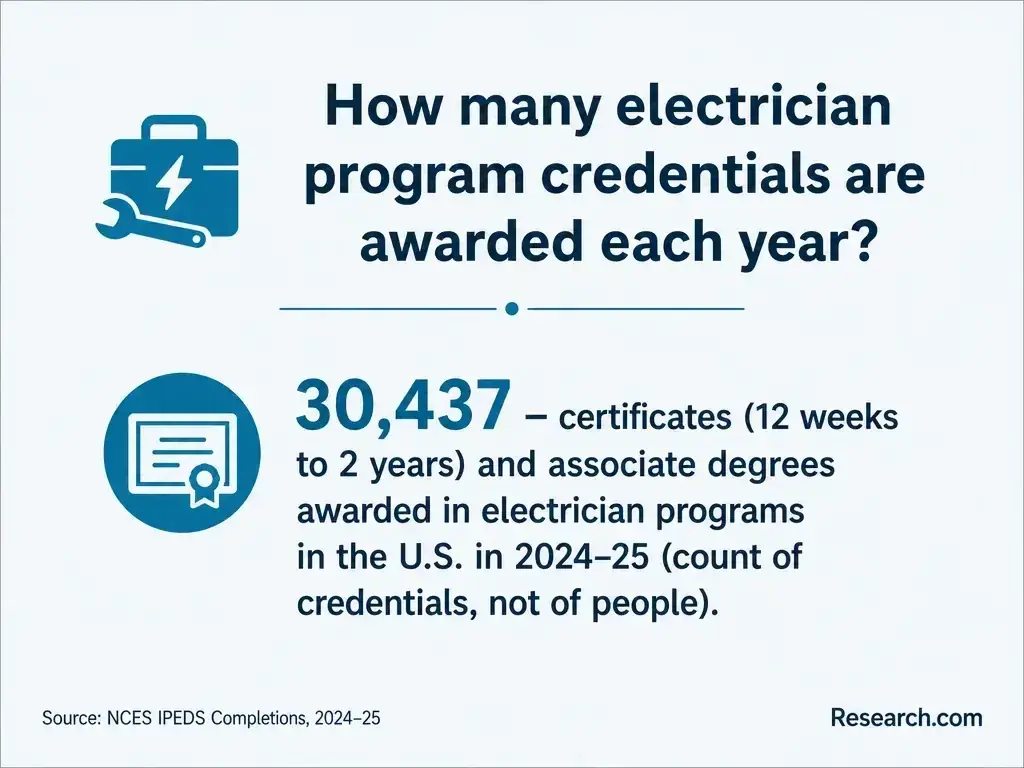
There is no defensible single average for all Phoenix electrician pathways: providers report different program lengths and charges, and paid apprenticeships do not have the same cost structure as tuition-based schools. A ranking's cost measures help narrow choices, but they may not capture everything you must spend to become job-ready.
For each option, request an itemized, current quote covering tuition, required fees, books or software, tools, safety equipment, consumable materials, and any required checks or exams. Add travel to classes and worksites, plus earnings you would forgo while training. Then subtract only aid or employer-paid costs for which you actually qualify. Federal student aid eligibility depends on the school and program, according to Federal Student Aid; do not assume that every short course or apprenticeship qualifies.
Compare that net cost with the likely time until paid work and your probability of finishing. A lower sticker price can be poor value if a program offers little practice or requires an expensive second course before an employer will consider you.
The credential depends on the route: a school may award a certificate, diploma, or associate degree; a registered apprenticeship documents completion under its approved standards. Ask for the exact credential name before enrolling and whether local employers recognize it for the work you want. NCCER credentials, where a provider offers them, are industry training credentials - not Arizona occupational licenses.
Check accreditation and authorization separately. Institutional accreditation concerns the school; Arizona's applicable school authorization concerns its permission to operate; apprenticeship registration concerns the sponsor's work-and-instruction program. None automatically grants an electrical contractor license or proves that a graduate has completed another provider's experience requirements. Where relevant, ask whether prior electrical coursework or documented work can count toward the program or an apprenticeship, and get the answer in writing.
Requirements vary by provider and pathway. A school may assess reading and math readiness, while an apprenticeship sponsor may set its own application, age, education, assessment, and employment requirements. A driver's license or dependable transportation may matter for worksites even when it is not a school-admission rule. Check each provider's current criteria rather than treating a school's admission offer as an apprenticeship offer.
If you have relevant work experience, ask whether you can receive prior-learning credit or advanced standing and how it will be documented. Before accepting a place, confirm that you can attend every required lab or jobsite assignment; being admitted is useful only if the schedule lets you complete the practical training.
Core instruction commonly covers electrical safety, basic circuitry, calculations, wiring methods, blueprint reading, the electrical code, and testing. Practical work should let students handle tools and meters, assemble circuits, identify faults, and explain why an installation is safe. The U.S. Bureau of Labor Statistics identifies installation, maintenance, testing, and troubleshooting as central electrician duties, so a program consisting mostly of videos warrants closer scrutiny.
Ask to see the course outline and lab inventory, then compare them with your intended workplace. Someone seeking building-construction work needs relevant installation practice; someone targeting facility maintenance should look for substantial diagnostic work. Code instruction should identify the editions and local requirements being taught rather than suggesting one course permanently settles code knowledge.
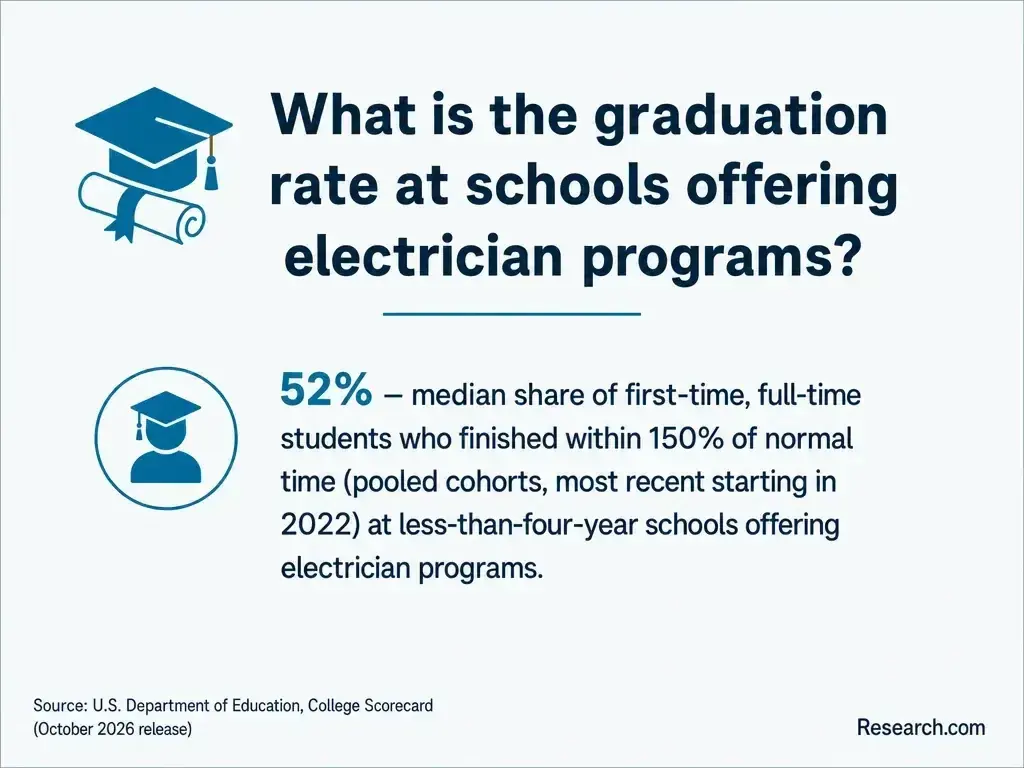
Arizona does not issue a general statewide journeyman electrician license for individual employees, according to the Arizona Registrar of Contractors (ROC). That does not mean an untrained person should perform electrical work independently. Employers must assign work consistent with applicable safety and contractor rules, and experience remains important for progression.
Operating an electrical contracting business is a separate decision. The Arizona ROC regulates contractor licensing, including electrical classifications, and sets qualifying-party, experience, examination, and application requirements. A school certificate, NCCER credential, or completed apprenticeship does not automatically confer that license. If self-employment is your goal, check the ROC's current classification and qualifying-party rules before choosing training or counting on prior experience.
Choose the option that gets you into the specific electrical work you want at a manageable net cost. A cost ranking is a useful shortlist, not a verdict on lab quality or employer access. For example, if comparing offerings from GateWay Community College, South Mountain Community College, UEI College-Phoenix, Refrigeration School Inc, or Carrington College-Phoenix North, verify the current electrician-related program, credential, campus, and schedule directly; do not assume every provider offers the same occupational route.
Take these questions to admissions staff or an apprenticeship coordinator, and request written answers where costs or credit are involved:
- What credential will I earn, and how many hours are classroom instruction, supervised lab practice, and employer work?
- What is my full required cost after confirmed aid, including tools, safety gear, fees, and travel?
- Which local employers or apprenticeship sponsors accept this training, and is placement arranged or only suggested?
- Is the school appropriately authorized and accredited, if applicable, and is any apprenticeship actually registered?
- Will my prior coursework or documented electrical experience count, and who confirms that decision?
Red flags include unclear practical hours, a tuition quote that omits required tools, claims that a certificate is an Arizona contractor license, and earnings claims based on experienced workers. Evaluate return on investment using completion likelihood, aid and debt, wages while training, likely post-training earnings, program duration, and the time over which you expect to benefit.
A common starting point is supervised helper or apprentice work, followed by increasingly complex installation, troubleshooting, or maintenance assignments as experience grows. Some workers specialize in commercial systems or facility maintenance; others move into crew supervision. Running an electrical contracting business involves Arizona ROC requirements beyond completing training.
Choose an entry program for the first role you can realistically obtain, then ask employers what further experience or credentials they value for the next role. Do not pay a premium for an advanced-sounding course if it does not improve access to the work experience you still need. Resources on the best accredited online schools with free application address a separate school-search question; an electrician pathway should be judged chiefly on practical training and entry into supervised work.
The U.S. Bureau of Labor Statistics projects 9.2% national growth in electrician employment from 2025 to 2035. That supports considering the trade, but it does not measure Phoenix openings, guarantee a job, or show which local specialization is hiring. Use current Arizona labor-market information and actual employer or apprenticeship openings to test demand before committing to a schedule or loan.
Construction work can also change with project timing. A pathway that develops transferable safety, installation, and troubleshooting skills may leave you with more options than one built around a narrow task. Ask a prospective program how it helps students obtain their first supervised position - not just whether it reports general industry demand.
Most Affordable Electrical Technician Schools & Training in Phoenix for 2027
Investing in electrician training is a consequential decision. Research.com created its affordability ranking to help readers compare programs against other electrician programs in the same location, rather than against unrelated trades or schools elsewhere. Only programs with completions reported to the Integrated Postsecondary Education Data System (IPEDS) are eligible; that means the ranking does not cover every apprenticeship, employer training program, or trade-school option.
The most affordable ranking scores costs and debt: tuition, cost of attendance, median student debt, and federal loan default rate. Its weights use an entropy-based method, under which measures that vary more among programs receive more weight. Accreditation and other quality measures are not part of this affordability score. Readers should therefore check training quality, practical experience, and fit separately. Research.com's distinct best programs rankings also consider student outcomes, earnings, and quality; they should not be mistaken for this cost-focused ranking.
To assemble and check ranking information, the team uses the following sources. Some cover multiple occupations and are not electrician-specific endorsements:
- IPEDS database - program completions and institutional education data.
- National Center for Education Statistics - federal education data and definitions.
- College Scorecard database - available cost, debt, and outcome measures.
- Peterson's database - supplemental institution and program information.
- Commission on Accreditation of Allied Health Education Programs (CAAHEP) - accreditation information for relevant programs in the broader ranking system.
- Accrediting Bureau of Health Education Schools (ABHES) - accreditation information for relevant programs in the broader ranking system.
- Commission on Dental Accreditation (CODA) - accreditation information for relevant programs in the broader ranking system.
- Dental Assisting National Board (DANB) - occupation-specific credential information in the broader ranking system.
- National Center for Construction Education and Research (NCCER) - construction-training and credential information.
- Apprenticeship.gov Partner Finder - information on apprenticeship partners and alternatives.
These sources help make the ranking a starting point for a credible cost comparison, not a substitute for a current written quote or confirmation of field-training opportunities. See Research.com's methodology for more information about how rankings are created.
# 2 position
GateWay Community College - Electrician.
certificate or diploma# 3 position
South Mountain Community College - Electrician.
certificate or diploma# 4 position
UEI College-Phoenix - Electrician.
certificate or diploma
# 5 position
Refrigeration School Inc - Electrician.
certificate or diploma
# 6 position
Carrington College-Phoenix North - Electrician.
certificate or diploma
Frequently asked questions about electrician programs in Phoenix
Is electrician trade school worth it if I can apply for an apprenticeship?
It can be if you need structured preparation and the program has substantial labs or a credible route to employers. If you can enter a paid apprenticeship directly, compare its instruction and wages with the school's net cost before paying for overlapping training.
What is the cheapest way to start electrician training in Phoenix?
Compare paid apprenticeships and supervised employer-entry roles with the full net cost of school programs. The lowest tuition is not necessarily the lowest cost once tools, transportation, aid, and forgone wages are included.
Can I become an electrician through an entirely online course?
Online study can teach theory and code concepts, but electrical work requires supervised practical competence. Check where you will complete hands-on training and how an employer or apprenticeship sponsor will recognize it.
Does an electrician certificate give me an Arizona license?
No. Arizona does not issue a general statewide journeyman license to individual employees, and a certificate does not grant an Arizona ROC electrical contractor license. Check the ROC's current rules if you intend to operate a contracting business.
What should I ask before enrolling in a Phoenix program?
Request the exact credential, separate classroom and hands-on hours, an itemized total cost, current schedule and lab location, and evidence of connections to supervised work. Confirm authorization, accreditation, or apprenticeship registration where applicable.
- U.S. Bureau of Labor Statistics - Electricians
Used to verify salary, employment outlook, and typical education requirements.
https://www.bls.gov/ooh/construction-and-extraction/electricians.htm - Apprenticeship.gov - Partner Finder
Used to verify programmatic accreditation or industry recognition of programs.
https://www.apprenticeship.gov/partner-finder - O*NET OnLine - Electricians
Used to verify common responsibilities, skills, work settings, and education expectations.
https://www.onetonline.org/link/summary/47-2111.00 - GateWay Community College - official website
Official school website (programs, tuition, admissions).
https://www.gatewaycc.edu/ - South Mountain Community College - official website
Official school website (programs, tuition, admissions).
https://www.southmountaincc.edu/ - UEI College-Phoenix - official website
Official school website (programs, tuition, admissions).
https://www.uei.edu/ - Refrigeration School Inc - official website
Official school website (programs, tuition, admissions).
https://www.rsi.edu/ - Carrington College-Phoenix North - official website
Official school website (programs, tuition, admissions).
https://carrington.edu/