# 1 position
Mineral Area College - Electrician.
associate

Audited and Verified:
Our Editorial and Data Verification Process
Research.com uses government datasets, official education statistics and primary institutional information to support its career and degree guides. Our review process checks factual accuracy, occupational definitions, source dates and the requirements associated with the credentials discussed.
How This Article Was Fact-Checked
Our editorial team verifies salary estimates, employment projections, education requirements and program information against original data providers and official organizations. Salary figures are checked against the relevant occupational definitions and reporting periods. Information about licensure, accreditation and required in-person training is reviewed separately.
Fact-checked and verified on:

Co-Founder and Chief Data Scientist

Reviewed by Karolina Broda
Fact-Checker and Data Verification
Choosing electrician training in Park Hills means deciding not just where to study, but how to gain supervised jobsite experience. The U.S. Bureau of Labor Statistics projects 9.2% national growth in electrician employment from 2025 to 2035, making that choice timely. For prospective students and career changers, this guide compares credentials, apprenticeships, costs, and Missouri licensing considerations. It also accompanies the Best Electrician Trade Schools in Park Hills for 2027 ranking, created by the Research.com team of data scientists to help students make an informed choice about programs worth considering.
Expect a mix of electrical theory and physical practice: interpreting plans, selecting wire and equipment, installing circuits, using test instruments, and following safety procedures. A Park Hills resident can ask Mineral Area College which electrical training options are currently offered and whether they lead to a certificate or associate degree. Confirm the current catalog and schedule rather than assuming every electrical course is part of an entry-level electrician program.
The central choice is whether to begin in a school lab or on a paid worksite. This comparison describes pathways, not interchangeable credentials; specific hours and awards depend on the provider or registered apprenticeship sponsor.
| Pathway | Training and credential | Best fit and limitation |
| Pre-apprenticeship or short certificate | Introductory safety, tools, and electrical skills; a completion credential may be awarded. | Useful for testing the trade or strengthening an apprenticeship application; usually not a substitute for full apprenticeship experience. |
| College certificate or associate degree | Structured classes and labs; the award depends on the specific program. | Fits students seeking scheduled instruction; ask whether employers or apprenticeship sponsors credit the coursework. |
| Registered apprenticeship | Paid, supervised work plus related instruction; a completion credential follows successful training. | Fits applicants ready for a longer work-based route; admission and available placements may be competitive. |
| Employer-sponsored entry | Worksite training that varies by employer. | Can provide an immediate start; verify whether training is structured, documented, and accepted toward advancement. |
For this occupation, a search for easiest college majors is less useful than asking how much supervised wiring and troubleshooting practice a program actually provides.
Electrical training can lead toward work with residential and commercial contractors, industrial maintenance teams, construction employers, and facilities operations. The U.S. Bureau of Labor Statistics describes electricians as installing, maintaining, and repairing electrical power, communications, lighting, and control systems. Those settings call for different strengths: new construction emphasizes installation and plan reading, while maintenance places more weight on diagnosis and safe repair.
Park Hills is not the whole hiring market. A student should ask each training provider where its recent work placements occurred and whether reaching those jobs requires regular travel. A longer commute can change the value of a low-cost program, particularly when an apprenticeship combines classroom attendance with changing worksites.
The U.S. Bureau of Labor Statistics reports a $63,190 national median annual wage for electricians in May 2025. That is the midpoint for employed electricians across experience levels, not a Park Hills starting offer or an apprentice wage. Treat it as a career benchmark; compare actual local postings or apprenticeship wage schedules before budgeting around expected pay.
For a useful offer comparison, ask about the starting hourly rate, scheduled hours, raises tied to training progression, overtime rules, benefits, and travel between sites. An entry-level position with documented supervision and wage progression may be more valuable than a higher initial rate with no clear route to greater responsibility.
The timeline depends on the endpoint. An introductory course or pre-apprenticeship can establish basic skills sooner than a full college credential, but it generally does not provide the sustained supervised work needed to become an experienced electrician. The U.S. Bureau of Labor Statistics describes electrician apprenticeships as typically lasting four to five years, combining paid on-the-job training with technical instruction.
Ask for two timelines: time to finish the school credential and time to reach the work-experience milestone required by the employer or licensing jurisdiction. If you are considering part-time classes, also ask whether every required lab is offered often enough to avoid delaying completion. Never assume that school contact hours automatically count as apprenticeship hours; get any advanced-standing decision from the sponsor in writing.
Online study can suit code concepts, electrical calculations, and some blueprint instruction. It cannot by itself demonstrate safe tool use, wiring installation, testing, or supervised work in the field. An on-campus or hybrid program should specify when students attend labs, who assesses practical skills, and whether a worksite placement is arranged or left to the student.
A general list of accredited colleges online that waive application fees does not establish that an electrician program supplies local lab access or qualifying practical experience. Before choosing a remote option from Park Hills, obtain its lab location, attendance requirements, equipment list, and apprenticeship-credit policy. Institutional accreditation and hands-on competency answer different questions.
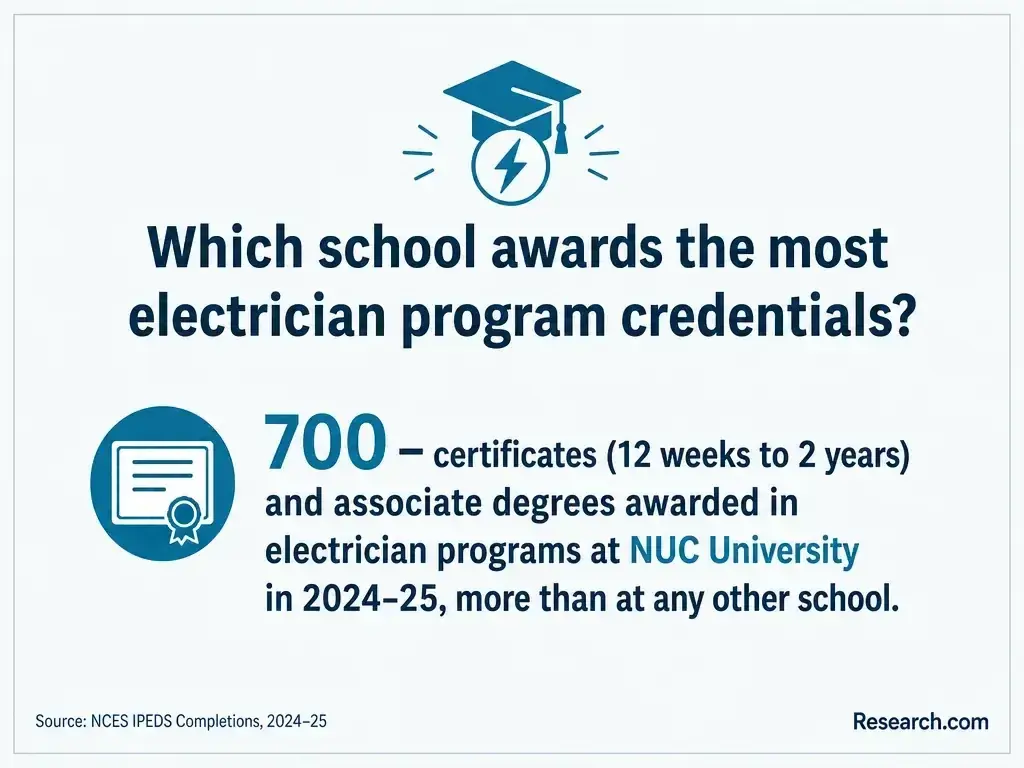
There is no defensible Park Hills-wide average that covers college programs, short courses, employer training, and paid apprenticeships on the same basis. Request a current, itemized quote from each provider. The amount needed to become job-ready - not advertised tuition alone - is the meaningful comparison.
These expenses and offsets can change which route is affordable, especially if training requires travel to classes and worksites:
Federal Student Aid eligibility depends on the institution and program, not merely on its trade-school label. Ask Mineral Area College about aid for the specific credential, and ask apprenticeship sponsors what instruction and equipment they cover. To judge return on investment, compare likely completion, debt, baseline earnings, expected wage progression, training time, and the value of income received while learning - not just the first year's tuition.
The award may be a course-completion document, certificate, diploma, or associate degree, depending on the program. A registered apprenticeship has its own completion credential. These labels do not establish identical lab skills, employer recognition, apprenticeship standing, or legal authority to perform regulated work.
Ask to see the exact credential name and a skills-and-hours transcript. Then ask the intended apprenticeship sponsor whether it recognizes that training for advanced standing. Industry credentials, including those associated with the National Center for Construction Education and Research where offered, may document competencies, but they do not replace a required local license. Lists of certification that pay well are no substitute for checking what the electrical employers you hope to join actually accept.
Requirements differ by route. A college or career-school program may assess readiness for technical math and require enrollment documents; an apprenticeship sponsor may also use an application process, aptitude assessment, interview, and eligibility requirements for worksite placement. The provider's current admissions rules - not a national description - control.
Before applying, ask whether you need a diploma or equivalent, specific math preparation, a driver's license for traveling to jobsites, or employer-required screening. Also ask whether prior electrical coursework or verified work experience can reduce repeated instruction. A promise of advanced standing is useful only when the receiving program or sponsor confirms the credit and its effect on the training timeline.
A sound entry-level curriculum connects electrical calculations and circuit behavior to safe installation: reading drawings, choosing materials, bending or installing raceway where taught, making connections, and testing circuits. Students should also practice identifying hazards, de-energizing equipment, and applying the electrical code relevant to their work. The U.S. Bureau of Labor Statistics identifies troubleshooting, critical thinking, and physical stamina as important electrician skills.
Course titles alone cannot show how capable a graduate will be. Ask for the lab syllabus, the equipment students use individually, the way practical work is assessed, and whether instruction reflects the code edition used by the relevant jurisdiction. Training that covers theory but provides little assessed hands-on practice may still be useful preparation, but it is not equivalent to substantial shop and supervised field experience.
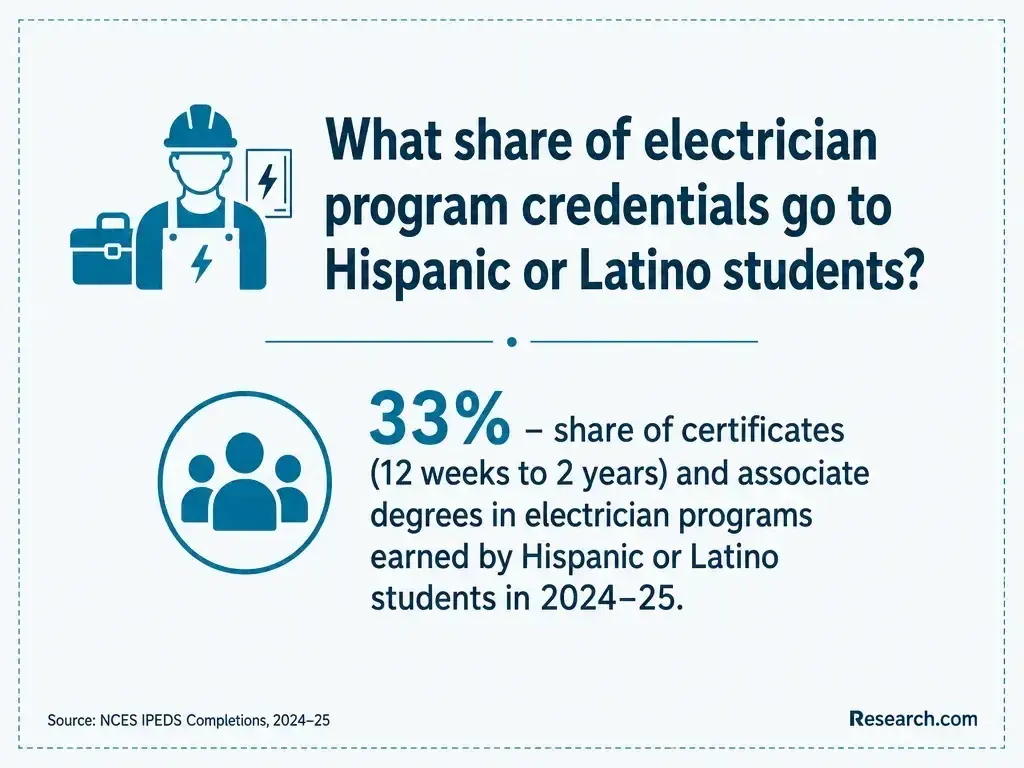
Do not assume a school certificate authorizes independent electrical work. In Missouri, electrical licensing and permitting questions can depend on the locality and the type of work; confirm the current rules with the jurisdiction where a job will be performed. For Park Hills work, begin with the city's building or permitting authority, and check other jurisdictions separately if you expect to work outside the city. The Missouri Division of Professional Registration and the relevant local authority are appropriate starting points for verifying applicable requirements.
Ask specifically whether a worker, contractor, or both need a credential; what documented supervised experience and examinations apply; and who may pull permits. Institutional accreditation addresses the school, apprenticeship registration addresses the training arrangement, and an industry certificate documents particular skills. None should be mistaken for occupational licensure or permission to contract independently. If you may work across jurisdictional boundaries, verify portability before paying for a program marketed as "license-ready."
Start with the work you want to do, then compare programs on evidence that connects training to that job. Mineral Area College is a local provider to investigate; a registered apprenticeship or employer route may be a better investment if you can secure paid, structured training sooner. A search for what are the highest paying bachelor degrees will not resolve that trade-specific choice.
Use these checks before enrolling or accepting a training offer:
Be wary of a program that advertises "licensed electrician" status upon graduation without identifying the jurisdiction, experience rules, and examination involved. The best option is the one that offers a credible path from its particular training to the supervised work and eligibility your intended job requires.
Entry-level training can lead to an apprentice or supervised electrical-helper role, followed by broader installation or maintenance responsibilities as experience grows. With the experience and permissions required in the jurisdiction of work, an electrician may pursue supervisory, estimating, or contracting responsibilities. Specialization in industrial controls, service troubleshooting, or other systems can change the skills an employer expects; it is not automatically conferred by a general entry credential.
For someone comparing certifications that pay well without a degree, electrician work is a reminder that a short credential and readiness for independent work are different milestones. Choose introductory training if it helps you enter a strong supervised pathway; choose a longer school program if its labs, credential, and recognized credit justify its extra cost and time.
Nationally, electrician employment is projected to increase 9.2% from 2025 to 2035, according to U.S. Bureau of Labor Statistics employment projections. That indicates demand across the occupation, not the number of openings in Park Hills. Construction schedules, maintenance hiring, and the availability of supervised positions can shape when a new entrant finds work locally.
Use the national projection as a reason to investigate, not a guarantee. Ask prospective sponsors about their current intake and where apprentices work, then compare local job advertisements for the skills and experience requested. If nearby opportunities require regular travel, include that cost and time in your program decision.
Investing in training is a consequential decision. Research.com created its ranking to help readers compare electrician programs against other programs serving the same occupation and location, rather than against unrelated schools. The team checks outcomes, costs, recognition, and student support; nevertheless, rankings are a starting point, not a substitute for confirming current program details.
Only programs with completions reported to IPEDS are eligible for this ranking. Best-program scores consider student completion and full- and part-time retention; median earnings one year after completion and earnings relative to annual attendance cost; tuition, attendance cost, debt - including debt held by students who withdrew - and federal loan default rates; and institutional accreditation, relevant program recognition, and student support. Occupation-relevant programmatic accreditation or industry recognition carries 20% of the score, institutional accreditation 10%, and student support 10%. Outcomes, earnings, and costs account for the remaining 60%, with weights distributed through an entropy-based method that gives more weight to indicators that differ more across programs.
The separate most-affordable-programs approach scores only tuition, attendance cost, median debt, and federal loan default rates using entropy-based weights; accreditation and other quality measures are not part of that affordability score. These sources inform Research.com's trade-program ranking work; occupation-specific recognition sources are applied only where relevant, not treated as electrician accrediting bodies:
IPEDS and college-oriented outcomes databases do not cover every union, employer, or apprenticeship training route. An unranked provider is not necessarily unapproved or unsuitable. Readers can find further detail on the scoring approach in Research.com's methodology.
# 1 position
# 2 position
Not necessarily. A registered apprenticeship combines related instruction with paid supervised work. Prior schooling may help an application or qualify for credit, but the sponsor decides whether to recognize it (U.S. Department of Labor, Apprenticeship.gov).
Online lessons can teach theory, but electrician work requires practical competence and supervised experience. Confirm where labs and work-based training occur before enrolling.
No. A school credential and permission to perform or contract for electrical work are separate. Check the current requirements with the jurisdiction where you plan to work.
It may reduce tuition costs and provide wages during training, but compare tools, travel, instructional charges, benefits, and time to progression. School aid or recognized prior credit can also change the calculation.
Ask which electrical credentials and labs are currently offered, their complete costs and schedules, and whether apprenticeship sponsors recognize any coursework for advanced standing.