# 1 position


Audited and Verified:
Our Editorial and Data Verification Process
Research.com uses government datasets, official education statistics and primary institutional information to support its career and degree guides. Our review process checks factual accuracy, occupational definitions, source dates and the requirements associated with the credentials discussed.
How This Article Was Fact-Checked
Our editorial team verifies salary estimates, employment projections, education requirements and program information against original data providers and official organizations. Salary figures are checked against the relevant occupational definitions and reporting periods. Information about licensure, accreditation and required in-person training is reviewed separately.
Fact-checked and verified on:

Co-Founder and Chief Data Scientist

Reviewed by Karolina Broda
Fact-Checker and Data Verification
Choosing dental assistant training near Oglesby means weighing more than tuition: you need a practical route into a dental office that fits your budget and Illinois rules. The U.S. Bureau of Labor Statistics projects 7.4% national employment growth for dental assistants from 2025 to 2035, making training decisions timely. This guide explains costs, credentials, hands-on experience, and career prospects. It also accompanies the Most Affordable Dental Assistant Trade Schools in Oglesby for 2027 ranking, created by the Research.com team of data scientists to help students identify programs worth considering.
Expect training for chairside support: preparing rooms and instruments, assisting during procedures, following infection-control protocols, communicating with patients, and maintaining records. A credible program should pair classroom instruction with supervised practice using dental equipment; a credential title alone does not show how much time students spend performing those tasks. The U.S. Bureau of Labor Statistics identifies clinical and administrative work as core dental assistant duties.
Near Oglesby, compare any available certificate or diploma with instruction provided by a hiring dental practice. Illinois Valley Community College is a local public-college starting point for asking about current dental-assisting offerings, schedules, and referrals, but confirm that the specific program and intake you want are actually available. Formal training can provide structured practice and a defined credential; employer training may let you earn sooner but depends on the practice's capacity to teach. Neither route should be confused with dental hygienist training, which prepares workers for a different occupation.
Dental offices are the principal employment setting for dental assistants nationally, according to the U.S. Bureau of Labor Statistics. For an Oglesby resident, the practical job market includes practices within a manageable commute, not just openings inside city limits. Compare the location of a program's clinical placement with the offices where you could realistically accept a job; travel time can affect both completion and earnings.
General dentistry is a common entry point, while specialty practices may seek additional familiarity with particular procedures and instruments. Ask prospective employers which chairside duties they teach new hires and which skills they expect on day one. That answer may tell you more about the value of a longer program than its credential name does.
A reliable Oglesby-specific dental assistant wage estimate is not available here. For context, the U.S. Bureau of Labor Statistics reports a $48,070 national median annual wage for dental assistants in May 2025. A median describes the occupation's workforce, not what a newly trained assistant will earn in an Oglesby-area practice.
Request pay ranges for entry-level openings within your commuting area and compare them with your current earnings. When judging a program's return, include its duration, aid, debt, chance of completion, time away from work, and the earnings difference you could reasonably expect over several years. Neither a national median nor a school ranking establishes your personal return.
Length depends on the credential and schedule: a short certificate, a longer diploma, an associate-degree program, and practice-based training are not interchangeable. There is no single statewide classroom-hour requirement for entering every basic dental assistant job in Illinois; preparation for particular duties or certification can involve additional conditions (Illinois Department of Financial and Professional Regulation; Dental Assisting National Board).
Ask each provider for the actual calendar length, total contact hours, supervised clinical hours, and whether students must arrange their own placement. A compressed schedule can shorten time away from full-time work only if you can attend its labs and clinical shifts. If you are comparing a longer associate-degree route, an accelerated associate degree is not automatically a shortcut to dental assistant clinical competence; confirm the program's occupation-specific practice requirements.
Online coursework can cover terminology, records, and some theory. Instrument handling, chairside assistance, infection-control technique, and supervised patient-facing work require an appropriate in-person setting. A hybrid program may reduce trips for lectures, but its lab and clinical locations matter especially if you commute from Oglesby.
Before enrolling, get the in-person schedule and placement policy in writing. An "online" label does not establish eligibility for Dental Assisting National Board certification or authorize particular Illinois duties; check those requirements independently. An online college open enrollment policy concerns access to admission, not whether a dental assistant program supplies required hands-on training.
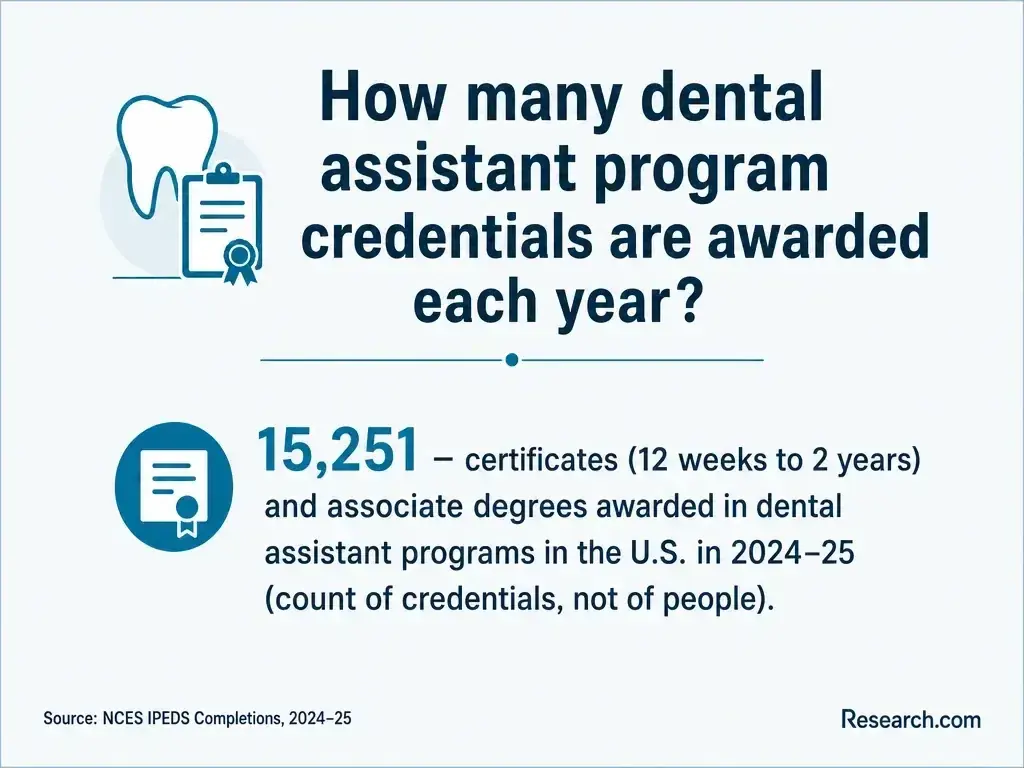
There is no verified Oglesby-wide average for dental assistant training, and a single advertised price would be a poor substitute. Ask for a written cost of attendance specific to your schedule and residency status. Compare tuition with mandatory fees, books, uniforms and protective equipment, required health or background checks, certification exams, and travel to labs or clinical sites. Add the wages you would give up if the schedule reduces your working hours.
Illinois Valley Community College can provide current prices for any relevant offering it has; do not assume an older listing is still available or priced the same way. Ask the provider whether the specific program qualifies for federal aid, Illinois assistance, workforce funding, or scholarships. Federal Student Aid eligibility depends on the student, institution, and program - not on the school being called a trade school. Paid employer training can lower upfront cost, but compare its supervision and skills coverage before choosing it solely on price.
A training provider may award a certificate, diploma, or associate degree; the precise award depends on the program. That school credential is distinct from the Dental Assisting National Board's Certified Dental Assistant (CDA) certification, which has its own eligibility and examination requirements. CODA programmatic accreditation, an institution's accreditation, school authorization, professional certification, and permission to perform duties under Illinois rules answer different questions; none automatically substitutes for another (CODA; DANB; Illinois Department of Financial and Professional Regulation).
Ask the school to identify the exact award, its CODA accreditation status, and the DANB eligibility route its curriculum supports. If you want a route beyond initial chairside training, compare the added time and cost with the duties you actually want to perform. General lists of quick online degrees that pay well do not establish whether a dental assistant credential includes clinical practice.
Requirements vary by provider. Request the current admissions checklist rather than assuming that a high school credential, prerequisite course, immunization record, background check, or CPR training is universally required. Ask separately what must be completed before enrollment and what is needed before clinical placement; the latter can affect your start date and total cost.
Employer-trained entry is a realistic alternative for basic duties in Illinois, but hiring requirements are set by each practice and permissible duties remain subject to Illinois rules (Illinois Department of Financial and Professional Regulation). If a school offers credit for prior learning or transferable coursework, obtain a written evaluation before paying a deposit. Prior experience should not be assumed to replace supervised practice or certification prerequisites.
Useful training connects dental anatomy and terminology to real chairside workflow: setting up a procedure, transferring instruments, maintaining a clean field, sterilizing equipment, documenting care, and communicating clearly with patients and the dental team. Programs may also teach dental materials, office systems, and radiography-related concepts. The U.S. Bureau of Labor Statistics describes both clinical and administrative tasks in the occupation.
Compare curricula by demonstrated practice, not course titles. Ask how students are assessed on infection control, how much supervised time they spend in a dental setting, and whether the program teaches duties relevant to the jobs you are seeing locally. Illinois rules govern which tasks assistants may perform and under what conditions, so coverage of a topic in class does not itself authorize a graduate to perform it at work (Illinois Department of Financial and Professional Regulation).
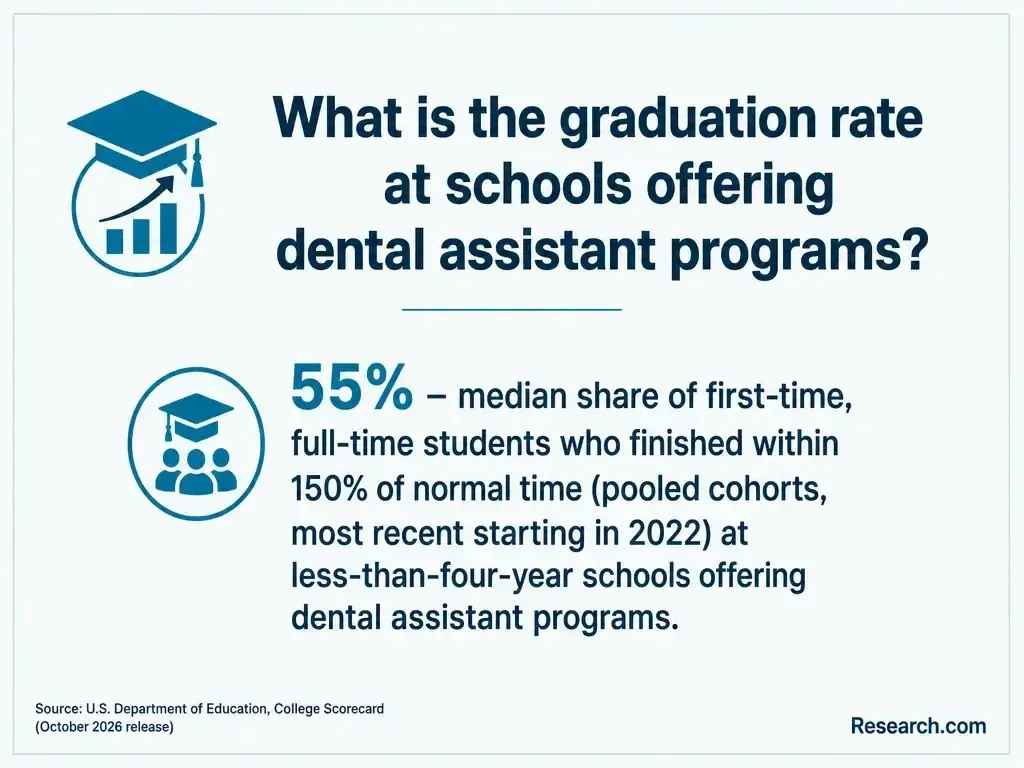
Illinois does not require a separate occupational license or CDA certification for every basic dental assistant position. It does regulate dental practice and the conditions under which assistants perform particular functions, so the answer changes with the duties an employer wants you to undertake (Illinois Department of Financial and Professional Regulation). Do not assume that rules for another state - or a school's graduation requirements - define your Illinois scope of work.
CDA is a professional certification administered by the Dental Assisting National Board, not an Illinois license. Before choosing a program for certification or expanded duties, confirm the current education, experience, examination, and any duty-specific training conditions with DANB and the Illinois Department of Financial and Professional Regulation. A school should be able to explain which requirements it addresses and which remain your responsibility.
Start with the job you want, then compare programs against that job rather than relying on affordability rank alone. For an Oglesby commuter, a low tuition quote can lose its advantage if clinical shifts require costly travel or the timetable prevents you from working. Use the same questions with each provider:
Be cautious of a provider that advertises "fully online" clinical preparation, promises certification upon graduation, or quotes tuition without required extras. Check institutional accreditation, any applicable school authorization, CODA status, and certification eligibility separately. The least expensive suitable route may be school-based training or an employer willing to teach; it is the route that gets you job-ready at a manageable total cost, not necessarily the one with the shortest brochure.
Initial training commonly points toward chairside work in a general dental practice. With experience and appropriate additional training, an assistant may seek responsibilities in a specialty practice, office coordination, or supervision. Those steps depend on employer needs and Illinois rules; CDA is an optional professional certification rather than an automatic promotion or a blanket authorization for expanded duties (Dental Assisting National Board; Illinois Department of Financial and Professional Regulation).
Choose further training for a defined next job, not merely a higher credential title. For example, an assistant interested mainly in patient care should ask which clinical skills a prospective employer values, while someone drawn to scheduling and billing should compare office responsibilities. A bachelor's degree online cheap comparison addresses a different educational investment and is not required for basic dental assistant entry.
The U.S. Bureau of Labor Statistics projects 7.4% growth in U.S. dental assistant employment from 2025 to 2035. That national projection signals continuing demand, but it does not measure openings in Oglesby or guarantee a position after training. A small-city applicant should examine vacancies across a realistic commuting area and note whether employers seek experience, certification, or particular chairside skills.
Ask programs where their recent clinical placements occurred and whether participating practices hired trainees. Then compare that evidence with current postings and your transport options. This is more useful for a local enrollment decision than applying a national growth rate directly to Oglesby.
Education is a significant investment, so the Research.com team built this ranking to help readers compare dental assistant programs with other options in the same occupation and location. Only programs with completions reported to the Integrated Postsecondary Education Data System (IPEDS) are eligible. The team draws on education, cost, debt, and occupation-specific sources to improve the ranking's credibility and accuracy.
Most affordable rankings evaluate tuition, cost of attendance, median student debt, and federal loan default rates. Weights are distributed using an entropy-based method, which gives more weight to measures that vary more across eligible programs. Accreditation and other quality indicators do not contribute to the affordability score. Readers should therefore use the ranking as a cost comparison, then separately verify practical training, credential fit, and Illinois employment requirements. More detail appears in the Research.com methodology.
The sources used to create the ranking are:
IPEDS and college-oriented datasets do not capture every career school or employer training route. An unranked option is not necessarily unavailable or inferior; compare it directly if it serves your intended role.
# 1 position
# 2 position
No. Employer training can be an entry route for basic dental assisting. A formal program may be worthwhile if you need structured clinical practice or a particular certification pathway; permitted duties remain governed by Illinois rules (Illinois Department of Financial and Professional Regulation).
Do not decide from advertised tuition alone. Obtain current all-in quotes and confirm that each option offers the practice, schedule, and credential you need. An affordability ranking covers eligible programs with IPEDS-reported completions, not every possible employer-training route.
You may be able to study some theory remotely, but chairside skills require in-person practice. Confirm the lab and clinical schedule before enrolling, especially if placements would require a commute.
No. CDA certification has separate Dental Assisting National Board eligibility and examination requirements. Ask whether your particular program supports an eligible route and what you must do afterward.
Compare total cost and lost earnings with likely entry-level pay in your commuting area, your chance of finishing, available aid, and the skills each route provides. The national occupational median is not a starting-pay promise.