
2027 Most Popular Psychology Degree Programs Ranking in Iowa

Co-Founder and Chief Data Scientist
Choosing the right psychology degree program in Iowa can feel overwhelming, but having reliable information makes all the difference.
This article presents the 2027 Most Popular Psychology Degree Programs Ranking in Iowa created by the Research.com team of data scientists to help you explore your options confidently.
By reading this guide, you'll discover which programs stand out, making it easier to find a path aligned with your goals and interests.
Pursuing a psychology degree offers rewarding opportunities to understand human behavior and make a real impact.
Key benefits of getting psychology degree in Iowa
- Strong salary potential: Graduates can expect competitive wages, such as a Marketing Research Analyst earning around $83,190 annually and a Human Resources Specialist making about $76,060. These figures reflect rewarding financial opportunities in psychology-related fields in Iowa.
- Diverse career paths: A psychology graduate from the University of Iowa can explore roles in research, counseling, or human resources, showcasing the degree's versatility. This flexibility allows you to find a job that truly fits your interests and strengths.
- Benefits of an online degree: Completing a psychology degree online from an Iowa university offers convenience and flexibility, making it easier to balance work and study. Online graduates often develop strong time-management skills, helping them succeed in today's dynamic job market.
- 2027 Most Popular Psychology Degree Programs Ranking in Iowa
- What can I expect from psychology degree in Iowa?
- Where can I work with psychology degree in Iowa?
What can I expect from psychology degree in Iowa?
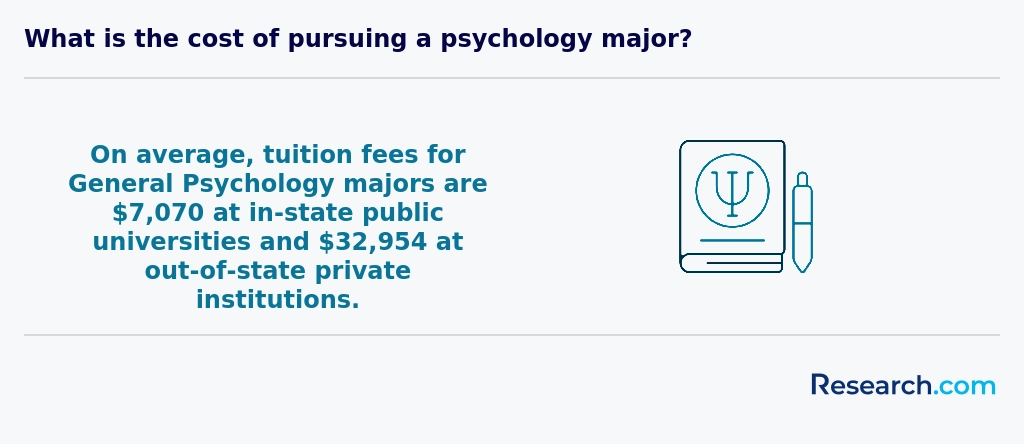
If you're eyeing a psychology degree in Iowa, the cost is something you'll want to know upfront. On average, in-state students at popular public schools like the University of Iowa or Iowa State University pay around $9,000 a year in tuition. That's pretty reasonable compared to some other states, especially when you consider the quality of programs you're getting.
Graduates often share how scholarships and financial aid made a huge difference, easing the money stress and letting them focus more on classes and research opportunities. Imagine juggling your studies in social psychology while also diving into hands-on projects that connect to real Iowa communities-all without constantly worrying about tuition fees piling up.
Plus, these schools tend to offer plenty of resources specifically for psychology students, like tutoring or special counseling scholarships, which can help keep the costs manageable. So while prices can vary a bit depending on your exact program or school, many find the investment well worth it given the career doors a psychology degree opens up here in Iowa.
Where can I work with psychology degree in Iowa?
If you're studying psychology in Iowa, you'll find plenty of places to put that degree to good use. Graduates from schools like the University of Iowa or Iowa State often jump right into healthcare jobs, becoming mental health counselors or behavioral therapists. Many of them love working in smaller towns where they really feel like they're making a difference because mental health services can be scarce there.
On the flip side, some grads land roles on campus as research assistants or student support staff, which is awesome if you're into academic life and want to stay connected to your university community. School psychology jobs are another big draw, especially in K-12 settings-they require extra licensure, but helping kids thrive can be super rewarding.
Others have found cool gigs in HR departments of companies around Des Moines or Iowa City, using their psychology know-how to improve employee happiness and teamwork. Plus, social service agencies and government programs are always looking for folks who understand human behavior to support people in crisis or guide rehabilitation efforts.
If you're wrapping up a psychology degree in Iowa, you're probably wondering how much cash you can expect to pull in. Let's get real: entry-level gigs like childcare workers or support roles usually bring in around $32,000 a year, which isn't too shabby for starting out. Graduates from places like the University of Iowa often find these roles helpful to get hands-on experience and build a solid foundation.
Moving up a bit, jobs such as clinical research associates or survey researchers, which some graduates from Iowa State University land, offer a median salary near $62,370. That's a nice step up and reflects the specialized skills you gain in those college programs.
For those who dive into fields like human resources or marketing research, both popular options for psychology grads, annual salaries hover around $76,060 to $83,190 in Iowa. Imagine working in Des Moines for a marketing research analyst job - not only is the pay competitive, but the job vibe is energizing and connected to real-world trends.
Bottom line: your salary depends on the path you choose after your Iowa psychology degree, and with the state's steady growth in mental health and research fields, there's good reason to feel optimistic about your earning potential.
- In-state tuition at Iowa public universities for psychology degrees ranges from $8,000 to $10,000 per year, while private schools often charge over $20,000 annually.
- Entry-level psychology professionals in Iowa earn around $55,000 per year, with experienced individuals making $75,000 or more.
- Iowa offers bachelor's, master's, and doctoral psychology programs focused on applied training and research opportunities.
- Licensure in Iowa requires completing an accredited degree, supervised experience, and passing licensing exams.
- Job demand in psychology-related fields, including healthcare and education, is growing due to increased mental health awareness.
In Iowa, finishing a psychology degree usually depends on which level you're going for. If you're aiming for a bachelor's degree, expect about four years if you're studying full-time, just like most students at universities like the University of Iowa or Iowa State. Many grads say the mix of general classes and psychology courses kept things interesting and manageable.
Going for a master's? That typically takes around two years. Some students at places like Drake University appreciate how flexible the programs can be, especially with options for part-time or even accelerated study if you're juggling work or family.
If you're dreaming bigger with a PhD or PsyD, get ready for a longer haul-about 5 to 7 years. This includes tough stuff like research, exams, and internships. Lots of graduates from the University of Northern Iowa remember the challenges but also how rewarding it felt to finally land that license and start their careers.
Factors like part-time study, online classes, or specific tracks also play a role in how long it'll take for you. So, whether you're on campus or taking hybrid classes, there's a way to fit your life and goals in Iowa.
One of the most valuable components of psychology degree programs in Iowa is the structured internship and practicum experience. Many universities partner with local mental health clinics, hospitals, school districts, and research labs to provide hands-on training that bridges theory and practice. For example, students at the University of Iowa can complete a semester-long practicum at the Iowa City VA Health Care System, gaining exposure to clinical assessments and group therapy sessions under faculty supervision. To enhance career readiness, programs often require completion of 300–600 internship hours, integrating fieldwork into courses such as Counseling Techniques and Psychological Assessment. This coordination allows students to apply cognitive-behavioral approaches and data-analysis skills in real-world settings, from conducting intake interviews to designing behavior-change interventions. Students seeking cost-effective practicum options can explore the Affordable Psychology Degree Programs Ranking in Hattiesburg, MS, where internships at regional community centers and telehealth services provide comparable experience at reduced expenses. By securing diverse hands-on experiences, psychology degree candidates in Iowa build robust resumes that resonate with employers in clinical, educational, and corporate environments.
If you're thinking about a psychology degree in Iowa, the big question is usually: online or on-campus? Online programs, like those at the University of Iowa, are all about flexibility. Imagine logging in after work or while juggling family stuff-lectures, assignments, and discussions all happen on your schedule. Graduates often mention how this convenience helped them stay on track without sacrificing life outside school.
On the flip side, on-campus programs at places like Iowa State University offer that classic college vibe. Picture walking into a lively classroom, chatting face-to-face with professors and classmates, or getting hands-on lab experience. Many grads say this personal interaction really boosted their learning and confidence, especially for clinical practice.
Cost-wise, in-state on-campus tuition usually runs around $9,000 to $10,500 yearly, while online might be a bit cheaper or similar but watch for extra tech fees. And regardless of the format, both paths lead to solid credentials recognized in Iowa, as long as you check on required in-person internships or supervised hours.
As prospective psychology students in Iowa navigate their educational journey, one crucial aspect to consider is the financial implications of their degree choice. Understanding the cost of attending a psychology program in Iowa is essential for making informed decisions. For those looking for affordable options, exploring the most affordable psychology schools in iowa can provide valuable insights into institutions that offer quality education at a lower cost. By considering factors such as tuition fees, living expenses, and potential financial aid, students can better plan their path to a psychology degree in Iowa. Additionally, understanding the potential return on investment, including salary expectations for psychology graduates in Iowa, can help alleviate financial concerns and highlight the value of pursuing a psychology degree in the state.
If you're thinking about getting a psychology degree in Iowa, the average cost tends to hover around $37,000 for in-state students, while out-of-state students often face nearly $50,000 or more. These numbers can feel a bit overwhelming at first, but many graduates from universities like the University of Iowa or Iowa State say that with careful planning, the investment pays off. For example, some shared how living on campus and working part-time helped balance expenses while they focused on their studies.
When it comes to psychology degree tuition and fees Iowa has a mix of options, whether you're eyeing public universities with reasonable in-state rates or private colleges where tuition is higher but often paired with more scholarships. One graduate mentioned that at a private school, the sticker price seemed steep, but the financial aid packages made it manageable, allowing them to concentrate on internships and research opportunities without added stress.
Besides tuition, don't forget to budget for books, supplies, and living costs, although Iowa generally has a lower cost of living compared to many other states. This can really help stretch your dollars further. If you want to explore schools with these expenses in mind, checking out the most affordable psychology schools in iowa is a great place to start.
After earning your psychology degree in Iowa, obtaining licensure is the next critical step to practice professionally. The Iowa Board of Psychology oversees credentialing for psychologists, licensed master’s social workers (LMSW), and licensed psychological practitioners (LPP). 1. Education and Coursework - Complete an APA-accredited doctoral program or a master’s program for LPP candidates. - For flexible scheduling and cost savings, students may consider an online psychology masters to fulfill core requirements. 2. Supervised Experience - Accrue at least 3,000 hours of supervised clinical experience (doctoral candidates) or 2,000 hours (LPP candidates) under a board-approved supervisor. - Document hours in the Board’s supervision log, including evaluations every 500 hours. 3. Examination Requirements - Pass the Examination for Professional Practice in Psychology (EPPP) with a minimum scaled score of 500. - Complete the Iowa Jurisprudence Exam to demonstrate knowledge of state laws and ethical standards. 4. Continuing Education (CE) - Renew licensure biennially and complete 30 hours of CE every two years, including at least 6 hours in ethics. - Acceptable CE sources include state-approved workshops, webinars, and professional conferences. 5. Specialty Certifications - Pursue credentialing in areas such as child psychology, neuropsychology, or health psychology through the American Board of Professional Psychology (ABPP). - Specialty certification enhances credibility and can lead to higher earning potential. By understanding each step-from accredited coursework and supervised practice to exams and CE requirements-you’ll ensure a smooth transition from graduate to licensed professional in Iowa’s dynamic psychology landscape.
Getting financial aid as a psychology student in Iowa can really lift a weight off your shoulders. For example, if you're attending the University of Iowa or Iowa State, many grads share how Pell Grants helped cover a big chunk of their tuition - that's free money based on need, up to $7,395 for the year. And if grants don't cover everything, federal student loans with low interest rates and flexible payback options are there to back you up.
State aid is also a game-changer. Students at private colleges in Iowa, like Drake University, often benefit from the Iowa Tuition Grant, which can make a huge difference in affordability. For those at public schools, programs like the Iowa Vocational-Technical Tuition Grant sometimes kick in, especially for specific programs related to psychology.
Plus, lots of psychology departments offer scholarships based on your hard work and passion - maybe you led a research project or contributed to a campus club. Work-study gigs, like assisting in counseling centers or research labs, not only help pay bills but give real-world experience, which recent grads found invaluable.
After earning your degree, obtaining licensure is a critical step before practicing as a psychologist in Iowa. The Iowa Board of Psychology mandates: 1. Education and Supervision - Doctoral degree in psychology from an APA-accredited program or regionally accredited institution. - Completion of a supervised practicum and internship totaling at least 1,500 hours under a licensed psychologist. 2. Examination Requirements - Passing score on the Examination for Professional Practice in Psychology (EPPP). - Iowa’s Jurisprudence Exam covering state regulations, ethical standards, and scope of practice. 3. Postdoctoral Supervision - At least 1,500 hours of postdoctoral supervised practice, documented on the board’s official forms. - Quarterly evaluations by your supervisor to ensure competency in assessment, diagnosis, and treatment planning. 4. Application and Fees - Submit a completed application with official transcripts, verification of supervised hours, and exam scores. - Pay the non-refundable application fee and licensure fee, currently totaling around $350. 5. Continuing Education - Renew your license every two years. - Complete 30 hours of continuing education, including 3 ethics credits, to stay current with best practices. For students balancing budget and quality, exploring out-of-state affordable programs can be wise; for instance, see our Affordable Psychology Degree Programs Ranking in Hattiesburg, MS to compare tuition and accreditation options. By understanding Iowa’s licensure pathway early, you’ll streamline your journey from classroom to clinical practice.
If you're thinking about diving into a psychology degree in Iowa, the basics usually start with having your high school diploma or a GED. Most schools, like the University of Iowa or Iowa State, expect you to have strong grades in English and math since those really set you up for success in psych courses. Many grads from these schools say having a solid GPA-around 2.5 to 3.0 or higher-made a big difference, especially at public universities where the competition can be tough.
Standardized tests like the SAT or ACT used to be a must, but lately, lots of Iowa schools have gone test-optional, which takes off some pressure. One graduate shared how this change made applying feel way less stressful. While you don't need psych classes beforehand for a bachelor's, courses in biology or statistics definitely help you hit the ground running.
Some programs might want letters of recommendation or personal statements, which let you show off your passion. If you're eyeing grad school in Iowa, expect a relevant undergrad degree and courses in research methods plus possibly GRE scores. It all sounds like a lot, but hearing from past students, it's totally doable and rewarding!
For many prospective students, time is as valuable as the education itself. Accelerated psychology programs offer a streamlined path to obtaining your degree, combining intensive coursework with flexible online formats to help you enter the workforce faster. By condensing traditional semesters and leveraging innovative teaching methods, these programs give you the opportunity to gain crucial skills in a shorter time frame without sacrificing academic quality. For instance, many institutions now provide comprehensive curriculums through formats such as a psychology degree online option, ensuring that you can balance career, life commitments, and education effectively. These fast-track programs are designed with current industry demands in mind, integrating practical experiences, research opportunities, and real-world case studies to prepare you for a diverse range of roles in psychology. Embracing an accelerated path not only fast-tracks your learning but also positions you competitively in a dynamic job market where timely expertise is highly prized.
If you're diving into a psychology degree in Iowa, you'll quickly find yourself exploring a mix of courses that really cover the human mind from all angles. At places like the University of Iowa or Iowa State, students often start with Introduction to Psychology, which basically lays the groundwork for everything else. You get to learn about how the brain ticks and why people act the way they do.
Typical classes include stuff like Developmental Psychology, where you see how people grow and change from kids to adults, and Cognitive Psychology that digs into memory and thinking processes. There's also Biological Psychology, which connects your brain's biology to behavior, and Abnormal Psychology, where you're introduced to different mental health disorders.
Many grads say the Research Methods and Statistics classes are super useful because they teach you how to design studies and actually analyze data, which is huge if you want to get into clinical work or counseling later on.
Plus, if you're interested, schools often let you pick electives like health psychology or forensic psychology. Overall, these courses give you a solid mix of theory and real-world skills that make studying psychology in Iowa feel both exciting and totally doable.
If you're looking into psychology degree specializations in Iowa, you'll find a bunch of options that really suit different interests and career goals. For example, many students at popular Iowa schools dive into clinical psychology, where they get hands-on experience diagnosing and treating mental health issues. Graduates often say it's rewarding to help people directly and even prepare for licensing as psychologists.
Counseling psychology is another fave, focusing on therapy and support for folks facing emotional or behavioral challenges. Developmental psychology is cool too, especially at colleges known for strong education programs-imagine studying how kids grow or how adults change over time. Industrial-organizational psychology gets super practical, teaching you how to boost workplace morale and productivity.
Other students enjoy cognitive or neuropsychology tracks, learning about brain function and memory, which is handy for careers involving neurological health. Some universities even blend psychology with forensic science or public health for unique careers. If you want to explore flexible options, consider checking out psychology degree online programs that offer these specializations.
When choosing the best psychology degree programs in Iowa, think about what really matters to you-accreditation, hands-on experience, and location. Graduates from schools in Iowa City or Cedar Rapids often rave about the access they had to local clinics and hospitals, which made internships feel less like a chore and more like real-world adventure. This kind of practical training prepares you for a smooth transition into a mental health career.
Financially, it's smart to weigh costs carefully. Many students find affordable psychology degrees Iowa by checking out public universities where tuition averages around $9,700 per year, compared to pricier private colleges. Don't forget to look into scholarships or financial aid-they can be game changers. Some who wanted to keep studying online found great value in programs like the online psychology masters.
Also, peek at the professors and their specialties; knowing they have real research or clinical backgrounds can make your classes feel genuinely inspiring and relevant. If you plan to become a licensed psychologist, picking a program with APA accreditation is a must. Plus, Iowa's steady job market and an average psychologist salary around $80,000 make pursuing a degree here feel like a smart investment.
If you're looking at psychology career opportunities in Iowa, there's a lot to get excited about. Graduates from schools like the University of Iowa or Iowa State often find jobs in clinical, counseling, or school psychology, helping folks work through mental health challenges. Many talk about how rewarding it is to make a real difference in their communities, especially since these roles come with decent salaries around $79,000. Plus, you don't always need an advanced degree to start; some jump right into social services or case management roles, which are all over Iowa's healthcare scene.
Jobs with psychology degree Iowa also include cool paths like industrial-organizational psychology, where you can improve workplace vibes in manufacturing or finance sectors. Graduates often mention how their degree helped them land roles in HR or training teams, boosting productivity in companies big and small.
If research or academia sounds like your thing, universities here have openings for research assistants, giving you hands-on experience. For a more creative twist, psychology can lead you into marketing or consumer behavior roles, helping businesses understand what makes people tick. And hey, if you want to compare costs, check out the Affordable Psychology Degree Programs Ranking in Hattiesburg, MS for some ideas on where to start.
The job market for psychology degree holders in Iowa is looking pretty promising, especially if you're aiming to work in places like Des Moines or Iowa City where there are plenty of hospitals, schools, and community agencies eager to hire behavioral health specialists. Many graduates from popular Iowa universities find themselves stepping into roles such as psychiatric technicians or case managers right after earning their bachelor's degrees. However, if you want to become a licensed clinical or school psychologist, you'll need a graduate degree and to pass Iowa's licensure exams, which most students approach with confidence after supervised training.
One of the great things about employment opportunities for psychology graduates Iowa offers is that increasing mental health awareness means more job openings and funding. Graduates often share how rewarding it is to apply what they learned in classrooms to real people's lives through internships and community programs. If cost is a concern, the state's public universities generally offer affordable tuition for in-state students, making it easier to invest without overwhelming debt. Plus, if you're exploring education options, check out the best 6 month associate online programs that can be a budget-friendly start.
2027 Most Popular Psychology Degree Programs Ranking in Iowa
Investing in your education is a significant decision that can shape your future, and the Research.com team is committed to helping prospective students make well-informed choices. To provide valuable guidance, we have carefully developed the "2027 Most Popular Psychology Degree Programs Ranking in Iowa." Our dedication to quality, credibility, and accuracy is demonstrated through rigorous research and thorough analysis. We used the following reputable data sources to create this ranking:
By exploring this ranking, readers will gain valuable insights into the most popular psychology degree programs in Iowa, enabling them to select the best educational path to match their goals. For more information on how this ranking was created, please visit our Research.com methodology page.


Frequently Asked Questions About psychology
Psychology degree students in Iowa can maximize their learning experience by actively engaging in both coursework and practical opportunities. Many Iowa universities, such as the University of Iowa and Iowa State University, offer internships and research assistantships that provide hands-on experience. According to the Iowa Department of Education, participating in applied settings enhances understanding and employability.
Students should also take advantage of academic resources like tutoring centers and study groups, which support mastery of complex psychological theories. Joining psychology clubs or attending local conferences, such as those sponsored by the Iowa Psychological Association, helps build professional networks.
Furthermore, incorporating diverse coursework-covering areas such as clinical, cognitive, and social psychology-broadens knowledge and prepares students for varied career paths. Staying current with research through university libraries and online databases is essential for academic success and future careers in Iowa's growing mental health sector.
The field of psychology is expanding to include several emerging niches, particularly relevant for students pursuing degrees in Iowa. Areas such as neuropsychology and health psychology are gaining traction, driven by increased research funding and healthcare demands. For example, Iowa's growing aging population is fueling interest in geropsychology, focusing on mental health in older adults.
Additionally, industrial-organizational psychology is becoming prominent due to Iowa's expanding businesses seeking expertise in workplace behavior and productivity. Behavioral genetics and forensic psychology also show promising growth, supported by advancements in technology and criminal justice needs. These specializations offer diverse career paths within the psychology landscape.
Preparing for the job market after earning a psychology degree in Iowa involves several key steps. Graduates should seek internships or practicum experiences during their studies, as Iowa employers highly value practical experience. According to the Iowa Workforce Development, demand for psychology-related roles, such as mental health counselors and social workers, is expected to grow by 8% through 2030.
Networking with local professionals and joining organizations like the Iowa Psychological Association can open doors to job opportunities. Graduates should also consider obtaining relevant certifications, such as Licensed Mental Health Counselor (LMHC), which is required for many clinical positions in Iowa.
Additionally, enhancing skills in data analysis and research methods improves employability, particularly in community agencies and healthcare settings. Keeping up with state licensure requirements and continuing education ensures readiness for diverse career options within Iowa's psychology job market.
Employers in Iowa highly value several core skills in psychology degree graduates. Strong analytical abilities are essential, as graduates must interpret data and research findings accurately. Communication skills, both written and verbal, are critical for effectively interacting with clients and colleagues. Additionally, proficiency in research methods and statistics is frequently sought after, reflecting the empirical nature of psychology work.
Empathy and interpersonal skills remain fundamental, enabling graduates to work well in clinical, counseling, or human services roles. According to Iowa Workforce Development, jobs in psychology-related fields often emphasize problem-solving and critical thinking. Graduates demonstrating these competencies tend to find better employment opportunities across Iowa's health and social service sectors.
Finding internships in Iowa relevant to a psychology degree involves several key steps. First, students should explore opportunities offered directly through their university's psychology department, as many Iowa colleges have partnerships with local clinics and mental health organizations. For example, the University of Iowa and Iowa State University provide listings and support for internship placements.
Additionally, students can search Iowa-based resources like the Iowa Mental Health Planning Council or the Iowa Psychological Association, which both highlight internship openings. Internships can be found in hospitals, counseling centers, social service agencies, and research institutions focused on mental health and behavioral science.
Networking through professional Iowa-based associations and attending job fairs hosted by psychology programs also increases internship prospects in the state.
A psychology degree in Iowa significantly enhances career mobility and advancement opportunities within the state's diverse job market. Graduates equipped with a bachelor's or higher degree in psychology can access roles in healthcare, education, social services, and business sectors. According to the Iowa Workforce Development, employment for psychologists and related occupations in Iowa grew by 7% from 2019 to 2023, reflecting increasing demand.
This degree also serves as a foundation for advanced certifications and licensure, essential for clinical and counseling careers. Completing graduate education opens doors to leadership and specialized roles, driving salary growth above the state average in many cases. Employers in Iowa value the critical thinking and communication skills psychology graduates bring, which supports upward career movement across industries.
Studying for a psychology degree in Iowa equips students with skills that support interdisciplinary work across healthcare, education, and social services. Iowa universities emphasize integrating psychological theories with fields such as biology, social work, and business. According to the Iowa College Student Aid Commission, many programs include practicum experiences that foster collaboration with other professionals.
Iowa's focus on research and applied practice prepares students to analyze complex human behaviors in diverse settings. For example, coursework often covers cognitive science, neuroscience, and counseling techniques relevant to multiple disciplines. This approach reflects labor market demands in Iowa, where psychologists frequently work alongside educators, healthcare providers, and community organizations.
Reliable data from the U.S. Bureau of Labor Statistics shows growth in interdisciplinary roles for psychology graduates in Iowa, highlighting the value of a well-rounded education. Programs often encourage internships with agencies that address mental health, education, and public policy, helping students build versatile skill sets.
Choosing between a thesis and a non-thesis psychology degree program in Iowa depends largely on your career goals and learning preferences. Thesis programs require students to conduct original research and produce a formal thesis, which is ideal if you plan to pursue doctoral studies or research positions. Non-thesis options focus more on coursework and practical experience, suitable for those aiming for professional roles in counseling or applied psychology.
In Iowa, many public universities offer both options, with thesis pathways typically lasting longer due to research commitments. According to the Iowa Board of Regents, about 60% of psychology graduates in 2022 chose thesis tracks, reflecting the state's strong emphasis on research.
Consider your inclination toward research, time availability, and long-term plans when deciding. Consulting faculty advisors at specific Iowa schools can also provide tailored guidance.
Students based in Iowa seeking to study psychology abroad have several pathways through their home institutions. Many Iowa universities, including the University of Iowa and Iowa State University, offer established exchange programs and faculty-led study abroad options targeting psychology disciplines. These programs frequently partner with European and Asian universities, allowing students to earn credits while experiencing different cultural and academic settings.
According to the Institute of International Education's 2023 Open Doors Report, nearly 15% of U.S. psychology students participate in some form of study abroad, underscoring growing interest in global perspectives.
Additionally, Iowa students can explore third-party providers specializing in psychology-related internships and research experiences abroad, often supported by scholarships and financial aid specific to healthcare and social sciences fields.
Students pursuing psychology degrees in Iowa have access to several part-time job opportunities that enhance their academic knowledge and professional skills. Common roles include research assistants at universities such as the University of Iowa and Iowa State University, where students can engage in ongoing psychology studies and gain practical experience. Additionally, working as mental health aides or behavioral technicians in local healthcare facilities allows students to apply psychological principles in real-world settings.
Positions in social services and community support organizations also complement psychology education by providing exposure to client interaction and case management. According to Iowa Workforce Development, healthcare support roles are expected to grow by 12% through 2030, offering steady opportunities for psychology students.
Psychology students in Iowa benefit from diverse networking opportunities that help build professional connections crucial for their careers. Many universities, such as the University of Iowa and Iowa State University, have active psychology clubs and honor societies where students can meet peers and faculty. These groups often host guest speakers, workshops, and conferences focused on current research and practice in psychology.
Additionally, Iowa offers access to regional chapters of national organizations like the American Psychological Association (APA). The Iowa Psychological Association provides students with chances to attend annual meetings, presenting research and engaging with practicing professionals.
Internships and practicum placements facilitated by Iowa colleges enable students to build local networks in clinical and research settings. According to the Bureau of Labor Statistics, Iowa's healthcare and social assistance sector is the state's largest employer, highlighting ample workplace opportunities for psychology students to explore and connect.
Alumni networks provide valuable support for psychology degree students in Iowa by connecting them to experienced professionals in the field. These networks often offer mentorship opportunities that guide students through academic and career planning phases. According to the American Psychological Association, strong alumni ties increase chances of internships and job placements.
In Iowa, universities with psychology programs, such as the University of Iowa and Iowa State University, have active alumni associations that facilitate networking events and online platforms. These connections can lead to collaborations on research projects and access to the latest industry trends.
Such networks also enhance professional development by sharing job openings and graduate school recommendations, helping students enter Iowa's competitive psychology job market more effectively.
In Iowa, psychology degree programs offer flexibility that allows students to tailor their education to specific career goals. Many universities provide elective courses and concentration options such as clinical, counseling, or industrial-organizational psychology. These specializations enable students to gain focused knowledge and skills relevant to their desired profession.
Additionally, Iowa schools often encourage practical experience through internships or research projects, enhancing career readiness. According to the Iowa Department of Education, nearly 60% of psychology undergraduates participate in experiential learning activities.
Students should also consider accreditation and program resources when customizing their degree, ensuring alignment with licensure or graduate study requirements in their chosen field.
Psychology students in Iowa commonly face several challenges throughout their academic journey. One significant difficulty is balancing rigorous coursework with practicum requirements, which demand substantial time in clinical or research settings. Iowa's higher education institutions often emphasize practical experience, creating scheduling conflicts for many.
Financial strain is another common issue. According to the Iowa College Student Aid Commission, many students struggle with tuition costs and limited availability of scholarships specific to psychology majors.
Another challenge lies in limited local opportunities for specialized internships or research compared to more populous states. This can affect students' ability to gain diverse experiences needed for competitive graduate programs or employment.
A psychology degree in Iowa opens the door to various professional certifications. Common options include becoming a Licensed Psychologist, which requires a doctoral degree and passing the Examination for Professional Practice in Psychology (EPPP). For those with a master's degree, the Licensed Psychological Associate credential is available, allowing supervised practice. Additionally, certifications such as Certified Alcohol and Drug Counselor (CADC) or Licensed Mental Health Counselor (LMHC) are attainable through state-specific exams and supervised hours. According to the Iowa Board of Psychology, these certifications ensure practitioners meet rigorous standards for client care.
These credentials improve employability and are often required for clinical roles in Iowa's mental health system. Choosing the right certification depends on your education level and career goals.
To write a winning application for a psychology program in Iowa, start by highlighting your academic achievements, especially in psychology and related sciences. Most programs in Iowa value a strong GPA, often above 3.0, and relevant coursework. Include any research experience or internships that demonstrate your practical skills in psychology.
Personal statements should clearly explain your motivation for studying psychology and your career goals. Tailor your statement to each program's focus, such as clinical or counseling psychology. Letters of recommendation from professors or professionals familiar with your work also strengthen your application.
According to Iowa college admissions data, programs often emphasize critical thinking and communication skills, so showcasing these is essential.
Psychology careers hold diverse opportunities globally, with significant growth in demand, especially in the United States. In Iowa, the Bureau of Labor Statistics (BLS) projects a 14% increase in psychologist jobs from 2020 to 2030, aligning with national trends. This growth is influenced by rising awareness of mental health and expanding research fields worldwide.
Internationally, psychology professions vary by licensure, but U.S. standards-like those followed in Iowa-are often seen as rigorous and comprehensive. Many countries recognize U.S. psychology degrees, enhancing mobility for graduates interested in global practice or research. Moreover, global health organizations increasingly emphasize the need for trained psychologists to tackle mental health challenges at scale.
Students pursuing psychology degrees in Iowa can expect training that aligns with internationally respected competencies, preparing them for varied career paths including clinical work, counseling, research, and organizational psychology. The cross-cultural focus in modern curricula also reflects broader global perspectives shaping the field.
Gaining practical experience while studying for a psychology degree in Iowa is essential for building skills and enhancing your resume. Many Iowa colleges and universities, including the University of Iowa and Iowa State University, offer internship programs that partner with local hospitals, clinics, and community organizations. These placements allow students to work directly with clients or conduct research under supervision.
Additionally, some programs encourage volunteering at mental health centers or participating in faculty-led research projects. According to the Iowa Board of Psychology, hands-on experience helps meet licensure requirements and improves job prospects after graduation.
Exploring field placements early can give you a competitive edge in Iowa's growing mental health sector.
Choosing the right concentration within a psychology degree program in Iowa depends on your career goals and interests. Psychology concentrations typically include clinical, counseling, developmental, or industrial-organizational psychology. It is important to review the curriculum and faculty expertise at Iowa institutions such as the University of Iowa or Iowa State University. Consider concentrations with strong local job markets; for example, clinical psychology is in demand due to Iowa's growing healthcare sector, according to the Iowa Workforce Development. Additionally, internships and research opportunities offered by each program can influence your practical experience and networking in Iowa.
- 2027 Most Popular Psychology Degree Programs Ranking in Minnesota
- 2027 Most Popular Psychology Degree Programs Ranking in North Dakota
- 2027 Most Popular Psychology Degree Programs Ranking in Michigan
- 2027 Most Popular Psychology Degree Programs Ranking in Oklahoma
- 2027 Most Popular Psychology Degree Programs Ranking in Arkansas
- 2027 Most Popular Psychology Degree Programs Ranking in Colorado
- 2027 Most Popular Psychology Degree Programs Ranking in Louisiana
- 2027 Most Popular Psychology Degree Programs Ranking in Mississippi
- 2027 Most Popular Psychology Degree Programs Ranking in Alabama
- 2027 Most Popular Psychology Degree Programs Ranking in Georgia
See What Experts Have To Say About Studying Psychology
Read our interview with Psychology experts

Elizabeth L. Jeglic Ph.D.
Psychology Expert
Professor of Psychology
City University of New York

Robin M. Kowalski. Ph.D.
Psychology Expert
Professor of Psychology
Clemson University

Joann Farrell Quinn, Ph.D., MBA
Psychology Expert
Director at the College of Medicine Department of Medical Education
Morsani College of Medicine

- Ontario Psychological Association - Networking and Community Resources https://www.psych.on.ca/become-a-member-(1)/member-services/networking-and-community-resources
- 2026 Rankings of the Best Psychology Degree Programs in Iowa https://psychologyonlinedegrees.org/programs/iowa/
- Scholarships & Grants https://educate.iowa.gov/higher-ed/financial-aid/scholarships-grants
- Psychology Transfer Major, AA Degree - Iowa Lakes Community College https://iowalakes.edu/program/associate-in-arts-psychology-transfer-aa/
- How to Change Your Career from Psychology to UX Design https://ixdf.org/literature/article/how-to-change-your-career-from-psychology-to-ux-design
- Best Types Of Online Psychology Degrees 2025 https://www.psychology.org/degrees/
- Psychology Degree Requirements | University of Bridgeport https://www.bridgeport.edu/news/psychology-education-requirements/
- A Guide to Psychology Internships | Psychology Degree Guide https://psychologydegreeguide.org/resources/internships/
- Career Opportunities - Iowa Psychological Association https://iowapsychology.org/career-opportunities/
- Study Psychology Abroad https://astarfuture.co.uk/study_psychology_abroad.html


