2027 Best Psychology Degree Programs Ranking in Dallas

Co-Founder and Chief Data Scientist
Choosing the right psychology degree program in Dallas can feel overwhelming. That's why we've created the 2027 Best Psychology Degree Programs Ranking in Dallas, carefully compiled by the Research.com team of data scientists.
This ranking helps you make an informed decision about which programs truly stand out. Whether you're starting fresh or advancing your education, a psychology degree opens doors to meaningful careers and personal growth.
Explore this guide to find the program that fits your goals and aspirations. Your future in psychology begins here.
Key benefits of getting psychology degree in Dallas
- Salary for psychology degree graduates: Jobs like Marketing Research Analyst offer a mean annual wage of $83,190, while Human Resources Specialists earn about $76,060, showing strong earning potential.
- Career paths: Psychology graduates from Dallas institutions can explore diverse fields such as clinical research, survey research, or childcare, each offering meaningful opportunities to make a positive impact.
- Online degree benefits: Earning a psychology degree online from a Dallas university provides flexibility and convenience, allowing students to balance work or family while gaining skills to boost their career.
- 2027 Best Psychology Degree Programs Ranking in Dallas
- What can I expect from psychology degree in Dallas?
- Where can I work with psychology degree in Dallas?
What can I expect from psychology degree in Dallas?
The average cost of earning a psychology degree in Dallas varies depending on the institution type and level. For example, graduates from public universities like the University of North Texas at Dallas often report tuition costs around $8,000 to $12,000 per year for in-state undergraduates. This affordability allows students to focus more on gaining practical skills rather than worrying about overwhelming debt. On the other hand, private schools such as Dallas Baptist University can cost approximately $15,000 to $20,000 annually, but many students find the smaller class sizes and personalized attention worth the investment.
Graduates share that managing these costs effectively involves utilizing financial aid, scholarships, and part-time work opportunities available through campus resources. They often balance their studies with internships in Dallas' expanding mental health sector, which provides valuable hands-on experience without extra expenses. These real-world placements also help students build professional networks, reducing costs associated with job searching after graduation.
Overall, planning your budget carefully at Dallas institutions can lead to a rewarding and financially manageable psychology education.
Where can I work with psychology degree in Dallas?
With a psychology degree from popular Dallas institutions like the University of Texas at Dallas or Southern Methodist University, graduates often find themselves stepping into roles at healthcare facilities such as hospitals and mental health clinics. One graduate shared how working as a behavioral therapist in a local rehabilitation center allowed them to directly impact patient recovery, making their education feel immediately valuable.
Many graduates also land positions within the Dallas Independent School District as school psychologists or counselors, providing essential support to students. The district's steady hiring and projected 10% employment growth create promising job security and satisfaction.
Others discover rewarding corporate roles, applying psychological expertise in human resources or marketing agencies to improve workplace culture and consumer insights. These paths show how versatile a psychology degree can be in Dallas's thriving business scene.
For those drawn to research, universities and research institutions in Dallas regularly employ psychology graduates as lab assistants or research coordinators, offering hands-on experience in cutting-edge studies.
Social service nonprofits and Dallas's correctional system are further avenues where graduates contribute meaningfully, helping vulnerable populations or supporting offender rehabilitation, fueling a sense of purpose along with career growth.
Graduates from psychology programs at institutions like the University of Texas at Dallas often find entry-level roles as behavioral health technicians or case managers earning between $35,000 and $45,000 annually. These figures align well with the practical realities in Dallas, helping new graduates budget and plan their next steps confidently.
Those advancing with a master's degree typically qualify for jobs such as Licensed Professional Counselors, where salaries range from approximately $50,000 to $65,000. This range reflects the growing demand in Dallas' healthcare and community services, offering graduates a solid footing to expand their expertise and increase earnings.
The US Bureau of Labor Statistics reports that related roles, like Clinical Research Associates, have a mean annual wage of about $62,370 nationwide-informing expectations for similar positions in Dallas's competitive market.
Graduates appreciate how these practical salary benchmarks make financial planning transparent, whether they aim for steady progression in counseling, clinical support roles, or research-focused careers within Dallas's evolving psychological services landscape.
- Psychology degree programs in Dallas range from associate to doctoral levels and often have accreditation from the American Psychological Association.
- Annual tuition for bachelor's degrees at public universities is typically $7,000 to $15,000 for in-state students, while private institutions charge between $20,000 and $40,000.
- Graduate programs, including master's and doctoral degrees, often cost more than $30,000 per year.
- Entry-level salaries for those with a bachelor's degree are around $40,000 to $50,000 annually, while those with master's degrees or higher can earn $65,000 to $85,000 or more.
- The job market in Dallas for psychology professionals is strong, with growing demand in hospitals, schools, private practice, and government agencies.
- Licensure in Texas requires completing accredited programs, supervised clinical hours, and passing state-specific exams.
Completing a psychology degree in Dallas typically follows a clear timeline that students at well-known institutions like the University of Texas at Dallas or Southern Methodist University can expect. Most undergraduates finish their bachelor's degree in about four years of full-time study. Graduates often mention how this period allowed them to build a solid foundation in psychological theories and research methods, preparing them well for future steps.
For those pursuing advanced education, a master's degree generally adds around two years beyond the bachelor's. Many students share positive experiences balancing coursework and practicum hours at Dallas colleges, finding that consistent scheduling helps manage both study and real-world training. It's a practical timeframe that aligns with national standards.
Doctoral degrees, such as Ph.D.s or Psy.D.s, take longer-usually between five to seven years after finishing a bachelor's. Dallas-based doctoral candidates often appreciate the thorough clinical training and research opportunities available locally, which contribute to a rewarding yet demanding journey toward licensure or academic careers.
After earning your bachelor’s degree in psychology, many graduates choose to deepen their expertise and expand their career opportunities by pursuing advanced degrees. Whether you aim to become a licensed professional counselor, a school psychologist, or a researcher, understanding the pathways to master’s and doctoral programs is essential. 1. Why Pursue a Master’s or Doctoral Degree? - Eligibility for Licensure: In Texas, roles such as Licensed Professional Counselor (LPC) or School Psychologist require a master’s or higher plus supervised clinical hours and passing state board exams. - Specialized Career Tracks: Advanced degrees open doors to forensic psychology, health psychology, neuropsychology, and organizational consulting. - Higher Earning Potential: According to the Bureau of Labor Statistics, master’s-level psychologists earn on average 20–30% more than bachelor’s-level counterparts. 2. Program Formats & Specializations - On-Campus vs. Online: On-campus programs at institutions like the University of Texas at Dallas emphasize face-to-face mentorship, while online offerings deliver flexibility for working professionals. - Certificate & Post-Master’s Options: Short-term certificates in behavior analysis or trauma counseling allow targeted skill development. - Specializations: Common tracks include Clinical Mental Health Counseling, School Psychology, Industrial-Organizational Psychology, and Applied Behavior Analysis. 3. Finding an Affordable Online Master’s Program Balancing cost with quality is key. Prospective students should compare tuition rates, accreditation status, and practicum requirements. For those seeking cost-effective pathways without sacrificing rigor, explore our selection of affordable online master’s in psychology programs. These programs often feature: - Regional or national accreditation recognized by the Council for Accreditation of Counseling and Related Educational Programs (CACREP). - Cohort-based schedules to foster peer support and networking. - Integrated practicum or internship placements in Dallas-area clinics and schools. 4. Tips for Success in Graduate Studies - Plan Early: Research application deadlines, prerequisite coursework, and GRE requirements at least a year in advance. - Secure Field Placements: Reach out to local counseling centers, school districts, or research labs to arrange supervised practicum sites. - Leverage Financial Aid: Many graduate programs offer assistantships, fellowships, and scholarships specifically for psychology students. By carefully selecting the right advanced degree and format, you’ll position yourself for licensure, specialized career advancement, and a stronger presence in Dallas’s competitive psychology job market.
Choosing between online and on-campus psychology degrees in Dallas comes down to balancing your lifestyle and learning preferences. Graduates from the University of Texas at Dallas often recall the energizing environment of face-to-face lectures and easy access to campus resources like counseling centers and research labs, which helped them gain hands-on clinical experience essential for psychology careers.
On the other hand, alumni from Texas Woman's University who pursued online degrees appreciate the flexibility to study around work and family obligations. They highlight how virtual classrooms and recorded lectures allowed them to manage their own pace without daily commuting hassles.
Cost-wise, attending on-campus programs means budgeting for housing and transportation, while online students usually save on these expenses, making tuition feel more affordable. Both paths require accredited programs with internship options to meet Texas licensing standards, so double-check that before committing.
Either way, the choice depends on your need for direct interaction versus a flexible schedule-both valid routes to a rewarding psychology degree in Dallas.
Navigating the path from graduation to professional practice requires careful planning to meet Texas licensing standards. After earning your bachelor’s, master’s, or doctoral degree in psychology, you must complete the following steps: 1. Supervised Experience • Doctoral candidates typically need 3,000 hours of supervised experience under a licensed psychologist. • Master’s-level applicants seeking LPC (Licensed Professional Counselor) credential must accrue 3,000 supervised hours under an LPC-S (supervisor). 2. Examination Requirements • Nationally, all aspiring psychologists must pass the Examination for Professional Practice in Psychology (EPPP). • Texas also requires the Jurisprudence and Professional Ethics Exam, focusing on state laws and ethical standards. 3. Application to the Texas State Board of Examiners of Psychologists • Submit official transcripts, verification of supervised hours, and exam scores. • Complete fingerprinting and background check within the Board’s timelines. 4. Maintaining Your License • Renew biennially, completing at least 40 hours of continuing education (CE), including ethics and cultural competency. • Specialty certifications (e.g., school psychology, forensic psychology) require additional CE and supervision. 5. Alternative and Online Options For students seeking cost-effective online alternatives, explore our Inexpensive Online Psychology Degree Programs Ranking in Kansas, which can help you fulfill degree requirements before meeting Texas licensure criteria. By understanding these requirements early in your academic journey, you’ll streamline the transition from student to licensed professional, ensuring compliance with Texas regulations and positioning yourself for a successful psychology career.
The average cost of a psychology degree in Dallas typically hinges on whether you study as an in-state or out-of-state student. Recent figures indicate median total expenses around $40,190 for in-state learners and approximately $58,926 for out-of-state students. These figures include tuition, fees, and other direct costs. Graduates from popular universities in Dallas often share how managing these expenses shaped their academic journey, balancing scholarships, part-time work, and careful budgeting.
For example, students pursuing psychology degrees at well-known Dallas colleges have found the median cost manageable by focusing on in-state tuition benefits and tapping into various financial aid options. Many have noted that while the initial sticker price feels high, breaking down the total expenses helps build realistic expectations and reduces anxiety about funding their education.
Remember to factor in costs beyond tuition such as textbooks, lab fees, and living expenses, especially if you're moving to Dallas from another city. These additional expenses add to the psychology degree total expenses Dallas 2027 students should anticipate. Mapping out these costs ahead of time helps to secure a smooth and confident academic experience.
When comparing programs, consider exploring the most affordable psychology programs in Texas offered locally. They often offer a balanced combination of quality education and financial feasibility, making your investment in a psychology degree in Dallas not only achievable but rewarding.
Earning your psychology degree is just the first step; obtaining licensure ensures you can legally practice in Texas. To become a Licensed Psychologist (LP), you must: 1. Educational Requirements - Hold a doctoral degree in psychology from an APA-accredited program or one deemed equivalent by the Texas State Board of Examiners of Psychologists. - Complete specific coursework in assessment, ethics, and intervention techniques. 2. Supervised Experience - Accumulate at least 3,000 hours of supervised post-doctoral experience under a Board-approved supervisor. - Ensure 1,500 of those hours are face-to-face client contact. 3. Examinations - Pass the Examination for Professional Practice in Psychology (EPPP), administered by the Association of State and Provincial Psychology Boards (ASPPB). - Succeed on the Texas Jurisprudence Exam, covering state statutes and ethical codes. 4. Application Process - Submit official transcripts, verification of supervised experience, exam scores, and a completed application to the Texas State Board of Examiners of Psychologists. - Pay all required fees and undergo a background check. 5. Continuing Education and Renewal - Complete 40 hours of continuing education every two years, including at least six hours in ethics. - Submit renewal applications online before your license expiration date to avoid late fees. If you’re considering online program options that align with these licensure requirements, compare costs and accreditation standards by exploring our Inexpensive Online Psychology Degree Programs Ranking in Kansas. Ensuring your chosen program meets APA accreditation and state board criteria will streamline your path to practicing as a professional psychologist in Texas.
When pursuing a psychology degree in Dallas, starting with federal aid is crucial. Many graduates recall applying for FAFSA to access the Pell Grant, which can provide up to $7,395 annually. This grant made a tangible difference for students at the University of Texas at Dallas, significantly lowering out-of-pocket tuition costs. Federal student loans, with their manageable interest rates, also offer a reliable way to cover expenses without immediate financial strain.
State aid through programs like the TEXAS Grant is another valuable resource. Psychology students attending public universities in Dallas often benefit from this support, easing the financial burden by covering significant tuition portions-especially for in-state students.
Scholarships specifically geared toward psychology majors add further help. For example, scholarships from the Texas Psychological Association and department awards at schools like Southern Methodist University have empowered students to focus more on their studies and less on finances.
- Work-study programs provide hands-on psychology experience while earning income, a common choice for those balancing costs at Dallas colleges.
- Some students utilize employer tuition reimbursement to fund advanced degrees, perfect for working adults aiming to advance their psychology careers.
When considering a psychology degree in Dallas, TX, affordability is a crucial factor. The cost of tuition, fees, and living expenses can vary significantly depending on the institution and program. Students can explore various financial aid options, including scholarships, grants, and loans, to help fund their education. For those looking for more budget-friendly options, checking out the most affordable psychology programs in Texas can provide valuable insights. By understanding the financial implications and available aid, prospective students can make informed decisions about their educational journey and career goals in psychology.
To enroll in a psychology degree program in Dallas, you'll need to start with a high school diploma or equivalent like a GED. Graduates from popular Dallas universities share that having solid grades in core subjects such as English, math, and science helped them feel confident when applications asked for academic readiness. Many schools may also still request SAT or ACT scores, but an increasing number have shifted to test-optional policies, which has relieved some pressure for students balancing work or family.
If you're aiming for graduate programs, like a Master's or Doctorate at well-known Dallas colleges, expect to have a bachelor's degree with significant psychology coursework. Practical classes in research methods, statistics, and developmental psychology really prepare you for the rigor ahead, as many graduates mention. Adding strong letters of recommendation and personal statements, plus any volunteer or work experience in mental health, often made a positive difference during their admissions.
Check specific Dallas schools early to confirm prerequisites like minimum GPA or required courses; this careful planning helped many by avoiding last-minute surprises.
For students seeking to rapidly advance their career while balancing other commitments, accelerated and online psychology programs offer a dynamic alternative to traditional pathways. These programs are designed to compress curriculum without compromising academic rigor, allowing you to complete your degree in a shorter timeframe. Often tailored for working professionals, the online format provides the flexibility to study from anywhere without sacrificing quality interaction with experts in the field. Additionally, many of these programs integrate practical components such as virtual internships, networking events, and real-time case studies to ensure that graduates are job-market ready. If you’re eager to explore efficient and flexible learning options, discover more about what are the best online accelerated psychology degree programs that can help you fast-track your journey into the psychology profession. Emphasizing both speed and quality, these courses are rapidly gaining popularity among students who want to jumpstart their careers while managing personal and professional responsibilities.
When pursuing a psychology degree in Dallas, expect a well-rounded mix of courses designed to build solid expertise. Graduates from popular Dallas colleges frequently praise starting with Introduction to Psychology, where they first grasp key concepts like cognition and behavior, making real-world connections in everyday life.
Following this, courses in Research Methods and Statistics equip students with the skills to conduct and analyze studies, a foundation praised by graduates who value hands-on experience with data. Many find these courses vital for internships or senior projects typical in Dallas programs.
Core topics also include Biopsychology, helping students understand brain-behavior links, and Cognitive Psychology, which dives into thought processes. Clinical-focused classes such as Abnormal Psychology introduce mental health disorders, preparing students for careers in therapy or counseling.
Electives like Health Psychology and Forensic Psychology offer customization to fit diverse interests, often reflecting Dallas's booming job market. Internships and thesis work, common at downtown Dallas universities, let students apply theory to practical settings, boosting confidence and readiness.
When exploring psychology degree specializations in Dallas, students typically encounter clinical psychology, counseling psychology, industrial-organizational psychology, and developmental psychology. Graduates from popular institutions like the University of Texas at Dallas often share how clinical psychology helped them pursue roles diagnosing and treating mental health disorders, a growing field given increasing public awareness.
Another frequently chosen concentration is counseling psychology, where students learn to support individuals coping with stress or career challenges. Recent graduates describe how this specialization opened doors to careers in schools and community agencies, making a tangible difference in people's lives.
Students interested in workplace dynamics gravitate toward industrial-organizational psychology, which is especially relevant in Dallas due to its numerous corporate headquarters. Such specialization equips graduates to improve employee well-being and organizational effectiveness.
Developmental psychology focuses on human growth across the lifespan, and Dallas students report this leads to rewarding careers in research and therapy. For those weighing options, campuses here often offer various Dallas psychology program concentration options that meet evolving interests.
For a broader view of online alternatives and accelerated tracks available beyond Dallas, check out what are the best online accelerated psychology degree programs.
Start by verifying the accreditation of the psychology program at popular Dallas institutions like Southern Methodist University or the University of Texas at Dallas. Graduates often emphasize how APA accreditation boosted their confidence in pursuing licensure. Next, clearly define your career goals-whether it's clinical work or research-to choose the right degree level and specialization, such as a bachelor's for foundational knowledge or a doctoral degree for clinical roles. Many students who selected programs with strong licensing preparation found practicum placements in Dallas-area hospitals invaluable.
Cost matters too; Dallas offers a range of affordable psychology schools. Bachelor's tuition can vary widely, so balancing expenses with financial aid and scholarships is key. Some students opted for affordable online master's in psychology programs available locally to manage costs while working.
Finally, check faculty expertise and research opportunities-graduates frequently praise hands-on projects with experienced professors, which enhanced their job readiness and networking. Pay attention to flexible schedules and student support services, crucial for balancing life and studies, to find the best psychology degree programs Dallas has that fit your needs.
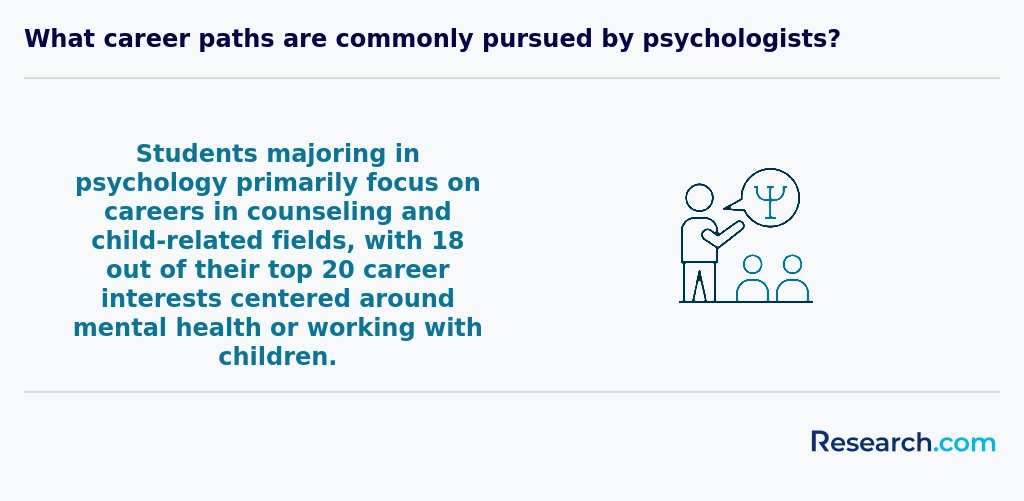
Graduates with a psychology degree in Dallas find diverse and practical career paths tailored to the city's evolving needs. Many start as clinical psychologists, advancing through master's or doctorate programs at institutions like the University of Texas at Dallas before obtaining licensure to practice independently. Others gain experience as counselors or therapists focusing on substance abuse or marriage therapy, often joining community health centers or private practices where demand is strong.
Dallas psychology job opportunities extend into education, with school psychologists helping students thrive in local districts. Graduates working in industrial-organizational psychology support Dallas's growing corporate and tech sectors, improving employee wellbeing and training. Others enter research roles at institutions such as the University of Texas Southwestern Medical Center, contributing to cutting-edge behavioral studies. For those weighing costs, considering a solid educational foundation is crucial; programs range from around $10,000 to $15,000 annually in Texas public universities. Exploring Inexpensive Online Psychology Degree Programs Ranking in Kansas can also offer practical alternatives to balance budget and ambition.
Additional options include support roles like case managers or HR specialists, accessible with a bachelor's degree and often a step toward advanced degrees. Many psychology graduates appreciate these roles as they offer meaningful work and hands-on experience. When planning careers in psychology degree careers in Dallas, leveraging local resources and universities helps build a resilient professional path aligned with personal goals.
The psychology degree job outlook Dallas offers is encouraging for graduates willing to target clinical, counseling, or school psychology roles. Many graduates from popular universities in Dallas successfully find employment in hospitals, schools, and private practices within the metropolitan area's expanding healthcare sector. For example, a graduate who completed their degree at a local university found steady work as a mental health counselor, benefitting from the region's growing demand for these professionals.
Dallas psychology career opportunities are strongest for those with advanced degrees, as entry-level roles often require specialized skills or certifications. Bachelor's degree holders can still access jobs in related fields like human resources or case management, but those pursuing clinical or counseling psychology typically seek graduate-level education. Those balancing work and study might consider options like an accelerated bachelor degree online to speed their entry into the field.
2027 Best Psychology Degree Programs Ranking in Dallas
Investing in your education is a significant decision that can shape your future, and the Research.com team understands the importance of making informed choices. To assist prospective students in Dallas, we have meticulously crafted the "2027 Best Psychology Degree Programs Ranking in Dallas." Our commitment to quality, credibility, and accuracy is reflected in the extensive research and analysis conducted to compile this ranking.
We utilized the following reputable data sources to ensure a comprehensive evaluation of psychology programs:
By exploring this ranking, readers will gain valuable insights into the best psychology degree programs available in Dallas, helping them make informed decisions about their educational paths. For more details on our methodology, please visit our Research.com methodology page.


Frequently Asked Questions About psychology
Psychology degree students in Dallas can maximize their learning by engaging deeply with both coursework and practical experiences. Many Dallas institutions, like the University of Texas at Dallas, offer research opportunities that enhance understanding beyond the classroom.
Active participation in internships or volunteer roles with local mental health organizations helps students apply theories in real-world settings. According to the Texas Higher Education Coordinating Board, hands-on experience significantly improves job readiness for psychology graduates statewide.
Networking through student chapters of professional groups, such as the American Psychological Association, connects students with experts and peers, fostering mentorship and career development. Additionally, attending seminars and workshops in Dallas can keep students informed about emerging psychological research and practice trends.
The psychology field is expanding with several emerging niches that reflect societal and technological changes. In Dallas, specialties like neuropsychology and health psychology are gaining attention due to rising awareness of brain health and chronic illness management.
Another growing area is forensic psychology, driven by increased collaboration between legal systems and mental health professionals. Dallas, with its large urban population, provides practical opportunities in this field.
Additionally, the rise of digital technology has sparked growth in cyberpsychology, which studies online behavior and its impact on mental health. According to the Bureau of Labor Statistics, clinical, counseling, and school psychologist roles are expected to grow 8% nationally through 2032, suggesting strong local demand in these specialized areas.
After completing a psychology degree in Dallas, preparing for the job market involves several strategic steps. Graduates should consider gaining practical experience through internships or volunteer roles in local healthcare facilities or community organizations. Such experience enhances resumes and builds professional networks.
Dallas boasts a growing mental health sector, with the Bureau of Labor Statistics projecting a 14% job growth for psychologists in Texas from 2022 to 2032, above the national average. This trend suggests promising opportunities for entry-level positions and specialized roles.
Networking through local professional associations, like the Texas Psychological Association, can connect graduates with mentors and job openings. Additionally, obtaining relevant certifications or considering graduate education increases competitiveness in Dallas's healthcare and counseling industries.
Employers in Dallas value psychology graduates who demonstrate strong critical thinking and analytical skills. These abilities enable professionals to interpret research data and apply psychological theories effectively in clinical or organizational settings. Communication skills, both written and verbal, are equally crucial, as psychologists must convey complex concepts clearly to clients and colleagues.
Additionally, proficiency in ethical decision-making is essential due to the sensitive nature of psychological work. Dallas-based employers also prioritize cultural competence, reflecting the city's diverse population. According to the Bureau of Labor Statistics, those with these skills often experience better job prospects and higher starting salaries in local psychology roles.
Finding psychology internships in Dallas involves targeting local healthcare facilities, universities, and nonprofit organizations. Students should start by consulting their college's career services and psychology department for partnerships with institutions like Baylor University Medical Center and Dallas Behavioral Health Specialists.
The Texas Workforce Commission reports that Dallas has a growing demand for mental health professionals, increasing opportunities for internships in counseling centers, hospitals, and research labs. Professional associations such as the Texas Psychological Association also list internship openings specifically for students in the region.
Networking through local events and volunteering can enhance chances of placement. Additionally, many internships require students to be enrolled in accredited programs, so verifying program eligibility is essential for securing these positions.
A psychology degree in Dallas can significantly enhance career mobility and advancement opportunities. The city's growing healthcare, education, and social services sectors provide a diverse range of roles suited for psychology graduates. According to the U.S. Bureau of Labor Statistics, Dallas/Fort Worth is among the top metropolitan areas for employment of psychologists, with above-average wage growth expected through 2030.
Holding a psychology degree allows professionals to pursue positions in counseling, human resources, research, and clinical settings. Advanced degrees often open doors to senior roles in therapy, organizational psychology, or academia. Local licensing requirements typically mandate graduate-level education and supervised experience, making degree completion critical for career progression.
Employers in Dallas value psychology graduates for their skills in critical thinking, behavioral analysis, and interpersonal communication. These competencies support career flexibility, allowing individuals to transition into related fields such as social work, public health, or business management.
Studying for a psychology degree in Dallas equips students with a strong foundation in behavior science while emphasizing collaboration across various fields. Local programs often integrate courses in sociology, business, and health sciences, reflecting Dallas's diverse economy and healthcare sector. According to the Texas Higher Education Coordinating Board, Dallas institutions have expanded interdisciplinary curriculum elements by over 15% in recent years.
This approach prepares graduates to work in multifaceted roles such as human resources, public health, and counseling, where psychological knowledge intersects with other disciplines. Furthermore, partnerships between Dallas universities and local hospitals or businesses provide practical experience, strengthening communication and teamwork skills crucial for interdisciplinary positions.
Choosing between a thesis and a non-thesis psychology degree program in Dallas depends on your career goals and preferences. Thesis programs typically require original research and a detailed written project, which suits students aiming for research roles or doctoral studies. Non-thesis options usually focus on coursework and practical experience, ideal for those entering clinical practice or applied psychology.
In Dallas, universities like the University of Texas at Dallas offer both tracks, with thesis students often securing research assistantships. According to the National Center for Education Statistics, about 40% of psychology master's students nationwide opt for thesis programs. Your choice affects time to graduation, funding opportunities, and skill development.
Students in Dallas seeking to study psychology abroad have multiple pathways through U.S. universities offering exchange or dual-degree programs. Institutions such as the University of Texas at Dallas often partner with international universities, allowing psychology majors to complete part of their studies overseas while earning degree credit.
Options include semester-long exchanges in countries with strong psychology research, like the UK, Canada, or Australia. These programs enhance cultural competency-a key skill in psychology-with opportunities to study varied psychological theories and practices.
Financial aid and scholarships specifically for study abroad are increasingly available, with some Dallas universities allocating funds toward psychology students venturing internationally. According to the Institute of International Education's 2022 Open Doors report, psychology ranks among popular fields for U.S. students studying abroad.
Students pursuing psychology degrees in Dallas have several part-time job options that complement their academic learning. Working as a behavioral health technician or a mental health aide is common, offering hands-on experience with patients under supervision. Dallas has a growing healthcare sector, with over 50,000 jobs in mental health services as of 2023, according to the Texas Workforce Commission.
Other opportunities include research assistant positions at local universities, where students can develop skills in data collection and analysis. Additionally, roles in social service agencies or crisis intervention centers help students apply psychological principles in real-world settings.
Psychology students in Dallas have access to a variety of networking opportunities that can enhance their academic and professional careers. Local universities often host psychology clubs and events where students connect with peers and faculty. The Dallas Psychological Association (DPA) offers memberships and networking events, providing students a chance to meet practicing professionals in the field.
The city's proximity to major healthcare institutions like UT Southwestern Medical Center encourages collaboration through internships and research projects. Students can also attend conferences such as the Texas Psychological Association Annual Convention, which attracts thousands of psychology professionals statewide.
These engagements are vital for building practical skills and securing future employment. According to the Bureau of Labor Statistics, the Dallas area has a growing demand for clinical psychologists, making networking crucial for job placement.
Alumni networks play a significant role in supporting psychology degree students in Dallas. These networks connect current students with graduates who have experienced similar academic and professional paths. Through organized events and online platforms, students gain access to mentorship opportunities that can guide career decisions and graduate school applications.
In Dallas, where the psychology job market is competitive, alumni connections often lead to internships and job openings. According to the National Association of Colleges and Employers, 85% of jobs are filled through networking, underscoring this benefit.
Moreover, alumni can provide valuable insights about local employers and regional trends in psychology, helping students better prepare for the unique Dallas market.
Customizing a psychology degree program in Dallas allows students to align their education with specific career goals. Many Dallas institutions offer elective courses and specialized tracks such as clinical, counseling, industrial-organizational, or forensic psychology. This enables students to gain skills relevant to their desired field.
Internship opportunities with local mental health agencies and organizations provide practical experience, crucial for careers requiring licensure or certification. Schools often support research projects tailored to student interests, enhancing expertise in areas like child development or neuropsychology.
Furthermore, some programs provide flexible scheduling, including evening or online classes, benefiting working professionals. Prospective students should consult academic advisors to select coursework and experiences matching current job market demands in Dallas, where the demand for psychology-related roles has grown steadily.
Psychology students in Dallas often face a range of common challenges during their studies. One major difficulty is managing the extensive coursework combined with practical experience requirements, such as internships and research projects. Balancing these demands with part-time work or family obligations can be stressful.
Additionally, navigating the competitive local job market can be challenging. According to the Texas Workforce Commission, Dallas has a growing demand for mental health professionals, but entry-level positions often require advanced degrees or specialized certifications.
Financial pressures also affect many students, as tuition rates for psychology programs in Dallas can range from $8,000 to $25,000 annually, depending on the institution.
Moreover, staying updated with evolving psychological theories and research methods requires continuous effort and access to resources, which may not always be readily available.
With a psychology degree in Dallas, you can pursue several professional certifications to enhance your career prospects. Common certifications include Licensed Professional Counselor (LPC), Licensed Marriage and Family Therapist (LMFT), and Certified Alcohol and Drug Counselor (CADC). These require completing supervised clinical hours and passing state exams governed by the Texas Behavioral Health Executive Council.
Additionally, certifications like Board Certified Behavior Analyst (BCBA) are popular for those specializing in applied behavior analysis. According to the Texas Workforce Commission, demand for mental health professionals in Dallas is growing steadily, reflecting increasing opportunities.
Certification credentials improve employability and allow psychology graduates to provide specialized services in Texas' healthcare and educational systems.
To write a winning application for a psychology program in Dallas, start by carefully researching programs that align with your career goals. Dallas offers several accredited psychology programs, including those at the University of Texas at Dallas and Texas Woman's University. Admissions committees look for strong academic records, relevant experience, and clear career objectives.
Highlight your GPA, especially in psychology-related courses, as the average admitted GPA in Dallas programs is typically above 3.3. Include meaningful research or internship experiences to demonstrate commitment. A well-crafted personal statement explaining your motivation and future goals is crucial. Lastly, secure strong letters of recommendation from professors or professionals familiar with your abilities.
Psychology careers in the United States, including Dallas, benefit from a growing global recognition of mental health's importance. Internationally, psychology fields emphasize diverse cultural perspectives, which enrich clinical practice and research in US programs. According to the American Psychological Association, US-trained psychologists often collaborate worldwide, sharing methods and findings.
Dallas is home to several institutions offering psychology degrees that prepare students for both domestic and international roles. For instance, Texas Woman's University and the University of Texas at Dallas incorporate global mental health topics into their curricula. This prepares graduates for careers that may address multinational issues like trauma, healthcare disparities, and psychological resilience.
The US Bureau of Labor Statistics projects a 14% growth in psychologist employment from 2022 to 2032, reflecting increased global demand. With Dallas's diverse population, student understanding of cross-cultural competence becomes essential for future practice.
Gaining practical experience while studying for a psychology degree in Dallas is essential for building relevant skills. Many universities require or encourage internships, which can be secured through partnerships with local hospitals, mental health clinics, and nonprofit organizations. For example, Texas Woman's University and the University of North Texas at Dallas offer internship opportunities integrated into their psychology programs.
Volunteering at community centers or participating in research labs can also provide hands-on experience. According to the Bureau of Labor Statistics, internships and practical exposure significantly improve job prospects for psychology graduates in Texas.
Students may also join professional organizations like the Dallas Psychological Association to access workshops and networking events.
Choosing the right concentration within a psychology degree program in Dallas requires understanding your career goals and local opportunities. Dallas offers diverse psychology fields, including clinical, counseling, industrial-organizational, and forensic psychology. According to the Texas Workforce Commission, healthcare and social assistance remain among the fastest-growing sectors in Dallas, making clinical and counseling psychology popular choices with strong job prospects.
Consider program curriculum and faculty expertise when selecting a concentration. Research local licensure requirements for psychologists as these often differ by specialization and influence your eligibility for practice in Texas. Networking with professionals in Dallas through internships or local psychology associations can provide useful insights.
- 2027 Best Psychology Degree Programs Ranking in Wichita
- 2027 Best Psychology Degree Programs Ranking in Springfield
- 2027 Best Psychology Degree Programs Ranking in Baton Rouge
- 2027 Best Psychology Degree Programs Ranking in New Orleans
- 2027 Best Psychology Degree Programs Ranking in Hattiesburg
- 2027 Best Psychology Degree Programs Ranking in Kansas City
- 2027 Best Psychology Degree Programs Ranking in Mobile
- 2027 Best Psychology Degree Programs Ranking in Saint Louis
- 2027 Best Psychology Degree Programs Ranking in Lincoln
- 2027 Best Psychology Degree Programs Ranking in Birmingham
See What Experts Have To Say About Studying Psychology
Read our interview with Psychology experts

Catherine Caldwell-Harris, Ph.D.
Psychology Expert
Associate Professor of Psychology
Boston University

Robin M. Kowalski. Ph.D.
Psychology Expert
Professor of Psychology
Clemson University

Joann Farrell Quinn, Ph.D., MBA
Psychology Expert
Director at the College of Medicine Department of Medical Education
Morsani College of Medicine

- Mental Health Challenges Faced by Psychology Students | The Healthcare Guys https://healthcareguys.com/2023/11/23/mental-health-challenges-faced-by-psychology-students/
- Cost and Financial Support: Ph.D. Degree in Clinical Psychology https://gsbs.utsouthwestern.edu/cost-financial-support/clinical-psychology.html
- How to help students cope with mental health challenges https://www.eaie.org/resource/help-students-cope-mental-health-challenges.html
- Psychology Major (BA/BS) https://www.dbu.edu/undergraduate-programs/ba-bs-psychology/
- Society for the Teaching of Psychology https://teachpsych.org/page-1784686/8675326
- Have You Found a Niche? https://www.apaservices.org/practice/business/marketing/building/niche
- Community Psychology in Global Perspective http://siba-ese.unisalento.it/index.php/cpgp
- Study Psychology Abroad https://astarfuture.co.uk/study_psychology_abroad.html
- Know more about thesis vs non- thesis: what is the difference? https://studyfans.com/en/blogs/816
- Alumni Perspectives - Meet Our FPN Alumni https://www.aanmelder.nl/alumni-perspectives-june-2023