A marriage and family counseling degree is a substantial investment, but the lowest-priced program may not prepare you for licensure where you intend to practice. The 2027 Most Valuable Marriage, Couple, And Family Counseling Degree Programs Ranking in the USA, created by the Research.com team of data scientists, helps prospective students and career changers identify programs worth considering. This guide explains how to compare training, cost, accreditation, timelines, and career prospects so you can choose a program that fits both your professional goal and your budget.
Key findings about Marriage, Couple, and Family Counseling degrees in America
The U.S. Bureau of Labor Statistics reports a $66,940 median annual wage in May 2025 for marriage and family therapists; that occupational median is not a starting-salary promise.
BLS projects 14% employment growth from 2025 to 2035 for marriage and family therapists. A program still needs to match the licensing rules in the state where you plan to work.
The strongest value choice is usually a licensure-aligned master's program whose total cost, supervised-training arrangements, and likely completion time fit your circumstances - not necessarily the school with the lowest advertised tuition.
What can I expect from a Marriage, Couple, and Family Counseling degree in America?
Marriage, couple, and family counseling examines distress and change in the context of relationships and family systems. Students learn individual and relational assessment, ethics, diagnosis, treatment planning, and clinical work with couples and families. Programs may call the credential marriage and family therapy, couple and family counseling, or a counseling degree with a related concentration. Similar names do not establish identical licensing eligibility.
For someone seeking independent clinical practice, the usual path is a relevant master's degree followed by supervised post-degree experience, examinations, and a state license. A bachelor's degree can lead to support roles, but ordinarily does not qualify its holder for independent practice as a marriage and family therapist. A doctoral program makes more sense for some research, teaching, or advanced supervisory goals than for someone whose immediate objective is entry to clinical practice (U.S. Bureau of Labor Statistics; state licensing boards).
This degree is a promising fit if you want to provide relational therapy and can commit to supervised clinical training. If your goal is school counseling, social work, or nonclinical coaching, compare those distinct credentials first: paying for an MFT-oriented curriculum may not provide the authorization your intended job requires.
Where can I work with a Marriage, Couple, and Family Counseling degree in America?
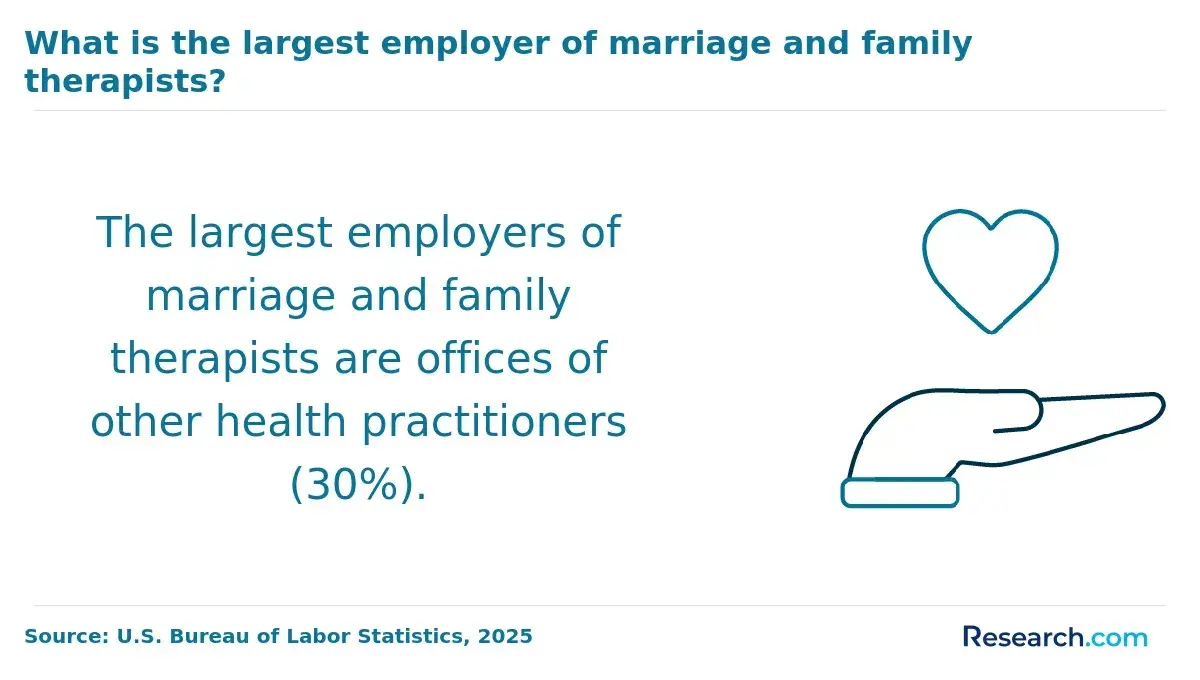
Marriage and family therapists work in settings including outpatient mental health services, individual and family services, healthcare settings, and private practice (U.S. Bureau of Labor Statistics). The setting changes the work: a community agency may involve coordinated care and referrals, while private practice also requires business administration, scheduling, and payer decisions.
Location matters before graduation as well as afterward. States license therapists separately, and an internship across a state border or a move after graduation can complicate eligibility if coursework or supervision does not meet the destination state's rules. Ask a program where its recent students have completed placements and which state licensing requirements its curriculum is designed to meet. Do not assume that access to online classes means access to a suitable local clinical site.
The national median annual wage for marriage and family therapists was $66,940 in May 2025 (U.S. Bureau of Labor Statistics, occupational wage data). Half of workers in that occupation earned more and half earned less. The figure describes employed practitioners across experience levels and settings - not a guaranteed salary for a new graduate or a return on a particular degree.
When estimating what a program could be worth to you, compare likely earnings in your intended state and workplace with your current earnings. Account for the time spent in school, any period of supervised practice before independent licensure, and the possibility that agency employment and private practice produce different net income after expenses. Ask programs for program-specific employment information, its reporting period, and the share of graduates represented.
These programs differ in degree design and professional emphasis. Their published program descriptions offer useful starting points for a shortlist, but a title or concentration alone cannot establish licensing eligibility; verify current credit requirements, clinical hours, outcomes, and state-board alignment with each school (institutional program pages).
San Francisco State University: Its M.S. in Counseling identifies a marriage, family, and child counseling concentration. The explicit child component may appeal to applicants who want their relational training to address work with children as well as couples; confirm how the curriculum maps to your intended California license.
Texas State University: Its M.A. in Professional Counseling offers a marriage and family nonthesis route. That structure merits a closer look if your priority is clinical preparation rather than writing a thesis, but ask how its fieldwork and coursework support the Texas license you want.
University of Illinois Springfield: Marriage, couple, and family counseling sits within its M.A. in Human Development Counseling. Compare the concentration's required courses with stand-alone couple and family degrees if you want a broader counseling foundation alongside relational work.
University of Nevada, Reno: Its published M.A. in Counseling information describes a broader counseling degree rather than identifying a marriage and family credential in the degree title. Applicants focused specifically on MFT licensure should request the current plan of study and written guidance on the relevant state board's requirements.
Governors State University: Its M.A. in Counseling is another broader degree option. It may suit a student comparing counseling career directions, but the decisive question for an aspiring couple or family therapist is whether the selected track - not just the degree name - meets the intended license's educational rules.
California State University, Sacramento: Its M.S. in Counseling has a named marriage, couple, and family counseling concentration. That explicit track gives applicants a defined curriculum to check against California requirements and to compare with programs that award a stand-alone family therapy degree.
South Dakota State University: Its M.S. in Counseling and Human Resource Development lists marriage and family counseling as a program option. The degree's broader title makes it especially important to check the requirements of the specific option and where its clinical placements can be completed.
University of Central Florida: It offers an M.A. expressly titled Marriage, Couple, and Family Therapy. For applicants committed to relational clinical work, that focus makes it a direct comparison with counseling degrees that place family work in a concentration; confirm Florida licensure alignment and placement expectations.
Northeastern Illinois University: Its M.A. is specifically titled Couple and Family Counseling. Students interested in an explicitly relational counseling degree can compare its required clinical training and Illinois licensure preparation with broader counseling programs nearby.
Liberty University: Its residential marriage and family counseling master's option is worth examining if in-person study is a priority. Applicants should confirm the current program title, clinical-placement process, total charges, and eligibility in the state where they expect to practice.
For another lens on program quality, consult the best marriage, couple, and family counseling programs. Compare their published outcomes using the same definitions and reporting periods before drawing conclusions.
A full-time, clinically oriented master's commonly takes about two to three years; part-time study can take longer. Your actual timeline depends on the school's course sequence, available clinical placements, prerequisites, and whether required fieldwork can fit around paid employment. Finishing the degree is not the same as finishing the post-degree supervised experience required for independent licensure (U.S. Bureau of Labor Statistics; state licensing boards).
Ask for a term-by-term plan showing when practicum and internship begin. An accelerated schedule may reduce time out of the workforce, but it is a poor bargain if the pace makes required unpaid or reduced-hours clinical work unmanageable. Working adults should compare the time to licensure, not only the advertised time to graduation.
Online delivery can reduce travel and make scheduled coursework easier to combine with work. It does not remove the need for supervised clinical training or guarantee that a placement is available near you. Campus study may make face-to-face skills practice and relationships with local placement sites more convenient, but commuting can add cost and limit your choice of schools.
Choose between formats by asking where clinical training occurs, who finds and approves supervisors, whether any campus visits are required, and whether the program accepts students in your state. State-board requirements apply regardless of teaching format, so seek written confirmation of how the program addresses your intended license (state licensing boards; institutional program information). The most popular marriage, couple, and family counseling programs can broaden a shortlist, but popularity does not resolve placement or licensure questions.
There is no single national average that reliably describes the total price of a marriage, couple, and family counseling degree. NCES/IPEDS publishes institutional graduate tuition and fee information, but that is not necessarily the price of this particular program or the amount a student ultimately pays. Published rates also vary by institution, residency, and enrollment pattern (National Center for Education Statistics, IPEDS).
Calculate a comparable budget for each school: required credits at the applicable tuition rate, mandatory fees, books, travel or relocation, and costs associated with clinical placements. Then subtract grants or employer assistance and add the earnings you may forgo while studying. A public university's resident rate can be attractive, but compare it with the actual aid offer and completion schedule at private nonprofit or other institutions; institutional type alone does not determine value.
Eligible graduate students can investigate federal Direct Unsubsidized Loans, institutional scholarships, assistantships, employer tuition assistance, and state or local workforce funding where offered. File the FAFSA and ask each financial aid office which awards apply to the specific program and whether assistance continues during clinical placements (Federal Student Aid; institutional financial aid offices).
Graduate PLUS rules changed for new borrowers beginning in July 2026. New graduate students generally should not build a financing plan around receiving a Graduate PLUS Loan; limited transition provisions may apply to some students who were already enrolled in the same program and had qualifying prior borrowing. Have the school confirm your individual eligibility and the current federal rules before accepting an offer (Federal Student Aid). Borrow only after estimating repayment against plausible early-career earnings, not the occupation-wide median.
View the chart data as a table
Median wage by U.S. state - Marriage & Family Therapists (BLS OEWS, May 2025) (Source: BLS)
State
Value
AK
60,010
AL
49,990
AR
64,340
AZ
65,290
CA
67,300
CO
60,700
CT
86,250
DE
76,580
FL
56,400
GA
91,550
HI
141,960
IA
67,180
ID
62,700
IL
60,970
IN
56,810
KS
68,710
KY
52,420
MA
67,370
MD
69,900
ME
71,680
MI
52,270
MN
72,470
MO
60,440
MS
51,440
MT
46,960
NC
48,100
NE
62,610
NH
60,030
NJ
92,150
NM
70,630
NY
64,430
OH
70,240
OK
57,670
OR
91,520
PA
66,040
SC
55,430
SD
44,870
TN
46,700
TX
46,300
UT
84,980
VA
79,900
VT
62,780
WA
60,000
WI
37,870
WV
55,700
Master's applicants generally need a bachelor's degree and must meet each school's stated application requirements. Programs may ask for transcripts, recommendations, a statement of purpose, interviews, or particular prior coursework; clinical placements may impose separate background-check or onboarding requirements. Check the current admissions page rather than assuming that every counseling program has the same prerequisites (institutional admissions offices).
Before applying, distinguish three separate checks: admission to the school, eligibility for clinical placement, and eligibility for the license you ultimately want. Ask whether previous graduate courses can transfer, which courses can count, and whether transfer credit changes clinical requirements or the graduation date. A certificate or a few transferable courses should not be assumed to replace a licensing board's required degree or supervised training (state licensing boards).
Expect coursework in family systems and relational theory, counseling methods, assessment and diagnosis, ethics, research, and human development, alongside supervised practicum or internship. A marriage and family curriculum should give meaningful attention to therapy with couples and families rather than treating those clients as a brief addition to an individual-counseling program (institutional program catalogs).
Compare syllabi and degree plans, not just course titles. Ask how students practice relational assessment, receive feedback on clinical skills, and learn the legal and ethical responsibilities relevant to their planned state of practice. A program with compelling electives is less useful if essential licensing coursework is missing or offered too infrequently to finish on schedule.
Depending on the school, students may encounter focused coursework or placements involving children and adolescents, trauma, substance use, or work with particular family populations. Some schools instead offer marriage and family work as a concentration within a broader counseling master's; others award a degree specifically in couple and family therapy (institutional program catalogs).
Treat a specialization as a way to shape training, not as a separate license or a guarantee of work in that area. If you already know the clients you hope to serve, compare relevant supervised placements and faculty expertise. If you are still deciding between relational therapy and another counseling field, a broader program may offer flexibility - but only if its chosen track also supports the license you intend to pursue.
Start with the job and state in which you intend to practice, then work backward to the degree. This prevents a costly mistake: selecting a well-regarded program whose curriculum or placement arrangements do not fit your licensing plan.
Use these checks in order when comparing offers:
Identify the intended state license and check that board's current degree, coursework, supervised-experience, and examination rules; ask the program how it addresses each requirement.
Verify institutional accreditation and any programmatic accreditation directly with the relevant accreditor. Do not assume that institutional accreditation and CACREP programmatic recognition mean the same thing or that either alone confers licensure (U.S. Department of Education; CACREP; state licensing boards).
Request the full course sequence, clinical-placement process, recent completion and employment information, and the reporting period and population behind any published outcome.
Compare total net cost and likely time to licensure, including aid, debt, reduced earnings during study, completion probability, and your expected career horizon - not tuition alone.
A ranking can help narrow your search, but a red flag is a school that cannot clearly explain where students train or how its curriculum relates to your intended state's requirements. Get consequential answers in writing before making a deposit.
View the chart data as a table
Wage range - Marriage & Family Therapists (U.S., BLS May 2025) (Source: BLS)
Category
Value
10th percentile
44,650
Median
66,940
90th percentile
123,730
The most direct path is supervised clinical work followed, if requirements are met, by state licensure as a marriage and family therapist. Licensed practitioners may pursue agency, healthcare, or private-practice roles; experience can also support later clinical supervision or program leadership, subject to employer and state requirements (U.S. Bureau of Labor Statistics; state licensing boards).
A broader counseling degree may support other paths, but the degree title does not authorize practice in another profession. For example, school counselor, professional counselor, and clinical social worker roles have their own education and credential rules. If your desired job is primarily research or university teaching, compare doctoral pathways rather than assuming a clinically focused master's is the final credential you need.
View the chart data as a table
Annual earnings-to-program-cost ratio distribution across ranked programs (Source: Research.com)
Category
Value
0--0
2
0-0
12
1-0
7
2-1
5
2-2
3
2-2
0
3-2
1
The U.S. Bureau of Labor Statistics projects 14% growth in marriage and family therapist employment from 2025 to 2035. That national projection indicates expanding demand for the occupation, not an assurance that a particular graduate will find a position in a preferred city or immediately establish a full caseload.
Evaluate the market where you can realistically train and work. Ask placement coordinators which local agencies accept students, look at current employer requirements, and check whether jobs you want require independent licensure or accept clinicians still completing supervision. That local check is particularly important if you plan to study online, move between states, or depend on paid work while finishing post-degree requirements.
2027 Most Valuable Marriage, Couple, And Family Counseling Degree Programs Ranking in the USA
Investing in graduate education deserves more scrutiny than a tuition comparison alone. Research.com developed its counseling rankings to help readers assess educational quality, professional preparation, outcomes, and cost using consistent data rather than relying on a school's promotional claims.
The ranking process draws on these data sources:
IPEDS database: institutional information, including enrollment, completion, and published charges.
Peterson's database: program and institutional information used to compare education options.
Research.com's counseling methodology considers program completion, employment or doctoral admission, applicable licensure-exam results, CACREP programmatic recognition, federal Title IV eligibility, and program cost. Its Best ranking gives the greatest weight to graduate outcomes and accreditation, with cost contributing a smaller share; criteria that do not apply are reweighted. Other rankings order programs by the dimension named in their titles. The same approach applies to online and campus programs. Read the full Research.com methodology for more detail. A ranking is a starting point: confirm current tuition, accreditation, placement arrangements, and licensure eligibility directly before enrolling.
# 1 position
San Francisco State University
Master
Master of Science in Counseling: Concentration in Marriage, Family, and Child Counseling
Delivery mode: campus
100.00
/ 100
Final score
Program length
Minimum 2 years (2 academic years)
Specialization
Marriage, Couple, and Family Counseling
Required credits
60 semester units
GPA range
3.00 - 4.00
Employment or doctoral admission
88% (2022-23)
Application deadline
Fall: December 15
Application process
Cal State Apply
GRE
no
Prerequisites
Recommended: undergraduate courses in theories of personality/counseling, lifespan development, psychopathology, and introduction to counseling; minimum 3.0 GPA in last 60 units.
Additional requirements
Cal State Apply application with supplementary materials, letters of recommendation, personal statement, work/volunteer experience with diverse populations.
Accreditation
Accredited by the Council for Accreditation of Counseling and Related Educational Programs (CACREP), with institutional accreditation from the WASC Senior College and University Commission (WSCUC).
San Francisco State University earned a Research.com Value Score of 100.0/100, supported by $73,361 median earnings and $21,060 total cost (tuition and fees, estimated). The program is CACREP-accredited, valid through 2027-10-31.
# 2 position
Texas State University
Master
M.A. Major in Professional Counseling
Delivery mode: campus
68.40
/ 100
Final score
Specialization
Marriage, Couple, and Family Counseling
Required credits
60
GPA range
3.00 - 4.00
Application process
direct
GRE
yes
Prerequisites
Baccalaureate degree from a regionally accredited university (non-U.S. degrees must be equivalent to a four-year U.S. Bachelor's degree).
Additional requirements
Online application; official transcripts; minimum 3.0 GPA overall or in last 60 hours; GRE general test (may be waived with a master's/doctoral degree); informed consent form; resume/CV; statement of purpose; English scores for international.
Accreditation
Accredited by the Council for Accreditation of Counseling and Related Educational Programs (CACREP), with institutional accreditation from the Southern Association of Colleges and Schools Commission on Colleges (SACSCOC).
Texas State University earned a Research.com Value Score of 68.4/100, supported by $53,083 median earnings and $21,442 total tuition (estimated). The program is CACREP-accredited, valid through 2032-10-31.
# 3 position
University of Illinois Springfield
Master
Human Development Counseling, MA with Marriage, Couple, and Family Counseling Concentration
Delivery mode: campus
60.60
/ 100
Final score
Program length
3 years
Specialization
Marriage, Couple, and Family Counseling
Required credits
61 semester credits
GPA range
2.75 - 4.00
Program completion rate
64% (2024-25)
Application deadline
rolling
Application process
direct
GRE
no
Prerequisites
No prerequisite courses. Phase 1: three recommendation forms; Phase 2: group interview; full admission needs a 3.00 GPA in last 60 credits or 2.75 cumulative. Fall admission only; Phase 1 due January 31 (late by June 15).
Additional requirements
Complete online application, submit official transcripts, submit a required statement/writing sample (250-650 words), and pay the non-refundable application fee ($60 domestic / $75 graduate per apply page)
Accreditation
Accredited by the Council for Accreditation of Counseling and Related Educational Programs (CACREP), with institutional accreditation from the Higher Learning Commission (HLC).
University of Illinois Springfield earned a Research.com Value Score of 60.6/100, supported by $48,357 median earnings and 64% program completion rate. The program is CACREP-accredited, valid through 2034-04-30.
# 4 position
University of Nevada-Reno
Master
M.A. in Counseling – Marriage, Couple and Family Counseling
Delivery mode: campus
58.60
/ 100
Final score
Program length
approximately 3 years (full-time, including summers)
Specialization
Marriage, Couple, and Family Counseling
Required credits
67 semester credits
Program completion rate
90% (2023-24)
Employment or doctoral admission
100% (2023-24)
GRE
no
Prerequisites
No undergraduate prerequisites; undergraduate degree must be completed before enrolling.
Additional requirements
Application; official transcripts; letter of intent/statement of career goals; resume; three professional recommendation letters; interview if invited. Reviewed for dispositions, academic potential (GPA, coursework) and counseling career fit.
Accreditation
Accredited by the Council for Accreditation of Counseling and Related Educational Programs (CACREP), with institutional accreditation from the Northwest Commission on Colleges and Universities (NWCCU).
University of Nevada-Reno earned a Research.com Value Score of 58.6/100, supported by $55,536 median earnings and 90% program completion rate. The program is CACREP-accredited, valid through 2033-10-31.
# 5 position
Governors State University
Master
Counseling, M.A.
Delivery mode: campus
45.90
/ 100
Final score
Specialization
Marriage, Couple, and Family Counseling
Required credits
60 semester credits
GPA range
2.50 - 4.00
Application deadline
Fall: February 15; Spring: August 15; Fall 2027 priority deadline: February 15, 2027
Application process
direct
GRE
Conditional: GRE Verbal 155+ required if cumulative GPA is 2.5-2.74 and last-60-hour GPA is below 3.0, unless COUN 6600, COUN 6630 and ENGL 1010 are completed with B- or better
Prerequisites
Bachelor's degree; GPA of 2.75+ cumulative or 3.0 over last 60 credit hours. Applicants with 2.50–2.74 meeting neither must score 155+ on GRE Verbal or complete COUN 6600, COUN 6630, and ENGL 1010 or equivalent with B- or better.
Additional requirements
Official transcripts from all previous college work, Statement of Character, three personal references, and GRE scores if applicable. Qualified applicants may be invited to an interview; academic references are preferred.
Accreditation
Accredited by the Council for Accreditation of Counseling and Related Educational Programs (CACREP), with institutional accreditation from the Higher Learning Commission (HLC).
Governors State University earned a Research.com Value Score of 45.9/100, supported by $52,581 median earnings and $29,885 total cost (tuition and fees). The program is CACREP-accredited, valid through 2031-03-31.
# 6 position
California State University-Sacramento
Master
MS in Counseling (Marriage, Couple, and Family Counseling)
Delivery mode: campus
45.30
/ 100
Final score
Program length
3 years (full-time)
Specialization
Marriage, Couple, and Family Counseling
Required credits
60 semester units
GPA range
3.00 - 4.00
Program completion rate
100% (2024-25)
Employment or doctoral admission
100% (2023-24)
Class size
24
Application process
direct
Prerequisites
Baccalaureate degree; good academic standing; GPA of at least 3.0 in last 60 semester units
Additional requirements
University application and program supplemental application, official transcripts, departmental application materials, in-person admission evaluation (Interview Day)
Accreditation
Accredited by the Council for Accreditation of Counseling and Related Educational Programs (CACREP), with institutional accreditation from the WASC Senior College and University Commission (WSCUC).
California State University-Sacramento earned a Research.com Value Score of 45.3/100, supported by $59,543 median earnings and 100% program completion rate. The program is CACREP-accredited, valid through 2029-03-31.
# 7 position
South Dakota State University
Master
Counseling and Human Resource Development (M.S.) – Marriage and Family Counseling Specialization
Delivery mode: campus
45.20
/ 100
Final score
Program length
Typically, full-time students graduate in 2.5 years
Specialization
Marriage, Couple, and Family Counseling
Required credits
60 semester credits
GPA range
2.75 - 4.00
Program completion rate
100% (2024-25)
Employment or doctoral admission
100% (2024-25)
Application deadline
Fall: April 15; Spring: October 15
GRE
no
Accreditation
Accredited by the Council for Accreditation of Counseling and Related Educational Programs (CACREP), with institutional accreditation from the Higher Learning Commission (HLC).
South Dakota State University earned a Research.com Value Score of 45.2/100, supported by $45,975 median earnings and 100% program completion rate. The program is CACREP-accredited, valid through 2033-10-31.
# 8 position
University of Central Florida
Master
Marriage, Couple and Family Therapy, MA
Delivery mode: campus
44.90
/ 100
Final score
Specialization
Marriage, Couple, and Family Counseling
Required credits
63 semester credits
Acceptance rate
22%
GPA range
3.00 - 4.00
Program completion rate
100% (2025-26)
Employment or doctoral admission
100% (2025-26)
Licensure exam pass rate
83% (2025-26)
Application deadline
Fall: February 1 (domestic applicants); January 15 (international applicants)
GRE
no
Accreditation
Accredited by the Council for Accreditation of Counseling and Related Educational Programs (CACREP), with institutional accreditation from the Higher Learning Commission (HLC).
University of Central Florida earned a Research.com Value Score of 44.9/100, supported by $40,214 median earnings and 83% licensure exam pass rate. The program is CACREP-accredited, valid through 2030-10-31.
# 9 position
Northeastern Illinois University
Master
Couple and Family Counseling, M.A.
Delivery mode: campus
39.90
/ 100
Final score
Program length
3 years
Specialization
Marriage, Couple, and Family Counseling
Required credits
60 semester credits
GPA range
2.75 - 4.00
Licensure exam pass rate
67% (2024-25)
Application deadline
February 1 for Fall
Application process
direct
Additional requirements
Application form, official transcripts from all colleges attended, current resume, Statement of Goals and Objectives essay addressing fit for the specialization, and attendance at a Pre-Admission Workshop (PAW).
Accreditation
Accredited by the Council for Accreditation of Counseling and Related Educational Programs (CACREP), with institutional accreditation from the Higher Learning Commission (HLC).
Northeastern Illinois University earned a Research.com Value Score of 39.9/100, supported by $50,825 median earnings and 67% licensure exam pass rate. The program is CACREP-accredited, valid through 2033-03-31.
# 10 position
Liberty University
Master
Master of Arts in Marriage and Family Counseling
Delivery mode: campus
28.80
/ 100
Final score
Program length
7 semesters (full-time plan of study)
Specialization
Marriage, Couple, and Family Counseling
Required credits
60 semester credits
Acceptance rate
93.55%
GPA range
2.70 - 4.00
Program completion rate
57% (2024-25)
Licensure exam pass rate
100% (2024-25)
Application process
direct
GRE
no
Prerequisites
Undergraduate prerequisites: 3 credit hours in statistics (can be taken after admission but must be taken in first 2 semesters in the program)
Additional requirements
Admission application; official transcripts showing a bachelor's degree with at least 2.7 GPA; 2 professional recommenders; personal statement including agreement to the Department's Mission and Diversity Statements.
Accreditation
Accredited by the Council for Accreditation of Counseling and Related Educational Programs (CACREP), with institutional accreditation from the Southern Association of Colleges and Schools Commission on Colleges (SACSCOC).
Liberty University earned a Research.com Value Score of 28.8/100, supported by $41,821 median earnings and 100% licensure exam pass rate. The program is CACREP-accredited, valid through 2032-03-31.
# 11 position
MidAmerica Nazarene University
Master
Master of Arts in Counseling
Delivery mode: hybrid
28.70
/ 100
Final score
Program length
Complete in 33 months
Specialization
Marriage, Couple, and Family Counseling
Required credits
60 semester credits
GPA range
3.00 - 4.00
Program completion rate
80% (2024-25)
Employment or doctoral admission
100% (2024-25)
Licensure exam pass rate
100% (2025)
Application deadline
Applications and interviews occur every February and April
Application process
direct
GRE
no
Prerequisites
Bachelor's degree from a regionally accredited college or university.
Additional requirements
All official transcripts; Three professional and/or academic references; A writing assessment; One half-day of comprehensive interviews with graduate faculty after all other admission requirements have been met.
Accreditation
Accredited by the Council for Accreditation of Counseling and Related Educational Programs (CACREP), with institutional accreditation from the Higher Learning Commission (HLC).
MidAmerica Nazarene University earned a Research.com Value Score of 28.7/100, supported by $47,940 median earnings and 100% licensure exam pass rate. The program is CACREP-accredited, valid through 2033-10-31.
# 12 position
Mississippi Christian University
Master
Marriage and Family Counseling (M.S.)
Delivery mode: campus
25.00
/ 100
Final score
Specialization
Marriage, Couple, and Family Counseling
Required credits
60 semester credits
GPA range
3.00 - 4.00
Program completion rate
100% (2024-25)
Employment or doctoral admission
90% (2024-25)
Application deadline
Fall: June 1; Spring: October 1
Application process
direct
Prerequisites
Bachelor's degree with minimum 3.0 GPA on previous undergraduate work; official transcripts; autobiographical and goal statement; two recommendation letters; current resume or vita.
Additional requirements
Application, official transcripts, autobiographical and goal statement, two recommendation letters/forms, current resume or vita
Accreditation
Accredited by the Council for Accreditation of Counseling and Related Educational Programs (CACREP), with institutional accreditation from the Southern Association of Colleges and Schools Commission on Colleges (SACSCOC).
Mississippi Christian University earned a Research.com Value Score of 25.0/100, supported by $39,336 median earnings and 100% program completion rate. The program is CACREP-accredited, valid through 2033-04-30.
# 13 position
Kutztown University of Pennsylvania
Master
M.A. in Counseling: Marriage, Couple and Family
Delivery mode: campus
23.70
/ 100
Final score
Program length
3 years including summer courses (full-time)
Specialization
Marriage, Couple, and Family Counseling
Required credits
60 semester credits
GPA range
3.00 - 4.00
Application deadline
Fall: Mar 1 (early), Apr 1 (regular, then rolling); Spring: Oct 1 (then rolling)
Application process
direct
Prerequisites
Bachelor's transcripts with 3.0 GPA or better (or master's with 3.0+); 2 letters of recommendation (one academic if graduated within 3 years); one-page resume; 2-3 page Academic Goal Statement; English proficiency for international applicants.
Additional requirements
Completed application form, processing fee, 2 letters of recommendation (at least one academic if graduated within last 3 years), bachelor's (or master's) transcripts with 3.0+ GPA, one-page resume, 2-3 page Academic Goal Statement essay.
Accreditation
Accredited by the Council for Accreditation of Counseling and Related Educational Programs (CACREP), with institutional accreditation from the Middle States Commission on Higher Education (MSCHE).
Kutztown University of Pennsylvania earned a Research.com Value Score of 23.7/100, supported by $43,166 median earnings and $41,090 total cost (tuition and fees). The program is CACREP-accredited, valid through 2033-03-31.
# 14 position
Geneva College
Master
M.A. in Counseling - Marriage, Couple, and Family Counseling
Delivery mode: campus
23.20
/ 100
Final score
Specialization
Marriage, Couple, and Family Counseling
Required credits
60 semester credits
GPA range
3.00 - 4.00
Application process
direct
GRE
no
Prerequisites
Bachelor's degree with GPA of 3.0+ expected (provisional admission possible below 3.0); basic statistics competency via CNS 504, an approved statistics course (B- or better within 5 years), or 80%+ on a statistics exam.
Additional requirements
Official transcripts from all colleges/universities attended, a typed academic essay describing career goals and reasons for applying, three professional recommendations, and a resume
Accreditation
Accredited by the Council for Accreditation of Counseling and Related Educational Programs (CACREP), with institutional accreditation from the Middle States Commission on Higher Education (MSCHE).
Geneva College earned a Research.com Value Score of 23.2/100, supported by $43,369 median earnings and $41,940 total tuition. The program is CACREP-accredited, valid through 2033-04-30.
# 15 position
Geneva College
Master
M.A. in Counseling - Marriage, Couple, and Family Counseling
Delivery mode: hybrid
23.20
/ 100
Final score
Program length
two years for a full-time student
Specialization
Marriage, Couple, and Family Counseling
Required credits
60 semester credits
GPA range
3.00 - 4.00
Application process
direct
GRE
no
Prerequisites
Bachelor's degree with GPA of 3.0+ expected (provisional admission possible below 3.0); basic statistics competency via CNS 504, an approved statistics course (B- or better within 5 years), or 80%+ on a statistics exam.
Additional requirements
Official transcripts from all colleges/universities attended, a typed academic essay describing career goals and reasons for applying, three professional recommendations, and a resume
Accreditation
Accredited by the Council for Accreditation of Counseling and Related Educational Programs (CACREP), with institutional accreditation from the Middle States Commission on Higher Education (MSCHE).
Geneva College earned a Research.com Value Score of 23.2/100, supported by $43,369 median earnings and $41,940 total tuition. The program is CACREP-accredited, valid through 2033-04-30.
# 16 position
Northwest Nazarene University
Master
Marriage, Couple and Family Counseling, Master of Science
Delivery mode: campus
22.90
/ 100
Final score
Program length
33 months on average (8 semesters)
Specialization
Marriage, Couple, and Family Counseling
Required credits
60 semester credits
GPA range
3.00 - 4.00
Program completion rate
80% (2024-25)
Employment or doctoral admission
100% (2024-25)
Application deadline
Fall: February 1; Spring: September 1
Application process
direct
GRE
no
Prerequisites
Baccalaureate degree with cumulative GPA of 3.0 (applicants below 3.0 must submit explanatory letter for faculty review); TOEFL for non-native English speakers
Additional requirements
References, transcripts, program interview, resume, biographical background, writing samples, observation in group and mock counseling experiences, background check
Accreditation
Accredited by the Council for Accreditation of Counseling and Related Educational Programs (CACREP), with institutional accreditation from the Northwest Commission on Colleges and Universities (NWCCU).
Northwest Nazarene University earned a Research.com Value Score of 22.9/100, supported by $39,097 median earnings and 80% program completion rate. The program is CACREP-accredited, valid through 2033-10-31.
# 17 position
University of Florida
Master
M.Ed./Ed.S. in Counselor Education – Marriage and Family Counseling
Delivery mode: campus
20.30
/ 100
Final score
Program length
2.5 years
Specialization
Marriage, Couple, and Family Counseling
Required credits
72 semester credits
Acceptance rate
61.54%
GPA range
3.00 - 4.00
Program completion rate
100% (2023-24)
Application deadline
November 1, 2026, to begin Fall 2027
GRE
no
Prerequisites
Bachelor's degree from an accredited U.S. college or university (or equivalent); minimum 3.0 GPA in upper-division (last 60 credits) undergraduate work; acceptable GPA for previous graduate work; no GRE required.
Accreditation
Accredited by the Council for Accreditation of Counseling and Related Educational Programs (CACREP), with institutional accreditation from the Southern Association of Colleges and Schools Commission on Colleges (SACSCOC).
University of Florida earned a Research.com Value Score of 20.3/100, supported by $35,991 median earnings and 100% program completion rate. The program is CACREP-accredited, valid through 2029-03-31.
# 18 position
George Fox University
Master
M.A. in Marriage, Couple and Family Counseling
Delivery mode: hybrid
17.60
/ 100
Final score
Program length
3 Years Program length
Specialization
Marriage, Couple, and Family Counseling
Required credits
64 semester credits
GPA range
3.00 - 4.00
Program completion rate
71% (2023-24)
Employment or doctoral admission
100% (2024-25)
Licensure exam pass rate
100% (2024-25)
Application deadline
Fall 2027: Mar 1, 2027
Application process
direct
GRE
no
Prerequisites
Bachelor's degree from a regionally accredited institution with a cumulative undergraduate GPA of 3.0 or above; does not have to be in psychology.
Additional requirements
Completed online application, two recommendations (one academic, one professional), a short essay, and a professional resumé; group interview by invitation; standardized test results not required.
Accreditation
Accredited by the Council for Accreditation of Counseling and Related Educational Programs (CACREP), with institutional accreditation from the Northwest Commission on Colleges and Universities (NWCCU).
George Fox University earned a Research.com Value Score of 17.6/100, supported by $46,410 median earnings and 100% licensure exam pass rate. The program is CACREP-accredited, valid through 2029-10-31.
# 19 position
Southern Methodist University
Master
Master of Science in Counseling
Delivery mode: campus
17.50
/ 100
Final score
Specialization
Marriage, Couple, and Family Counseling
Required credits
63 semester credits
GPA range
3.00 - 4.00
Application deadline
Spring: Sep 15
Application process
direct
GRE
Conditional: GRE (minimum 146 Quantitative, 156 Verbal, 3.5 Writing) required if cumulative undergraduate GPA is below 3.0
Prerequisites
Application; three recommendation forms; two-page essay on why you want to study counseling; resume; minimum 3.0 undergraduate GPA (GRE math and verbal required if below 3.0); criminal history background check.
Additional requirements
Bachelor's degree; online application; two-page essay; three recommendations; resume; official transcripts; $40 fee; 3.0 GPA minimum (GRE required below 3.0); TOEFL/IELTS if applicable; interview day (PONI Day) if invited; criminal background check.
Accreditation
Accredited by the Council for Accreditation of Counseling and Related Educational Programs (CACREP), with institutional accreditation from the Southern Association of Colleges and Schools Commission on Colleges (SACSCOC).
Southern Methodist University earned a Research.com Value Score of 17.5/100, supported by $42,474 median earnings and $49,770 total tuition. The program is CACREP-accredited, valid through 2027-10-31.
# 20 position
Portland State University
Master
Counseling: Marriage, Couple, and Family Counseling
Delivery mode: campus
16.70
/ 100
Final score
Program length
3-year minimum
Specialization
Marriage, Couple, and Family Counseling
Required credits
90 quarter credits
Program completion rate
94% (2024-25)
Employment or doctoral admission
100% (2024-25)
Licensure exam pass rate
100% (2024-25)
Application deadline
January 4, 2027
Class size
15
Application process
direct
Prerequisites
Upper-division or graduate introduction to counseling (e.g., COUN 441) and psychopathology (e.g., COUN 430) courses, completed within 7 years with a C or better; otherwise completed at the graduate level early in the program.
Additional requirements
Unofficial transcripts, English language proficiency (if applicable), resume, statement of purpose (three prompts), two letters of recommendation, and an in-person or remote group interview; criminal background check required prior to starting.
Accreditation
Accredited by the Council for Accreditation of Counseling and Related Educational Programs (CACREP), with institutional accreditation from the Northwest Commission on Colleges and Universities (NWCCU).
Portland State University earned a Research.com Value Score of 16.7/100, supported by $48,263 median earnings and 100% licensure exam pass rate. The program is CACREP-accredited, valid through 2033-10-31.
Frequently asked questions about Marriage, Couple, and Family Counseling degree in America
Is a marriage and family counseling degree worth it?
It may be if you want a career providing relational therapy and the program supports your intended state license at a manageable total cost. Compare debt and time to licensure with your current earnings and realistic local job options.
Do I need a master's degree to become a marriage and family therapist?
A relevant master's degree is generally part of the U.S. licensure path. States also impose supervised-experience and examination requirements; graduating alone does not authorize independent practice (U.S. Bureau of Labor Statistics; state licensing boards).
Does an online degree qualify for licensure?
Online delivery does not by itself determine eligibility. Check the curriculum, accreditation requirements of your intended state board, and arrangements for supervised clinical training before enrolling.
Is CACREP accreditation required?
Requirements depend on the state and license sought. Check the applicable board's current rules and verify the program's actual accreditation status with the accreditor; do not infer eligibility from a school's general accreditation (CACREP; state licensing boards).
Can I work while earning the degree?
Often, but required courses and clinical placements may restrict your hours or schedule. Ask for a term-by-term plan and find out whether placement hours can be completed near your workplace.
What should I ask a program before applying?
Ask which state licenses its curriculum is designed to support, who secures clinical placements, what the complete program will cost you, and what recent graduates did after finishing. Request written, current answers where possible.
See What Experts Have To Say About Studying Counseling