Research.com is an editorially independent organization with a carefully engineered commission system that’s both transparent and fair. Our primary source of income stems from collaborating with affiliates who compensate us for advertising their services on our site, and we earn a referral fee when prospective clients decided to use those services. We ensure that no affiliates can influence our content or school rankings with their compensations. We also work together with Google AdSense which provides us with a base of revenue that runs independently from our affiliate partnerships. It’s important to us that you understand which content is sponsored and which isn’t, so we’ve implemented clear advertising disclosures throughout our site. Our intention is to make sure you never feel misled, and always know exactly what you’re viewing on our platform. We also maintain a steadfast editorial independence despite operating as a for-profit website. Our core objective is to provide accurate, unbiased, and comprehensive guides and resources to assist our readers in making informed decisions.

2026 Best Online Counseling Degree Programs Ranking in Alabama

Imed Bouchrika, PhD

by Imed Bouchrika, PhD

Co-Founder and Chief Data Scientist

What can I expect from online counseling degree in Alabama?

An online counseling degree in Alabama typically combines theory-based coursework, skills training, ethics, assessment, multicultural counseling, and supervised field experience. The online format usually covers lectures, readings, discussions, assignments, and faculty interaction virtually, while practicum and internship requirements are completed in approved clinical, school, nonprofit, rehabilitation, or community settings.

The average cost of an online counseling degree in Alabama typically falls between $7,000 and $15,000 annually for in-state students. Costs vary by institution type, degree level, residency status, program length, fees, and whether the school is public or private. Students should compare the full cost of attendance rather than tuition alone, because counseling programs may also include technology fees, books, liability insurance, background checks, exam fees, and clinical placement expenses.

Students often find that online learning is most valuable when the program provides clear advising, responsive faculty, licensure guidance, and help arranging practical experiences locally. A lower-cost program can become a poor choice if it does not support Alabama licensure preparation, while a more expensive program may be worthwhile if it offers stronger supervision support, career services, and a curriculum aligned with professional requirements.

Prospective students should also verify whether the program is recognized by the Alabama Board of Examiners in Counseling or designed to meet Alabama licensure expectations. This is especially important for students pursuing Licensed Professional Counselor preparation, because licensure typically depends on more than simply earning the degree.

Where can I work with online counseling degree in Alabama?

Graduates with online counseling degrees from Alabama institutions such as the University of Alabama or Auburn University can work in a range of behavioral health, education, rehabilitation, nonprofit, and community service settings. The best fit depends on the degree level, specialization, supervised experience, and whether the graduate meets Alabama licensing or certification requirements for the role.

  • Community mental health centers: Graduates may support clients facing anxiety, depression, substance use, crisis situations, trauma, or family stressors.
  • Schools: Those who meet school counseling requirements can work with K-12 students on academic planning, social development, emotional challenges, and college or career readiness.
  • Hospitals and outpatient care centers: Counselors may provide mental health support, referrals, discharge planning, or specialized care as part of a broader clinical team.
  • Substance abuse and addiction treatment programs: Graduates may work with individuals and families affected by addiction, relapse, recovery planning, and co-occurring behavioral health concerns.
  • Private practice: Licensed counselors may eventually provide therapy independently, depending on Alabama licensure status and supervision requirements.
  • Nonprofit and family service organizations: Counseling graduates may support family counseling, case management, outreach, prevention education, and community-based recovery programs.
  • Rehabilitation agencies: Graduates may help clients with disabilities, injuries, or life transitions build coping strategies, employment readiness, and independent living skills.

Online study does not limit where graduates can work, but licensure alignment does. Before choosing a program, students should ask where recent graduates complete internships and whether the school has placement relationships in Alabama communities.

How much can I make with online counseling degree in Alabama?

Earnings for counseling degree graduates in Alabama depend on the role, education level, licensure status, specialization, employer, and years of experience. An online degree from an Alabama institution can lead to several counseling-adjacent or counseling-focused roles, but higher-paying clinical positions often require a graduate degree, supervised hours, and licensure.

RoleSalary information stated for Alabama graduatesWhat affects pay
Addiction CounselorMean annual wage of about $60,080Certification or licensure, treatment setting, clinical experience, and client population
Rehabilitation SpecialistTypically around $48,430 annuallyAgency type, disability services experience, caseload, and credentials
Community Outreach CoordinatorAveraging $54,020 per yearProgram funding, nonprofit or public agency setting, leadership duties, and grant experience
Family Support WorkerAveraging $54,020 per yearEmployer, case complexity, social services experience, and population served

Graduates from universities like the University of Alabama and Auburn University often benefit from practicum and internship experiences that build confidence and make them more competitive for entry-level counseling and human services roles. In urban centers such as Birmingham, graduates may find a broader mix of employers, including hospitals, school systems, nonprofit agencies, private practices, and outpatient providers.

Salary growth is usually tied to licensure, specialization, supervision experience, and the ability to work with high-need populations. Students who want the strongest long-term earning potential should choose a program that clearly supports Alabama LPC preparation or another credential aligned with their target career.

Table of Contents

2026 Best Online Counseling Degree Programs Ranking in Alabama

# 1 position

College logo

Troy University offers a Master's degree program with a high level of financial aid, as 96% of students receive assistance. Detailed data regarding the program's discipline, length, graduation rate, online enrollment, total cost, and acceptance rate are unavailable, which limits assessment of duration, competitiveness, and affordability. Prospective students should note the strong financial aid availability as a significant benefit of this program.

Program Length
Financial Aid for online learning
Yes
% of student receiving financial aid
96
Cost per credit
494
Required Credits to Graduate
30
Accreditation
Data not available

# 2 position

College logo

Faulkner University offers a 48-month Bachelor program with a high level of financial aid, as 100% of students receive support. While specific details about the discipline, graduation rate, acceptance rate, total cost, and the number of online students are not available, the program's duration and comprehensive aid availability are key considerations for prospective students.

Program Length
48
Financial Aid for online learning
Yes
% of student receiving financial aid
100
Cost per credit
315
Required Credits to Graduate
123
Accreditation
Data not available

# 3 position

Amridge University

Master
College logo

Amridge University offers a 36-month Master's degree program. Specific details about the program's field of study, graduation rate, online student enrollment, acceptance rate, and average total cost are not available. Information regarding the percentage of students receiving financial aid is also not provided, which limits insights into financial support and admission competitiveness for prospective students.

Program Length
36
Financial Aid for online learning
Yes
% of student receiving financial aid
Data not available
Cost per credit
750
Required Credits to Graduate
60
Accreditation
Data not available

What online counseling degree graduates have to say

  • Liz: Liz described the online counseling degree at the University of Alabama as a turning point because the flexible schedule helped her balance work and family. She also valued faculty support and felt the program helped her build practical skills for her career.
  • Marcus: Marcus said Auburn University's online counseling program offered interactive courses, video sessions, and a stronger sense of community than he expected from a distance program. He appreciated being able to learn at his own pace while still building professional connections.
  • Jasmine: Jasmine highlighted Alabama State University's online counseling degree for combining convenience with a curriculum focused on culturally responsive counseling. She said accessible resources and mentoring helped support her growth throughout the program.

Student experiences vary by program, faculty, cohort, and clinical placement. When comparing schools, ask admissions teams for recent outcomes, field placement support, licensure exam preparation, student services, and alumni feedback specific to online counseling students.

How long does it take to complete online counseling degree in Alabama?

The time required to complete an online counseling degree in Alabama depends on the degree level, enrollment pace, transfer credits, specialization, and fieldwork requirements. A bachelor's degree commonly takes around four years for full-time students. However, many counseling careers—especially those involving independent clinical practice—typically require a master's degree.

Most online master's programs in counseling take about two to three years and include 48 to 60 credit hours. Students who enroll part time may take closer to four years, especially if they are working full time, raising a family, or completing practicum and internship hours gradually. This is common among adult learners who choose online programs because they need flexibility rather than the fastest possible timeline.

Doctoral study requires a longer commitment. Students pursuing doctoral degrees, such as at the University of Alabama at Birmingham, may add three to five years for advanced clinical training, leadership preparation, research, or specialized expertise.

Degree levelTypical timeline statedBest for
Bachelor's degreeAround four yearsStudents starting undergraduate study or preparing for graduate counseling programs
Master's degreeAbout two to three years; part-time study may be closer to four yearsStudents seeking licensure-focused counseling preparation
Doctoral degreeThree to five years beyond prior graduate studyStudents pursuing advanced practice, research, teaching, supervision, or leadership roles

Before enrolling, ask whether the program allows part-time study, whether courses are offered every term, and how practicum and internship scheduling affects graduation time.

What's the difference between online and on-campus counseling degree?

The main difference between an online and on-campus counseling degree is delivery format, not necessarily academic quality. Both formats can prepare students for counseling careers when the program is properly accredited, aligned with Alabama licensure requirements, and includes approved supervised field experiences.

FactorOnline counseling degreeOn-campus counseling degree
FlexibilityBetter for students balancing work, family, or rural access challengesBetter for students who prefer fixed schedules and in-person learning
InteractionUses virtual discussions, video sessions, online advising, and digital resourcesProvides face-to-face classroom discussion, campus labs, and in-person networking
Field experiencePracticum placements may be arranged locally when approved by the programPlacements may be tied more closely to the campus region and faculty networks
Cost considerationsMay include technology fees but can reduce commuting or relocation costsTuition for on-campus programs in Alabama often ranges from $8,000 to $15,000 for in-state students
Best fitSelf-directed learners who need location flexibilityStudents who want regular in-person structure and campus engagement

Graduates from the University of Alabama often value the in-person discussions, campus-based counseling labs, and professional networking available in on-campus formats. Online graduates from institutions like Auburn University often emphasize the ability to continue working, access coursework from home, and complete local practicum experiences.

Some online programs may be slightly higher due to technology fees, but savings on commuting and relocation can offset those costs. The most important question is not whether the format is online or on campus, but whether the program prepares students for LPC licensure and offers enough support to complete clinical requirements successfully.

What is the average cost of online counseling degree in Alabama?

The cost of an online counseling degree in Alabama varies by degree level, public or private status, residency, credit requirements, fees, and clinical preparation costs. One typical estimate centers around a median total of $41,872, including tuition and related expenses. For online master's degrees in counseling in Alabama, the average total cost ranges from $20,000 to $40,000, with public universities often offering lower rates.

Public universities in Alabama typically offer more affordable rates for in-state students, ranging roughly from $8,000 to $18,000 annually depending on the degree level. Private schools tend to exceed $20,000 per year. Earlier-stage estimates for online counseling degree costs in Alabama often fall between $7,000 and $15,000 annually for in-state students, depending on the institution and program structure.

Students should look beyond advertised tuition and ask each program for a full cost breakdown. Common expenses may include:

  • Tuition by credit hour or term
  • Online learning or technology fees
  • Books and course materials
  • Background checks and health clearances
  • Liability insurance for fieldwork
  • Practicum and internship-related costs
  • Licensure exam fees and application costs
  • Travel costs for any required campus visits or local placements

For working adults comparing flexible options, a fast online bachelor's degree for working adults can help explain how accelerated online formats may fit around employment and family responsibilities.

The best financial decision is not always the cheapest program. A counseling degree should be affordable, but it also needs to support licensure preparation, supervised experience, and career placement in Alabama.

What is the average cost of online counseling degree in Alabama?

What financial aid is available to online counseling degree students in Alabama?

Online counseling degree students in Alabama may qualify for several types of financial aid, including federal aid, state grants, institutional scholarships, employer tuition assistance, and professional association scholarships. Eligibility depends on the program, enrollment status, financial need, academic record, and whether the school participates in federal aid programs.

  • Federal financial aid: Completing the FAFSA can open access to Pell Grants, federal loans, and work-study programs for eligible students.
  • State-level aid: The Alabama Student Assistance Program (ASAP) provides need-based grants that may help cover gaps not met by other aid.
  • Institutional scholarships: Universities such as the University of Alabama and Auburn University may offer scholarships based on merit, need, academic department, or professional goals.
  • Employer tuition assistance: Students already working in health care, education, social services, or human services may be able to use employer reimbursement or tuition support.
  • Professional organization scholarships: Groups such as the Alabama Counseling Association may offer smaller awards that can help with textbooks, fees, or other education-related costs.

Students should submit the FAFSA early, ask whether online students receive the same aid consideration as campus students, and confirm whether scholarships apply to graduate counseling programs. It is also smart to ask about assistantships, payment plans, and whether clinical placements create additional out-of-pocket costs.

What are the prerequisites for enrolling in online counseling degree program in Alabama?

Prerequisites for online counseling degree programs in Alabama depend on whether the program is undergraduate, master's, or doctoral. For many graduate counseling programs, applicants need a bachelor's degree from an accredited institution. The degree does not always have to be in psychology or counseling, although prior coursework in psychology, social work, human development, or related fields can help students feel more prepared.

A minimum GPA around 2.75 to 3.0 is commonly expected. Programs may also ask for letters of recommendation, a personal statement, a resume, and sometimes an interview. Letters from professors, supervisors, or professionals who can speak to the applicant's maturity, communication skills, ethics, and readiness for counseling work can strengthen an application.

Standardized testing requirements vary. Some Alabama schools may no longer require the GRE, but applicants should verify current requirements directly with each program, including schools such as the University of South Alabama.

Because counseling programs include client-facing internships or field experiences, students may also need background checks, health clearances, proof of immunizations, liability insurance, or site-specific documentation. These requirements are not just administrative steps; they protect clients, agencies, schools, and students during supervised practice.

What are the prerequisites for enrolling in online counseling degree program in Alabama?

What courses are typically in online counseling degree programs in Alabama?

Online counseling degree programs in Alabama usually combine human development, counseling theory, skills practice, assessment, ethics, research, cultural responsiveness, and supervised fieldwork. The exact curriculum varies by specialization, but many programs include courses designed to meet Alabama counseling licensure expectations.

  • Human Growth and Development: Covers development across the lifespan and helps students understand client behavior in context.
  • Theories of Counseling: Introduces major counseling approaches and helps students build a professional framework for practice.
  • Counseling Techniques: Focuses on interviewing, listening, treatment planning, goal setting, and helping skills.
  • Group Counseling: Prepares students to lead structured group sessions in schools, clinics, recovery programs, or community agencies.
  • Multicultural Counseling: Builds awareness of culture, identity, bias, equity, and culturally responsive practice in Alabama's diverse communities.
  • Research and Program Evaluation: Helps students understand evidence-based practice, outcomes, and how counseling programs are assessed.
  • Professional Ethics: Covers confidentiality, boundaries, informed consent, duty to protect, documentation, and professional conduct.
  • Career Counseling: Prepares students to help clients with employment decisions, academic pathways, transitions, and vocational development.
  • Practicum and Internship: Provides supervised experience with real clients or students in approved settings.

Students should compare course lists carefully. A strong program should not only teach counseling concepts but also provide enough supervised practice to help students move toward licensure, certification, or employment in their chosen setting.

What types of specializations are available in online counseling degree programs in Alabama?

Online counseling degree specializations in Alabama often reflect the state's mental health, education, addiction recovery, family services, and rehabilitation needs. They also need to align with licensing expectations set by the Alabama Board of Examiners in Counseling or other relevant credentialing bodies.

  • Clinical Mental Health Counseling: A common licensure-focused track for students who want to diagnose and treat a broad range of mental health concerns and pursue Licensed Professional Counselor (LPC) preparation.
  • School Counseling: Designed for students who want to support K-12 learners with academic planning, social-emotional development, behavioral concerns, and college or career readiness.
  • Marriage and Family Therapy: Focuses on relationships, couples, family systems, and family-based interventions, though it may be less frequently available fully online.
  • Addiction Counseling: Prepares students to work with individuals and families affected by substance use, recovery, relapse prevention, and co-occurring concerns.
  • Rehabilitation Counseling: Helps students prepare to support people with disabilities, injuries, or barriers to employment and independent living.

Students comparing Alabama counseling degree concentration options should ask whether each specialization leads to the credential they want. A concentration can shape internship placements, licensure pathways, job options, and long-term salary potential.

For students who are earlier in their education and want a flexible starting point, the top online associate degree in 6 months accredited options may help them explore faster entry-level online pathways before committing to a longer counseling route.

How do you choose the best online counseling degree in Alabama?

To choose the best online counseling degree in Alabama, start with licensure fit, then compare accreditation, cost, flexibility, field placement support, faculty experience, and student outcomes. Counseling is a regulated profession, so a program that looks convenient can still be the wrong choice if it does not support your intended credential.

  • Confirm accreditation: Look for regional accreditation by SACSCOC and check whether the counseling program has CACREP accreditation or clear alignment with Alabama LPC requirements.
  • Verify licensure preparation: Ask whether the curriculum, credit hours, practicum, and internship structure meet Alabama expectations for counseling professionals.
  • Evaluate field placement support: Strong programs help online students secure approved practicum and internship sites in Alabama rather than leaving them to navigate the process alone.
  • Compare total cost: Public universities often offer more affordable online counseling programs Alabama students can use to reduce debt, especially when paired with scholarships or employer assistance.
  • Check flexibility: Asynchronous courses can help working adults, but students should still understand live session requirements, deadlines, and clinical scheduling.
  • Review faculty and advising: Faculty with counseling experience, responsive advising, and licensure guidance can make a major difference in online student success.
  • Ask about career services: Look for resume support, internship networks, alumni connections, licensure exam preparation, and job search help.

Students interested in shortening their timeline should compare speed carefully with quality. Exploring what is the fastest masters degree program can help identify accelerated models, but counseling students should avoid any option that sacrifices supervised clinical preparation or licensure alignment.

How do you choose the best online counseling degree in Alabama?

What career paths are available for online counseling degree students in Alabama?

Online counseling degree students in Alabama can pursue several career paths, depending on degree level, specialization, supervised experience, and licensure. Some roles involve direct counseling, while others focus on case management, outreach, prevention, family services, rehabilitation, or student support.

  • Licensed Professional Counselor: Provides support for emotional, behavioral, and mental health challenges after meeting Alabama licensure requirements.
  • School Counselor: Works with K-12 students on academic, social, emotional, and developmental concerns, depending on certification requirements.
  • Substance Abuse Counselor: Supports people affected by addiction, recovery, relapse prevention, and related mental health concerns.
  • Rehabilitation Specialist: Helps clients with disabilities, injuries, or life transitions access services, build coping strategies, and pursue employment or independence.
  • Family Support Worker: Assists families with resources, crisis response, parenting support, and connections to community services.
  • Community Outreach Coordinator: Develops and supports programs that connect underserved populations with mental health, prevention, recovery, or social services.
  • Mental health advocate or nonprofit program staff: Works on education, awareness, resource coordination, and access to care.

Graduates from institutions like the University of Alabama or Auburn University often point to practicum and internship experiences as key steps in moving from classroom learning into real counseling and support roles. Students who want specialized expertise while continuing to work may also compare online masters 1 year programs as part of their broader education planning.

What is the job market for online counseling degree in Alabama?

The job market for online counseling degree graduates in Alabama is supported by demand for mental health care, school counseling, addiction treatment, rehabilitation services, and community-based support. Graduates from institutions such as the University of Alabama or Auburn University may find opportunities in schools, community mental health centers, hospitals, outpatient programs, nonprofit agencies, rehabilitation services, and telehealth-supported settings.

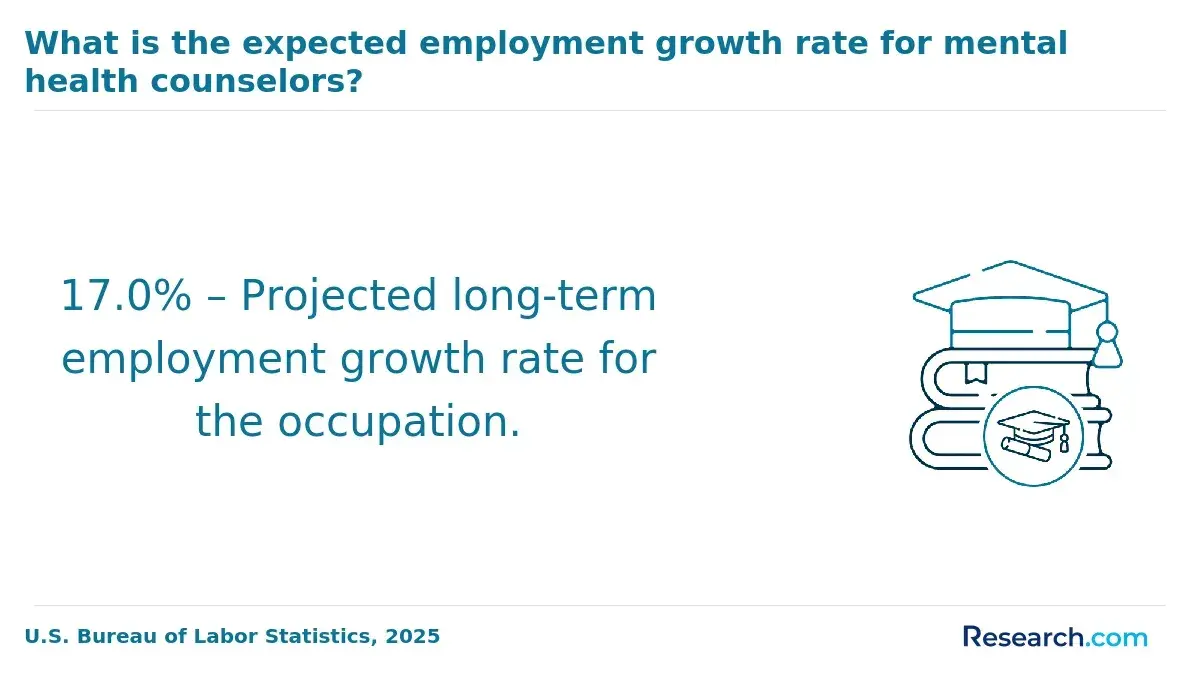
Employment for mental health counselors in Alabama is projected to grow by about 10% between 2022 and 2032. The state's employment for counselors is also projected to grow by 15% over the next decade. These outlook figures point to continued need, though actual hiring conditions vary by region, employer, licensure status, and specialization.

Salaries typically start around $35,000 and grow significantly with experience. Entry-level counselors in Alabama typically earn $40,000 to $45,000 annually, while experienced professionals can earn $60,000 or more. Graduates with licensure, clinical experience, and specialized training in areas such as addiction, school counseling, or mental health counseling may have stronger prospects.

Telehealth is also expanding access to behavioral health services, especially in rural areas where distance can limit care. However, students should confirm telehealth rules, supervision requirements, and employer expectations before assuming an online degree alone will qualify them for remote counseling work.

For professionals aiming to deepen expertise, teach, supervise, or move into advanced roles, exploring affordable online phd programs may be a useful long-term planning step.

Frequently Asked Questions About counseling

How can online counseling degree students in Alabama maximize their learning experience?

Online counseling degree students in Alabama can maximize their learning by actively engaging with both coursework and practical experiences. The Alabama State Board of Examiners in Counseling requires specific supervised clinical hours for licensure, so students should seek programs offering strong practicum or internship opportunities within the state. Participating in virtual study groups and discussions enhances understanding and professional networking. Utilizing university resources such as academic advising and career services supports timely graduation and employment. Staying current with Alabama's counseling licensure requirements, available on the Alabama Board website, ensures alignment between studies and future professional goals.

What are the most recognized online counseling degree programs in Alabama for 2026?

In 2026, the University of Alabama, Auburn University, and Troy University are ranked among the top online counseling degree programs in Alabama. These institutions offer accredited programs with flexible learning options designed to cater to various student needs and career goals.

How to prepare for the job market after completing online counseling degree in Alabama?

After completing an online counseling degree in Alabama, graduates should focus on obtaining licensure to enter the job market. Alabama requires counselors to hold either a Licensed Professional Counselor (LPC) or Licensed Marriage and Family Therapist (LMFT) credential, which involves passing a national exam and completing supervised clinical hours. According to the Alabama Board of Examiners in Counseling, candidates must document at least 3,000 hours of supervised experience. Networking with local mental health agencies can provide valuable job leads. Graduates should also prepare a professional resume highlighting clinical practicum experience and consider joining state organizations like the Alabama Counseling Association for career support.

How does a online counseling degree influence career mobility and advancement in Alabama?

Obtaining an online counseling degree in Alabama significantly enhances career mobility and advancement opportunities within the state's mental health sector. Alabama requires licensed professional counselors (LPCs) to hold a master's degree in counseling or a related field, making such degrees essential for entry and progression in counseling careers.

Online programs accredited by CACREP or recognized by the Alabama Board of Examiners in Counseling ensure graduates meet licensure requirements. According to the U.S. Bureau of Labor Statistics, Alabama's employment of counselors is projected to grow by 12% through 2031, driven by increased mental health awareness and demand.

With an accredited online degree, professionals can pursue roles in schools, clinics, and private practices, or advance toward specialized counseling fields. This flexibility and accessibility support career transitions and promotions without geographic limits within Alabama.

How does studying for a counseling degree in Alabama prepare for interdisciplinary roles?

Studying for a counseling degree in Alabama equips students with skills essential for interdisciplinary roles in healthcare, education, and social services. Alabama's programs often emphasize collaboration with professionals from psychology, social work, and healthcare fields, preparing graduates to work in diverse team settings.

Curricula usually include courses on mental health counseling, family therapy, and crisis intervention, promoting an understanding of multiple client needs. According to the Alabama Board of Examiners in Counseling, nearly 70% of licensed counselors work alongside professionals in fields such as education or healthcare, highlighting the importance of interdisciplinary training.

Online programs also offer flexible clinical internships in community agencies, fostering practical experience across different sectors. This approach ensures graduates are ready to navigate complex client issues within integrated service models.

How to choose between a thesis and a non-thesis counseling degree program in Alabama?

Choosing between a thesis and a non-thesis counseling degree in Alabama depends largely on your career goals and learning preferences. A thesis option involves conducting original research and writing a significant paper, ideal for students aiming for academic or research-focused careers. In contrast, a non-thesis program emphasizes coursework and practical skills, which suits those seeking clinical practice or licensure quickly.

Alabama counseling programs are accredited by the Council for Accreditation of Counseling and Related Educational Programs (CACREP), ensuring consistent quality whether you choose thesis or non-thesis tracks. According to the Alabama Board of Examiners in Counseling, practical experience and meeting supervised hours are crucial for licensure.

Students should consider time commitment and long-term objectives before making a decision. Speaking directly with program advisors at institutions is advisable to understand specific requirements and opportunities.

How to prepare for the job market after completing an online counseling degree in Alabama?

Graduates can prepare for the job market by networking with industry professionals, attending counseling workshops or local conferences, obtaining relevant certifications, and actively applying to diverse counseling roles across Alabama. Tailoring resumes to match specific job requirements can also enhance job prospects after graduation.

What part-time job opportunities in Alabama can complement counseling degree education?

Students pursuing an online counseling degree in Alabama can benefit from various part-time job opportunities that complement their education. Positions such as mental health aide, peer support specialist, or case manager assistant offer practical experience in counseling-related environments. These roles help develop essential skills like communication, empathy, and crisis intervention.

According to the Alabama Department of Mental Health, these entry-level jobs often require minimal prior experience and provide valuable exposure to clinical settings. Additionally, working in school counseling support or community outreach programs can broaden understanding of diverse populations.

Wages for these roles typically range from $12 to $18 per hour, enabling students to gain hands-on experience while managing their academic workload effectively. These positions also enhance a resume, improving future job prospects in counseling fields within Alabama.

What are the networking opportunities for online counseling students in Alabama?

Online counseling students in Alabama have several networking opportunities despite the virtual nature of their programs. Many Alabama universities offering online counseling degrees facilitate connections through virtual events, group projects, and discussion forums. These platforms allow students to engage with peers and faculty across the state. Additionally, students can join statewide professional organizations like the Alabama Counseling Association (ALCA), which offers annual conferences, workshops, and networking mixers both online and in-person.

Internships and practicum placements often connect students with local counseling professionals, expanding their networks further. According to the Alabama Board of Examiners in Counseling, practical experience is vital for licensure, making these placements key networking chances.

How can I customize my online counseling degree program in Alabama to fit my career goals?

Customizing an online counseling degree program in Alabama begins with selecting a specialization that aligns with your career goals, such as school counseling, clinical mental health, or marriage and family therapy. Many Alabama universities offer elective courses and practicum options allowing students to gain experience in specific counseling settings.

The state's licensure requirements, outlined by the Alabama Board of Examiners in Counseling, influence how you tailor your program, ensuring you meet the needed supervised hours and coursework. Additionally, look for programs accredited by CACREP, as this accreditation is often preferred by employers and required for licensure.

Some schools provide flexible scheduling and online internships to accommodate working professionals, which can help balance education with career advancement. According to the Alabama Department of Labor, specialized counselors in mental health and schools are in demand, so aligning your studies with these fields can improve job prospects.

What are the typical challenges that online counseling students in Alabama are facing?

Online counseling students in Alabama often face unique challenges that differ from traditional campus learners. One major issue is the limited availability of accredited programs within the state, which can restrict local options and affect licensure requirements. According to the Alabama Board of Examiners in Counseling, students must complete state-approved clinical hours, which can be difficult to coordinate remotely.

Another challenge is maintaining consistent internet access and technical support, especially in rural parts of Alabama where connectivity can be unreliable. Additionally, online students may struggle with feelings of isolation due to fewer opportunities for peer interaction and live supervision, both important for developing counseling skills.

Time management also poses a significant hurdle, as students must balance coursework with personal and professional responsibilities without the structured environment of a traditional classroom.

What professional certifications can I pursue with a online counseling degree?

With an online counseling degree in Alabama, graduates can pursue several professional certifications to advance their careers. One common certification is the Licensed Professional Counselor (LPC) credential, which requires meeting educational and supervised experience criteria set by the Alabama Board of Examiners in Counseling. The LPC designation enables counselors to offer mental health services independently.

Another option is the Certified Clinical Mental Health Counselor (CCMHC) credential, offered by the National Board for Certified Counselors. This certification requires a master's degree, supervised clinical hours, and passing a national exam. It signals specialized expertise in clinical mental health counseling.

In Alabama, the demand for licensed counselors is projected to grow by 14% through 2031 according to the U.S. Bureau of Labor Statistics, highlighting the value of these certifications. Other certifications, such as School Counseling credentials, may be obtained with additional state-specific requirements.

How to write a winning application for a online counseling program in Alabama?

Writing a winning application for an online counseling program in Alabama requires careful preparation and attention to detail. Start by highlighting your motivation for pursuing counseling and how it aligns with your career goals. Programs in Alabama often seek applicants with strong interpersonal skills and a clear understanding of the profession's demands, so emphasizing relevant experiences is beneficial.

Ensure your academic records meet the program's minimum GPA requirements, typically around 3.0, and prepare a polished personal statement. According to the Alabama Board of Examiners in Counseling, demonstrating awareness of state licensure requirements strengthens your application.

Lastly, secure strong letters of recommendation from professionals familiar with your potential in counseling. These elements together increase your chances of acceptance into competitive online programs.

What are the most recognized online counseling degree programs in Alabama for 2026?

In 2026, the most recognized online counseling degree programs in Alabama include those offered by the University of Alabama, Auburn University, and Troy University. These programs stand out due to their accreditation, faculty expertise, and comprehensive curricula designed to meet both state and national licensure requirements.

How can I gain practical experience while studying for a online counseling degree in Alabama?

Gaining practical experience while studying for an online counseling degree in Alabama is essential for licensure and career readiness. Many accredited programs incorporate required practicum and internship hours, which students can complete at approved local facilities. The Alabama Board of Examiners in Counseling mandates a minimum of 100 supervised practicum hours and 600 internship hours for Licensed Professional Counselors (LPC).

Students should seek partnerships between their online school and Alabama-based clinics, hospitals, or community agencies. Additionally, some universities assist in placing students in sites near their residence. This hands-on experience allows students to apply theory in real-world settings under professional supervision.

Networking with licensed counselors and attending state counseling conferences can also complement field experience by exposing students to best practices and emerging trends in Alabama's mental health field.

How do I choose the right concentration within a online counseling degree program in Alabama?

Choosing the right concentration within an online counseling degree program in Alabama involves understanding your career goals and the state's licensing requirements. Alabama requires counselors to complete a master's degree with specific coursework depending on the counseling field, such as clinical mental health or school counseling. The Alabama Board of Examiners in Counseling provides detailed guidelines on approved concentrations and supervised experience.

Consider areas with growing demand. For example, mental health counseling is expanding due to increased recognition of behavioral health. Data from the Alabama Department of Labor shows a steady rise in counselor job openings through 2028. Research program curricula carefully to ensure they align with licensure pathways in Alabama.

See What Experts Have To Say About Studying Counseling

Read our interview with Counseling experts

Meredith A. Rausch

Meredith A. Rausch

Counseling Expert

Associate Professor

University of Alabama

Charles Figley

Charles Figley

Counseling Expert

Kurzweg Distinguished Chair in Disaster Mental Health

Tulane University

Do you have any feedback for this article?

Related Articles
2026 Fastest Way To Become a Counselor in Michigan thumbnail
Careers JUN 22, 2026

2026 Fastest Way To Become a Counselor in Michigan

by Imed Bouchrika, PhD
2026 How to Become a Substance Abuse Counselor in West Virginia thumbnail
Careers JUN 18, 2026

2026 How to Become a Substance Abuse Counselor in West Virginia

by Imed Bouchrika, PhD
2026 Is a Master's in Counseling Worth It? thumbnail
Degrees JUN 16, 2026

2026 Is a Master's in Counseling Worth It?

by Imed Bouchrika, PhD
2026 How to Become a Licensed Counselor (LPC) in Missouri thumbnail
Careers JUN 12, 2026

2026 How to Become a Licensed Counselor (LPC) in Missouri

by Imed Bouchrika, PhD
2026 LPC Counseling Licensure Requirements in Louisiana thumbnail
Degrees JUN 22, 2026

2026 LPC Counseling Licensure Requirements in Louisiana

by Imed Bouchrika, PhD
2026 What Can You Do with a Counseling Degree? Costs & Job Opportunities thumbnail