Is a counseling doctorate the right next step for your career - or an expensive detour from a goal you could reach with a master's degree? This guide examines New York doctoral options through the decisions that matter most: career fit, licensure, time, cost, and likely outcomes. It also features the 2027 Most Popular Doctorate in Counseling Degree Programs Ranking in New York, created by the Research.com team of data scientists to help students make an informed choice about programs worth considering. Use it to build a shortlist, then test each option against your own goals.
Key findings about Counseling degrees in New York
A counseling doctorate is generally most relevant to counselor education, supervision, and research; it is not ordinarily required for entry to New York's licensed mental health counselor pathway, which begins with qualifying graduate education and additional state requirements (New York State Education Department).
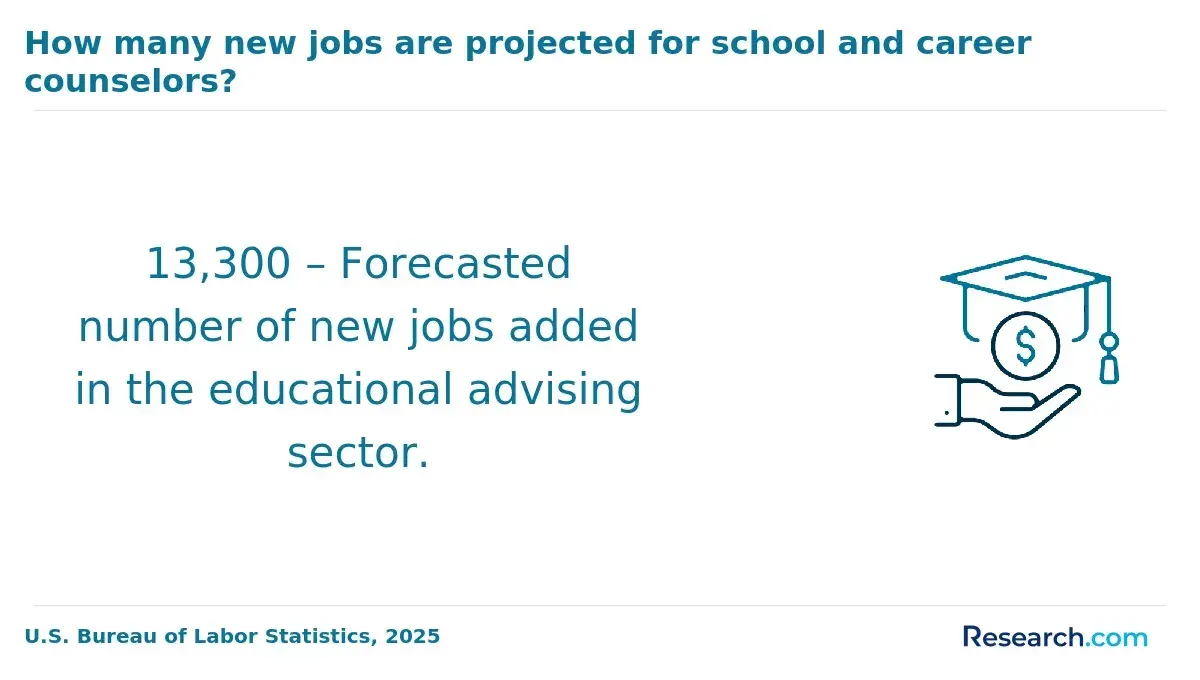
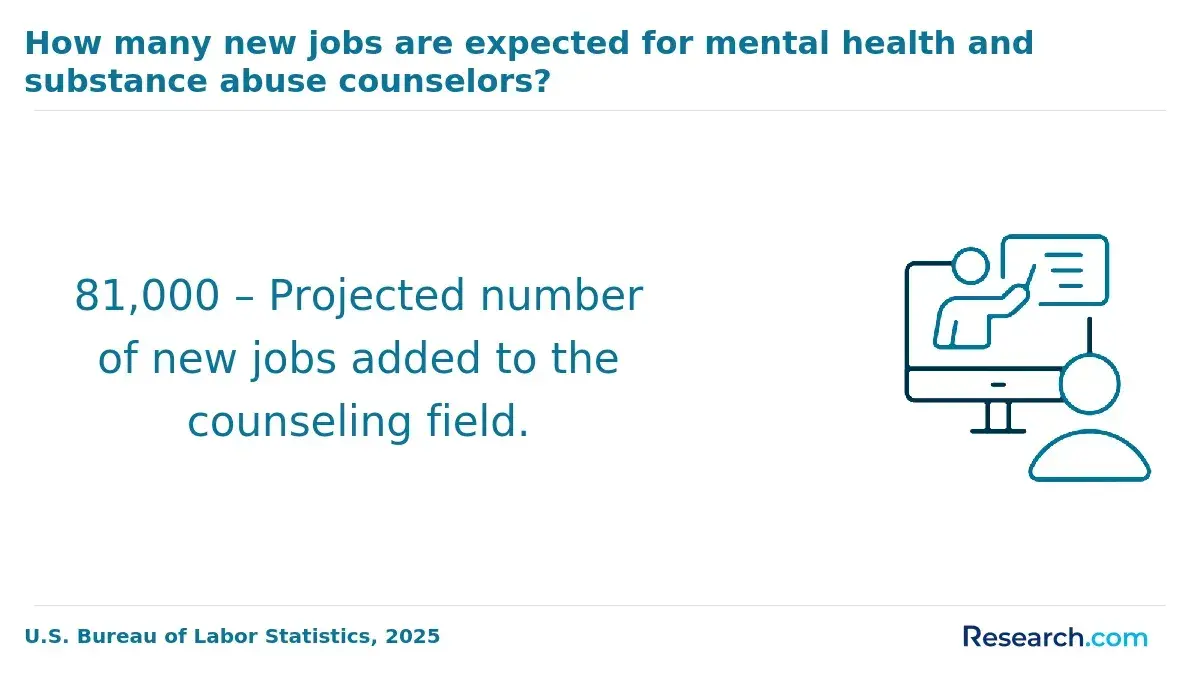
For national context, the U.S. Bureau of Labor Statistics reports a May 2025 median annual wage of $59,350 for clinical mental health counseling roles and projects 18% employment growth for the associated occupation over 2025-2035. Those figures describe occupations, not doctoral graduates' earnings.
Compare the full funding package, not tuition alone: a doctorate may require several years of coursework and dissertation research, and its financial value depends heavily on assistantships, existing earnings, and the job you intend to pursue.
What can I expect from a Counseling degree in New York?
A counseling doctorate is advanced preparation to study counseling practice, teach future counselors, supervise clinicians, conduct research, or lead programs. It is not one interchangeable credential. A PhD centered on mental health counseling may appeal to someone investigating clinical practice, while a doctorate in counselor education and supervision is more directly aligned with faculty development and training counselors.
The distinction matters if your immediate goal is to see clients. New York licenses mental health counselors through requirements administered by the New York State Education Department (NYSED), including qualifying education, supervised experience, and an examination. Earning a doctorate does not, by itself, confer an LMHC license. Applicants who do not already have appropriate master's-level clinical preparation should ask whether the doctoral curriculum actually satisfies the educational requirements for their intended license.
Expect doctoral seminars, research methods, substantial independent scholarship, and a dissertation or comparable research requirement. Ask programs where graduates work and whether teaching or supervision opportunities are built into the degree; those details help distinguish preparation for a faculty role from simply accumulating more clinical coursework.
Where can I work with a Counseling degree in New York?
Potential settings include university counselor-training programs, community mental health organizations, hospitals, behavioral health systems, schools, government agencies, and private practice. The role - not the degree title - determines which credentials an employer will require. Faculty appointments may emphasize research and teaching; clinical jobs may require an active New York license even when the applicant holds a doctorate.
Location affects the choice. An applicant hoping to teach should investigate faculty openings and willingness to relocate, rather than assume a New York doctorate leads to a nearby academic position. Someone intending to maintain a clinical caseload should instead compare access to approved supervisors, placements, and employers in the part of the state where they plan to practice. NYSED requirements remain relevant whether the university is in New York City, central New York, or elsewhere in the state.
There is no single "counseling doctorate salary." Pay depends on the job, employer, location, experience, and licensure. In its national occupational data for May 2025, the U.S. Bureau of Labor Statistics (BLS) reports a median annual wage of $59,350 for clinical mental health counseling roles. That is a benchmark for an occupation, not a forecast of what a new PhD recipient will earn in New York.
For a prospective doctoral student, the more useful comparison is between the salary and advancement available with the degree and the career already available without it. A practicing LMHC should ask whether the intended faculty, research, supervisory, or leadership position requires a doctorate and offers enough additional value to offset forgone earnings and any borrowing. Request recent, program-specific graduate destinations; occupational medians cannot answer that question.
These New York options illustrate why a shortlist should be organized by career goal, not just rank. Their published degree structures point toward different kinds of doctoral work; confirm current requirements and funding with each department before applying.
Pace University: Pace's catalog identifies a PhD specifically in mental health counseling, making its disciplinary focus more explicitly clinical than the counselor-education pathways below. It is worth examining for applicants whose research questions arise from mental health counseling practice, while checking separately how the degree relates to their own licensure status (Pace University graduate catalog).
Syracuse University: Syracuse places its counselor education doctorate within its School of Education, an orientation especially relevant to applicants planning to train and supervise future counselors. Compare its teaching and research expectations with the clinical focus of Pace before deciding which work you want your doctorate to prepare you to do (Syracuse University School of Education).
University of Rochester: Rochester describes its route as a PhD in education with coursework in counselor education and supervision. That degree structure may suit applicants who want to situate counselor-training research within broader education scholarship; ask how dissertation advising and teaching opportunities align with your proposed topic (University of Rochester Warner School).
These descriptions are not employment or licensure outcomes. For a broader comparison of program characteristics, consult the best counseling programs ranking, then verify the details most important to your intended career.
Plan on roughly four to six years of full-time doctoral study as a working estimate, and potentially longer if studying part-time or completing a dissertation alongside employment. This is a planning range, not a promised completion time: prior graduate credits, research progress, teaching duties, and each university's residency and dissertation rules can change it substantially.
Ask each program for its published time-to-degree policy and recent completion times, specifically for students entering with a counseling master's degree. A short coursework phase does not necessarily mean a short doctorate. If the additional years would delay a clinical career you could enter through a qualifying master's program, compare those paths before committing.
Online coursework can make doctoral study more workable for an employed counselor outside a university center. Campus-based study can make it easier to participate in research groups, teaching, and regular faculty meetings. Neither format alone establishes educational quality or New York licensure eligibility.
Before choosing a remote option, distinguish online classes from the entire degree: supervision activities, residencies, research collaboration, and any clinical placements may still require scheduled in-person participation. Ask where those activities occur, who arranges them, and whether the program's specific accreditation status and curriculum fit your intended role. If you seek an LMHC license, have the program explain how your complete educational path - not just its doctoral delivery format - maps to NYSED requirements.
A reliable statewide average specifically for counseling doctorates is not established by the commonly published institutional tuition figures. Undergraduate tuition, institution-wide graduate tuition, and a doctoral student's actual net cost measure different things; treating one as the other could produce a misleading budget (National Center for Education Statistics, IPEDS).
Build a program-level estimate instead. Request tuition and mandatory fees for the credits you must complete, expected annual increases, health insurance costs, and any dissertation-continuation charges. Then subtract guaranteed tuition remission and stipends, and account for the income you would give up or retain. Compare the same anticipated years of enrollment across schools. The most affordable counseling programs ranking can help identify options to investigate, but a lower listed price does not necessarily mean a lower net cost.
Start with university-funded research or teaching assistantships, tuition remission, fellowships, and relevant employer tuition benefits. Ask whether an offer guarantees support, how many years it covers, whether summer funding is included, and what teaching or research duties accompany it. An unfunded offer can have a very different financial effect from a funded place in the same discipline.
Federal Direct Unsubsidized Loans may be available to eligible graduate students, subject to federal rules and borrowing limits. Graduate PLUS availability changed for new graduate and professional students beginning July 1, 2026; qualifying students who borrowed before the change for the same program may be covered by transitional provisions. Confirm your own eligibility and current terms with Federal Student Aid and the school's financial aid office before relying on that loan in a doctoral budget (Federal Student Aid).
Do not assume a New York undergraduate grant will pay for doctoral study. Check the eligibility rules of any state award individually, and compare funding offers against the full cost of attendance rather than tuition alone (New York State Higher Education Services Corporation).
View the chart data as a table
Projected job growth 2025-2035 by counseling career path (U.S., BLS) (Source: BLS)
Category
Value
Mental Health Counselors
18
Marriage & Family Therapists
14
Postsecondary Teachers
7
Psychologists
6
School & Career Counselors
3
Rehabilitation Counselors
2
All occupations
3
Admissions rules differ by university, but applicants should expect a review of graduate preparation, transcripts, recommendations, a statement of research interests, and potential fit with faculty advisers. Some programs are designed primarily for applicants who already have a counseling master's degree and professional experience; others may evaluate related backgrounds differently. Confirm prerequisites on the current program admissions page rather than assuming that holding any mental health degree is sufficient.
Two checks are particularly important. First, ask whether your prior graduate credits can count toward doctoral requirements and obtain the answer in writing; admission does not mean every credit transfers. Second, if clinical licensure is part of your plan, compare your entire prior and proposed curriculum with NYSED's educational requirements. Doctoral admission and eligibility for a New York counseling license are separate decisions (NYSED).
Doctoral study commonly combines advanced counseling theory with research design, quantitative or qualitative methods, counselor supervision, teaching, ethics, and dissertation work. The balance is a useful signal: a curriculum with sustained pedagogy and supervision preparation fits an aspiring counselor educator differently from one centered on mental health counseling research.
Read the actual course sequence rather than the degree title alone. Identify when research methods begin, whether there is structured teaching or supervision experience, and what must happen before dissertation work can start. If you need additional clinical coursework for licensure, ask whether those courses are included, available separately, or outside the doctorate altogether (university program catalogs; NYSED).
Applicants may encounter mental health counseling, counselor education and supervision, school counseling research, rehabilitation, or substance use counseling as areas of study or faculty expertise. A research interest is not necessarily a formal concentration: check whether it changes required courses, fieldwork, adviser availability, or the credential printed on the transcript.
Choose backward from the job. Counselor education and supervision is a logical area to investigate for a prospective faculty member; mental health counseling research may better fit a clinician studying treatment or service delivery. School-based work raises a separate credential question: New York school counselor certification and LMHC licensure are distinct pathways, so do not assume a doctoral specialization substitutes for either set of requirements (NYSED).
The right program is the one that can support your intended work at a cost and time commitment you can sustain. Use the ranking to identify candidates, then ask the same questions of each school:
What positions did recent doctoral completers take, and how many completed the program? Request the cohort and reporting period, not just selected success stories.
Which faculty members could advise your proposed research, and what happens if an adviser becomes unavailable?
Is the specific program accredited where relevant, and how does its curriculum relate to any New York credential you intend to seek? Verify program status with the accreditor and licensure rules with NYSED.
Which parts of the funding offer are guaranteed, what duties accompany them, and what would you pay if completion takes longer than planned?
Which prior credits may transfer, and when can you receive a written credit evaluation?
A common mistake is to equate popularity, institutional reputation, or low advertised tuition with a good personal return. Compare completion prospects, net cost, time away from earnings, existing income, and plausible post-degree roles over the same time horizon. The most valuable counseling programs ranking offers another lens, but your own funding and career starting point still determine whether the investment makes sense.
View the chart data as a table
Pay vs projected growth by counseling career path (U.S., BLS) (Source: BLS)
Name
Median annual wage (USD/year)
Projected growth (%)
Mental Health Counselors
59,350
18
School & Career Counselors
64,330
3
Rehabilitation Counselors
46,850
2
Marriage & Family Therapists
66,940
14
Psychologists
99,110
6
Postsecondary Teachers
85,330
7
A doctorate may support a move into counselor education, academic research, clinical supervision, program evaluation, or behavioral health leadership. A licensed clinician may also continue practicing while taking on teaching or supervisory work. Requirements differ by position: employers determine hiring qualifications, NYSED governs state licenses and certifications, and a university determines its faculty hiring criteria.
Not every path needs the doctorate. If your principal goal is to begin providing mental health counseling services, investigate a qualifying master's-to-licensure route first. If you already practice and want to teach future counselors or produce original research, doctoral study has a clearer purpose. Before applying, find actual postings for your target roles and note which require a doctorate, a New York license, teaching experience, or published research.
View the chart data as a table
Graduates (2024-25) by program (Source: Research.com)
Category
Value
University of Rochester
3
Syracuse University
4
Pace University
18
The national outlook for counseling practice is stronger than a single doctoral employment forecast can convey. BLS projects 18% growth over 2025-2035 for the occupation associated with clinical mental health and addiction counseling. That supports investigating clinical demand, but it does not measure New York faculty vacancies or guarantee that a doctorate improves an individual applicant's hiring chances (BLS, 2025-2035 Employment Projections).
Treat clinical and academic markets separately. A clinician should examine local employers, supervision opportunities, and license requirements. An aspiring professor should examine openings by specialty and be prepared to evaluate opportunities beyond the city where they study. For either path, recent graduate placements and the qualifications in current job postings are more decision-useful than a broad growth figure alone.
2027 Most Popular Doctorate in Counseling Degree Programs Ranking in New York
Investing in a doctorate is a consequential decision. Research.com developed its counseling rankings to give prospective students a more consistent starting point for comparison, using multiple education data sources and checking program characteristics rather than relying on reputation alone.
Research.com's counseling rankings consider graduate outcomes, applicable licensure exam results, accreditation and federal aid eligibility, and program cost. The Best ranking weights completion, employment or doctoral admission, applicable exam pass rates, CACREP recognition, and Title IV eligibility before factoring in cost; rankings with other names order programs by their stated dimension. A popularity ranking is therefore a starting point for a shortlist, not proof that its highest-listed program is the best fit for every applicant. The following sources were used to create the ranking:
IPEDS database: institutional reporting on enrollment, completions, and other education measures.
Peterson's database: program and institutional information used in school comparisons.
College Scorecard database: federal institutional information, including available cost and outcome measures.
The team's aim is to make comparisons more credible and useful while recognizing that reported measures may cover different cohorts or levels of study. Readers should confirm current doctoral tuition, funding, accreditation, and outcomes directly with each university. Learn more about the ranking process on Research.com's methodology page.
# 1 position
Pace University
Doctor
Mental Health Counseling, PhD
Delivery mode: campus
41.00
/ 100
Final score
Specialization
Counselor Education and Supervision
Required credits
60 semester credits
GPA range
3.60 - 4.00
Program completion rate
61.36% (2024-25)
Employment or doctoral admission
100% (2024-25)
Application deadline
Fall: November 1 (then space available basis until January 15)
Application process
direct
GRE
no
Prerequisites
Master's in mental health counseling equivalent to Pace's 60-credit M.S.; graduate GPA 3.6+; NY MHC limited permit eligibility or MHC licensure. Those without graduate statistics in three years must complete a research/statistics course first.
Additional requirements
Letters of recommendation, personal statement, and official academic transcripts; applicants substantially meeting requirements are invited to an interview with the departmental admission screening committee.
Accreditation
Accredited by the Council for Accreditation of Counseling and Related Educational Programs (CACREP), with institutional accreditation from the Middle States Commission on Higher Education (MSCHE).
Pace University earned a Research.com Student Interest Score of 41.0/100, supported by 18 graduates (2024-2025) and 61.36% program completion rate. The program is CACREP-accredited, valid through 2027-10-31.
# 2 position
Syracuse University
Doctor
Counseling and Counselor Education, Ph.D.
Delivery mode: campus
22.40
/ 100
Final score
Specialization
Counselor Education and Supervision
Required credits
60 semester credits
GPA range
3.25 - 4.00
Employment or doctoral admission
100% (2025-26)
Application deadline
November 1
Application process
direct
GRE
no
Prerequisites
Bachelor's degree; CACREP-accredited master's degree in counseling or equivalent; minimum graduate GPA of 3.25. Applicants without a CACREP-accredited master's degree should expect additional coursework built into the doctoral program.
Additional requirements
CACREP (or equivalent) counseling master's with 3.25 GPA; official transcripts; 500-word personal statement; writing sample; 3 letters of recommendation; resume/CV; TOEFL 90 / IELTS 6.5 / Duolingo 120 (international); interview; GRE not required. Deadline Nov 1.
Accreditation
Accredited by the Council for Accreditation of Counseling and Related Educational Programs (CACREP), with institutional accreditation from the Middle States Commission on Higher Education (MSCHE).
Syracuse University earned a Research.com Student Interest Score of 22.4/100, with 4 graduates (2024-2025) among the verified supporting factors. The program is CACREP-accredited, valid through 2027-10-31.
# 3 position
University of Rochester
Doctor
PhD in Education: Counselor Education and Supervision
Delivery mode: campus
19.30
/ 100
Final score
Specialization
Counselor Education and Supervision
Required credits
66 semester credits
Program completion rate
50% (2024-25)
Employment or doctoral admission
100% (2024-25)
Application deadline
November 1, 2026
Application process
direct
Prerequisites
Up to 30 credits in entry-level or advanced counseling coursework (often transferred from a previous graduate degree).
Accreditation
Accredited by the Council for Accreditation of Counseling and Related Educational Programs (CACREP), with institutional accreditation from the Middle States Commission on Higher Education (MSCHE).
University of Rochester earned a Research.com Student Interest Score of 19.3/100, supported by 3 graduates (2024-25) and 50% program completion rate. The program is CACREP-accredited, valid through 2028-03-31.
Frequently asked questions about Counseling degree in New York
Do I need a doctorate to become a mental health counselor in New York?
No. New York's LMHC pathway centers on qualifying graduate education, supervised experience, and examination requirements; a doctorate is not the standard entry requirement. Confirm your individual educational eligibility with NYSED.
Will a counseling PhD automatically qualify me for an LMHC license?
No. NYSED evaluates licensure requirements separately. Ask the program to identify which required coursework it covers and whether you must complete other education, supervised experience, or an examination.
Is a doctorate worthwhile if I already have an LMHC license?
It may be if you intend to pursue counselor education, research, or roles that specifically value doctoral preparation. Compare likely career opportunities with the program's net cost and the earnings you might forgo.
Can I complete a New York counseling doctorate online?
Delivery varies by program. Confirm which courses, residencies, supervision activities, and research meetings require in-person attendance; an online course option does not establish that the entire doctorate is remote.
What accreditation should I check?
Verify institutional accreditation and, where relevant to your goal, the specific program's CACREP status in the accreditor's directory. Do not assume that accreditation of one counseling degree at a university extends to its doctorate (CACREP; U.S. Department of Education).
Should I choose the most popular program?
Use popularity to discover options, not to make the final decision. Adviser fit, verified outcomes, funding, degree requirements, and alignment with your intended New York credential or career matter more than a ranking position alone.
See What Experts Have To Say About Studying Counseling