Choosing an online counseling master's program in Illinois means looking beyond convenience: the degree must fit the work you want to do and the credential you may need. This guide compares clinical mental health and rehabilitation options, explains Illinois licensure considerations, and helps you weigh training, cost, and career prospects. It also features the 2027 Best Online Master's in Counseling Degree Programs Ranking in Illinois, created by the Research.com team of data scientists to help students make an informed choice about which counseling programs are worth considering.
Key findings about online Counseling degrees in Illinois
Start with the credential: Illinois clinical counselor licensure and school counselor certification follow different state processes; an online counseling degree is not automatically suitable for both (Illinois Department of Financial and Professional Regulation; Illinois State Board of Education).
Plan for local clinical training: Online coursework does not eliminate supervised practicum or internship requirements, making placement support and travel requirements important comparison points (Council for Accreditation of Counseling and Related Educational Programs).
Use salary data as context, not a promise: The U.S. median for substance abuse, behavioral disorder, and mental health counselors was $59,350 in May 2025; national employment is projected to grow 18% from 2025 to 2035 (U.S. Bureau of Labor Statistics).
What can I expect from an online Counseling degree in Illinois?
An online master's in counseling combines graduate study in assessment, ethics, counseling methods, and human development with supervised practice. "Online" usually describes how academic courses are delivered - not where clients are seen. Ask each school whether classes meet live, whether campus visits are required, and who secures and approves an Illinois clinical placement.
The most important distinction is the intended credential. Clinical mental health counseling generally points toward Illinois professional counselor licensure; rehabilitation counseling focuses on disability, employment, and independent living; school counseling requires an educator-credential pathway. Illinois licenses professional counselors through the Illinois Department of Financial and Professional Regulation (IDFPR), while the Illinois State Board of Education (ISBE) oversees school counselor endorsement. A degree title alone establishes neither eligibility.
This route suits someone prepared for direct client work, supervised training, and potentially post-degree licensure requirements. If the goal is a school-based position, a rehabilitation role, or a nonclinical human-services job, compare programs built for that outcome rather than choosing a clinical degree solely because its course schedule is convenient.
Where can I work with an online Counseling degree in Illinois?
Potential settings include community mental health organizations, hospitals, outpatient practices, substance-use treatment programs, disability-service agencies, colleges, and schools. Which positions are available depends on the employer's requirements and the graduate's license or certification - not simply possession of a master's degree (U.S. Bureau of Labor Statistics; IDFPR; ISBE).
Location affects the practical value of an online program. A student near Chicago may have a different set of placement and employer options from a student elsewhere in the state, even while taking identical online courses. Before enrolling, ask whether the program has approved supervisors and placement procedures near the place you intend to live and work. Students planning to move should check the destination state's rules separately; Illinois approval does not establish eligibility everywhere.
Pay depends on occupation, setting, experience, location, and credentials. The U.S. Bureau of Labor Statistics reports a May 2025 national median annual wage of $59,350 for substance abuse, behavioral disorder, and mental health counselors. That occupational figure is a benchmark - not an Illinois starting salary or a prediction of what a particular graduate will earn.
Specialization changes the comparison. The national median was $64,330 for educational, guidance, and career counselors and advisors and $46,850 for rehabilitation counselors in May 2025 (U.S. Bureau of Labor Statistics). Those occupations cover different jobs and qualification routes, so a higher median should not, by itself, determine which degree to pursue. Compare roles you would actually qualify for, then weigh likely earnings against borrowing, time out of the workforce, and any post-degree supervision required.
The most useful program differences concern the counseling role being taught, how courses reach students, and whether required clinical training is feasible where they live. The distinctions below are starting points for comparison, not confirmation that every course or field experience can be completed remotely; verify current formats and requirements with each program.
Lewis University: Its clinical mental health counseling master's is housed in the psychology department, making its published graduate catalog particularly useful for reviewing the course sequence against Illinois licensure requirements. It merits a close look from students who want to audit required clinical coursework before deciding whether the available delivery format fits their schedule (Lewis University graduate catalog).
Adler University: Adler frames its clinical mental health counseling program around socially responsible practice. Students interested in community-facing clinical work should ask how that emphasis appears in required training and available placements, rather than relying on the program's mission statement alone (Adler University).
Bradley University: Bradley identifies its clinical mental health counseling master's as an online offering. That makes it a direct comparison for working students, who should examine live-session times and field-placement responsibilities alongside the convenience of remote coursework (Bradley University Online).
Judson University: Judson's clinical mental health counseling program provides a faith-based university setting. It may fit applicants who want to explore how that setting relates to counselor training; they should confirm the current delivery format and required clinical experiences before treating it as an online option (Judson University).
Northern Illinois University: Its graduate offering sits within rehabilitation services rather than a general clinical mental health counseling track. That distinction matters most to students interested in disability-related counseling, who should confirm the precise degree, delivery options, and credential alignment with the department (Northern Illinois University).
North Park University: North Park explicitly presents an online clinical mental health counseling master's. Students who want that specialty without regular campus-based coursework can compare its live-class expectations and placement support directly with other online clinical programs (North Park University).
Northeastern Illinois University: Its M.A. is specifically in rehabilitation counseling, providing a focused alternative to the clinical mental health degrees in this group. It is most relevant when disability services and rehabilitation practice - not general psychotherapy - match the intended career; applicants should verify current online availability (Northeastern Illinois University).
Northwestern University: Counseling@Northwestern offers an online counseling route associated with its counseling program. Students comparing it with other online clinical options should focus on its instructional schedule, supervised-training arrangements, and full program price rather than assuming an online format means identical costs or attendance expectations (Northwestern University).
A full-time counseling master's commonly takes about two to three years; part-time study can take longer. Actual timing depends on the school's course sequence, start dates, placement availability, and whether clinical courses must be taken in order. Online delivery can reduce commuting without shortening required supervised training.
If speed matters, compare the fastest counseling programs against the date you could realistically begin fieldwork. Ask for a term-by-term plan based on your work schedule and whether any prior graduate credits would transfer. An advertised short completion time may apply only to full-time students who meet every placement deadline.
The central difference is access to academic instruction, not whether students must practice counseling skills. Both formats can require supervised experiences with clients, and Illinois credentialing depends on meeting the applicable requirements rather than choosing a particular classroom format (IDFPR; ISBE).
This comparison highlights the practical trade-offs to confirm with individual schools:
Decision factor
Online program
On-campus program
Course attendance
May include live online meetings, recorded work, or both
Usually requires travel for scheduled classes
Clinical experience
Usually arranged at an approved site; local availability matters
Also requires approved training; nearby institutional contacts may be useful
Best fit
Students who need geographic flexibility and can manage remote learning
Students who prefer regular in-person contact and campus-based scheduling
Neither format is inherently better for licensure. A strong choice is the one whose clinical-site arrangements, supervision, course schedule, and total cost work for your circumstances.
There is no single reliable statewide average that captures the total price of an Illinois online counseling master's. NCES/IPEDS institutional graduate tuition figures are useful context, but they do not necessarily represent counseling-specific tuition, required fees, or the cost of completing a particular program. A comparison based only on a school-wide average can therefore misstate what you would pay (National Center for Education Statistics, IPEDS).
Instead, request each school's current per-credit price, required credits, mandatory online and clinical fees, expected travel costs, and estimated time to completion. At public institutions, confirm whether the quoted rate depends on Illinois residency; do not assume an online student automatically receives an in-state rate. The most affordable counseling programs can help form a shortlist, but compare the total amount payable to finish, not just advertised tuition.
A lower-price program may be the better investment if it meets the intended credential requirements and offers workable placements. Conversely, extra time to completion or an unaffordable placement commute can erode an apparent tuition advantage.
Start with the Free Application for Federal Student Aid (FAFSA) and the school's graduate aid office. Depending on eligibility and program participation, options may include federal Direct Unsubsidized Loans, institutional scholarships, assistantships, employer tuition support, and relevant outside awards. Confirm that the specific program and enrollment pattern qualify; online status by itself does not settle aid eligibility (Federal Student Aid; U.S. Department of Education).
Do not build a financing plan around Graduate PLUS without checking current eligibility. Under federal changes affecting new graduate borrowing from July 2026, new borrowers generally cannot count on that loan for a newly started program; limited transition provisions may apply to qualifying students who borrowed for their program before the change. Ask the financial aid office to review your individual history and current Federal Student Aid rules before accepting an offer (Federal Student Aid).
For each offer, separate grants and employer benefits from loans, then compare expected debt at graduation. Also ask about funding during internship terms: reduced paid-work hours can matter as much as a tuition difference.
View the chart data as a table
Median wage by counseling career path (U.S., BLS May 2025) (Source: BLS)
Category
Value
Psychologists
99,110
Postsecondary Teachers
85,330
Marriage & Family Therapists
66,940
School & Career Counselors
64,330
Mental Health Counselors
59,350
Rehabilitation Counselors
46,850
Applicants generally need an accredited bachelor's degree and must submit the materials specified by the program, which may include transcripts, recommendations, a statement of purpose, and an interview. A psychology major is not necessarily required; prerequisite coursework, GPA policies, and experience expectations are school-specific (Lewis University; Bradley University; Northwestern University).
If your academic record is unconventional, use the easiest counseling programs as an admissions-comparison starting point - not as evidence that the coursework or licensure process will be easy. Ask whether prerequisite courses can be completed before entry and whether prior graduate courses transfer into required counseling credits. Transfer approval can reduce cost, but it should not be assumed for supervised clinical work.
Clinical mental health programs commonly cover counseling theories, helping skills, assessment, diagnosis, ethics, multicultural counseling, research, group counseling, and supervised practicum and internship. CACREP's counseling accreditation standards address curricular and supervised-practice expectations, but each program determines its course titles and sequence (Council for Accreditation of Counseling and Related Educational Programs).
Read the catalog against your intended work. A rehabilitation counseling applicant should look for disability and vocational content; an aspiring Illinois school counselor should verify that the course of study is part of an appropriate school-counselor preparation pathway. A course that sounds relevant is not a substitute for confirmation from the program and the applicable Illinois credentialing authority (IDFPR; ISBE).
Clinical mental health and rehabilitation counseling are distinct options among the Illinois programs discussed here. Other counseling-related paths include school counseling, addiction counseling, and marriage and family therapy, but they do not share one interchangeable Illinois credential (IDFPR; ISBE).
Choose by intended job before choosing by course format. Clinical mental health is the closer match for someone seeking professional counselor licensure and broad mental health practice; rehabilitation counseling better matches disability and vocational-service goals. A school applicant should prioritize an ISBE-aligned preparation route, while someone seeking marriage and family therapist licensure should verify that a program meets that separate licensing pathway. An elective or concentration name alone does not establish eligibility.
The best choice is the program that meets your intended credential requirements at a manageable cost and offers training you can actually complete. A ranking helps narrow the field; it cannot determine whether a nearby internship site is available or whether a course sequence fits your working hours. The most valuable counseling programs offer another comparison lens, but value is personal: weigh aid and debt, completion likelihood, forgone earnings, expected post-degree earnings, and the time over which those benefits may accrue.
Before paying a deposit, put the same questions to each finalist so that their answers are comparable:
Which specific Illinois license or certification is this degree designed to support, and which requirements remain after graduation?
Is the counseling program itself CACREP-accredited, and what is its current accreditation status? Confirm directly with the accreditor and school.
Which courses require live attendance or campus visits, and who is responsible for finding and approving my clinical site?
What is my written total-cost estimate, including fees, placement expenses, and the schedule available to me?
What program-level completion, exam, and employment outcomes can the school document, and for which reporting period?
Two common mistakes are assuming institutional accreditation is the same as programmatic accreditation and assuming an online program satisfies every state's licensing rules. Verify each separately. If a school cannot explain its credential alignment or placement process for your circumstances, consider another option before borrowing.
Graduates may pursue clinical mental health, rehabilitation, addiction-related, or school-based work when their education and subsequent credentials match the role. Licensure and certification can involve separate educational review, supervised experience, and examinations; a master's diploma does not confer an Illinois license (IDFPR; ISBE).
For a career changer, the key distinction is between qualifying for a position after graduation and qualifying only after additional supervised work or credential steps. Ask employers which credential they require for the jobs you want, then ask programs how graduates address those requirements. If you want a nonclinical role and do not intend to complete counselor licensure, compare less clinically intensive graduate options as well; required counseling fieldwork may be an unnecessary investment for that goal.
View the chart data as a table
Best score distribution across ranked programs (Source: Research.com)
Category
Value
89-89
1
90-90
1
91-91
5
92-92
0
93-93
0
94-94
1
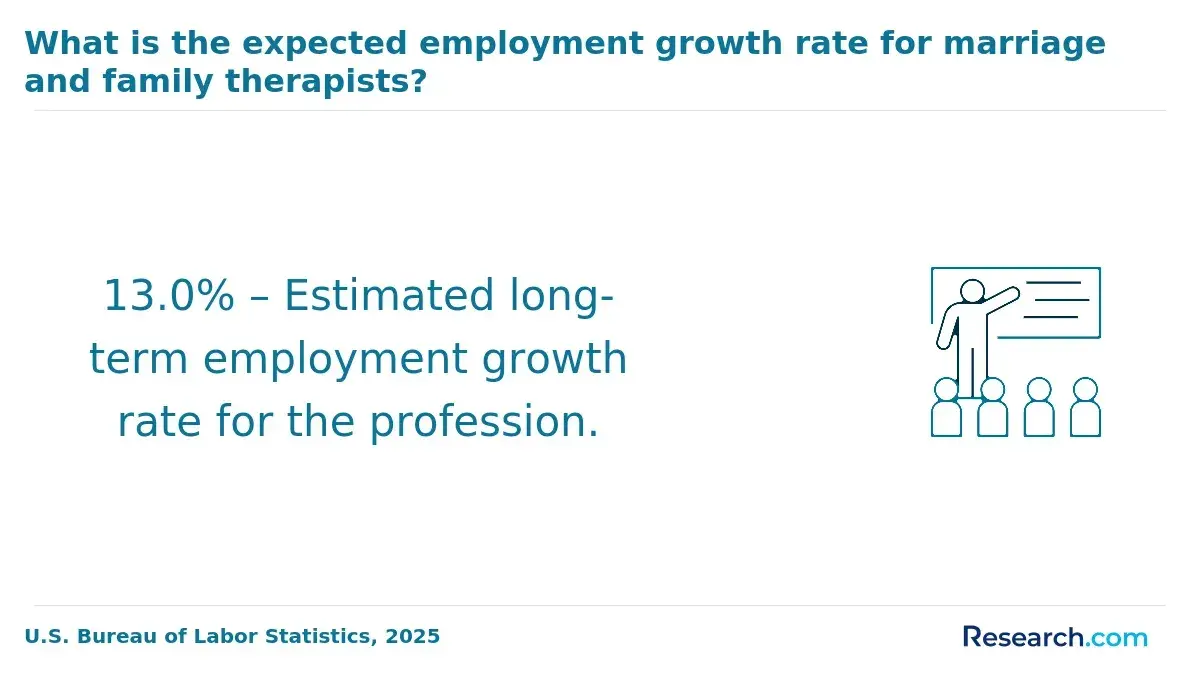
National employment for substance abuse, behavioral disorder, and mental health counselors is projected to grow 18% from 2025 to 2035 (U.S. Bureau of Labor Statistics, Employment Projections). That signals demand for the occupation nationally, but it is not an Illinois hiring forecast and does not say which employers will accept a particular degree or pre-licensure status.
For a local job search, compare actual postings in the Illinois areas where you could work: note required license, supervision arrangements, setting, and whether entry-level roles are available. Clinical placement can also be an early way to learn which services and employers operate nearby. Treat promising national growth as a reason to investigate local opportunities - not as a guarantee of a job after graduation.
2027 Best Online Master's in Counseling Degree Programs Ranking in Illinois
How do we rank schools?
Investing in graduate education is a consequential decision. To make the ranking useful and credible, the Research.com team evaluates outcomes, accreditation, eligibility for federal aid, and cost rather than treating a program's reputation as a substitute for evidence. Readers can use the ranking to identify programs worth investigating, then confirm current tuition, delivery format, and licensure fit directly with each school.
The Best ranking begins with a graduate-outcomes-and-accreditation score: program completion accounts for 40%; employment or doctoral admission, 20%; licensure exam pass rate, 20% where applicable; CACREP programmatic accreditation, 16%; and federal Title IV institutional eligibility, 4%. Shares are renormalized when a criterion does not apply. Program cost contributes a smaller component - about 7% of the final score. The same method applies to online and on-campus programs; other Research.com rankings order programs by the dimension named in each ranking.
The ranking draws on these data sources:
IPEDS database - institutional enrollment, completion, and cost reporting.
Peterson's database - program and institution information used for comparison.
Some outcomes and prices are reported at the institution rather than the specific counseling-program level, so no ranking replaces a direct program-level check. Read more about the approach on the Research.com methodology page.
# 1 position
Lewis University
Master
Master of Arts in Clinical Mental Health Counseling
Delivery mode: hybrid
94.50
/ 100
Final score
Specialization
Clinical Mental Health Counseling
Required credits
60 semester credits
Acceptance rate
87%
GPA range
3.00 - 4.00
Program completion rate
97% (2024-25)
Employment or doctoral admission
92% - 95% (2024-25)
Application process
direct
GRE
no
Prerequisites
At least 15 semester hours of undergraduate psychology coursework, including a course in statistics or research methods; baccalaureate degree from a regionally-accredited institution.
Additional requirements
Application with personal statement of professional goals; two recommendation letters from professors, employers or supervisors (one from an instructor preferred); official transcripts; TOEFL/IELTS or similar for non-native English speakers.
Accreditation
Accredited by the Council for Accreditation of Counseling and Related Educational Programs (CACREP), with institutional accreditation from the Higher Learning Commission (HLC).
Lewis University earned a Research.com Counseling Program Score of 94.5/100, supported by 97% program completion rate and 92% - 95% employment or doctoral admission rate. The program is CACREP-accredited, valid through 2030-03-31.
# 2 position
Adler University
Master
Master of Arts in Counseling: Clinical Mental Health Counseling
Delivery mode: hybrid
91.67
/ 100
Final score
Program length
2 Year Course Sequence (online); 2-year program, full-time study
Specialization
Clinical Mental Health Counseling
Required credits
62 semester credits
GPA range
3.00 - 4.00
Application process
direct
Prerequisites
Bachelor's degree from a regionally accredited or equivalent international institution; recommended GPA of 3.0 or higher (undergraduate and graduate coursework), with exceptions considered case-by-case.
Additional requirements
Application fee; completed online application; resume/CV; official transcripts from all post-secondary institutions; Statement of Intent; letters of recommendation/references; personal interview as final step (for approved applicants).
Accreditation
Accredited by the Council for Accreditation of Counseling and Related Educational Programs (CACREP), with institutional accreditation from the Higher Learning Commission (HLC).
Adler University earned a Research.com Counseling Program Score of 91.67/100. The program is CACREP-accredited, valid through 2031-10-31.
# 3 position
Bradley University
Master
Master of Arts in Counseling – Clinical Mental Health Counseling
Delivery mode: online
91.63
/ 100
Final score
Program length
approximately 3 years (part-time)
Specialization
Clinical Mental Health Counseling
Required credits
60 semester credits
GPA range
2.75 - 4.00
Program completion rate
93% (2022-23)
Employment or doctoral admission
96% (2022-23)
Licensure exam pass rate
92% (2022-23)
Application deadline
Spring 2027: November 8, 2026
Application process
direct
GRE
Conditional: GRE or MAT required if the Graduate Education GPA evaluation is below 3.0
Prerequisites
Accredited bachelor's degree. Unconditional admission: 3.0 GPA in the last 60 undergraduate hours; conditional admission: overall undergraduate GPA 2.75+. Prior graduate coursework (12+ credits) needs a 3.0 GPA. No counseling or psychology experience…
Additional requirements
Online application; transcripts; resume; statement of interest; three recommendations (one from a current supervisor); online group interview. GRE or MAT required only if GPA is below 3.0. English proficiency for international applicants.
Accreditation
Accredited by the Council for Accreditation of Counseling and Related Educational Programs (CACREP), with institutional accreditation from the Higher Learning Commission (HLC).
Bradley University earned a Research.com Counseling Program Score of 91.63/100, supported by 92% licensure exam pass rate and 93% program completion rate. The program is CACREP-accredited, valid through 2031-10-31.
# 4 position
Judson University
Master
Master of Arts in Clinical Mental Health Counseling
Delivery mode: online
91.55
/ 100
Final score
Program length
under three years
Specialization
Clinical Mental Health Counseling
Required credits
60 semester credits
GPA range
2.50 - 4.00
Application deadline
Spring 2027: Oct 16, 2026
Application process
direct
GRE
no
Prerequisites
Bachelor's degree from a regionally accredited college or university; minimum GPA of 2.50; minimum two years of work experience.
Additional requirements
Completed signed application form, official transcripts, two letters of reference, professional resume, one-page essay, interview with Program Chair and/or panel.
Accreditation
Accredited by the Council for Accreditation of Counseling and Related Educational Programs (CACREP), with institutional accreditation from the Higher Learning Commission (HLC).
Judson University earned a Research.com Counseling Program Score of 91.55/100. The program is CACREP-accredited, valid through 2031-03-31.
# 5 position
Northern Illinois University
Master
Master of Science in Rehabilitation Counseling
Delivery mode: hybrid
91.39
/ 100
Final score
Specialization
Rehabilitation Counseling
Required credits
60 semester credits
GPA range
2.75 - 4.00
Program completion rate
100% (2025-26)
Employment or doctoral admission
100% (2025-26)
Application deadline
Fall/Summer: Feb 1; Spring: Sep 1
Application process
direct
GRE
no
Prerequisites
Baccalaureate or higher degree from an accredited U.S. college or university or equivalent degree from a recognized foreign institution
Additional requirements
Graduate School application; unofficial transcripts from all undergraduate/graduate institutions (official required after admittance); personal goals statement; two letters of recommendation; pre-admission interview for qualified applicants
Accreditation
Accredited by the Council for Accreditation of Counseling and Related Educational Programs (CACREP), with institutional accreditation from the Higher Learning Commission (HLC).
Northern Illinois University earned a Research.com Counseling Program Score of 91.39/100, supported by 100% program completion rate and 100% employment or doctoral admission rate. The program is CACREP-accredited, valid through 2031-03-31.
# 6 position
North Park University
Master
M.A. in Clinical Mental Health Counseling
Delivery mode: online
91.16
/ 100
Final score
Program length
about two years
Specialization
Clinical Mental Health Counseling
Required credits
60 semester credits
GPA range
2.75 - 4.00
Employment or doctoral admission
95% (2023-24)
Licensure exam pass rate
100% (2023-24)
Application deadline
12/15/2026
Application process
direct
GRE
no
Prerequisites
A bachelor's degree from an accredited institution
Additional requirements
Official transcripts from all colleges/universities attended, current resume, two professional and/or academic recommendations, an essay, and an interview with a faculty member; up to six transfer credits accepted
Accreditation
Accredited by the Council for Accreditation of Counseling and Related Educational Programs (CACREP), with institutional accreditation from the Higher Learning Commission (HLC).
North Park University earned a Research.com Counseling Program Score of 91.16/100, supported by 100% licensure exam pass rate and 95% employment or doctoral admission rate. The program is CACREP-accredited, valid through 2034-04-30.
# 7 position
Northeastern Illinois University
Master
Rehabilitation Counseling, M.A.
Delivery mode: online
90.39
/ 100
Final score
Program length
2.5 years full-time
Specialization
Rehabilitation Counseling
Required credits
60 semester credits
GPA range
2.75 - 4.00
Application deadline
February 1
Accreditation
Accredited by the Council for Accreditation of Counseling and Related Educational Programs (CACREP), with institutional accreditation from the Higher Learning Commission (HLC).
Northeastern Illinois University earned a Research.com Counseling Program Score of 90.39/100. The program is CACREP-accredited, valid through 2033-03-31.
# 8 position
Northwestern University
Master
Master of Arts in Clinical Mental Health Counseling
Delivery mode: hybrid
89.24
/ 100
Final score
Program length
18 months (Accelerated Track, 6 quarters); traditional track ~30 months
Specialization
Clinical Mental Health Counseling
Required credits
24 courses (equivalent to a 60-credit-hour program)
Program completion rate
86% (2024-25)
Employment or doctoral admission
80% (2024-25)
Licensure exam pass rate
98% (2024-25)
Application process
direct
Additional requirements
Applicants must be U.S. citizens, permanent residents or DACA recipients living in the United States and hold a bachelor's degree from a regionally accredited institution; a degree in psychology or human services is preferred but not required.
Accreditation
Accredited by the Council for Accreditation of Counseling and Related Educational Programs (CACREP), with institutional accreditation from the Higher Learning Commission (HLC).
Northwestern University earned a Research.com Counseling Program Score of 89.24/100, supported by 98% licensure exam pass rate and 86% program completion rate. The program is CACREP-accredited, valid through 2031-03-31.
Frequently asked questions about online Counseling degree in Illinois
Can I become an Illinois licensed counselor with an online master's?
Potentially. IDFPR evaluates the applicable education and other licensing requirements; online delivery alone does not establish or prevent eligibility. Get written clarification about the program's Illinois credential alignment before enrolling.
Are internships completed online?
Online courses typically do not eliminate supervised client-facing training. Ask where placements occur, who approves the site and supervisor, and whether the school can support placements near you.
Is CACREP accreditation the same as university accreditation?
No. CACREP accredits eligible counseling programs; institutional accreditation applies to the school. Check both, and ask how the specific program's status relates to your intended credential (Council for Accreditation of Counseling and Related Educational Programs; U.S. Department of Education).
Do I need an undergraduate counseling degree?
Not necessarily. Programs set their own admissions and prerequisite policies. Send your transcript to admissions for a course-by-course answer before assuming you need another degree.
Is a clinical mental health degree interchangeable with a school counseling degree?
No. Illinois school counselor endorsement follows an educator-credential pathway overseen by ISBE; professional counselor licensing is administered by IDFPR. Choose the pathway tied to the job you want.
Is an online counseling master's worth the cost?
It can be if it supports your intended credential, offers feasible supervised training, and leaves you with manageable debt. Compare written total costs and likely completion time against your current earnings and realistic career options - not a national median salary alone.
See What Experts Have To Say About Studying Counseling