Choosing a counseling doctorate in Illinois means deciding whether years of advanced study will move you toward the work you actually want: teaching future counselors, conducting research, supervising clinicians, or developing a specialty. This guide accompanies the 2027 Most Popular Doctorate in Counseling Degree Programs Ranking in Illinois, created by the Research.com team of data scientists to help students make an informed choice about programs worth considering. You'll learn how to compare program focus, licensure implications, time, cost, and career prospects before committing.
Key findings about Counseling degrees in Illinois
A counseling doctorate is most directly aligned with counselor education, supervision, and research; Illinois clinical licensure has separate requirements that a doctoral admission offer does not satisfy.
Allow roughly 3-6 years for doctoral coursework, research, and a dissertation; compare each school's published credit requirements, funding, and time-to-degree policies before estimating total cost.
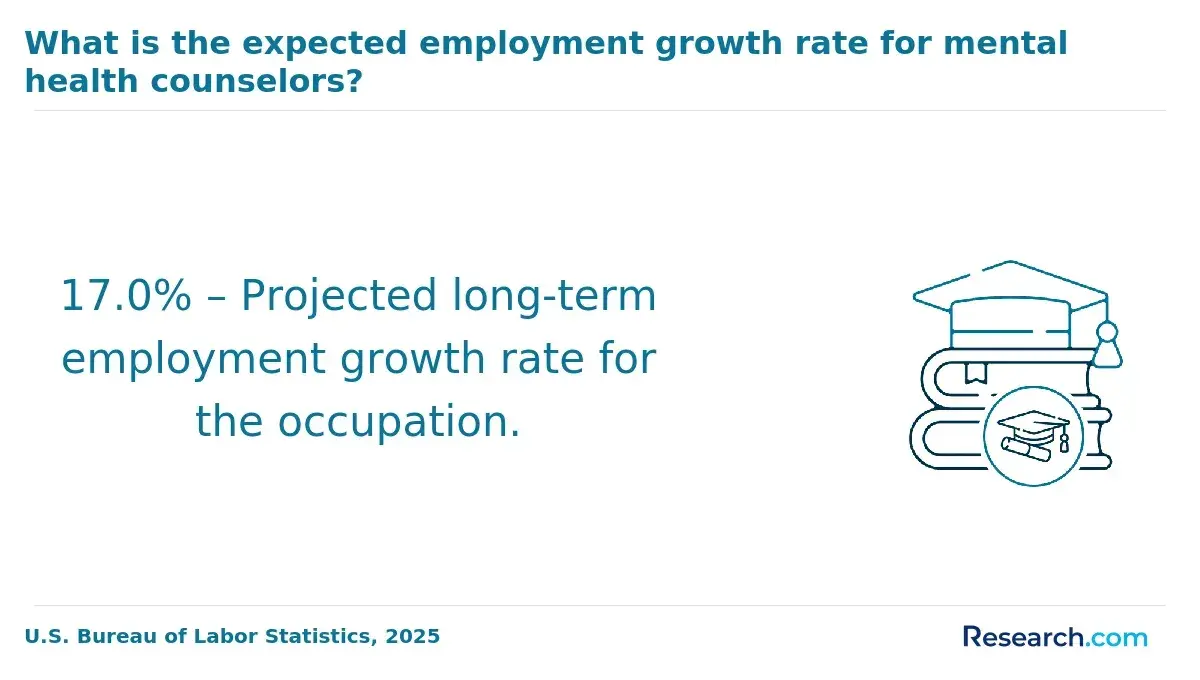
The U.S. Bureau of Labor Statistics reports a May 2025 national median wage of $59,350 for substance abuse, behavioral disorder, and mental health counselors, with 18% projected employment growth for 2025-2035. Those occupation-wide figures are not a forecast of a doctorate holder's pay.
What can I expect from a Counseling degree in Illinois?
A counseling doctorate generally builds beyond a master's degree in counseling or a related field. A Ph.D. in counselor education and supervision emphasizes research, teaching, advanced practice, and supervision; a rehabilitation counseling doctorate may concentrate more specifically on disability, vocational participation, and rehabilitation systems. These distinctions matter more than the letters after the degree when choosing a faculty or research path.
Expect advanced seminars, supervised teaching or clinical supervision, research methods, and a dissertation. Ask whether the program prepares graduates to teach and study counseling, to pursue a particular clinical credential, or both. In Illinois, the Illinois Department of Financial and Professional Regulation (IDFPR) determines professional counselor licensure eligibility; a doctorate does not replace its applicable education, examination, and supervised-experience requirements.
Where can I work with a Counseling degree in Illinois?
Doctoral graduates may seek roles in university counselor-training programs, community mental health organizations, hospital systems, rehabilitation services, school-related research, government, and private practice when appropriately licensed. The match depends on the position: a faculty search may prioritize publications and teaching, while a clinical supervisor role may require an active Illinois license and relevant practice experience.
Chicago-area institutions offer a large concentration of potential academic and health-system contacts, but a local doctorate is not a substitute for checking actual openings. Students hoping to work elsewhere in Illinois should ask programs how they arrange field placements and research partnerships outside the immediate campus area. Anyone planning to practice across state lines should check the destination state's board separately; state licensing rules can differ.
Pay depends on the job, not simply on holding a doctorate. The following U.S. occupational benchmarks are from the Bureau of Labor Statistics (BLS): median annual wages refer to May 2025, while projected employment change covers 2025-2035. They are national, occupation-wide figures - not Illinois doctoral-graduate salaries.
Career direction
National median annual wage
Projected growth
How to use the figure
Mental health or addiction counseling
$59,350
18%
Benchmark for clinical roles, which have separate licensure requirements.
School counseling
$64,330
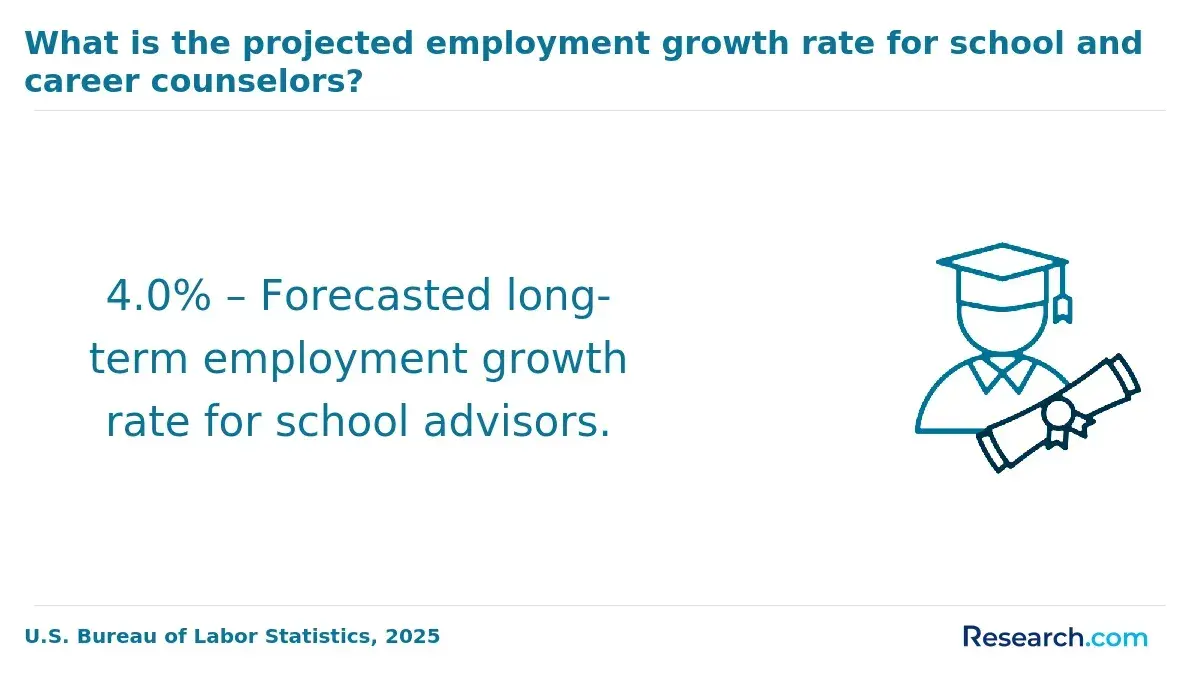
3%
Benchmark for a distinct school-based credential path.
Rehabilitation counseling
$46,850
2%
Benchmark for rehabilitation roles, not doctoral faculty positions.
A doctorate can open eligibility for different responsibilities without assuring a wage increase in an existing counseling job. For a sound return-on-investment estimate, compare your current earnings with salaries in specific Illinois vacancies you would realistically pursue, then account for aid, borrowing, time away from work, and the likelihood of finishing.
The Illinois options below serve different doctoral goals. Their most useful distinction is the kind of work each degree centers; applicants should confirm current credits, dissertation requirements, delivery format, funding, and outcomes with the program before comparing offers.
Adler University - Ph.D. in Counselor Education and Supervision: Adler frames its counselor-educator training around socially responsible practice, making it worth examining for applicants who want to connect scholarship and supervision with community-focused work. Compare the faculty's current research and available assistantships with your intended dissertation topic rather than treating that mission alone as an outcome measure. Source: Adler University program information.
Illinois Institute of Technology - Ph.D. in Rehabilitation Counseling Education: Its explicit rehabilitation focus sets it apart from the broader counselor education and supervision degrees here. It may fit a candidate whose research or teaching interests involve disability and rehabilitation services more closely than general clinical counselor training. Source: Illinois Institute of Technology program information.
Governors State University - Ph.D. in Counselor Education and Supervision: This is a public-university counselor-educator option in the Chicago Southland, a practical distinction for applicants comparing campus access and public-university charges with Chicago-based alternatives. Ask how its teaching, supervision, and dissertation opportunities match the specific faculty or leadership roles you seek. Source: Governors State University program information.
For a comparison weighted toward academic and outcome measures rather than popularity, review the best counseling programs as well. Verify each program's current accreditation status and doctoral outcomes independently.
Plan on roughly 3-6 years, with the dissertation often creating the widest variation. A full-time student with a defined research question may move through milestones faster; a working clinician studying part time may preserve income but spend more years paying fees and balancing supervision, teaching, and research.
Request each program's published course sequence, residency rules, dissertation milestones, maximum time limit, and recent completion data. A shorter advertised coursework phase is not the same as a shorter completed doctorate.
Online coursework can reduce commuting and help a working counselor remain employed, but doctoral supervision, teaching practice, research meetings, or dissertation defenses may still require scheduled in-person participation. Campus study can make recurring faculty collaboration easier, at the cost of travel or relocation. Neither format alone establishes quality or Illinois licensure eligibility.
Ask for a calendar of required campus visits, where field experiences may occur, and whether approved placements are available near your home. If your goal includes clinical practice, have the program explain how its curriculum relates to IDFPR requirements; if it includes school counseling, check Illinois State Board of Education (ISBE) credential rules separately. Sources: IDFPR and ISBE.
There is no single reliable sticker price for an Illinois counseling doctorate: schools can charge by credit or term, tuition can vary by residency and enrollment status, and dissertation registration may continue after coursework. NCES IPEDS institutional tuition figures do not, by themselves, establish the total price of completing a particular doctoral program.
Build a full-program estimate from the school's current tuition schedule and required credits or terms. Include mandatory fees, dissertation-continuation charges, travel for residencies, books, and income you would give up to study. Then subtract only aid you have been offered or can reasonably document. The most affordable counseling programs can narrow your search, but compare net completion costs rather than tuition alone.
Start with doctoral assistantships, fellowships, tuition waivers, employer education benefits, and the school's financial aid office. Ask whether funding covers summer terms and dissertation years, whether it requires teaching or research work, and whether it remains available to part-time students. A nominal award can be less useful if its work obligation delays completion.
Federal Direct Unsubsidized Loans may be available to eligible graduate students, subject to federal rules and the school's aid determination. Federal loan availability and terms can change; confirm your eligibility and current borrowing options with Federal Student Aid and the institution before relying on loans in a multiyear budget. Illinois aid programs may have degree-level and residency limits, so verify eligibility rather than assuming an undergraduate state grant funds doctoral study. Sources: Federal Student Aid and Illinois Student Assistance Commission.
View the chart data as a table
Wage range - Mental Health Counselors in Illinois (BLS OEWS, May 2025) (Source: BLS)
Category
Value
10th percentile
43,010
25th percentile
47,390
Median
60,730
75th percentile
80,070
90th percentile
109,100
Programs commonly seek a relevant master's degree, academic transcripts, a statement of research and career goals, recommendations, and evidence that the applicant can undertake doctoral research. Some may expect counseling practice, a professional license, interviews, or a proposed faculty match. Requirements differ: consult the current admissions page for the exact program and entry term.
Before paying an application fee, ask admissions whether your master's coursework meets entry expectations, which credits - if any - can transfer, and whether missing prerequisites must be completed before or after admission. Transfer credit may reduce coursework without shortening dissertation time. If clinical licensure is your main goal and you lack a qualifying master's pathway, ask IDFPR about that pathway first; a doctorate may be an expensive detour. Source: IDFPR.
Counselor education and supervision curricula commonly cover advanced counseling theory, supervision, counselor teaching, leadership or advocacy, quantitative and qualitative research, and dissertation development. Rehabilitation-focused study may add disability, vocational rehabilitation, and related service systems. Exact course titles and fieldwork requirements are program-specific.
Compare syllabi and degree plans against the work you want to do. A prospective faculty member should look for substantial teaching and research preparation; a prospective clinical supervisor should examine supervised supervision experience and applicable professional credential requirements. A compelling elective list matters less if key courses are offered too infrequently to support timely completion.
Useful areas of emphasis include counselor education and supervision, clinical mental health, rehabilitation, addiction, and school-related counseling research. Not every emphasis is a formally named concentration: sometimes specialization comes from a faculty adviser, placements, electives, and a dissertation topic. Request the degree plan before assuming an advertised interest area guarantees particular courses.
Match the emphasis to its credential consequences. A school-counseling research focus is not automatically an Illinois school-counselor credential, and a clinical mental health dissertation does not itself confer an IDFPR license. Sources: ISBE and IDFPR.
Start with the job you want after graduation. A doctorate is more defensible if that job calls for research, teaching, or advanced supervision; an appropriately qualifying master's program may be the more direct investment if your principal goal is to enter counseling practice. Popularity, institutional control, and a low per-credit price cannot settle that choice.
Use this sequence to compare finalists without overlooking costly mismatches:
Verify the credential path: Check institutional accreditation, any relevant programmatic accreditation, and the Illinois agency responsible for the license or school credential you need. Do not assume accreditation alone confers eligibility.
Test academic fit: Identify potential advisers, recent dissertation topics, required teaching or supervision, and whether faculty are accepting students in your area.
Price completion: Obtain a written estimate covering the expected study period, funding conditions, dissertation fees, and earnings you may forgo.
Check outcomes and constraints: Request doctoral completion and time-to-degree information, placement examples, campus-visit requirements, and transfer-credit rules.
To examine cost alongside other measures, compare the most valuable counseling programs. Estimate value for your own circumstances: debt, completion probability, career earnings, and the time needed to realize a return may differ substantially from another applicant's.
View the chart data as a table
Median wage by U.S. state - Mental Health Counselors (BLS OEWS, May 2025) (Source: BLS)
State
Value
AK
80,770
AL
47,310
AR
51,580
AZ
65,300
CA
59,250
CO
62,390
CT
63,590
DC
60,450
DE
56,020
FL
56,790
GA
58,960
HI
60,090
IA
60,880
ID
63,360
IL
60,730
IN
53,760
KS
59,470
KY
54,190
LA
37,910
MA
59,890
MD
59,530
ME
59,970
MI
61,690
MN
58,780
MO
56,910
MS
46,990
MT
59,000
NC
55,490
ND
68,630
NE
63,770
NH
54,840
NJ
62,820
NM
74,100
NV
57,210
NY
59,450
OH
58,360
OK
59,350
OR
74,590
PA
52,010
PR
46,790
RI
65,120
SC
52,370
SD
53,650
TN
49,580
TX
62,630
UT
63,890
VA
59,880
VT
61,810
WA
68,910
WI
62,220
WV
49,430
WY
62,980
A counselor education doctorate can support applications for faculty, researcher, clinical-supervisor, and program-leadership positions. A rehabilitation-centered doctorate may be especially relevant to teaching or studying disability and rehabilitation services. Competition and qualifications vary by employer; faculty roles, in particular, depend on scholarly record and available openings, not the degree title alone.
Existing clinicians may also use doctoral training to strengthen supervision or research skills while continuing practice. They must retain the license required for that practice under Illinois rules. If a job posting asks only for a master's degree and licensure, compare the doctoral investment against the actual promotion or role change you expect. Source: IDFPR.
View the chart data as a table
Graduates (2024-25) by program (Source: Research.com)
Category
Value
Illinois Institute of Te
1
Adler University
6
Governors State Universi
6
National demand is strongest among the counseling occupations listed here for substance abuse, behavioral disorder, and mental health counselors: BLS projects 18% employment growth from 2025 to 2035. That signals potential demand for clinical services, but it does not measure Illinois openings for doctoral faculty or guarantee that a doctorate will improve a clinician's hiring prospects. Source: BLS Employment Projections, 2025-2035.
For a realistic local assessment, collect recent postings in the Illinois areas where you would work and separate faculty, licensed clinical, rehabilitation, and school-based roles. Compare their required credentials, research expectations, pay ranges when disclosed, and location. This is especially important if you intend to remain in one part of the state rather than search across the Chicago metropolitan area and beyond.
2027 Most Popular Doctorate in Counseling Degree Programs Ranking in Illinois
Investing in a doctorate is a consequential decision, so Research.com's team uses multiple education datasets to check program information and build credible, consistent comparisons. The popularity ranking is intended to help readers identify programs attracting student interest; popularity alone does not establish academic quality, affordability, or career outcomes.
The ranking draws on these data sources:
IPEDS database - institutional enrollment, completions, and reported costs.
Research.com also evaluates counseling programs on graduate outcomes, applicable licensure-exam results, accreditation, federal aid eligibility, and cost for its other rankings. Because those rankings answer different questions, a popular program need not be the best-value or lowest-cost choice. See Research.com's methodology for more about how the rankings are created, and use the results as a starting point for verifying current program details directly with schools.
# 1 position
Adler University
Doctor
Doctor of Philosophy (Ph.D.) in Counselor Education + Supervision
Delivery mode: campus
27.10
/ 100
Final score
Specialization
Counselor Education and Supervision
Required credits
60 semester credits
Acceptance rate
91.7%
GPA range
3.25 - 4.00
Program completion rate
100% (2022-23)
Employment or doctoral admission
100% (2022-23)
Application deadline
Spring 2027: Nov 2, 2026; Summer 2027: Mar 1, 2027; Fall 2027: Apr 1, 2027 (priority Feb 1, 2027)
Application process
direct
Prerequisites
Master's in counseling or a clinical/related field from an accredited institution, with counseling coursework and practicum (100 hours) and/or internship (600 hours). Non-CACREP graduates may need equivalency coursework.
Additional requirements
Application fee, completed online application, resume/CV, letters of recommendation/references, official transcripts, and a 2-3 page double-spaced Statement of Intent.
Accreditation
Accredited by the Council for Accreditation of Counseling and Related Educational Programs (CACREP), with institutional accreditation from the Higher Learning Commission (HLC).
Adler University earned a Research.com Student Interest Score of 27.1/100, supported by 6 graduates (2022-2023) and 100% program completion rate. The program is CACREP-accredited, valid through 2031-10-31.
# 2 position
Illinois Institute of Technology
Doctor
Rehabilitation Counseling Education (Ph.D.)
Delivery mode: campus
9.60
/ 100
Final score
Program length
2 years of full-time coursework and supervised experience, plus dissertation research typically completed in the 3rd year
Specialization
Counselor Education and Supervision
Required credits
63 semester credits
GPA range
3.50 - 4.00
Application deadline
March 15 (priority, for Fall entry)
Application process
direct
GRE
yes
Prerequisites
Master's degree from a CACREP-accredited program (or evidence of coursework meeting CACREP standards); CRC certification and counseling licensure highly encouraged; typically at least one year of post-master's professional experience.
Additional requirements
GRE scores (min verbal 151, quantitative 153 within past 5 years), three letters of recommendation, professional statement, transcripts from all post-secondary institutions, personal interview; TOEFL min 90 for international students.
Accreditation
Accredited by the Council for Accreditation of Counseling and Related Educational Programs (CACREP), with institutional accreditation from the Higher Learning Commission (HLC).
Illinois Institute of Technology earned a Research.com Student Interest Score of 9.6/100, with 1 graduates (2022-2023) among the verified supporting factors. The program is CACREP-accredited, valid through 2032-10-31.
# 3 position
Governors State University
Doctor
Ph.D. in Counselor Education and Supervision
Delivery mode: campus
27.10
/ 100
Final score
Program length
3 years including summers (9 semesters)
Specialization
Counselor Education and Supervision
Required credits
60 semester credits
GPA range
2.70 - 4.00
Application deadline
Priority: February 15, 2027; Final: April 19, 2027 (for Fall 2027 admission)
Application process
direct
GRE
Conditional: GRE (verbal 155+) required if master's GPA is 2.70-2.99
Prerequisites
Master's degree in counseling or a closely related field; cumulative master's GPA of 3.0 or higher (2.70-2.99 considered with GRE verbal 155+).
Additional requirements
Official transcripts; three references from professionals with a doctorate or master's in counseling or related field; personal and professional goals statement; essay on counselor identity and social justice advocacy.
Accreditation
Accredited by the Council for Accreditation of Counseling and Related Educational Programs (CACREP), with institutional accreditation from the Higher Learning Commission (HLC).
Governors State University earned a Research.com Student Interest Score of 27.1/100. The program is CACREP-accredited, valid through 2031-03-31.
Frequently asked questions about Counseling degree in Illinois
Is a counseling doctorate required to become a counselor in Illinois?
No. Professional counselor licensure follows Illinois requirements for qualifying education, examination, and, where applicable, supervised experience. Check your intended license with IDFPR before selecting a degree. Source: IDFPR.
Is a Ph.D. in counselor education worth it?
It may be if your target role involves teaching counselors, research, or advanced supervision. It is harder to justify solely as a way to start clinical practice when a qualifying master's pathway could meet that goal.
Can I complete an Illinois counseling doctorate online?
Delivery varies by program. Confirm whether coursework, supervision, research activities, and dissertation milestones require campus visits; "online" does not necessarily mean no in-person obligations.
How long does a counseling doctorate usually take?
Roughly 3-6 years is a planning range, not a program promise. Enrollment pace, prior preparation, research progress, and dissertation requirements can change the timeline.
Does CACREP accreditation guarantee Illinois licensure?
No. Accreditation and licensure are different determinations. Check a program's current accreditation status and have IDFPR confirm how your education fits the particular Illinois credential you seek. Sources: CACREP and IDFPR.
See What Experts Have To Say About Studying Counseling