
2027 Fastest Online Bachelor's in Counseling Degree Programs Ranking in Virginia

Co-Founder and Chief Data Scientist
If you're considering a career in counseling, finding the right degree program is an important first step. This article features the 2027 Fastest Online Bachelor's in Counseling Degree Programs Ranking in Virginia, created by the Research.com team of data scientists to help students make informed decisions.
By exploring this ranking, you'll discover programs that balance quality education with flexibility, saving you time and effort. Earning a counseling degree opens doors to meaningful work helping others, and this guide aims to support your journey toward a rewarding future.
Key benefits of getting online counseling degree in Virginia
- Counseling degree graduates in Virginia can expect competitive salaries, such as Addiction Counselors earning around $60,080 annually and Community Outreach Coordinators making about $54,020 per year.
- Graduates often pursue fulfilling careers in roles like Rehabilitation Specialist or Family Support Worker, enjoying diverse opportunities to help communities and make a positive impact.
- Online counseling degrees offer flexibility and convenience, allowing students to balance work and life while gaining credentials from respected Virginia institutions, similar to successful graduates who appreciate learning at their own pace.
- Key benefits of getting online counseling degree in Virginia
- What can I expect from online counseling degree in Virginia?
- Where can I work with online counseling degree in Virginia?
- How much can I make with online counseling degree in Virginia?
- 2027 Fastest Online Bachelor's in Counseling Degree Programs Ranking in Virginia
- Key Findings
- How long does it take to complete online counseling degree in Virginia?
- Licensure and Certification Requirements in Virginia
- What's the difference between online and on-campus counseling degree?
- Licensing and Certification in Virginia
- What is the average cost of online counseling degree in Virginia?
- How to Complete Your Online Counseling Degree Faster
- What financial aid is available to online counseling degree students in Virginia?
- Admission Requirements and Process
- What are the prerequisites for enrolling in online counseling degree program in Virginia?
- Accreditation and Licensure: Ensuring Your Degree Meets Virginia Standards
- What courses are typically in online counseling degree programs in Virginia?
- What types of specializations are available in online counseling degree programs in Virginia?
- How do you choose the best online counseling degree in Virginia?
- What career paths are available for online counseling degree students in Virginia?
- What is the job market for online counseling degree in Virginia?
- Top Trending Counseling Rankings
- See What Experts Have To Say About Studying Counseling
What can I expect from online counseling degree in Virginia?
The average cost of an online counseling degree in Virginia typically ranges from $20,000 to $40,000 for a master's program, depending on the institution and your residency status. Graduates from well-known universities like James Madison University or Virginia Commonwealth University often reflect on how investing in a CACREP-accredited program opened doors to meaningful careers. Many felt the cost was manageable when balanced against flexible online scheduling and the opportunity to gain supervised clinical experience close to home.
Students often share how scholarships, employer tuition assistance, and payment plans helped ease financial concerns. For example, a graduate once described using a combination of these resources while working full-time, making progress without overwhelming debt. This kind of support is crucial in Virginia, where licensure requirements include hands-on training and specialized coursework.
When considering cost, think beyond tuition alone. Include expenses for textbooks, technology fees, and clinical placement logistics. Planning ahead ensures you can focus on gaining the skills and confidence to thrive as a licensed professional counselor in Virginia's growing job market.
Where can I work with online counseling degree in Virginia?
Graduates with an online counseling degree from Virginia universities like James Madison University or Liberty University often find a wealth of career paths waiting for them across the state. Many start their journey as behavioral health technicians or case managers within Community Service Boards (CSBs), where they make a tangible difference supporting individuals facing mental health or substance abuse challenges in their communities.
As they advance, especially after earning a master's degree and securing licensure, the opportunities multiply. Licensed Professional Counselors (LPCs) commonly work in private practices, hospitals, or schools, seeing firsthand how their expertise transforms lives. Imagine guiding students in a Fairfax County school system or providing vital mental health support in Richmond's outpatient clinics-these roles offer both impact and professional fulfillment.
Others find meaningful work in correctional facilities or nonprofit organizations focused on wellness, while some embrace the expanding telehealth field to offer counseling remotely, maintaining flexibility and reach. Each path embraces the core mission of helping others, a rewarding pursuit shared by many counseling graduates across Virginia's educational institutions.
How much can I make with online counseling degree in Virginia?
Graduates from online counseling degree programs in Virginia, such as those offered by well-known schools like James Madison University or George Mason University, can anticipate a range of rewarding salary opportunities. For example, many find roles as Addiction Counselors earning an average of about $60,080 annually, a figure that reflects the meaningful impact they make in people's lives every day.
Others choose paths like Rehabilitation Specialist or Community Outreach Coordinator, where annual wages average $48,430 and $54,020 respectively. These positions allow graduates to use their skills in diverse settings, from hospitals to community centers, often creating deep personal fulfillment alongside financial stability.
Some graduates advance to become Intervention Specialists, commanding a higher mean salary of around $76,000 per year. These roles, often found in demanding environments like schools or social service agencies, benefit from the strong training and licensure many Virginia programs emphasize.
Many students graduating from these programs share how moving to urban areas such as Richmond or Fairfax not only boosts their salaries but also enriches their professional networks and opportunities, affirming that investing in an online counseling degree in Virginia can truly transform both career and life.
2027 Fastest Online Bachelor's in Counseling Degree Programs Ranking in Virginia
How do we rank schools?
Investing in your education is a significant decision that can shape your future, and the Research.com team understands the importance of making informed choices. To assist prospective students in Virginia, we have meticulously crafted the "2027 Fastest Online Bachelor's in Counseling Degree Programs Ranking in Virginia." Our commitment to quality, credibility, and accuracy is reflected in the extensive research and analysis conducted to compile this ranking. We utilized the following reputable data sources to ensure a comprehensive evaluation of counseling programs:
By exploring this ranking, readers will gain valuable insights into the fastest online bachelor's counseling programs available in Virginia, helping them make informed decisions about their educational paths. For more details on our methodology, please visit our Research.com methodology page.


Key Findings
- Virginia offers accredited online counseling programs at both bachelor's and master's levels, with many approved by the Southern Association of Colleges and Schools Commission on Colleges (SACSCOC).
- Tuition for online bachelor's programs ranges from $8,000 to $20,000 per year for in-state students, while private institutions may charge over $25,000 annually, excluding fees and materials.
- Starting salaries for counseling graduates in Virginia typically range from $40,000 to $45,000, increasing to $60,000 to $70,000 with experience and licensure such as the LPC.
- The demand for mental health professionals in Virginia is projected to grow by 12% to 15% over the next decade, especially in cities like Richmond, Virginia Beach, and Arlington.
- Licensure in Virginia requires a master's degree, supervised clinical hours, and passing a state-recognized exam, which many online programs prepare students for effectively.
How long does it take to complete online counseling degree in Virginia?
Completing an online counseling degree in Virginia typically takes about three to four years for a bachelor's program if you study full-time. Many graduates from reputable institutions like James Madison University or Liberty University find that pacing themselves through 120 to 130 credit hours aligns well with their personal and work commitments. One graduate shared that balancing part-time work with part-time study stretched their timeline to about five years-but the flexibility was worth it to stay on track with life's demands.
For those pursuing a master's degree, the journey usually lasts two to three years, meeting Virginia's 60-credit graduate coursework requirement for licensure as a Licensed Professional Counselor. Students from schools such as Virginia Commonwealth University often emphasize how the practical experience integrated in their programs-like clinical internships-shapes their real-world skills while extending the timeframe. This hands-on training isn't just a hurdle, but a rewarding step that connects theory to meaningful impact.
Choosing your enrollment status and program format wisely can turn this challenge into a fulfilling adventure, allowing you to earn your degree in a way that fits your lifestyle perfectly.
Licensure and Certification Requirements in Virginia
After earning your online bachelor’s in Counseling, understanding Virginia’s licensure path is critical to practice legally and advance your career. In Virginia, most counseling roles-such as Licensed Professional Counselor (LPC) or Licensed Mental Health Counselor (LMHC)-require a master’s degree in Counseling or a related field. Key steps include: 1. Graduate Education: Complete a CACREP-accredited master’s program with at least 60 semester hours covering core counseling competencies. 2. Supervised Experience: Accumulate 3,360 hours of supervised clinical practice over no fewer than 24 months, including a minimum of 960 hours of direct client contact under a board-approved supervisor. 3. Examinations: Pass the National Clinical Mental Health Counseling Examination (NCMHCE) or the Counseling Examination for Licensure and Certification (CELC). 4. Board Application: Submit an application to the Virginia Board of Counseling, including official transcripts, supervision verification, and exam scores. Maintaining active licensure in Virginia also involves completing 40 continuing education units (CEUs) every two years, with at least 3 hours in ethics. Many graduates find it helpful to compare program costs and accreditation before committing to graduate school-resources like the Cheapest Counseling Degree Programs Ranking in Fort Myers, FL can offer insights into affordable pathways. Understanding these requirements early ensures you can map out your educational and professional milestones, avoid licensure delays, and begin making a positive impact on Virginia communities as soon as possible.
What's the difference between online and on-campus counseling degree?
Choosing between online and on-campus counseling degrees in Virginia often comes down to how you want to balance life and learning. Graduates from online programs at schools like Liberty University often share how the flexibility allowed them to juggle full-time jobs and family, studying coursework whenever their schedule freed up. Imagine logging into classes after work without worrying about the commute-that freedom is a game-changer for many.
Conversely, those who attended traditional campuses such as James Madison University highlight the energy of face-to-face interactions with professors and peers, which strengthened their confidence and built lasting professional networks. These in-person experiences can deepen your sense of community and support during your studies.
Regardless of format, all Virginia counseling programs stick to strict accreditation standards like CACREP, ensuring your education prepares you well for licensure. Remember, clinical internships will require onsite participation, offering hands-on practice that's essential no matter where you take classes.
Licensing and Certification in Virginia
In Virginia, practicing as a professional counselor or school counselor requires state licensure. After completing your online bachelor’s in counseling, you’ll follow these steps:
- Earn a CACREP-accredited master’s in counseling.
- Complete at least 3,360 hours of supervised post-master’s clinical experience.
- Pass the National Counselor Examination (NCE) administered by NBCC.
- Submit your application and official transcripts to the Virginia Board of Counseling.
- Maintain licensure with continuing education every renewal cycle.
For those pursuing a career in schools, explore our school counselor certification guide.
What is the average cost of online counseling degree in Virginia?
The average cost of an online counseling degree in Virginia typically falls around $48,840 for the entire program, with in-state students often paying about $43,200. These numbers reflect the full cost for programs at well-regarded public universities known for their accessible online counseling degrees. Many graduates recall feeling relieved knowing they could complete their studies affordably without sacrificing quality, as these institutions often provide strong academic support and practical training opportunities.
Virginia's diverse university landscape means some students may pay more if they choose private schools, but the value of in-state tuition savings is a major benefit in the state. For example, students pursuing a Virginia online bachelor's in counseling tuition fees often find it manageable compared to national averages, making the dream of becoming a licensed counselor more attainable. Graduates report that understanding the real costs helped them budget effectively and pursue scholarships or employer assistance confidently.
It's also important to remember tuition is just part of the equation; students might incur additional fees for textbooks, supervision hours, or practicum placements. Being proactive, many students explore financial aid options or state grants early on. For those looking beyond just counseling, it's worth comparing options like affordable online clinical MSW programs that can complement their counseling career path.
Embracing the journey with clear knowledge about the average cost of online counseling degree Virginia can transform uncertainty into a focused plan, inspiring many to start their careers ready to make a meaningful difference in others' lives.
How to Complete Your Online Counseling Degree Faster
Completing a fast-track bachelor’s in counseling demands strategic planning and efficient use of available credits and resources. By optimizing your course load and leveraging prior learning, you can graduate sooner without sacrificing quality. Consider these key strategies:
- Maximize transfer credits: Apply AP, CLEP, military or previous college coursework to reduce required credits.
- Enroll in accelerated sessions: Choose 8- or 7-week terms to maintain focus and finish courses more quickly.
- Leverage prior learning assessments: Document professional or volunteer counseling experience for competency-based credit.
- Maintain year-round enrollment: Include summer and winter terms alongside fall/spring semesters to avoid gaps.
- Explore program flexibility: Research accredited schools offering both synchronous and asynchronous options-check out an affordable counseling degree online for examples.
What financial aid is available to online counseling degree students in Virginia?
When pursuing an online counseling degree in Virginia, financial aid can come from several dependable sources that ease the journey. Federal aid, like Direct Unsubsidized Loans and Grad PLUS Loans through FAFSA, is crucial-graduates often recall how filing early maximized their aid options. Although Pell Grants are mostly for undergraduates, the loans available to graduate students can greatly reduce upfront costs.
State-specific grants, such as the Virginia Tuition Assistance Grant (VTAG) and the Virginia Commonwealth Award, have been lifelines for many attending institutions like James Madison University or George Mason University. These programs offer tailored support to Virginia residents, making private and public colleges more accessible.
Institutional scholarships often unlock unexpected opportunities; many counseling students share how checking with financial aid offices at schools like Norfolk State University led to finding merit or need-based awards. Employer tuition reimbursement programs also play a key role-working professionals studying online can leverage their job benefits to lower expenses while gaining skills.
Finally, for those drawn to public service, programs like Public Service Loan Forgiveness motivate graduates to serve communities while managing loans responsibly, fueling a rewarding career path in counseling.
Admission Requirements and Process
Admission requirements for online counseling degree programs in Virginia typically include a minimum GPA, prerequisite courses, and standardized test scores. The admission process usually involves submitting transcripts, letters of recommendation, and a personal statement outlining career goals and motivations for pursuing a degree in counseling. Some programs may also require interviews or additional assessments. To be eligible for a Master's in Counseling program at a university like Virginia Tech or George Mason University, applicants usually need to hold a Bachelor's degree from an accredited institution, with a minimum GPA of 3.0. Some programs may also require prerequisite courses in psychology, statistics, or research methods. The prerequisites for online counseling programs in Virginia can be summarized as follows:
- A Bachelor's degree from an accredited institution
- A minimum GPA of 3.0
- Prerequisite courses in psychology, statistics, or research methods
- Transcripts and letters of recommendation
- A personal statement outlining career goals and motivations
- GRE scores (required by some programs) It's essential to check the specific admission requirements for each program, as they may vary. Additionally, some programs may offer conditional admission or provisional acceptance, which can provide an opportunity for students who do not meet all the admission requirements to still pursue their degree.
What are the prerequisites for enrolling in online counseling degree program in Virginia?
To enroll in an online counseling degree program in Virginia, you'll need a high school diploma or GED as your essential starting point. Many graduates from well-known institutions like Radford University or George Mason University found that maintaining a GPA around 2.5 to 3.0 helped them stand out during admission, ensuring they were ready for the coursework ahead.
While standardized test scores such as the SAT or ACT were once mandatory, many programs have shifted to making these optional, especially after recent changes sparked by the pandemic-so it's smart to check with your chosen school. Submitting transcripts, letters of recommendation, and a heartfelt personal essay are common steps that help the admissions team understand your passion and suitability for counseling.
One graduate shared how writing their personal statement about helping friends through challenging times opened doors for them at Liberty University's counseling program, showing how your unique story can shape your path.
Virginia's requirements also emphasize ethical readiness, often asking for background checks and training on confidentiality, reinforcing the trust central to counseling. Understanding these prerequisites will prepare you not only to enter the program but to thrive within it.

Accreditation and Licensure: Ensuring Your Degree Meets Virginia Standards
When evaluating online counseling bachelor’s programs in Virginia, accreditation is the cornerstone of both academic quality and eligibility for state licensure. Look for CACREP-accredited programs-this seal of approval ensures your curriculum covers essential competencies in ethics, multicultural counseling, assessment techniques and supervised clinical practice hours. In addition to CACREP, regional accreditation (e.g., SACSCOC) signals that your credits will transfer seamlessly if you pursue a master’s or doctoral degree. Virginia licensure requires a set number of supervised practicum and internship hours, successful completion of the National Counselor Examination (NCE) or National Clinical Mental Health Counseling Examination (NCMHCE), and adherence to the Virginia Board of Counseling’s continuing education requirements. Many online programs embed these supervised experiences through partnerships with local agencies, but it’s crucial to confirm that your chosen school has established clinical sites within Virginia or offers clear guidance on securing approved supervisors. For graduates planning to specialize or advance into leadership roles, selecting a graduate program that balances cost, accreditation and licensure support is key. Explore our list of affordable christian counseling masters online degrees to compare options that meet licensure criteria while minimizing debt. By choosing an accredited pathway aligned with Virginia’s professional standards, you can streamline your journey from online bachelor’s degree to Licensed Professional Counselor (LPC).
What courses are typically in online counseling degree programs in Virginia?
In Virginia's online counseling degree programs, you'll dive into courses that build both your understanding and confidence as a future counselor. Graduates often speak about the transformative impact of foundational classes like Introduction to Counseling Theories and Human Growth and Development, which empower them to connect deeply with clients' journeys. You'll study Psychopathology and Diagnosis, learning to recognize and understand mental health disorders in diverse populations, vital in Virginia's varied communities.
Ethics and Legal Issues courses prepare you to navigate complex professional responsibilities with integrity-something every counselor in the state must take seriously. Many students find the Multicultural Counseling classes especially rewarding, as they tailor these lessons to Virginia's rich cultural and rural diversity. Popular programs at Virginia's top colleges include hands-on Group Counseling and practicum experiences, allowing you to apply skills in real counseling settings virtually or in person.
Graduates praise the career development and substance abuse counseling courses for readying them to meet regional mental health needs. These curricula truly shape compassionate professionals ready to make a difference in Virginia's evolving mental health landscape.

What types of specializations are available in online counseling degree programs in Virginia?
When exploring an online counseling degree in Virginia, you'll find several enriching specializations designed to fit your passion and career goals. Clinical Mental Health Counseling is a cornerstone for many; graduates from well-known Virginia colleges often share how this specialization prepared them to confidently support clients through real-world mental health challenges in hospitals or private settings. For those drawn to education, School Counseling offers the rewarding opportunity to guide K-12 students through academic and emotional growth, a path many find fulfilling given Virginia's specific licensure by the Department of Education.
Other specializations available in Virginia online counseling degree programs include Marriage and Family Therapy, where students learn to nurture relationships, Rehabilitation Counseling focusing on empowering those with disabilities, and Substance Abuse Counseling, addressing critical community needs like opioid addiction. Veterans of these programs often highlight how concentrating on Virginia online counseling program concentrations gave them the edge to meet local workforce demands.
For students eager to accelerate their career, Virginia's offerings complement the fastest accredited online MSW programs, blending flexibility with rigorous, state-aligned education.
How do you choose the best online counseling degree in Virginia?
When choosing the best online counseling programs Virginia offers, focus first on accreditation and practical training. Graduates from popular Virginia colleges often share how CACREP-accredited programs gave them confidence in their education's quality and helped them meet Virginia's LPC licensure requirements. Affordability is another key. Many students find affordable counseling degrees Virginia online, especially at public universities with lower in-state tuition, making their goal achievable without overwhelming debt.
Flexibility in course delivery is crucial for balancing studies with work or family life. Look for programs offering asynchronous classes combined with strong support for clinical practicum placements, as hands-on experience is required for licensure. Some universities have excellent local partnerships, smoothing the way to complete those hours. For practical insights on clinical experiences, consider exploring details about LPC practicum Texas, which can be helpful for comparing practicum setups.
Lastly, remember that faculty expertise and student support greatly impact your journey. Graduates often praise how accessible, experienced instructors and career counseling services helped them thrive. Choosing a program with positive student reviews and proven licensure pass rates will inspire you too, making the path to becoming a licensed counselor feel both manageable and rewarding.

What career paths are available for online counseling degree students in Virginia?
Graduates with an online counseling degree in Virginia find themselves stepping into a world of meaningful career opportunities with online counseling degree Virginia programs that provide real-life readiness. Many alumni from well-known institutions like Liberty University and Norfolk State University share how becoming Licensed Professional Counselors (LPCs) transformed their passion into practice, offering therapy in private practices or community agencies. These graduates describe the rewarding experience of supporting individuals through emotional challenges while meeting Virginia's specific licensure criteria.
Others pursue roles as school counselors, helping students navigate academic and social pressures in local school districts. This path aligns with promising Virginia online counseling degree job prospects, reflecting the 15% national growth in school counselors. Graduates also find fulfillment in rehabilitation counseling, aiding people with disabilities to reclaim independence, or in community mental health, where their work addresses substance abuse and trauma in underserved populations.
For those interested in exploring beyond Virginia, it's useful to compare requirements, such as the Delaware psychologist certification requirements, to broaden career options. These diverse paths demonstrate how an online counseling degree in Virginia opens doors to impactful, compassionate careers.

What is the job market for online counseling degree in Virginia?
Graduates with an online counseling degree in Virginia find a promising job market full of diverse opportunities. Thanks to a projected 16% job growth nationally for counseling professions, the state's demand remains strong across urban and rural areas. Many graduates from well-known universities in Virginia share how flexible online programs helped them gain the supervised clinical hours required for licensure, preparing them well for roles in schools, healthcare, and government agencies. This positive outlook reflects the growing need for mental health services statewide.
Those exploring Virginia counseling degree employment opportunities often discover that salaries typically range from $50,000 to $60,000 annually, with higher earnings in metropolitan areas like Richmond and Northern Virginia. Graduates appreciate that affordable tuition at public universities supports their career goals without overwhelming debt. Additionally, some alumni have found unique pathways by comparing counseling degrees to roles such as industrial-organizational psychologist, expanding their professional options.
Frequently Asked Questions About counseling
Students pursuing online counseling degrees in Virginia can maximize their learning by actively engaging with course materials and faculty. Research from Virginia's State Council of Higher Education highlights that regular communication with professors improves understanding and retention. Participating in virtual study groups can also foster peer support, which is crucial in counseling education.
Since counseling programs often require practical experience, seeking internships or supervised clinical hours within Virginia's diverse communities enhances real-world skills. The Virginia Board of Counseling mandates specific practicum hours, making early planning vital.
Utilizing university career services and networking with licensed counselors in Virginia enriches professional development. Staying informed about state licensure requirements ensures alignment with educational goals.
The counseling field is evolving rapidly, with several emerging niches gaining prominence in Virginia's workforce. One such area is telehealth counseling, which has expanded significantly due to increased access to technology and the pandemic's impact. According to the Virginia Department of Health Professions, telehealth services grew by over 40% between 2020 and 2023.
Another growing niche is substance abuse counseling, driven by the state's ongoing opioid crisis. The Virginia Board of Counseling reports a steady rise in demand for counselors specializing in addiction treatment.
Additionally, school counseling focused on mental health support is becoming critical as Virginia invests more in student well-being programs. These niches offer strong career prospects for online counseling degree graduates.
After earning an online counseling degree in Virginia, preparing for the job market involves several key steps. First, gaining licensure is essential; Virginia requires counseling professionals to obtain a Licensed Professional Counselor (LPC) credential, which involves completing supervised clinical hours and passing the National Counselor Examination.
Networking is equally important. Joining professional organizations such as the Virginia Counseling Association can connect graduates with local job opportunities and mentorship.
Additionally, gaining experience through internships or volunteer roles strengthens practical skills. According to the Bureau of Labor Statistics, Virginia's demand for mental health counselors is projected to grow by 22% through 2031, making timely job preparedness crucial.
Understanding regional salary ranges and employer expectations further supports successful employment.
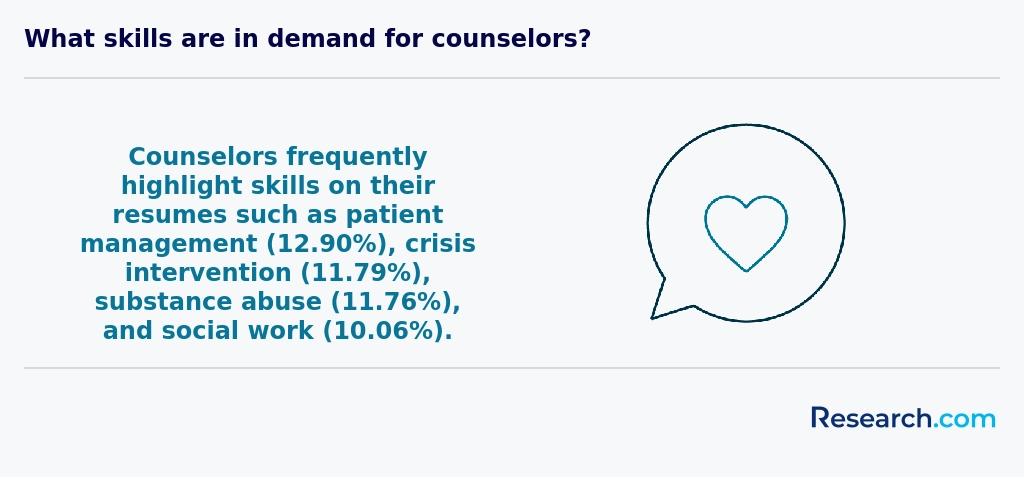
Employers in Virginia value counseling graduates who demonstrate strong communication skills, including active listening and empathy. These abilities are essential for building trust and effectively supporting diverse client populations. Additionally, knowledge of ethical practices and state regulations plays a critical role in ensuring compliant and responsible care.
Virginia's counseling workforce also prioritizes cultural competence, reflecting the state's growing diversity. Familiarity with evidence-based therapeutic techniques and crisis intervention strategies is highly regarded, as reported by the Virginia Department of Behavioral Health and Developmental Services (DBHDS).
Furthermore, skills in teamwork, problem-solving, and technological proficiency, especially in telehealth platforms, are increasingly important due to the rise of online counseling services across Virginia's healthcare system.
Finding internships in Virginia relevant to a counseling degree involves strategic steps aligned with the state's licensure requirements. Many accredited online counseling programs in Virginia require supervised fieldwork, making internships essential. Students should explore partnerships between their schools and local mental health centers, hospitals, and community organizations.
Virginia's Department of Behavioral Health and Developmental Services offers resources on approved internship sites. Additionally, professional associations like the Virginia Counseling Association provide listings and networking opportunities to connect students with placements.
According to recent data, Virginia has over 300 licensed mental health facilities, offering diverse internship opportunities. Early outreach and applying through official state internship portals can improve chances of placement.
Obtaining an online counseling degree in Virginia can significantly enhance career mobility and advancement opportunities. The Virginia Department of Professional and Occupational Regulation recognizes accredited online degrees for licensure, which is essential for becoming a Licensed Professional Counselor (LPC) in the state. Graduates with online degrees meet educational requirements that allow them to pursue various counseling roles in mental health, school, and substance abuse settings.
Additionally, online programs often offer flexible schedules, enabling students to continue working while studying, which supports career growth without interruption. According to the U.S. Bureau of Labor Statistics, counseling jobs in Virginia are projected to grow 15% through 2031, faster than the national average.
This growth, combined with licensure eligibility from online degrees, expands the potential for salary increases and leadership roles within counseling services across the state.
Studying for a counseling degree in Virginia equips students with skills needed for interdisciplinary roles across healthcare, education, and social services. Virginia programs emphasize collaborative training that integrates psychological theory with practical applications in diverse settings. Students learn to work alongside professionals such as social workers, educators, and medical personnel, fostering teamwork essential in real-world environments.
Virginia's licensure requirements for counselors often include coursework in ethics, communication, and cultural competence, further supporting interdisciplinary engagement. According to the Virginia Department of Health Professions, professionals with such comprehensive preparation show higher employability in settings like community health centers and school systems.
When choosing between a thesis and a non-thesis counseling degree program in Virginia, consider your career goals first. Thesis programs require original research and are ideal for those interested in academia, research, or advanced clinical roles. Non-thesis options typically focus on practical skills and coursework, preparing students for immediate counseling practice.
Virginia's licensing boards-for example, the Virginia Board of Counseling-do not specifically mandate a thesis for licensure as a Licensed Professional Counselor (LPC). This means practical experience and coursework often weigh more heavily.
Additionally, thesis tracks can extend program length and require strong research aptitude, while non-thesis tracks often appeal to working professionals seeking faster completion. According to the Council for Accreditation of Counseling and Related Educational Programs (CACREP), both paths can lead to quality licensure outcomes in Virginia.
Students based in Virginia who wish to study counseling abroad often face limited direct options through fully online foreign programs due to accreditation and licensure compatibility challenges. Most international counseling degrees may not meet the requirements set by the Virginia Board of Counseling for licensure in the state. However, Virginia students can explore study-abroad programs offered by U.S. institutions with international campuses or partnerships, allowing some coursework abroad while maintaining U.S. accreditation.
Alternatively, some students combine online counseling degrees from Virginia schools with short-term international experiences or internships. According to the Virginia Department of Education, ensuring program accreditation and alignment with U.S. licensure rules is critical for counseling practice after graduation. Consequently, students must thoroughly research program credentials before pursuing counseling studies abroad.
Part-time job opportunities in Virginia that complement counseling degree education often include roles in mental health support, social services, and educational settings. Many students find positions as behavioral health technicians or case management assistants, gaining practical experience while earning an income.
Virginia's Department of Behavioral Health and Developmental Services reports increased demand for paraprofessionals who assist counselors and therapists. These roles provide exposure to client interaction and treatment planning, essential skills for counseling students.
Additionally, working as a crisis hotline operator or peer support specialist offers valuable communication practice and understanding of community mental health needs.
Local school systems sometimes employ part-time aides or counselors-in-training, giving students firsthand experience in educational counseling environments.
Online counseling students in Virginia benefit from various networking opportunities despite studying remotely. Many universities offer virtual events, such as webinars, discussion forums, and guest lectures featuring local counseling professionals. These platforms allow students to connect with peers and experienced counselors statewide.
Additionally, students can join Virginia-based professional organizations like the Virginia Counseling Association (VCA). VCA hosts annual conferences and regular regional meetups, providing chances for online students to build relationships and stay informed about local industry trends.
The State of Virginia also supports internship placements in diverse settings, helping students meet supervisors and local colleagues essential for future employment.
Alumni networks offer significant advantages for online counseling degree students in Virginia. These networks connect current students with graduates who have firsthand experience in the local counseling field. According to the Virginia Board of Counseling, nearly 80% of counseling professionals find employment through networking. Alumni can provide mentorship, career advice, and guidance on Virginia's licensure requirements, which are essential for practice.
Additionally, these networks often share job opportunities in schools, clinics, and counseling centers across Virginia. They foster professional development by hosting workshops and events tailored to the unique demands of Virginia's mental health sector.
In Virginia, students pursuing online counseling degrees can tailor their programs by selecting concentrations aligned with career goals, such as clinical mental health, school counseling, or marriage and family therapy. Many accredited Virginia institutions offer electives and practicum placements that provide experience in specific populations or settings. For example, applicants aiming for licensure as Licensed Professional Counselors (LPC) should ensure their curriculum meets the Virginia Board of Counseling's 60-semester-hour requirement and includes supervised clinical hours. According to the Virginia Department of Behavioral Health and Developmental Services, over 1,500 LPCs are licensed statewide, reflecting strong demand for specialized training in the region.
Online counseling students in Virginia often face the challenge of balancing rigorous coursework with personal and professional responsibilities. Many juggle work, family, and study, which can affect time management. According to the Virginia Department of Education, maintaining consistent engagement in virtual environments is another barrier due to the less structured nature of online learning.
Practical training is crucial in counseling degrees. However, securing quality internships or practicum opportunities within Virginia can be difficult, with some students reporting limited local availability that fits online schedules, as noted by the Council for Accreditation of Counseling and Related Educational Programs.
Additionally, students must navigate state licensure requirements, which include specific supervised hours and exams. Online programs may not always align perfectly with Virginia's licensure regulations, creating extra steps for graduates.
With an online counseling degree in Virginia, graduates can pursue several professional certifications that enhance their careers. The Licensed Professional Counselor (LPC) credential is one of the most common certifications in the state, requiring graduation from an accredited program and supervised clinical hours, according to the Virginia Board of Counseling.
The Certified Clinical Mental Health Counselor (CCMHC) certification, offered by the National Board for Certified Counselors (NBCC), is also popular and can boost job prospects. Many graduates also consider the National Certified Counselor (NCC) credential, recognized nationwide and helpful for mobility.
These certifications typically require passing exams and continuing education to maintain licensure, ensuring counselors stay current with best practices in Virginia's counseling field.
Writing a winning application for an online counseling program in Virginia starts with understanding the state's requirements and standards. Virginia requires counseling programs to be accredited by the Council for Accreditation of Counseling and Related Educational Programs (CACREP), so highlight any relevant coursework or experiences aligned with CACREP standards.
Focus on a clear personal statement explaining your motivation for pursuing counseling, referencing Virginia's growing demand for mental health professionals, which is projected to increase by 22% through 2030 according to the Virginia Employment Commission.
Include any volunteer or work experience related to mental health, as practical experience strengthens your application. Request strong recommendation letters that vouch for your interpersonal and communication skills.
Finally, ensure your resume and application materials are error-free and meet the specific online program's instructions to demonstrate professionalism.
Globally, counseling is recognized as a vital profession that supports mental health and well-being. In the United States, including Virginia, counseling careers are expanding due to growing awareness of mental health needs. According to the Bureau of Labor Statistics, employment of mental health counselors is projected to grow 22% from 2020 to 2030, much faster than the average for all occupations.
Virginia's emphasis on licensure and ethical standards ensures counselors meet rigorous educational requirements, often including a master's degree and supervised clinical hours. Online counseling degrees now help students across Virginia access these credentials more flexibly.
Internationally, counseling practices vary, but the core focus on client-centered care remains consistent. This global support highlights counseling as a respected and essential profession worldwide.
Gaining practical experience is essential while studying for an online counseling degree in Virginia. Many programs require supervised fieldwork or clinical internships, which students can complete locally. Virginia's licensing board mandates a minimum of 3,360 hours of post-graduate supervised experience for professional counselors, making early hands-on training valuable.
Students often partner with approved counseling centers, schools, or healthcare facilities near their residence. These opportunities allow application of theoretical knowledge in real-world settings, under the guidance of licensed supervisors. Additionally, some programs offer virtual simulation tools to develop counseling skills remotely.
Virginia's workforce resource websites provide listings for internship openings, helping students connect with local agencies for practical hours needed toward licensure.
Choosing the right concentration in an online counseling degree program in Virginia depends largely on your career goals and interests. Virginia offers specializations such as clinical mental health, school counseling, and marriage and family therapy, each aligned with state licensure requirements. For instance, the Virginia Board of Counseling outlines specific course and practicum hours needed for Licensed Professional Counselor (LPC) licensure. Selecting a concentration that matches demand in Virginia's job market can improve employment prospects; recent data from the Bureau of Labor Statistics shows a projected 19% growth for counselors in Virginia through 2031. Reviewing state licensure criteria and local employment trends is essential.
Top Trending Counseling Rankings
See What Experts Have To Say About Studying Counseling
Read our interview with Counseling experts

Meredith A. Rausch
Counseling Expert
Associate Professor
University of Alabama

References
- Interdisciplinary Training: Preparing Counselors for Collaborative Practice - The Professional Counselor https://tpcjournal.nbcc.org/interdisciplinary-training-preparing-counselors-for-collaborative-practice/
- 11 Challenges That Counselors & Therapists Face - Talkspace https://www.talkspace.com/blog/counselor-challenges/
- metrics https://ojed.org/jis/article/view/3444/1955
- Networking for Therapists: Building Connections for Career Success & Client Care https://www.mentalyc.com/blog/networking-for-therapists
- Bringing the benefits of career counselling/guidance to youth https://euroguidance.eu/to-bring-the-benefits-of-career-counseling-guidance-to-the-youth
- For Students - CACREP https://www.cacrep.org/for-students/
- Networking: Are You Connected? https://www.apaservices.org/practice/business/marketing/building/networking
- Mental Health challenges that counselors and therapists experience - RESILIENCE PSYCHOLOGY COUNSELLING http://resonsindiyo.com/mental-health-challenges-that-counselors-and-therapists-experience-due-to-the-nature-of-their-profession/
- Alternative Careers for Counselors Who Are Burnt Out [2025 Update] - The Bad Therapist https://www.thebadtherapist.coach/blog/alternative-careers-for-counselors
- Internship Opportunities | PCS https://pacounseling.com/internships/


