
2027 Best Computer Science Degree Programs Ranking in New York

Co-Founder and Chief Data Scientist
Are you considering pursuing a computer science degree in New York? Choosing the right program can make a big difference in your career path and personal growth.
This article introduces the 2027 Best Computer Science Degree Programs Ranking in New York, developed by the Research.com team of data scientists. It offers clear insights on the top programs to help you make an informed decision.
Reading this guide will give you confidence and clarity, opening doors to exciting opportunities in technology. A computer science degree can be a rewarding and empowering step forward.
Key benefits of getting computer science degree in New York
- Salary benefits: Graduates with a computer science degree in New York can expect strong earning potential, with roles like Software Engineer and Software Developer earning a mean annual wage of $138,110. Web Developers and Data Analysts also earn competitive salaries, averaging $95,570 and $119,040 respectively.
- Career paths: Many New York graduates find diverse opportunities from software development to IT support, enabling flexibility and growth in exciting tech industries. These pathways support both innovative startups and established companies in the city's vibrant tech scene.
- Online degree advantages: Earning a computer science degree online offers schedule flexibility and the ability to study while working, making it easier to balance life and career goals. Online programs from reputable New York universities provide the same quality education, empowering graduates to succeed without relocating.
- Key benefits of getting computer science degree in New York
- What can I expect from computer science degree in New York?
- Where can I work with computer science degree in New York?
- How much can I make with computer science degree in New York?
- 2027 Best Computer Science Degree Programs Ranking in New York
- Key Findings
- How long does it take to complete computer science degree in New York?
- Faculty Expertise and Research Opportunities
- What's the difference between online and on-campus computer science degree?
- Faculty Expertise and Research Opportunities
- What is the average cost of computer science degree in New York?
- Internship and Industry Partnership Opportunities
- What financial aid is available to computer science degree students in New York?
- Essential Skills for Success in a Computer Science Degree
- What are the prerequisites for enrolling in computer science degree program in New York?
- Campus Life and Student Experience
- What courses are typically in computer science degree programs in New York?
- What types of specializations are available in computer science degree programs in New York?
- How do you choose the best computer science degree in New York?
- What career paths are available for computer science degree students in New York?
- What is the job market for computer science degree in New York?
- Top Trending Computer Science Rankings
- See What Experts Have To Say About Studying Computer Science
What can I expect from computer science degree in New York?
The average cost of a computer science degree in New York varies depending on the institution and residency status. For example, graduates from state universities within the CUNY system often report more manageable tuition expenses, with in-state tuition averaging around $7,000 to $9,000 per year. This affordability allows students to focus on coursework in programming, algorithms, and specialized fields like cybersecurity without overwhelming debt.
Graduates from private schools like Columbia University or NYU face higher costs, often exceeding $60,000 annually in tuition alone. Many students handle these expenses by combining scholarships, internships within New York's thriving tech ecosystem, and part-time work - strategies that also build valuable real-world experience.
Students frequently share that investing in programs with strong industry connections, such as Cornell Tech's entrepreneurial focus, pays off through internships and job placements at startups or major tech firms. The combination of practical skills and NYC's tech opportunities makes managing costs worthwhile for many.
Where can I work with computer science degree in New York?
Graduates with a computer science degree from institutions like New York University or Columbia University quickly find diverse job opportunities across New York's thriving sectors. Many start by targeting software development roles in major companies such as IBM or Google, which maintain significant presences in New York City and nearby counties. These roles often involve software engineering, cybersecurity, or systems architecture, offering salaries that reflect strong industry demand.
Others leverage their skills in New York's financial district, where banks and fintech startups seek experts in algorithms and data analysis to improve trading platforms or develop blockchain solutions. Graduates often describe these environments as fast-paced and rewarding, building technical expertise while contributing to innovative financial technologies.
Health technology companies also attract graduates, especially those interested in medical software or telemedicine applications. Alumni from schools like Cornell Tech highlight their ability to impact patient care by developing advanced health informatics tools. Additionally, government agencies and media firms across New York recruit for cybersecurity and data roles, providing varied and dynamic career paths that keep graduates engaged and motivated.
How much can I make with computer science degree in New York?
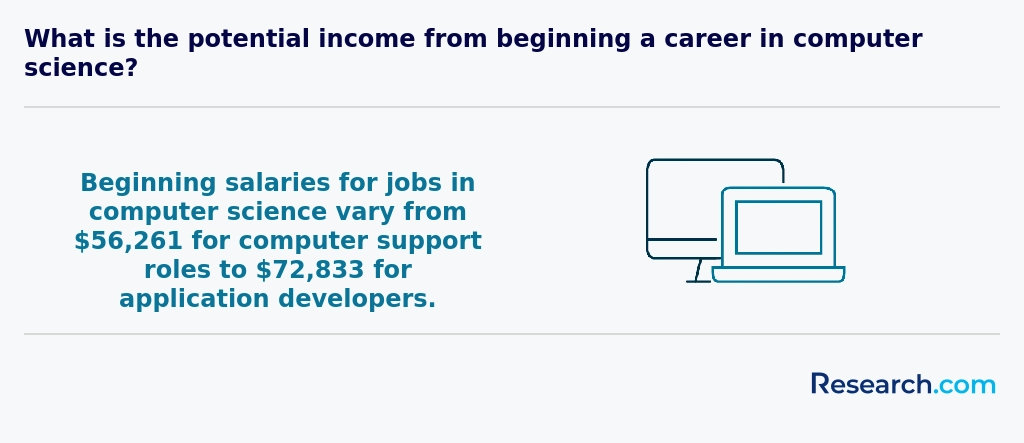
Graduates from computer science programs in New York, including those from well-known institutions like New York University and Columbia University, can expect to earn competitive salaries. Entry-level roles such as software developers typically start with salaries around $75,000 to $85,000, but quickly grow. According to the latest data, software engineers and developers in New York have a mean annual wage of about $138,110, reflecting strong demand and the state's vibrant tech ecosystem.
For roles like web developers, the mean annual wage is approximately $95,570, while data analysts earn near $119,040, offering attractive options for graduates with diverse skills. Even IT support specialists, a solid entry into tech, earn around $63,640 per year.
Many graduates report feeling optimistic about their financial future, especially in New York City, where tech salaries often exceed those in other parts of the state by 10% to 20%. This is encouraging when balancing the higher living costs typical of NYC. Bonus packages, stock options, and benefits in startups add even more value to these figures, making a computer science degree from a New York institution a strong investment.
2027 Best Computer Science Degree Programs Ranking in New York
How do we rank schools?
Investing in your education is a significant decision that can shape your future, and the Research.com team is fully aware of the importance of making well-informed choices. To support prospective students in New York, we have carefully developed the "2027 Best Computer Science Degree Programs Ranking in New York." Our dedication to quality, credibility, and accuracy is demonstrated by the thorough research and detailed analysis undertaken to create this ranking. We utilized the following reputable data sources to ensure a comprehensive evaluation of computer science programs:
By consulting this ranking, readers will gain valuable insights into the top computer science degree programs available in New York, empowering them to make confident and informed choices about their educational journeys. For more information about our ranking process, please visit our Research.com methodology page.


# 6 position
Touro University
Bachelor of Science in Computer Science


Key Findings
- Annual tuition at public universities for in-state students ranges from $10,000 to $15,000.
- Private universities may charge between $40,000 and $60,000 per year for computer science degrees.
- Entry-level salaries for graduates average around $75,000 per year, rising to over $120,000 with experience and specialization.
- New York City is a major tech hub with strong job growth in technology, finance, healthcare, and media sectors.
- Universities offer internship and co-op opportunities to help gain practical experience and improve job prospects.
- Flexible degree options and financial aid programs like scholarships and grants help reduce costs for students.
How long does it take to complete computer science degree in New York?
Completing a bachelor's degree in computer science in New York generally takes about four years of full-time study. Graduates from schools like New York University or the State University of New York (SUNY) system often share how this timeline fits well into their busy lives, balancing coursework and internships. If you're working part-time or managing other commitments, expect this to stretch to five or six years, which many find manageable without burning out.
Master's programs in New York usually require one to two years full-time, but several universities offer part-time options designed with working professionals in mind. These flexible schedules allow students to extend their learning over three or more years while maintaining their jobs.
Using transfer credits from AP exams or community colleges can help speed up your degree, as some SUNY students have done, graduating earlier and saving tuition. Planning summer classes or joining co-op programs is another smart way to stay on track or finish faster.
Faculty Expertise and Research Opportunities
New York’s top Computer Science degree programs distinguish themselves through world-class faculty and cutting-edge research centers that drive innovation and student success. At New York University’s Courant Institute of Mathematical Sciences, leading researchers in machine learning and computational neuroscience helm labs like the Center for Data Science, offering undergraduates and graduates hands-on projects alongside published professors. Columbia University’s Department of Computer Science hosts the Columbia Vision and Graphics Center and the Data Science Institute, where students collaborate on real-world problems from autonomous vehicles to large-scale data analytics. Key research opportunities and faculty highlights include:
- NYU Courant’s Artificial Intelligence Lab, led by award-winning faculty publishing in premier conferences such as NeurIPS and ICML.
- Columbia’s Laboratory for Computational Science and Numerical Methods, focusing on high-performance computing and quantum algorithms.
- Pace University’s Cybersecurity Research Center, offering student assistantships in vulnerability assessment and digital forensics.
- CUNY’s Advanced Science Research Center, which facilitates interdisciplinary projects spanning bioinformatics, machine learning, and materials simulation. Engaging in faculty-led research not only deepens theoretical understanding but also bolsters student portfolios. Many programs offer:
- Research Assistant positions with stipends or academic credit.
- Opportunities to co-author journal articles and present at international conferences.
- Summer research internships sponsored by industry partners in New York City’s tech ecosystem. For prospective master’s students seeking flexible, cost-effective options, exploring our Most Affordable Online Master’s in Computer Science Degree Programs Ranking in Virginia can reveal additional pathways to engage with faculty expertise remotely while maintaining affordability and quality.
What's the difference between online and on-campus computer science degree?
Choosing between online and on-campus computer science degrees in New York boils down to how you want to balance flexibility with direct access to resources. Online programs suit those juggling jobs or family, offering video lectures and virtual labs that a graduate from an online New York University course found helpful for fitting studies around a busy schedule.
On-campus degrees, such as those at Columbia University, provide hands-on experiences with faculty mentorship and specialized lab access-something many on-campus students say enhanced their learning and networking. These students often describe the energy of in-person career fairs and local tech meetups as invaluable for landing internships in New York's competitive tech scene.
Cost is another factor. While online options can cut commuting and housing expenses, tuition at top schools can be similar for both formats. Graduates from both types emphasize that curriculum quality remains consistent, covering essential topics like algorithms and AI, thanks to strict accreditation standards.
Finally, pacing differs: online students can often accelerate courses, while on-campus learners follow structured semesters that aid consistent progress, making the choice rely on your personal learning style and lifestyle.
Faculty Expertise and Research Opportunities
New York’s top computer science degree programs are distinguished by their acclaimed faculty and cutting-edge research initiatives, ensuring students receive mentorship from leaders in the field. Professors at institutions like New York University and Columbia University hold appointments in prestigious labs-ranging from artificial intelligence to cybersecurity-where they publish regularly in top-tier journals and secure significant grant funding. Undergraduates often collaborate with these experts on projects in data analytics, machine learning, and human-computer interaction, gaining first-hand exposure to the research process. Dedicated research centers such as NYU’s Center for Data Science and Columbia’s Zuckerman Institute host seminars, hackathons, and symposiums that invite students to present findings and network with industry partners. These partnerships frequently lead to internship placements, where undergraduates apply theoretical concepts in real-world settings and explore what jobs can you do with coding after graduation. Faculty members also integrate their research breakthroughs into the curriculum, updating course content to reflect evolving technologies like quantum computing and edge AI. This dynamic approach ensures that graduates not only master core topics-such as algorithms, software engineering, and database management-but also develop a research mindset that enhances critical thinking and problem-solving skills. Whether participating in NSF-funded projects or co-authoring papers with doctoral candidates, students benefit from a learning environment that prioritizes innovation, collaboration, and academic excellence.
What is the average cost of computer science degree in New York?
The average cost of a computer science degree in New York varies depending on whether you attend a public or private institution and your residency status. For in-state students at public universities, the median total cost for a four-year degree is around $37,870. Graduates recall budgeting carefully for tuition and appreciating the balance between quality education and manageable expenses at these schools. Out-of-state students face significantly higher fees, with median costs near $62,997, which can feel daunting but often reflect the enhanced resources and broader networking opportunities they encounter.
Private colleges in New York, popular for their strong computer science programs, typically have even higher costs close to the median out-of-state total, reaching upwards of $62,997 over four years. Former students from such institutions often highlight the valuable labs, technology access, and faculty engagement that justified these expenses. However, these costs also underscore the importance of financial planning early on.
Alongside tuition, students should factor in additional expenses such as books, technology fees, and living costs, which can be substantial in New York City. Many graduates recommend seeking out scholarships and financial aid to offset the full sticker price. To explore options, consider the affordable computer science school in New York listings, which can provide pathways to reduce your overall New York computer science degree tuition fees.
Internship and Industry Partnership Opportunities
New York’s top computer science programs connect students with paid, credit-bearing internships and co-op positions through strong industry partnerships.
- Major tech firms (Google, IBM, Amazon) and finance companies (Goldman Sachs, JPMorgan) recruit on campus.
- University career centers host hackathons, networking events and dedicated tech fairs.
- Capstone projects often partner with local startups and research labs.
Benefits include:
- Hands-on experience that builds portfolios and practical skills.
- Networking pathways that frequently lead to full-time offers.
- Flexible options for remote learners-explore ai degrees online for AI-focused internships.
Start exploring opportunities by sophomore year and leverage faculty advisors to secure placements aligned with your career goals.
What financial aid is available to computer science degree students in New York?
For students pursuing computer science degrees in New York, several financial aid options make steep tuition more manageable. Graduates from SUNY schools often share how the Tuition Assistance Program (TAP) eased their costs, offering up to $6,895 annually based on income. This is a practical first step for residents attending public institutions.
Federal Pell Grants are another essential resource, covering up to $7,395 and requiring no repayment. Those who pursued computer science at private universities like NYU or Columbia recall combining these grants with federal student loans to balance tuition and living expenses. These loans have fixed interest rates, helping students plan repayment effectively.
Merit-based scholarships often reward high-achieving computer science students, especially at competitive schools. For instance, students at Columbia celebrate grants that recognize leadership and academic excellence, enabling them to focus more on studies than finances.
Finally, tech industry internships and employer tuition reimbursement programs have supported many students. Securing an internship with a New York-based tech firm can lead to partial tuition coverage, highlighting the value of aligning academic and career goals early on.
Essential Skills for Success in a Computer Science Degree
Building the right skill set ensures you thrive in coursework and real-world projects:
- Programming fluency (e.g., Python, Java, C++) to implement solutions efficiently
- Algorithmic thinking for problem decomposition and optimization
- Strong mathematical foundations in discrete math, calculus, and linear algebra
- Software design and debugging practices to build reliable applications
- Collaboration and communication skills for team-based development
- Time management and organizational skills to balance coding, exams, and projects
- Adaptability and continuous learning to keep pace with emerging technologies
To apply these skills in specialized fields like game development, consider online game design classes.
What are the prerequisites for enrolling in computer science degree program in New York?
To enroll in a computer science degree program in New York, start by completing a strong high school curriculum emphasizing math and science-courses like algebra and geometry are essential. Graduates from popular schools such as those within the SUNY system often recall how mastering these fundamentals made tackling university-level programming courses more rewarding and less intimidating.
Next, prepare for standardized tests such as the SAT or ACT. While some local colleges have become test-optional, top programs still consider scores; aiming for a combined SAT score around 1200 or an ACT above 25 can increase your chances at selective campuses in New York City and beyond.
Application materials play a big role too. Successful applicants commonly include personal statements and recommendation letters highlighting their passion for coding or internships. Graduate hopefuls should hold a bachelor's degree with solid coursework in algorithms and data structures, and many share how submitting GRE scores (where required) proved a critical step in admissions.
Taking these steps early, like many SUNY computer science graduates advise, helps avoid surprises and opens doors to affordable, quality education tailored for New York students.
Campus Life and Student Experience
New York’s computer science programs are not solely defined by academics-they also offer a vibrant campus life that enriches the overall student experience. Beyond the classroom, students have the chance to join tech clubs, participate in coding hackathons, and attend industry networking events that nurture a sense of community and professional growth. Universities in the city often provide modern lab facilities, collaborative workspaces, and access to career support centers that help students refine both technical and soft skills. Moreover, campus initiatives like mentorship programs and guest lectures from industry leaders offer invaluable real-world insights, ensuring that graduates are well-prepared for the competitive job market. For those looking for a blend of quality education and an active student life, exploring options such as an affordable computer science school in New York might be a great starting point. This holistic approach not only fosters academic success but also builds lifelong relationships and networks that are pivotal in navigating the dynamic tech landscape.
What courses are typically in computer science degree programs in New York?
At New York universities, computer science degrees typically start with core courses like programming, data structures, and algorithms. Graduates often recall how these basics built their confidence in problem-solving and coding-essential skills they use daily, whether debugging a function or designing software.
Students also dive into software engineering, computer systems, and operating systems to understand the nuts and bolts of hardware-software interaction. For example, at popular schools like NYU or SUNY, learning about networking protocols prepares students for real-world roles managing data communication, which is a huge asset given New York's vibrant tech startup scene.
Mathematics courses such as calculus, discrete math, and linear algebra ground students in logic and theory critical for advanced electives like AI and cybersecurity, areas where many graduates find high demand jobs. Others cherish opportunities to work on databases or web development projects that make their resumes stand out.
Hands-on experiences like capstones and internships embedded in these programs connect students directly to New York's tech industry, helping them translate coursework into practical career skills.
What types of specializations are available in computer science degree programs in New York?
Computer science degrees in New York commonly include specializations like Artificial Intelligence (AI) and Machine Learning, Data Science and Big Data Analytics, and Cybersecurity. Graduates from well-known public and private universities describe the AI track as empowering, giving them hands-on experience building algorithms used in finance or healthcare industries. This practical approach matches the city's tech-driven job market perfectly.
Data Science and Big Data Analytics is another popular specialization, especially for students aiming to work in New York's finance and marketing sectors. They find this track rewarding because it teaches skills to analyze vast datasets, which is essential for decision-making roles. Cybersecurity students focus on real-world network protection and ethical hacking techniques, reflecting current industry needs and enabling graduates to confidently enter a growing job field.
Other practical options for students exploring best computer science degree tracks New York offer include Software Engineering, Human-Computer Interaction, Cloud Computing, and Robotics. These paths give graduates the tools to innovate and succeed in diverse tech roles. For those curious about the overall career outlook, understanding what jobs can you do with coding can also guide specialization choices.
How do you choose the best computer science degree in New York?
Start by examining the curriculum of prospective programs to ensure they cover essentials like algorithms, programming languages, and data structures, alongside trending fields such as artificial intelligence and cybersecurity. Graduates from well-known New York institutions often praise how updated course content helped them stay competitive in the tech job market. Next, check for ABET accreditation and faculty expertise, as these factors guarantee rigorous academic standards and access to mentorship opportunities.
Consider the financial aspect carefully. While private colleges in New York may charge over $40,000 annually, many students attending public universities benefit from in-state rates around $7,100, making affordable computer science programs New York offers more accessible. Graduates often highlight balancing costs with quality as critical to their positive college experience. Also, explore schools that connect students to internships with New York's booming tech sector, which can launch rewarding career paths.
Flexibility matters too-part-time, online, or hybrid formats can fit working professionals' schedules. For more budget-conscious options, see this Most Affordable Online Master's in Computer Science Degree Programs Ranking in Virginia for ideas on cost-effective pathways.

What career paths are available for computer science degree students in New York?
Graduates with a computer science degree in New York have several promising career options with computer science degree New York that reflect the state's dynamic job market. Many find opportunities in software development, particularly in New York City's finance and media sectors, where median salaries often reach around $110,000. Others pursue roles in data science and analytics, capitalizing on the demand for experts who transform complex datasets into actionable business strategies. Cybersecurity jobs are also abundant, with the State Department of Labor reporting rapid growth and competitive wages in this field.
Many graduates from leading institutions like SUNY or private colleges embrace hands-on experience through internships with local tech startups, which often transition into long-term roles. Emerging fields such as artificial intelligence, blockchain, and cloud computing are also ripe with openings. For those exploring flexible pathways, combining a degree with 3-month certificate programs that pay well can accelerate career progress in these cutting-edge areas. Understanding computer science job opportunities in New York requires tapping into this diverse, evolving landscape where practical skills meet thriving industries.
What is the job market for computer science degree in New York?
The job market for computer science degree holders in New York remains robust, driven by a diverse economy spanning finance, healthcare, media, and startups. Graduates from institutions like the City University of New York (CUNY) and private universities frequently land roles in Manhattan's fintech firms or growing healthcare IT companies statewide. This steady demand for skilled tech workers ensures that the computer science job outlook in New York is strong, with salary prospects that often exceed national averages, helping graduates feel confident as they navigate early career steps.
Many graduates talk about how internships and co-ops organized through their universities provided hands-on experience that directly led to job offers. This practical background is key in competitive sectors such as cybersecurity and data analytics. Cost-conscious students can also explore a range of programs, balancing tuition expenses with local salary trends to maximize return on investment.
For those interested in expanding knowledge without relocating, exploring the best online college courses for seniors can be a practical option to stay updated and competitive in the tech workforce.
Frequently Asked Questions About computer science
Students pursuing a computer science degree in New York can enhance their learning by engaging in internships with the city's thriving tech sector. NYC hosts numerous startups and established companies like IBM and Google, offering practical experience alongside academic studies. According to the New York State Department of Labor, internships significantly improve employment prospects for graduates.
Active participation in coding bootcamps and hackathons can further sharpen skills. Events frequently held in New York foster collaboration, networking, and real-world problem solving. Additionally, joining student organizations or research projects within universities helps students deepen theoretical knowledge and teamwork abilities.
Leveraging online resources and certifications, such as those from Coursera or edX, complements classroom learning, especially in fast-evolving fields like artificial intelligence and cybersecurity. Balancing academic rigor with experiential opportunities positions New York students for success in the competitive technology job market.
Emerging niches within the computer science field in New York reflect national and global technology trends, impacting educational programs and job markets. Areas such as artificial intelligence (AI), machine learning, and data science are rapidly growing, fueled by New York's strong finance and healthcare sectors. According to the Bureau of Labor Statistics, data science roles are expected to grow by 36% through 2030 nationally, with New York City as a key hub.
Cybersecurity is another critical niche, driven by increasing digital threats. New York State recently invested in cybersecurity education initiatives across universities to meet demand.
Additionally, quantum computing is gaining attention, with institutions like Columbia University offering specialized research programs.
The rise of blockchain technology, especially in fintech, also offers new career pathways for students pursuing computer science in New York.
After completing a computer science degree in New York, preparing for the job market involves a combination of practical experience and strategic networking. Internships and cooperative education programs offered by many New York universities can provide valuable hands-on skills and industry connections. According to the New York State Department of Labor, the tech sector in New York is projected to grow by 12% through 2030, emphasizing strong demand for software developers and data analysts. Graduates should also focus on building a robust portfolio showcasing projects and coding skills, which is often crucial during technical interviews.
Joining local tech meetups and organizations like New York Tech Alliance can expand your professional network and keep you informed about the latest industry trends. Additionally, leveraging platforms such as LinkedIn to connect with recruiters and alumni can increase job opportunities. Understanding specific tools and languages favored in the New York job market, such as Python, JavaScript, and SQL, will also enhance employability. Continuing education through certifications in cloud computing or cybersecurity can further differentiate candidates in a competitive environment.
Employers in New York highly value technical proficiency when hiring computer science graduates. Key skills include programming languages such as Python, Java, and C++, which remain standard across many industries. Additionally, knowledge in data structures, algorithms, and software development are essential.
Beyond coding, expertise in cloud computing and cybersecurity is increasingly demanded, reflecting New York's growing tech and finance sectors. According to the New York State Department of Labor, job postings for computer science roles emphasize problem-solving and collaboration abilities as critical soft skills.
Familiarity with machine learning and artificial intelligence also provides a competitive edge due to rising applications in industries like healthcare and finance.
Finding internships in New York for computer science students involves leveraging university career services, job fairs, and online platforms. Many New York universities, such as NYU and Columbia, offer dedicated resources and connections with tech companies in the city. According to the National Association of Colleges and Employers (NACE), about 70% of internships are secured through networking and career center support.
Students should also explore websites like Handshake and local job boards focused on technology roles in New York. Internships with firms in sectors such as finance, media, and startups are common, reflecting the city's diverse tech ecosystem. Actively applying early and attending industry events can increase chances of securing a position.
A computer science degree significantly enhances career mobility and advancement opportunities in New York. The state's robust tech industry, centered in NYC and growing hubs like Albany, constantly seeks skilled professionals. According to the New York State Department of Labor, employment for computer and information technology occupations is projected to grow by 16% from 2020 to 2030, much faster than the average for all occupations.
Possessing a degree in computer science often opens doors to various roles, including software development, data analysis, and cybersecurity. Employers in New York frequently prefer candidates with formal education due to the technical complexity involved.
Furthermore, higher degrees enable access to leadership and specialized careers, contributing to salary increases. The median annual wage for computer and IT roles in New York was about $101,000 in 2023, per BLS data, with graduates from reputable programs often earning more.
Studying for a computer science degree in New York equips students for interdisciplinary roles through diverse curricula that combine technical skills with knowledge from other fields. Many New York universities incorporate coursework in data science, finance, healthcare, and urban planning alongside core computer science topics.
Research from the New York State Education Department highlights partnerships between computer science departments and industries such as biotechnology and media, fostering practical, cross-disciplinary experience.
This exposure enables students to develop critical thinking and collaboration skills, essential for addressing complex problems in sectors like finance and healthcare, abundant in New York's economy.
Access to internships in leading technology and innovation hubs within New York City further strengthens interdisciplinary readiness.
Choosing between a thesis and a non-thesis computer science degree program in New York depends largely on your career goals and learning preferences. Thesis programs focus on original research, which is ideal for students interested in pursuing a PhD or careers in research and development.
Non-thesis options emphasize coursework and practical skills, appealing to those aiming to enter the workforce immediately or enhance their technical expertise. According to the National Center for Education Statistics, about 40% of computer science master's students nationwide opt for thesis tracks, with New York universities reflecting a similar trend.
Consider your interest in research, time commitment, and whether you want to publish scholarly work when making your choice.
Students in New York seeking to study computer science abroad have several options through exchange programs and partnerships maintained by local universities. Institutions like New York University and Columbia University offer joint initiatives with European and Asian universities, giving students opportunities to earn credits overseas while remaining enrolled in their US programs.
Many of these programs focus on emerging tech hubs, including Germany, the Netherlands, and Singapore, providing exposure to diverse tech industries. According to the Institute of International Education, in 2022, nearly 12% of New York college students participated in study abroad programs, with a growing share focusing on STEM fields like computer science.
Additionally, some New York schools facilitate direct enrollment at partner universities abroad, while others support summer research or internship experiences in global tech centers. Students should consult their institution's study abroad office for tailored computer science opportunities aligned with degree requirements.
New York offers a variety of part-time job opportunities that enhance computer science education. Students often find roles as software development interns, helping them build coding skills and real-world experience. According to the New York State Department of Labor, tech internships and junior developer positions grew by 10% annually from 2020-2023, reflecting demand in the region.
Other options include technical support positions in startups and data analysis roles, which sharpen problem-solving and software proficiency. Freelancing in web development or app design is popular, allowing flexible schedules and practical portfolio building.
Working in local tech hubs like Silicon Alley exposes students to industry trends and networking, crucial for career growth.
New York offers computer science students numerous networking opportunities through its dense concentration of tech companies, startups, and research institutions. Students often connect with industry leaders via career fairs hosted by universities like NYU and Columbia, which attract hundreds of employers annually. According to a 2023 report by the New York State Department of Labor, the tech sector in New York City alone employs over 300,000 people, creating a vibrant environment for internships and mentorships.
Additionally, local chapters of organizations such as the Association for Computing Machinery (ACM) and Women Who Code provide events and workshops that foster peer and professional networking. These groups frequently collaborate with corporate sponsors to offer students direct access to hiring managers and project opportunities.
Meetups and conferences, including the annual NYC Tech Summit, further enrich the professional ecosystem by allowing students to engage with cutting-edge trends and potential employers. These resources combined create a dynamic community that supports career growth for computer science students in New York.
Alumni networks play a crucial role in supporting computer science students in New York by offering valuable connections within the tech industry. Many universities in the state, such as Columbia and NYU, have extensive alumni communities actively involved in mentorship programs and job referrals. According to the National Association of Colleges and Employers (NACE), 85% of jobs are filled through networking, underscoring the importance of these alumni ties.
These networks provide access to internships and tech conferences, which are vital for gaining real-world experience in New York's competitive market. Moreover, alumni often share insights on emerging technologies and startup trends specific to the region, helping students make informed career decisions.
Many New York colleges offer flexible computer science degree programs that allow students to tailor their studies toward specific career goals. You can often choose electives in areas like cybersecurity, data science, artificial intelligence, or software engineering, aligning your skills with industry demands. Several schools provide opportunities for internships and cooperative education, which is crucial for gaining practical experience in the New York tech market. According to the NYS Department of Labor, computer science jobs in New York are expected to grow by 15% through 2030, highlighting the importance of relevant specializations.
Advisors in New York institutions frequently help students customize their curriculum based on career interests. Additionally, many universities collaborate with local tech firms, enabling students to work on real-world projects. New York's diverse tech ecosystem offers networking events and workshops to complement academic learning, further supporting career-focused customization.
Computer science students in New York often face several common challenges during their studies. A primary difficulty is managing the demanding coursework, which frequently includes advanced topics like algorithms, data structures, and software engineering. According to the College Board, New York hosts some of the nation's most competitive programs, increasing academic pressure.
Financial stress is another significant issue. The average in-state tuition for public universities in New York is about $10,000 annually, while private institutions can exceed $50,000, making affordability a major concern for many students.
Additionally, balancing internships or part-time work with classes can be tough due to the fast-paced tech industry in New York City. Research by NYU highlights that time management is crucial for student success in these programs.
A computer science degree from a New York institution can open doors to several respected professional certifications. Common choices include the Certified Information Systems Security Professional (CISSP) and Certified Ethical Hacker (CEH), which are sought after in cybersecurity roles growing rapidly in New York's tech sector.
Other valuable certifications include the Project Management Professional (PMP), relevant for computer science graduates moving into leadership, and the Amazon Web Services (AWS) Certified Solutions Architect, reflecting the demand for cloud computing skills in New York-based companies.
Data from the New York State Department of Labor indicates over 15% growth in computer and information technology roles by 2030, underscoring the importance of these credentials.
To craft a winning application for a computer science program in New York, start with a clear and concise personal statement. Highlight your passion for technology and relevant experiences like coding projects or internships. New York universities often emphasize quantitative skills, so showcase your math and problem-solving abilities.
Strong letters of recommendation from teachers or mentors familiar with your technical skills can significantly boost your application. According to the National Center for Education Statistics, New York awarded over 3,800 bachelor's degrees in computer science in 2022, indicating competitive admissions.
Additionally, prepare well for standardized tests if required, and tailor your application to reflect knowledge of the specific program's curriculum and research opportunities. Demonstrating awareness of industry trends in New York's tech sector, such as AI and cybersecurity, can also be advantageous.
Computer science is recognized globally as a critical field driving innovation and economic growth. Within the United States, and particularly in New York, the demand for skilled computer science professionals continues to rise. According to the New York State Department of Labor, employment in computer and information technology occupations is projected to grow by 15% from 2020 to 2030, faster than the average for all occupations.
Globally, computer science careers are valued for their adaptability and connection to emerging technologies like artificial intelligence and cybersecurity. The U.S. higher education system, including New York institutions, often emphasizes practical experience and research opportunities, which align with international industry standards. Many students from New York pursue internships and collaborations with global tech companies, enhancing their competitiveness worldwide.
Furthermore, technology hubs in New York City attract both domestic and international talent, making the region a diverse and dynamic environment for computer science careers. This global perspective underscores the importance of strong academic foundations combined with cross-cultural skills relevant in today's interconnected tech landscape.
Gaining practical experience while studying computer science in New York is essential for career success. Many universities offer cooperative education programs (co-ops) that allow students to work in tech companies during their studies. For example, Cornell Tech and NYU Tandon provide strong industry connections enabling internships with top firms in Silicon Alley.
Students can also participate in research projects alongside professors, often funded by grants from the National Science Foundation. Additionally, coding bootcamps and hackathons hosted in New York City offer real-world problem-solving opportunities.
According to the New York State Department of Labor, internships in tech roles have grown by 15% over the past five years, reflecting high demand for practical skills.
Choosing the right concentration within a computer science degree program in New York requires understanding both your interests and the regional job market. Popular concentrations include cybersecurity, data science, artificial intelligence, and software engineering. According to the New York State Department of Labor, tech fields like data analysis and cybersecurity are growing faster than average, with expected employment increases of over 15% between 2022 and 2032.
Consider your career goals alongside these trends. Research universities in New York City, which often tailor their programs to meet local industry demands in finance, media, and technology sectors. Exploring internship opportunities can also guide your decision.
Related Computer Science Rankings for Nearby Cities
- 2027 Best Computer Science Degree Programs Ranking in Philadelphia
- 2027 Best Computer Science Degree Programs Ranking in Albany
- 2027 Best Computer Science Degree Programs Ranking in Amherst
- 2027 Best Computer Science Degree Programs Ranking in Providence
- 2027 Best Computer Science Degree Programs Ranking in Worcester
- 2027 Best Computer Science Degree Programs Ranking in Baltimore
- 2027 Best Computer Science Degree Programs Ranking in Cambridge
- 2027 Best Computer Science Degree Programs Ranking in Boston
- 2027 Best Computer Science Degree Programs Ranking in Medford
- 2027 Best Computer Science Degree Programs Ranking in College Park
Top Trending Computer Science Rankings
See What Experts Have To Say About Studying Computer Science
Read our interview with Computer Science experts

Martin Kang
Computer Science Expert
Assistant Professor
Loyola Marymount University

Imed Bouchrika, Phd
Computer Science Expert
Professor of Computer Science
National Higher School of Artificial Intelligence

Kathleen M. Carley
Computer Science Expert
Professor of Computer Science
Carnegie Mellon University

Elan Barenholtz
Computer Science Expert
Associate Professor
Florida Atlantic University

References
- Fields of Work in Computer Science: Top IT Careers | Walbrook https://www.walbrook.ac.uk/subjects/computer-science/computer-science-fields-of-work-career-in-it/
- Essential Skills Every Computer Science Graduate Needs | LSBF https://lsbf.edu.my/blog/11-essential-skills-every-computer-science-graduate-needs/
- Computer Science Cover Letter: How to Show You're a Top Tech Candidate https://arc.dev/talent-blog/computer-science-cover-letter/
- Alumni computer science dual https://www.fbi.h-da.de/en/informieren/ueber-uns/alumni/alumni-computer-science-dual
- Getting the Most Out of a Computer Science Degree https://robkokochak.com/blog/getting-the-most-out-of-a-cs-degree/
- A Holistic Approach to Studying Interdisciplinary Collaboration: Computer Science https://sciety.org/articles/activity/10.21203/rs.3.rs-8694985/v1
- Challenges That Frustrate Computer Science Teachers https://codeeasy.io/blog/challenges-that-frustrate-computer-science-teachers
- How to choose a bachelor's in computer science | edX https://www.edx.org/resources/how-to-choose-a-bachelors-in-computer-science
- UK Computer Science Degree Requirements Explained https://accesscoursesonline.com/blogs/news/computer-science-degree-requirements
- New and Future Computer Science and Technology Trends https://www.computerscience.org/resources/computer-science-trends/


