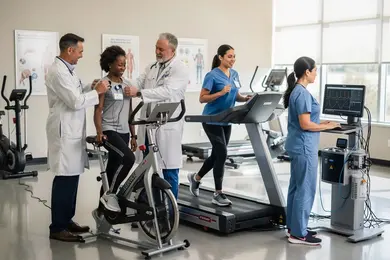
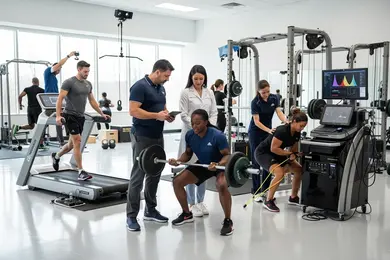
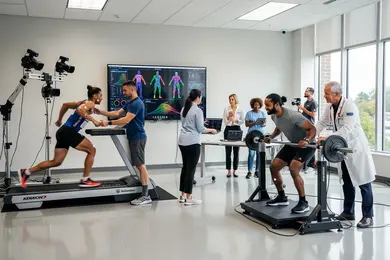
2027 School and Athletic Program Roles You Can Target With an Exercise Science Degree

Co-Founder and Chief Data Scientist
Facing an oversaturated job market, many holding Exercise science degrees struggle to identify reliable pathways to sustainable employment, particularly within school and athletic program settings where roles are increasingly specialized. The U.S. Bureau of Labor Statistics projects a 13% growth in related health and fitness occupations over the next decade, signaling opportunity yet also rising competition. Additionally, with over 40% of undergraduates now opting for at least partial online education, programs offering flexible delivery can determine access and timing advantages for adult learners balancing work and study. This article examines targeted school and athletic career roles matched to Exercise Science qualifications, clarifying practical options to align education choices with workforce realities and advancement goals.
Key Things You Should Know
- Exercise science roles in school athletics face wage compression, with median salaries near $46,000, limiting long-term financial growth despite demand growth projected at 11% through 2031 by the U.S. Bureau of Labor Statistics.
- Employers prioritize candidates with certifications in sports medicine or strength conditioning alongside exercise science degrees, raising entry barriers and segmenting career pathways toward specialized athletic program roles.
- Degree durations averaging 4 years cause timing and cost hurdles; workforce entrants considering expedited certifications or associate degrees may gain faster access but face narrower career mobility within school and athletic settings.
What is an exercise science degree and how does it prepare you for school and athletic program roles?
Graduates with an exercise science degree addressing career opportunities in school and athletic programs must navigate a distinct operational landscape shaped by resource limitations, diverse athlete maturity, and safety priorities. For instance, a high school strength coach tailors conditioning programs to meet the physical development and sport-specific needs of student-athletes while complying with safety standards-a critical balancing act absent in professional sports environments where more resources allow specialized staffing.
The curriculum's focus on practical skills like assessment, program implementation, and data-driven performance monitoring aligns with employer expectations in educational athletics, where managing over 8 million U.S. high school participants in the 2022-23 period demands efficient workload and injury risk management. Key workforce implications include multitasking across coaching and rehabilitation roles amid equipment constraints and variable athlete skill levels.
How exercise science prepares you for roles in educational and sports settings involves understanding these tradeoffs and emphasizing scientifically validated performance strategies over anecdotal practices. This analytical approach enhances employability in competitive school programs subject to continuous outcome evaluation.
Prospective students seeking flexibility may also consider an online kinesiology degree, a pathway offering access to specialized knowledge without geographic limitations, supporting strategic career pivots within exercise science fields.
What school-based and athletic program jobs can you get with an exercise science degree?
Graduates targeting school-based athletic program careers with an exercise science degree face a demanding blend of clinical expertise, program management, and state-specific certification hurdles. Athletic training and coaching jobs in schools with exercise science credentials frequently require candidates to hold additional certifications such as CSCS. Athletic trainers maintain critical roles managing onsite injury assessment and emergency care, a demand expected to grow by 11% from 2024 to 2034 with approximately 2,400 annual openings nationwide, primarily within secondary and collegiate sports.
Strength and conditioning roles often demand not only foundational degree knowledge but also practical collaboration with coaches and healthcare teams to optimize athlete performance. Physical education instructors with an exercise science background who integrate scientific principles can influence long-term student wellness programs beyond basic fitness instruction.
Hands-on experience through internships or assistantships during the degree program is vital for employability, especially in public schools where budget constraints limit hiring flexibility. Rehabilitation specialists working alongside local clinics face additional challenges relating to interdisciplinary coordination and adherence to healthcare protocols. Balancing these responsibilities while demonstrating measurable athlete outcomes can determine job retention and career mobility within this sector.
Students evaluating this pathway should consider how program rigor, credentialing costs, and state licensing requirements may impact their career trajectory. For those considering alternatives with accelerated options, a fast track computer science degree may offer a strategic pivot into a growing technical field.
How do exercise science careers differ across K-12 schools, colleges, and community athletic programs?
Exercise science career opportunities in K-12 schools differ significantly from roles in colleges and community athletic programs due to varied responsibilities and workplace constraints. In K-12 settings, professionals juggle foundational fitness education, injury prevention, and group activities while often handling teaching or coaching duties. The limited budgets and large student ratios here restrict specialized intervention, favoring broad fitness literacy over individualized athlete development.
By contrast, colleges emphasize specialization, requiring evidence-based performance enhancement, sports nutrition, and rehabilitation skills. Collaboration with multidisciplinary teams and compliance with NCAA standards shape roles centered on data-driven decision-making and targeted athlete improvement. These expectations create a demanding environment that highlights measurable performance outcomes.
Community athletic programs serve diverse populations across age and skill, blending fitness instruction, wellness coaching, and chronic disease management. Balancing individualized programming with accessibility means leveraging group classes and community outreach, posing unique operational challenges distinct from school or collegiate settings.
The workforce outlook aligns with these distinctions: the U.S. Bureau of Labor Statistics projects a 12% growth in fitness trainers and instructors from 2024 to 2034, generating about 74,200 openings annually. This growth favors adaptable, tailored roles primarily found in community and college contexts rather than K-12 schools. Professionals must therefore weigh whether they prefer the broad educational impact characteristic of K-12 or the specialized, performance-oriented expectations of higher education and community settings.
For those considering advanced academic pathways in this field, exploring a doctorate in data analytics online can offer critical competencies in performance data interpretation and research methodologies relevant to collegiate and community athletic roles. Understanding the differences in college and community athletic program roles for exercise science graduates is essential for making informed educational and career decisions.
What education, certifications, or licenses are required for common exercise science roles in schools and athletics?
Securing roles in school athletics or educational sports programs frequently hinges on meeting specific education requirements for exercise science professionals in school athletics that go beyond a bachelor's degree in exercise science or kinesiology. Positions like athletic trainer or strength and conditioning coach regularly demand certifications or licensure reflecting rigorous compliance with accreditation standards and state regulations. For example, certified athletic trainers must graduate from programs approved by the Commission on Accreditation of Athletic Training Education and pass the Board of Certification exam, with licensure varying by state but typically required.
Certification through bodies such as the American Society of Exercise Physiologists is not a legal mandate but significantly enhances employability, especially in settings requiring additional credentials, such as CPR/AED certification or teaching credentials geared toward physical education. Specifically, strength and conditioning specialists in high school or collegiate environments often obtain National Strength and Conditioning Association certification, which involves ongoing education and renewal to sustain professional standing.
Employers emphasize verifiable credentials paired with substantive hands-on experience. A typical high school sports program may insist on candidates maintaining current licensure and continuing education to ensure safety and evidence-based training. Without suitable certification, professionals risk restricted access to clinical or supervisory roles, narrowing their practical career path.
Given the median wage of $58,160 in May 2024 and projected growth at 9% through 2034 with about 1,700 annual openings from the U.S. Bureau of Labor Statistics, the balance of time, cost, and certification benefits is critical. Those evaluating this career should consider pathways that integrate credentials with real-world application. For tailored advanced education options, exploring online MS data science programs may provide complementary skills supporting data-driven decision-making in exercise science roles.
How do online exercise science programs compare to campus-based degrees for athletic and school careers?
Online exercise science programs offer theoretical knowledge on par with traditional campus degrees but typically lack hands-on training essential for school-based athletic roles. For example, K-12 athletic trainers must demonstrate practical skills like biomechanics lab work, injury assessment, and direct athlete interaction, which campus programs support through clinical placements and supervised fieldwork. This creates a significant tradeoff for remote learners who must actively pursue internships or community partnerships to develop competencies employers prioritize.
Campus environments also provide specialized equipment and immediate faculty mentorship, which are difficult to replicate virtually. Athletic trainers employed by school districts often need documented practical hours to prove proficiency, underscoring the value of in-person education. Conversely, online programs deliver flexibility, enabling working professionals to study without interrupting employment, which suits those balancing career pivots and job commitments.
U.S. Department of Labor projections anticipate 13% job growth in exercise science-related fields over the next decade. Employers expect candidates to couple theoretical expertise with observable applied skills, including program design and observational assessment. Hence, students deciding between modalities should weigh the benefits of immersive, on-campus training against the necessity for self-driven, local experiential learning to remain competitive in this expanding market.
What courses and practical experiences should an exercise science program include for athletic and school work?
Programs in exercise science intended for school or athletic careers must balance rigorous scientific foundations with applied, hands-on learning to align with employer demands and enhance job prospects. Core coursework should cover human anatomy and physiology, biomechanics, exercise physiology, motor learning, and sports nutrition to ground students in essential physical sciences. Complementary classes in injury prevention, rehabilitation methods, and kinesiology are vital for managing athlete health and recovery in practical settings.
Students aiming for secondary education roles need embedded pedagogical training, including curriculum design, educational psychology, and classroom management, since roughly 9% of sport and exercise science graduates in the UK transition to teaching within 15 months (Prospects "Sport and exercise science" graduate outcomes). This dual focus on science and education prepares candidates for the complexities of school environments.
Practical experience is non-negotiable: internships or clinical placements in schools, gyms, or community sports offer direct exposure to athlete assessment, program planning, coaching, and fitness testing. For example, professionals in school systems must navigate adolescent development alongside instruction, making supervised practice essential.
Tradeoffs are inherent. Programs are weighted heavily toward laboratory science, risk-limiting education, and coaching practice opportunities, reducing versatility for school-based roles. Conversely, programs focused mainly on applied coaching may lack depth in physiological sciences, constraining clinical athletic training prospects.
Additionally, competence in data interpretation, from fitness assessments to injury risk evaluations, is increasingly valued. Integrating statistics and research methods enhances graduates' ability to implement evidence-based decisions, a necessity reflected in employer expectations across education and athletic sectors.
How long does it take to earn an exercise science degree and what does it typically cost?
Choosing an exercise science degree involves critical tradeoffs between duration, cost, and long-term employability that shape career trajectories. A standard bachelor's degree requires four years, aligning with employer preferences for roles like sports coaching, athletic training, or fitness instruction. Shorter programs, including associate degrees or accelerated bachelor's, reduce time but often limit access to certifications and advanced positions valued by employers.
Graduate studies add two to six years and significantly increase expenses but are often necessary for specialized clinical, research, or academic opportunities within the field. These extended timelines also demand careful financial and time commitment planning.
Cost considerations vary widely by institution type and residency status. Public universities charge approximately $10,000 annually in-state and up to $25,000 out-of-state, while private institutions range $30,000 to $50,000 per year. Such figures exclude additional living expenses and fees that can effectively double total costs. Online options may lower some indirect expenses but rarely reduce tuition rates significantly.
Within 15 months of graduation, about 13% of exercise science graduates work as coaches or instructors, making this a dominant immediate employment sector. Students targeting these careers should prioritize programs with integrated practical certification and internship opportunities to reduce employment barriers.
Ultimately, candidates must weigh accelerated entry to the workforce against potential caps on upward mobility, while those investing in longer degrees access broader roles but face increased financial and temporal burdens.
What are the salary ranges and benefits for exercise science professionals in school and athletic settings?
Income for exercise science professionals varies significantly by setting, with school and athletic roles typically earning $40,000 to $70,000 annually. A common role-recreational therapist averages around $65,350 per year, supported by steady demand and a projected 4.3% job growth through 2033. These figures highlight opportunities mainly within school and community programs, but real-world earnings and benefits fluctuate.
In educational settings, athletic trainers on school sports teams generally see salaries between $45,000 and $60,000, while rehabilitation specialists in special education or youth clinics might achieve the higher range. Full-time roles commonly include health insurance, retirement plans, paid leave, and funding for professional development, whereas part-time or contract positions often lack these benefits, impacting financial stability and requiring budgeting foresight.
A concrete example: a school-employed exercise science professional earning $55,000 with comprehensive benefits may have total compensation comparable to a private clinic role paying $65,000 without benefits. This tradeoff between stable income and higher pay with less security is a critical decision factor.
Advancement depends heavily on targeted certifications in athletic training, physical rehabilitation, or wellness coaching, which can boost salary by up to 15%. Prospective candidates should weigh these credentials' cost and time investment against market value and employer expectations when planning their career trajectory.
What is the job outlook for exercise science graduates in school districts, colleges, and youth sports organizations?
Exercise science graduates face a favorable but complex job market shaped by institutional priorities and funding variability. Growth projections of up to 14% between 2023 and 2033 reflect demand in school districts, colleges, and youth sports organizations, yet these sectors differ significantly in job stability and advancement potential.
In school districts, roles often focus on designing physical education curricula, managing adaptive fitness for students with disabilities, and implementing injury prevention protocols. These positions tend to be more stable but require navigating bureaucratic structures and compliance demands.
Colleges employ exercise science graduates for fitness assessment, rehabilitation, and athletic training, typically within multidisciplinary health teams. These roles demand certifications such as CPR and specialized licensure, often influencing hireability and career progression. Leadership or higher-paying roles are usually contingent on graduate education or niche expertise.
Youth sports organizations offer diverse opportunities from coaching to injury prevention education but frequently rely on seasonal budgets, making income irregular and requiring skill diversification to maintain steady employment.
- Balancing part-time or contract work in youth sports with more stable institution-based jobs is a common logistical challenge.
- Staying current with evolving sports medicine protocols and compliance requirements is critical in collegiate environments.
- Proactive acquisition of specialty certifications can differentiate candidates in a competitive job market.
Realistically, prospective students should weigh these contextual factors alongside program outcomes when considering exercise science pathways. For deeper workforce insights and education alignment, refer to NutritionEd and the U.S. Bureau of Labor Statistics data summarized therein.
How can you evaluate and choose an accredited, reputable exercise science program for these career paths?
Accreditation from recognized agencies like the Commission on Accreditation of Allied Health Education Programs (CAAHEP) is a non-negotiable baseline for exercise science programs aimed at school and athletic careers. Without it, graduates face significant barriers to certification and employment, especially in regulated roles such as athletic training or physical therapy assistance. Programs must also deliver curriculum depth in foundational sciences and applied topics, including kinesiology and sports nutrition, while integrating clinical internships or partnerships that provide essential hands-on experience.
Choosing a program involves weighing the tradeoffs between cost, duration, and post-graduation outcomes. For example, physical therapy pathways require specific undergraduate prerequisites to qualify for accredited doctoral programs, so selecting an unaligned school could delay licensure and increase overall training time. Transparency on graduate placement rates helps quantify return on investment; with employment in physical therapy projected to grow 14%, success hinges on aligning academic experiences with certification exam requirements, such as those established by the National Athletic Trainers' Association Board of Certification.
Logistical factors, like evening or hybrid course formats, matter for working professionals seeking career pivots, balancing immediate income with program rigor. Ultimately, a program's ability to meet industry standards, provide real-world exposure, and prepare students for certification influences both employability and financial stability in this competitive sector.
Other Things You Should Know About Exercise Science
An exercise science degree alone rarely qualifies graduates for positions as athletic trainers, which typically require certification from the Board of Certification for Athletic Trainers (BOC) and professional clinical experience. If your goal is an athletic training role in schools or sports programs, prioritize programs that offer a pathway to this certification or plan to pursue a master's in athletic training. Without these credentials, opportunities in athletic training will be limited despite your degree.
School-based exercise science roles often involve dual responsibilities, such as managing athletic programs and supporting classroom instruction or health services. This can lead to extended hours and administrative duties beyond hands-on physical training or fitness assessment. When evaluating programs or job offers, consider how much administrative versus direct athlete engagement is expected, as heavier administrative loads reduce time spent practicing exercise science skills and may impact job satisfaction.
Strong internship placements offer practical experience, enhancing hands-on skills needed in athletic and school settings. Meanwhile, research opportunities bolster critical thinking and problem-solving abilities. Balancing both can significantly improve employment prospects, as they collectively develop a well-rounded skill set in 2027.
Most school districts require a fingerprint-based criminal background check before hiring, and many also require Child Abuse and Neglect Registry screening. Coaches or student-contact staff may need additional district clearance under state education rules, especially for K-12 settings and after-school athletic programs.
References
- Exercise science: What exactly is it? https://www.scienceforsport.com/exercise-science/
- Best Exercise Science Careers - Let's Find out! https://www.ptpioneer.com/personal-training/exercise-science-careers/
- Online Exercise Science Program https://stmary.edu/online-programs/exercise-science.html
- Online Exercise Science Degrees: Top School Review https://www.edumed.org/online-schools/exercise-science-degrees/
- What Can You Do with an Exercise Science Degree? https://www.cune.edu/news/what-can-you-do-exercise-science-degree
- ESSA's career guide for Accredited Exercise Scientists https://www.essa.org.au/Web/Web/Resources/Tools-and-templates/ESSA-AES-Guide.aspx
- Sports Science Degree Careers and Salary in Europe - StudyinEurope.eu https://www.studyineurope.eu/sports-science/sports-science-degree-careers-salary-europe/
- How to Become an Exercise Physiologist or Athletic Trainer https://www.healthcareersinfo.net/profession/athletic-trainers-and-exercise-physiologists/
- What Can You Do with an Exercise Science Degree? 10 Fitness-Focused Careers https://www.berry.edu/articles/blog/2021/what-can-you-do-with-an-exercise-science-degree
- Exercise Science Degree Careers, Jobs and Salaries - Peak Physical Therapy and Sports Performance https://peaktherapy.com/blog/exercise-science-degree-careers-jobs-and-salaries/