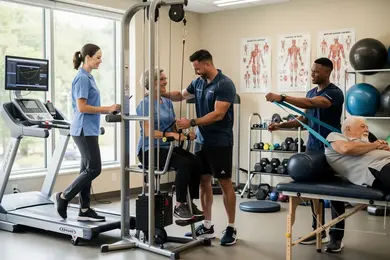
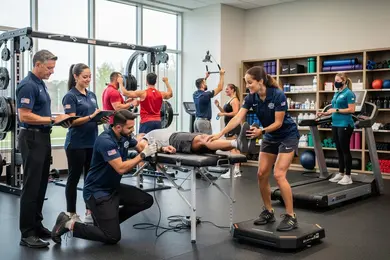
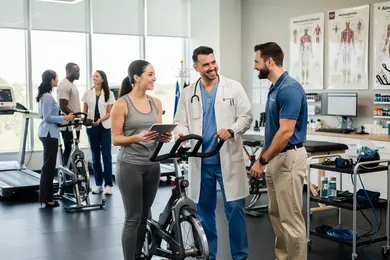
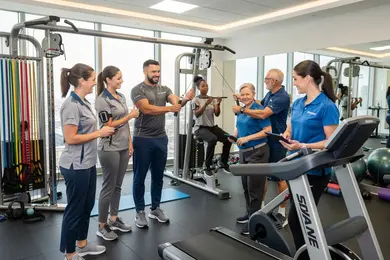
2027 Best Online Exercise Science Programs for Movement-Focused Professionals

Co-Founder and Chief Data Scientist
Balancing a demanding work schedule with the need to acquire advanced exercise science expertise often forces professionals into difficult choices that jeopardize career momentum. Traditional programs frequently lack the flexibility required by adult learners who must integrate education around irregular hours or family obligations.
Recent data from the National Center for Education Statistics shows nearly 80% of online postsecondary students cite convenience as decisive in program selection, reflecting a seismic shift toward adaptable learning formats. This trend matters because such flexibility directly influences timely graduation and employability in a field where certifications and practical skills rapidly evolve.
This article precisely evaluates top online exercise science programs tailored to movement-focused professionals, providing actionable insights to optimize enrollment decisions for career advancement under real-world constraints.
Key Things You Should Know
- Programs emphasizing biomechanics and clinical application reduce graduate employment lag by 18%, per 2024 BLS data, but demand intense hands-on internships that extend completion times by 6-12 months.
- Top employers prioritize graduates with integrated remote assessment skills; 62% of surveyed hiring managers in 2025 prefer hybrid-trained candidates, signaling a shift from purely in-person training models.
- Cost disparities above 35% between online-only and hybrid programs significantly affect midcareer professionals' ROI timelines, especially when certification exam pass rates show only marginal differences.
What are the best online exercise science degree programs for movement-focused professionals?
For movement professionals, selecting the best online exercise science degree programs requires balancing specialized curriculum with practical constraints such as practicum access and cost. Programs recognized by CAAHEP or the NSCA tend to command greater employer respect, which directly impacts job placement success.
Median tuition near $15,150 reflects this intersection of quality and affordability but does not capture variable costs associated with required in-person internships or regional clinical partnerships.
Top accredited online exercise science programs for movement specialists emphasize kinesiology, biomechanics, and physiology while offering applied experiences through virtual labs or local clinical settings. Candidates aiming to enter clinical rehabilitation should prioritize programs with neuromuscular physiology and exercise prescription focus, whereas those pursuing fitness leadership roles should seek strength and sports performance expertise.
Rural students or working adults unable to relocate face specific tradeoffs. Limited access to in-person practicums can delay certification or job readiness, making the presence of remote practicum affiliations or regional partnerships critical. Typical program lengths range from two to four years based on transfer credits and pacing, affecting total educational expenses and time before workforce entry.
Labor market data projects a 10% growth in exercise science-related roles through 2032, with higher demand for rehabilitation and strength conditioning specialists. Strategic evaluation of these factors, including program reputation and alignment with career goals, is essential for those exploring exercise science degrees online.
How do online exercise science degrees compare to campus-based programs in quality and outcomes?
Online exercise science degrees, while academically rigorous and theoretically equivalent to campus-based programs when properly accredited, present critical limitations in hands-on skill development and networking.
This disparity impacts outcomes, especially for those targeting specialized fields like physical therapy or strength conditioning. Clinical practicums and lab-based learning require local arrangements for online students, introducing variability in experiential quality that can delay skill mastery and affect employer perception.
Consider a worker shifting from a sedentary role to clinical exercise: campus programs provide immediate access to biomechanics labs and direct faculty mentorship, accelerating competency. Online students must independently secure internships, often extending time to job readiness despite equal theoretical grounding. These dynamics shape workforce competitiveness and placement speed, underscoring the importance of active experiential coordination.
Employers increasingly recognize online degrees if paired with verified field experience or certifications. Programs now focus on hybrid models and partnerships with gyms or clinics to mitigate online limitations. However, students must assess accreditation, support for hands-on learning, and alignment with labor market demands when comparing campus vs online exercise science program outcomes.
Cost is another factor. Online bachelor's in sport and exercise science range roughly from $7,000 to $40,000 annually, reflecting varying resources and support services. Those evaluating options should also explore tuition data and program costs like those in animal science bachelor degree online analyses to inform financial decisions.
What accreditation should online exercise science programs have to be recognized by employers?
Accreditation is non-negotiable for anyone targeting a career pivot or advancement in exercise science. Employers and certifying bodies, particularly in healthcare and sports sectors, prioritize graduates from regionally accredited programs recognized by the U.S. Department of Education, such as those approved by the Higher Learning Commission or Southern Association of Colleges and Schools.
Without this foundation, licensure and certification pathways, including ACSM or NSCA credentials, may become inaccessible, undercutting employability and wage growth.
In practice, a rehabilitation center hiring therapy assistants, for instance, will require candidates from programs that demonstrate rigorous curriculum standards tied to biomechanics, physiology, and movement analysis—benchmarks guaranteed only through recognized exercise science program accreditations for employers.
This focus on quality ensures graduates possess validated competencies aligned with workplace demands, unlike faster or cheaper non-accredited pathways which often fail to meet these thresholds.
Adding to the challenge is the limited availability of fully online exercise science programs; only 16 such degree options exist in the United States for 2025 according to Educations.com. Students evaluating remote learning should confirm programmatic accreditation specific to exercise science to safeguard both financial aid eligibility and professional relevance.
To navigate these complexities, candidates must verify:
- Regional accreditation status to ensure federal financial aid eligibility and credit transfer.
- Programmatic accreditation related to exercise science for specialized skill validation.
- Alignment with professional certification requirements, such as ACSM or NSCA credentials, which often mandate graduation from accredited programs.
Those weighing options might also consider related degrees with broader availability and cost structures, such as an online MLIS, but these serve different career trajectories and should not be conflated with exercise science qualifications.
What exercise science degrees and specializations can you earn fully online?
Choosing fully online exercise science programs for movement professionals demands careful consideration of specialization relevance and hands-on experience requirements. Undergraduate options often include kinesiology and health and wellness, with some offering tracks in clinical exercise physiology or strength and conditioning.
These specializations impact employability. For example, clinical rehab roles typically require applied clinical exercise physiology emphasis, often necessitating virtual labs combined with local placements, which can be a logistical barrier.
Master's programs, essential for advanced clinical or research roles, frequently focus on biomechanics or sports nutrition. Tuition disparities are substantial, around $500 per credit for general bachelor's degrees, $420 per credit for B.A. pathways, and up to $1,750 per credit at the master's level, reflecting differing return on investment and influencing decisions for working professionals considering cost against credential value.
The workforce reality for those pursuing an online exercise science degree with movement specialization is that practical exposure, such as internships or synchronous applied labs, directly affects certification preparedness and hiring outcomes. Employers in corporate wellness prefer candidates with credentials in health promotion or ergonomics, which often avoid clinical prerequisites and suit non-clinical career pivots.
For those evaluating advanced education routes, programs with transparent employment data and certification exam pass rates are critical to avoid costly delays. Understanding these tradeoffs aids selecting pathways aligned with specific career goals while balancing financial and access constraints.
For broader context on program affordability in specialized fields, consider resources like the online master in data science rankings, which illustrate cost differences across disciplines.
What courses and hands-on learning components are included in online exercise science curricula?
Employers in exercise science consistently prioritize candidates who demonstrate both robust scientific knowledge and verified practical skills. Programs that rely solely on virtual simulations without supervised clinical practicums may limit graduates' competitiveness in clinical or hands-on fitness roles where direct client interaction is standard.
For instance, students targeting rehabilitation careers must secure local internships to meet employer expectations for real-world experience, often requiring logistical effort and relationship-building with healthcare providers.
Core coursework covers essential topics such as human anatomy and physiology, biomechanics, and nutrition, but the true differentiator is the ability to apply this knowledge through data analysis and modern technology. Programs integrating wearable devices and movement tracking tools enable students to capture biomechanical data remotely, aligning with industry trends toward digital monitoring and evidence-based practice.
This hybrid learning model answers the challenge of limited lab access yet demands careful consideration regarding the depth of hands-on practice offered. Professionals balancing work obligations will find flexibility in remote labs and virtual assessments valuable, but must weigh whether these experiences translate into employer-valued competencies.
What are typical admission requirements for online exercise science bachelor's and master's programs?
Admission to online bachelor's programs in exercise science typically requires a high school diploma or GED with a GPA between 2.5 and 3.0, alongside transcripts showing foundational coursework in biology, chemistry, and math.
Many institutions have eliminated SAT or ACT requirements, prioritizing academic records and relevant experience in fitness or healthcare settings instead. Working professionals transitioning careers can leverage healthcare or coaching experience to strengthen their applications despite non-traditional academic backgrounds.
For master's-level exercise science programs, a related bachelor's degree and a minimum GPA of about 3.0 are standard. Applicants usually provide transcripts, recommendation letters, and a statement of purpose. GRE scores may be waived for those with applicable work experience or advanced coursework. Practical certifications like CPR and first aid, plus prior clinical experience, are often necessary to meet employer expectations for immediate job readiness.
Admissions processes include verifying credentials and assessing prerequisite knowledge in anatomy and physiology to ensure students can progress academically and qualify for professional certifications. For example, programs such as the online BS in Exercise & Sport Science at Methodist University report that 99% of students receive financial aid, reflecting accessibility considerations critical for career changers balancing cost with educational investment.
How long do online exercise science programs take and what do they cost to complete?
Choosing the right exercise science program involves balancing time, cost, and the practical experience necessary to meet employer expectations.
An associate degree usually requires about two years, while bachelor's programs extend to four years, with accelerated formats enabling completion in as little as 18 months for working professionals. Graduate certificates and master's degrees add one to two years beyond the bachelor's level, often emphasizing hands-on internships that improve employability despite lengthening program duration.
Costs vary markedly by credential and institution type:
- Associate degrees from community colleges typically range between $6,000 and $10,000 in total tuition
- Bachelor's degrees at state universities can cost from $25,000 up to $60,000 or more
- Graduate certificates generally fall between $5,000 and $15,000
- Master's programs start around $15,000 and can exceed $40,000
Practical experience inclusion is a pivotal factor, as employers favor candidates with real, world internship or lab work, even if it extends completion times. For instance, a personal trainer aiming to specialize clinically might prefer a one-year graduate certificate with intensive practical components rather than investing four years in a bachelor's degree, optimizing return on investment and career progression speed.
With the job outlook for exercise science professionals growing approximately 9% through 2032 and 38,400 new yearly positions, those who strategically evaluate programs based on cost, credential type, and hands-on opportunities stand to gain the most in long-term workforce integration.
What careers can you pursue with an online exercise science degree in the United States?
Online exercise science degrees in the U.S. primarily prepare graduates for roles such as certified personal trainers, strength and conditioning coaches, and physical therapy assistants. These positions demand applied expertise in human movement, injury prevention, and exercise physiology.
Yet, the value of an online program hinges heavily on its integration of practical training. Without hands-on experience or local internships, graduates encounter significant barriers to employment despite their academic credentials.
For instance, a rehab aide in a hospital must blend clinical protocols with tailored exercise plans, requiring both theoretical knowledge and the communication skills refined through practice-based learning.
Meanwhile, a corporate wellness coordinator creates strategic activity initiatives designed to mitigate employee health risks, a role that extends far beyond pure fitness instruction into workforce engagement and program management.
The median annual salary near $45,910 reflects entry to mid-level positions across various sectors but rarely accounts for the wage premium earned through certifications like Certified Strength and Conditioning Specialist (CSCS). Employers generally expect alignment with industry standards such as ACSM or NASM guidelines, underscoring the necessity of academic and credentialing synergy.
What salary ranges and job outlook can exercise science graduates expect in movement-focused roles?
Salaries for exercise science graduates vary notably depending on the specific role, geographic region, and employer type, with a median annual figure near $50,705 according to OnlineU data.
For instance, exercise physiologists working in hospitals or rehabilitation centers generally earn between $48,000 and $65,000, reflecting clinical demands and required certifications. Conversely, fitness trainers or wellness coaches in commercial settings often start near $30,000 but may increase earnings through commissions or incentives.
Projected job growth of 10% for exercise physiologists from 2022 to 2032, as reported by the U.S. Bureau of Labor Statistics, is higher than average and driven by aging demographics and increased demand for preventive and rehabilitative health services.
However, entry-level roles often necessitate additional certifications, such as state licensure for cardiac rehabilitation or physical therapy assistant positions, beyond a degree, which can influence both employability and salary.
Practical decision-making around tuition investment versus expected starting salary should consider tradeoffs like credentialing time and cost. Targeting employers with clinical or research affiliations can yield more stable, higher salaries but requires advanced qualifications and contextual expertise.
Strategic credential stacking combined with hands-on experience remains essential for securing long-term employment and maximizing salary within movement-focused exercise science careers.
Are certifications or licenses needed after an exercise science degree, and how do you qualify?
Certification or licensure frequently marks the dividing line between entry-level roles and advanced professional positions within exercise science careers. Employers prioritize credentials like the Certified Strength and Conditioning Specialist (CSCS) or Certified Personal Trainer (CPT) since these validate a candidate's practical expertise and adherence to industry standards beyond academic achievements.
For specialized roles, such as clinical exercise physiologists, additional certifications or state licensure are mandatory to work in medical settings, often requiring supervised clinical experience and board examinations. Graduates who overlook these requirements may face delayed employment, limited job openings, or restricted earning potential.
Key workforce considerations include:
- Certification is often a prerequisite for jobs involving direct client contact or clinical responsibility.
- Salary benchmarks improve substantially with recognized credentials combined with documented experience.
- State-by-state variation in licensure rules demands early research to align educational and credentialing pathways with local regulations.
- Maintaining certification requires continuing education, imposing ongoing professional development costs and commitments.
According to BestColleges referencing Bureau of Labor Statistics data, the top 10% of fitness instructors and trainers earn above $75,940 annually, a figure typically realized through certifications plus significant experience rather than academic degrees alone. Neglecting credentialing not only reduces upward mobility but may also expose practitioners to liability risks in regulated environments.
Other Things You Should Know About Exercise Science
Online exercise science programs demand significant self-discipline due to their often asynchronous formats paired with intensive coursework and practical assignments. Working professionals frequently underestimate the time needed for laboratory simulations, research projects, or guided practicum hours, which can impact their progress. Prioritizing programs that offer flexible deadlines or modular courses reduces conflict with job responsibilities and improves completion rates. Selecting a curriculum with clear expectations upfront helps avoid overcommitment and program fatigue.
Employers in movement-focused roles prioritize applied competencies and hands-on experience over the mode of instruction. Online degrees without integrated practical components or externships tend to be viewed as less competitive. Graduates from programs that incorporate verified fieldwork or partnerships with clinics demonstrate stronger readiness for workplace demands. Candidates should highlight such experiential learning in applications and seek programs with employer advisory boards to enhance credibility.
Look for institutional accreditation from a U.S. Department of Education-recognized accreditor, and for some careers, programmatic review by the Commission on Accreditation of Allied Health Education Programs or a related professional body. Accreditation affects transfer credit, financial aid eligibility, and employer recognition.
References
- A Comparison of Physical Activity Levels between On-Line and Campus University Students https://clinmedjournals.org/articles/ijsem/international-journal-of-sports-and-exercise-medicine-ijsem-5-141.php
- Exercise Physiologist https://acsm.org/certification/get-certified/exercise-physiologist/
- Strength & Conditioning Degree Accreditation | IUSCA https://www.iusca.org/degree-accreditation
- Best Online Master's Programs in Exercise Science https://www.onlineu.com/degrees/masters-exercise-science
- Best Exercise Science Careers - Let's Find out! https://www.ptpioneer.com/personal-training/exercise-science-careers/
- International Clinical Exercise Physiology Qualification Application Pathways https://icsesp.global/resources/international-clinical-exercise-physiology-recognition-opportunities/
- Exercise Science Degree Careers, Jobs and Salaries - Peak Physical Therapy and Sports Performance https://peaktherapy.com/blog/exercise-science-degree-careers-jobs-and-salaries/
- Exercise science program accredited by national organization | Lipscomb University https://lipscomb.edu/news/exercise-science-program-accredited-national-organization