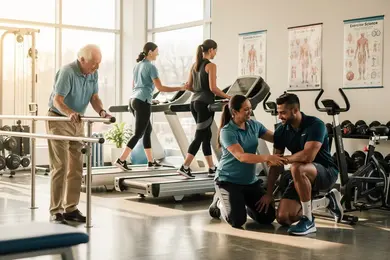
2027 Online Exercise Science Degrees With Strong Rehabilitation Support Training

Co-Founder and Chief Data Scientist
Balancing clinical rehabilitation skills with a flexible academic schedule challenges many aspiring exercise science professionals, especially those juggling part-time jobs or family responsibilities.
As enrollment in online programs surged 11% last year, according to the National Center for Education Statistics—a rate outpacing traditional on-campus growth—options now exist that better accommodate adult learners seeking timely career advancement. However, not all online exercise science degrees adequately integrate rehabilitation training vital for workforce readiness, limiting graduates' employability in evolving healthcare settings.
This article evaluates online exercise science degrees offering robust rehabilitation support to help students identify programs that strategically align with their professional goals and real-world constraints.
Key Things You Should Know
- Online exercise science degrees with robust rehabilitation training often extend program length by 20% due to clinical practicum requirements, increasing total costs by an average $7,500, influencing affordability and time-to-degree tradeoffs per NCES data.
- Employers in post-acute and outpatient rehab increasingly seek candidates with hands-on musculoskeletal assessment skills; programs integrating virtual simulations still face skepticism on practical readiness, impacting hiring rates reported by APTA surveys.
- The demand surge for credentialed exercise science professionals specializing in rehabilitation, forecasted at 13% growth through 2032 by BLS, pressures online curricula to deepen clinical competency beyond didactic content for long-term career viability.
What is an online exercise science degree with rehabilitation training?
An online exercise science degree with rehabilitation training positions graduates to meet rising employer demands for applied therapeutic expertise, not just theoretical knowledge. For example, a graduate working in outpatient rehabilitation must tailor exercise prescriptions for patients recovering from orthopedic surgery, balancing injury-specific protocols with patient progress—a task requiring more than general exercise science skills.
This specialization aligns with a growing market: the global physical therapy and rehabilitation sector, valued at $163.7 billion, is expanding rapidly with a projected 14.5% CAGR through 2030. Programs focused on rehabilitation support such practical workforce needs by combining biomechanics, physiology, and injury prevention with real-world clinical applications.
However, students frequently encounter logistical challenges due to clinical practicums, which demand local site approvals and supervised hours to demonstrate competency. Without verified hands-on experience, employability in rehabilitation roles—frequently requiring certification or licensure—is significantly restricted.
Evaluating programs therefore requires scrutiny of clinical placement support, faculty expertise in rehabilitation sciences, and alignment with certification bodies such as the Commission on Accreditation of Rehabilitation Facilities (CARF) or the National Strength and Conditioning Association (NSCA).
Prospective students should also consider how specialized rehabilitation training compares to more generalist exercise science programs, weighing practical immersion and targeted credentials against program flexibility. Career trajectories in rehabilitation often involve interdisciplinary communication and adapting strategies across clinical, athletic, or community health settings.
For those considering related paths, it's worth exploring how much does a sports analyst make as a comparative lens on alternative career outcomes from exercise science-related fields.
How do you verify program accreditation and credibility?
Programs lacking accreditation recognized by the U.S. Department of Education or the Council for Higher Education Accreditation pose significant risks to students, especially for those seeking online exercise science program accreditation verification in rehabilitation fields.
Without credentials from bodies like the Commission on Accreditation of Allied Health Education Programs (CAAHEP) or the Accreditation Review Commission on Education for the Physician Assistant (ARC-PA), graduates often find themselves barred from certification and licensure, which employers and licensing boards commonly require.
Prospective students must verify accreditation status directly through official accrediting agencies, ensuring it is current and relevant. For instance, physical therapist assistant programs should hold accreditation from the Commission on Accreditation in Physical Therapy Education (CAPTE) to align with professional standards.
Failure to consider these factors can stall employment prospects in a market where job growth for physical therapist assistants and exercise physiologists is projected to rise by nearly 19% and 10%, respectively, from 2022 to 2032.
In addition to accreditation, confirming that programs include practicum or clinical components tied to certification prerequisites is essential. Faculty qualifications and training partnerships with healthcare providers serve as markers of program credibility and workforce readiness. Students must weigh potential time and financial losses if these elements are absent, as insufficient preparation limits career mobility in this regulated domain.
Students seeking to pivot or advance strategically may also examine costs comparatively, considering alternatives like the animal science bachelor degree online to understand how program expenses align across related fields.
Which online exercise science programs offer rehabilitation support training?
Programs focused on online exercise science with rehabilitation training must balance robust theoretical coursework with hands-on clinical experience, a critical factor often underestimated by prospective students. Leading institutions like the University of Florida, Arizona State University, and East Carolina University combine remote learning with required in-person practicums to develop skills employers expect, especially in physical and occupational therapy methods.
Employers prioritize graduates proficient in patient assessment, adaptive treatment planning, and device operation, emphasizing the need for accredited clinical placements near students' locations. Purely online formats lacking these practicum options leave graduates at a disadvantage in rehabilitation roles.
Graduates with this specialization benefit from competitive median wages, as physical therapists earned $99,710 and occupational therapists $96,370 annually in 2023 per U.S. Bureau of Labor Statistics data, reflecting the workforce demand for these competencies.
A practical scenario involves a fitness professional aiming to pivot into rehabilitation-focused exercise science. Selecting a program with integrated occupational or physical therapy components and accessible clinical hours can reduce retraining time and improve employability in hospital or outpatient settings.
For those exploring advanced education options, examining a data science doctorate online may provide complementary skills relevant to emerging health analytics fields. Prospective students must weigh program design, accreditation, and clinical support when targeting the best rehabilitation support in exercise science degrees to ensure market-ready skills and licensing preparation.
Is an online or campus exercise science program better for rehabilitation careers?
Rehabilitation careers grounded in exercise science demand practical clinical experience, which on-campus exercise science degrees with rehabilitation training inherently provide more consistently than fully online programs. Employers in settings such as physical therapy clinics and sports performance centers prioritize applicants with substantial patient-contact hours and supervised lab work, components that fully online exercise science programs for rehabilitation careers often struggle to deliver reliably.
Cost also factors into decision-making, with tuition for online bachelor's programs ranging widely—from $7,500 up to more than $28,000 annually, according to OnlineU's 2025 data. Lower-cost options may appeal financially but often come with limited support for clinical placements, hampering the development of essential hands-on skills and reducing employability in rehabilitation roles.
Consider a student targeting outpatient orthopedic rehabilitation: campus programs typically offer structured internships paired with access to biomechanical labs, a combination critical for meeting licensing and certification requirements efficiently.
Conversely, online learners must independently secure clinical hours, introducing potential delays and employer concerns about the quality and supervision of practical training.
Key factors influencing the choice between these pathways include a student's existing professional network, geographic access to approved clinical sites, and financial constraints. Those without local clinical opportunities or prior experience will likely find on-campus degrees more practical for achieving the rigorous standards demanded by rehabilitation professions.
For comparative insight into related fields, prospective students may explore options such as the master of data science online programs, balancing cost, flexibility, and career-specific outcomes.
What courses are included in rehabilitation-focused exercise science programs?
Rehabilitation-focused exercise science programs demand a precise skill set centered on applying biomechanics, neuromuscular rehabilitation, and therapeutic exercise within clinical contexts. Graduates must be able to design rehab protocols that respect patient-specific limitations and variable recovery trajectories—skills vital when managing complex cases such as post-stroke or chronic arthritis recovery.
Employers, particularly in outpatient clinics and long-term care facilities, expect candidates to demonstrate proficiency in functional movement analysis alongside mastery of exercise testing protocols and safety measures during vulnerable recovery stages.
These curricula embed rigorous training in clinical assessment and evidence-based outcome measurement, ensuring interventions align with validated research. Practical components emphasize therapeutic modalities, adaptive physical activities, and emerging rehabilitation technologies, bridging theory with hands-on application. For instance, coordinating multidisciplinary care plans while adjusting exercises for remotely monitored patients is a growing imperative in digital health environments.
The notable 78% surge in rehabilitation specialization enrollments at Concordia University Chicago from 2020 to 2024 illustrates workforce demand escalation, yet it also underscores the increased competition and the necessity for clinical internship experiences that replicate real-world rehabilitation challenges under supervision.
Students must weigh the tradeoff between comprehensive supervised practice and the logistical constraints of online delivery models when selecting programs that meaningfully prepare them for the evolving rehabilitation job market.
What admission requirements do online exercise science programs usually have?
Admission to online exercise science programs often hinges on academic benchmarks and relevant experience, creating a decisive filter for candidates. A high school diploma with a cumulative GPA of 2.5 to 3.0 is typically required, alongside foundational courses in biology, anatomy, and physiology.
Some programs demand practical experience in clinical or fitness settings, especially for applicants transitioning careers, which can extend the time before professional entry but better aligns graduates with employer needs.
Testing requirements vary; while many undergraduate programs have removed ACT/SAT, graduate-level degrees frequently still require GRE scores. Application materials must demonstrate career intent and relevant competencies, with letters of recommendation from healthcare or academic professionals reinforcing candidate reliability in rehabilitation and allied health roles.
The labor market signals robust employer demand, projecting 15% growth for occupational therapists and 17% for physical therapists through 2032. Yet, fully online programs rarely satisfy hands-on clinical prerequisites, necessitating local hybrid formats or placements.
Candidates should prepare for logistical challenges in completing real-world labs and practicums that are essential for professional readiness. Those lacking prior exercise science experience may face prolonged pathways to meet these immersive requirements, impacting time-to-employment and career momentum.
Strategic evaluation of program delivery models, prerequisite fulfillment, and workforce alignment is critical to optimize educational investment and meet the rigorous standards embedded in rehabilitation-focused careers.
How long does an online exercise science degree take and what does it cost?
Investing in a bachelor's degree in exercise science typically means committing four years, with accelerated options potentially reducing this to three depending on transfer credits and course load. This contrasts with associate degrees, which take about two years but restrict immediate job opportunities to narrower roles.
For example, a candidate aiming to work as a rehabilitation specialist supporting physical therapy teams faces a tradeoff between quicker workforce entry with an associate degree and the more comprehensive skillset demanded by employers favoring bachelor's-level preparation.
Annual tuition costs vary significantly: public universities charge roughly $9,000 to $15,000 for in-state online students, whereas private schools range between $20,000 and over $40,000. These figures exclude additional fees and materials, which may add another 10-20% to total expenses.
Employment growth for recreation and rehabilitation therapy roles is projected at 4% over a decade, with median wages near $57,120, suggesting a reasonable return on a $36,000 to $60,000 investment over four years when factoring in salary progression and career advancement.
Students must consider program structures, including part-time and asynchronous options, which influence pacing and completion time, as well as clinical practicum requirements that sometimes extend study durations. Practical cost assessments should also include potential lost income during full-time study and the availability of financial aid or employer tuition reimbursement plans.
What careers can you pursue with rehabilitation training in exercise science?
Rehabilitation training within exercise science equips graduates for roles that demand applied clinical knowledge to optimize patient recovery and functional mobility. Positions such as physical therapy assistants, cardiac rehab specialists, and strength and conditioning coaches require practical skills alongside academic theory, with real-world expectations including certification and clinical hours.
For example, physical therapy assistants develop individualized movement programs to aid patients recovering from surgery, necessitating collaboration with licensed therapists to adjust care efficiently. Cardiac rehab specialists must monitor vitals closely while adapting exercise safely for patients with cardiac conditions, highlighting the need for precise physiological understanding.
The job market prioritizes candidates who bridge academic knowledge and hands-on rehabilitation competencies, impacting employability and career mobility. Work environments—ranging from hospitals to corporate wellness centers—produce variable physical demands and scheduling that should factor into career decisions.
Financially, costs can be substantial. At St. Mary's University, tuition runs $460 per credit hour, totaling $55,200 for a 120-credit degree. This makes transfer credits and employer tuition assistance critical for mitigating debt that may otherwise offset early-career wages in entry-level roles.
Key considerations for prospective students include:
- Confirming program alignment with required certifications and clinical experience for targeted roles
- Evaluating work setting realities that affect physical demands and hours
- Weighing tuition costs against realistic salary trajectories in rehabilitation-focused exercise science careers
What salary can exercise science graduates expect in rehabilitation roles?
The financial outlook for exercise science graduates pursuing rehabilitation roles varies significantly, influenced by certification status, work setting, and geography. Entry-level salaries typically range from $50,000 to $65,000 annually, but athletic trainers—a frequent career path—earn a median around $49,860, with top performers surpassing $75,000.
This divergence in compensation reflects real workforce segmentation between clinical, sports, and corporate wellness environments, demanding targeted job market analysis before specialization.
Employment forecasts for athletic trainers predict 17% growth over the decade, outpacing average occupational increases. Despite this, candidates without certifications like Board of Certification (BOC) or Certified Strength and Conditioning Specialist (CSCS) may experience suppressed starting wages and slower progression, underscoring employer emphasis on hands-on credentials alongside academic degrees.
Choosing to work in rural or economically modest regions typically reduces salary by 10% to 20%, a factor that must be weighed against lower living costs. Conversely, urban healthcare systems and professional sports organizations offer premiums but expect greater clinical expertise and longer hours, illustrating a tradeoff between pay and work-life balance.
For exercise science graduates transitioning into physical therapy assistant or occupational therapy roles, certification mandates and separate pay scales apply, generally starting near $45,000 with increases tied to licensure and experience.
What certifications or licenses may rehabilitation graduates need?
Certification hurdles decisively shape rehabilitation graduates' career trajectories. Holding credentials such as Certified Rehabilitation Counselor (CRC) or Physical Therapy Assistant (PTA) licensure is not optional but foundational for roles involving direct patient care. These qualifications require passing demanding exams and completing supervised clinical hours tailored to each state's regulatory framework.
For example, a graduate without CRC certification will encounter significant limitations securing a position in hospital or outpatient rehabilitation settings where licensure controls scope of practice and reimbursement eligibility.
In more specialized fields like occupational therapy or athletic training, additional licenses such as Occupational Therapy Assistant (OTA) or Certified Athletic Trainer (ATC) are non-negotiable for participation in multidisciplinary teams implementing focused rehabilitation protocols. Decisions about which licenses to pursue must weigh local labor market dynamics against shifting employer expectations rather than defaulting to maximal credential accumulation.
Remote rehabilitation roles introduce another complexity. Professionals must acquire certifications in telehealth compliance and digital therapeutics to meet rising national standards and operationalize virtual care. With the global telerehabilitation sector expanding annually at over 15%, according to Grand View Research, these credentials provide a critical competitive edge in an evolving, technology-dependent niche.
Practical realities challenge graduates to synchronize program content with state licensure requirements and to continuously update certifications. Employers favor candidates offering both clinical competence and digital fluency, making ongoing investment in specialty certifications a pragmatic, if resource-intensive, necessity.
Other Things You Should Know About Exercise Science
A strong program should include corrective exercise, therapeutic exercise, anatomy, kinesiology, and injury prevention. Look for coursework aligned with ACSM or NSCA preparation and at least 120 credit hours total, with supervised practicum or internship hours tied to rehabilitation settings.
Employers expect graduates to demonstrate applied rehabilitation skills and clinical reasoning, not just theoretical knowledge. Online programs without structured, in-person clinical components risk leaving graduates less prepared for practical demands. Candidates who complete supervised internships or accredited rehabilitation practicums have a clear advantage in meeting employer standards and securing relevant jobs.
Yes, prioritizing programs that provide robust clinical placement networks is critical for rehabilitation-focused exercise science students. Direct access to quality internships ensures skill application and employer connections essential for career entry. Broader academic programs may seem flexible but often lack streamlined pathways to gain the necessary practical experience valued by hiring organizations.
These programs can accommodate working professionals but expect rigorous scheduling demands when clinical practicums begin. Online coursework offers flexibility, but rehabilitation training often involves fixed clinical hours that must fit around work commitments. Prospective students should evaluate program support services and clinical scheduling options to balance employment with training effectively.
References
- Rehabilitation and Exercise Science https://www.keele.ac.uk/study/undergraduate/undergraduatecourses/rehabilitationandexercisescience/
- Online Exercise Science Program https://stmary.edu/online-programs/exercise-science.html
- ESSA's career guide for Accredited Exercise Physiologists https://www.essa.org.au/Web/Web/Resources/Tools-and-templates/ESSA-AEP-Guide.aspx
- B.S. in Exercise Science | Cornerstone University https://www.cornerstone.edu/programs/exercise-science/
- Get Your Exercise Therapy Certification | ISSA https://www.issaonline.com/products/exercise-therapy-certification
- Exercise Science Major (BA, BS) | Hamline University - MN https://www.hamline.edu/academics/undergraduate/exercise-science
- Bachelor of Science (B.S.) Major in Exercise and Sports Science (Pre-Rehabilitation Sciences Concentration) https://mycatalog.txstate.edu/undergraduate/education/health-human-performance/exercise-sports-science-prerehab-sciences/
- Rehabilitation Counselor https://onlinecounselingprograms.com/become-a-counselor/counseling-careers/rehabilitation-counselor/
- Browse Databases and Directories | Council for Higher Education Accreditation https://www.chea.org/search-institutions
- Get Certified - CRCC COMMISSION ON REHABILITATION COUNSELOR CERTIFICATION https://crccertification.com/get-certified/