2027 Employers Hiring Most Aggressively for Exercise Science Talent

Co-Founder and Chief Data Scientist
Clinicians and fitness specialists aiming to transition into exercise science face a pressing dilemma: identifying which employers are aggressively hiring amid shifting healthcare demands and workforce shortages. With the U. S. Bureau of Labor Statistics projecting a 15% growth in exercise science roles by 2032, the urgency to align education with employer expectations intensifies.
Simultaneously, 2024 data from the National Center for Education Statistics reveals a 22% rise in adult learners enrolling in flexible, online exercise science programs, highlighting a market adaptation toward accessibility and career mobility. This article profiles top employers hiring exercise science talent and decodes hiring patterns to guide strategic enrollment and employment decisions.
Key Things You Should Know
- Employers prioritize candidates with advanced certifications linked to injury prevention and rehabilitation; a 2024 National Institutes of Health report shows 62% of new roles demand such credentials, raising entry barriers despite broader bachelor's program access.
- Healthcare systems expanding exercise science roles report a 27% staffing gap versus 2019 baseline, increasing competition among employers and forcing recruitment from crossover fields, driving up starting salaries by 15% in 2025, per Bureau of Labor Statistics data.
- The median postsecondary tuition surge of 8% since 2022 constrains candidate inflow, delaying workforce entry by an average of 9 months as per the National Center for Education Statistics, skewing supply toward financially supported mid-career professionals.
Which industries are hiring the most exercise science graduates and professionals today?
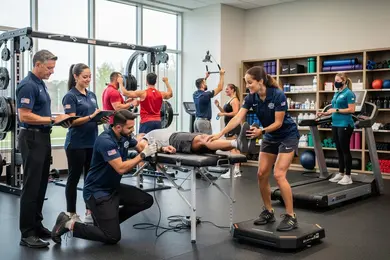
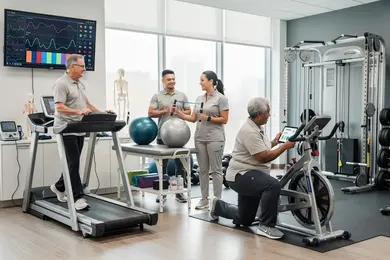
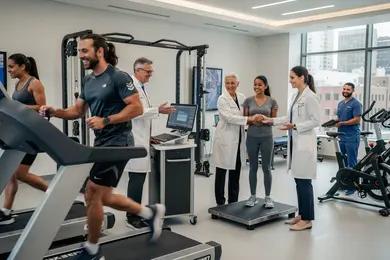
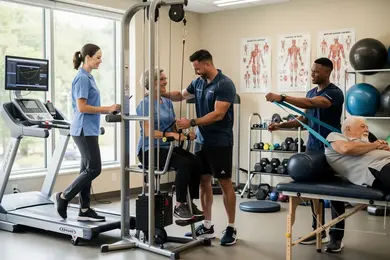
Employment in healthcare, fitness, and sports sectors disproportionately drives demand for exercise science graduates in the US, reflecting distinct operational expectations across these fields. The healthcare sector recruits exercise physiologists to manage chronic diseases and rehabilitation, requiring navigation of insurance systems and multidisciplinary communication-a challenge that often necessitates advanced certifications beyond initial degrees.
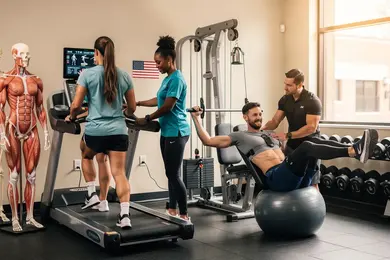
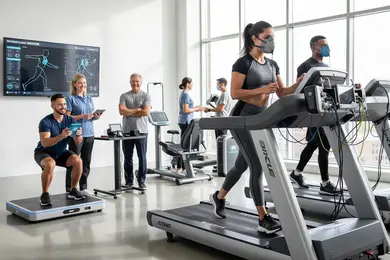
Fitness employers prioritize candidates who combine certifications with practical skills for personalized client assessments and adaptable programming, essential for managing diverse populations and improving client retention.
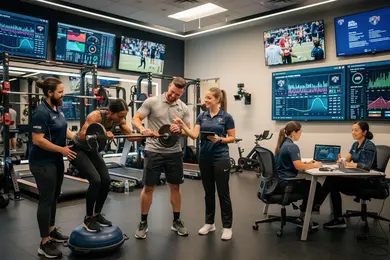
Sports organizations and collegiate athletic departments currently represent a top sector recruiting exercise science professionals nationwide, where expertise in sports-specific biomechanics, performance monitoring, and injury prevention is mandatory.
These roles demand a deeper integration with coaches and medical staff, increasing the pressure to produce measurable performance gains through applied research and technology. Prospective professionals should weigh the rigor of these sector-specific qualification paths against personal career goals, local market conditions, and the competition intensity that is highest in urban hubs.
Projected job openings for exercise physiologists show a 9% growth rate from 2024 to 2034, translating to roughly 1,700 new positions annually. Those considering a pivot should assess educational requirements pragmatically, including the impact of credentialing and continuing education investments.
For information tailored to athletic leadership roles and credential expectations, reviewing athletic director education requirements can provide strategic insights.
What specific job roles can you pursue with an exercise science degree?
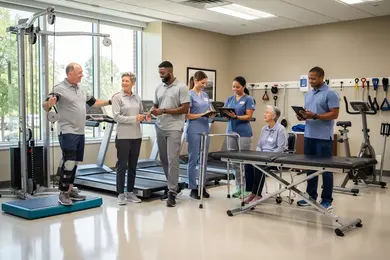
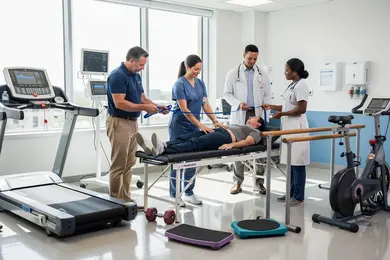
Exercise science careers in the United States demand careful prioritization of role-specific certifications and working conditions to align with job stability and compensation realities. Clinical exercise physiologists, for instance, typically require certification in clinical exercise physiology and operate within hospital or rehab environments, frequently collaborating with interdisciplinary teams.
These roles tend to offer higher median salaries-$58,160 in May 2024-reflecting specialized expertise, compared with the broader U.S. median wage of $48,060 across all occupations. This wage premium underscores the market demand for clinical and healthcare-focused graduates.
By contrast, strength and conditioning positions emphasize credentials like the CSCS and often involve athletic or fitness center settings, where incomes and job consistency may fluctuate more substantially.
Those targeting roles in community or commercial fitness environments should anticipate a greater emphasis on client management and more predictable hours but potentially lower pay scales. Evaluating these tradeoffs is essential when mapping out career trajectories within exercise science careers in the United States.
Prospective students should weigh the investment in advanced degrees or certifications against practical job requirements and long-term employability, especially where employer expectations favor evidence-based physical activity prescriptions and effective communication skills.
Additionally, where certification overlaps with broader health fields, combining credentials may enhance versatility. Considering this, students exploring broader health-related pathways might also examine options such as an online nutritionist degree to extend their expertise portfolio.
How strong is the current job outlook for exercise science majors in the U.S.?
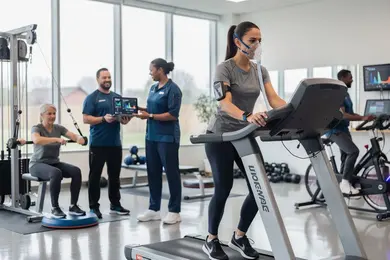
The exercise science job outlook in the U.S. remains strong but nuanced by evolving employer expectations and market segmentation. Companies expanding corporate wellness programs increasingly prioritize graduates who integrate exercise science expertise with data analysis, behavior modification, and digital fitness technology competencies.
Top U.S. employers hiring exercise science graduates often require applied skills such as interpreting biometric data to tailor employee health initiatives or facilitating virtual sessions within multidisciplinary teams. For instance, a large healthcare provider's wellness expansion demands candidates capable of leveraging these hybrid skills rather than relying solely on foundational exercise science knowledge.
Urban job markets tend to be highly competitive, dominated by graduates of top-tier programs who match employer credential preferences. Conversely, emerging sectors like telehealth and remote corporate wellness favor adaptable professionals with interdisciplinary backgrounds, prompting a need for students to diversify skill sets beyond traditional curricula.
Salary progression generally reflects moderate growth, but certifications in rehabilitation sciences or client management markedly enhance employability. Internships and certifications aligned with trends in wellness analytics and digital platforms represent strategic investments that address practical employer demands for measurable program outcomes.
The pathway choice also involves tradeoffs in geographic and credential flexibility, with variable employer standards shaping opportunities. Prospective students weighing an exercise science degree online can evaluate affordability against program relevance and industry applicability to inform career pivots or advancement goals.
Exploring a computer science degree online may offer complementary digital expertise advantageous in a digitally infused wellness landscape.
What education and certifications do employers typically require for exercise science roles?
Employers consistently require a bachelor's degree in exercise science, kinesiology, or a closely related field as the baseline credential for entry-level roles, with specialized positions such as strength and conditioning coaches at collegiate and professional levels increasingly demanding a master's degree due to the complexities of athlete monitoring and load management.
This trend reflects the growing emphasis on science-driven decision-making and data literacy in performance staff, making advanced credentials crucial for navigating these evolving demands.
In practice, certified exercise science certifications in the US significantly impact hiring and advancement. The Certified Strength and Conditioning Specialist (CSCS) credential is often mandatory for strength and conditioning roles, while clinical positions typically require certifications like the ACSM Registered Clinical Exercise Physiologist due to regulatory requirements.
Candidates without these certifications or advanced degrees may find hiring and wage growth limited, particularly in high-performance contexts.
Proficiency with data-driven athlete monitoring and wearable technology interpretation is becoming a non-negotiable skill set, especially within professional sports organizations. This necessitates additional coursework or supplementary training, which can be pursued alongside core curricula or through options such as an online data science masters.
These interdisciplinary skills expand employability beyond traditional exercise science degree requirements for employers, addressing market needs for analysts who can translate complex data into actionable training decisions.
How do salaries compare across common exercise science career paths and settings?
Salary outcomes in exercise science careers directly correlate with industry sector and credential level, shaping distinct financial trajectories. For example, physical therapy assistants typically earn between $45,000 and $65,000 annually but face capped advancement without advanced licensure, making further education a practical necessity for sustained income growth.
By contrast, fitness technology roles such as fitness tech engineers yield median salaries near $41,592 yet allow broader scalability tied to programming and data analytics skills-critical differentiators in the digital health ecosystem. This pathway demands continual technical upskilling to remain competitive and can offer varied advancement options in startups or established tech firms.
Academic and research positions generally start in the $40,000 to $55,000 range, with compensation tied to research funding success and tenure, which introduces long-term uncertainty for novices. Corporate wellness managers typically command $55,000 to $80,000 but require fluency in health promotion within complex organizational systems.
Employers expect candidates' salaries to reflect demonstrated competencies and relevant experience. Prospective students weighing clinical practice must consider licensure pathways and potential debt, while those oriented toward tech or wellness sectors should emphasize interdisciplinary skills beyond core exercise science knowledge.
Sector choice influences both initial pay and career income trajectory, demanding strategic evaluation of educational investment versus long-term workforce positioning.
Which employers and sectors offer the best growth and advancement opportunities?
Exercise science graduates face markedly different advancement landscapes depending on their employment sector. Community and public health organizations, including YMCAs and government programs, show a projected job growth rate of 20% from 2021 to 2031, offering more sustainable career trajectories.
These roles reward skills in program management, grant writing, and community engagement, favoring candidates with a bachelor's or master's degree and providing clearer non-clinical pathways than many healthcare or rehabilitation positions.
Healthcare systems and rehab clinics, while significant employers, impose growth limitations due to reimbursement caps and intense staffing competition. They typically require specialized certifications or advanced degrees, constraining upward mobility for entry-level graduates without further qualifications.
Meanwhile, corporate wellness and fitness technology sectors demand interdisciplinary expertise in data analytics and behavioral science, which adds complexity for exercise science professionals seeking to advance beyond basic coaching roles.
For example, a graduate aiming to move quickly into leadership would benefit from targeting public health roles where outcomes can be quantified and linked directly to organizational goals. The operational emphasis on measurable impact in community health creates tangible channels for advancement that are less restricted by certification barriers.
How do online exercise science programs compare to campus-based programs for employability?
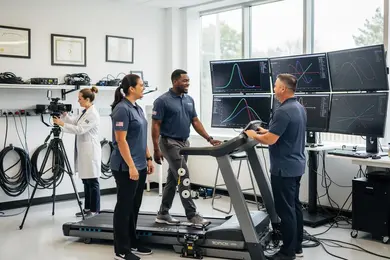
Employers in movement science prioritize candidates with strong practical skills that fully online exercise science programs often fail to provide. Major medical centers and sports labs demand proficiency in biomechanical assessments and patient interventions, competencies typically developed through in-person lab access and clinical placements.
Conversely, tech companies focused on device innovation may accept online credentials if paired with verified internships or applied projects.
This disparity impacts employability and career trajectory significantly. Campus-based programs embed students in hands-on environments, fostering relationships with faculty and employers and building robust portfolios that improve job readiness.
Online students must independently secure local internships and certifications, a challenge for those without nearby clinical resources.
Key workforce considerations include:
- Candidates with hybrid or campus backgrounds usually start with stronger demonstrated competencies and adaptability.
- Research roles requiring specialized equipment and faculty mentorship are generally inaccessible through fully online formats.
- Strategic planning for fieldwork integration is essential for online learners to remain competitive in hiring landscapes dominated by established institutions.
The choice between online and campus-based programs shapes not just academic experience but practical employability outcomes, where replicating rigorous on-site training is fundamental to meeting employer expectations highlighted by data from leading research institutions in 2024.
What accreditations and program quality indicators matter most to exercise science employers?
Employers in exercise science prioritize certification from bodies like the National Strength and Conditioning Association (NSCA) and the American College of Sports Medicine (ACSM), with a distinct preference for practical, operationally relevant credentials such as the Tactical Strength and Conditioning Facilitator (TSAC-F).
For example, federal agencies building specialized human performance units increasingly require candidates who combine certification with hands-on experience in military or tactical settings.
Programs that incorporate fieldwork or internships with operational personnel significantly enhance employment prospects by equipping graduates with applied skills, rather than relying solely on theoretical knowledge. Candidates trained exclusively in classroom environments risk falling short in competitive hiring scenarios, especially in tactical or military sectors.
Accreditation by the Commission on Accreditation of Allied Health Education Programs (CAAHEP) remains a critical marker of curricular rigor, ensuring foundational competence in anatomy, physiology, biomechanics, and nutrition. Yet, quantifiable data such as graduate job placement and employer collaboration rates offer better insight into a program's market alignment and relevance.
Prospective students face important tradeoffs: pursuing practical certifications like TSAC-F demands additional time and financial resources beyond a bachelor's degree but opens doors to niche and expanding roles. Conversely, those targeting clinical or wellness fields might focus on ACSM certifications linked to accredited degree programs centered on evidence-based methodologies.
How can students and career changers align their coursework with employer needs?
The value of coursework in exercise science depends heavily on how well it equips students with applied, niche skills that align with employer demands. Employers hiring specialized trainers or performance consultants often look for candidates with expertise in advanced physiology, biomechanics, nutrition, and performance analytics rather than broad theoretical knowledge.
For example, a strength and conditioning coach increases employability by obtaining certifications in sport-specific conditioning and injury prevention, alongside practical experience using client data management software.
Those seeking clinical or rehabilitation roles benefit from targeted courses in pathophysiology and chronic condition exercise prescription, which are essential in medical-based environments. Programs that include practicum placements with local clinics or sports teams provide measurable skills and reduce onboarding time, addressing employers' preference for candidates who demonstrate immediate client-impact.
Career changers must critically assess existing qualifications to identify and fill gaps with specialized certifications like functional movement screening or metabolic testing, avoiding redundancy. Collaboration between educational providers and industry through internships or real-world projects enhances readiness and networking opportunities, which are vital in private practice or consulting entrepreneurship.
Understanding regional workforce variations and client demographics guides course selection toward higher-paying niches, mitigating risks of oversaturated generalist roles and optimizing long-term career outcomes.
What strategies help exercise science graduates stand out in a competitive job market?
Exercise science graduates face a competitive labor market projected to grow by 10% through 2033, requiring a deliberate blend of credentials and applied experience to gain employer traction. Clinical certifications such as ACSM Certified Exercise Physiologist or NSCA Certified Strength and Conditioning Specialist substantiate expertise beyond a degree and are often baseline expectations for roles in healthcare or rehabilitation settings. Without these, even strong academic records can yield slower employment outcomes.
Practical experience through internships or assistantships proves decisive. For instance, a candidate who has completed a cardiac rehabilitation internship can directly apply clinical skills, giving their resume a distinct advantage over peers lacking supervised exposure. This translates to higher employer confidence and job readiness in a field where about 1,600 annual openings exist for exercise physiologists, intensifying competition.
Growth in technology integration means candidates must also develop fluency with data analysis tools and patient management software, especially in preventive health contexts where personalized care plans dominate. Networking through professional organizations and part-time roles in fitness or research environments further sharpens practical understanding of diverse operational challenges.
Balancing certifications, internships, and technical skills remains the most effective strategy. Graduates focusing solely on academic achievement miss the evolving, increasingly technical demands employers value most.
Other Things You Should Know About Exercise Science
Most employers ask for a bachelor’s degree in exercise science or kinesiology, plus CPR/AED certification and a recognized credential such as ACSM-CPT, NSCA-CPT, or CEP. Clinical and rehab employers often require an internship or supervised practicum, and some roles prefer a master’s degree.
Employers expect entry-level exercise science professionals to manage diverse responsibilities such as conducting assessments, programming exercise plans, and administrative tasks simultaneously, often under time constraints. Candidates must demonstrate strong organizational skills and adaptability, as the workload frequently includes client education, data entry, and coordination with other health professionals. Understanding this multitasking requirement helps candidates prepare more comprehensive skill sets rather than focusing narrowly on technical exercise knowledge.
While multiple certifications can broaden eligible job opportunities, employers often prioritize depth of expertise and demonstrated impact in a focused area like strength conditioning or clinical exercise physiology. For career advancement and long-term employer confidence, specializing with one or two relevant certifications combined with documented applied experience outweighs collecting numerous general credentials. Candidates should target certifications that align with their intended career path and ensure practical application.
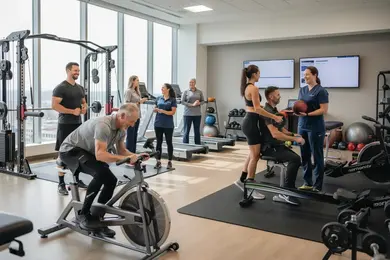
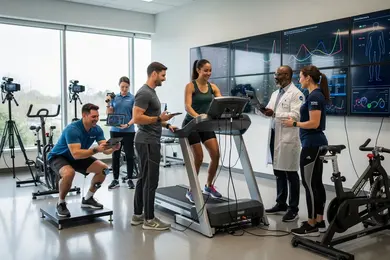
In 2027, major employers aggressively hiring exercise science talent include fitness industry leaders like 24 Hour Fitness and Planet Fitness. Hospital systems such as the Mayo Clinic and Cleveland Clinic also seek exercise science professionals to enhance wellness programs and patient recovery. Professional sports teams are expanding their support staff, providing more opportunities for exercise science graduates.
References
- Online Exercise Science Degrees: Top School Review https://www.edumed.org/online-schools/exercise-science-degrees/
- Accreditation - Irish Sport and Exercise Sciences Association https://isesa.ie/accreditation/
- Building Trust in Qualified Exercise Professionals: The Power of Alignment, Professional Competencies and Academic Accreditation https://acsm.org/building-trust-certified-pros/
- Exercise Science Jobs | Career Information https://www.nutritioned.org/exercise-science-jobs/
- The Best Education Pathway for Success in the Fitness Industry - IDEA Health & Fitness Association https://www.ideafit.com/the-best-education-for-success-in-the-fitness-industry/
- Online Degree vs. Traditional: Choosing the Right Path https://beal.edu/online-degree-vs-traditional/
- 10 in-demand careers for the future https://www.vu.edu.au/about-vu/news-events/vu-blog/10-in-demand-careers-for-the-future
- Top 20 Careers With a Master’s in Exercise Science | PLNU https://www.pointloma.edu/resources/health-sciences/top-20-careers-masters-exercise-science
- Exercise science program accredited by national organization | Lipscomb University https://lipscomb.edu/news/exercise-science-program-accredited-national-organization
- A Comparison of Physical Activity Levels between On-Line and Campus University Students https://clinmedjournals.org/articles/ijsem/international-journal-of-sports-and-exercise-medicine-ijsem-5-141.php