2027 Exercise Science Roles That Often Lead to Leadership Positions

Co-Founder and Chief Data Scientist
Faced with a rapidly evolving health and fitness landscape, many exercise science professionals must decide how to position themselves for leadership roles without sacrificing valuable work experience. The U. S. Department of Education reported in 2024 that over 40% of adult learners now prefer flexible, hybrid, or fully online degree programs, responding to career demands and time constraints.
This shift directly impacts how emerging leaders in exercise science can advance credentials while staying embedded in their workplaces. Understanding which roles frequently lead to management or director positions helps clarify strategic educational and career moves.
This article identifies specific exercise science roles that commonly serve as stepping stones to leadership, equipping readers to align their skills and timing with market realities.
Key Things You Should Know
- Leadership roles in exercise science increasingly require advanced certifications or graduate degrees, with the National Center for Education Statistics reporting a 28% employment premium for candidates holding master's credentials in 2024, pressuring bachelors-only professionals to upskill or risk stagnation.
- Employers in healthcare and sports sectors prioritize evidence-based practice leadership, making research experience and clinical internship completions critical; lack thereof significantly reduces advancement chances, as seen in the 2024 Bureau of Labor Statistics survey highlighting promotion rates 40% lower without these qualifications.
- Extended education pathways introduce notable timing and financial tradeoffs, with average graduate program tuition rising 7% annually up to 2024, forcing mid-career professionals to weigh immediate income loss against long-term salary growth potential in management roles.
What exercise science roles lead to leadership positions?
Leadership roles in exercise science careers with leadership opportunities arise primarily through operational responsibilities alongside technical expertise.
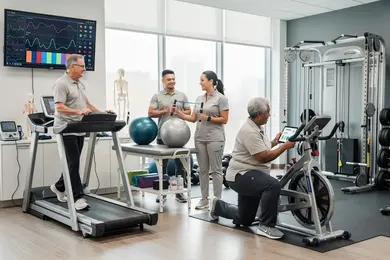
Clinical exercise physiologists often become managers overseeing patient care protocols and multidisciplinary teams in healthcare settings, where median wages reached $58,160 and projected employment growth stands at 9% from 2024 to 2034. Transitioning to leadership demands skills in budgeting and cross-functional coordination beyond clinical licensure requirements.
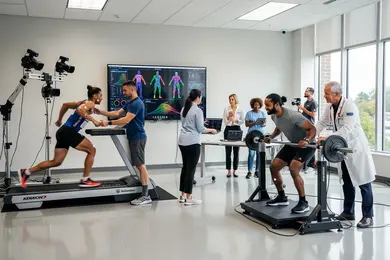
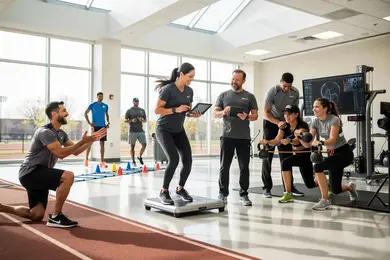
Strength and conditioning coaches who implement evidence-based training in collegiate or professional sports frequently progress into head coach or athletic director positions. These roles require merging sports science with complex management, aligning with the top exercise science positions that progress to management by emphasizing leadership over pure technical coaching.
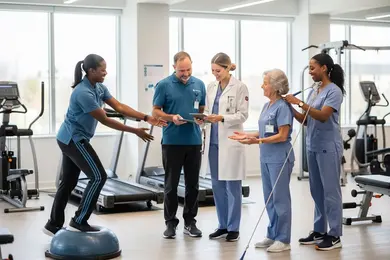
In physical therapy clinics or hospitals, rehabilitation coordinators move into supervisory roles by designing recovery programs and managing clinical staff, demanding fluency in both outcomes and operational logistics.
Wellness program managers in corporate environments advance by developing health policies that impact insurance costs and productivity, influencing overall business strategy and administrative budgeting. Candidates pursuing these paths must navigate clear tradeoffs: clinical leadership involves patient care complexity and licensure, while corporate or sports routes require broader administrative and strategic competencies.
Prospective professionals aiming for these top exercise science positions should also consider parallel fields with overlapping leadership options, such as sports analytics jobs, which offer complementary skills in data-driven program evaluation and management.
What degree and accreditation do exercise science programs require?
Achieving leadership roles in exercise science requires more than a basic credential; it demands degrees aligned with rigorous accreditation standards for exercise science programs.
Employers prioritize degrees accredited by recognized regional or national agencies to confirm comprehensive coverage of biomechanics, motor learning, and exercise physiology. This ensures candidates possess not only theoretical knowledge but also practical clinical experience critical for supervisory duties.
Professional certification further sorts candidates, distinguishing leadership-ready professionals from entry-level practitioners. Credentials like the Certified Strength and Conditioning Specialist (CSCS) by the National Strength and Conditioning Association and Certified Exercise Physiologist (EP-C) from the American College of Sports Medicine represent validated expertise that hiring managers expect for advanced roles.
The interplay between coursework, internships, and certification prerequisites shapes candidate viability. Directing fitness or performance programs often entails fulfilling 400+ hours of documented hands-on experience, making degree programs with integrated cooperative education or partnerships a strategic choice. Balancing classroom and applied work remains a key friction point influencing time to credential completion.
Employment for fitness trainers and instructors, common entry points to this pipeline, is projected to grow 15% from 2022 to 2032, outpacing average occupational growth. This intensifies demand for accredited, certification-ready graduates who can demonstrate leadership potential through practical skills and validated experience.
Prospective students should also consider programs focused on specialized management tracks, such as sports management online programs, which may offer tailored curricula supporting these ambitions.

How do online and campus exercise science programs compare?
Choosing between online vs campus exercise science degree advantages hinges on the tangible practical training and employer perceptions tied to each format. Campus programs inherently provide immediate access to lab equipment, clinical internships, and face-to-face mentoring critical for mastering hands-on skills.
Employers, especially within healthcare and corporate wellness sectors where over 59,000 new exercise science-related positions are projected by 2029 per the Bureau of Labor Statistics and Calvin University Online, often favor candidates with verifiable in-person clinical experience.
Conversely, online programs offer working professionals flexibility but lack built-in access to specialized facilities and structured practicums. Students pursuing fully online tracks face the additional challenge of arranging local internships independently to fulfill accreditation and competency requirements, potentially delaying graduation and complicating employer evaluations of readiness. This tradeoff impacts recruitment for leadership roles where supervisory and applied expertise are indispensable.
For example, an individual targeting management roles in corporate wellness benefits significantly from campus exposure to interdisciplinary teams and real-time physiological assessments, while online learners aiming for adult fitness coaching must supplement digital coursework with external practicum arrangements-a logistical barrier that can hinder seamless resume development.
Those weighing differences between online and on-campus exercise science programs should align their choice with career trajectory: entry-level roles in emerging sectors may accept online credentials supported by strong internships, but leadership positions usually demand comprehensive campus-enabled experiential learning and networking.
Prospective students seeking advanced interdisciplinary studies might consider an online PhD in data science to complement their exercise science expertise.
What coursework prepares students for exercise science leadership roles?
Leadership positions in exercise science demand more than foundational knowledge; they require applied expertise in human physiology, biomechanics, kinesiology, and robust quantitative skills like data interpretation and research methodology. For instance, managers must critically evaluate athlete performance data through advanced exercise physiology and statistics coursework to implement effective training regimens.
A 2024 analysis of 1,033 U.S. job postings revealed that 60% of exercise science leadership roles require at least a bachelor's degree, emphasizing how employers prioritize formal academic preparation for management eligibility.
Essential academic courses for exercise science management careers also cover program development and organizational behavior to prepare students for navigating team coordination, budgeting, and facility operations. For example, a sports performance facility manager's responsibilities differ significantly from a clinical director's focus on therapeutic exercise and patient care management, requiring tailored academic preparation.
Soft skills such as communication, ethics, and collaboration are frequently undervalued but critical components of leadership training. Internship opportunities within programs provide exposure to practical workplace dynamics that enhance leadership capability. Given these varied demands, candidates should carefully evaluate programs balancing scientific rigor, applied leadership, and real-world exposure to navigate complex organizational environments effectively.
Prospective students seeking exercise science leadership coursework in the United States might also explore cost-effective alternatives, such as those identified in rankings for the cheapest data science masters in USA, which can complement management competencies with advanced data analytics skills.
What admissions requirements do exercise science programs usually expect?
Exercise science programs require more than just baseline academic credentials; they demand targeted scientific preparation and relevant hands-on experience to ensure graduates can meet workforce expectations beyond entry-level fitness roles.
Admissions typically expect a high school diploma with strong grades in biology, chemistry, and math-many programs set a minimum GPA between 2.5 and 3.0-and prerequisite coursework in anatomy, physiology, and physics to establish a solid foundation.
Standardized testing requirements vary, with some institutions waiving SAT or ACT scores in favor of demonstrated course rigor and fitness-related activities like volunteer work or internships. Practical exposure is critical: positions such as sports facility managers command salaries averaging $69,454, reflecting a premium for operational experience over basic training roles.
Letters of recommendation from health or allied professionals remain a standard measure of applicant reliability and interpersonal aptitude.
Applicants should anticipate interviews and personal statements to assess motivation and long-term intent, alongside programs stressing lab, research, and fieldwork skills. Candidates missing prerequisites might face delays, often extending their timeline by several semesters. For working professionals, part-time or hybrid formats present viable options to obtain qualifications without full-time enrollment.
Successful applicants align academic readiness, documented practical experience, and clear professional objectives, positioning themselves to advance beyond frontline exercise roles into leadership within a competitive market.
How long do exercise science degrees usually take to finish?
Completing an exercise science degree involves more than a fixed timeline; the path distinctly shapes career readiness and employability. A standard full-time bachelor's program spans four years, balancing foundational education with specialized courses in anatomy, biomechanics, and physiology.
Accelerated three-year options exist but often intensify the curriculum and limit opportunities for internships, a tradeoff that can hinder practical skill development crucial for leadership roles.
Postgraduate paths extend this timeline. A master's degree, typically requiring 1.5 to 2 years post-bachelor's, often becomes necessary for supervisory or clinical positions. Additional certifications or licenses, essential for clinical or rehabilitation careers, add months or years due to required clinical hours and regulatory standards.
For example, a UK government study found that 4% of exercise science graduates enter rehabilitation roles within 15 months, underscoring how certification and applied experience delay entry into specialized leadership areas.
Selecting programs with integrated clinical placements can accelerate employment readiness compared to part-time or online tracks, which may extend to six years and dilute essential networking and hands-on practice.
Prospective students must weigh the relative speed of degree completion against the demand for applied experience employers expect, particularly when targeting leadership, clinical, or rehabilitation roles.
What exercise science certifications support advancement into management?
Advanced certifications distinctly shape management trajectories within exercise science by signaling specific competencies tied to workplace functions. For instance, the Certified Strength and Conditioning Specialist (CSCS) designation is often indispensable for candidates aiming to lead sports performance teams, as it verifies proficiency in athletic program oversight.
In contrast, Certified Exercise Physiologist (EP-C) and Certified Clinical Exercise Physiologist (CEP) credentials carry more weight in clinical or cardiac rehabilitation environments, where managers coordinate multidisciplinary care teams.
Academic leadership follows a different calculus, with management roles frequently requiring graduate degrees combined with research- or clinically oriented certifications such as ACSM Registered Clinical Exercise Physiologist or NSCA Strength and Conditioning certification. According to 2024 Indeed salary data, university professors in exercise science average $61,014 annually, suggesting a potential financial advantage in this segment despite longer credentialing pathways.
From an employment perspective, fitness center managers tend to seek certifications focused on program design and client supervision, while hospital-based managers emphasize clinical exercise expertise alongside healthcare compliance. Without these tailored certifications, practitioners risk stagnating in operational or technician-level roles, as employers prioritize validated leadership and supervisory capabilities.
For example, an exercise physiologist targeting leadership at a cardiac rehab clinic must earn CEP certification and cultivate healthcare management skills, whereas a strength coach aspiring to collegiate head coach roles benefits more from CSCS certification and demonstrated team leadership experience.
What jobs can exercise science graduates get before becoming managers?
Graduates with exercise science degrees face distinct tradeoffs depending on whether they pursue education, clinical rehabilitation, or fitness industry roles. For example, about 9% secure secondary school teaching jobs and 2% primary education roles within 15 months, often moving quickly into leadership such as department head or health curriculum coordinator.
This path demands strong communication and program planning skills layered over scientific knowledge and offers relatively rapid advancement into management.
In contrast, those in rehabilitation or athletic training typically start in assistant or coordinator roles, balancing patient care with administrative duties. This frontline exposure is essential but often delays management progression due to credentialing and clinical experience requirements.
Fitness sector roles such as strength and conditioning coach require additional certification beyond the degree and center on client coordination and multidisciplinary teamwork. Leadership development here depends on managing measurable outcomes, yet advancement speed varies widely versus education settings.
Pragmatically, early leadership opportunities and structured mentorship significantly influence long-term prospects. Diverse experience across sectors fortifies adaptability but demands careful credential planning to navigate the fragmented landscape of exercise science careers.
How much do exercise science leadership roles typically pay?
Leadership roles in exercise science reveal sharp compensation divides shaped by setting, credentials, and organizational scale. Early managers typically see salaries from $65,000 to $100,000 annually, but ascending into senior leadership often requires strategic credentialing and results-driven management experience to reach $110,000-$140,000 or more.
Consider a clinical exercise physiologist managing rehabilitation programs in a hospital: starting salaries hover around $70,000. However, advancing to director-level roles with oversight of multiple clinicians and complex intervention design usually elevates compensation beyond $120,000. Contrastingly, sports performance managers face wider regional and funding-driven salary variability, reflecting demand fluctuations and institutional resources.
By 5-10 years post-graduation, over 40% of exercise and sports science alumni progress into program design and leadership roles. This trend underscores the necessity of combining advanced certifications-such as clinical credentials or master's degrees-with practical networking in multidisciplinary environments to unlock these higher-paying leadership tiers.
Prospective professionals should approach career development with a focus on long-term, cumulative experience and ongoing credentialing rather than relying on entry-level wages. Understanding these dynamics is essential for navigating salary progression in exercise science leadership effectively.
What job outlook exists for exercise science leadership careers?
Exercise science leadership roles demand a nuanced balance of scientific expertise and managerial acumen, with salary outcomes shaped by sector and organizational scope. U.S. directors of health and wellness earned an average $69,833 annually in 2024, a figure reflecting real demand in corporate wellness, healthcare administration, and community health sectors where measurable impact on health outcomes and cost containment is essential.
Advancing toward such leadership often requires credentials beyond core exercise science knowledge, including certifications or degrees in health administration or business. For example, a corporate wellness director must manage budgets, analyze engagement data, and oversee evidence-based program evaluation, requiring experience that spans clinical or fitness environments and strategic organizational contexts.
Key workforce realities include:
- Transitioning from roles like fitness coordinator or health coach to directorship involves increasing fiscal responsibility and team leadership.
- Employers expect candidates to align diverse stakeholder goals while demonstrating fiscal and health impact.
- Investment in advanced education or integrated leadership training with practicum components improves readiness but demands time and financial resources.
This pathway is not linear; candidates must weigh the value of additional business acumen against the variable stability and earnings in different sectors. Data from the Bureau of Labor Statistics project steady growth fueled by aging populations and expanding corporate health programs, reinforcing the pragmatic advantages and challenges embedded in these leadership trajectories.
Other Things You Should Know About Exercise Science
In 2027, common career paths in exercise science that can lead to leadership roles include becoming a clinical exercise physiologist, strength and conditioning coach, or wellness program director. These positions often require individuals to develop strong interpersonal, organizational, and research skills.
Employers increasingly value demonstrated leadership and applied experience more than just academic credentials. While advanced degrees can open doors, candidates with proven program management or supervisory skills often have stronger prospects for leadership roles. Professionals should prioritize gaining hands-on experience managing teams or programs to meet employer expectations effectively.
Choosing between specialization and broad skills depends on career goals. Specialization can position candidates as technical experts, but leadership roles frequently require interdisciplinary knowledge including business, communication, and data analysis. For leadership preparation, programs that integrate diverse skills alongside technical instruction better align with employer demands.
Certified Strength and Conditioning Specialist (CSCS), ACSM-EP, and NSCA credentials are the strongest leadership signals in exercise science. CSCS requires a bachelor’s degree and CPR/AED certification, while ACSM-EP candidates must pass the ACSM exam. These credentials support advancement into supervisory and program-director roles.
References
- Exercise Physiologist Salary: Careers Supporting Heart and Movement Health https://coronanewsroom.org/exercise-physiologist-salary-careers-supporting-heart-and-movement-health
- Prospects https://www.prospects.ac.uk
- How Long to Get a Kinesiology Degree? | ValidGrad https://validgrad.com/blog/kinesiology-degree-duration/
- Exercise science: What exactly is it? https://www.scienceforsport.com/exercise-science/
- Applied Exercise Science https://springfield.edu/programs/applied-exercise-science
- Clinical Exercise Physiologists in the Workforce https://acsm.org/cep-in-the-workforce/
- Online Exercise Science Degrees: Top School Review https://www.edumed.org/online-schools/exercise-science-degrees/
- Online Exercise Science Program https://stmary.edu/online-programs/exercise-science.html
- International Clinical Exercise Physiology Qualification Application Pathways https://icsesp.global/resources/international-clinical-exercise-physiology-recognition-opportunities/
- The Best Education Pathway for Success in the Fitness Industry - IDEA Health & Fitness Association https://www.ideafit.com/the-best-education-for-success-in-the-fitness-industry/