2027 Online Exercise Science Degrees With Biomechanics Coursework

Co-Founder and Chief Data Scientist
Balancing work, family, and advancing a career in exercise science often leaves limited options for in-person education, yet expertise in biomechanics remains essential for roles in rehabilitation, sports performance, and research.
The National Center for Education Statistics reported a 15% increase in adult enrollment in fully online health science programs between 2022 and 2024, signaling growing demand for flexible learning that does not sacrifice technical rigor. This shift pressures students to select programs that provide robust biomechanics coursework alongside accessible delivery methods that align with their schedules and employer expectations.
This article examines current online exercise science degrees with biomechanics components to guide informed choices based on accessibility, curriculum strength, and career outcomes.
Key Things You Should Know
- Accredited online exercise science degrees with biomechanics coursework often extend completion time by 20% due to limited lab access, resulting in a 15-25% higher cost when factoring in repeated in-person practicums, per 2024 regional education reports.
- Employers in kinesiology and rehabilitation increasingly demand verified biomechanical analysis skills; over 68% of surveyed U.S. clinics specified proficiency with motion capture software as a hiring prerequisite in 2024.
- Postgraduate outcomes indicate that graduates completing online biomechanics tracks experience a 12% slower salary growth over five years compared to hybrid program alumni, reflecting employer skepticism about fully remote lab training.
What is an online exercise science degree with biomechanics coursework, and who is it best for?
An online exercise science degree with biomechanics specialization offers targeted expertise in human movement and musculoskeletal dynamics, primarily suited for learners balancing remote study with professional demands. This path aligns with careers in physical therapy assistance, strength and conditioning, and research positions requiring nuanced biomechanical analysis to inform injury prevention and rehabilitation strategies.
With 188 sports and exercise science degree programs nationwide, the best online exercise science programs with biomechanics coursework emphasize translating complex motion data from wearables and force plates into actionable insights. For example, physical therapists rely on biomechanics to customize post-operative recovery protocols that minimize re-injury risks.
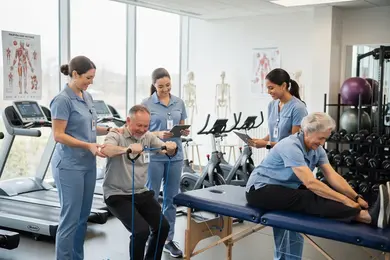
Careful consideration is needed when selecting this online format, as limited access to hands-on biomechanical labs or internships may impede skill acquisition. Employers, particularly in rehabilitation and athletic performance settings, expect applied experience in addition to theoretical knowledge. Students without local practicum options must proactively secure clinical opportunities to demonstrate practical competence beyond virtual learning.
Choosing this degree necessitates balancing the convenience of remote education against potential gaps in experiential training. This tradeoff demands self-directed efforts to supplement coursework with fieldwork, which ultimately impacts employability and career progression.
Prospective candidates can explore comparative program options through resources such as online kinesiology programs to identify pathways that best match their career goals and practical constraints.
How do online exercise science programs compare to campus-based options for biomechanics study?
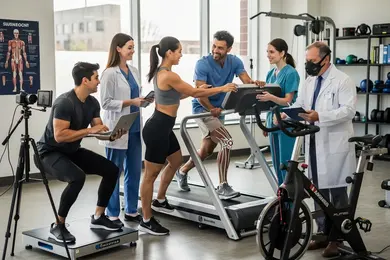
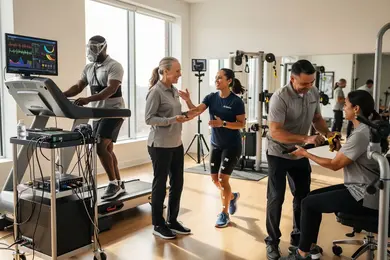
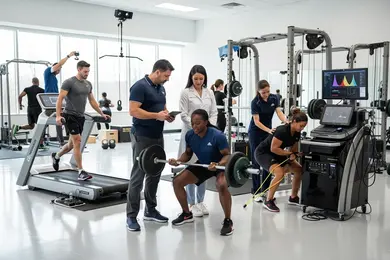
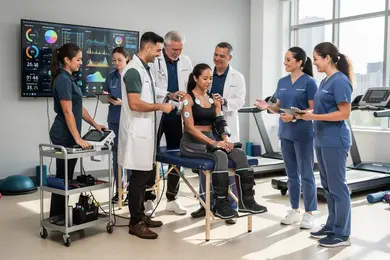
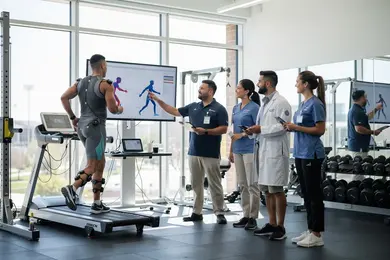
Online exercise science programs with biomechanics focus typically struggle to replicate the essential hands-on lab experiences provided by campus-based exercise science degrees biomechanics comparison reveals. Direct access to motion capture systems, force plates, and dedicated biomechanics research facilities remains indispensable for developing proficiency in applied assessments and clinical interventions.
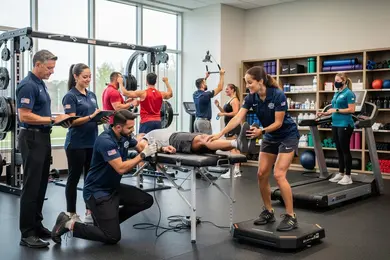
For example, clinical or human performance roles require supervised practice with specialized equipment, a facet online curricula cannot fully substitute despite offering theoretical rigor.
Employment projections reflect these practical demands. Exercise physiologist positions are expected to grow 13% by 2030, with employers favoring candidates demonstrating measurable biomechanical tool expertise in real-world settings. Graduates from campus-centered programs often have a competitive edge, especially in research-intensive or clinical environments.
However, online study serves students balancing work or location constraints by providing flexible scheduling and cost benefits. To mitigate the gap in hands-on training, hybrid models or fully online programs that incorporate mandatory on-site internships or lab residencies offer a more viable pathway to meet workforce expectations.
Prospective students should assess whether programs include partnerships enabling applied biomechanics exposure or risk limited advancement opportunities. Comprehensive evaluation also involves financial considerations. For further insight on costs, see online animal science bachelor degree resources.
Ultimately, students must align their choice based on career objectives. Theoretical biomechanics can be effectively studied online, but clinical, research, and high-performance roles demand immersive, campus-based lab training to build necessary competencies.

What types of accredited online exercise science degrees include focused biomechanics coursework?
Focusing on biomechanics coursework within accredited online exercise science degrees addresses a vital employer demand for graduates proficient in motion analysis and musculoskeletal function assessment.
For example, physical therapist assistants aiming to enhance patient rehabilitation outcomes should prioritize programs offering substantial lab work, often virtual through 3D motion capture simulations, to gain applicable skills despite limited in-person access. This pragmatic approach distinguishes programs that merely mention biomechanics from those building measurable expertise.
Accredited exercise science programs offering biomechanics coursework frequently embed this concentration within broader bachelor of science or health science degrees, a structural choice driven by accreditation standards from CAHEEP and CHEA-recognized institutions. This arrangement aligns with workforce roles in rehabilitation, sports performance, and ergonomic consulting, where applied biomechanics knowledge is indispensable.
Prospective students must carefully evaluate financial costs against experiential learning opportunities. Private online programs typically charge $300-$500 per credit, accumulating $36,000-$60,000 tuition, positioning these options as mid-tier investments compared to alternatives. The scarcity of traditional labs directs many toward hybrid formats or local internships to supplement virtual coursework.
Choosing an online exercise science degree with a biomechanics focus requires balancing tuition costs with practical training quality and confirming program accreditation to meet employer standards. For those considering alternative pathways, exploring a librarian degree online may offer a distinct but relevant pivot in allied health and information management fields.
How can you verify accreditation and academic quality for online biomechanics programs?
Online biomechanics degrees that fail to meet rigorous accreditation standards risk limiting graduates' mobility and employer acceptance. Confirming institutional accreditation by a U.S. Department of Education-recognized body, such as regional accreditors like the Higher Learning Commission (HLC) or Middle States Commission on Higher Education (MSCHE), offers a baseline validation of academic quality and access to federal aid.
Beyond institutional recognition, alignment with specialized accreditation including the Commission on Accreditation of Allied Health Education Programs (CAAHEP) or the Exercise and Sport Science Accreditation Commission (ESSAC) strengthens program credibility in biomechanics-related curricula.
Evaluating academic quality of biomechanics programs online requires scrutiny of curriculum relevance to current workforce competencies established by professional bodies like the National Strength and Conditioning Association (NSCA).
Employers prioritize graduates proficient in motion analysis technology, musculoskeletal anatomy, and biomechanics data applications. Programs lacking virtual labs or updated simulation tools may deliver outdated training, which adversely affects job readiness despite accreditation.
Graduate outcome transparency also shapes program evaluation. Exercise science graduates with a BS degree report average annual earnings near $71,000, per Methodist University Online, illustrating market demand for biomechanics expertise. Programs without clear post-graduation employment data or industry engagement warrant skepticism.
Additionally, program delivery must comply with federal and state authorization rules to avoid legal complications for students enrolling across states. Faculty qualifications, especially terminal degrees and biomechanical research experience, further ensure instructional rigor.
For candidates comparing pathways, weighing the practical tradeoffs between institutional and specialized accreditation alongside workforce alignment is essential. Financial considerations also matter; those seeking cost-effective options might explore studies in online master in data science programs as a related field with distinct market potential.
What biomechanics courses and lab experiences are typically included in online exercise science curricula?
Online exercise science programs with biomechanics coursework deliver essential quantitative skills through virtual labs and motion capture simulations, but they inherently limit tactile experience with specialized equipment. For instance, gait analysis software might allow students to measure stride length and ground reaction forces remotely, aligning well with roles focused on data interpretation and injury risk assessment in clinical or athletic settings.
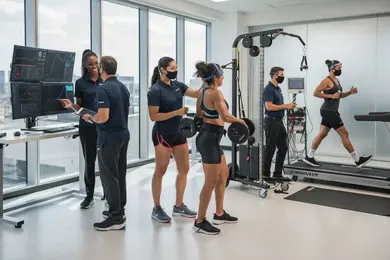
However, workforce demands for roles in advanced research or clinical environments often include hands-on proficiency with tools like force plates or electromyography hardware, which are difficult to replicate fully online. Students considering fully remote pathways should evaluate whether hybrid program models or local lab partnerships are accessible to supplement this gap.
Key practical points include:
- Online labs focus on sensor data collection and software analysis rather than physical equipment manipulation.
- Proficiency in biomechanical data interpretation is increasingly expected by employers in sports performance and rehabilitation fields.
- Graduates report average salaries around $64,000, consistent with related health and wellness positions, but salary potential may rise with direct lab experience.
Ultimately, the decision to pursue online study in this field requires a careful assessment of how program structure aligns with targeted job roles, especially since in-person lab experience remains a critical differentiator in certain career tracks.

What are the usual admissions requirements for online exercise science degrees with biomechanics?
Admission to online exercise science degrees with biomechanics coursework hinges on more than a high school diploma; foundational science preparation and quantitative aptitude are decisive.
Candidates generally need a GPA between 2.5 and 3.0, completed courses in biology, chemistry, anatomy, and physiology, and often standardized test scores, though some programs waive tests for applicants with relevant college credits or experience. Prior collegiate work in kinesiology or health sciences can ease entry, reflecting employer demand for candidates with strong analytical skills applicable to biomechanical assessment.
Letters of recommendation and a personal statement remain common requirements, serving as practical tools for admissions committees to evaluate an applicant's alignment with rigorous program content and long-term professional focus. These selective criteria correlate with workforce expectations, where proficiency in anatomy and data interpretation commands median salaries around $62,860 for health education specialists and $54,860 for exercise physiologists in the U.S.
Prospective students should anticipate logistical challenges in verifying prerequisites remotely, especially in fully online formats, where delays in transcript submission or test score processing can impact timely admission decisions. Thoughtful preparation involves securing targeted academic recommendations and completing relevant science prerequisites well in advance.
Ultimately, meeting these requirements is less about credential accumulation and more about positioning oneself for roles demanding biomechanical expertise within rehabilitation, health programming, or wellness design.
How long do these online exercise science programs take, and what do they cost?
Programs in online exercise science with biomechanics components typically range from 30 to 36 credit hours, equating to 1.5 to 2 years full-time or up to 3 years part-time. Tuition per credit varies significantly, from $500 to $700, demonstrated by Concordia University Chicago's $575 and Logan University's $700 rates for specialized master's degrees.
These differences often reflect faculty expertise and access to advanced labs, which are valued by employers in research or clinical settings.
Professionals targeting roles requiring rapid certification renewal or lateral career shifts might find shorter, less costly programs more practical, avoiding extended enrollment that can complicate financial aid or reimbursement schedules.
For instance, an athlete moving into biomechanics analysis within sports technology companies faces employer expectations for comprehensive degrees completed within two years, which aligns with industry demands for current methodologies.
Key decision factors include:
- Total tuition calculated by credit hours multiplied by per-credit cost, plus fees for materials or internships
- Tradeoffs between part-time pacing and extended program costs
- Alignment of program length with employer hiring practices and career objectives
Grasping these variables upfront is essential to negotiate employer tuition support and optimize post-graduate outcomes rather than underestimating financial and time investments.
What careers can a biomechanics-focused online exercise science degree prepare you for?
The specialized focus on biomechanics within an online exercise science degree targets a distinct sector of applied human kinetics with notable workforce realities. Roles such as sports performance analysts and ergonomic consultants rely heavily on quantitative movement data, using tools like motion capture and force plates, to enhance athletic training or workplace injury prevention.
For instance, a collegiate sports analyst often translates biomechanical insights into tailored athlete programs, a task demanding solid technical proficiency beyond theoretical knowledge.
However, graduates face credentialing barriers; many healthcare-adjacent positions require supplementary certifications such as ACSM-CEP or licensure as a physical therapy assistant. The online delivery model introduces logistical challenges for hands-on practicum experiences, which remain critical for direct patient care roles, potentially limiting employability in clinical settings despite the degree.
Employer expectations prioritize candidates who demonstrate mastery of both biomechanics software and evidence-based assessment integrated with foundational exercise physiology. This combination supports functions in clinical exercise physiology, rehabilitation research, or ergonomic consulting, where advanced data interpretation is essential.
Financially, accessibility to biomechanics tracks is enhanced by broad financial aid availability, often exceeding 99% eligibility at some online institutions, though students must weigh this against the practical demands of credentialing and clinical experience acquisition, which are less easily met remotely.
What salary ranges and job outlook can graduates with biomechanics training expect?
Graduates with biomechanics training embedded in an exercise science degree face a differentiated job market where technical specialization often dictates salary potential and immediate employability.
Entry-level salaries typically range from $50,000 to $70,000, but roles demanding skills in motion capture or biomechanical analysis, such as at sports technology firms or rehabilitation clinics, can command salaries exceeding $90,000, especially with added certifications.
Employment growth for biomechanics-related roles is projected at 10% through 2032 according to U.S. Bureau of Labor Statistics data, outpacing average job growth. However, geographic location heavily influences wage levels, with metropolitan areas housing research hospitals and sports franchises offering higher compensation but requiring geographic flexibility.
Key considerations for prospective students include the impact of credentialing timelines and the premium placed on practical certifications, which can boost starting pay by $5,000 to $10,000. Those targeting government or military research roles should factor in additional security clearance requirements and experience, which can alter salary brackets upward.
Tuition affordability strongly affects net return on investment. Military-affiliated students may access rates as low as $250 per undergraduate credit compared to the standard $420, improving salary-to-debt ratios, particularly where expensive post-degree certifications are pursued.
How do licensing, certification, and professional standards apply to biomechanics-related roles?
Licensure and certification requirements sharply delineate career paths within biomechanics and exercise science, heavily influencing who qualifies for specific roles. Clinical positions demand formal credentials such as the Board Certified Biomechanist (BCB) or state-level physical therapy licenses, without which employment prospects at hospitals and research centers are effectively closed due to liability restrictions.
For example, a biomechanics specialist tasked with devising injury prevention protocols for athletes must hold certifications recognized by authorities like the American Board of Physical Therapy Specialties to legally impact treatment decisions.
Conversely, ergonomics or corporate consulting roles emphasize professional standards over mandated state licensure, where ongoing education and industry certifications substitute for rigid licensing. These sectors reward proven applied experience and specialty knowledge, yet absence of formal credentials can limit trust with clients and slow advancement.
Financial considerations also shape educational trajectories. Representative online BS in exercise science programs typically charge around $398 per credit, offering tuition guarantees that stabilize costs during certification prep. This consistency aids candidates navigating the extensive coursework licensing often requires, reducing disruptions to budgeting and study timelines.
Planning effective entry or transitions into biomechanics careers thus requires clear distinction between legally mandated healthcare licenses and recommended industry certifications. Employers across settings prioritize credentials aligned with compliance standards or professional benchmarks, making strategic academic and credential choices pivotal for gaining access to desired roles and avoiding credential-related employment barriers.
Other Things You Should Know About Exercise Science
Choosing between synchronous and asynchronous biomechanics courses depends on your learning style and schedule flexibility. Synchronous formats provide real-time interaction with instructors and peers, which can enhance understanding of complex biomechanics concepts but require strict time commitments. Asynchronous courses offer greater flexibility for working professionals but may limit immediate feedback and hands-on engagement, potentially affecting skill mastery. Prioritize synchronous options if direct interaction and structured learning drive your success; otherwise, ensure asynchronous programs include robust support resources to maintain learning quality.
Lab and practical experience are critical for developing applied skills in biomechanics, yet online programs vary in how they provide this component. Some incorporate virtual labs or require local internships to meet practical requirements, while others rely heavily on theoretical study. If you plan to work in roles demanding hands-on biomechanical assessment or analysis, select programs with verified lab access or affiliated partnerships. Skipping substantial practical experience can hinder your readiness and employer confidence in your technical capabilities.
Most programs require college preparatory algebra, statistics, general biology, and anatomy and physiology before admission or during the first year. Some also expect chemistry or physics, plus a minimum 2.5 to 3.0 GPA. Advanced biomechanics courses often require prior coursework in exercise physiology.
References
- Are Online Degrees Accredited? How to Identify Quality Distance Learning Programs https://www.umassglobal.edu/blog-news/online-degrees-accredited-identify-quality-distance-learning-programs
- Online Exercise Science Degrees: Top School Review https://www.edumed.org/online-schools/exercise-science-degrees/
- Licensure, Registration & Certification - ABET https://www.abet.org/accreditation/what-is-accreditation/licensure-registration-certification/
- Biomechanics: Salary, career path, job outlook, education and more - RaiseMe https://www.raise.me/careers/architecture-and-engineering/biomedical-engineers/biomechanics/
- Exercise Science Degree Programs Lead to Rewarding Careers in Health and Fitness https://www.carrollcc.edu/articles/exercise-science-degree-programs-lead-to-rewarding-careers-in-health-and-fitness/
- Kinesiology Program Provides Options in Health and Human Performance | Florida College https://floridacollege.edu/news/kinesiology-program-options/
- The BioMechanics Method Corrective Exercise Specialist Course | CPD Fitness Courses | World Class Online Education - FitPro https://www.fitpro.com/INFITPRO/index.cfm/fuseaction/home.Course/courseid/109
- Professional Licensure of Biomedical Engineers - IEEE Pulse https://www.embs.org/pulse/articles/professional-licensure-biomedical-engineers/
- Exercise Science Degree Programs, Online Included for 2026 https://www.kinesiologydegrees.org/programs/exercise-science