2027 Exercise Science Specializations for Strength and Conditioning Careers

Co-Founder and Chief Data Scientist
Balancing full-time work with advancing a career in strength and conditioning presents a complex challenge for many aspiring exercise science professionals. The growing demand for specialized credentials coincides with a 22% increase in online enrollment among adult learners over 25, according to the National Center for Education Statistics, indicating a clear shift toward flexible, career-compatible education options.
However, not all specializations offer the same practical return on investment, and misaligned program choices risk delayed credentialing and diminished employability in an already competitive field.
This article examines key exercise science specializations relevant for strength and conditioning careers, guiding readers to make informed, strategic decisions that optimize timing, accessibility, and marketability.
Key Things You Should Know
- Specializing in biomechanics yields 25% higher employer demand in strength and conditioning roles but extends certification time by 40% compared to broader exercise science tracks, limiting rapid workforce entry.
- Sports nutrition specialization aligns with 60% of collegiate athletic programs' hiring preferences, narrowing applicant pools but offering a 15% median salary increase over generalist pathways.
- Programs emphasizing data analytics and wearable tech integration incur 30% greater upfront training costs yet meet emerging labor market needs in elite sports, impacting candidates' financial and temporal investment choices.
What are the main exercise science specializations for strength and conditioning careers?
Pursuing exercise science specializations for strength training careers requires weighing the practical relevance of fields like exercise physiology, biomechanics, sports nutrition, and athletic training against specific occupational demands.
Exercise physiology directly influences programming and recovery protocols and is vital for tailoring interventions for clients with chronic conditions—an asset in both clinical and athletic settings. Biomechanics emphasizes movement mechanics and injury prevention through data-driven techniques, often demanding technical expertise valued by professional sports teams and rehabilitation centers.
Sports nutrition and athletic training also significantly affect strength and conditioning exercise science career paths. Coaches integrating sports nutrition can align training loads with dietary strategies critical for optimizing performance, particularly in elite environments. Athletic training's emphasis on injury prevention and acute care is indispensable in team sports and physical therapy roles, expanding the scope of strength professionals beyond pure conditioning.
Deciding which pathway to prioritize hinges on realistic employment considerations. Gym-focused coaching leans toward exercise physiology and biomechanics, whereas collegiate or professional sports roles benefit from combined knowledge in sports nutrition and athletic training.
According to 2024 Bureau of Labor Statistics data, exercise physiologists earn a median wage of $58,160 annually with a projected 9% growth through 2034, surpassing average occupational expansion and underscoring the market's preference for scientifically grounded, interdisciplinary skills.
Prospective candidates should also consider role adjacency; for example, professionals exploring administrative leadership can learn "How do I become an athletic director?" allowing strategic navigation beyond direct training roles.
Which exercise science degree levels best prepare you to become a strength and conditioning coach?
Employers for strength and conditioning coaching roles increasingly distinguish candidates by degree level and practical experience, with bachelor's degrees serving mainly as a foundational entry point. These programs cover fundamental anatomy, physiology, biomechanics, and training methods but typically require supplementary certifications or internships to meet real-world coaching demands.
For students weighing the best exercise science degree for strength and conditioning careers, the bachelor's route enables faster workforce entry yet often limits initial role scope.
Master's degrees focused on strength and conditioning or sport science incorporate applied research and advanced performance analytics, aligning with employer preferences for evidence-based programming. This is particularly relevant for top exercise science programs for strength and conditioning coaches aiming at Division I collegiate or competitive professional settings.
Labor market data forecasts a 2.3% growth in human performance analytics roles nationally between 2022 and 2027, signaling rising employer demand for analytics-integrated skill sets.
At the professional and research level, doctoral studies or specialized certifications coupled with graduate education become prerequisites, reflecting the sector's leadership and innovation needs. Candidates must balance the delayed market entry and financial costs of graduate study against enhanced long-term career resilience and salary prospects.
A strategic priority for all candidates is selecting programs that provide both practical experience and applied analytics training to improve employability and coaching efficacy.
For students considering varied degree pathways, cost and tuition details play a significant role in decision-making; exploring options such as an online animal science degree can offer comparative insights into educational investments outside conventional routes.
What certifications and licensing do strength and conditioning professionals typically need in the U.S.?
Certification significantly shapes employability for strength and conditioning professionals in the U.S., with industry-standard credentials like the NSCA-CSCS or CSCCa SCCC credential functioning as essential gatekeepers.
Employers in collegiate and professional sports environments prioritize these qualifications because they reliably indicate mastery in exercise science principles, program design, and athlete safety management. Without at least an NSCA-CSCS, candidates targeting NCAA Division I strength coach roles are unlikely to be seriously considered.
Licensing requirements vary by state and job context but generally do not mandate formal licenses for strength and conditioning specialists. However, most employers require current CPR/AED certification due to safety concerns inherent in training.
Job scopes that cross into personal training or clinical rehabilitation often call for additional certifications or alignments with physical or occupational therapy credentials to satisfy compliance and insurance standards. This captures the nuance of licensing and certification pathways for U.S. strength and conditioning specialists.
Ongoing professional education is non-negotiable, as certifications typically require renewal every three years accompanied by documented continuing education. Without these credentials, individuals face substantial barriers, frequently restricted to entry-level roles or lower wages.
The median salary at $46,010, with a projected 12% job growth rate, reflects both competitive market demand and the premium on validated expertise as reported by NutritionED.
Prospective students should weigh the practical realities against educational investments, keeping in mind that paths such as computer science degrees differ markedly in structure and outcomes.
Understanding these workforce implications clarifies why targeted certifications remain the cornerstone for serious advancement in strength and conditioning careers in the U.S.
How do online exercise science programs for strength and conditioning compare to campus-based options?
Online exercise science strength and conditioning programs offer convenience but lack the critical hands-on training essential for many applied roles. Positions within military, police, or fire departments frequently mandate supervised practical experiences and certifications like CSCS that campus-based exercise science degrees for strength and conditioning systematically provide through partnerships and direct field exposure.
Employers in tactical strength roles clearly prioritize candidates with demonstrated real-world skill application, a demand online learning alone struggles to meet.
Working professionals balancing job responsibilities might find online routes viable for foundational knowledge acquisition. However, supplementing with in-person internships or residencies is necessary to document the applied competencies employers require.
This is especially visible given that over 15% of relevant U.S. job postings request advanced credentials tailored to "human performance" or "tactical" populations, underscoring a preference for integrated experiential learning.
Tradeoffs to consider include cost and geographic accessibility, where online programs generally have an advantage. Yet, this often comes at the expense of employability in high-demand, specialized sectors that rely on rigorous biomechanical assessment and emergency response training.
Prospective students must weigh career ambitions carefully: academic or entry-level roles may accept online credentials, but advanced tactical positions demand campus-based practical experience verified by recognized certification pathways.
Those investigating comparable flexibility in other health-related specialties might also explore online PMHNP programs as alternative online options with specific professional outcomes.
What coursework and lab experiences are included in strength and conditioning-focused exercise science programs?
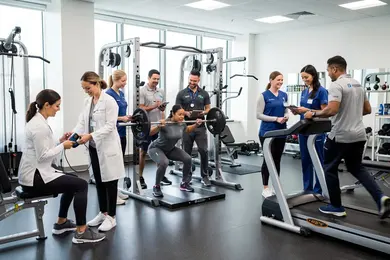
Strength and conditioning-focused exercise science programs demand a rigorous combination of advanced coursework and applied labs that directly prepare students for professional settings. Core subjects—such as biomechanics, motor learning, and strength training principles—build critical expertise in human movement and neuromuscular function essential to developing tailored training protocols.
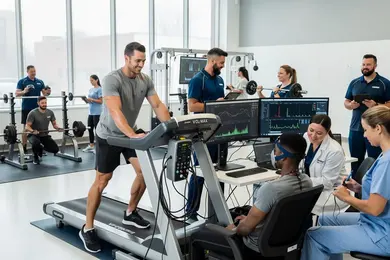
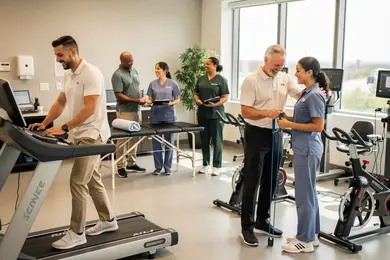
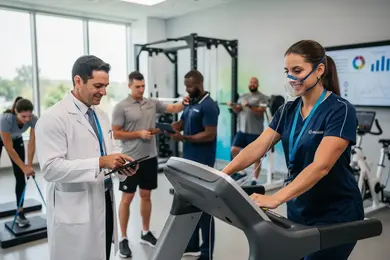
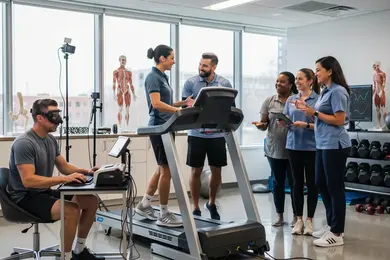
Real-world lab experiences include performance testing like VO2 max and electromyography (EMG) analysis, simulating conditions encountered when working with athletes, military personnel, or clinical populations.
Employers expect graduates to integrate interdisciplinary knowledge areas, including nutrition, sports psychology, and injury prevention, alongside evidence-based periodization and program evaluation methods. This multifaceted approach reflects a growing emphasis on data-driven adjustments to training loads, ensuring outcomes align with measurable performance metrics.
The practical benefits of combining strength and conditioning study with clinical exercise physiology are significant. With a median pay around $58,470 and an 11% projected job growth rate through 2032, clinical skill sets broaden employability, especially when paired with clinical risk assessment and rehabilitation competencies.
However, balancing intensive academic, lab, and internship requirements presents a notable challenge for students managing external work or family commitments.
Prospective students should weigh the tradeoff between the expanded career options offered by joint clinical-specialty learning opportunities and the substantial time demands required to meet certification and applied experience expectations.
How can you verify that an exercise science program is properly accredited and industry-recognized?
Selecting an exercise science program without verifying its accreditation and industry recognition risks delaying or derailing professional progress. Regional accreditation by U.S. Department of Education-recognized bodies like the Higher Learning Commission is foundational, ensuring programs meet essential academic and administrative standards required for certification eligibility in strength and conditioning careers.
However, institutional accreditation alone is insufficient. Specialized endorsements from organizations such as the Commission on Accreditation of Allied Health Education Programs (CAAHEP) or the National Strength and Conditioning Association (NSCA) reflect alignment with employer expectations and curriculum rigor.
For example, graduates who lack programs with this layered accreditation often face additional certification hurdles, slowing entry into specialized roles.
Practical evaluation must consider:
- Curriculum content emphasizing advanced competencies in biomechanics and movement science tied to labor market realities
- Graduate outcomes including Certified Strength and Conditioning Specialist (CSCS) exam pass rates, job placement, and employer feedback
- Industry demand data showing that specialized skills such as biomechanics command salary premiums of approximately 18% over general fitness roles, according to Frontiers in Sports and Active Living
For prospective students, insufficient verification risks enrolling in programs whose credentials lack employer valuation or fail to deliver necessary skills, resulting in costly supplemental education. Employers increasingly prefer candidates with verifiable credentials tied to specific curricular standards, making thorough accreditation and outcome analysis critical to informed decision-making.
What admission requirements and prerequisites do strength and conditioning specializations usually have?
Admission to strength and conditioning specializations hinges on a foundational bachelor's degree in exercise science, kinesiology, or related fields, but the nuance lies in coursework and practical exposure.
Beyond core anatomy and biomechanics, the increasing integration of nutrition reflects labor market demands: over 40% of U.S. job listings now require nutrition advising skills or coordination with dietitians. Candidates without these competencies risk limited employability in competitive roles.
Practical experience remains a decisive criterion; documented internships or supervised clinical hours, commonly between 300 and 500, provide essential exposure to athlete assessment, program design, and injury mitigation. This mitigates the persistent disconnect many employers note between academic theory and actionable skills.
Certification prerequisites, such as the NSCA Certified Strength and Conditioning Specialist (CSCS), enforce a baseline that shapes curriculum design: a completed bachelor's and targeted coursework in strength training and nutrition. Prioritizing programs with rigorous nutrition and applied coaching components better equips graduates for collegiate or professional sports environments.
Choosing a specialization demands balancing a theoretical foundation with practical, multidisciplinary readiness to avoid employability gaps in an evolving market.
How long do exercise science programs with strength and conditioning tracks take, and what do they cost?
Completing a bachelor's in exercise science with a strength and conditioning focus typically demands four years, with accelerated options trimming this to three. Graduate certificates and master's degrees require an additional 1 to 2 years, depending on enrollment status. This timeline balances rigorous coursework with hands-on internships or practicum experiences that most employers expect. Forgoing this practical training often hinders employability in specialized roles.
Cost differences between public and private institutions are substantial. In-state public tuition ranges from $10,000 to $15,000 annually, while out-of-state and private institutions charge $25,000 to $50,000 per year. Graduate certificates cost $5,000 to $15,000 and master's programs $20,000 to $40,000 total.
Beyond tuition, certification fees, textbooks, and equipment access impose extra costs that candidates frequently underestimate but are essential for workforce readiness.
For professionals targeting corporate wellness or occupational fitness, the projected 14% employment growth for fitness trainers through 2033 signals opportunity. However, many corporate employers prioritize graduate-level credentials or certifications rather than bachelor's degrees alone, positioning advanced study as a practical necessity despite higher investment.
In healthcare or elite sport settings, the demand for advanced credentials and robust experience narrows entry points.
What jobs, salary ranges, and career pathways are available with a strength and conditioning specialization?
Strength and conditioning specialization leads to distinct career tracks with divergent skill sets and salary outcomes. Strength coaches in collegiate or professional sports typically earn between $40,000 and $75,000 annually, with elite roles surpassing $100,000, while athletic trainers earn around $50,000 to $70,000 depending on certification and environment.
Technology-focused positions such as fitness tech engineers commonly command median salaries above $60,000, driven by demand for expertise in wearables and data analytics.
The career bifurcation between hands-on coaching and tech-driven roles underscores important tradeoffs. Strength coaches must obtain certifications like CSCS and build practical proof of results through internships, often extending the timeline to stable earnings.
In contrast, fitness tech engineers require additional training in programming and data science beyond traditional exercise science coursework, aligning with a projected 20% job growth in tech-oriented fitness roles from 2021 to 2031. Those opting for technology roles must navigate interdisciplinary learning but gain strategic advantage in a growing segment.
Practical employment challenges include balancing formal certifications and technical competencies. Candidates benefit from specializing in niche areas such as youth athlete development or data-enabled performance monitoring, which can differentiate them in competitive markets.
Immediate steps include targeted certification, portfolio development of coaching outcomes or tech projects, and strategic networking with sports medicine or technology professionals to align skill sets with employer expectations.
How can prospective students choose the best strength and conditioning program for their goals?
Choosing an exercise science program demands a precise alignment between specialized curriculum content and specific career targets within strength and conditioning. For example, candidates pursuing roles in high-performance athletics must prioritize coursework in advanced biomechanics, sports nutrition, and data-driven monitoring technologies.
Conversely, those focused on clinical rehabilitation require programs offering in-depth training in therapeutic exercise, neuromuscular adaptation, and patient assessment techniques.
Program reputation hinges heavily on faculty expertise and professional network connections. Opportunities for internships and mentorships through partnerships with sports teams or clinical practices significantly affect the practical skills gained and initial job placement success.
Accreditation by recognized bodies such as the National Strength and Conditioning Association (NSCA) is also essential, impacting eligibility for certifications that employers regard as benchmarks of credibility.
Financial commitment should be considered with realistic salary projections: entry-level salaries for specialized roles typically range from $35,000 to $40,000 but can advance to $60,000-$80,000+ with experience and credentials. Those with prior work exposure or integrated certification support often see improved return on investment. Part-time or online formats may benefit working professionals but often limit direct internship access, requiring proactive networking.
Requesting data on graduate employment rates and credential completion timelines from programs can reveal workforce integration challenges and help assess whether a program's outcomes meet your career goals.
Other Things You Should Know About Exercise Science
Specializing too early in strength and conditioning can limit exposure to foundational exercise science principles that employers value, such as anatomy, physiology, and biomechanics. Programs that balance broad coursework with focused practicum opportunities produce candidates with a stronger ability to adapt across different settings. Prioritize programs that allow initial generalist training followed by targeted specialization in later years to enhance job market flexibility and long-term career growth.
Programs with high clinical or practical hour requirements tend to produce more job-ready graduates, as hands-on experience is critical in strength and conditioning careers. However, extensive clinical hours can increase total program duration and stress, impacting work-life balance for students who need to work concurrently. Select programs that integrate applied learning efficiently, ensuring sufficient practice without disproportionate extension or burnout, to maintain both competency and sustainability.
Most employers prioritize candidates with applied training and coaching experience over those who focus primarily on research. Exercise science programs emphasizing practical skill development, internships, and real-world case studies align better with employer expectations. When choosing a program, emphasize its connections to athletic facilities and strength and conditioning labs rather than solely its research output, unless your career aims include academic or clinical research.
The most recognized certifications are the NSCA Certified Strength and Conditioning Specialist (CSCS) and the USA Weightlifting Sports Performance Coach credential. The CSCS requires a bachelor’s degree or final-term enrollment, CPR/AED certification, and a passing score on the NSCA exam, which is administered by the National Strength and Conditioning Association.
References
- Career Pathways for Strength and Conditioning Coaches https://blog.portobelloinstitute.com/career-pathways-for-strength-and-conditioning-coaches
- Becoming a Strength and Conditioning Coach https://www.nsca.com/education/articles/career-articles/becoming-a-strength-and-conditioning-coach/
- International Clinical Exercise Physiology Qualification Application Pathways https://icsesp.global/resources/international-clinical-exercise-physiology-recognition-opportunities/
- Exercise Science (Strength & Conditioning) | Academics | Southern Arkansas University https://web.saumag.edu/academics/program/exercise-science-strength/
- The Fundamentals of Program Design for Strength & Conditioning Coaches | TrainHeroic https://www.trainheroic.com/blog/the-fundamentals-of-program-design-for-strength-conditioning-coaches/
- Strength & Conditioning Certification Guide 2026 https://ironcoaching.app/blog/strength-and-conditioning-certification
- Exercise Sciences https://www.caahep.org/committees-on-accreditation/exercise-science
- How To Choose The Right Exercises For A Sports Specific Strength Training Program - No Regrets Personal Training https://noregretspt.com.au/how-to-choose-the-right-exercises-for-a-sports-specific-strength-training-program/
- Exercise science: What exactly is it? https://www.scienceforsport.com/exercise-science/
- Degree in Strength & Conditioning - Majors & Programs | Benedictine College https://www.benedictine.edu/academics/degrees/strength-conditioning